
Baseball Umpire Overview: Certification, Levels & Career Path 2026 September
💯 Complete baseball umpire overview: certification path, rulebook differences, gear, pay scales, and career levels from rec ball to MLB.
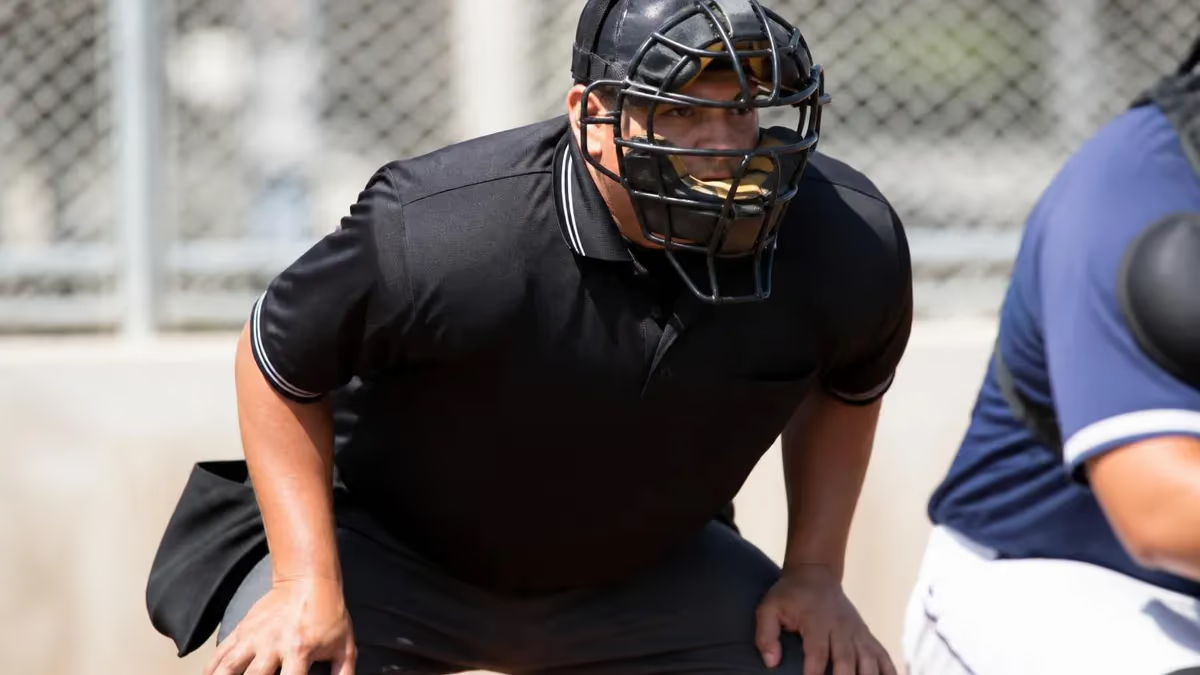
Stepping behind the plate or onto the bases as a baseball umpire means owning every call, every count, and every conversation that follows. You signal balls and strikes, judge fair and foul, rule on safe and out, and keep the game moving inside a rulebook refined for more than 150 years.
That sounds intense because it is. The good news? Nobody is born knowing the infield fly rule or the proper mechanic for a third-strike swing in the dirt. Every umpire you watch on television learned the craft one game, one clinic, one mistake at a time.
This overview walks you through what the job really looks like in 2026, from sandlot rec leagues to professional ball. You will see how certification paths differ for amateur, high school, college, and pro tracks, plus where the rulebooks share ground and where they diverge.
We will also touch the parts nobody puts on the recruitment poster: the late drives home, the parent who thinks the strike zone shrinks below their kid's knees, the brutal August doubleheaders where your shin guards feel welded to your legs.
Worth it? Most umpires who stick with it past their second season say yes. A surprising number describe the work as the most engaging job they have ever held. The foundations are the same at every level: know rules cold, stand in the right place, see the play, call it decisively.
Before you sign up for your first association meeting, take an honest look at your schedule. Baseball is the most game-dense sport in American officiating. A varsity high school slate during peak May can mean four games a week, often on back-to-back evenings. Travel weekends in June and July routinely run from Friday night through Sunday afternoon. If your family or day job cannot absorb that load, start with rec ball instead of varsity. Burning out by July because you stretched too thin is the fastest way to leave the avocation.
Learn more in our guide on Umpire: What It Means, Types, and How to Get Certified. Learn more in our guide on MLB Umpires: Complete Overview of the Job, Salary, and Path to the Majors. Learn more in our guide on Umpire Gear: Complete Equipment Guide for Plate and Base Umpires. Learn more in our guide on Umpire News: Profession, Career, and Industry Updates.
Baseball Umpire Snapshot
Look at those numbers and a story jumps out. The pool of working umpires is huge, the path to the top is narrow, and the gap between weekend rec ball and the major leagues is filled with thousands of officials grinding through high school, college summer leagues, and minor league assignments.
Most umpires never aim for the show, and that is completely fine. Plenty earn meaningful side income, build community, and stay close to a game they love without ever buying a plane ticket to Florida for pro school.
Pay scales reflect the same pyramid. A new Little League umpire might pocket 35 to 60 dollars per game. A varsity high school plate job runs 75 to 130 dollars depending on state. College conferences pay 150 to 400 per game with travel covered.
MLB umpires earn between 150,000 and 450,000 dollars annually once they hold a full-time roster spot, plus per diems and postseason bonuses that can push total compensation past 500K in playoff years. That spread is wide because the skill ceiling is steep.
Salary structures also vary by region. Texas, Florida, California, and the Northeast generally pay higher rates than the Mountain West or rural Midwest. Tournament organizers in metropolitan areas often add per-diem bonuses for umpires willing to work the holiday weekends nobody else wants. Memorial Day, Fourth of July, and Labor Day tournaments routinely pay double the standard rate. Veteran umpires plan their calendars around these high-value dates and decline lower-paying assignments in advance.
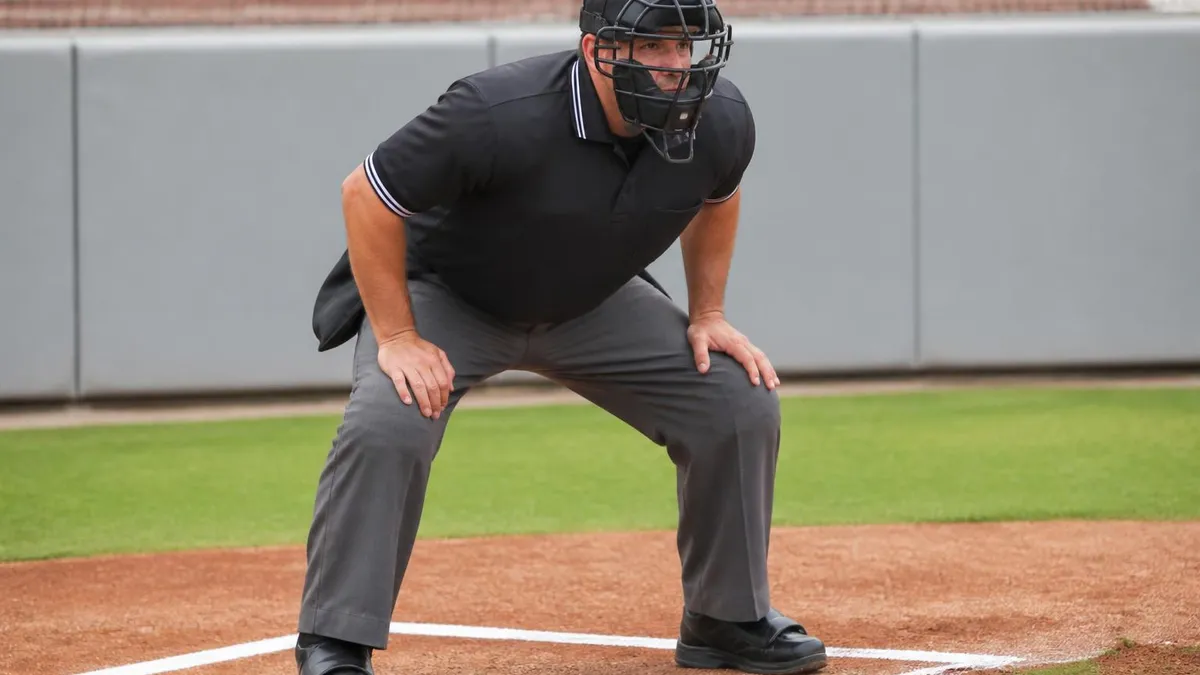
Three Things Every New Umpire Wishes They Knew
- Rules knowledge beats athleticism. Umpires who advance fastest can recite definitions cleanly, not former college players who assume they know everything.
- Your strike zone is a brand. Coaches will live with a low zone or a wide zone — they cannot live with a zone that changes inning to inning.
- Game management is 60% of the job. Calls take 8 seconds. The other 2 hours and 52 minutes are about pace, presence, and not making yourself the story.
That last bullet is the one veteran umpires hammer into rookies. When you watch a great umpire, you forget they are there. The game flows, the pace stays brisk, the coaches behave because they sense the official has a handle on things.
When you watch a struggling umpire, you cannot stop watching them. They are pulling their mask off after every pitch, arguing with a base coach about a call from the third inning, slowing the rhythm until the ballpark feels like it is wading through mud.
The difference is not eyesight or knowledge. It is presence — the calm, unflappable bearing that says I have done this a thousand times and nothing about today is going to rattle me.
Presence is built, not given. It comes from reps, from clinic feedback, from working enough games that the strange situations stop being strange. The third-out appeal play at second base after a runner missed third? You will see it.
The catcher's interference on a swinging strikeout with a runner stealing? You will see that too. Every wrinkle in the rulebook eventually appears, and the only way to handle it smoothly is to have studied it beforehand and ideally seen a colleague work through it.
One veteran offered a simple presence test for rookies. After every half-inning, ask yourself: did anyone look at me funny during that inning? If yes, why? If no, you are doing the job correctly. Umpires who stay invisible accumulate work assignments quickly because coaches, assigners, and athletic directors all want predictable officials they can pencil in without controversy.
Four Levels of Baseball Umpiring
Coach-pitch through majors division. Most umpires start here. Local league trains you, often in a single evening, and you work games solo or in two-person crews. Pay is modest but the learning curve is friendly and parents are usually supportive.
USSSA, AAU, Perfect Game, Triple Crown. Higher intensity, paid better (60-120 per game), and you often work 4-6 games in a weekend. Tournament directors expect crisp mechanics and quick game management.
State association certified, NFHS rulebook in high school, NCAA rulebook in college. Plate jobs pay 75-400 depending on level. Background check and annual rules exam required in nearly every state.
Wendelstedt or Minor League Baseball Umpire Training Academy, 5-week pro school in Florida, evaluation period in advanced rookie ball, then a slow climb through A, AA, AAA toward the 76-spot MLB roster.
Notice how the levels are not strictly sequential. Plenty of high school umpires never worked Little League, going straight from being a player to being certified by their state association at age 19 or 20.
Conversely, many lifelong Little League umpires never pursue varsity work because they like the rhythm of youth ball and the time commitment that fits their schedule. The pipeline is more buffet than escalator.
What every level shares is the rulebook foundation. The OBR (Official Baseball Rules) used in pro baseball is the parent document. NFHS and NCAA codes branch from OBR but include modifications — designated hitter rules, courtesy runners, mound visit limits, slide rule interpretations, and dozens of other nuances.
An umpire who jumps between high school and Legion ball in the same week needs to flip mental gears every time they put on the gear. The OBR rulebook has 8 sections and roughly 180 numbered rules. NFHS condenses similar territory into 10 rules.
NCAA mirrors OBR more closely but with its own appendix of modifications. Memorizing the structure of each book makes finding answers during a heated game-day call far less stressful.
The rulebook structure deserves dedicated study time off the field too. Most associations send members a printed copy each spring along with a study guide. Carry it in your gear bag for the entire season. Even after fifteen years of officiating, the best umpires still flip through their book on the drive to the field. They are not insecure about their knowledge — they are professionals reinforcing the foundation before every shift.
Rulebook Quick Comparison
The Official Baseball Rules. Used by MLB, MiLB, and most independent leagues. No courtesy runners. No mercy rule. Full balk language. DH optional. Rulebook is 180+ rules across 8 sections. Definitions appear in Rule 5.09 and the lengthy definitions appendix.
One practical tip from longtime umpires: do not try to memorize all four rulebooks at once. Pick the level you actually work and master that one first. If you bounce between levels, keep printed quick-reference cards in your bag with the top 20 differences highlighted.
The most common differences include courtesy runner eligibility, fake-to-third pickoff legality, slide rules, and force-play distinctions on tag-up appeals. Knowing where those land in each book saves you from the worst moment in officiating.
That worst moment? Standing on the field, surrounded by coaches, knowing the answer is somewhere in your head but unable to retrieve it cleanly. Preparation prevents it.
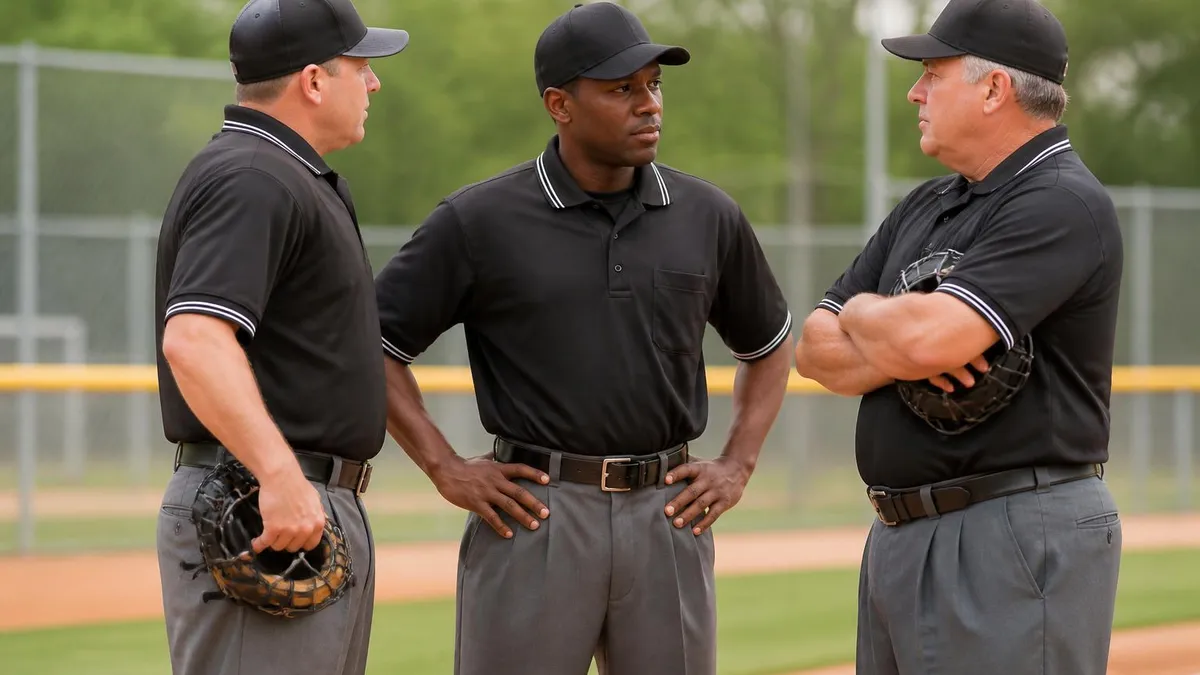
Mechanics — the physical positioning and signaling — also vary slightly between levels. Two-person crews dominate amateur ball. Three-person crews appear in upper varsity and most college regular season.
Four-person crews are standard for college regionals, super regionals, the College World Series, and all of professional baseball. Each crew size has its own rotation system for plays at third base, fly balls down the line, and trailing runners on extra-base hits.
The transition from two-person to three-person mechanics trips up nearly every umpire who promotes. Expect to attend a dedicated clinic before working your first three-person assignment.
Nearly every state high school association, college conference, and youth league now requires a background check, concussion awareness certification, and proof of liability insurance before assigning games. Budget 50-150 dollars for first-year setup. Many local umpire associations include insurance with annual dues, so joining your area chapter often costs less than going solo.
The insurance piece catches new umpires off guard. You might assume the school or league covers you. They do not, at least not for personal liability if a parent decides to file a lawsuit over an ejection or alleged misapplication of the rules.
Umpire associations carry blanket policies that cover their members for around 25-40 dollars per year as part of dues. Skip the membership and you skip the coverage. A single nuisance lawsuit can drain savings even when dismissed.
Concussion training is now mandatory in roughly 40 states for any official working sports where head contact is possible. Baseball qualifies because of foul tips off the mask, collisions at the plate, and the rare line drive that catches a base umpire in the head.
The training is online, takes about 30 minutes, and renews every two years. Treat it as part of the licensing checklist alongside your rules exam.
Most state associations administer an annual closed-book or open-book test, usually 100 questions covering NFHS rules plus state-specific bylaws. Score 80% or higher to qualify for varsity assignments.
Score under 70% and you might find yourself limited to JV or sub-varsity work until the next testing cycle. Structured study pays huge dividends. The umpires who breeze through these exams treat them like a real test, with timed practice runs and flashcards on weird rule scenarios.
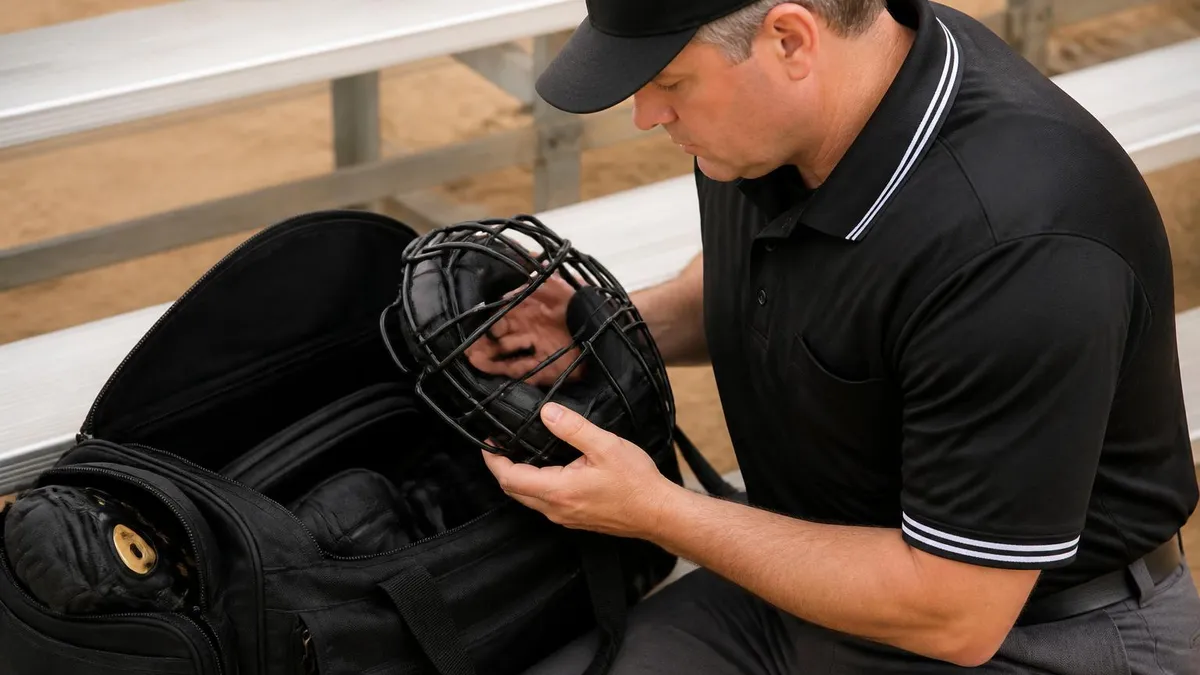
Year One Umpire Setup Checklist
- ✓Join your local umpire association (covers insurance, training, assignments)
- ✓Complete state-mandated background check and concussion training
- ✓Purchase plate gear: mask, chest protector, shin guards, plate shoes, indicator, brush
- ✓Buy base gear: black slacks, navy or charcoal shirt, ball bag, plate brush, indicator
- ✓Acquire current rulebook for your level (NFHS, NCAA, OBR, or Little League)
- ✓Read the rulebook cover to cover at least once before your first game
- ✓Attend a pre-season clinic — most associations require minimum 4-6 hours
- ✓Pass the annual rules exam at 80% or higher to qualify for varsity work
- ✓Schedule yourself for low-stakes early-season games to shake off rust
- ✓Find a mentor — a 5+ year veteran willing to review your mechanics on video
The mentor piece deserves emphasis. Umpires who progress fastest almost always cite a veteran who watched them work, recorded their plate stance on a phone, and walked through the game frame by frame afterward.
You cannot see yourself clearly while you are officiating. Your stance might be drifting closer to the catcher than you realize. Your timing on out calls might be rushing. Your strike-three mechanic might look like a half-hearted wave when you think it is crisp.
A mentor catches the things you cannot, then helps you build a deliberate plan to fix them before the next outing.
If your association does not pair you with a mentor automatically, just ask. Most veteran umpires love teaching the craft and will gladly meet for coffee, review your video, or even ride to games together.
Bring questions, bring humility, and bring beverages. The investment compounds. By season three, the umpires who built mentor relationships are visibly two levels above peers who tried to figure it out alone.
Umpire Pros and Cons
- +Side income that grows quickly — varsity plate jobs can pay 100+ per game in many states
- +Stay close to a sport you love without the time commitment of coaching
- +Build a tight-knit community of officials who become lifelong friends
- +Develop transferable skills: decision-making under pressure, conflict resolution, attention to detail
- +Flexible scheduling — you accept the games that fit your week
- +Clear progression path from rec to varsity to college if you want to climb
- −Verbal abuse from parents and coaches is real and persistent, especially at youth level
- −Significant up-front gear cost (400-800 dollars for quality plate gear)
- −Evening and weekend hours conflict with family time during spring and summer
- −Outdoor work in heat, cold, rain, and occasional lightning delays
- −Long drives to rural fields with little compensation for travel time
- −Annual rules exam and clinic attendance required to maintain status
Pros and Cons at a Glance
| Pros | Cons |
|---|---|
| Stay close to a sport you love without the time commitment of coaching | Verbal abuse from parents and coaches is real and persistent, especially at youth level |
| Build a tight-knit community of officials who become lifelong friends | Evening and weekend hours conflict with family time during spring and summer |
| Develop transferable skills: decision-making under pressure, conflict resolution, attention to detail | Outdoor work in heat, cold, rain, and occasional lightning delays |
| Flexible scheduling — you accept the games that fit your week | Long drives to rural fields with little compensation for travel time |
| Clear progression path from rec to varsity to college if you want to climb | Annual rules exam and clinic attendance required to maintain status |
The verbal abuse warning is not a scare tactic. Talk to any umpire association recruiter and they will tell you the number-one reason new officials quit after year one is parent behavior at youth games.
The mom who screams at you for missing a pitch on her 11-year-old. The dad who follows you to your car. The travel coach who treats every called third strike like a personal attack. It happens.
Not at every game, not even at most games, but often enough that you need a mental framework for handling it before your first season starts.
The frameworks veterans use boil down to three habits. First, never engage in real-time arguments about ball-strike calls — those are not protestable and not reviewable, and arguing them only validates the complainer.
Second, use a verbal warning protocol before ejection: ask the coach to stop, then warn formally, then eject if the behavior continues. Third, document everything immediately after the game in a notes app.
None of this is meant to discourage you. The vast majority of games have zero conflict. Coaches behave, parents cheer, players hustle, and you walk off the field tired but satisfied. By year three, most umpires have built such a thick skin that the rare problem coach just becomes a story to share later.
Umpire Questions and Answers
One last piece of advice from umpires who have been at it for decades: take your first season slow. Decline the tournament that promises eight games in two days. Skip the varsity assignment your assignor offers in week two because they are desperate to fill a slot.
Work the rec games, the JV games, the early-season scrimmages where coaches are still installing their lineups. Build your foundation on low-stakes innings where a missed call costs nothing.
By year two you will know your weaknesses. Maybe your strike zone drifts low when you get tired. Maybe you struggle with tag plays at first base. Maybe game management goes sideways when a coach pushes back twice in the same inning.
Those weaknesses become your offseason study list. Get clinic time on them. Get video on them. Get reps. By year three the weaknesses are strengths and you are ready for the next level of assignments.
The umpires who burn out are usually the ones who tried to skip steps — accepted varsity assignments in year one, took on tournament weekends before they were ready, or simply did not study the rulebook enough between games.
The umpires who thrive are patient. They treat the craft like any other skill: deliberate practice, honest feedback, gradual progression. Five years in, they are the ones calling regional tournaments, mentoring rookies, and quietly earning more in side income than they ever expected.
The job is what you make of it, and the ceiling is genuinely high for anyone willing to put in the work. Suit up, sharpen your rulebook, and get to work behind the plate.
Whatever path you choose, remember that every veteran umpire was once a rookie standing nervous behind home plate during their first scrimmage. The craft rewards persistence, study, and a willingness to learn from every game you work.
About the Author

Educational Psychologist & Academic Test Preparation Expert
Columbia University Teachers CollegeDr. Lisa Patel holds a Doctorate in Education from Columbia University Teachers College and has spent 17 years researching standardized test design and academic assessment. She has developed preparation programs for SAT, ACT, GRE, LSAT, UCAT, and numerous professional licensing exams, helping students of all backgrounds achieve their target scores.