
Umpire Gear: Complete Equipment Guide for Plate and Base Umpires 2026 October
Umpire gear guide: 🗨️ masks, chest protectors, shin guards, shoes, indicators. Brand picks (Wilson, Honig's), beginner vs pro kits, and cost ranges.
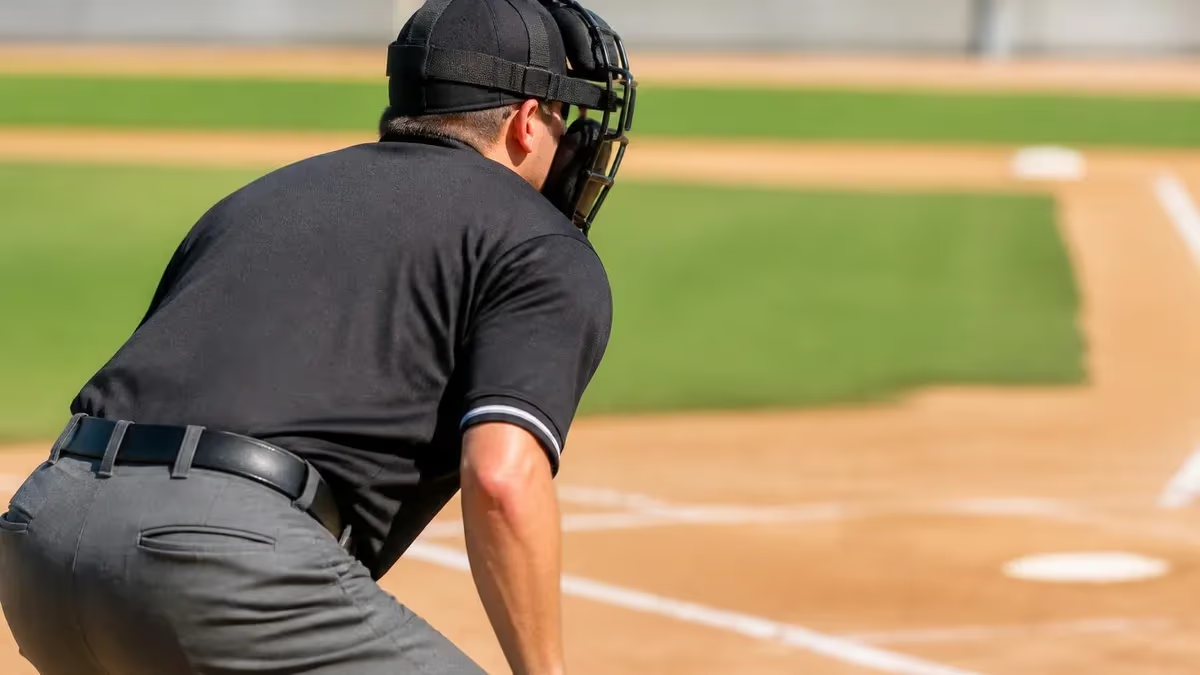
Umpire gear is the protective and professional equipment you wear when officiating baseball or softball games. It does two jobs at once. It keeps you safe from foul tips, line drives, and errant pitches. It also signals to coaches, players, and parents that you take the job seriously.
A new umpire showing up in tennis shoes and a t-shirt loses credibility before the first pitch. A seasoned umpire in clean navy pants, a polished mask, and proper plate shoes earns trust the moment they walk on the field. The right gear shapes how the game perceives you.
Gear splits into three buckets. Plate gear covers everything you wear at home plate. Base gear is lighter, built for moving fast and getting to the right angles. Accessories like indicators, ball bags, and plate brushes round out the kit.
The total cost ranges from about $250 for a beginner setup to $3,000 for a full professional package. If you're starting out, you don't need top-tier Wilson gear right away. You do need a safe mask, a real chest protector, decent shin guards, and proper plate shoes. Everything else can wait until you know you'll stick with umpiring.
A complete beginner umpire kit costs $250-$500 and includes a mask, chest protector, shin guards, plate shoes, indicator, and ball bag. Start with Champion Sports or Honig's starter packages. Don't buy used safety gear unless you can inspect it in person. Replace mask padding every 2-3 years and chest protectors every 5-7 years. Read the umpire definition page if you're new to the role and want to understand what's expected on the field.
Let's talk about plate gear first because that's where the danger lives. The face mask is the single most important piece of equipment you own. Foul tips off a high school or college hitter can reach 90+ mph, and the mask is what keeps your teeth in your head.
Traditional masks use steel bars in a hollow-bar or solid-bar design. Hollow bars are lighter. Solid bars are heavier but absorb more energy. The Wilson MX2D Magnesium mask is the gold standard for pros, weighing around 18 ounces with excellent visibility.
Expect to pay $200-$300 for a Wilson magnesium model. Honig's masks run $100-$200 and last for years. Champion Pro masks at $50-$100 work fine for beginners and youth ball. Pick the price tier that matches how many games you'll work each year.
Whatever mask you pick, make sure it has a throat protector. The dangling extension below the chin is non-negotiable. Catcher's interference and ricochets off the dirt come up at the throat constantly.
Check the chin cup padding too. Foam should be firm, not mushy. Replace mask padding every 2-3 years or sooner if you see compression. A mask that fits loose will rattle when you take contact, and that's how you get knocked out cold.
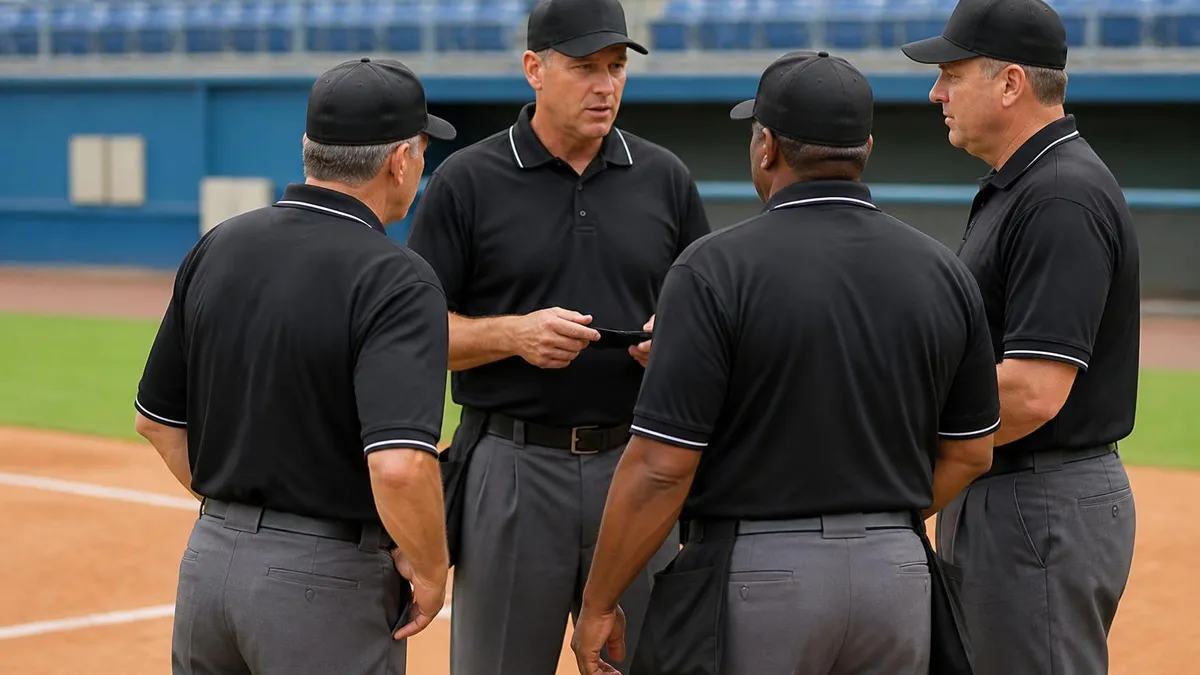
Plate vs Base vs Beginner Kit
The plate umpire stands behind the catcher and takes every foul tip, wild pitch, and bounce-back. Your full kit includes a face mask with throat guard ($50-$300), a chest protector or CP ($80-$300), shin guards ($60-$200), plate shoes with reinforced toe caps ($80-$200), navy or charcoal plate pants ($30-$80), an umpire shirt ($30-$60), a cap with adjustable brim ($20-$50), an indicator ($10-$30), a ball bag holding 6+ baseballs ($20-$50), and a plate brush ($5-$15). Expect to spend $400-$1,500 on a full plate setup depending on quality tier.
The chest protector, or CP, is the next big purchase. It covers your sternum, ribs, shoulders, and upper abdomen. Foam-based protectors are flexible and let you move freely, which matters when tracking pitches and reacting to foul balls.
Hard-plate CPs absorb more impact but feel stiff. Most working umpires prefer foam with reinforced plates over the heart and sternum. The Wilson WTA3000 is the industry standard at $150-$250. It fits well, breathes in summer heat, and lasts five to seven years with regular use.
Honig's chest protectors run $100-$200 and hold up nearly as well. Champion Sports CPs at $80-$120 work for amateur ball but compress faster. If you're paying out of pocket on a tight budget, Champion will get you on the field safely. Plan to upgrade in year two or three.
Fit matters more than brand. A CP that's too small leaves your ribs exposed. One that's too large slides around and shifts during a swing. Check the strap system before buying. Adjustable shoulder straps and a wide waist belt keep the protector snug without restricting your breathing.
Try squatting in it before you commit. If you can't get into the slot comfortably, it's the wrong size. Many companies offer women's-cut CPs now, with a tapered fit through the chest. Don't ignore that option if a standard CP doesn't sit right on your frame.
Top Umpire Gear Brands at a Glance
- Price Range: $$$ (Premium)
- Best Known For: MLB-licensed gear, MX2D mask, WTA3000 CP
- Durability: 5-10 years on safety gear
- Best For: College, pro, committed amateur umpires
- Price Range: $$ (Mid-range)
- Best Known For: Umpire-specific brand, full kits, indicators
- Durability: 4-7 years on safety gear
- Best For: High school, intermediate umpires
- Price Range: $ (Budget)
- Best Known For: Affordable starter kits, youth gear
- Durability: 2-4 years on safety gear
- Best For: Beginners, Little League umpires
- Price Range: $$ (Mid-range)
- Best Known For: MU460 plate shoes, MU950 base shoes
- Durability: 1-2 seasons depending on use
- Best For: All levels — industry-standard footwear
Shin guards finish the protective stack. Your knees and shins take more hits than you'd expect, mostly from foul balls bouncing off the dirt and catchers backing into you. Skimp here and you'll feel it within the first few innings.
Wilson Pro Tour shin guards run $150-$200 and have replaceable straps, which extends the life of the gear by years. Honig's mid-range shin guards at $100-$150 cover most needs. Champion shin guards at $60-$100 work for beginners but the straps wear out fast.
Length matters. Short shin guards stop at the top of the calf and feel lighter. Long shin guards extend up to the knee cap and protect more area. Most umpires running modern stances prefer mid-length for the balance of mobility and coverage.
Check the knee cap design before buying. A floating knee cap that pivots with your leg lets you crouch deep into the slot without the guard digging into your thigh. Fixed knee caps are cheaper but uncomfortable in long games.
Replace shin guards every 3-5 years or when the foam stops bouncing back after pressure. Cracked plastic is a warning sign. Once the shell breaks, the impact protection drops fast and you're one foul ball away from a hospital visit.
Umpire Shoes by Position
Plate shoes have a reinforced toe cap, usually steel or hard plastic, that protects your feet from foul balls and bouncing baseballs. They also have ankle support and a low profile that lets you set in the slot without rolling. The Reebok ProUmpire, New Balance MU460, and Wilson plate shoes are the three most common picks. Expect $80-$200. New Balance MU460 is the most popular at high school and college levels because it fits a wide range of foot shapes and breaks in fast. Don't wear tennis shoes behind the plate. One foul ball off the laces and you'll never make that mistake again.
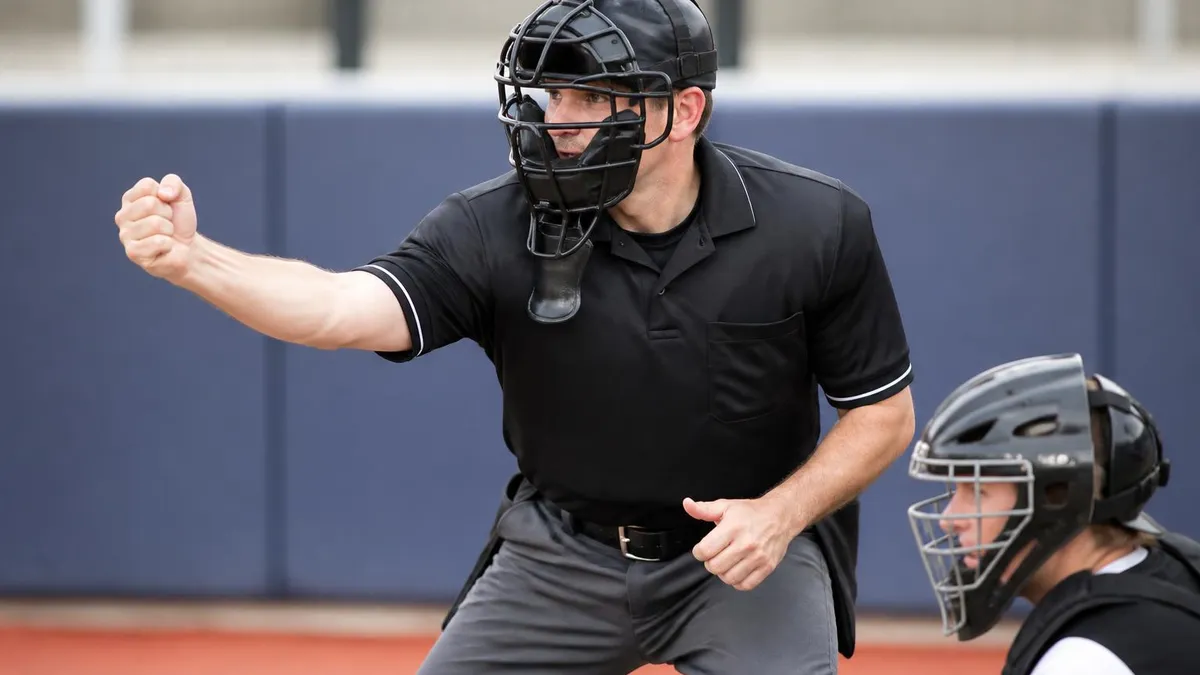
Indicators and ball bags are the small stuff that makes a big difference. The indicator is the click-counter you hold in your non-throwing hand to track balls, strikes, outs, and innings. It looks simple, but you'll touch it more than any other piece of gear during a game.
A 3-dial Wilson indicator handles balls, strikes, and outs and costs $10-$15. A 4-dial adds inning count and runs $20-$30. Get the 4-dial if you work games where you might lose track of innings, which is every game, eventually.
Hold the indicator in your left hand if you throw right, and vice versa, because the ball bag goes on your throwing side. Mixing them up is a beginner mistake that slows down ball retrieval and looks awkward to coaches and scouts watching from the dugout.
Ball bags clip to your belt and hold spare baseballs for replacement. Most plate umpires carry 6-8 balls. Some prefer two bags, one on each hip, for balanced weight. Wilson two-tone bags are the standard at $20-$30.
Make sure the bag sits high enough that it doesn't bounce against your thigh when you run. A low-slung bag throws off your gait and looks unprofessional. For more on what umpires actually carry in the big leagues, check our MLB umpire overview for the full pro-level breakdown.
Umpire Gear Cost Breakdown
Pants, shirts, and caps make up the uniform side of the gear. NFHS high school standards typically call for navy or charcoal grey pants and a polo or button-down umpire shirt in matching navy, light blue, or red. Check your state association handbook before buying so you match the local color code.
Plate pants are heavier with a relaxed cut to fit over shin guards. Base pants are lighter and more athletic. Expect $30-$80 for plate pants and $25-$60 for base pants. Smitty and Honig's make most of the umpire-specific pants you'll see on the field.
Shirts run $30-$60. Buy two or three so you always have a clean one for a doubleheader. Coaches notice when an umpire shows up in a sweat-stained shirt for the second game, and that perception can shape how they argue close calls all afternoon.
Caps are simpler. A six-stitch combo cap or a four-stitch base-only cap in black or navy covers most associations. Many state associations and Little League require specific patches on the cap or sleeve. Check with your local umpire coordinator before buying.
An adjustable cap is more useful than fitted because layering for cold weather changes your head size. For the latest changes in pro uniform standards and rule interpretations, our umpire news hub tracks updates from MLB, NCAA, and NFHS each season.
Buying Used Umpire Gear
- +Saves 30-50% off new gear prices
- +Good for non-safety items like indicators, ball bags, and shoes
- +Retiring umpires often sell complete kits cheap
- +Eco-friendly and reduces gear waste
- +Lets you upgrade brands you couldn't afford new
- −Cracked masks or compressed CP foam can fail under impact
- −Hidden damage in plastic shells isn't always visible
- −No warranty or return policy on private sales
- −Sizing is tricky without trying gear on first
- −Used shoes may have worn-out toe protection
Pros and Cons at a Glance
| Pros | Cons |
|---|---|
| Good for non-safety items like indicators, ball bags, and shoes | Cracked masks or compressed CP foam can fail under impact |
| Retiring umpires often sell complete kits cheap | Hidden damage in plastic shells isn't always visible |
| Eco-friendly and reduces gear waste | No warranty or return policy on private sales |
| Lets you upgrade brands you couldn't afford new | Sizing is tricky without trying gear on first |
Softball umpire gear overlaps a lot with baseball gear but has some real differences worth knowing. Softball masks tend to have wider eye holes for better visibility on the smaller ball at closer plate distances. The faster reaction window matters more in fastpitch than in baseball.
Fastpitch softball plate distances of 43 feet mean shorter shin guards work better. Long guards bang against the catcher when you're set in the slot. Ball bags carry only 2-3 softballs since you don't switch as often. The chest protector is similar to baseball but some fastpitch umpires prefer a slightly lighter CP for faster reaction time.
NCAA softball and USA Softball both publish approved gear lists that govern what you can wear in sanctioned games. Always check those before showing up to a tournament. Showing up with non-approved gear can get you sent home or pulled from the rotation, and that's a wasted weekend and a damaged reputation.
Youth umpire gear is another category. Little League umpires working ages 9-12 can use smaller masks and youth-sized CPs from Champion or All-Star. Don't put a kid umpire in adult gear. It'll be too heavy, too loose, and unsafe.
Check the manufacturer's sizing chart against the umpire's height and chest measurement. If you're planning to take the next step in your umpiring career, our umpire certification test walks through what's required for state and national certifications.
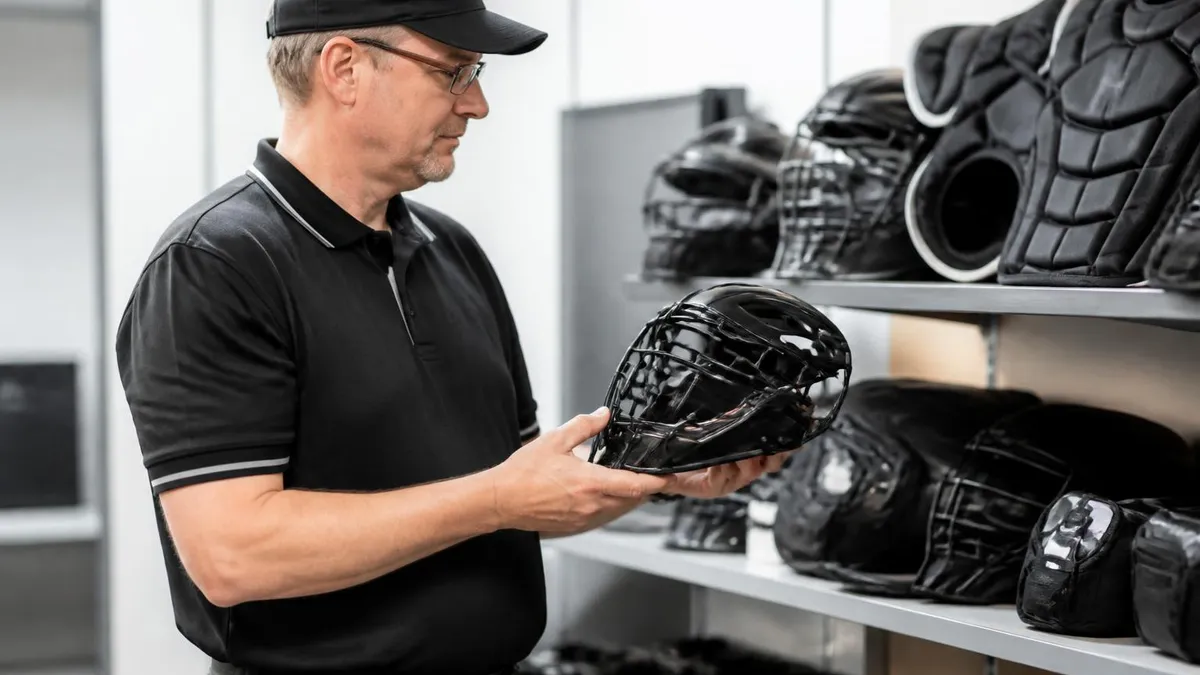
Inspecting Used Gear Before You Buy
- ✓Check the mask for cracks, dents, or bent bars — replace it, don't buy
- ✓Press into the chest protector foam — it should bounce back fully
- ✓Examine shin guard plastic shells for stress fractures
- ✓Check all straps for fraying, broken buckles, or stretched elastic
- ✓Smell the gear — mildew means it was stored wet and the foam may be compromised
- ✓Try on shoes and walk in them — confirm no toe-cap collapse
- ✓Verify indicator dials click cleanly without sticking
- ✓Inspect ball bag stitching and clip for wear
Maintenance keeps gear safe and extends its life. After every game, wipe down the mask with a damp cloth. Sweat eats into padding and straps faster than you'd expect. Air-dry the chest protector and shin guards before stowing them.
Don't toss wet gear into a sealed bag. Mildew kills foam in a season. Once a month, hand-wash the CP cover and shin guard sleeves with mild soap. Don't machine-wash protective gear unless the manufacturer says it's safe. Replace mask use straps when the elastic starts to lose tension, usually every 1-2 years for active umpires.
Storage matters too. Hang your CP and shin guards on a rack instead of stuffing them into a duffel. Foam compresses if it's pressed flat for months, and compressed foam doesn't absorb impact the same way.
Keep masks in a dedicated mask bag with the throat guard up. Store shoes with cedar inserts or newspaper to absorb moisture. Keeping gear dry and shaped between games is the cheapest way to add years to its life.
If you work outdoors year-round, expect to replace plate pants and base pants every 2-3 seasons. The knees and seat wear through from the squat-and-stand cycle faster than the rest of the gear. Track your replacement cycle on a simple calendar so nothing surprises you mid-season.
Umpire Gear Investment Path
Year 1: Starter Kit ($250-$500)
Year 2: Upgrade Mask + CP ($300-$500)
Year 3-4: Pro Shoes + Shin Guards ($300-$500)
Year 5+: Full Pro Setup ($500-$1,500)
Where you buy matters too. Umpire-Empire.com and Honig's.com are the two biggest dedicated umpire retailers in the US. Both stock the full range of Wilson, Honig's, Champion, New Balance, and Smitty gear, and both ship fast.
Wilson.com sells direct but is pricier and slower. Amazon carries some umpire gear but watch out for knockoffs and sellers who don't list size charts properly. DICK's Sporting Goods carries basics like indicators and ball bags but rarely stocks plate-quality safety gear.
For used gear, Facebook Marketplace and umpire forums are your best bets. Retiring officials often sell complete kits at 40-60% off retail. Ask around at your local association meetings too. Word-of-mouth deals are common and you can inspect the gear before paying.
Tax-wise, if you're paid for umpiring, all your gear is a deductible business expense. Save receipts and track mileage to games. The IRS treats umpiring income as self-employment, so you'll file a Schedule C and write off the gear, uniform cleaning, training fees, and travel costs.
For a deeper study of the official rules and field mechanics behind the gear, our umpire wound care practice test PDF is a solid review tool before your next exam or training session. Pair gear shopping with study time and you'll see results on the field fast.
Never reuse a face mask that has been hit hard enough to dent or crack. Even small structural damage drops impact protection. The same goes for chest protectors that have visible cracks in internal plating or compressed foam sections. Safety gear has a service life — replace it when the manufacturer says, not when it falls apart. Cutting corners on protective equipment is how umpires end up with concussions, fractured ribs, and broken jaws. If in doubt, throw it out and buy new.
Sample Umpire Certification Practice Questions
Try these questions from our free Umpire Certification practice tests. The correct answer and an explanation follow each question.
How does a base umpire properly signal that a runner is safe?
- A. Raise both hands above the head with fists clenched
- B. Extend both arms outward horizontally with palms down and call 'Safe!'
- C. Point both index fingers downward toward the base
- D. Clap hands twice above the head
Answer: B. Extend both arms outward horizontally with palms down and call 'Safe!'
The safe signal involves extending both arms outward horizontally with palms facing down, accompanied by the verbal call 'Safe!' to confirm no out was made.
How should an umpire signal interference?
- A. Wave both arms above the head and call 'Interference!'
- B. Point at the player who interfered and call 'That's interference!'
- C. Blow a short whistle blast and hold up one finger
- D. Cross both arms in an X-shape at chest level
Answer: B. Point at the player who interfered and call 'That's interference!'
The umpire points at the offending player and clearly calls 'That's interference!' to identify who committed the violation and remove any ambiguity.
When an umpire calls 'Time,' what is the proper hand signal?
- A. Point both index fingers to the sky and hold them
- B. Raise both hands above the head with palms facing outward
- C. Cross both arms at the wrist and hold them up
- D. Raise one hand with the index finger pointing up
Answer: B. Raise both hands above the head with palms facing outward
The Time signal requires raising both hands above the head with palms facing outward while calling 'Time!' to clearly stop play.
What code compliance requirement applies to equipment operation?
- A. Codes are guidelines, not requirements
- B. All work must comply with applicable local, state, and national codes
- C. Code compliance only matters for commercial projects
- D. Follow codes only when inspectors are present
Answer: B. All work must comply with applicable local, state, and national codes
Code compliance is mandatory for all work, ensuring safety, quality, and legal adherence.
Umpire Gear Questions and Answers
Bottom line: start small, buy quality safety gear, and upgrade as you grow into the role. A new umpire doesn't need a $300 magnesium mask or a $250 Wilson WTA3000 CP. They need a mask that fits, a CP that covers the sternum, shin guards that don't crack, and shoes that protect the toes.
That's it. Add pants, shirts, caps, and the smaller accessories as the season progresses. After two years, you'll know which pieces feel right and which need an upgrade. After five years, you'll have the full pro-level kit if you've stayed with it.
Umpiring rewards patience and good habits, and your gear should match that approach. Buy once, buy right where it counts, and don't chase the most expensive option just because a pro wears it. Fit, comfort, and safety beat brand prestige every time you step on the field.
One last tip: talk to veteran umpires in your association before you buy anything. They've made every gear mistake and they'll save you hundreds of dollars in trial-and-error spending. Most are happy to walk you through their kit between innings or at a clinic.
Ask about local repair options too. Some umpires fix straps, replace foam pads, and re-stitch ball bags themselves, which extends gear life by years. Build those relationships early and umpiring becomes cheaper and more enjoyable as the seasons roll by.
First-Season Habits That Save Money
- ✓Keep a written purchase log: brand, price, date, durability notes
- ✓Don't buy everything at once — spread purchases across two or three months
- ✓Test each piece in a live game before adding the next item
- ✓Borrow gear from veteran umpires for a doubleheader to test fit
- ✓Attend association clinics and ask veterans what they wish they'd bought first
- ✓Use loaner gear closets while you finalize your long-term kit
Keep a written log of every purchase you make in your first three seasons. Note the brand, the price, the date, and how the gear held up. You'll spot patterns fast: which brands last, which fail, and where your money goes furthest. That log turns into a tax record at year-end too, which makes Schedule C filing painless.
One more piece of advice for new umpires building a kit: don't buy everything at once. Spread the purchases across two or three months so you can test each piece in a live game before adding the next. A mask that feels great in the living room can ride up on your nose during a fastball. A CP that fits standing up can pinch your ribs in the slot.
The umpire community is small and welcoming. Veterans want new officials to stick around because every league is short on umpires, especially at the youth and high school level. Lean on that network. Ask questions, attend clinics, and don't be afraid to admit when something isn't working.
Finally, remember that gear is a tool, not a costume. The best mask in the world won't fix bad mechanics or a poor strike zone. The most expensive shoes won't get you to the right base-running angle. Use the gear to do the job, but spend most of your energy on the skills that actually matter: positioning, timing, voice, and judgment.
Gear sets the stage. You still have to call the game. Take care of your equipment, treat it like the investment it is, and it'll take care of you across hundreds of innings. Replace what wears out, upgrade where it counts, and resist the urge to chase every new product release. The basics haven't changed in decades because they work.
Whether you're calling Little League on a Saturday morning or working a high school playoff under the lights, the same kit principles apply: protect your head, your chest, and your shins, wear shoes that fit the position, and dress like you belong there. Do that consistently and the rest of the job gets easier season after season.
About the Author

Educational Psychologist & Academic Test Preparation Expert
Columbia University Teachers CollegeDr. Lisa Patel holds a Doctorate in Education from Columbia University Teachers College and has spent 17 years researching standardized test design and academic assessment. She has developed preparation programs for SAT, ACT, GRE, LSAT, UCAT, and numerous professional licensing exams, helping students of all backgrounds achieve their target scores.