
Umpire: What It Means, Types, and How to Get Certified 2026 October
🎯 Learn what an umpire is, the types across different sports, what the job involves day-to-day, and how to get umpire certified at any level.
Umpire: What It Means, Types, and How to Get Certified
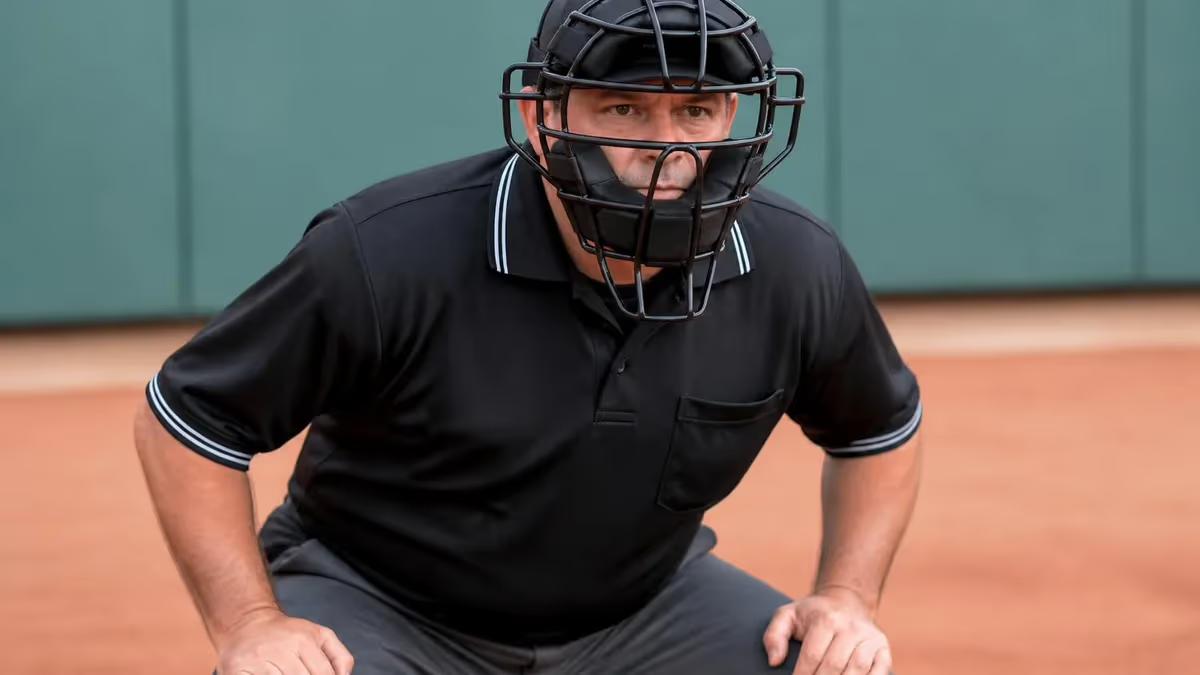
An umpire is an official who enforces the rules of a sport or competitive event during play. The word comes from the Old French nonper, meaning "not equal" — a third party who's neither competitor. In practice, umpires watch the action, make calls, resolve disputes, and ensure both sides play by the same rules. Without them, organized competition breaks down fast.
The title is common in baseball, tennis, cricket, softball, and field hockey — though the specific duties and authority vary considerably by sport. In baseball, the home plate umpire makes ball/strike calls and rules on close plays; in tennis, the chair umpire oversees an entire match from a raised seat; in cricket, two on-field umpires work together and can appeal decisions to a third umpire reviewing video. Same job title, very different responsibilities.
People often ask whether umpires and referees are the same thing. They're not — though both are game officials, the terms are sport-specific. Baseball, tennis, and cricket use "umpire." Football, basketball, and soccer use "referee." There's no functional difference in authority, just convention. Calling a baseball umpire a referee will get you a sideways look in most dugouts.
If you want to learn what the role actually entails — from umpire roles and responsibilities to the certification path — this guide covers the full picture. Whether you're curious about the profession, coaching youth sports, or actively working toward certification, knowing the terrain before you start saves a lot of confusion.
The good news: entry-level umpiring doesn't require years of experience or a steep financial investment to start. Most sports have accessible certification paths for beginners. What it does require is a genuine commitment to learning the rules, developing consistent mechanics, and being willing to take criticism — because every game you work is a chance to get better, and the officials who advance fastest are the ones who treat it that way.
- Role: Neutral official who enforces sport rules during competition
- Common sports: Baseball, softball, tennis, cricket, field hockey
- Entry level: Youth/recreational leagues — minimal training required
- Certification: Required for sanctioned and competitive play; varies by sport and governing body
- Pay range: $15–$25/game (youth) to $120K–$350K+ (MLB umpires)
- Key skills: Rule knowledge, positioning, quick judgment, conflict de-escalation
How to Become a Certified Umpire
Learn the Rulebook
Complete a Certification Course
Pass the Written Exam
Complete On-Field Evaluation
Register with Your Association
Work Games and Advance
Types of Umpires by Sport
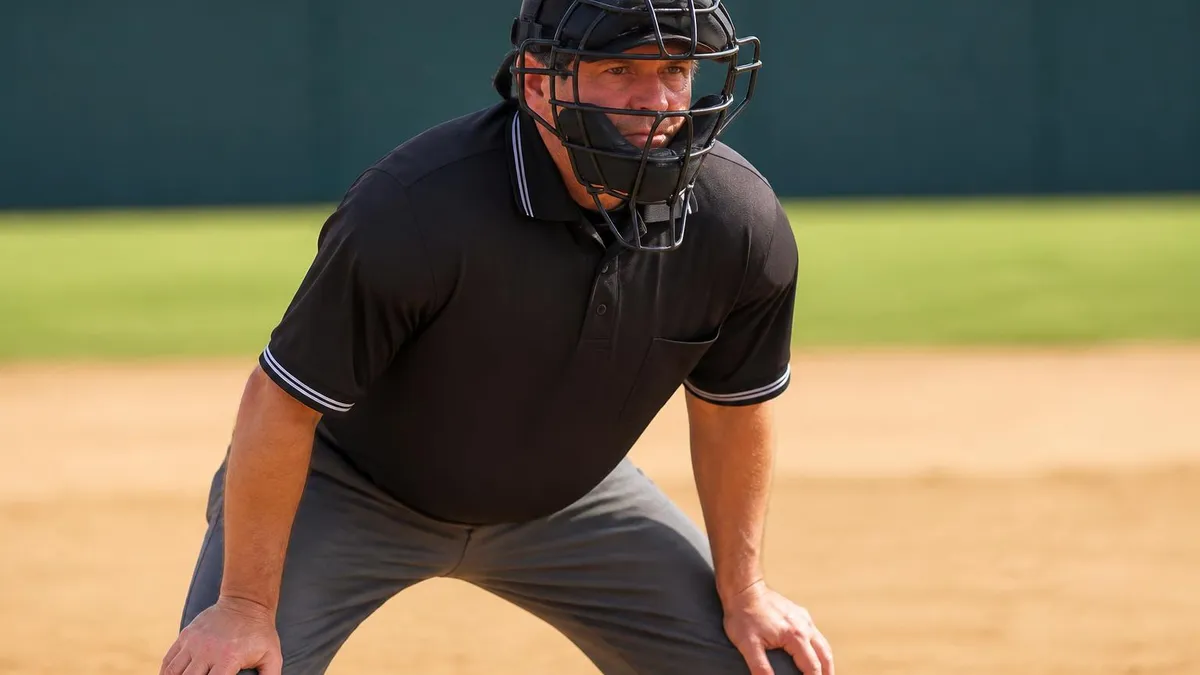
Baseball umpires work in crews of one to six depending on the level of play. Youth and recreational leagues typically run single-umpire games — one person covers everything, which is genuinely hard. High school varsity games use two. College games use three. Major League Baseball uses four regular season, six in the playoffs. Each position in the crew has a defined zone of responsibility, and umpires rotate positions between games. The plate umpire rotates too — nobody works behind the dish all week.
Tennis uses a different structure. The chair umpire sits above the net post and has overall authority: they call the score, issue warnings, and can overrule line calls in some formats. Line umpires cover specific zones of the court — service box, baseline, sideline — and call faults and outs. At major tournaments, Hawk-Eye electronic line calling has replaced many line umpires, but the chair umpire remains essential and can't be replaced by technology. Good umpire game management — knowing when to intervene and when to let play flow — is a skill that separates average officials from excellent ones.
Cricket umpires stand at either end of the pitch and share responsibility. The on-field umpire at the bowler's end rules on LBW (leg before wicket) appeals, no-balls, and wides. The square leg umpire watches for run-outs and stumpings at their end. Since 2009, the Decision Review System (DRS) allows teams to challenge on-field calls — a third umpire reviewing video footage makes the final ruling on referrals. It's the most technologically complex officiating structure in major sport.
Softball umpiring is structured similarly to baseball but with distinct rule differences — underhand pitching, a larger ball, shorter base paths — that require separate training even for experienced baseball umpires. Field hockey, which also uses the term "umpire" instead of referee, employs two officials who each control one half of the field and coordinate on calls near the centerline. Each sport has its own certification body, so umpires who want to cross over to a different sport need sport-specific training regardless of their experience elsewhere.
Umpire Certifications by Sport
- Governing Body: USA Baseball, state associations, NFHS, NCAA
- Entry Path: Local clinic, written exam, on-field evaluation
- Pro Track: Minor League development camps → MLB evaluation
- Pay (entry): $15–$40/game at youth/HS level
- Governing Body: USA Softball, ASA, NFHS for high school
- Entry Path: USA Softball certification clinic and exam
- Key Difference: Separate rulebook from baseball — cross-over training required
- Pay (entry): $15–$35/game
- Governing Body: ITF, USTA (US), national tennis federations
- Entry Path: USTA certification; ITF Badge for international levels
- Levels: Club → Regional → National → ITF Bronze/Silver/Gold/Platinum
- Pay (entry): Volunteer at local level; paid at higher tournaments
- Governing Body: ICC (international), national cricket boards
- Entry Path: ECB (England), CA (Australia), or national board courses
- Elite Level: ICC International Panel and Elite Panel
- Pay (entry): Volunteer for club cricket; paid at county/state level
Umpire Duties Across Game Situations
- Review the rulebook and any local ground rules specific to the venue
- Inspect equipment (balls, bases, pitching rubber) for compliance
- Meet with both team managers for lineup exchange and ground rule review
- Confirm crew responsibilities and coverage zones (multi-umpire games)
- Arrive early — late arrivals are a red flag for evaluation purposes
The Certification Process in Detail
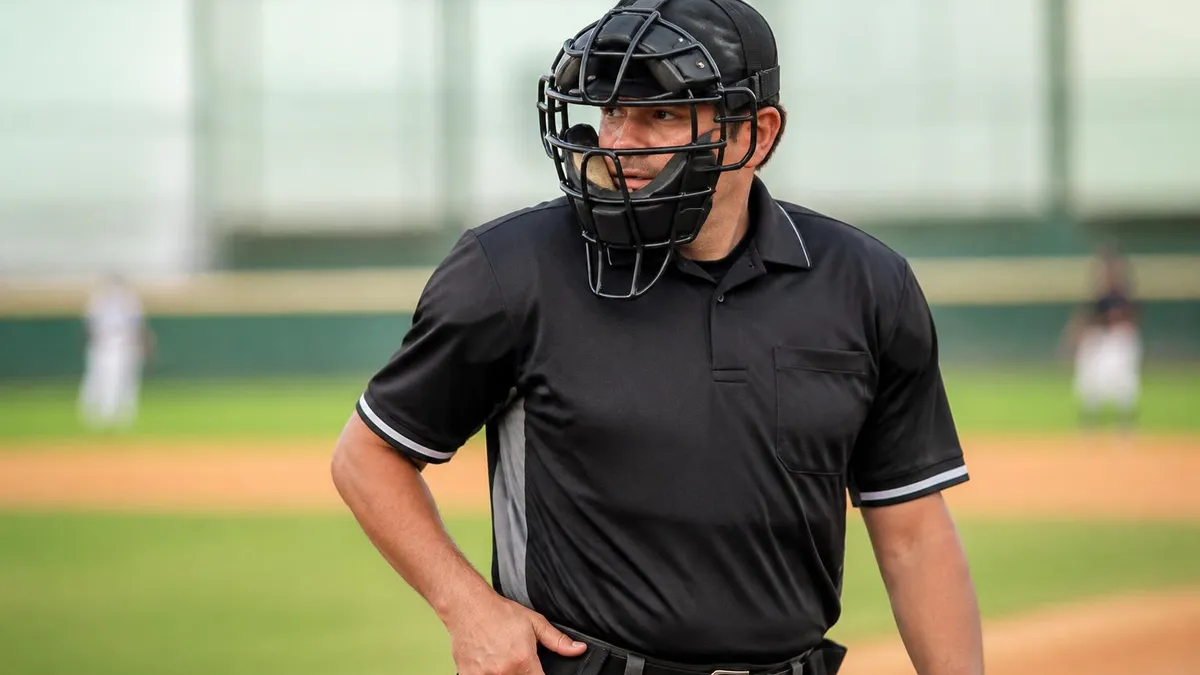
Certification requirements differ by sport and by the level you're targeting, but the common structure is: attend a clinic, pass a written exam, get evaluated on the field, and register with your association. For baseball in the US, most states run umpire associations affiliated with the relevant governing body — Little League, USA Baseball, NFHS for high school, NCAA for college. Each level has its own rules and certification expectations, and you generally need to be certified at the lower level before advancing.
The written exam is where most first-time umpires underestimate the preparation required. Baseball's rulebook is over 100 pages, filled with situational rules and exceptions that require interpretation, not just memorization. Questions like "runner on first, one out, batter hits a pop-up to shallow right, what are the infield fly rule conditions?" require you to reason through multiple conditions simultaneously under time pressure. Working through umpire certification practice questions — covering safety procedures, positioning mechanics, and rule applications — is a more effective study method than reading the rulebook cover to cover.
The on-field evaluation component varies significantly. Some associations send an evaluator to watch you work a real game and submit a written review. Others run dedicated evaluation days where candidates work simulated games. Either way, evaluators look for: correct positioning based on baserunners and game situation, timing of calls (calling too quickly is a major error — watch the play finish), signal clarity, communication with partner umpires, and composure under pressure. A technically perfect rules test score doesn't compensate for poor positioning during the evaluation.
For tennis, the USTA's certification path runs from Club Chair Umpire (entry level, local tournaments) up through Regional and National certification. The ITF's badge system extends internationally — Bronze, Silver, Gold, and Platinum badges representing progressively higher tour levels. Getting on Grand Slam court crews requires years of consistent evaluation at national and ITF events. It's a long track with clear milestones, which some officials find motivating and others find discouraging.
Annual recertification is also worth noting. Most associations require certified umpires to renew each year — attending a rules update clinic, passing an updated exam, or both. The rules of sport don't change dramatically from year to year, but they do change. Missing a rules update and applying the old interpretation in a game is embarrassing and preventable. Staying current with your association's renewal process is part of professional officiating at every level.
Before Your First Certification Exam
- ✓Download the official rulebook for your sport (OBR for baseball, ITF Rules for tennis, etc.)
- ✓Identify your state or regional umpire association and check their certification calendar
- ✓Complete any required online pre-clinic modules before attending in person
- ✓Study rule situations, not just definitions — exams test application, not recall
- ✓Watch game video from the umpire's perspective to learn positioning
- ✓Practice calling plays aloud (timing, signal, confidence) before your evaluation
- ✓Know the local ground rules specific to your area's venues
- ✓Prepare to accept criticism during on-field evaluation — it's part of the process
- ✓Arrange your own game attire per association uniform requirements before your first assignment
- ✓Register with your association before working any sanctioned games
Working as an Umpire
- +Flexible scheduling — work as many or as few games as your availability allows
- +Outdoor work during game season; active, non-desk environment
- +Pay at competitive levels is strong relative to the time commitment
- +Deep engagement with sport rules — umpires often know the game better than coaches
- +Clear advancement path from youth to scholastic to collegiate to professional
- +Strong community of fellow officials through association networks
- −Regular confrontation is part of the job — conflict avoidance is a liability
- −Physical demands: standing for hours, moving into position quickly on every play
- −Pay at entry level is modest — youth games often pay $20–$30 per game
- −Evening and weekend scheduling affects personal and family time
- −Mistakes are visible, immediate, and sometimes recorded on video
- −Advancement at the top levels is extremely competitive and slow
Pros and Cons at a Glance
| Pros | Cons |
|---|---|
| Flexible scheduling — work as many or as few games as your availability allows | Regular confrontation is part of the job — conflict avoidance is a liability |
| Outdoor work during game season; active, non-desk environment | Physical demands: standing for hours, moving into position quickly on every play |
| Pay at competitive levels is strong relative to the time commitment | Evening and weekend scheduling affects personal and family time |
| Deep engagement with sport rules — umpires often know the game better than coaches | Mistakes are visible, immediate, and sometimes recorded on video |
| Clear advancement path from youth to scholastic to collegiate to professional | Advancement at the top levels is extremely competitive and slow |
Umpire Pay and Career Paths
Pay varies dramatically by sport and level. At the youth and recreational level, most umpires earn $15–$40 per game — enough to cover gas and maybe dinner, not a living. High school varsity baseball umpires typically earn $60–$100 per game depending on state. College games pay $200–$500+ per game for experienced officials. And MLB umpires — who go through years of minor league development and formal evaluation — earn base salaries starting around $120,000, rising to $350,000 or more at the senior end. That number reflects decades of development, not a starting point.
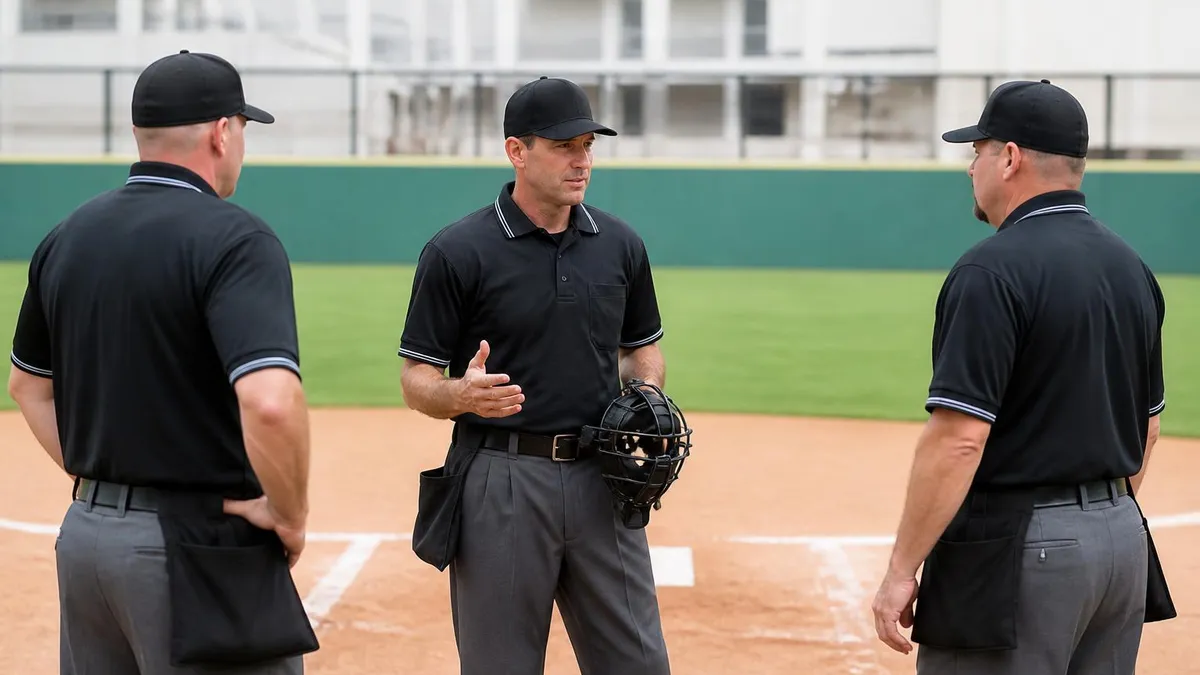
Career advancement in baseball umpiring follows a formal pipeline. After working at the youth and high school level, umpires who want to pursue a professional career need to attend a certified umpire school (currently operated by Minor League Baseball) and then work in the minor leagues under ongoing evaluation. It's genuinely competitive: there are roughly 300 Minor League umpires competing for 76 MLB spots, and attrition is slow because MLB umpires have strong job tenure protections. Most umpires who reach Triple-A and don't get called up eventually move into supervisory, instructional, or collegiate roles.
For tennis, the elite level is similarly selective. Court-level officiating at Grand Slams requires ITF Silver or Gold badge status, accumulated over years of evaluation across national and international events. Most tennis officials work locally or regionally for the entirety of their careers — which is sustainable since local club tournaments are common and the commitment is flexible. The umpire positioning and mechanics practice questions that appear in certification prep also map directly to the situational judgment evaluated at higher levels.
Outside baseball and tennis, cricket umpires on the ICC Elite Panel — there are typically 12 worldwide — earn full-time income from officiating international matches. But entry to that level requires years of first-class cricket officiating, strong DRS familiarity, and assessment by the ICC itself. For most cricket umpires, the work is local and volunteer, with expenses covered for travel to away matches.
Regardless of sport, umpires who advance tend to share a few traits: they study rules continuously rather than only when required, they seek feedback rather than avoid it, and they treat every game — regardless of level — as an opportunity to refine mechanics and judgment. The career track at the top is narrow, but the fundamentals that get you there are accessible from the very first game you work.
Umpiring by the Numbers
Umpire Signals, Positioning, and Game Management
Signals are the umpire's primary communication tool. They're standardized — strike (raised right fist, verbal "strike"), out (raised right fist, verbal "out"), safe (arms extended horizontally, verbal "safe"), fair/foul, time. But delivery matters as much as accuracy. A tentative signal — a halfway-raised fist, a mumbled call — invites argument. A clean, decisive signal delivered at full extension communicates confidence and discourages challenge. Umpires who hesitate on their signals get more arguments, not fewer, even when their call is correct.
Positioning is the part new umpires consistently underestimate. The right position isn't one spot — it changes with every pitch, baserunner configuration, and defensive alignment. The slot position (behind the plate, looking over the catcher's inside or outside shoulder depending on batter handedness) is the baseline, but umpires adjust based on the pitch expected and the catcher's setup.
For base umpires, pre-pitch positioning is based on baserunner location, and then "reading the ball" — tracking where the batted ball is going — triggers a move to the correct coverage position. Poor positioning leads to blocked angles, which leads to incorrect calls, which leads to avoidable arguments.
Game management — keeping the game moving, maintaining appropriate tempo, preventing confrontations from escalating — is the hardest skill to develop because it can't be fully taught in a classroom. It's judgment: knowing when to give a coach 30 seconds to vent before restating your call, knowing when to issue a warning before something becomes an ejection situation, knowing when to get partners together to discuss an appeal versus when to rule immediately. Working through the umpire code compliance practice questions gives you the rules foundation, but game management only sharpens through actual games worked over time.
Getting Started: Your Next Steps
If you're new to officiating, the fastest path to your first game is to contact your local umpire association and ask about the next clinic. Most state umpire associations run clinics in the late winter or early spring ahead of the baseball/softball season. Tennis clinics are offered year-round in most markets. A quick search for "[your state] umpire association" or "USTA [your region] officiating" will get you to the right registration page in most cases.
While you're waiting for a clinic, start with the rulebook. Download the official rules for your sport — they're free from the governing body's website — and work through the sections on play rules and situation rules. Don't try to memorize everything at once; understand the structure and logic first, then drill the specific situations that appear most often in games. Common situations (infield fly, interference, time plays, balk) show up repeatedly on certification exams and in real games.
Practice tests are a high-use study tool. They show you which rules you genuinely understand and which ones you think you know but actually don't — a distinction that only shows up when you try to apply the rule to a specific scenario rather than just recalling the definition. Work through as many as you can access before your exam, review the ones you miss carefully, and re-test on those specific situations until you're confident. That's the cycle — test, identify gaps, study, retest — and it's more effective than any other approach to rules preparation.
Once you're certified and working games, request feedback actively. Most associations have mentor programs or evaluators who can watch you work. The umpires who improve fastest are the ones who ask questions, accept criticism without defensiveness, and study their own game as seriously as they study the rulebook. That mindset — staying coachable after certification — is what separates officials who plateau at entry level from those who advance.
Don't overlook the social dimension of officiating. Local umpire associations are genuine communities — experienced officials who've seen every situation, mentors who'll work games alongside you and debrief afterward, a network that helps you get assigned to better games as your reputation builds. Showing up consistently, communicating reliably with your assigner, and working games with professionalism even at the lowest levels builds a reputation that compounds over time. The mechanics get refined in every game you work. The reputation — reliable, professional, genuinely knowledgeable — builds steadily between them, one assigned game at a time.
Sample Umpire Certification Practice Questions
Try these questions from our free Umpire Certification practice tests. The correct answer and an explanation follow each question.
What is the standard mechanic used by an umpire to indicate a strike?
- A. Raise the right hand in a fist motion and call 'Strike!'
- B. Point both index fingers upward and call 'Strike!'
- C. Wave both arms overhead and call 'Strike!'
- D. Clap hands together and call 'Strike!'
Answer: A. Raise the right hand in a fist motion and call 'Strike!'
The standard strike mechanic is to raise the right hand in a fist or punching motion while verbally calling 'Strike!' to communicate the call clearly.
What should an umpire prioritize during a conflict between players on the field?
- A. Ensure their own safety
- B. Mediate the conflict immediately
- C. Penalize both players without assessing the situation
- D. Prevent escalation and apply the rules impartially
Answer: D. Prevent escalation and apply the rules impartially
When conflicts arise, an umpire's priority is to de-escalate the situation and restore order on the field. This involves intervening promptly, assessing the actions of all involved, and applying the rules fairly and impartially to address any infractions. Their objective is to maintain control and ensure the game continues in a sportsmanlike manner, preventing further escalation.
What is the proper procedure when an umpire crew needs to confer on a ruling?
- A. The senior umpire has final authority and other umpires may not be consulted on any call
- B. Any crew member may request a conference and the crew confers to reach the correct ruling
- C. Only the plate umpire may initiate an umpire conference during a game
- D. Umpires may never change a ruling once it has been publicly announced
Answer: B. Any crew member may request a conference and the crew confers to reach the correct ruling
Any crew member may request a conference, and the crew should briefly confer to ensure the correct ruling is made — getting the call right is the priority.
What should an umpire do if a coach argues excessively about a decision?
- A. Ignore the coach and continue the game
- B. Engage in a prolonged argument with the coach
- C. Issue a warning or, if necessary, eject the coach
- D. Allow the coach to overrule the call
Answer: C. Issue a warning or, if necessary, eject the coach
Umpires must maintain control and authority during a game. While coaches can question calls, excessive arguing disrupts play and undermines the umpire's role. Issuing a warning is the first step to address such behavior, and if it persists, ejection is a necessary measure to restore order and ensure the game can proceed fairly and without undue interference.
Umpire Questions and Answers
About the Author

Educational Psychologist & Academic Test Preparation Expert
Columbia University Teachers CollegeDr. Lisa Patel holds a Doctorate in Education from Columbia University Teachers College and has spent 17 years researching standardized test design and academic assessment. She has developed preparation programs for SAT, ACT, GRE, LSAT, UCAT, and numerous professional licensing exams, helping students of all backgrounds achieve their target scores.