
Tarango Wife Slaps Umpire: The Infamous Tennis Umpire Incident and What It Reveals About the Job
🆕 Tarango wife slaps umpire — the full story behind the 1995 Wimbledon scandal and what it teaches about tennis umpire duties, training, and authority.
The phrase tarango wife slaps umpire is one of the most searched and remembered moments in tennis officiating history. During the 1995 Wimbledon Championships, American player Jeff Tarango walked off court in protest of chair umpire Bruno Rebeuh's calls, and his wife Benedicte famously slapped the umpire as he left the court. Nearly three decades later, the incident still anchors conversations about the pressure, authority, and human element of tennis umpiring at the highest level of the sport.
Tennis umpires operate in a uniquely exposed environment. Unlike baseball or basketball officials who work in teams with rotating positions, the chair umpire sits alone above the court, makes split-second calls on serves traveling over 130 mph, and manages two players whose careers often hinge on a single line call. The Tarango incident exposed every fragility in that system — the isolation, the player-official tension, and the public nature of every ruling.
For anyone studying to become a tennis official, understanding moments like the Tarango walk-off is essential. They illustrate the difference between calling a match and managing one. A great chair umpire enforces the rulebook, but more importantly, they read momentum, defuse confrontation, and protect the integrity of the event. The slap heard around Wimbledon became a case study taught in International Tennis Federation (ITF) certification courses and is still referenced in officiating clinics today.
This article walks through the full story of the 1995 incident, the disciplinary fallout for Tarango, the formal complaint process Bruno Rebeuh faced, and the broader lessons modern tennis umpires can extract from it. We'll also cover what tennis umpires actually do day-to-day, how the certification pathway works in the United States and internationally, what they earn at various levels, and how the role compares to baseball umpiring in terms of authority and decision-making cadence.
Whether you arrived here curious about a single viral moment or because you're genuinely considering tennis officiating as a career, you'll find concrete answers below. The job is more nuanced than the headlines suggest, the pathway is more accessible than most assume, and the skills required overlap heavily with other officiating disciplines — meaning experience in one sport can accelerate your progress in another.
We'll lean on official ITF, USTA, and Grand Slam rulebooks throughout, and tie the historical incident back to the actual mechanics of how chair umpires are trained today. By the end, you should understand not just what happened on Court 13 in 1995, but why it still matters in 2026 and what tennis officiating looks like in practice for the people who pursue it.
Finally, if you're preparing for any officiating exam, the comprehension skills tested overlap meaningfully across sports. Tennis-specific code-of-conduct knowledge, positioning, signaling, and game management all appear on multi-sport certification batteries. The Tarango case is a teaching tool precisely because it touches every one of those domains in a single televised episode.
Tennis Umpiring by the Numbers
The Tarango Wimbledon Walk-Off: Step by Step
First Set Tension Builds
Code Violation Escalation
The Walk-Off
The Slap
Fines and Suspensions
Officiating Reforms
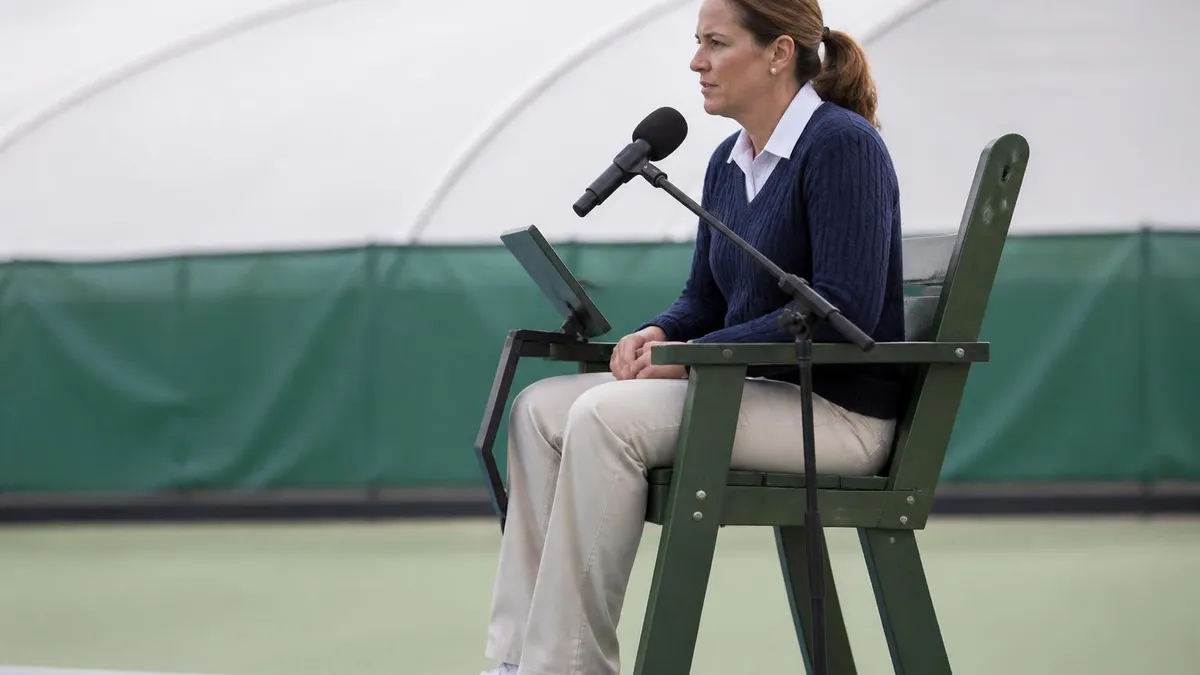
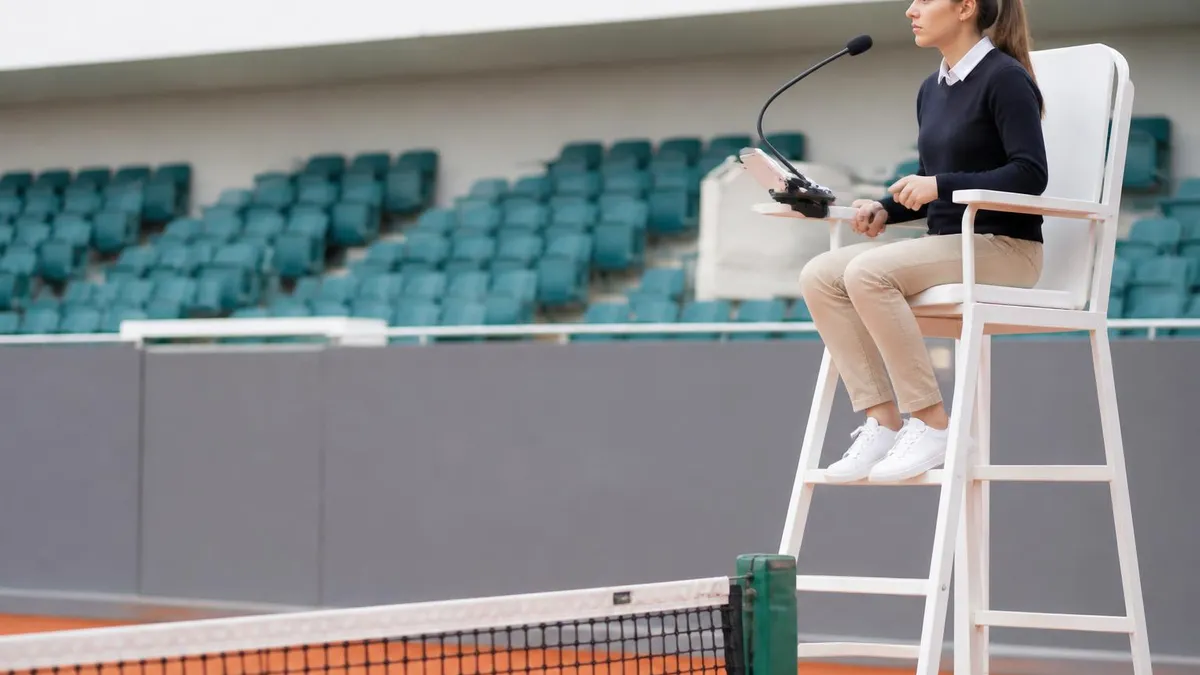
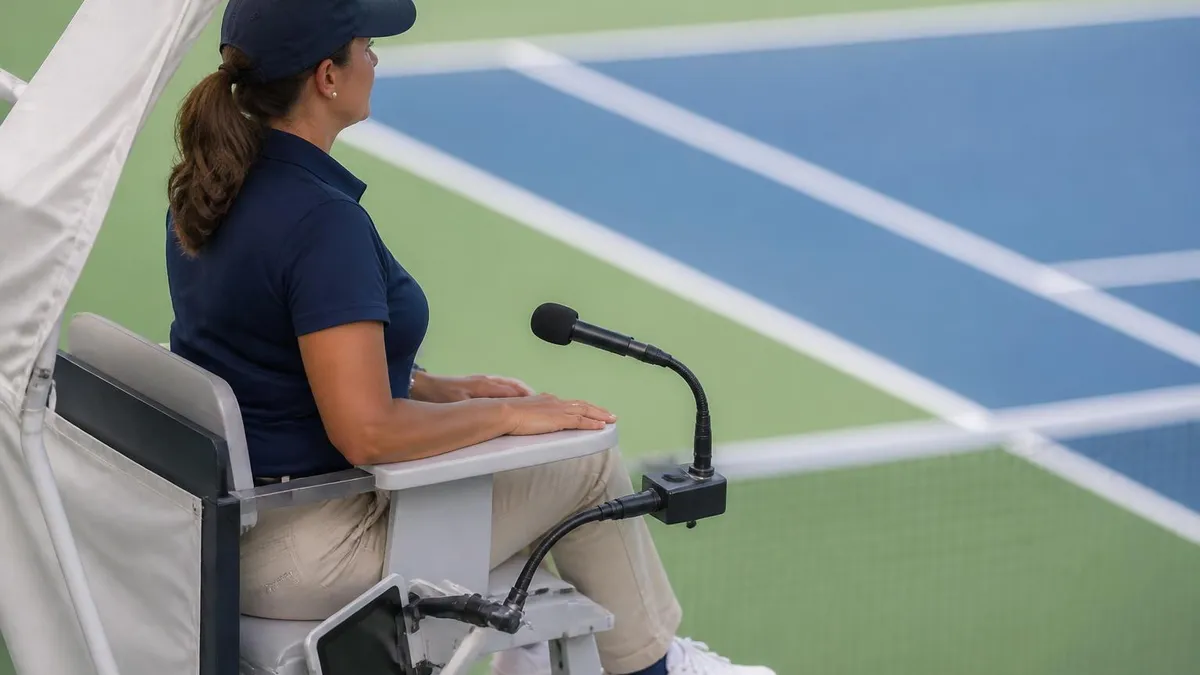
To understand why the Tarango incident still resonates, it helps to know exactly what a tennis umpire does. The chair umpire is the on-court authority for a single match. They sit elevated above the net, call the score after every point, overrule line judges when they have clear evidence of an incorrect call, enforce the code of conduct, manage time between points and changeovers, and ultimately decide when to escalate to a tournament supervisor. It is one of the most concentrated officiating jobs in any sport.
Tennis umpiring is layered. At the professional level, a single Grand Slam match can involve up to eleven officials — one chair umpire, nine line judges (or electronic line calling in modern stadiums), and a roving supervisor available for disputes. The chair umpire is the captain of that crew. They calibrate the team before the match, set expectations on signaling, and absorb the most direct contact with the two competing players. Communication clarity is non-negotiable.
Beyond calls, the chair umpire manages pace and tone. ATP and WTA rules permit 25 seconds between points and 90 seconds at changeovers. Enforcing those clocks consistently — without arbitrarily punishing one player — requires judgment. So does the foot-fault call, the let, the hindrance ruling, and the medical timeout authorization. Each of these has a written rule, but the application requires reading the moment, the surface, and the players' competitive intent in real time.
Off the court, tennis umpires file detailed match reports, debrief with supervisors, and study video. At every certification level, continuing education is mandatory. Officials are evaluated on their match files, on supervisor observations, and on player feedback collected anonymously through tour systems. A reputation for fairness — across years, not weeks — is what unlocks advancement to bigger tournaments and eventually Grand Slam main draws.
The job also requires physical stamina. A five-set match at the US Open can run over five hours in 90-degree heat. The umpire cannot leave the chair except during set breaks. Hydration, sun protection, and concentration management are professional disciplines. Many career umpires report needing 24 hours to fully recover after a marathon match, much like the players themselves. This often-overlooked physical demand shapes the kind of person who succeeds long-term in the chair.
Finally, tennis umpires increasingly partner with technology. Hawk-Eye and Electronic Line Calling Live now handle line decisions at most tour-level events, freeing the chair to focus on code of conduct, time management, and player interaction. But the human role has actually grown more — not less — important. When technology handles the easy calls, every remaining decision is harder, more visible, and more likely to draw the kind of confrontation Bruno Rebeuh faced in 1995.
If you're considering the path, the work is rewarding but demanding. The skills overlap with other officiating roles, which is why many tennis chair umpires also hold certifications in volleyball, badminton, or other net sports. Understanding the broad principles of officiating — neutrality, decisiveness, communication — translates everywhere. For those interested in another sport entirely, the path to becoming an MLB umpire follows a different but parallel structure of badges, evaluations, and advancement.
Umpire Practice Test Questions
Prepare for the Umpire Certification exam with our free practice test modules. Each quiz covers key topics to help you pass on your first try.
Umpire Game Management
Umpire Exam Questions covering Game Management. Master Umpire Test concepts for certification prep.
Umpire Positioning and Mechanics
Free Umpire Practice Test featuring Positioning and Mechanics. Improve your Umpire Exam score with mock test prep.
Umpire Roles and Responsibilities
Umpire Mock Exam on Roles and Responsibilities. Umpire Study Guide questions to pass on your first try.
Umpire Rules of the Game
Umpire Test Prep for Rules of the Game. Practice Umpire Quiz questions and boost your score.
Umpire Certification Code Compliance
Umpire Questions and Answers on Certification Code Compliance. Free Umpire practice for exam readiness.
Umpire Certification Environmental Standards
Umpire Mock Test covering Certification Environmental Standards. Online Umpire Test practice with instant feedback.
Umpire Certification Equipment Operation
Free Umpire Quiz on Certification Equipment Operation. Umpire Exam prep questions with detailed explanations.
Umpire Certification Maintenance Protocols
Umpire Practice Questions for Certification Maintenance Protocols. Build confidence for your Umpire certification exam.
Umpire Certification Material Selection
Umpire Test Online for Certification Material Selection. Free practice with instant results and feedback.
Umpire Certification Quality Inspection
Umpire Study Material on Certification Quality Inspection. Prepare effectively with real exam-style questions.
Tennis Umpire Certification Levels Explained
The White Badge is the entry-level ITF certification for tennis officials and is awarded after completing a national school recognized by the ITF, typically run by the USTA in the United States. Candidates pass a written exam on rules of tennis, the code of conduct, and basic officiating mechanics, then complete supervised on-court practical evaluations.
White Badge officials work USTA sectional events, college matches, and ITF junior tournaments. The badge is the prerequisite for every higher level. Most candidates need 1-2 years of consistent match work — usually 30+ matches in the chair — before they are competitive for the next badge. Annual training updates are required to maintain status.
Is a Career as a Tennis Umpire Right for You?
- +Direct authority and decision-making at the highest levels of a global sport
- +International travel to major tournaments across every continent
- +Clear, badge-based advancement pathway with measurable milestones
- +Strong network within professional tennis and officiating communities
- +Income scales with badge level — Gold Badge officials earn six figures
- +Transferable skills to other sports including baseball, volleyball, and badminton
- +Year-round work available across professional, collegiate, and junior levels
- −Long path — typically 10+ years to reach top-tier Grand Slam matches
- −Significant travel away from family, often 30+ weeks per year at the top
- −Public scrutiny — every controversial call can go viral within minutes
- −Physical demands of 4-5 hour matches in extreme heat or cold conditions
- −Entry-level pay is low and rarely a full-time income for first 3-5 years
- −Direct exposure to confrontation, abuse, and rare incidents like the Tarango slap
Skills Every Tennis Umpire Must Master
- ✓Memorize the ITF Rules of Tennis and the Grand Slam Rulebook in detail
- ✓Apply the three-tier code violation system: warning, point penalty, game penalty
- ✓Project a calm, clear scoring voice that carries across a full stadium
- ✓Track 25-second and 90-second clocks without showing or losing the count
- ✓Read player body language to anticipate frustration before it escalates
- ✓Use neutral de-escalation language: 'Time, please' and 'Code violation' tones
- ✓Know exactly when to call the tournament supervisor for support
- ✓Operate Hawk-Eye challenge protocols and Electronic Line Calling overlays
- ✓Maintain hydration and concentration through five-set matches in heat
- ✓Write detailed, factual post-match reports that hold up under appeal
Escalation Beats Confrontation Every Time
The single biggest training takeaway from the 1995 Tarango incident is that chair umpires must escalate to the tournament supervisor faster than they think necessary. Once a player has crossed into open hostility, the chair's authority is structurally limited. Calling the supervisor isn't weakness — it's protocol, and it protects both the official and the integrity of the match.
Tennis umpire compensation varies enormously by level, country, and tour. At the entry tier, USTA-certified officials working sectional adult and junior events typically earn $80-$150 per day plus expenses. That's roughly comparable to entry-level baseball umpire pay at the high school and youth tournament level, and like baseball, it rarely covers a full-time living for the first several years.
Bronze Badge officials working ITF World Tennis Tour events earn approximately $200-$300 per match day, usually with hotel and per-diem coverage. A working week at a smaller ITF event might pay $1,500-$2,500 all-in. Officials at this level typically piece together 20-30 weeks of international work per year, supplemented by domestic USTA assignments and college conference matches, building both income and the evaluations needed to advance.
Silver Badge chair umpires working ATP and WTA Tour main draws can earn $400-$700 per match day, with daily expenses fully covered. Across a full professional season, a Silver Badge official commonly nets $50,000-$90,000 in officiating income, depending on assignments. This is generally the first level at which tennis umpiring becomes a primary career rather than a serious side commitment, though many still maintain other professional credentials.
Gold Badge officials — the highest tier — see daily rates above $1,000 during Grand Slams, plus performance bonuses for late-round and final assignments. Top Gold Badge umpires can earn $150,000-$250,000 per year across the four Grand Slams, Tour Finals, and selected Masters 1000 and WTA 1000 events. Income is performance-based: officials who handle big matches well are repeatedly assigned to them.
Comparing this to other sports highlights the path's particularity. A typical professional umpire salary in MLB tops out around $500,000 for senior crew chiefs, exceeding even Gold Badge tennis earnings — but the MLB path is far narrower, with only 76 full-time positions league-wide. Tennis offers more global opportunity at the mid-tier, while baseball offers higher ceilings at the very top of the structure.
Beyond match fees, top tennis officials build income through clinics, mentorship contracts, ITF schools as instructors, and consulting on rules education for federations. The most established Gold Badge umpires often transition into supervisor and referee roles after retirement from the chair, extending their tennis income well past their on-court career. Several former Gold Badge officials now run national officiating programs and earn six-figure salaries running development pipelines.
For US-based candidates, the practical entry point is a USTA officials' school in your section, followed by consistent local match work. Within two to three years, strong officials can begin pursuing international Bronze Badge evaluation. The financial reality is honest: this is not a get-rich path. It is a long-build career where dedication, neutrality, and evaluation discipline compound across years into both prestige and meaningful income.
Under the Grand Slam Code, the three-step penalty sequence — warning, point penalty, game penalty — is non-discretionary once thresholds are crossed. Chair umpires must apply it without hesitation. Failure to follow the sequence cleanly, as much as applying it, can trigger supervisor intervention and post-match review of the umpire's performance.
The tarango wife slaps umpire moment offers more than tabloid memory. It is, in effect, a closed-book case study in everything tennis officiating tries to prevent and prepare for. Modern certification courses dissect the match almost frame by frame: when did Rebeuh have the right to overrule a line judge? When should he have called the supervisor? Did the second code violation come too quickly, or arguably too late? These questions still drive curriculum design in ITF schools.
One useful framing is that an umpire never "wins" a confrontation with a player. The chair's authority is administrative, not adversarial. Once a player begins arguing the umpire personally rather than the call, the situation has fundamentally changed. The chair's correct move is to enforce procedure mechanically, call the supervisor when appropriate, and never escalate emotionally. Rebeuh, by most subsequent reviews, executed this technically correctly — yet still ended up slapped at the end.
This points to a structural reality: officials cannot control every outcome. Tennis chair umpires accept that they will sometimes be wrong on individual calls, sometimes be the target of player frustration, and occasionally — very rarely — be subjected to incidents outside any reasonable professional expectation. The Tarango slap is part of why post-match exit protocols at major tournaments now route officials through secured corridors away from player areas, a quiet but meaningful reform.
The case also shaped how tennis trains officials in non-verbal authority. Today's ITF schools teach chair umpires to maintain neutral facial expression, controlled breathing, even-paced scorekeeping voice, and minimal hand gestures during disputes. The objective is to deny a frustrated player any visual cue to escalate against. It's a skill set that takes years to develop — and ironically, many of the best practitioners say they learned it by watching old footage of disputes, including Tarango–Rebeuh.
Another lesson is the role of the supervisor. Tournament supervisors exist precisely so that the chair umpire is never the last word on an unraveling situation. Calling the supervisor early is now framed in modern training as a strength, not an admission of losing control. If Rebeuh in 1995 had access to today's communication tools and supervisor expectations, the entire match might have been managed differently before reaching the walk-off threshold.
For aspiring umpires, perhaps the most important takeaway is psychological. The job will at times be unfair. Players will sometimes blame officials for their own frustrations. The press will sometimes amplify a single moment into a career-defining story. Career longevity in tennis officiating belongs to those who can absorb these realities, work the next match cleanly, and trust that consistent performance across years is what evaluators measure — not any single televised moment.
This is also why the ecosystem matters. Strong relationships with fellow officials, mentorship from senior chair umpires, and integration into the broader officiating community provide the support structure that keeps careers resilient. The same dynamics exist in every officiating profession; if you're curious about how the credentialing structure compares in another sport, the umpire certification test pathway in baseball follows a similar evaluation-driven model.
If you're serious about pursuing tennis officiating, the practical first steps are clearer than most people assume. Contact your USTA section office and ask for the schedule of upcoming officials' schools. These are typically weekend programs held two to four times per year in each section, costing $75-$200, and they include both classroom rules instruction and on-court practical work. Completing the school and passing the written exam earns provisional certification, which lets you begin working matches under mentor supervision.
Your first season should focus on volume over prestige. Aim to work 30-40 matches in your first 12 months, mostly junior and adult sectional events. Each match is an evaluation opportunity, even if no formal evaluator is present, because senior officials and tournament directors do talk. Build a reputation for clean scorekeeping, neutral demeanor, and clear voice projection. These three elements alone will distinguish you from most peers in your first year and unlock the next round of assignments.
Invest in video review of your own matches when feasible. Many sectional events now record show courts, and reviewing your own work is the fastest way to identify habits you didn't know you had — looking down at the scorecard too long, hesitating before overrules, fidgeting during long points. Top officials review tape weekly. The same discipline applies in baseball and other sports, which is one reason multi-sport officials often progress faster than single-sport peers.
Network deliberately. Tennis officiating is small. The supervisors who assign you to better events know each other, and reputations move quickly. Volunteer for less glamorous assignments — line-judging early-round qualifiers, working junior nationals, supporting wheelchair tennis events — and you build both technical skill and goodwill. Many Gold Badge officials trace their first big break to a senior official who personally recommended them for an ITF assignment based on observed work at a smaller event.
Pursue your Bronze Badge evaluation when a senior official tells you you're ready — not before. The international evaluation is a significant time and financial investment, and failing it can slow your progress by a year or more. Listen to mentors. The signs of readiness are consistent: clean match files for two seasons, supervisor-level feedback from sectional events, and the ability to manage a contested match without supervisor escalation. When those align, the next step is appropriate.
Finally, prepare for the cross-disciplinary nature of modern officiating. Tennis chair umpires are increasingly tested on rules compliance across electronic line calling integrations, anti-corruption protocols, and player-welfare standards. Continuing education isn't optional. Study your federation's annual rule updates carefully, complete the required online modules promptly, and treat the rulebook as a living document. The officials who embrace the broader professional standard are the ones whose careers extend across decades.
And remember: every Gold Badge umpire was once a beginner missing scoring calls at a Saturday junior event. The pathway is real, evaluable, and accessible to anyone willing to put in the work. Even the Tarango incident, in the end, teaches the most encouraging lesson — that chair umpires who handle the worst moments with professionalism and procedural cleanness emerge with their careers intact and their reputations enhanced.
Sample Umpire Certification Practice Questions
Try these questions from our free Umpire Certification practice tests. The correct answer and an explanation follow each question.
What should an umpire prioritize during a conflict between players on the field?
- A. Ensure their own safety
- B. Mediate the conflict immediately
- C. Penalize both players without assessing the situation
- D. Prevent escalation and apply the rules impartially
Answer: D. Prevent escalation and apply the rules impartially
When conflicts arise, an umpire's priority is to de-escalate the situation and restore order on the field. This involves intervening promptly, assessing the actions of all involved, and applying the rules fairly and impartially to address any infractions. Their objective is to maintain control and ensure the game continues in a sportsmanlike manner, preventing further escalation.
What is the primary role of an umpire during a game?
- A. To cheer for the home team
- B. To enforce the rules and maintain fairness
- C. To assist players with strategies
- D. To manage team substitutions
Answer: B. To enforce the rules and maintain fairness
The primary role of an umpire or referee during a game is to ensure fair play by strictly enforcing the established rules of the sport. They make impartial decisions, call fouls or violations, and manage the game flow to maintain integrity and provide an equitable environment for all competitors. Their authority is crucial for the orderly conduct of the game.
What should an umpire do if a coach argues excessively about a decision?
- A. Ignore the coach and continue the game
- B. Engage in a prolonged argument with the coach
- C. Issue a warning or, if necessary, eject the coach
- D. Allow the coach to overrule the call
Answer: C. Issue a warning or, if necessary, eject the coach
Umpires must maintain control and authority during a game. While coaches can question calls, excessive arguing disrupts play and undermines the umpire's role. Issuing a warning is the first step to address such behavior, and if it persists, ejection is a necessary measure to restore order and ensure the game can proceed fairly and without undue interference.
What environmental protection measure applies to code compliance?
- A. Environmental concerns do not apply to this field
- B. Proper handling, storage, and disposal of materials according to environmental regulations
- C. Environmental rules only apply to large corporations
- D. Follow environmental rules only if specifically asked
Answer: B. Proper handling, storage, and disposal of materials according to environmental regulations
Proper handling, storage, and disposal of all materials according to environmental regulations is a legal obligation in all trades.
Umpire Questions and Answers

How to Become an MLB Umpire — Complete Guide (2026)

Umpire Salary: Complete 2026 Pay Guide for Every Level of Baseball Officiating
Umpire Certification Test: Your Guide to Success
MLB Umpires: Complete Overview of the Job, Salary, and Path to the Majors
Umpire Certification Practice Test PDF (Free Printable 2026)
About the Author

Educational Psychologist & Academic Test Preparation Expert
Columbia University Teachers CollegeDr. Lisa Patel holds a Doctorate in Education from Columbia University Teachers College and has spent 17 years researching standardized test design and academic assessment. She has developed preparation programs for SAT, ACT, GRE, LSAT, UCAT, and numerous professional licensing exams, helping students of all backgrounds achieve their target scores.