
Toyota 2.5T Forklift: Complete Guide to Toyota Forklift Models for TLILIC0003 Operators in Australia
Toyota 2.5t forklift guide for TLILIC0003 operators in Australia. Compare 8-Series, 9-Series models, specs, attachments and licensing requirements. ✍🏼
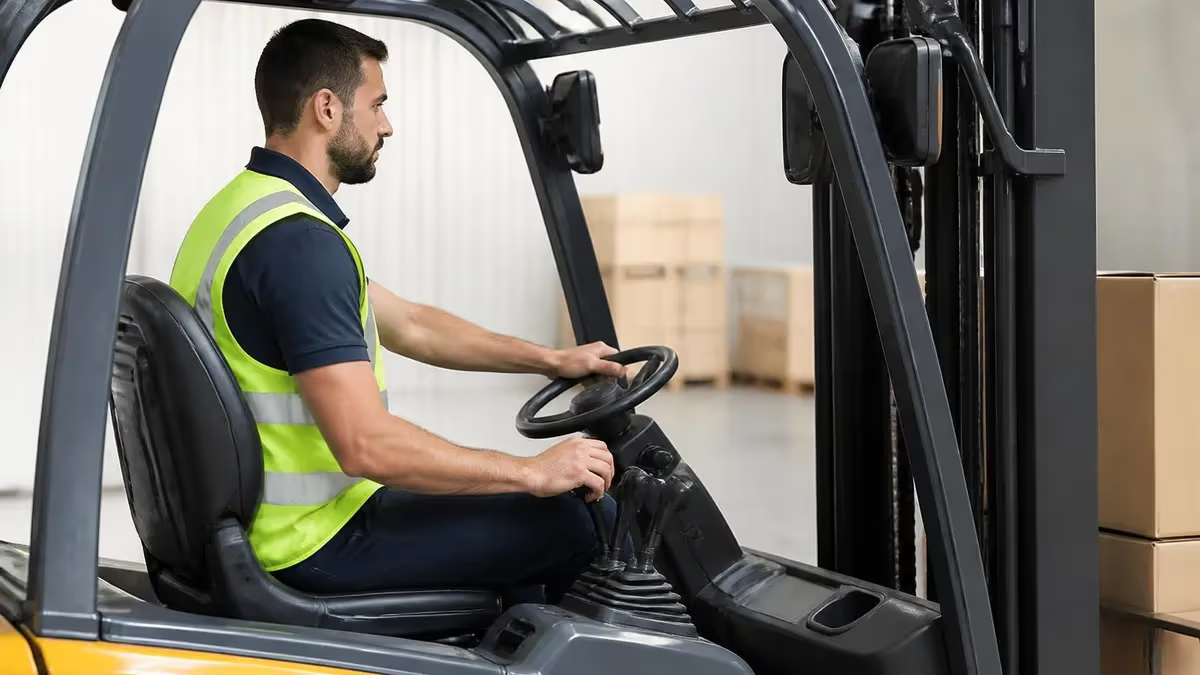
The toyota 2.5t forklift is one of the most widely deployed counterbalance trucks across Australian warehouses, logistics yards, manufacturing plants and construction sites. For anyone preparing for the TLILIC0003 licence to operate a forklift truck, understanding the Toyota model range is essential because the assessor's test unit, and almost certainly your future workplace truck, will likely come from Toyota's 8-Series or 9-Series line. Knowing the model, controls and load chart before you arrive at the assessment dramatically improves your confidence and your chance of passing first attempt.
Toyota Material Handling Australia (TMHA) holds the largest single share of the country's forklift market, with the brand consistently leading new truck sales every year for more than two decades. That dominance means Toyota trucks set the benchmark for ergonomics, safety features and load-handling behaviour that the National Standard for Licensing Persons Performing High Risk Work is essentially written around. When SafeWork inspectors and RTO assessors describe "a standard 2.5 tonne counterbalance forklift", they're describing a truck like the Toyota 8FG25 or 8FGCU25 in almost every practical sense.
This guide walks you through the most common Toyota forklift models you'll encounter during TLILIC0003 training and assessment, covering the LPG, diesel and electric variants at 1.8t, 2.5t, 3.0t and 3.5t capacities. We'll explain how to read a Toyota data plate, what the model code letters actually mean, and how to interpret the load capacity chart that's mounted on every legal truck. We'll also cover Toyota's signature System of Active Stability (SAS) and what it does — and doesn't — do for you as an operator.
Beyond raw specifications, you'll learn the practical day-one knowledge that separates a confident new ticket-holder from a nervous one: how to pre-start a Toyota 8-Series, where the service indicators live, how to handle Toyota's Operator Presence Sensing system, and what to do when a fault code flashes on the dash. These are the exact items your assessor will watch during the practical demonstration component of TLILIC0003.
Australian workplaces overwhelmingly favour the 2.5 tonne capacity class because it sits at the sweet spot for pallet handling — comfortably lifting two CHEP pallets stacked, full IBC tanks, or palletised drinks and groceries — without the bulky turning circle of larger trucks. That's why TMHA sells more 2.5t-class units than any other capacity, and why your TLILIC0003 logbook will most likely be filled out behind the wheel of one.
We've also included a comparison of LPG versus electric Toyota models, because the 2026 push toward warehouse electrification means new operators are increasingly being placed on the Toyota Traigo electric range straight out of training. Understanding both fuel types, and the different startup and shutdown procedures each one requires, future-proofs your licence and makes you more employable across the industry.
Finally, every claim and figure in this guide is cross-referenced against TMHA's official 2025 specification sheets and the WHS Regulation 2017 Schedule 3 requirements that underpin TLILIC0003. Use this article alongside your RTO learner guide, not as a substitute for it, and you'll arrive at assessment day knowing exactly what truck you're stepping onto.
Toyota Forklifts in Australia by the Numbers
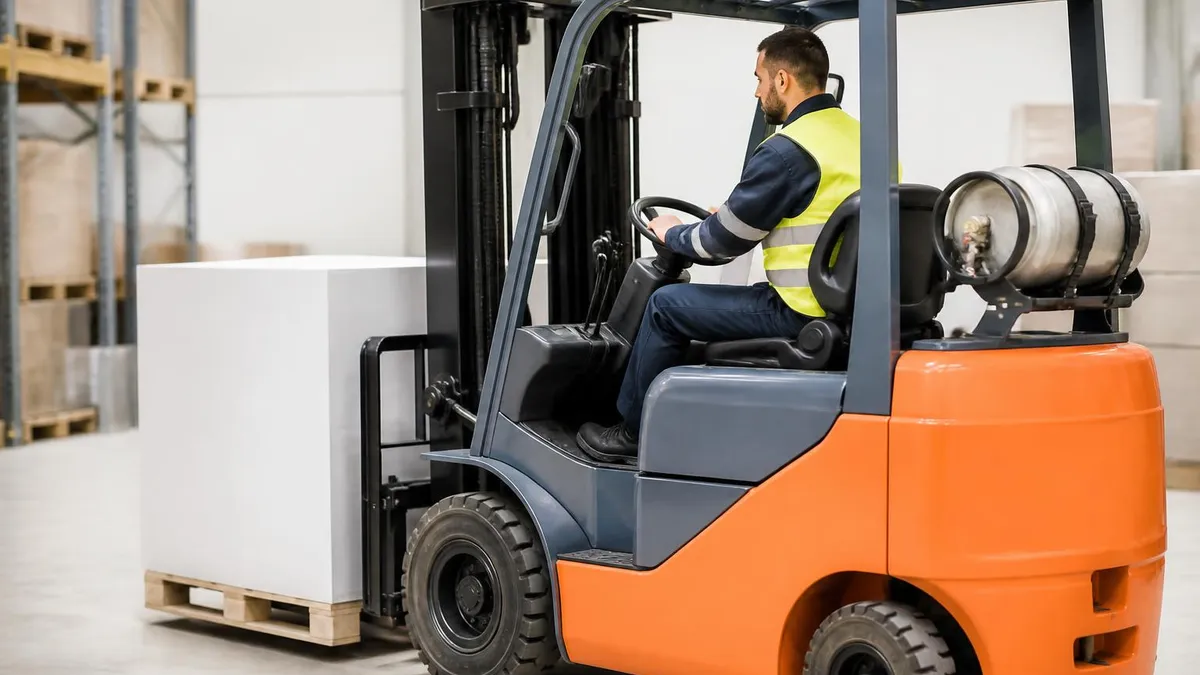
Toyota's Core Forklift Model Range
The workhorse internal-combustion range. 8FG denotes LPG, 8FD denotes diesel. Equipped with SAS as standard, hydrostatic power steering and the Toyota 4Y or 1DZ-III engine. Found in virtually every Australian RTO training yard.
Cushion-tyre (8FGCU) variants suit smooth concrete warehouses; pneumatic (8FGU) variants handle yards and rough surfaces. The 8FGCU25 is the single most common 2.5t LPG truck used in TLILIC0003 assessments nationwide.
Toyota's three-wheel (Traigo 48) and four-wheel (Traigo 80) electric counterbalance range. Capacities 1.5t to 5.0t. Lead-acid or lithium-ion battery options. Zero emissions makes them mandatory in food-grade warehouses.
Although branded BT, these narrow-aisle reach trucks fall under the Toyota Material Handling umbrella. Capacities 1.0t to 2.5t with lift heights to 13 metres. Require additional TLILIC0003 endorsement consideration for high-bay work.
Toyota's European-built mid-range internal combustion line covering 3.5t to 8.0t. Less common in AU but appears in heavy logistics depots. Uses the same SAS architecture and controls as the 8-Series for operator familiarity.
Reading a Toyota forklift specification plate is the first practical skill your TLILIC0003 assessor will test. Every legally compliant forklift in Australia must carry a manufacturer's compliance plate, and Toyota mounts theirs on the dashboard cowling directly in front of the operator's seat. The plate lists the model number, serial number, mast type code, year of manufacture, unladen weight, and maximum rated capacity at a specified load centre — usually 500 mm for trucks up to 5 tonnes.
Toyota's model coding follows a logical pattern once you learn it. Take "8FGCU25" as an example: the "8" indicates the 8-Series generation, "F" means forklift, "G" indicates gasoline/LPG fuel, "C" means cushion tyres, "U" denotes the US/Asia-Pacific specification, and "25" means 2,500 kg capacity. A nearby "8FDU25" would be the same truck with a diesel engine and pneumatic tyres. Memorising these codes lets you identify any Toyota truck at a glance during pre-start inspection.
The load capacity plate is even more critical than the compliance plate. Toyota's standard load chart shows three columns: load centre distance (in millimetres), maximum load weight (in kg), and lift height (in millimetres). A 2.5t-rated truck might only lift 1,800 kg when the load centre extends to 700 mm, and even less above 4 metres lift height. Misreading this chart is one of the most common reasons candidates fail the knowledge component of TLILIC0003. For a deeper breakdown of these components, see our guide on mast of forklift assemblies.
Mast types appear as two- or three-letter codes near the model designation. "V" indicates a two-stage simplex mast, "FV" a two-stage full free-lift mast, "FSV" a three-stage full free-lift mast, and "FSW" a four-stage. Full free-lift means the inner mast can raise the forks to full first-stage height without the outer mast extending — essential for container loading and low-ceiling warehouses.
The unladen weight stamped on the plate matters more than most new operators realise. Mezzanine floors, lifts, and even some concrete slabs have weight limits, and a Toyota 8FGCU25 weighs roughly 3,900 kg empty before you add a 2,500 kg load. That's a 6.4 tonne point load through four small contact patches — enough to crack inadequate flooring. Always check the truck's unladen weight against the site's floor loading rating before driving onto an upper level.
Serial numbers on Toyota trucks decode the build date in plain text since 2018, making it easy to verify whether a truck has been serviced according to its 250-hour, 500-hour and 1,000-hour intervals. Older 7-Series and 6-Series trucks use a coded serial format that requires a TMHA service technician to interpret. Either way, your TLILIC0003 logbook should record the serial number of every truck you operate during training.
Finally, never operate a Toyota with a missing, illegible or modified compliance plate. SafeWork Australia treats an unidentifiable forklift as out-of-service equipment, and using one — even briefly — can void your assessment, your insurance and your future workplace's PCBU compliance. If the plate is damaged, request a replacement from TMHA before training continues.
TLILIC0003 Practice Test Questions
Prepare for the Forklift Licence Australia - TLILIC0003 exam with our free practice test modules. Each quiz covers key topics to help you pass on your first try.
TLILIC0003 Forklift Licence Australia Atta...
TLILIC0003 Exam Questions covering Forklift Licence Australia Attachments and Modifications. Master TLILIC0003 Test concepts for certification prep.
TLILIC0003 Forklift Licence Australia Batt...
Free TLILIC0003 Practice Test featuring Forklift Licence Australia Battery and Fuel Safety. Improve your TLILIC0003 Exam score with mock test prep.
TLILIC0003 Forklift Licence Australia Emer...
TLILIC0003 Mock Exam on Forklift Licence Australia Emergency Procedures. TLILIC0003 Study Guide questions to pass on your first try.
TLILIC0003 Forklift Licence Australia Fork...
TLILIC0003 Test Prep for Forklift Licence Australia Forklift Pre-Operational Checks. Practice TLILIC0003 Quiz questions and boost your score.
TLILIC0003 Forklift Licence Australia Haza...
TLILIC0003 Questions and Answers on Forklift Licence Australia Hazard Identification. Free TLILIC0003 practice for exam readiness.
TLILIC0003 Forklift Licence Australia Load...
TLILIC0003 Mock Test covering Forklift Licence Australia Load Centre Calculations. Online TLILIC0003 Test practice with instant feedback.
TLILIC0003 Forklift Licence Australia Load...
Free TLILIC0003 Quiz on Forklift Licence Australia Load Handling and Capacity. TLILIC0003 Exam prep questions with detailed explanations.
TLILIC0003 Forklift Licence Australia Oper...
TLILIC0003 Practice Questions for Forklift Licence Australia Operating in Different Environments. Build confidence for your TLILIC0003 certification exam.
TLILIC0003 Forklift Licence Australia Oper...
TLILIC0003 Test Online for Forklift Licence Australia Operating Techniques. Free practice with instant results and feedback.
TLILIC0003 Forklift Licence Australia Pede...
TLILIC0003 Study Material on Forklift Licence Australia Pedestrian Safety. Prepare effectively with real exam-style questions.
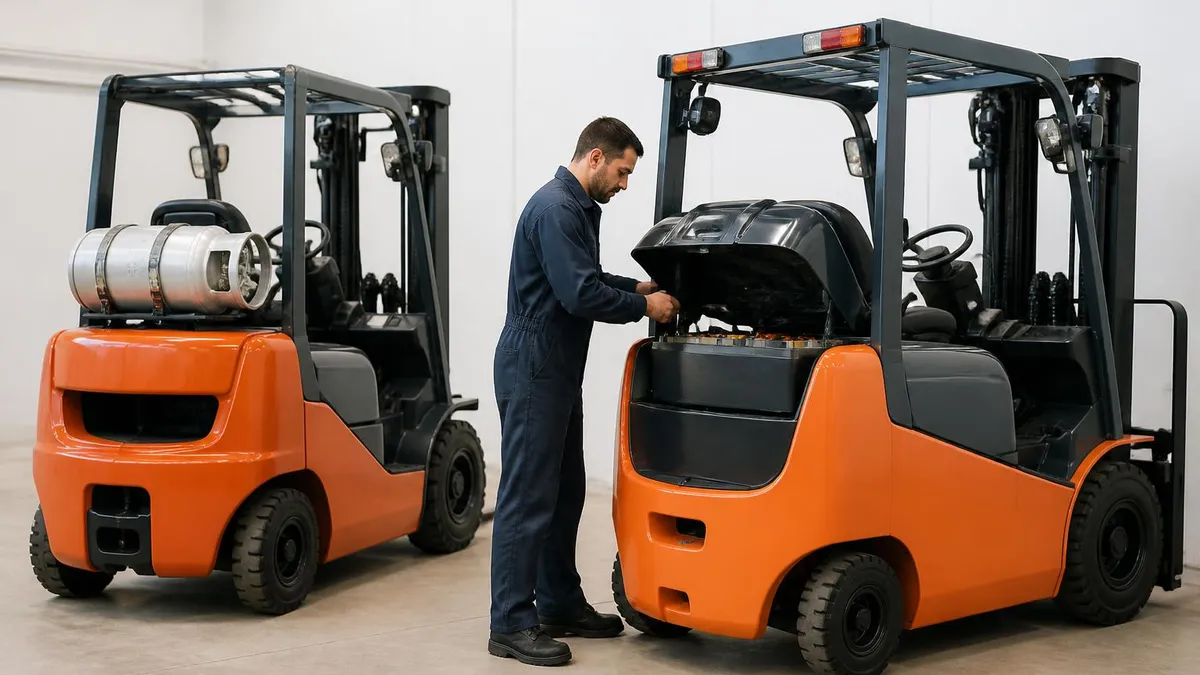
Toyota Fuel Type Variants Compared
LPG-powered Toyota 8FG trucks dominate Australian indoor-outdoor sites because they combine the run-time of internal combustion with reasonably clean exhaust suitable for ventilated warehouses. The 4Y engine delivers around 33 kW and runs on a standard 18 kg forklift cylinder for roughly 8 hours of moderate-duty work. Cylinder changes take two minutes once you've been trained on the bracket and quick-release coupling.
Watch for carbon monoxide exposure in poorly ventilated spaces — Australian WHS regulations require atmospheric monitoring whenever LPG forklifts work indoors for extended periods. The 8FG25 is the assessment truck of choice at most metropolitan RTOs because its controls perfectly match the National Forklift Performance criteria. Always close the cylinder valve before parking and check the hose for cracks during pre-start inspection.
Should You Train on a Toyota for TLILIC0003?
- +Toyota controls match the National Standard layout used in TLILIC0003 assessment criteria
- +SAS active stability gives new operators a safer learning environment with tilt protection
- +Widely available across RTOs, meaning consistent training experience nationwide
- +Most employers operate Toyota fleets, so skills transfer directly to first jobs
- +Comprehensive operator manuals in plain English support self-study before assessment
- +Strong dealer network means service records and load charts are easy to verify
- +Resale and rental availability make Toyota the cheapest hourly training rate at most RTOs
- −Toyota-only training can leave you unfamiliar with Crown, Hyster or Linde control layouts
- −SAS can mask poor operator technique by automatically correcting balance issues
- −Older 7-Series Toyotas at some RTOs lack modern operator presence sensing
- −Diesel 8FD models can be intimidating for first-time operators due to size and weight
- −Cushion-tyre 8FGCU models handle differently outdoors and can mislead operators new to pneumatic
- −Premium-brand training fees are 10–15% higher than generic forklift training in some regions
Toyota 2.5t Forklift Pre-Start Inspection Checklist
- ✓Walk around the truck checking for visible damage, fluid leaks and loose components
- ✓Verify compliance plate and load capacity chart are present, legible and matched to the truck
- ✓Check tyre condition — cushion tyres for chunks, pneumatics for cuts and correct pressure
- ✓Inspect fork blades for cracks, bend, wear at the heel and secure positioning locks
- ✓Test horn, reverse beeper, headlights, brake lights and rotating beacon if fitted
- ✓Check hydraulic hoses, mast chains, lift cylinders and tilt cylinders for leaks or damage
- ✓Verify LPG cylinder is secure, valve closes properly, and hose has no cracks
- ✓Test parking brake holds the truck stationary on a slight incline before driving
- ✓Cycle lift, lower, tilt forward and tilt back through full range checking for hesitation
- ✓Test service brake, steering response and seatbelt operation before leaving the parking area
- ✓Confirm SAS warning lamp extinguishes after startup and OPS detects operator presence
- ✓Record any defects in the logbook and tag the truck out-of-service if unsafe to operate
Never skip the SAS warning lamp check
The amber SAS lamp on a Toyota 8-Series dashboard should illuminate briefly during ignition and then extinguish within three seconds. If it stays on, the System of Active Stability has detected a sensor fault and rear-axle locking is disabled — meaning the truck has no extra rollover protection beyond its physical wheelbase. SafeWork inspectors regard this as a defective safety device and will issue an improvement notice on the spot.
Toyota's System of Active Stability, universally abbreviated to SAS, is the most distinctive engineering feature of the brand's counterbalance range and the single most asked-about topic during TLILIC0003 theory assessment. Introduced in 1999 and now standard on every 8-Series and 9-Series truck sold in Australia, SAS uses three sensors and two hydraulic actuators to detect and prevent the two most dangerous instability modes: lateral tip-over and longitudinal pitch.
The rear-axle swing lock is the headline SAS feature. Counterbalance forklifts pivot on a central rear axle to maintain ground contact over uneven surfaces — but that same pivot is what allows the truck to roll sideways when cornering with an elevated load. SAS monitors travel speed, steering angle, mast height and load weight, and when those values combine into a tip-over risk, a hydraulic cylinder locks the rear axle rigid, converting the truck from a three-point pivot to a four-point stable platform within milliseconds.
The second SAS function is forward tilt control. When the mast is raised above approximately 2 metres, SAS automatically limits forward tilt to roughly 1–2 degrees and slows the tilt cylinder speed, preventing the inertia of a tilting load from pulling the truck onto its front wheels. Operators new to Toyota sometimes interpret this slowed tilt as a hydraulic fault — it isn't, it's the system working correctly, and assessors specifically check that you understand this behaviour.
Rear-stability control is the third element, particularly relevant during reverse travel down a ramp with a raised load. SAS limits rear tilt speed and provides progressive resistance through the joystick, giving operators tactile feedback that something risky is being attempted. The system does not override operator inputs — it cannot stop you from doing something dangerous — but it provides clear warnings and reduces the consequence severity if you ignore them.
Critically for TLILIC0003 candidates: SAS does NOT replace safe operating technique. Many failed assessments come from candidates who assume the truck will "save them" from a poorly planned manoeuvre. SafeWork Australia statistics show 60% of fatal forklift incidents in Australia between 2018 and 2024 involved trucks with active stability systems engaged — the systems reduce frequency, not the consequences when an operator deliberately exceeds the load chart.
The Operator Presence Sensing (OPS) system on modern Toyotas is technically separate from SAS but works alongside it. A weight sensor in the seat detects whether the operator is present; if the seat is empty for more than three seconds while the truck is in gear, OPS disengages drive and lift functions automatically. This prevents "runaway forklift" incidents that previously caused dozens of warehouse injuries annually.
Diagnosing SAS faults requires a TMHA-approved diagnostic tool — but operators can read a basic fault code from the dashboard. A flashing wrench icon combined with a numeric code (E-01 through E-99) tells you whether the issue is electrical, hydraulic, or sensor-related. Record the code in the logbook, tag the truck out-of-service, and call your supervisor before any further operation.
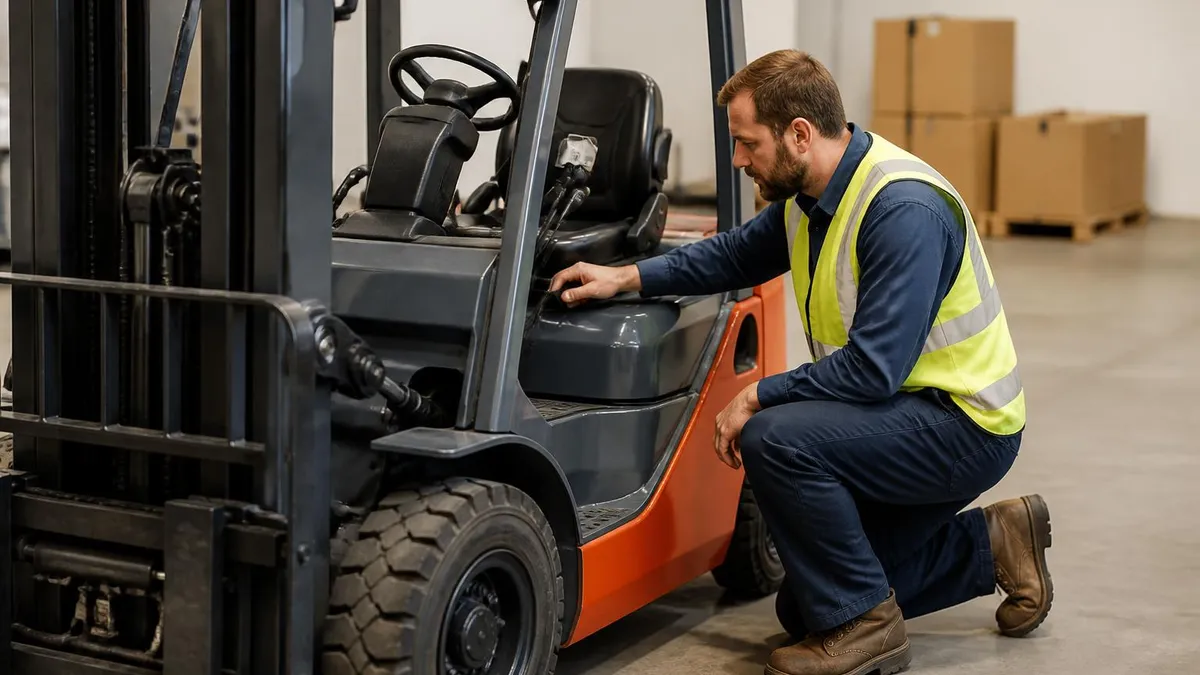
SAS does not increase the rated capacity printed on the Toyota data plate. A 2.5t-rated truck with SAS engaged still tips at the same load weight as a non-SAS truck — the system only reduces the likelihood of tipping during normal operations within the load chart. Exceeding rated capacity will tip the truck regardless of stability technology, and the consequences are typically more severe because operators trust the system to protect them.
Approaching your TLILIC0003 assessment with a clear plan dramatically increases your pass rate. The national first-attempt pass rate sits around 78%, and the most common reason for failure isn't poor truck handling — it's incomplete pre-start inspection and inability to articulate the reasoning behind safety decisions. Assessors want to hear you think out loud about hazards, load chart interpretation and stability triangle considerations, not just see you drive smoothly.
Begin your assessment by introducing yourself and walking the assessor through your hazard identification of the work area. Point out pedestrian walkways, racking damage, surface conditions and overhead obstructions before you touch the truck. On a Toyota 8FGCU25, the next step is the 360-degree walk-around — start at the left rear, move clockwise, and verbally call out each item from the pre-start checklist. This structured approach reassures the assessor you're working methodically, not relying on memory.
When you mount the truck, fasten the seatbelt before turning the key. This single act prevents more failures than any other — assessors immediately fail candidates who drive even one metre without belt engagement. Toyota's OPS will warn you with a buzzer if you forget, but by then the assessor has already marked the deficiency. The seatbelt is also the single most important survival factor in a tip-over event, holding you inside the protective overhead guard structure.
Load handling demonstrations on the assessment course will typically include picking up a pallet from floor level, transporting it through a marked travel path, placing it on a beam at approximately 2 metres, retrieving it, and returning to the start. The assessor watches for correct fork insertion depth (full length under the pallet), correct tilt-back during travel, smooth lift and lower cycles, and appropriate travel speed for the load condition. For specification questions, check our forklift clearance height reference guide.
Speak the load chart out loud when the assessor asks questions about capacity. "This truck is rated at 2,500 kg at 500 mm load centre. The load I'm about to lift is 1,200 kg with a load centre of approximately 600 mm based on pallet depth. According to the chart, my de-rated capacity at this load centre is 2,100 kg, so I have adequate margin." That kind of articulate reasoning is what separates a competent operator from a marginal one in the assessor's notes.
Communication is the second-most-important assessment criterion after safety. Use the horn at every intersection, blind corner and pedestrian-zone boundary — even when no one is visible. Make eye contact with anyone on foot before passing them, and never assume they've seen you. Toyota's standard horn is loud enough to be heard 30 metres away on a typical warehouse floor, and using it actively shows the assessor you understand the visibility limitations of operating a counterbalance truck.
End the assessment by parking the truck correctly: forks lowered to the floor, mast tilted forward, parking brake engaged, control levers in neutral, ignition off, and key removed. On an LPG Toyota, close the cylinder valve. On an electric Traigo, plug it into the charger if your assessor includes this in the scope. Walking away from a properly shut-down truck is the final assessable competency — and the easiest mark to win or lose.
The week before your TLILIC0003 assessment is when smart candidates do their final preparation work. Re-read your RTO learner guide cover to cover, paying special attention to the load chart interpretation chapter and the stability triangle diagrams. Most failures stem from theory gaps, not practical inability, so investing time in the written knowledge component pays disproportionate returns. Practice tests are particularly valuable because they expose the way assessors phrase questions, which differs from how operators describe the same concepts conversationally.
If your RTO uses a Toyota 8FGCU25 or 8FGU25, ask whether you can sit in the truck for 30 minutes the day before assessment to familiarise yourself with the seat adjustment, joystick layout and dashboard. Toyota's controls are intuitive but the seat-belt latch position, parking brake lever style and ignition position vary subtly between model years. Eliminating these small uncertainties on assessment day frees up mental bandwidth for the more important hazard-identification thinking.
Sleep matters more than most candidates realise. Forklift operation is a fatigue-sensitive skill, and TLILIC0003 assessment typically takes 4 to 6 hours including written and practical components. Arriving sleep-deprived measurably increases reaction time and reduces working memory for load chart calculations. Treat the night before like an exam — eight hours of sleep, light meal, no alcohol — and you'll perform meaningfully better than candidates who don't take this seriously.
Bring photo ID, your USI number, comfortable closed-toe boots, high-visibility clothing if required by the RTO, and a notebook. Toyota assessments often include a brief verbal Q&A while you're operating the truck, and the assessor may ask you to identify components, explain a procedure, or recite a safety rule. Confident verbal answers, delivered while you continue operating safely, demonstrate the situational awareness employers actually want from a licensed operator.
Workplace placement after passing TLILIC0003 happens fastest when you can list specific Toyota model experience on your resume. "Operated Toyota 8FGCU25 at 2.5t capacity with 4.8m FSV mast, side-shifter attachment, in cross-dock environment" reads enormously stronger to a logistics manager than "forklift experience." Employers using Toyota fleets — which is most of them — view brand-specific competence as significantly reducing their training overhead for a new hire.
Refresher training is required every three years to maintain your licence currency, but Toyota releases minor control and SAS updates more frequently than that. Subscribe to TMHA's operator bulletin (free at toyotamaterialhandling.com.au), follow SafeWork Australia's alerts for forklift incident notifications, and consider attending one paid refresher per year even outside the mandatory cycle. Industry-leading operators treat ongoing learning as career insurance, not regulatory burden.
Finally, remember that your TLILIC0003 licence is a high-risk work licence under WHS legislation, carrying personal legal responsibility. Operating any Toyota forklift — or any forklift of any brand — outside the load chart, with a known defect, or after consuming alcohol or restricted drugs is a criminal offence with penalties up to $300,000 and imprisonment in serious cases. The licence opens significant employment opportunities; treat it with the seriousness it deserves and it'll serve you for a lifetime.
TLILIC0003 Questions and Answers
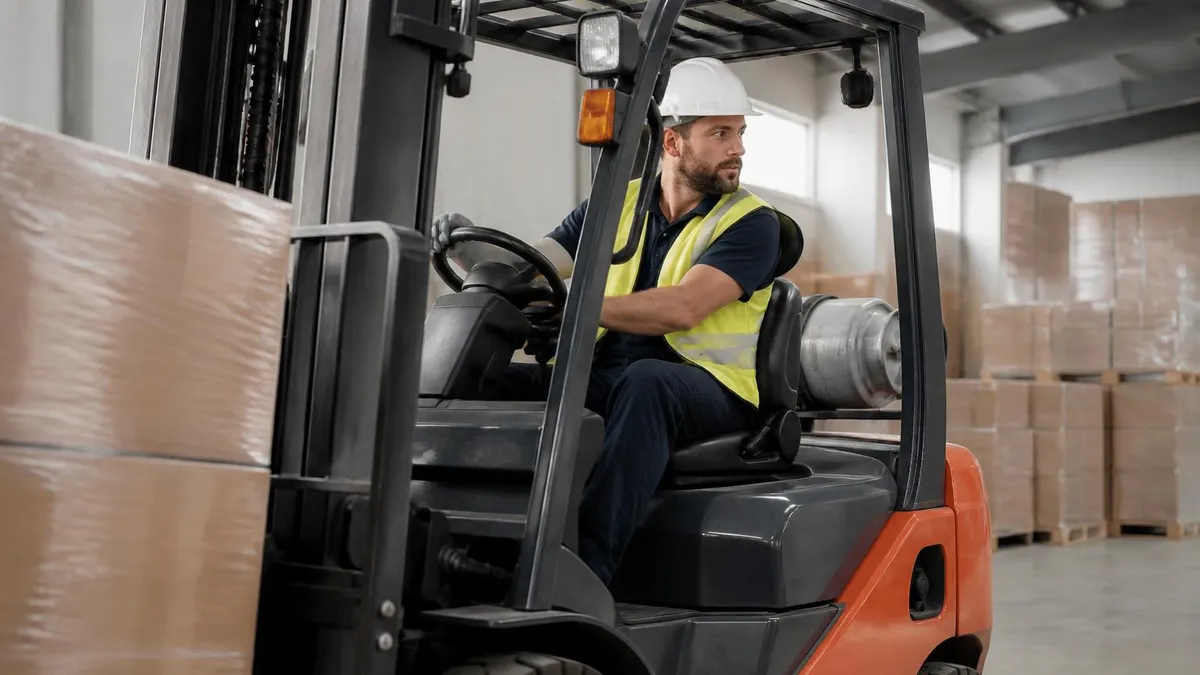
Mast of Forklift: Complete Guide to Forklift Parts for TLILIC0003 Operators in Australia
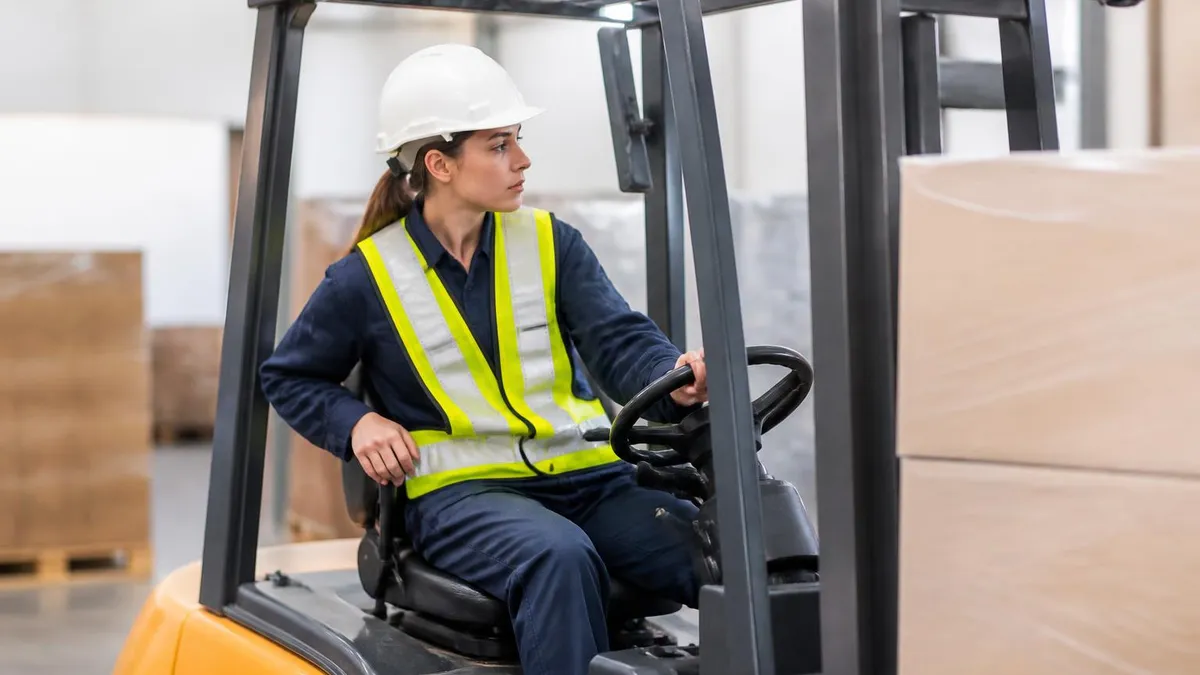
Multi Directional Forklift Trucks: Complete Guide to Forklift Types and Parts for TLILIC0003 Operators in Australia
Free Forklift Practice Test 2026 - Forklift Exam Questions
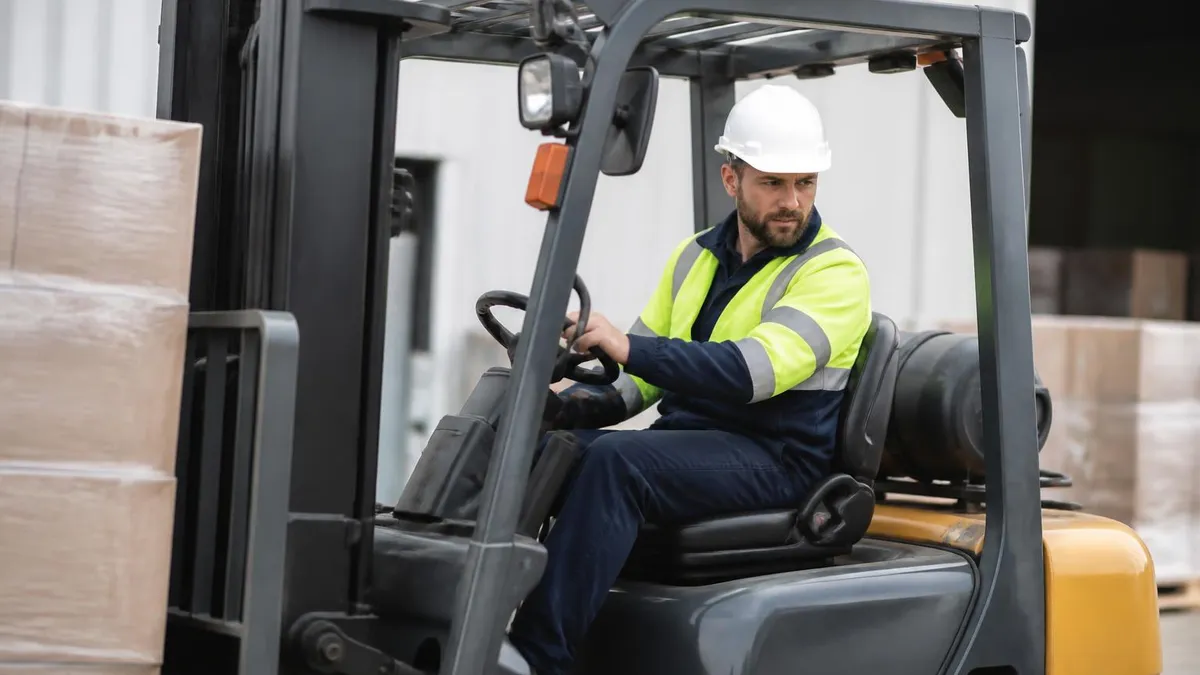
Electric 3 Wheel Forklift: Complete Guide to Electric Forklift Types for TLILIC0003 Operators in Australia
Forklift Clearance Height: Complete Guide to Forklift Specifications for TLILIC0003 Operators in Australia
About the Author

Certified Crane Operator & Skilled Trades Exam Specialist
Ferris State UniversityRobert Martinez is a Journeyman Ironworker, NCCCO-certified crane operator, and forklift trainer with a Bachelor of Science in Construction Technology from Ferris State University. He has 21 years of ironworking, rigging, and heavy equipment operation experience across high-rise and industrial construction sites. Robert prepares candidates for crane operator, rigger, forklift, and skilled trades certification examinations.