
Forklift Training Brisbane: Your Complete Guide to TLILIC0003 Licensing in Queensland
📚 Forklift training Brisbane guide covering TLILIC0003 course costs, RTO selection, exam format, and tips to pass your Queensland forklift licence
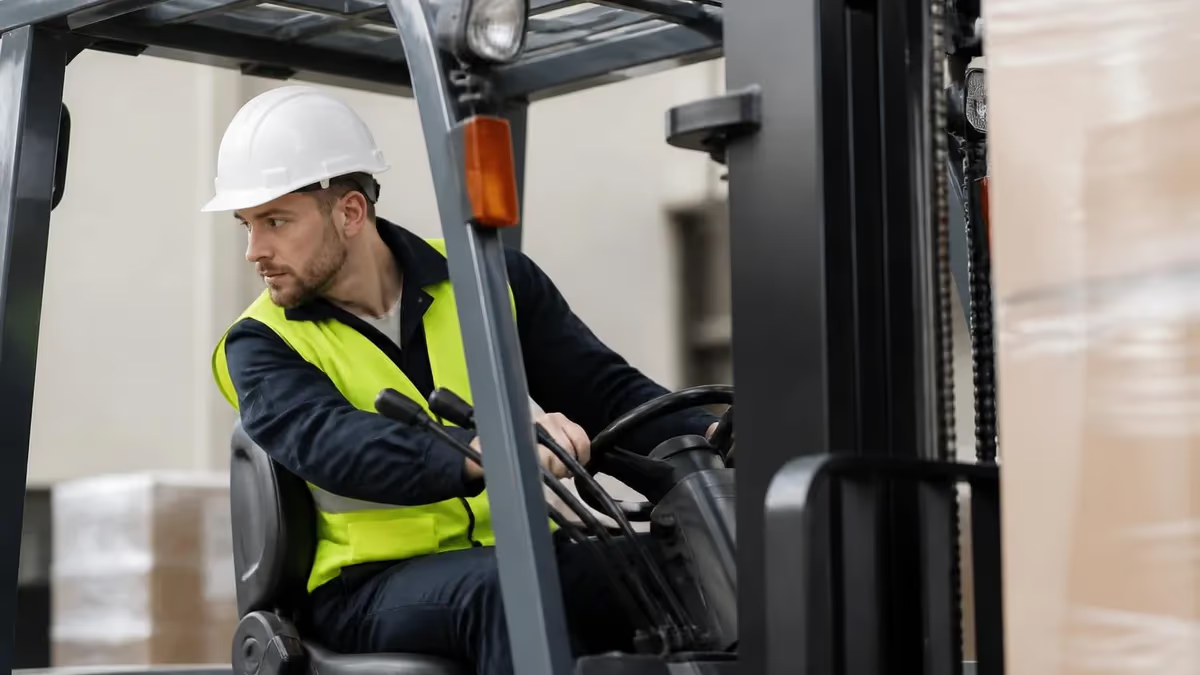
Forklift training Brisbane has become one of the most in-demand vocational pathways in Queensland, with warehouses, logistics hubs, manufacturing plants, and construction sites across the city all requiring qualified TLILIC0003 operators. Whether you are an apprentice looking to broaden your employability, a worker pivoting from another trade, or a long-term operator finally formalising your skills with a high-risk work licence, Brisbane offers a diverse network of registered training organisations (RTOs) and assessors capable of getting you ticketed within a few days.
The TLILIC0003 unit of competency, formally titled "Licence to operate a forklift truck," is the nationally recognised qualification administered by Workplace Health and Safety Queensland on behalf of Safe Work Australia. Anyone who operates a powered industrial truck fitted with a mast and elevating load carriage, with a load-shifting capacity of one tonne or more, must hold this licence. Brisbane sits at the centre of Queensland's freight corridors, so demand for qualified operators consistently outpaces supply throughout the city's industrial suburbs.
Training providers in Brisbane typically cluster around the major freight and logistics zones — Eagle Farm, Hemmant, Wacol, Acacia Ridge, Rocklea, and Crestmead — because these suburbs sit closest to the airports, the Port of Brisbane, and intermodal terminals where most newly licensed operators end up working. This proximity matters: many RTOs offer industry placement assistance, and learning to operate near real working sites helps candidates build confidence with the equipment they will use post-licensing.
The typical Brisbane training course runs between two and five days depending on prior experience, with experienced operators completing assessment-only pathways while complete novices undertake a full duration program. Course fees in Brisbane sit between $350 and $750, with most reputable RTOs charging around $500 to $600 for a comprehensive three-day program that includes textbooks, equipment hire, the practical assessment, and submission of the WorkSafe Queensland licence application paperwork on your behalf.
Before you book a course, it pays to understand exactly what equipment you will be tested on. The TLILIC0003 covers counterbalance forklifts only — reach trucks, order pickers, walkie stackers, and pedestrian-operated equipment fall under different units or do not require a high-risk work licence at all. If you need to drive specialised lift equipment with attachments, your training should explicitly cover load configurations beyond standard pallet handling, including drum clamps, slip sheets, jibs, and rotating carriages.
Many Brisbane RTOs also bundle adjacent qualifications into their programs — first aid certifications, white card refreshers, manual handling competencies, and dangerous goods awareness — which can boost your employability significantly when applying for warehouse coordinator or yard supervisor roles. For operators looking ahead, understanding what a forklift licence near me entails locally helps you compare Brisbane providers against those in Logan, Ipswich, and Moreton Bay before committing to a course date.
This guide walks through every part of the Brisbane training landscape: course structure, RTO selection criteria, costs, assessment format, common reasons candidates fail their first attempt, and practical tips for hitting the ground running once you have your green ticket in hand. By the end you will know exactly which provider suits your circumstances and how to prepare for both the written knowledge assessment and the practical operating evaluation.
Forklift Training Brisbane by the Numbers
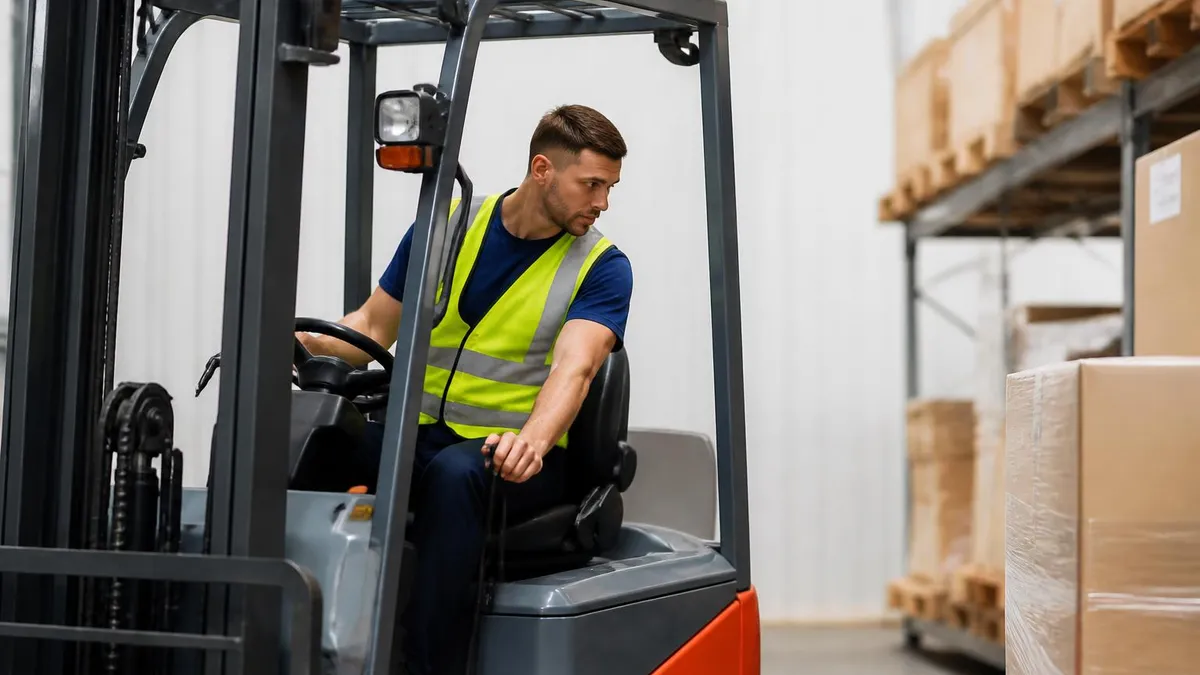
Brisbane TLILIC0003 Course Journey
Enrolment & Pre-Reading
Day One Theory
Practical Familiarisation
Written Assessment
Practical Assessment
Licence Application
Choosing the right RTO is the single most important decision you'll make in your forklift training Brisbane journey, because the quality of instruction varies enormously across providers. The Australian Skills Quality Authority (ASQA) regulates all RTOs, but registration alone doesn't guarantee a great learning experience. Some Brisbane providers run lean operations with minimal practical time, while others invest heavily in modern equipment, multiple assessor relationships, and follow-up mentoring after you receive your licence.
Start your shortlist by checking the official training.gov.au database to confirm any provider you're considering is currently authorised to deliver TLILIC0003. Lapsed scope, suspended status, or pending audits are all warning signs. Once you've confirmed registration, look at how long each RTO has been delivering the unit — five years or more usually indicates established processes, consistent assessor relationships with WHSQ, and a stable training yard with well-maintained equipment.
Equipment quality matters more than most candidates realise. A Brisbane RTO that trains you on a 1990s-era LPG counterbalance with worn tyres and sluggish hydraulics will leave you underprepared for the modern electric and dual-fuel machines you'll meet in warehouses around Eagle Farm or Hemmant. Ask which makes and models you'll operate, whether the training yard simulates real racking heights, and how many candidates share each forklift during practical sessions.
Group size is another quality marker. The best Brisbane RTOs cap their classes at six to eight candidates per assessor, ensuring everyone gets meaningful seat time on the equipment. If a provider quotes you a low course price but then runs sessions with twelve or fifteen students sharing two forklifts, you'll spend most of your training day watching others operate rather than building your own muscle memory. Always ask for the candidate-to-machine ratio before booking.
Read genuine reviews carefully. Google reviews, Facebook recommendations, and forums like Whirlpool give you unfiltered candidate feedback. Look for patterns rather than one-off complaints — repeated mentions of rushed assessments, unclear instruction, or pressure to pass everyone are red flags. Conversely, consistent praise for assessor patience, well-explained theory, and post-course phone support indicates a provider that genuinely cares about long-term operator safety.
Consider whether the RTO offers refresher training and high-risk work licence renewals, because forklift licences in Queensland don't expire but employers increasingly require periodic competency verification under their workplace safety management systems. A provider with strong relationships across Brisbane's industrial corridors can introduce you to recruiters and labour-hire firms after you qualify. Some RTOs even maintain dedicated job boards listing operator vacancies posted by their corporate clients, smoothing the transition from trainee to employed driver. Reviewing detailed information about the multi directional forklift trucks and other specialty equipment you might encounter helps you ask better questions during RTO selection.
Finally, ask about make-up sessions and reassessment fees. Even competent candidates occasionally need an extra hour of practical practice or a second attempt at the written assessment. The best Brisbane RTOs build one reassessment into their standard fee, while less ethical operators charge $150–$250 for any retake. Get the reassessment policy in writing before you pay your enrolment deposit, and ask whether make-up days are scheduled regularly or treated as one-off accommodations.
TLILIC0003 Practice Test Questions
Prepare for the Forklift Licence Australia - TLILIC0003 exam with our free practice test modules. Each quiz covers key topics to help you pass on your first try.
TLILIC0003 Forklift Licence Australia Atta...
TLILIC0003 Exam Questions covering Forklift Licence Australia Attachments and Modifications. Master TLILIC0003 Test concepts for certification prep.
TLILIC0003 Forklift Licence Australia Batt...
Free TLILIC0003 Practice Test featuring Forklift Licence Australia Battery and Fuel Safety. Improve your TLILIC0003 Exam score with mock test prep.
TLILIC0003 Forklift Licence Australia Emer...
TLILIC0003 Mock Exam on Forklift Licence Australia Emergency Procedures. TLILIC0003 Study Guide questions to pass on your first try.
TLILIC0003 Forklift Licence Australia Fork...
TLILIC0003 Test Prep for Forklift Licence Australia Forklift Pre-Operational Checks. Practice TLILIC0003 Quiz questions and boost your score.
TLILIC0003 Forklift Licence Australia Haza...
TLILIC0003 Questions and Answers on Forklift Licence Australia Hazard Identification. Free TLILIC0003 practice for exam readiness.
TLILIC0003 Forklift Licence Australia Load...
TLILIC0003 Mock Test covering Forklift Licence Australia Load Centre Calculations. Online TLILIC0003 Test practice with instant feedback.
TLILIC0003 Forklift Licence Australia Load...
Free TLILIC0003 Quiz on Forklift Licence Australia Load Handling and Capacity. TLILIC0003 Exam prep questions with detailed explanations.
TLILIC0003 Forklift Licence Australia Oper...
TLILIC0003 Practice Questions for Forklift Licence Australia Operating in Different Environments. Build confidence for your TLILIC0003 certification exam.
TLILIC0003 Forklift Licence Australia Oper...
TLILIC0003 Test Online for Forklift Licence Australia Operating Techniques. Free practice with instant results and feedback.
TLILIC0003 Forklift Licence Australia Pede...
TLILIC0003 Study Material on Forklift Licence Australia Pedestrian Safety. Prepare effectively with real exam-style questions.
Forklift Training Brisbane Course Formats
The full Brisbane training course suits candidates with no prior forklift experience. Across three to five consecutive days you'll cover the complete TLILIC0003 theory curriculum, undertake at least eight hours of supervised practical operation, and complete both written and practical assessments under your assessor's observation. Expect early starts — most Brisbane RTOs run sessions from 7:30 am to 4:00 pm to mirror real industrial shift patterns and give you exposure to typical warehouse rhythms.
This format works best for career changers, school leavers, and workers transitioning from labouring or driving roles into warehouse operations. Course fees usually range from $550 to $750 in Brisbane, with the higher end of that bracket including small extras like printed workbooks, photo licence application fees, lunches across each training day, and unlimited reassessment within ninety days of your original attempt.
Brisbane vs Other Queensland Cities for Forklift Training
- +Highest concentration of RTOs in Queensland with over 40 registered providers across greater Brisbane
- +Strong post-training job market with logistics hubs at the airport, port, and Wacol intermodal terminal
- +Competitive pricing driven by RTO density keeps course fees lower than regional Queensland
- +Modern equipment fleets at most Brisbane training yards reflecting current warehouse technology
- +Easy public transport access to most training locations via Translink bus and rail networks
- +Multiple weekend and evening course options to accommodate shift workers and career changers
- +Active recruiter networks specifically targeting newly-licensed Brisbane operators
- −Higher demand means popular weekend courses book out four to six weeks in advance
- −Traffic congestion around industrial suburbs can extend commute times to early-start sessions
- −Some discount RTOs in outer suburbs cut corners on equipment maintenance and assessor experience
- −Limited free parking at some inner-Brisbane training facilities adds incidental costs
- −Peak summer humidity makes outdoor practical assessments physically demanding
- −Brisbane-trained operators sometimes lack exposure to mining-style yards common in regional Queensland
- −Course quality varies widely between providers making research and reviews essential
Pre-Course Checklist for Forklift Training Brisbane
- ✓Confirm you are at least 18 years old on the day of assessment
- ✓Apply for a Unique Student Identifier (USI) via the official usi.gov.au portal
- ✓Bring two forms of identification including one photo ID such as a driver licence or passport
- ✓Wear closed-toe steel-capped boots or borrow loaner boots from the RTO
- ✓Bring high-visibility clothing or confirm whether the RTO provides loaner hi-vis vests
- ✓Complete any pre-reading workbook the RTO emails before your first training day
- ✓Arrange transport to the training yard and account for early start times around 7:30 am
- ✓Bring reading glasses or contact lenses if you need them for paperwork and load charts
- ✓Eat a substantial breakfast and bring snacks since practical training is physically demanding
- ✓Confirm payment is settled before day one to avoid administrative delays at sign-in
- ✓Notify the RTO of any medical conditions, medications, or learning support needs in advance
- ✓Get a good night's sleep before assessment day — fatigue is the leading cause of practical failures
Book Early for Saturday Courses
Saturday courses at popular Brisbane RTOs typically book out four to six weeks ahead, particularly through January-February when warehouse hiring spikes after Christmas. Reserve your spot as soon as you've chosen a provider — most RTOs require only a $100 deposit to hold a place, and that deposit is fully refundable up to two weeks before your start date.
Assessment day is the moment your forklift training Brisbane investment either pays off or sends you back for a reassessment. Understanding exactly what happens hour by hour reduces nerves and lets you focus on demonstrating competence rather than worrying about logistics. Most Brisbane RTOs follow a similar assessment day rhythm, though precise timing varies depending on candidate numbers and assessor preferences.
You'll arrive between 7:00 am and 7:30 am for sign-in, identification verification, and final paperwork. Bring your USI, photo ID, secondary ID such as a Medicare card, and any prior qualifications relevant to your application. Your assessor will review the day's running sheet, confirm the order of written and practical components, and remind you of the pass thresholds — 80% on the written test and zero critical errors on the practical course.
The written assessment typically runs first, while you're mentally fresh. Brisbane assessors administer 65 multiple-choice and short-answer questions covering Queensland WHS legislation, load centres, stability principles, refuelling and recharging procedures, attachment safety, hazard identification, and emergency response. You have two hours, but most candidates finish in 45 to 75 minutes. Read every question twice, especially the ones with words like "never," "always," "only," and "except," because those qualifiers often determine the right answer.
After a short break for marking, your assessor delivers individual results. Candidates who pass move directly to the practical evaluation. Those who fall short — usually because they rushed sections on load chart calculations or stability triangle questions — receive targeted feedback and are scheduled for a written reassessment within seven days at no additional charge with most reputable Brisbane RTOs.
The practical assessment begins with a thorough pre-start inspection. You'll walk around the forklift narrating every check: tyres, forks, mast, chains, hydraulic hoses, lights, horn, seatbelt, data plate visibility, fuel or battery levels, and operator manual presence. Your assessor wants to hear your reasoning, not just see you ticking boxes. Speak clearly and identify any defects you spot — even staged ones — because failing to call out planted issues will cost critical marks.
Once you've completed the pre-start and the assessor confirms the truck is fit for use, you'll mount up and demonstrate basic handling: smooth acceleration, controlled deceleration, three-point turns, reversing with mirrors and rear glance, and parking on level ground. Then comes the load work — picking up a test pallet, transporting it through a defined course with cones representing hazards, stacking it onto designated racking at chest and shoulder height, and returning the load to its starting position without scuffing or damage.
Throughout the practical, your assessor watches for the safety behaviours that distinguish licensed operators from amateurs: tilting the mast back when travelling loaded, lowering forks for travel, using the horn at intersections and blind corners, looking in the direction of travel including when reversing, and maintaining exclusion zones around pedestrians. Single critical errors — driving with raised forks, ignoring exclusion zones, or unsafe load handling — result in immediate failure regardless of your performance on the rest of the course.
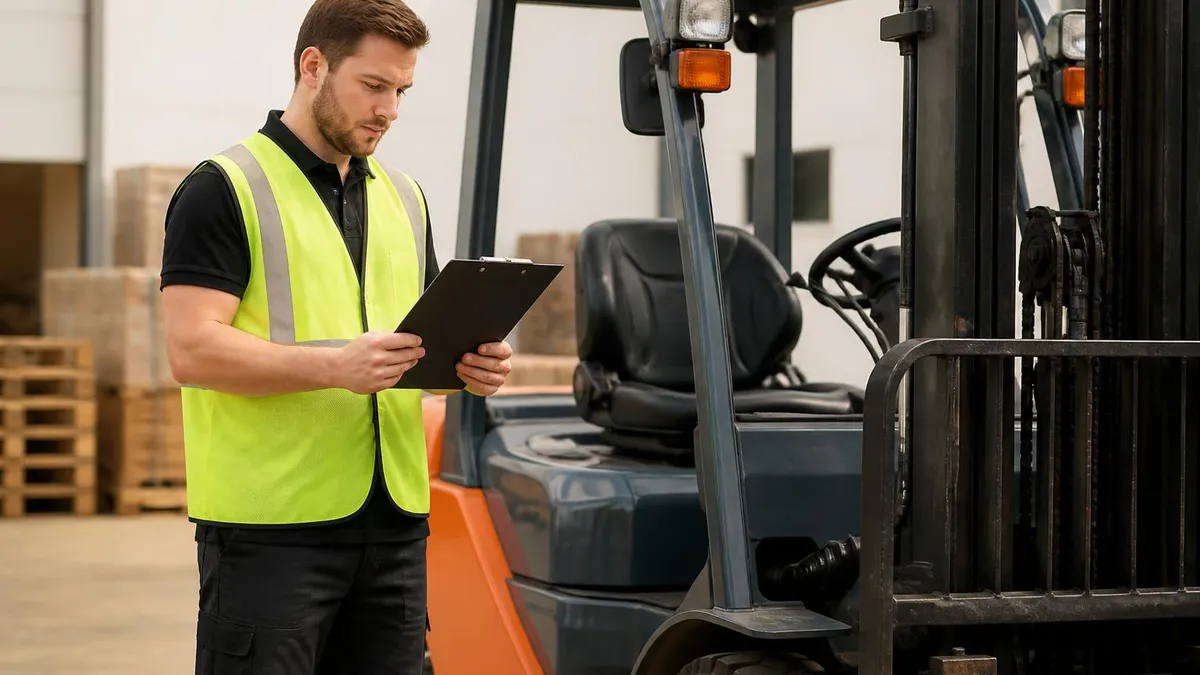
Brisbane assessors apply zero-tolerance to certain safety failures. Travelling with elevated forks, failing to apply the parkbrake when dismounting, ignoring pedestrians within exclusion zones, and exceeding the load chart capacity are all immediate-fail offences regardless of your performance elsewhere. Review each of these specifically in the days before your assessment so the safe behaviour becomes automatic under pressure.
After you pass your forklift training Brisbane assessment, the next phase is converting that qualification into a paying job and ongoing safe operation. Your assessor lodges the Notice of Assessment electronically with Workplace Health and Safety Queensland on the day of your successful assessment, and you receive a printed copy that serves as your legal authorisation to operate forklifts in Queensland workplaces for up to 60 days while the physical photo licence is manufactured and posted to you.
The Notice of Assessment is a legitimate licence document — employers across Brisbane recognise it immediately and most won't even ask for the physical card during your first weeks on the job. Keep your Notice somewhere safe and durable; a plastic sleeve in your work backpack works well. If you lose it before the physical licence arrives, you'll need to contact WHSQ and pay a small replacement fee, which can delay your start date with a new employer.
Job hunting becomes significantly easier once you have your ticket. Brisbane labour-hire companies like Programmed, Hays Logistics, Adecco Industrial, and Workforce Australia all maintain active forklift operator pools that turn over weekly as warehouses scale up for promotions, seasonal peaks, and project-based work. Submitting your resume to three or four labour-hire firms simultaneously usually produces interview offers within a fortnight, and many candidates land their first shift within ten days of qualifying.
Permanent positions pay better but take longer to land. Logistics employers across Eagle Farm, Hemmant, and Wacol typically prefer candidates with three to six months of labour-hire forklift experience before offering permanent contracts at $32 to $38 per hour. Use your early labour-hire shifts to build a portfolio of references, develop site-specific competencies like reach truck or high-bay racking, and learn warehouse management systems like SAP, Manhattan, or Dematic before applying for permanent roles.
Your TLILIC0003 licence in Queensland never expires, but most Brisbane employers require periodic competency verification under their site safety management systems — typically every three to five years. This usually takes the form of a half-day refresher, a verification of competency (VOC) assessment by an in-house trainer, or a formal re-assessment by an external RTO. Budget around $150 to $250 every three years for VOC top-ups to keep your employability sharp.
Beyond the core licence, consider stacking adjacent qualifications that boost your hourly rate. A reach truck VOC, an order picker VOC, a dangerous goods awareness certificate, and a workplace first aid ticket together can push you from $32/hr base-grade work into $38–$42/hr coordinator and senior operator roles. Understanding the basics of mast of forklift mechanics and other equipment fundamentals also helps you transition into supervisor positions where you'll manage maintenance schedules.
Finally, take your own ongoing learning seriously. Manufacturer updates, new battery technologies, telematics integrations, and pedestrian detection systems are reshaping warehouse forklift operation faster than at any point in the last twenty years. Subscribe to industry publications like MHD Supply Chain Solutions, follow Brisbane logistics LinkedIn groups, and attend free supplier demonstration days at places like the Queensland Materials Handling Show. The operators who treat their licence as the start rather than the finish line tend to advance fastest into supervisor and trainer roles.
Final preparation in the 48 hours before your forklift training Brisbane assessment makes the difference between confident performance and avoidable mistakes. Even candidates who've absorbed every minute of their course tend to underestimate how nerves compress recall under pressure, so a structured pre-assessment routine pays dividends well beyond its modest time cost. Treat the two days before your practical evaluation as deliberate revision rather than passive relaxation.
Start by reviewing the official Safe Work Australia forklift national standard alongside your RTO's workbook. Pay special attention to load centre calculations because they're the single most common stumbling block in the written test. Practice working through three or four scenarios where the load centre shifts forward — for example, an oversized pallet, a load with its centre of gravity offset, or a back-leaning load on a tilted mast — and confirm you can recalculate maximum safe capacity from the data plate in under sixty seconds.
Sit at least one full practice test under timed conditions the night before assessment. Online practice platforms cover the same content domains as Queensland's official knowledge assessment and reveal which topic areas still feel shaky. If you're consistently scoring below 85% on stability triangle questions or refuelling and recharging procedures, spend an extra hour with your workbook on those sections before bed rather than reviewing topics you've already mastered.
Mental rehearsal is one of the highest-return preparation techniques. Sit quietly, close your eyes, and walk through the entire practical assessment in your mind: arriving, signing in, pre-start inspection, mounting the forklift, the first set of cones, picking up the test load, transporting it through the course, stacking to racking, returning the load, parking, and shutting down. Visualise the assessor's likely questions and your confident responses. This rehearsal primes your muscle memory and reduces decision fatigue on the day.
Practical preparation should include hands-on time if your RTO offers paid extra practice sessions, which many Brisbane providers do for $60 to $100 an hour. An extra two-hour session two days before assessment is worth far more than the same time spent reading more theory. Focus on the manoeuvres that felt awkward during your course — typically reverse stacking, three-point turns in tight spaces, and lowering loads precisely onto racking beams without scuffing.
Logistics on assessment day deserve genuine attention. Lay out your boots, hi-vis vest, identification documents, USI confirmation, water bottle, and any payment receipts the night before. Set two alarms. Plan your route allowing thirty extra minutes for Brisbane traffic delays. Skip caffeine if you're prone to jitters, or stick to a single coffee if you're a habitual drinker. Eat a real breakfast — eggs, oats, fruit — rather than relying on a sugary energy drink that will spike and crash mid-morning.
Once at the RTO, slow your breathing deliberately. Most candidates who fail their practical do so because anxiety accelerates their movements and they skip pre-start checks or take corners too fast. Talk to your assessor as a peer rather than an examiner — they want you to pass and are genuinely on your side. Ask questions if any instruction is unclear, narrate your reasoning during the pre-start, and treat the load handling segment as a controlled demonstration rather than a race against the clock.
TLILIC0003 Questions and Answers
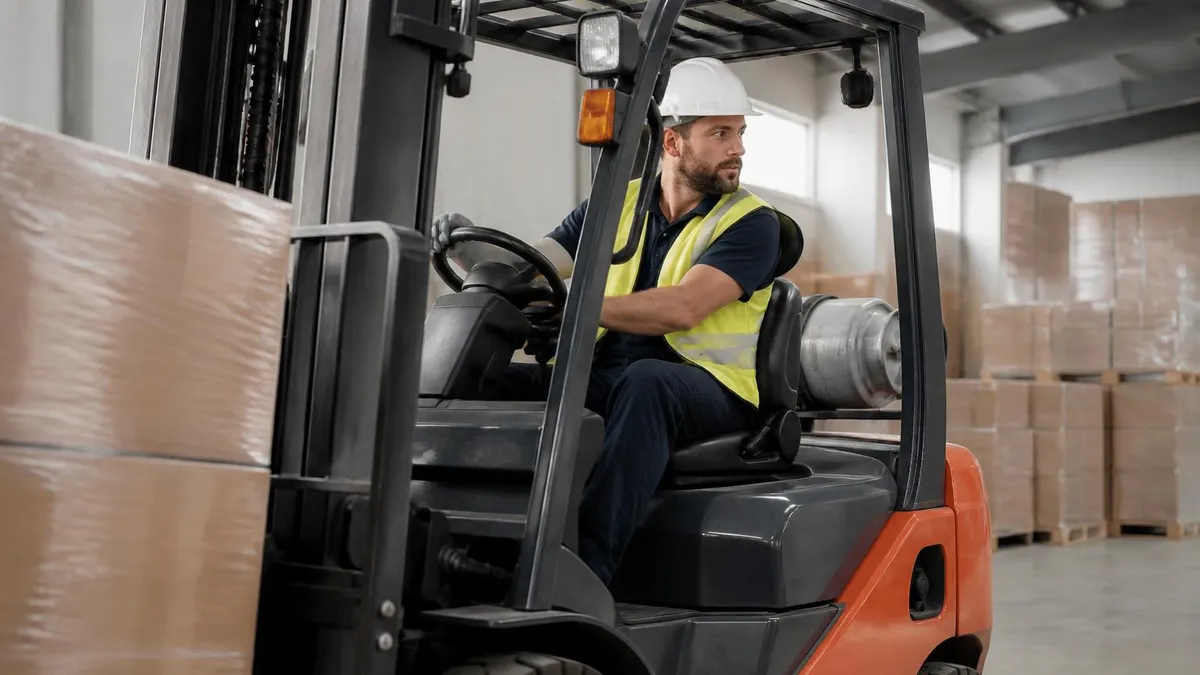
Mast of Forklift: Complete Guide to Forklift Parts for TLILIC0003 Operators in Australia
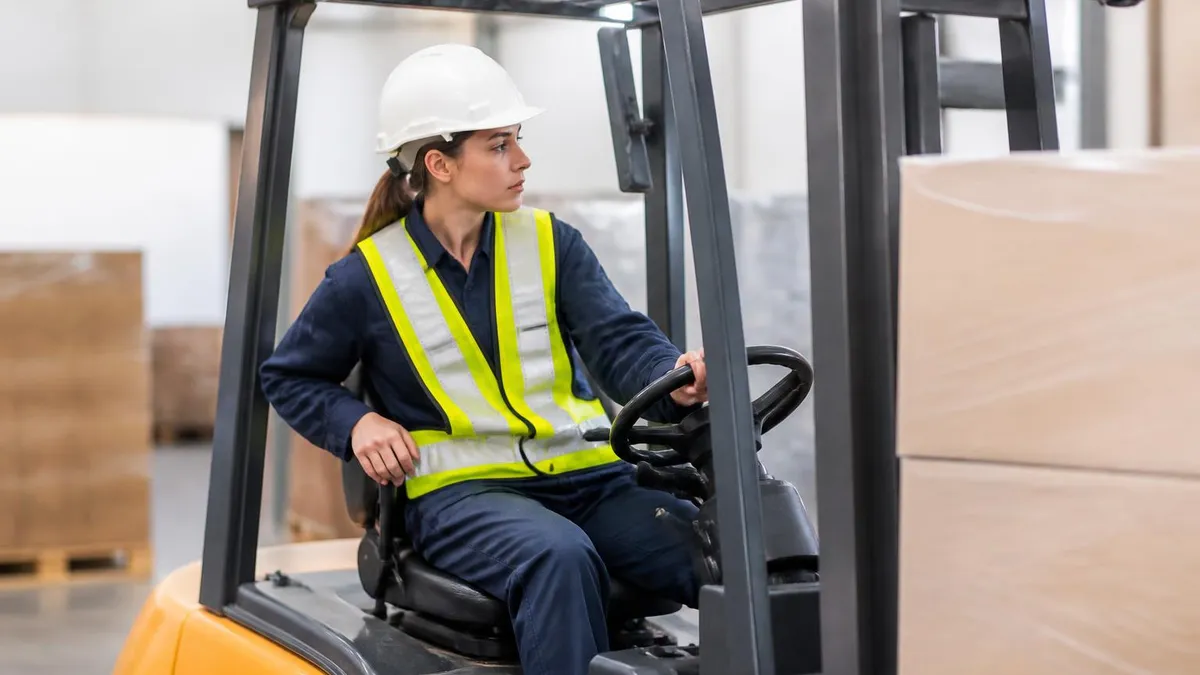
Multi Directional Forklift Trucks: Complete Guide to Forklift Types and Parts for TLILIC0003 Operators in Australia
Free Forklift Practice Test 2026 - Forklift Exam Questions
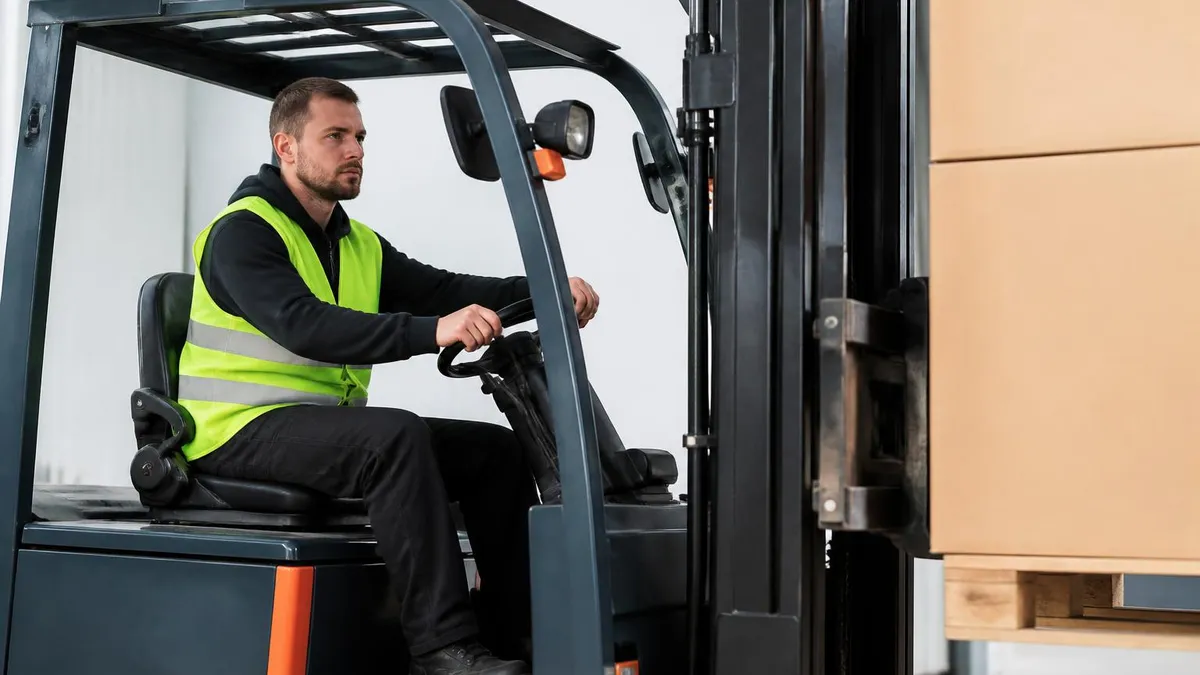
Forklift Clearance Height: Complete Guide to Forklift Specifications for TLILIC0003 Operators in Australia
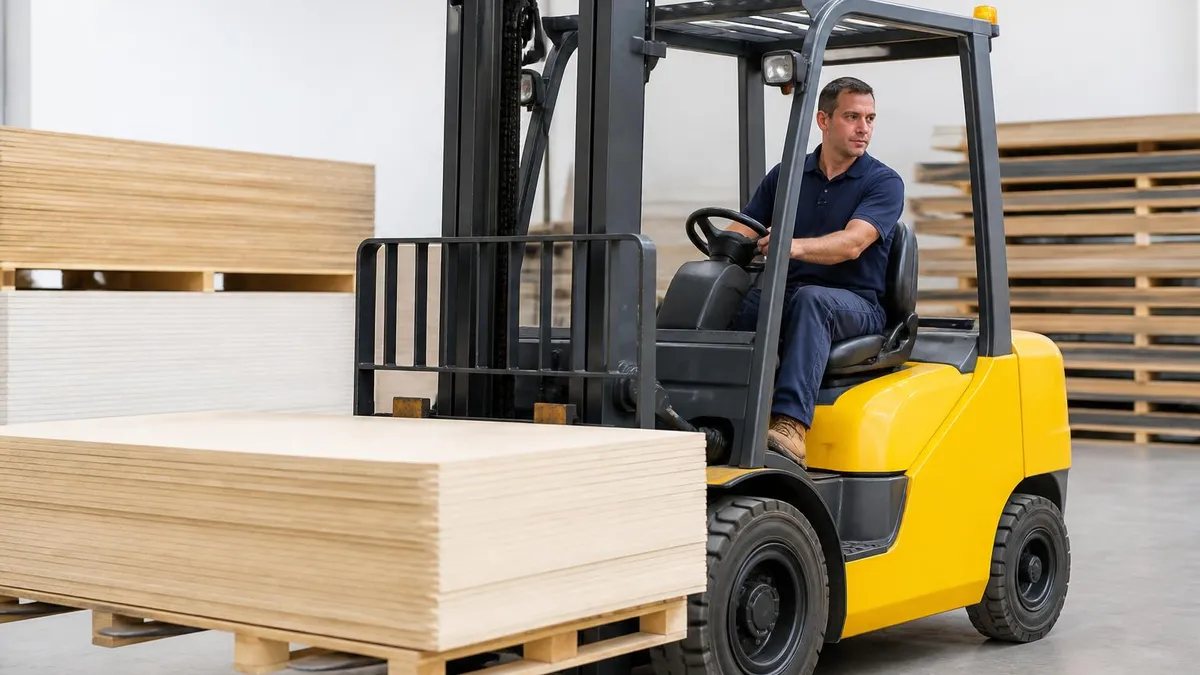
Forklift Licence Near Me: How to Find Local TLILIC0003 Training Providers in Australia
About the Author
Certified Crane Operator & Skilled Trades Exam Specialist
Ferris State UniversityRobert Martinez is a Journeyman Ironworker, NCCCO-certified crane operator, and forklift trainer with a Bachelor of Science in Construction Technology from Ferris State University. He has 21 years of ironworking, rigging, and heavy equipment operation experience across high-rise and industrial construction sites. Robert prepares candidates for crane operator, rigger, forklift, and skilled trades certification examinations.