
Forklift Licence Gold Coast: Complete TLILIC0003 Study Guide (2026 September)
Get your forklift licence Gold Coast with this complete TLILIC0003 study guide. Costs, RTO options, exam tips, and free practice tests. ✍🏼

Getting your forklift licence Gold Coast is one of the most practical career moves you can make in South East Queensland. The Gold Coast is home to a booming logistics, construction, and manufacturing sector, and certified forklift operators are consistently among the most sought-after tradespeople in the region. To legally operate a forklift anywhere in Australia — including at distribution centres in Yatala, warehouses in Currumbin, or construction sites in Southport — you must hold a High Risk Work (HRW) licence under the TLILIC0003 unit of competency.
TLILIC0003 stands for "Licence to Operate a Forklift Truck" and is the nationally recognised qualification that covers everything from pre-operational safety checks to load management and refuelling procedures. Unlike a simple in-house certification, this licence is issued by Safe Work Australia through your state regulator — in Queensland, that is Workplace Health and Safety Queensland (WHSQ). The licence is valid for five years and must be renewed before expiry to avoid a gap in your working rights.
The Gold Coast training market is competitive, with dozens of Registered Training Organisations (RTOs) offering TLILIC0003 courses across the region. Course duration typically ranges from one to three days depending on whether you have prior forklift experience. Absolute beginners should expect to spend two full days in a structured programme that blends classroom theory with hands-on yard practice on a live counterbalance forklift. Those who can demonstrate prior skills may complete a Recognition of Prior Learning (RPL) pathway in a single day.
Costs on the Gold Coast sit between $350 and $650 for a standard open-enrolment course, with some providers offering government-subsidised places through the Queensland Skills Strategy for eligible workers. If your employer is sending you, many RTOs also offer corporate group rates that bring individual costs below $300. Always confirm that your chosen provider is a nationally approved RTO before booking — only training delivered by an approved RTO will produce an HRW licence application that WHSQ will accept.
One of the most common reasons candidates fail to complete their TLILIC0003 assessment on the first attempt is insufficient preparation for the written knowledge component. While the practical yard assessment is something you can practise on a real machine, the theory component requires solid understanding of load capacity charts, stability triangles, hazard identification, and relevant legislation including the Work Health and Safety Act 2011 (Qld). Reviewing practice questions before your assessment day dramatically improves your pass rate and builds confidence.
This study guide covers everything you need to know about obtaining your forklift licence gold coast — from choosing the right RTO and understanding assessment formats, to building a smart study schedule and tackling the toughest theory topics. Whether you are a school leaver entering the workforce, a warehouse worker formalising your skills, or a tradesperson expanding your ticket portfolio, this guide gives you a clear, step-by-step pathway to certification in 2026.
Use the free practice quizzes embedded throughout this article to test your knowledge before assessment day. Each quiz mirrors the style of real TLILIC0003 knowledge questions, covering topics such as attachments and modifications, load stability, pre-operational checks, and workplace safety legislation. The more questions you attempt, the more confident and prepared you will be when it counts.
Forklift Licence Gold Coast by the Numbers

TLILIC0003 Study Schedule
- ▸Read the Work Health and Safety Act 2011 (Qld) summary
- ▸Study the difference between counterbalance, reach, and order-picker forklifts
- ▸Learn the key definitions: rated capacity, load centre, stability triangle
- ▸Complete Quiz 1 on Attachments and Modifications
- ▸Memorise the pre-operational checklist sequence (engine, tyres, mast, forks, fluids)
- ▸Practise reading load capacity data plates and load centre diagrams
- ▸Study the dynamic and static stability triangle
- ▸Complete Quiz 2 and review all incorrect answers
- ▸Learn how sideshifters, clamps, and rotators affect rated capacity
- ▸Study LPG cylinder change procedures and battery charging safety
- ▸Practise hazard identification scenarios using workplace diagrams
- ▸Complete Quizzes 3 and 4 under timed conditions
- ▸Sit two full timed mock theory assessments
- ▸Arrange extra practical yard time with your RTO if available
- ▸Review the WHSQ HRW licence application process and required documents
- ▸Complete Quizzes 5 and 6 and target any remaining weak areas
Choosing the right Registered Training Organisation on the Gold Coast is the single most important decision you will make before starting your TLILIC0003 journey. Queensland has dozens of RTOs approved to deliver forklift training, but quality varies significantly. When evaluating providers, look for RTOs that maintain a fleet of modern counterbalance forklifts in good working condition, employ trainers who hold both their Certificate IV in Training and Assessment (TAE40116 or later) and current industry experience, and offer small class sizes of no more than eight students to ensure adequate practical yard time for every participant.
The Gold Coast and surrounding Yatala–Ormeau industrial corridor is particularly well-served for forklift training. Many of the region's top RTOs are located in industrial estates close to major employers such as Costco Wholesale, Amazon Fulfilment, and the various logistics operators that operate along the Pacific Motorway. This proximity is deliberate — providers in these locations often have strong employer relationships and can refer graduates directly to job opportunities, adding significant value beyond the qualification itself.
Course formats on the Gold Coast generally fall into three categories. Open enrolment public courses run on set dates and suit individuals paying out of pocket or whose employers book individual places. Group bookings allow companies to bring the trainer to their own site, which minimises downtime for staff and allows assessment to take place on the exact equipment operators will use daily.
Recognition of Prior Learning pathways suit experienced operators who have been driving forklifts for years without formal certification — a competency conversation and practical demonstration can sometimes replace the full theory component, though candidates must still demonstrate full competency across all elements of the unit.
When comparing costs across Gold Coast RTOs, always ask what is included in the quoted price. A reputable provider will include all training materials, WHSQ knowledge assessment fees, personal protective equipment (hard hat, hi-vis vest, steel-cap boots if required), and assistance completing your HRW licence application to WHSQ. Some lower-cost providers exclude the WHSQ application fee (currently $80.05 for a new HRW licence in Queensland) or charge separately for assessment re-sits, which can make what looks like a bargain considerably more expensive if you do not pass first time.
Queensland's User Choice funding programme may subsidise TLILIC0003 training for eligible workers — typically those who are employed, Australian citizens or permanent residents, and undertaking training in a skill area identified as a priority for the state. Eligibility requirements change annually, so check the Queensland Department of Employment, Small Business and Training website for the current approved qualifications list. If you are receiving Centrelink payments, some RTOs also work with jobactive providers and Disability Employment Services to arrange fully subsidised training places.
Accreditation verification is non-negotiable. Before handing over any money, visit training.gov.au and search for the provider's RTO number to confirm they are currently registered to deliver TLILIC0003. An RTO's registration can lapse or be suspended, and training delivered by a non-registered provider will not be accepted by WHSQ for an HRW licence application. This step takes less than two minutes and can save you hundreds of dollars and weeks of wasted time.
Once training is complete and your assessor marks you competent across all elements of TLILIC0003, your RTO will issue a Statement of Attainment within 30 days. You then submit this, along with your identity documents and application fee, to WHSQ to receive your physical HRW licence card. The entire process from course completion to licence card in hand typically takes two to four weeks, depending on WHSQ processing times, which can extend slightly during peak periods such as the end of financial year or Christmas-New Year.
Key TLILIC0003 Theory Topics for Gold Coast Candidates
Understanding load stability is the cornerstone of safe forklift operation and the topic most frequently examined in TLILIC0003 knowledge assessments. The stability triangle is formed by the two front wheels and the single rear pivot point, and any load must remain within this triangle to prevent tip-over. When you add attachments such as a clamp or rotator, the load centre shifts forward, reducing the rated capacity shown on the data plate — sometimes by as much as 30 to 40 percent depending on the attachment weight and load centre distance.
Load capacity data plates must be read carefully before every lift. The plate specifies the rated capacity in kilograms at a standard load centre distance (typically 500 mm for most counterbalance forklifts). If your load centre exceeds the standard, you must derate the capacity using the load chart on the data plate. Candidates who understand how to interpolate between load centre columns on a capacity chart consistently outperform those who rely on memory alone. Practice reading multiple different data plates before your assessment — RTOs often use unfamiliar machines specifically to test whether you can interpret any data plate, not just the one you trained on.

Is Getting a Forklift Licence on the Gold Coast Worth It?
- +Strong local job market — Yatala and Ormeau industrial precincts have high ongoing demand for HRW licence holders
- +Nationally recognised qualification valid in every Australian state and territory without re-testing
- +Course completion in as little as one to two days, making it one of the fastest trade tickets to obtain
- +Government funding available through Queensland Skills Strategy for eligible workers, potentially reducing out-of-pocket costs to zero
- +Significant salary uplift — certified operators earn $5,000–$12,000 more per year than uncertified workers in similar roles
- +Pathway to higher-value tickets such as the dogging (RIIWHS202E) and elevated work platform (TLILIC0005) licences
- −Upfront course cost of $350–$650 can be a barrier for workers paying out of pocket without employer support
- −Physical fitness requirements — the practical assessment involves extended periods of sitting, climbing, and walking on uneven warehouse floors
- −Theory component catches many candidates off-guard; those who do not study adequately face re-sit fees of $80–$150
- −Five-year licence expiry means renewal training and costs recur, unlike some other professional qualifications
- −Not all Gold Coast employers provide on-site forklifts for practice between enrolment and assessment, making unsupported study harder
- −High-demand periods (January–March) can make course bookings difficult, sometimes requiring three to four weeks' lead time
TLILIC0003 Assessment Day Checklist for Gold Coast Candidates
- ✓Arrive at the RTO at least 15 minutes early to allow time to locate the training yard and sign in
- ✓Bring government-issued photo ID (driver's licence or passport) — assessment cannot proceed without it
- ✓Wear steel-cap boots, long pants, and a hi-vis vest (check with your RTO whether they supply PPE or you must bring your own)
- ✓Review your pre-operational check sequence on the morning of assessment — recite it aloud at least once
- ✓Re-read the load capacity data plate procedure and practice interpolating load centre values
- ✓Ensure you have your USI (Unique Student Identifier) number accessible — RTOs cannot issue a Statement of Attainment without it
- ✓Bring a pen and notepad — writing down key steps during theory questions helps organise your answers
- ✓Eat a full meal before arriving; assessment days are physically and mentally demanding
- ✓Get at least seven hours of sleep the night before — fatigue significantly impairs recall of safety procedures
- ✓After assessment, confirm your RTO has all details correct on your Statement of Attainment before leaving — errors delay WHSQ processing

Attachments Always Reduce Rated Capacity — Never Assume the Data Plate Figure Applies
Every attachment fitted to a forklift — sideshifter, clamp, rotator, or push-pull — adds weight ahead of the front axle and shifts the effective load centre forward. This reduces the machine's rated capacity, sometimes dramatically. Always check the attachment-specific load chart, not just the base machine data plate, before lifting. Examiners specifically test this point because operators who miss it cause tip-overs in real workplaces.
Understanding the costs involved in obtaining your forklift licence on the Gold Coast helps you plan your budget realistically and avoid unexpected expenses. The headline course fee quoted by most RTOs — typically $350 to $650 for an open-enrolment class — usually covers training delivery, materials, and the in-house knowledge assessment. However, the full cost of becoming a licensed operator also includes the WHSQ HRW licence application fee, currently set at $80.05 for a new licence in Queensland as of 2026. This fee is paid directly to WHSQ, not the RTO, and is non-refundable regardless of processing outcome.
If you need to re-sit either the knowledge or practical component of your TLILIC0003 assessment, expect to pay between $80 and $200 per re-sit attempt depending on the RTO and which elements require reassessment. Some providers include one free re-sit in their course fee; others do not. Asking about re-sit policies before enrolment is a smart step that many candidates overlook. Providers who include a free re-sit often have a strong financial incentive to ensure you pass first time, which can be a reasonable proxy for training quality.
Queensland's User Choice programme funds training and assessment for eligible workers in priority skill areas, and TLILIC0003 has consistently appeared on the Queensland skills priority list due to persistent demand across logistics, construction, and agribusiness sectors. Eligible workers can access subsidised training at minimal personal cost — sometimes as low as $20 co-contribution — through a User Choice-contracted RTO. To check your eligibility, visit the Queensland Department of Employment, Small Business and Training website and search the current User Choice funded qualifications list.
The Australian Government's Skills for Education and Employment (SEE) programme and other workforce participation initiatives can also provide pathways to free forklift training for job seekers who meet language, literacy, and numeracy benchmarks. Speak to your jobactive provider or employment consultant about whether forklift certification can be incorporated into your individual learning plan. Some providers have direct relationships with RTOs and can arrange training as part of a broader employment pathway plan at no cost to the participant.
Group bookings represent excellent value for employers. When a business sends five or more workers at once, Gold Coast RTOs typically offer per-head rates between $250 and $350, a saving of $100 or more per person versus open enrolment. On-site delivery — where the trainer brings portable assessment materials to the employer's premises — costs slightly more per head but eliminates lost productivity from workers travelling to and from a training centre and allows assessment on the employer's own fleet, which reduces the transition period between certification and productive operation.
Hidden costs worth budgeting for include replacement PPE if you do not already own steel-cap boots (approximately $80–$150 for a basic compliant pair), transport to and from the training venue (particularly relevant if the RTO is located in the Yatala corridor and you are based in Surfers Paradise or Coolangatta), and potentially a day's lost wages if you are a casual worker. Adding these peripheral costs together, the realistic total investment for a first-time Gold Coast candidate paying out of pocket is approximately $550 to $900 — still an excellent return given the immediate salary uplift the licence delivers.
Longer-term, remember that your HRW licence must be renewed every five years. The Queensland renewal process requires you to demonstrate continued competency, which usually means completing a refresher course through an approved RTO. Renewal courses are shorter (typically half a day) and cost $150 to $300. Planning for this recurring cost and scheduling renewal well before your licence expiry date avoids the significant inconvenience of working unlicensed while awaiting a renewal assessment booking.
Operating a forklift in Queensland after your High Risk Work licence has expired is a serious WHS offence that can result in on-the-spot fines for both the operator and the employer. WHSQ inspectors routinely check HRW licences during workplace visits to logistics and warehouse facilities on the Gold Coast. Check your licence expiry date now and book your renewal course at least six weeks before expiry to allow time for WHSQ to process your renewal application.
The Gold Coast's employment market for certified forklift operators is one of the strongest in Queensland, and holding a current TLILIC0003 HRW licence opens doors across a surprisingly diverse range of industries. The Yatala Enterprise Area, located just north of the Gold Coast boundary and accessible via the Pacific Motorway, is Queensland's largest industrial precinct and home to more than 650 businesses employing thousands of forklift operators. Major employers in the area include beverage manufacturers, cold storage logistics operators, building materials distributors, and large-scale e-commerce fulfilment centres that run multiple shifts around the clock.
Beyond Yatala, the Gold Coast's tourism and hospitality sector generates significant forklift demand in areas that might surprise you. Convention centres and stadium venues require forklift operators for event bump-in and bump-out operations. Hotel chains and resort complexes use forklifts in their receiving and stores areas. Retail distribution centres servicing the coast's large supermarket and department store network operate extensive forklift fleets. Even the Gold Coast Airport precinct generates forklift employment through cargo handling, catering logistics, and maintenance operations.
Salary data from SEEK and Indeed for Gold Coast-based forklift operator roles in 2026 shows a range of $58,000 to $75,000 per year for full-time positions, with overtime-inclusive roles at major cold-storage and 24-hour distribution facilities reaching $80,000 or more for experienced operators working night or weekend shifts. Casual rates typically sit at $28 to $35 per hour depending on the industry award applicable to the employer — this is significantly above the general casual minimum wage and reflects the genuine scarcity of licensed operators relative to demand in the region.
Stacking additional high risk work licences on top of your TLILIC0003 is a reliable way to command higher rates and access a broader range of employer roles. The most valuable complementary tickets for Gold Coast operators are the elevated work platform licence (TLILIC0005, covering boom-type EWPs), the order-picker licence (TLILIC0004), and the dogging licence (RIIWHS202E), which allows operators to assess loads and direct crane and mobile plant operations. Many Yatala employers actively prefer operators who hold two or more HRW licences and will prioritise them in recruitment and pay negotiations.
Labour hire agencies on the Gold Coast represent an important entry point for newly certified operators who have not yet accumulated employer references. Agencies such as Trojan Recruitment, Programmed Skilled Workforce, and Adecco regularly advertise forklift operator roles across the Gold Coast and Yatala precinct and are experienced in placing recent licence holders in entry-level positions. Starting through a labour hire agency gives you the opportunity to build operating hours, accumulate workplace references, and demonstrate reliability before seeking permanent employment directly with a host employer.
Career progression beyond the forklift operator role is also a realistic goal. Many warehouse supervisors and operations managers on the Gold Coast began their careers as forklift operators and moved into leadership roles as they accumulated experience. Some companies specifically seek supervisory candidates who understand forklift operations from a hands-on perspective, particularly for roles overseeing compliance with WHS obligations for high-risk plant and equipment. Your TLILIC0003 is therefore not just a licence to operate a machine — it is a foundation credential that can anchor a long and well-remunerated career in logistics and supply chain management.
For operators looking to maximise their career options, staying current with industry developments is important. The transition to electric forklifts is accelerating across Australian warehouses, driven by sustainability commitments and falling battery costs. Operators who understand both LPG and electric forklift systems, including battery management, charging infrastructure, and performance differences, will be well positioned as more Gold Coast employers convert their fleets. Your TLILIC0003 already covers both fuel types — make sure your practical experience reflects both as well.
With assessment day approaching, the most effective final preparation strategy combines targeted theory revision with physical familiarity on the machine. If your RTO offers a supervised practice session in the days before your scheduled assessment, take it — even one additional hour in the yard consolidating your mast controls, three-point mount and dismount technique, and turning radius judgment can be the difference between a confident first-time pass and a nerve-wracking near-miss on a cone or bay marker.
For theory revision in the final week, focus on the topics where candidates most commonly lose marks. Attachment capacity derating is the single most frequently missed area — candidates often know that attachments reduce capacity but cannot correctly calculate the derated figure from a load chart.
Practise this with real numbers: if a 2,500 kg capacity forklift at 500 mm load centre is fitted with a 150 kg sideshifter, and your actual load centre is 600 mm, you need to work through the chart reduction step by step. Complete all six available practice quizzes in this article at least once each, under timed conditions, and review every question you answered incorrectly.
Workplace legislation questions appear in every TLILIC0003 knowledge assessment and tend to trip up candidates who focus exclusively on the mechanical aspects of forklift operation.
Know the key obligations under the Work Health and Safety Act 2011 (Qld): the primary duty of care owed by persons conducting a business or undertaking (PCBUs), the obligation to consult workers on matters affecting their health and safety, the right of workers to cease unsafe work without penalty, and the specific requirements for managing hazardous plant including forklifts. You do not need to memorise section numbers, but you must understand the practical implications of each obligation.
On the day of your practical assessment, communicate clearly and confidently with your assessor throughout the tasks. Assessors are evaluating not just whether you complete each task correctly, but whether you demonstrate safe habits automatically — checking your path before reversing, sounding the horn at blind corners, lowering forks to travel height before moving, and maintaining three points of contact when mounting and dismounting. These behaviours should be so deeply practised that you perform them without being prompted. If you are unsure about any instruction during the assessment, ask for clarification — assessors prefer a question to a safety-compromising assumption.
Managing assessment nerves is a skill in itself. Many candidates who know the material well underperform because anxiety causes them to rush through tasks or skip habitual safety checks. A simple technique is to pause for two full seconds before beginning each new task and mentally run through the safety steps required. This deliberate pause looks professional to your assessor, gives your working memory time to load the correct procedure, and prevents the hurried mistakes that cost candidates marks on otherwise well-understood tasks.
After your assessment is complete and your assessor indicates you have been marked competent, the administrative steps are straightforward but must be completed promptly. Your RTO will issue a Statement of Attainment — this is the document you will use to apply for your HRW licence from WHSQ.
Download and complete the HRW licence application form from the WHSQ website, attach certified copies of your identity documents (100-point check, with at least one being a primary photographic document), include your Statement of Attainment, and pay the $80.05 application fee online or by cheque. WHSQ typically processes new licence applications within 10 to 15 business days.
While waiting for your physical HRW licence card, you can request an interim certificate from WHSQ if you need to begin work immediately. The interim certificate serves as proof of licence status and is accepted by Queensland employers while your card is in production. Keep both the interim certificate and your eventual licence card in a safe place — you are required to carry your licence or have it readily accessible whenever you are operating a forklift, and presenting it on request to a WHSQ inspector or employer is a legal obligation under Queensland's WHS framework.
TLILIC0003 Questions and Answers
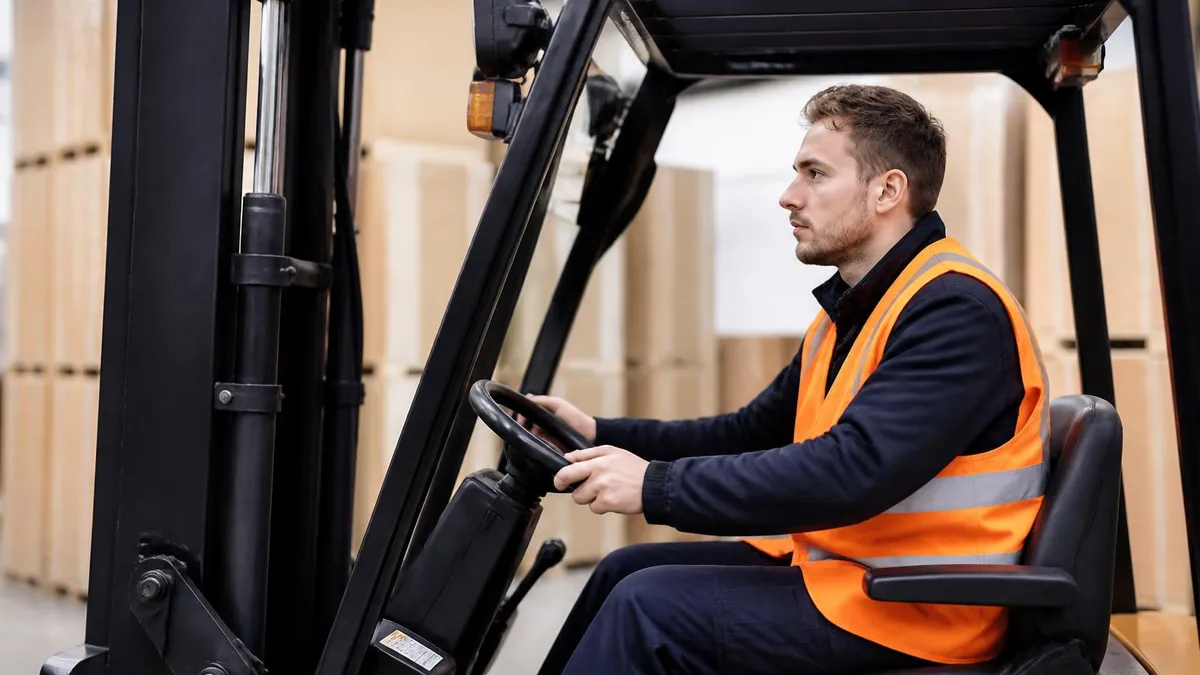
Forklift Models — Complete Guide (2026)
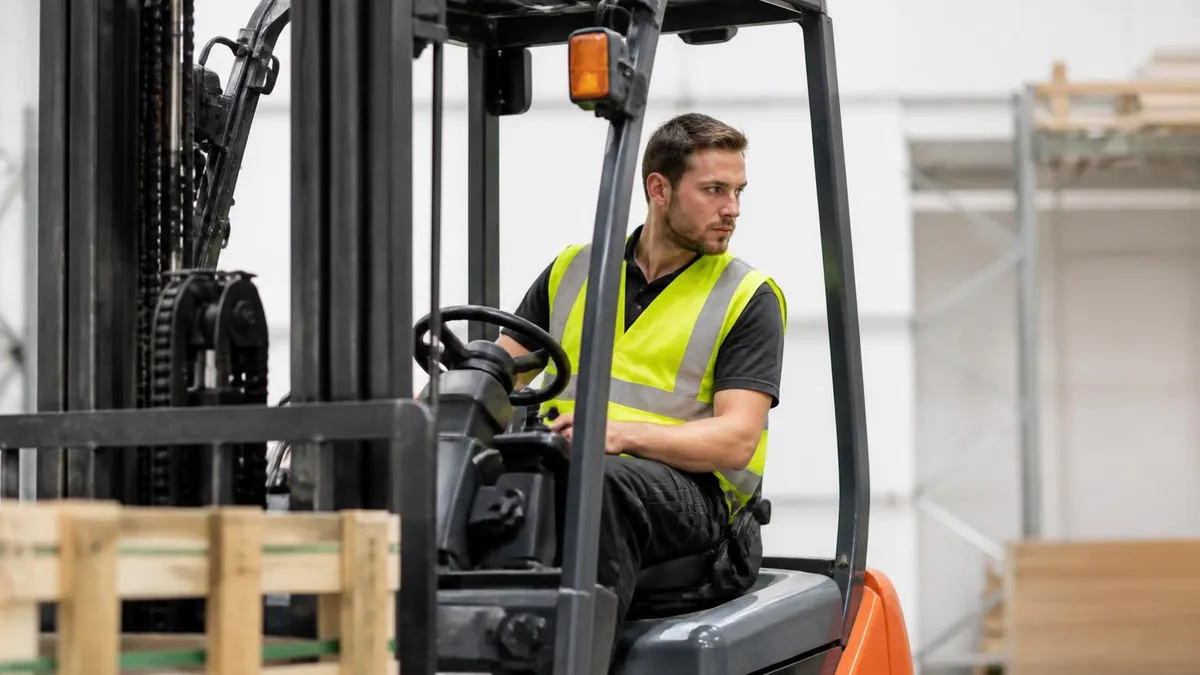
TLILIC0003 Forklift Maintenance: Pre-Shift Checks & Service Guide (2026)
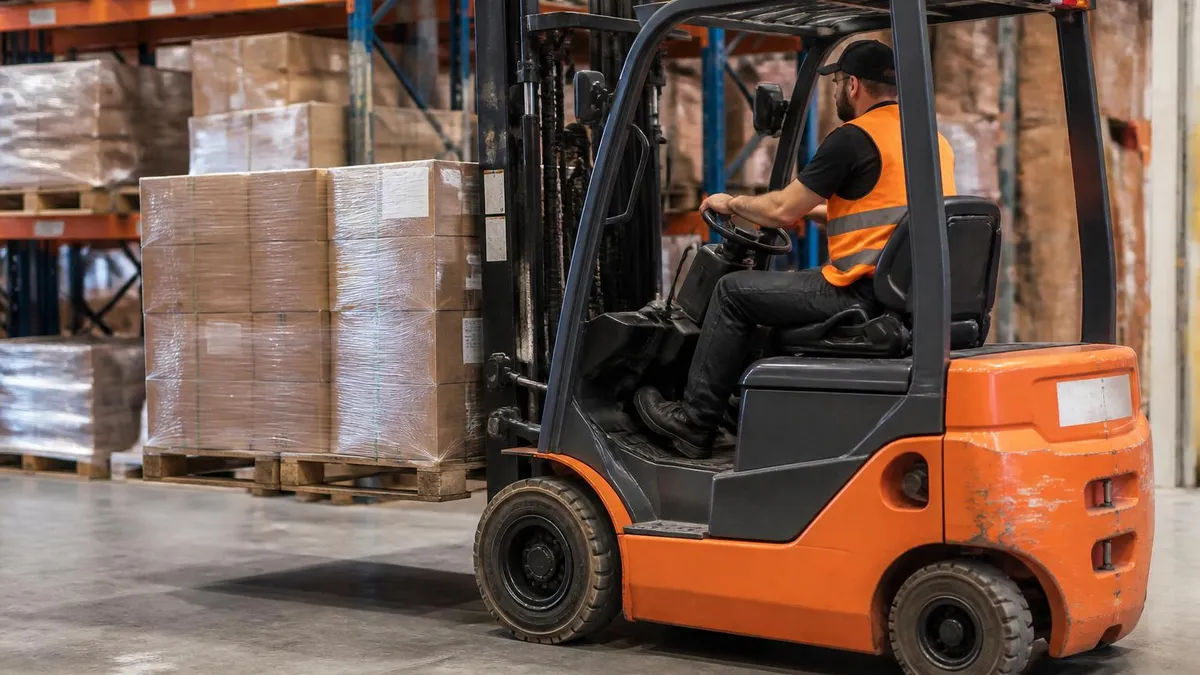
Forklift Licence Renewal Australia: Complete TLILIC0003 Guide (2026)
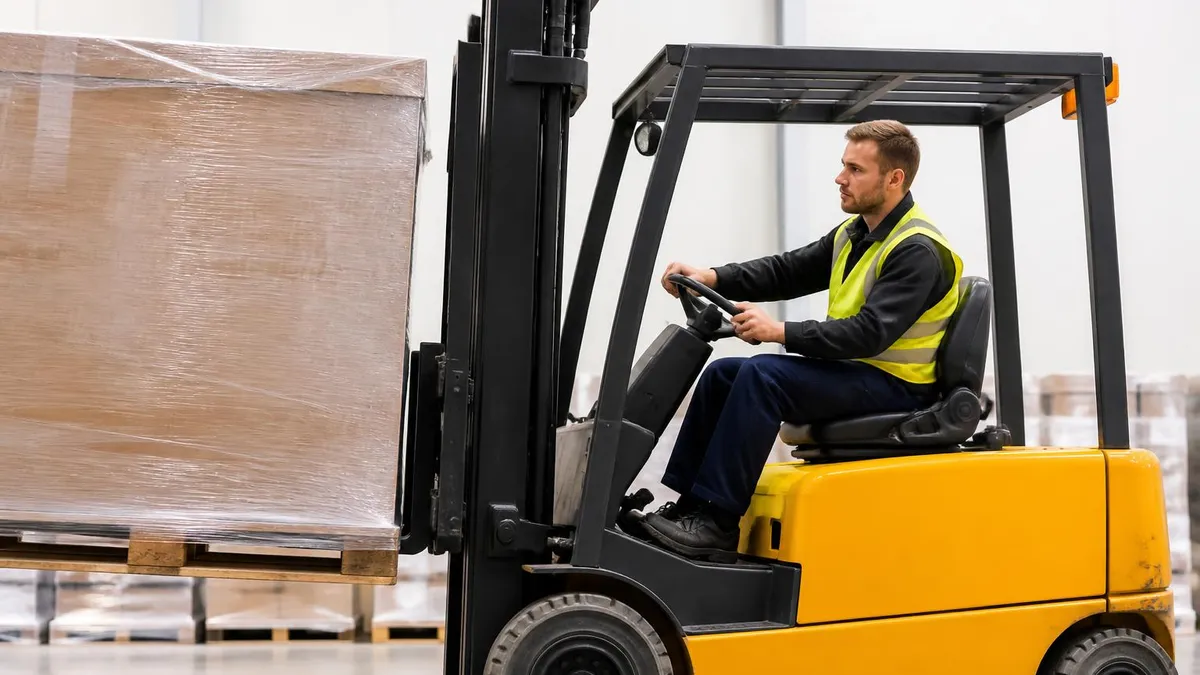
Forklift Licence Australia: How to Get Certified (TLILIC0003)
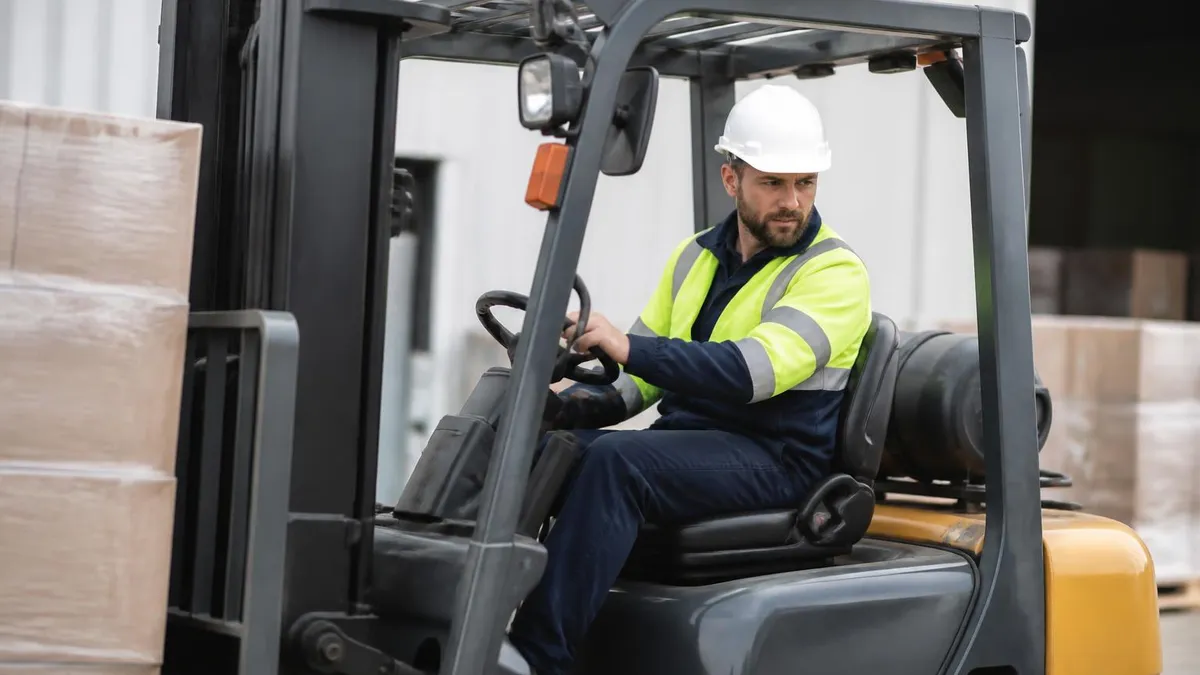
Electric 3 Wheel Forklift: Complete Guide to Electric Forklift Types for TLILIC0003 Operators in Australia
About the Author

Certified Crane Operator & Skilled Trades Exam Specialist
Ferris State UniversityRobert Martinez is a Journeyman Ironworker, NCCCO-certified crane operator, and forklift trainer with a Bachelor of Science in Construction Technology from Ferris State University. He has 21 years of ironworking, rigging, and heavy equipment operation experience across high-rise and industrial construction sites. Robert prepares candidates for crane operator, rigger, forklift, and skilled trades certification examinations.