
Forklift Licence Renewal Australia: Complete TLILIC0003 Guide (2026 September)
🏆 Everything you need to know about forklift licence renewal in Australia. TLILIC0003 requirements, costs, timelines, and tips to stay compliant.
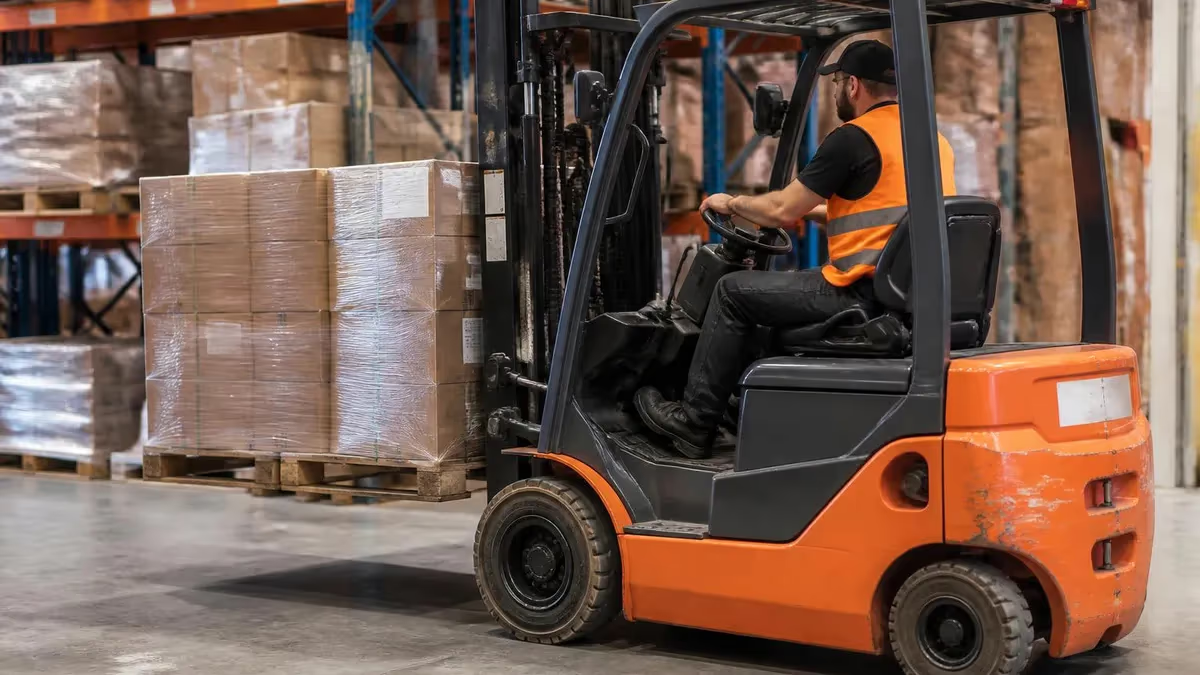
Forklift licence renewal in Australia is a legal requirement that every certified operator must navigate to remain compliant with workplace health and safety legislation. If you hold a High Risk Work (HRW) licence under the TLILIC0003 standard, you already know how critical it is to keep your certification current. An expired licence doesn't just put your job at risk — it exposes your employer to significant fines and creates serious liability in the event of a workplace incident. Understanding the renewal process before your licence lapses gives you time to prepare and avoid costly gaps in certification.
The High Risk Work licence for forklift operations in Australia is issued for a five-year period. That might seem like a long runway, but the renewal process involves several steps that can take longer than expected, especially if you need to book a practical assessment through a Registered Training Organisation (RTO). Many operators are caught off guard when they discover that assessor availability in busy periods can push booking windows out by four to six weeks, leaving them in a difficult position if their licence has already expired.
Different states and territories administer HRW licences through their respective workplace safety regulators: SafeWork NSW, WorkSafe Victoria, WorkSafe Queensland, SafeWork SA, WorkSafe WA, and NT WorkSafe, among others. While the TLILIC0003 unit of competency is nationally recognised, the administrative procedures for renewal — including fees, forms, and assessment requirements — vary by jurisdiction. Knowing which regulator governs your state is the first practical step in planning your renewal.
One of the most common misconceptions among forklift operators is that renewal is simply a matter of paying a fee and submitting a form. In reality, regulators assess whether your competency remains current, and in some cases you may be required to demonstrate practical skills before your licence is reissued. This is particularly relevant if you have changed the type of forklift you operate or if you have moved interstate since your original licence was issued.
Cost is another factor that surprises many operators. Between regulator application fees, RTO assessment charges, and any refresher training required, total renewal costs can range from around $150 to well over $500 depending on your state and whether additional training is needed. Planning ahead gives you time to compare RTOs, understand what's included in each fee structure, and potentially negotiate with your employer about who bears the cost — many employers cover renewal fees as part of workforce compliance obligations.
This guide covers everything you need to know about forklift licence renewal in Australia, from understanding the five-year cycle and state-by-state requirements to preparing for any practical reassessment, managing costs, and avoiding the most common administrative pitfalls. Whether your renewal is six months away or already overdue, the steps outlined here will help you get back on track efficiently and with full legal standing.
Forklift Licence Renewal by the Numbers
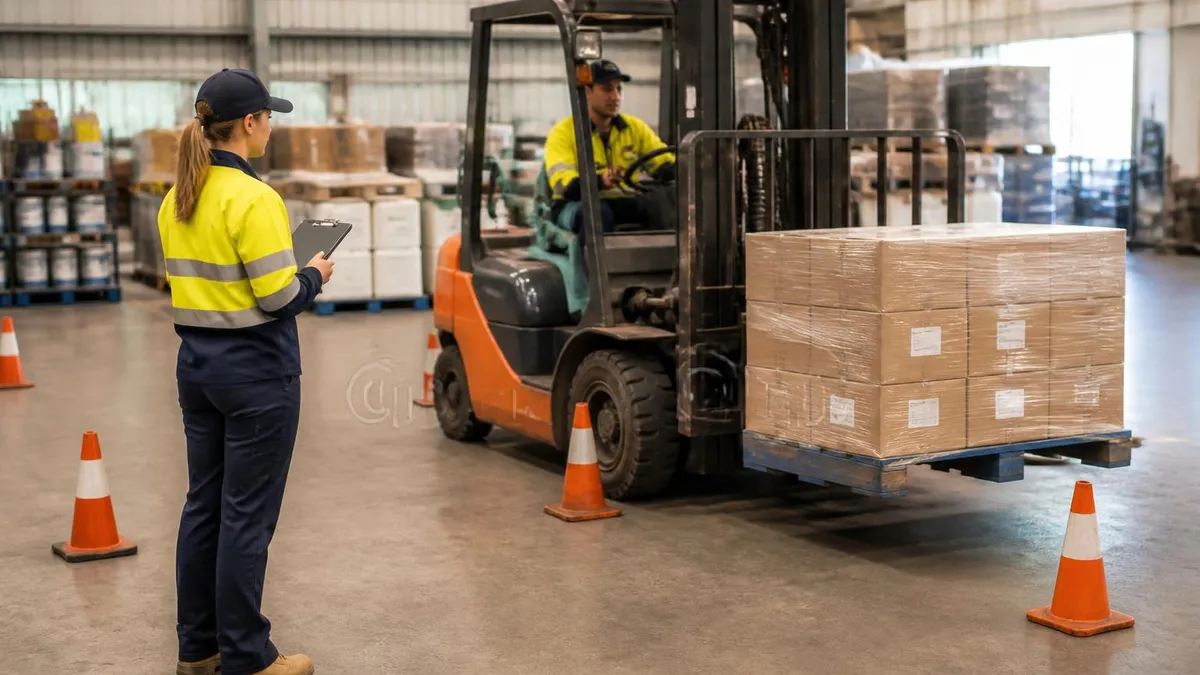
Renewal Requirements by State and Territory
Operators must apply to SafeWork NSW within 60 days before expiry. The application requires a completed form, current ID, and the prescribed fee. Competency reassessment via an accredited assessor may be required if there is evidence of changed work practices or safety incidents.
Victoria requires renewal applications to be submitted before the expiry date. Operators who allow their licence to lapse must reapply as new applicants, which includes a full practical assessment. WorkSafe strongly advises initiating renewal at least 60 days before expiry to avoid gaps.
Queensland issues HRW licences for five years. Renewal requires submitting the prescribed form to WHSQ along with relevant fees and proof of identity. Operators who have had safety incidents or licence conditions may be required to undergo a formal competency reassessment before renewal is approved.
WorkSafe WA administers forklift HRW licences and requires renewal applications before the expiry date. Western Australia has specific competency currency requirements, and operators who have not used their forklift licence in the preceding 12 months may need to demonstrate current competency.
The remaining states and territories follow similar five-year renewal cycles administered by their local workplace safety regulators. Fee structures and form requirements differ slightly, but the core competency standard under TLILIC0003 is consistent. Always confirm current requirements with your local regulator before applying.
The five-year High Risk Work licence cycle is designed to balance administrative practicality with safety assurance. When you first obtained your TLILIC0003 certification, you completed both theory and practical components that demonstrated competency across forklift pre-operational checks, load handling, travel and stacking, and safe shutdown procedures. The renewal process acknowledges that most operators maintain and develop these skills through daily practice, which is why a full retraining course is not typically required at renewal — provided your licence has not lapsed.
Your licence expiry date is printed on the physical card issued by your state regulator. Most regulators also allow you to check your licence status online through their respective portals. It is good practice to set a calendar reminder at least 90 days before your expiry date, giving yourself adequate time to book an assessment if one is required, gather your documents, and allow for the regulator's processing time. Many operators make the mistake of waiting until the 30-day mark, at which point assessor bookings and regulator processing queues can become a genuine problem.
A key consideration in the renewal cycle is the concept of competency currency. Even if your licence is technically still valid, if you have not operated a forklift in a substantial period — typically 12 months or more — some regulators and most responsible employers will require you to demonstrate that your skills remain current before you return to operating. This is not a formal renewal requirement in every jurisdiction, but it reflects best practice under the model Work Health and Safety Act, which places an ongoing duty on operators to be competent for the tasks they perform.
Interstate moves complicate the renewal cycle because HRW licences are issued by individual state and territory regulators. If you move from Queensland to Victoria, for example, your Queensland HRW licence remains valid for its remaining term, but when renewal is due you will need to apply through WorkSafe Victoria. In practice, many operators choose to transfer their licence to their new state as soon as they relocate to avoid confusion at renewal time. The transfer process generally requires proof of your existing licence and identity documents, and may or may not attract a fee depending on the receiving state.
The renewal cycle also has implications for employers managing a forklift workforce. Under WHS legislation, employers have a duty to ensure that workers performing high risk work hold a current, valid HRW licence. Many larger employers maintain internal licence registers and send automated reminders to operators 90, 60, and 30 days before expiry. If your employer has such a system, use it — but do not rely on it exclusively. The legal obligation to maintain a current licence rests with the operator, not the employer, even though both parties share compliance responsibilities.
One area where operators sometimes encounter difficulty in the renewal cycle is changes to the forklift class they operate. The original TLILIC0003 unit covers counterbalance forklifts of the type most commonly found in warehouses and manufacturing facilities. If you have moved into operating order-pickers, reach trucks, or specialised attachments since your original certification, you may need to confirm with your RTO and regulator whether any additional units of competency are required. These extensions do not replace your core renewal but may need to be completed concurrently.
Understanding the full five-year cycle — from initial certification through to renewal and the potential for competency reassessment — empowers you to manage your professional credentials proactively. Operators who approach renewal as a routine administrative task rather than an urgent crisis are far less likely to experience licence gaps, and they are better positioned to take on supervisory or training roles that often require demonstration of current, uninterrupted certification history.
Forklift Licence Renewal Costs and Fees
Each state and territory regulator charges an application fee for HRW licence renewal. In New South Wales, the current renewal fee is approximately $83 for a five-year licence. Victoria charges a similar amount, while Queensland's fee structure includes a slightly higher base rate for processing. It is essential to check the current fee schedule on your regulator's website, as these amounts are updated annually and penalties apply for under-payment.
Some states offer a reduced fee for eligible concession card holders, veterans, or those experiencing financial hardship. Western Australia and South Australia both have provisions for fee waivers in specific circumstances. When budgeting for your renewal, always source the current fee from the regulator's official website rather than relying on figures quoted by RTOs or industry contacts, as third-party sources are frequently out of date by six to twelve months.
Renewing Early vs. Waiting Until Near Expiry
- +Avoids the risk of operating with an expired licence if processing takes longer than expected
- +Gives you time to book preferred RTOs rather than taking the first available slot
- +Allows space for refresher training before the formal assessment if skills need sharpening
- +Employer has time to arrange cover if you need a day away from site for the assessment
- +Reduces administrative stress and keeps your professional credentials in order
- +Some regulators backdate the new expiry to the old expiry date, so you don't lose validity time
- −Renewing too early means starting a new five-year cycle before the current one has fully elapsed
- −Paying RTO fees sooner than necessary if assessment is not required by the regulator
- −May need to re-familiarise yourself with renewal forms if procedures have changed since last time
- −Booking an assessor months in advance requires coordination with your work schedule
- −If regulations change significantly before your new licence period ends, an early renewal could be based on older standards
- −Administrative burden of managing renewal while also fulfilling normal operational duties
Forklift Licence Renewal Checklist
- ✓Locate your current HRW licence card and confirm the exact expiry date.
- ✓Identify the correct workplace safety regulator for your state or territory.
- ✓Download the current renewal application form from the regulator's official website.
- ✓Confirm the current renewal fee and accepted payment methods with the regulator.
- ✓Gather your proof of identity documents (e.g., current driver's licence and Medicare card).
- ✓Check whether your state requires a practical competency assessment at renewal.
- ✓Book your practical assessment with an accredited RTO at least 6 weeks before expiry.
- ✓Notify your employer of your renewal timeline and any time needed away from site.
- ✓Complete any required refresher training before your formal assessment date.
- ✓Submit your renewal application form, fee, and supporting documents to the regulator.
Never Let Your Licence Lapse — Reinstatement Costs More Than Renewal
Operators who allow their HRW forklift licence to expire must typically reapply as new applicants, which means completing a full practical assessment, paying new-applicant fees, and in some states re-sitting the written theory component. The total cost of reinstatement can be three to four times higher than a straightforward renewal, and the process takes significantly longer. Set reminders at 90, 60, and 30 days before your expiry date and treat renewal as a non-negotiable professional obligation.
Preparing for a practical competency reassessment as part of your forklift licence renewal requires a different mindset to the original certification process. When you first earned your TLILIC0003 licence, you were being assessed from a baseline of structured training. At renewal, assessors understand that you have been operating in real workplaces for up to five years, but they will still be looking for strict adherence to the formal procedures specified in the unit of competency — not just the shortcuts that experienced operators often develop over time in familiar environments.
The practical assessment for renewal typically covers the same core competencies as the original certification: pre-operational inspection, safe load assessment and calculation, travel with a load, stacking and de-stacking, operation on inclines, and safe shutdown. The key difference at renewal is that assessors expect a higher level of procedural fluency and situational awareness. Candidates who fail renewal assessments most commonly do so because of procedural omissions in the pre-operational check — specifically skipping steps that feel unnecessary when you operate the same machine every day.
To prepare effectively, revisit the formal pre-operational inspection procedure as documented in your RTO's materials or the relevant Australian Standard. Walk through the full check on your everyday forklift before your assessment date, deliberately verbalising each step as you would in a formal assessment environment. This practice — known as narrated or commentary checking — helps assessors verify that you are completing each step intentionally rather than by habit, and it also catches any genuine faults or deterioration in your equipment that daily familiarity might cause you to overlook.
Load assessment is another area where experienced operators sometimes struggle in reassessments. In daily operations, most warehouse forklifts lift loads that are well within rated capacity and operators develop an intuitive sense for safe lifts. Assessors at renewal may present loads that are closer to the rated capacity, require you to calculate the effect of attachment weight on effective capacity, or test your response to a load that exceeds safe limits. Reviewing load capacity plate interpretation and the formula for calculating effective capacity with attachments is time well spent before your assessment.
Travel procedures are often where long-standing operators receive critical observations. In familiar warehouses, experienced operators may travel at speeds or with fork heights that are technically non-compliant with the standard but have become normalised in their work environment. Assessors are looking for travel speed appropriate to the conditions, forks at the correct travel height of 150 to 300 millimetres, mast tilted back for stability, and horn use at all blind corners and pedestrian crossings. Practise these procedures deliberately in the days before your assessment, even if it feels slower than your normal operating pace.
Mental preparation matters as much as physical practice. Renewal assessments generate anxiety even in very experienced operators, and that anxiety can cause procedural skips that would never occur in normal operations. Before your assessment, remind yourself that the assessor is not looking for perfection in the sense of speed or efficiency — they are looking for systematic, safe procedure that demonstrates you understand why each step matters. An operator who completes every step methodically and at a measured pace will always score better than one who rushes through the assessment to demonstrate how quickly they can operate.
If you have access to a TLILIC0003 practice environment in the weeks before your reassessment, use it to run through complete simulated assessments rather than just practising individual skills. The goal is to build the habit of moving sequentially through the full procedure without prompting, so that on assessment day the process feels natural rather than performed. Peer review with a colleague who holds current certification can also be valuable — having someone else observe your procedure and point out any omissions is a highly effective preparation strategy that costs nothing.
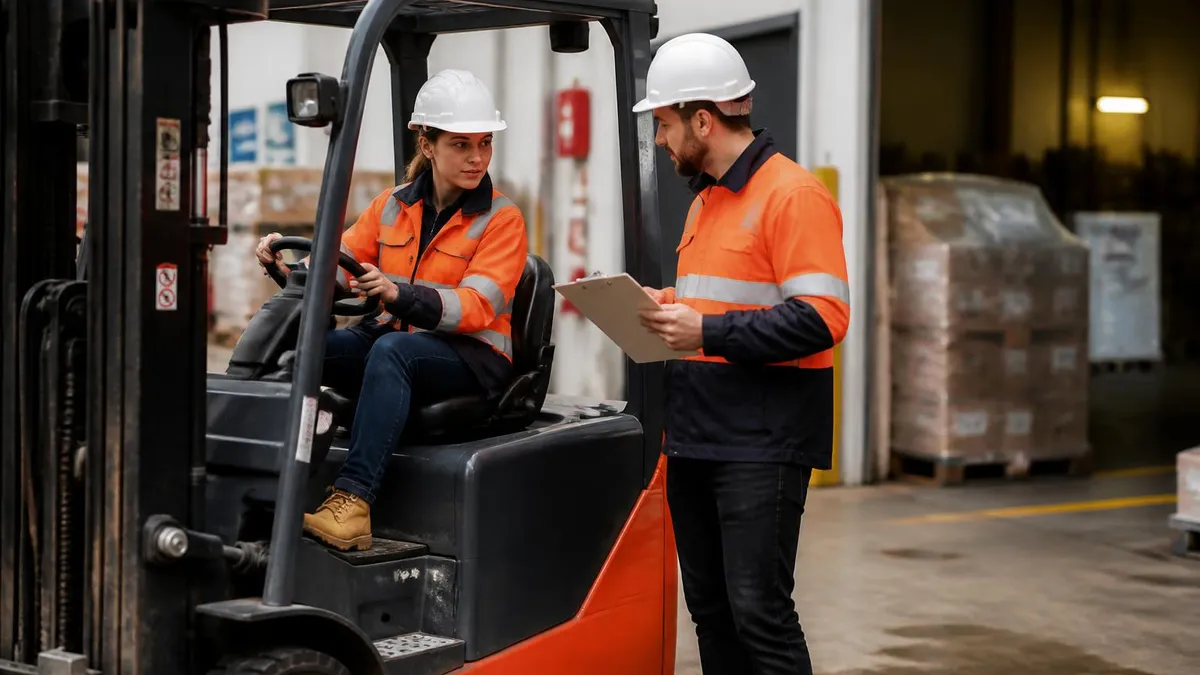
In every Australian state and territory, performing high risk work — including operating a forklift — without a current, valid HRW licence is a criminal offence under workplace health and safety legislation. Penalties for operators can reach $3,600 or more per offence, and employers who knowingly allow unlicensed operation face significantly higher fines. If your licence has expired and your renewal is still being processed, do not operate a forklift until your new licence has been formally issued and you have received written confirmation from the regulator.
When a forklift licence expires before renewal is completed, operators face a situation that is both legally serious and practically disruptive. The first and most important step is to stop operating immediately. While it may feel like a technicality — particularly if your renewal application is already lodged — operating on an expired licence is a breach of WHS legislation regardless of whether the paperwork is in progress. Inform your supervisor or employer the moment you realise your licence has lapsed so that alternative arrangements can be made for forklift operations in your area.
Contact your state regulator as soon as possible to explain the situation and ask about the expedited processing options. Some regulators have provisions for urgent renewal processing where operational continuity is genuinely affected, though these provisions vary significantly by jurisdiction and are not guaranteed. Be prepared to explain why the renewal was not completed before expiry and provide any supporting documentation, such as evidence that you attempted to book an assessor in advance but could not secure an appointment before your expiry date.
If your licence has only recently lapsed — within the past few weeks — some regulators treat the application more favourably than a licence that has been expired for months or years. In these cases, the regulator may process your renewal as a standard application rather than requiring you to reapply from scratch, especially if you can demonstrate that you submitted your application before the expiry date. Always ask your regulator explicitly about their policy for recently expired licences, as the answer can significantly affect both the process and the cost.
Employers have their own obligations when an operator's licence lapses. Under WHS legislation, allowing an unlicensed worker to perform high risk work exposes the employer to prosecution, not just the operator. Responsible employers should have systems in place to identify licence expiry before it occurs, but where that has failed, they must act immediately to remove the unlicensed operator from forklift duties and arrange compliant alternatives. This may mean bringing in a licensed operator through a labour hire arrangement, reassigning the operator to non-forklift tasks, or in smaller operations, pausing certain warehouse functions until the renewal is completed.
The administrative process for reinstating a lapsed licence varies considerably across jurisdictions. In New South Wales, operators whose licences have lapsed by more than three years are generally required to complete the full TLILIC0003 training and assessment program as though they were new applicants. In Victoria, the threshold is similar. Understanding where your jurisdiction draws the line between renewal and full reapplication is critical, and this information should be confirmed directly with your regulator rather than assumed from online forums or industry contacts whose experience may reflect a different state's rules.
One practical strategy for managing a lapsed licence is to engage an RTO immediately to book a practical assessment, even before your regulator has confirmed the exact requirements. Most RTOs can accommodate short-notice bookings for experienced operators, and having an assessment booked demonstrates to your employer and, if necessary, to the regulator that you are actively working to restore your compliance. Keep records of all booking attempts, correspondence with the regulator, and any supporting communications — these records can be valuable if your employer or an inspector asks about the timeline of your renewal efforts.
Prevention is always preferable to remediation when it comes to licence compliance. Once you have navigated the process of renewing or reinstating a lapsed licence, use the experience as motivation to establish durable systems for the next five-year cycle.
A simple annual calendar reminder set for 90 days before your licence expiry, combined with a saved copy of the current renewal form and fee schedule, is all it takes to ensure that you approach your next renewal with time to spare. Experienced operators who maintain impeccable certification records are consistently preferred for senior operational roles, training positions, and site supervisor appointments.
Experienced TLILIC0003 operators approaching their renewal date often underestimate how much the regulatory environment and industry best practices can shift over a five-year licence cycle. Australian workplace health and safety legislation is reviewed and updated regularly, and changes to the model WHS Act, relevant Australian Standards, and Safe Work Australia guidance documents can affect both the assessment criteria for renewal and the day-to-day safe operating procedures you are expected to follow.
Taking time to review what has changed since your original certification is not just good preparation for reassessment — it is an obligation under your ongoing duty of care as a licensed high risk work operator.
One area that has seen significant development in recent years is the guidance around forklift and pedestrian separation in workplaces. Safe Work Australia's updated guidance on traffic management and pedestrian safety has raised the bar for what regulators and employers expect in terms of segregation systems, speed controls, and signage. If your workplace operates on procedures that were established more than three years ago without review, it is worth checking whether they remain compliant with the current guidance — and this is directly relevant to your renewal assessment, where situational awareness around pedestrian hazards is a key competency.
Technology changes in the forklift industry are also relevant to renewal preparation. Electric forklifts now account for a growing proportion of the Australian fleet, and operators who were trained primarily on internal combustion machines may find that battery management, regenerative braking characteristics, and electric drivetrain behaviour are assessed more thoroughly in renewal assessments than they were in original certifications five or more years ago. Familiarising yourself with the specific characteristics of the equipment you will use in your assessment is always worthwhile, regardless of your overall experience level.
Load handling technology has also evolved. The proliferation of specialised attachments — side-shifters, rotators, paper roll clamps, and multi-pallet handlers — means that assessors are increasingly alert to operators who understand the effect of attachments on load capacity and stability. Even if your renewal assessment uses a standard counterbalance forklift without attachments, being able to articulate the principles behind attachment-related capacity derating demonstrates the depth of understanding that distinguishes a competent operator from an experienced but procedurally shallow one.
Documentation habits are another practical area where renewal assessors look for evidence of professional standards. Operators who maintain personal records of their pre-operational inspections, incident reports, and near-miss observations are demonstrating a level of professional practice that goes beyond minimum compliance. Some RTOs and assessors will ask to review your workplace records as part of a renewal assessment, particularly if they are conducting the assessment at your workplace rather than at an RTO training facility. Having well-maintained records is not just good WHS practice — it is direct evidence of competency currency.
Networking with other forklift operators who have recently completed their renewal can provide valuable practical intelligence about the current assessment process in your specific region. Assessment standards are consistent at a national level through the TLILIC0003 unit of competency, but individual assessors and RTOs have their own approaches and emphasis areas, and local operators can often tell you whether a particular assessor is known to focus heavily on load calculations, pre-operational checks, or travel procedures. This kind of peer intelligence is completely legitimate and can help you direct your preparation time most effectively.
Finally, consider your renewal as an opportunity to reflect on and formalise the operational knowledge you have accumulated over the past five years. Experienced operators often hold a great deal of practical wisdom about load behaviour, equipment quirks, and situational hazards that they have never formally documented or articulated. The renewal process — particularly if it includes a practical assessment with a skilled assessor — can be a genuine professional development experience that sharpens your practice, not just a compliance hurdle to be cleared as quickly as possible.
TLILIC0003 Questions and Answers
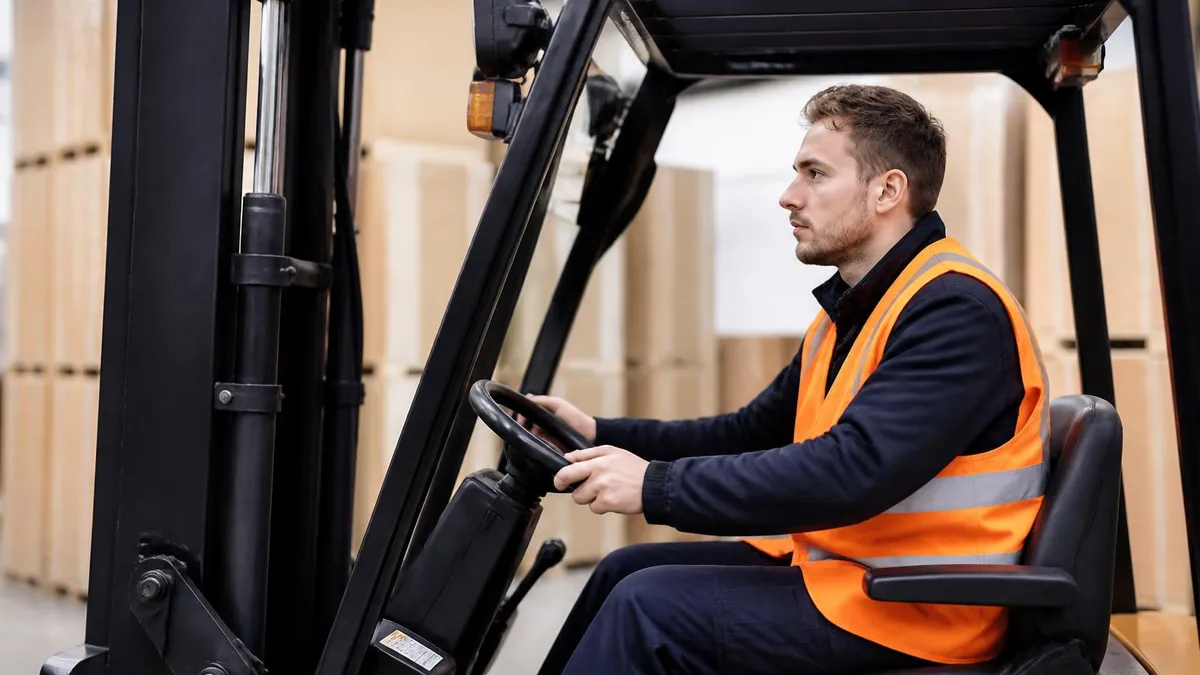
Forklift Models — Complete Guide (2026)
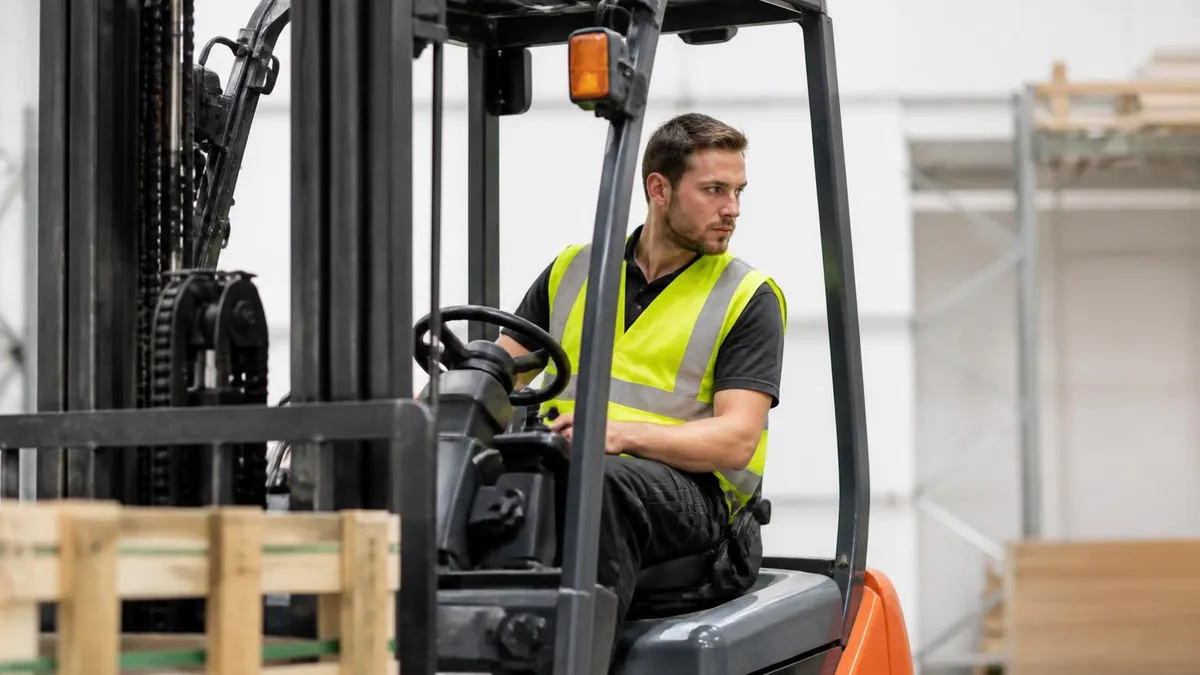
TLILIC0003 Forklift Maintenance: Pre-Shift Checks & Service Guide (2026)
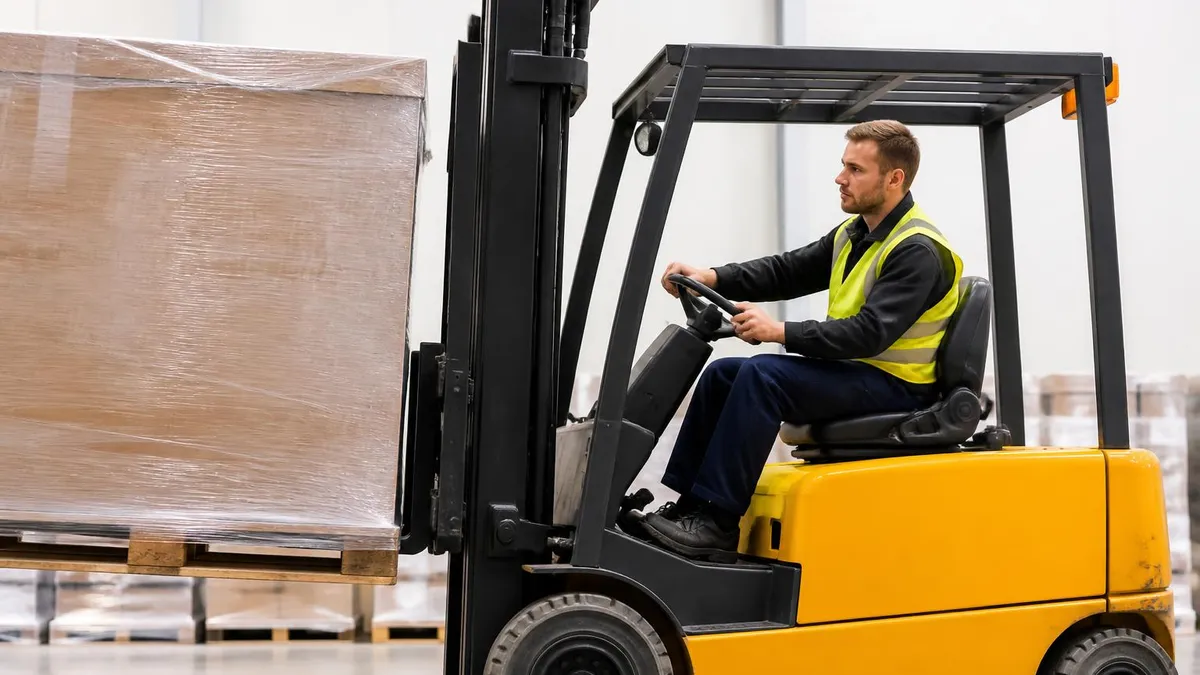
Forklift Licence Australia: How to Get Certified (TLILIC0003)
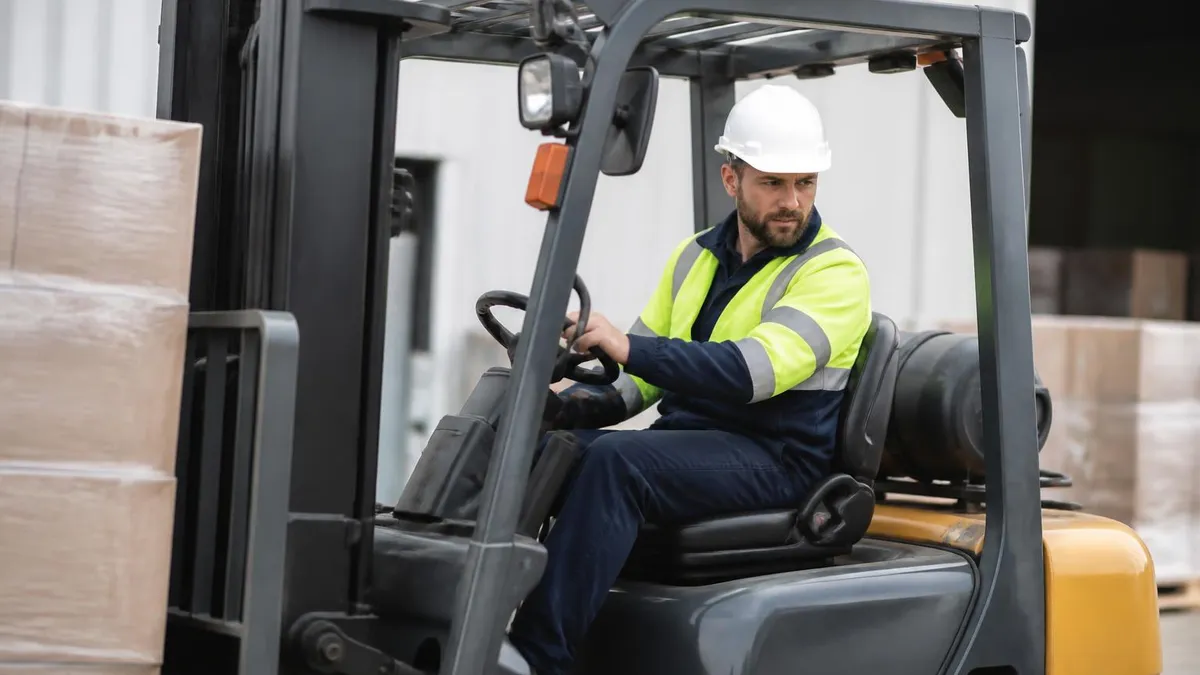
Electric 3 Wheel Forklift: Complete Guide to Electric Forklift Types for TLILIC0003 Operators in Australia
Forklift Sale Brisbane: Complete TLILIC0003 Operator Guide to Buying Forklifts in Australia
About the Author

Certified Crane Operator & Skilled Trades Exam Specialist
Ferris State UniversityRobert Martinez is a Journeyman Ironworker, NCCCO-certified crane operator, and forklift trainer with a Bachelor of Science in Construction Technology from Ferris State University. He has 21 years of ironworking, rigging, and heavy equipment operation experience across high-rise and industrial construction sites. Robert prepares candidates for crane operator, rigger, forklift, and skilled trades certification examinations.