
How to Get Your Forklift Licence in NSW: Complete TLILIC0003 Training Guide
Learn how to get forklift licence NSW with our complete TLILIC0003 guide. Steps, costs, training providers & tips. ✅ Start today!

Understanding how to get forklift licence NSW is the first step toward a high-demand, well-paying career in logistics, warehousing, construction, and manufacturing. In New South Wales, operating a forklift requires a High Risk Work (HRW) licence issued by SafeWork NSW, underpinned by successful completion of the nationally recognised TLILIC0003 unit of competency. This article walks you through every stage of the process — from eligibility checks and choosing a registered training organisation (RTO) to sitting your assessment and receiving your licence card.
The TLILIC0003 unit — Licence to Operate a Forklift Truck — replaced the older TLILIC2001 qualification and is now the sole pathway accepted by SafeWork NSW for new applicants. The unit covers pre-operational checks, load handling, travel and stacking, refuelling, and emergency procedures. Whether you are brand new to the industry or upgrading from a previous certificate, the requirements are the same: complete approved training, pass a practical and knowledge assessment, and lodge your application with the regulator.
Many workers in NSW are surprised to learn that the licence itself is issued by SafeWork NSW — not by the training provider. Your RTO delivers the training and conducts the assessment on behalf of the regulator, but the actual High Risk Work licence card arrives in the mail from SafeWork NSW approximately two to four weeks after your application is processed. It is valid for five years and must be renewed before it expires if you want to continue operating legally on any worksite in the state.
Choosing the right training provider is critical. Only RTOs that hold the relevant accreditation can deliver TLILIC0003 and conduct the final assessment. Prices vary considerably — from around $350 for a basic one-day course to over $600 for courses that include multiple re-sits and additional theory support. Location matters too: providers in Sydney's western suburbs, Newcastle, and Wollongong typically have the most frequent course dates, reducing your wait time to get started.
Before you enrol, check that you meet the basic eligibility requirements. You must be at least 18 years old on the day of assessment, able to communicate in English at a level sufficient to understand safety instructions, and physically capable of operating forklift controls safely. There is no prior experience required — the entire TLILIC0003 course is designed to take a complete beginner from zero to job-ready. Some RTOs do recommend that first-timers complete a short orientation session, but this is not a regulatory requirement.
Once you hold your HRW forklift licence, it is recognised in every Australian state and territory under national mutual recognition legislation. This means a licence earned in NSW through TLILIC0003 training is valid in Queensland, Victoria, Western Australia, and elsewhere — a significant advantage for workers who travel for project-based employment. If you are interested in understanding the different types of equipment covered, exploring options to get forklift licence nsw across different forklift classes is an excellent way to broaden your career options and earning potential.
This guide is structured to answer the most common questions asked by NSW candidates: what the training involves, how much it costs, how long it takes, what happens on assessment day, and what your career prospects look like once you qualify. By the end, you will have a clear, actionable roadmap to securing your TLILIC0003 qualification and launching — or advancing — your career in the forklift industry.
Free Forklift Licence Study Tools
Interactive Forklift Licence resources on PracticeTestGeeks, free to start:
- Forklift Licence practice test — 300+ questions with instant scoring and answer explanations
- Forklift Licence flashcards — review key terms and concepts card by card
- Forklift Licence study guide — topic-by-topic overview of what the exam covers
- Forklift Licence cheat sheet — one-page printable summary for last-minute review
Getting a Forklift Licence in NSW by the Numbers
Key Facts at a Glance
| Item | Value | Details |
|---|---|---|
| Typical Course Length | 1–2 Days | For most standard forklift courses |
| HRW Licence Validity | 5 Years | Must be renewed before expiry |
| Minimum Age to Qualify | 18+ | Must be 18 on assessment day |

Step-by-Step: How to Get Your Forklift Licence in NSW
Check Eligibility
Find a Registered Training Organisation (RTO)
Complete TLILIC0003 Training
Pass the HRW Licence Assessment
Lodge Your Application with SafeWork NSW
Receive Your HRW Licence Card
The TLILIC0003 unit of competency is structured around the specific knowledge and skills that SafeWork NSW and the national regulator have determined are essential for safe forklift operation. At its core, the course is divided into two streams: theory (also called knowledge evidence) and practical (performance evidence). Both must be completed and assessed satisfactorily before your application can be submitted. Neither component alone is sufficient — a worker who excels at theory but struggles with the practical controls, or vice versa, will need to address the weaker area before receiving a pass result.
The theory component covers the Australian standards and regulations governing forklift operation, including the Work Health and Safety Act 2011 (NSW) and related codes of practice. Candidates learn about load capacity and load centre calculations, stability triangle principles, forklift inspection procedures, refuelling and recharging requirements for different fuel types, and the rules governing pedestrian separation on worksites. Many candidates find the load calculation questions the most technically demanding part of the theory assessment, so it is worth spending extra preparation time on this topic before course day.
The practical component takes place on a real forklift — typically a counterbalance sit-down model, which is the most common configuration in Australian warehouses and distribution centres. Candidates must demonstrate correct pre-start inspection using a documented checklist, safe travel with and without a load, picking up and depositing a load at both ground level and on a racking system, and correct shutdown procedures. The assessor watches for specific performance indicators prescribed in the national assessment instrument, so consistent technique matters more than speed.
One area that catches many first-time candidates off guard is the refuelling and battery-charging segment. For LPG forklifts, candidates must demonstrate they can safely change a gas cylinder — this involves switching off the machine, isolating the fuel supply, removing the old cylinder safely, fitting the new one, checking for gas leaks, and recording the change in the log. For electric forklifts, the equivalent task involves correctly connecting and disconnecting the battery charger, checking electrolyte levels where applicable, and recording charge cycles. Your RTO should clarify which fuel type is used in the assessment before course day.
Emergency procedures form the final major theory block. Candidates must know what to do if a forklift tips over (the prescribed response is to grip the steering wheel, brace feet on the floor, and lean away from the direction of fall — never jump), what to do in the event of a fuel or battery leak, and how to report incidents and near-misses under NSW WHS legislation. These topics may seem unlikely to arise in everyday work, but SafeWork NSW considers them fundamental because the consequences of an incorrect response in an emergency are potentially fatal.
After completing your TLILIC0003 course, your RTO issues a Statement of Attainment — a nationally recognised qualification document that proves you have met the competency standard. Even if you never proceed to licence application (for example, if you are waiting to turn 18), this statement is a recognised industry credential. Many employers specifically list TLILIC0003 in their job advertisements as a minimum requirement, so holding the statement alone can open doors while your HRW licence application is in progress.
Beyond the core TLILIC0003 content, many RTOs offer complementary units on the same day — for example, TLILIC0005 (Licence to Operate an Order Picking Forklift Truck) or TLILIC0004 (Licence to Operate a Reach Stacker). Bundling units is cost-effective and means only one visit to the training facility. Discuss bundling options with your chosen RTO before you enrol, particularly if your employer operates multiple forklift types. Understanding the full range of equipment you may need to operate is also valuable — a thorough review of the relevant forklift categories can help you plan your training roadmap strategically.
TLILIC0003 Training Options in NSW Compared
The most common delivery model combines a morning of classroom theory with an afternoon of forklift operation on a dedicated training yard. This format suits first-time candidates who benefit from face-to-face instruction and immediate Q&A with a qualified trainer. Courses typically run from 7:30 am to 4:00 pm and are offered Monday through Saturday at most major RTO facilities in Sydney, Newcastle, and Wollongong. Class sizes are usually capped at eight to ten participants per forklift to ensure adequate hands-on time for each student.
Pricing for this format ranges from approximately $380 to $550 depending on the provider's location and whether the government application fee is included in the course price. Most RTOs in the greater Sydney metro area — particularly those in the Parramatta, Blacktown, and Liverpool corridors — run multiple sessions per week, meaning you rarely need to wait more than seven to ten days for a place. Bring your own steel-capped boots and a high-visibility vest to the course; most providers supply hard hats and gloves but check in advance to avoid turning up underprepared.

Is Getting a Forklift Licence in NSW Worth It?
- +Nationally recognised — your HRW licence is valid in every Australian state and territory under mutual recognition
- +Opens access to a wide range of industries including warehousing, logistics, construction, mining, and manufacturing
- +Relatively low cost compared to other trade qualifications — training typically costs $350 to $600
- +Short training time — most candidates are fully licensed within two to four weeks of starting
- +Strong and consistent demand for licensed forklift operators in NSW, particularly in western Sydney
- +Five-year licence validity with a straightforward renewal process requiring no re-assessment in most cases
- −Government application fee adds $67 on top of RTO course costs, and replacement card fees apply if lost
- −Physical fitness requirements may exclude some candidates with specific musculoskeletal conditions
- −Re-sit fees apply if you do not pass the assessment first time — typically $150 to $250 per re-sit
- −Licence must be renewed every five years and renewal may require proof of recent operation in some circumstances
- −Course availability in regional NSW can be limited, requiring travel to a major centre
- −Operating a forklift type not covered by your specific licence class is still prohibited — additional units may be needed
TLILIC0003 Assessment Day Checklist for NSW Candidates
- ✓Bring your original photo ID — a passport, Australian driver licence, or proof-of-age card is accepted by assessors.
- ✓Wear steel-capped safety boots — open-toed shoes or regular sneakers will result in you being excluded from the practical assessment.
- ✓Bring or borrow a high-visibility vest rated to Class D/N standard — confirm with your RTO whether they supply these.
- ✓Arrive at least 15 minutes early so you can complete any remaining paperwork before the session starts.
- ✓Review load capacity plate calculations and load centre principles the night before — these appear in nearly every knowledge assessment.
- ✓Memorise the standard pre-start inspection sequence — POWDERSS or your RTO's equivalent acronym — so you can perform it smoothly under assessment conditions.
- ✓Know the safe shutdown procedure: forks lowered to floor, parking brake applied, key removed, travel path blocked if on a slope.
- ✓Bring your SafeWork NSW application paperwork completed and signed if your RTO requires you to lodge it on the day.
- ✓Carry your bank card or cash for the government application fee ($67) if it is not bundled into your course price.
- ✓If you are retaking an assessment, bring your previous Statement of Attempt so the assessor can confirm which components still need to be demonstrated.
You Can Work Legally Before Your Licence Card Arrives
Once your RTO submits your assessment results and SafeWork NSW confirms receipt of your application, you are legally permitted to operate a forklift in NSW while your physical licence card is being processed. Your signed assessment result certificate or the SafeWork NSW application receipt serves as temporary evidence of your authorisation. Keep a copy on you at all times during this period — inspectors from SafeWork NSW can request to see proof of licence during any workplace inspection.
The cost of obtaining a forklift licence in NSW is one of the most frequently asked questions from candidates and their employers. The total outlay involves several distinct components: RTO training and assessment fees, the government High Risk Work licence application fee, and optional extras such as study materials, re-sit fees if needed, and replacement card fees if your card is lost or damaged. Understanding each component helps you budget accurately and avoid unexpected costs mid-process.
RTO training fees in NSW typically range from $350 to $600 for a standard one or two-day TLILIC0003 course that includes both training and assessment. The price variation reflects factors including provider location (metro versus regional), class size, the quality of training equipment, and whether the fee includes the SafeWork NSW application lodgement service or merely the training and assessment itself. Always confirm what is and is not included in the quoted price before you book — some providers advertise a low headline price that excludes the government fee, which can make meaningful cost comparisons difficult.
The SafeWork NSW HRW licence application fee is set by the government and is currently $67.00 for a new five-year licence. This fee is payable directly to SafeWork NSW and is separate from any amount paid to your RTO. It can be paid online via the SafeWork NSW portal, by phone, or in person at a Service NSW centre. The application fee is non-refundable — if your application is rejected for incomplete documentation, you will need to resubmit with the correct documents but the fee paid previously is not returned.
If you do not pass the assessment on your first attempt, re-sit fees apply. Most NSW RTOs charge between $150 and $250 for a single practical re-sit, or between $80 and $120 for a knowledge-only re-sit if only the theory component was unsatisfactory. Some providers offer a guaranteed pass package — where the course fee includes unlimited re-sits — at a premium of approximately $100 to $150 above the standard course price. For candidates who are less confident in their ability to pass first time, this can be a worthwhile investment and an effective stress-reducer on assessment day.
Government subsidies may reduce your out-of-pocket costs significantly. In NSW, the Smart and Skilled program funds eligible training for working-age adults who meet certain criteria, and some TLILIC0003 courses are listed on the approved training list. Eligibility depends on factors including your existing qualifications, age, employment status, and whether your employer is co-funding the training. Contact your chosen RTO to ask whether they offer Smart and Skilled-funded places for TLILIC0003 before you pay full price — availability is limited and enrolment requires additional paperwork, but the savings can be substantial.
Employers increasingly offer to cover some or all of the training costs for workers they want to qualify. If your current or prospective employer has an established relationship with an RTO, they may have negotiated group rates that are lower than you could access as an individual. It is always worth asking your employer's HR or training coordinator before self-funding your licence, particularly in large logistics or manufacturing businesses where forklift operators are in high demand and training investment is considered a standard operating cost.
When comparing total costs across providers, calculate the full-lifecycle cost: initial training and assessment, government application fee, and the likely cost of a re-sit if your first attempt is unsuccessful. A provider charging $400 with a $200 re-sit policy may end up costing the same as a $550 guaranteed-pass provider if you need one re-sit.
Factor in travel costs if the nearest accredited RTO is not local — a cheaper course two hours away may not be cheaper once fuel or public transport is factored in. NSW candidates in metropolitan Sydney generally have enough provider choice to negotiate or compare meaningfully.

Operating a forklift in NSW without a current High Risk Work licence is a serious offence under the Work Health and Safety Act 2011. Individual operators can face on-the-spot fines of up to $3,600 and court-imposed penalties significantly higher. Employers who permit unlicensed operators to work face penalties of up to $50,000. Your TLILIC0003 Statement of Attainment from a course does not alone authorise you to operate commercially — only the HRW licence (or a valid application receipt from SafeWork NSW) does.
Holding a valid TLILIC0003 HRW forklift licence in NSW unlocks a broad range of employment opportunities with competitive wages and genuine long-term career progression. The forklift industry in Australia is fundamentally tied to the health of supply chains, e-commerce, construction, and manufacturing — all sectors that have demonstrated strong resilience and growth over recent years. As of 2026, licensed forklift operators in NSW command hourly rates ranging from $28 to $38 per hour for standard warehouse roles, with specialist roles in ports, chemical handling, and cold storage commanding premiums above those figures.
Entry-level forklift operators typically begin in general warehousing or third-party logistics (3PL) facilities — picking, packing, and moving palletised goods in controlled indoor environments. These roles are an excellent starting point because they provide consistent hours, structured supervision, and the opportunity to build machine hours quickly. Most employers expect new licence holders to spend at least six to twelve months in a general warehousing role before progressing to higher-risk or higher-complexity environments such as outdoor container yards, high-bay racking systems above eight metres, or multi-shift operations with tight throughput targets.
Experienced forklift operators can progress into leading hand and supervisory roles, which involve coordinating a team of operators, managing inventory accuracy, and liaising with transport providers. These positions typically attract salaries of $65,000 to $85,000 per year and increasingly require additional qualifications such as a Certificate III in Warehousing Operations (TLI30319) or Certificate IV in Logistics. Some operators choose to specialise in a particular equipment type — reach stackers, container handlers, or rough terrain forklifts — and pursue additional HRW licence classes to increase their market value and scope of employment.
The Sydney basin, particularly the western suburbs corridor from Parramatta to Penrith and the south-west precincts around Moorebank and Ingleburn, is one of the highest-demand areas for licensed forklift operators in Australia. The Moorebank Logistics Park alone — one of the largest intermodal freight precincts in the Southern Hemisphere — employs thousands of logistics workers, many of whom are forklift operators. New distribution centres continue to open in this corridor as e-commerce volumes grow, creating consistent demand for newly qualified operators with TLILIC0003 credentials.
Beyond the Sydney metro area, regional NSW also offers solid employment prospects for forklift operators. The Hunter Valley region (Newcastle and Maitland) has a strong manufacturing and resources base, while the Illawarra and Southern Highlands support agricultural processing and regional logistics networks. Operators willing to travel for fly-in fly-out or drive-in drive-out roles in the NSW mining sector can access some of the highest-paid forklift positions available anywhere in the country, often earning $40 to $55 per hour on rotating rosters with site accommodation provided.
For workers looking to further expand their qualifications beyond the standard counterbalance forklift, there is a structured pathway available. After gaining experience with TLILIC0003, many operators add TLILIC0005 (order picking forklift), TLILIC0004 (reach stacker), or even crane and elevated work platform (EWP) licences to their profile. Each additional HRW class adds earning potential and makes the operator more attractive to employers seeking multi-skilled workers who can flex across different equipment types within a single shift. The investment in additional training typically pays for itself within one to two months of increased earning rate.
Career longevity is another compelling argument for the forklift industry. Unlike some manual roles that become physically unsustainable as workers age, modern forklift operation — with its sit-down ergonomic position, power-assisted controls, and improving cabin technology — can be sustained comfortably into a worker's late fifties or sixties. Many experienced operators find themselves moving into training, quality assurance, or warehouse management roles later in their careers, leveraging their deep operational knowledge in positions that are less physically demanding but equally well compensated.
Preparing effectively for your TLILIC0003 assessment is the single most important thing you can do to ensure you pass first time and avoid the cost and delay of a re-sit. The good news is that the assessment is entirely predictable — SafeWork NSW publishes the assessment instrument framework, and experienced RTOs know exactly what the assessor will be looking for. The key to passing is not talent or prior experience; it is deliberate, focused preparation combined with careful attention to procedure during the assessment itself.
Start your preparation at least one week before your course date by reviewing the fundamentals of forklift load calculation. The load capacity plate on every forklift tells you the rated capacity at a standard load centre distance (typically 500mm from the face of the forks). When the actual load centre is further away than the rated centre — because the load is unusually deep or because you are using an attachment that shifts the load outward — the effective capacity is reduced.
Practise these calculations until they feel automatic, because a confident, correct answer on load centre questions signals competence to the assessor.
Study the pre-operational inspection sequence until you can perform it without hesitation. Most RTOs teach a structured walk-around inspection that checks tyres, mast components, hydraulic hoses, forks (for cracks, bends, and wear), overhead guard, seat belt, horn, lights, fuel or battery level, and fluid levels.
The exact sequence varies slightly between providers, but the principle is the same: demonstrate that you check every safety-critical system before starting the engine. Assessors are watching not just that you check each item but that you do so in a logical, unhurried sequence — rushing through the inspection suggests you have not internalised why each check matters.
During the practical assessment, communicate your intentions out loud. Call out hazards as you identify them, announce directional changes before making them, and verbally confirm that the path is clear before reversing. This running commentary — sometimes called a commentary drive in driver training contexts — demonstrates situational awareness and makes your thought process visible to the assessor. Many candidates are surprised to discover that assessors respond positively to confident, accurate verbal communication even when a manoeuvre is technically imperfect, because it shows the candidate understands what safe operation looks like even if their machine control is still developing.
Pay special attention to speed control throughout the practical assessment. The most common reason candidates fail the practical is travelling too fast — particularly when turning, travelling on an incline, or operating in a simulated pedestrian area. NSW worksites typically enforce speed limits of 10 km/h in pedestrian zones and 15 km/h in general traffic zones, and assessors expect to see candidates operating well within these limits. If you find yourself naturally driving faster than feels comfortable for the assessor, remind yourself that the assessment is evaluating safety behaviour, not productivity or throughput speed.
If you feel genuinely underprepared on the morning of your course, speak to your trainer before the assessment begins rather than attempting the assessment anyway. Most RTOs would rather delay your assessment by one day and have you pass than have you attempt it in an unready state and incur a re-sit fee. Trainers are on your side — they want you to pass because a high pass rate reflects well on their organisation. Raise any concerns honestly and early, and let your trainer advise you on whether you are ready to sit.
Practice tests are a valuable supplementary preparation tool, particularly for the knowledge component of the assessment. Working through realistic TLILIC0003 practice questions helps you identify gaps in your understanding before the formal assessment, familiarises you with the language and format of the questions, and builds the kind of low-stress confidence that comes from knowing the material rather than hoping you remember it on the day.
The free practice quizzes available through PracticeTestGeeks cover the full range of TLILIC0003 topics — load handling, attachments, emergency procedures, regulatory requirements, and equipment inspection — and are an excellent way to benchmark your readiness in the days leading up to your course.
Sample Forklift Licence Practice Questions
Try these questions from our free Forklift Licence practice tests. The correct answer and an explanation follow each question.
What is the PCBU's obligation for worker training in WHS Legislation?
- A. No obligation exists
- B. To provide information, training, instruction, and supervision adequate for the worker to perform the task safely
- C. To provide a manual only
- D. To tell workers to be careful
Answer: B. To provide information, training, instruction, and supervision adequate for the worker to perform the task safely
The PCBU must ensure workers receive adequate information, training, instruction, and supervision appropriate to the nature of the work and risks.
What is the PCBU's obligation for worker training in Hazard Identification?
- A. No obligation exists
- B. To provide information, training, instruction, and supervision adequate for the worker to perform the task safely
- C. To provide a manual only
- D. To tell workers to be careful
Answer: B. To provide information, training, instruction, and supervision adequate for the worker to perform the task safely
The PCBU must ensure workers receive adequate information, training, instruction, and supervision appropriate to the nature of the work and risks.
What training is required before workers perform Operating Techniques activities?
- A. No training — learn on the job
- B. Appropriate training covering hazards, procedures, equipment use, and emergency response
- C. A quick verbal briefing only
- D. Self-study from a pamphlet
Answer: B. Appropriate training covering hazards, procedures, equipment use, and emergency response
Workers must receive comprehensive training appropriate to the risks before performing the activity.
What is the PCBU's obligation for worker training in Operating Techniques?
- A. No obligation exists
- B. To provide information, training, instruction, and supervision adequate for the worker to perform the task safely
- C. To provide a manual only
- D. To tell workers to be careful
Answer: B. To provide information, training, instruction, and supervision adequate for the worker to perform the task safely
The PCBU must ensure workers receive adequate information, training, instruction, and supervision appropriate to the nature of the work and risks.
TLILIC0003 Questions and Answers
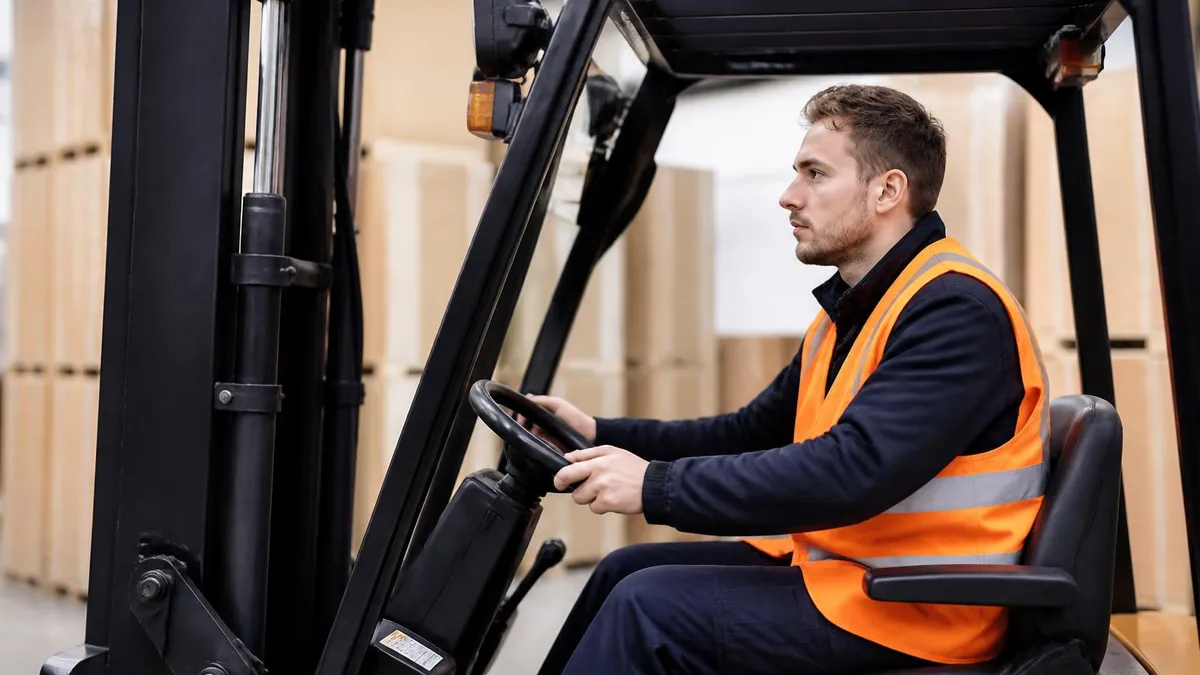
Forklift Models — Complete Guide (2026)

Forklift Tyne: Everything Australian TLILIC0003 Operators Need to Know

Forklift Refresher Course: Complete TLILIC0003 Training Guide for Australian Operators
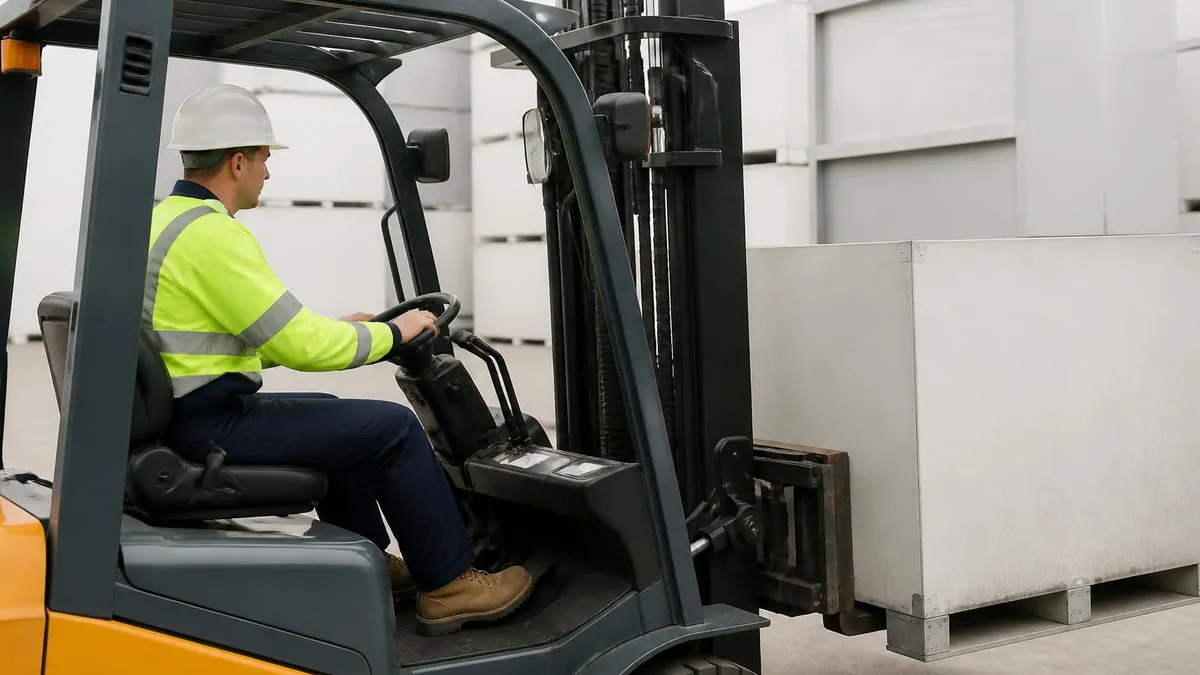
Different Forklift Types: A Complete Guide for Australian TLILIC0003 Operators

Forklift Test Questions and Answers PDF: Complete TLILIC0003 Practice Guide for Australian Operators
About the Author

Certified Crane Operator & Skilled Trades Exam Specialist
Ferris State UniversityRobert Martinez is a Journeyman Ironworker, NCCCO-certified crane operator, and forklift trainer with a Bachelor of Science in Construction Technology from Ferris State University. He has 21 years of ironworking, rigging, and heavy equipment operation experience across high-rise and industrial construction sites. Robert prepares candidates for crane operator, rigger, forklift, and skilled trades certification examinations.