
Different Forklift Types: A Complete Guide for Australian TLILIC0003 Operators
Explore different forklift types used across Australia — counterbalance, reach, order pickers, rough terrain, and more. Full TLILIC0003 operator guide. ✏️
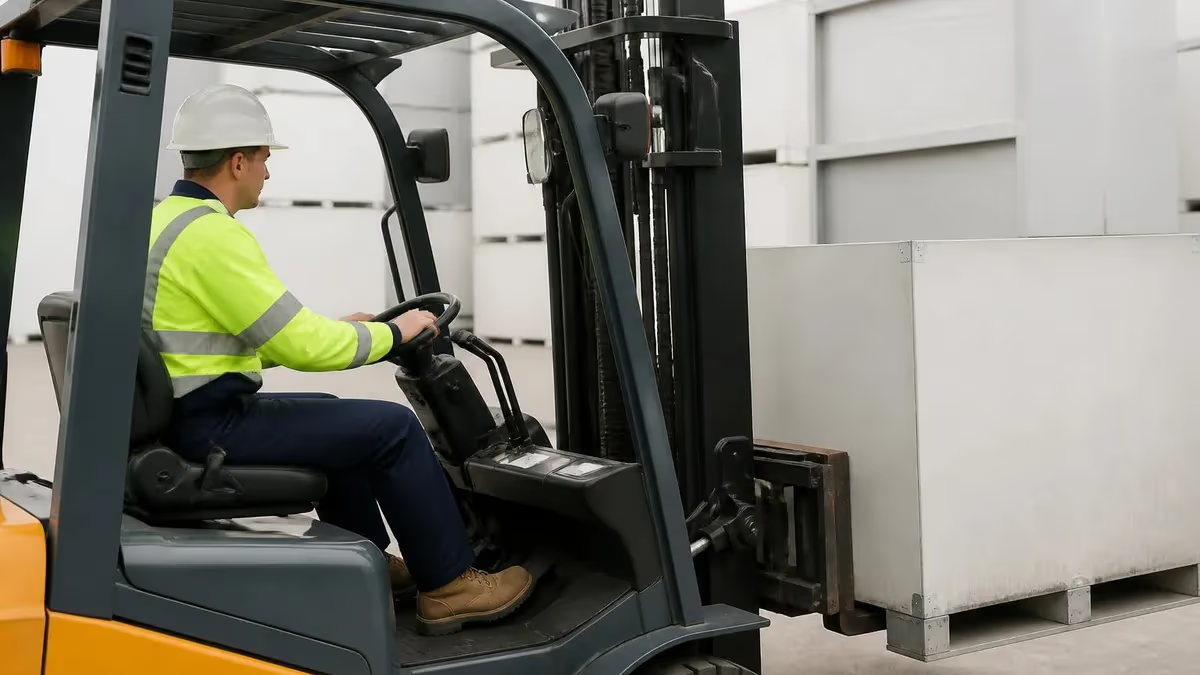
Understanding the different forklift types used across Australian worksites is one of the first and most important steps toward becoming a confident, safe, and employable TLILIC0003 licence holder. Forklifts are not a one-size-fits-all machine — each design exists because a specific industry, load, or environment demanded it. From the humming electric counterbalance gliding through a Sydney distribution centre to the diesel-powered container handler thundering across Port Botany, every variant carries its own controls, balance characteristics, and safety considerations that operators must master before stepping into the cabin.
The Australian materials handling industry uses dozens of forklift configurations, but the TLILIC0003 high-risk work licence specifically covers powered industrial trucks with a tynes-and-mast lifting mechanism. Within that scope sits a surprisingly diverse fleet: sit-down counterbalance trucks, three-wheel electrics, reach trucks, order pickers, side loaders, multi-directional trucks, articulated narrow aisle forklifts, telehandlers, container handlers, and rough-terrain machines. Knowing which type suits which application is critical knowledge for the verbal assessment portion of your TLILIC0003 evaluation.
Forklift selection is rarely arbitrary. Warehouse managers choose machines based on aisle width, ceiling height, load weight, surface conditions, fuel availability, ventilation, and the type of pallets or stillages being handled. A reach truck that thrives in a 2.7-metre aisle would be useless on a muddy construction site, just as a rough-terrain forklift would damage smooth epoxy flooring and waste energy on perfectly flat ground. Matching the truck to the task is the foundation of efficient and injury-free operation.
For new operators, the variety can feel overwhelming. The good news is that once you understand the core engineering principles — the load triangle, the fulcrum point at the front axle, and the relationship between mast height and stability — you can adapt your skills across most truck types with relatively little additional training. However, Safe Work Australia and state regulators still require operators to receive familiarisation training on any new model before using it commercially, even if a TLILIC0003 licence is already held.
This guide breaks down the major forklift categories you will encounter in Australian workplaces in 2026. We cover the engineering behind each design, the industries that rely on them, typical load capacities, fuel options, common attachments, and the unique hazards each presents. By the end, you should be able to walk into any warehouse, yard, or worksite and quickly identify which truck is appropriate, which one is being misused, and which safety controls should be in place around it.
Whether you are studying for your initial assessment, refreshing your knowledge after years on a single machine, or supervising a team that uses a mixed fleet, building a deep understanding of forklift types is one of the highest-use things you can do for your career. Employers consistently report that operators who can confidently switch between truck types earn more, get hired faster, and have significantly fewer incidents on site than single-machine specialists.
Let's start with the fundamentals — what defines a forklift, how Australian standards classify them, and why understanding the distinctions matters not just for passing your assessment, but for your safety and the safety of everyone working around you each day.
Australian Forklift Industry by the Numbers
Forklift Classification Categories in Australia
Battery-powered counterbalance forklifts with cushion or pneumatic tyres. Common in food, pharmaceutical, and indoor distribution because they emit zero exhaust and run quietly. Typical capacity 1.5–5 tonnes.
Reach trucks, order pickers, and turret trucks designed for aisles between 1.8 and 2.7 metres. Tall-mast lifting up to 13 metres makes them essential in high-density warehouses.
Walkie stackers and pedestrian-operated pallet trucks for short runs and low lifts. Often outside TLILIC0003 scope but covered by site-specific familiarisation training programs.
LPG, diesel, and petrol-powered counterbalance trucks with either cushion (Class IV indoor) or pneumatic (Class V outdoor/yard) tyres. The workhorses of Australian logistics.
Heavy-duty forklifts and telehandlers built for construction, agriculture, and mining. Four-wheel drive, articulated chassis, and oversized pneumatic tyres handle uneven ground.
The counterbalance forklift is the iconic image most people picture when they hear the word "forklift" — and for good reason. It accounts for roughly 60% of all forklifts operating in Australia. The design is elegantly simple: a heavy cast-iron or steel counterweight at the rear of the chassis balances the load lifted at the front, with the front axle acting as the fulcrum. This eliminates the need for outrigger legs and gives the truck excellent manoeuvrability in open warehouse floors, loading docks, and outdoor yards across the country.
Counterbalance trucks come in three-wheel and four-wheel configurations. Three-wheelers, with their single rear drive-and-steer wheel, achieve incredibly tight turning circles — sometimes under 1.6 metres — making them ideal for tight indoor work. Four-wheelers offer greater lateral stability and higher load capacities, typically 2.5 to 8 tonnes, and dominate yard work, container loading, and freight forwarding operations. Both types can run on electric batteries, LPG, diesel, or petrol depending on the workplace ventilation and refuelling infrastructure.
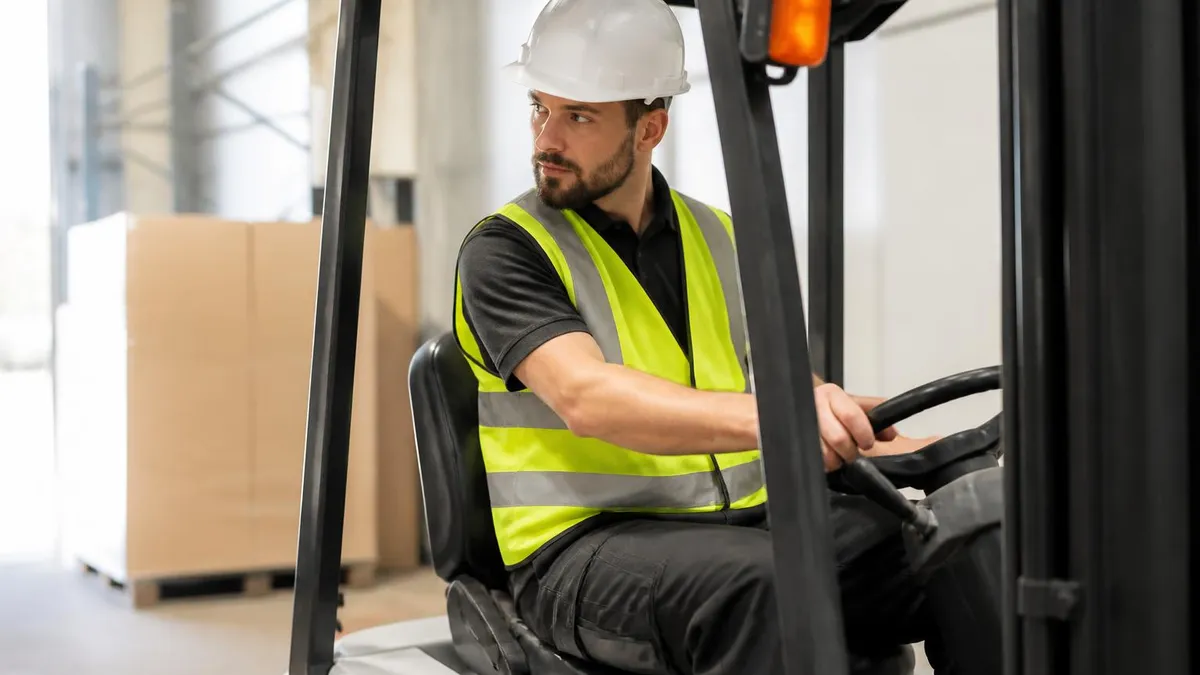
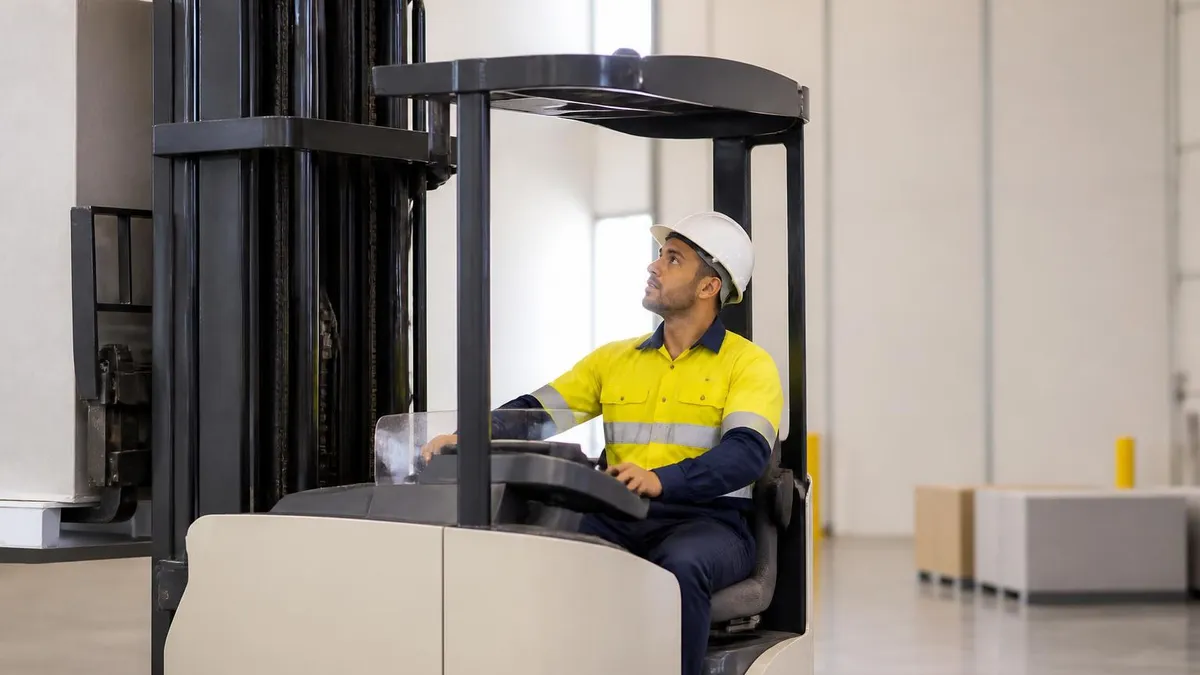
Reach trucks operate on completely different principles. Instead of carrying the load entirely in front of the front axle, the mast extends forward like a pantograph, allowing the truck to retrieve and place loads deep into selective pallet racking while keeping the wheelbase short. This design enables aisle widths as narrow as 2.7 metres — roughly half of what a counterbalance requires — dramatically increasing storage density in expensive warehouse real estate around Sydney, Melbourne, and Brisbane.
Because reach trucks have outrigger arms supporting their stability rather than a rear counterweight, they cannot operate outdoors or on uneven surfaces. Their cushion tyres demand smooth, level concrete and good lighting. Operators must also adapt to standing rather than sitting, side-on driver positioning, and joystick controls instead of conventional steering wheels. The learning curve is steeper than counterbalance, but the productivity gains in pick-and-replenish work are enormous.
Order pickers, sometimes called "high-level pickers" or "stock pickers," take the narrow-aisle concept further by improving the operator with the load. Instead of the forks retrieving a full pallet, the operator rises to 9 or 10 metres on a platform and manually selects cartons or cases from racking. These machines are common in e-commerce fulfilment centres handling thousands of SKUs and require additional fall-arrest use training under Australian work-at-height regulations.
Side loaders and multi-directional forklifts solve a different problem — moving long loads such as steel beams, timber lengths, plasterboard, or piping through narrow corridors. By carrying loads parallel to the chassis or steering all four wheels independently, these trucks navigate tight aisles that would otherwise require expensive overhead cranes. They are the unsung heroes of building supply yards and metal service centres throughout Australia.
Each design carries trade-offs. A wider load triangle gives stability but consumes floor space; a taller mast multiplies productivity but magnifies the consequences of any tip-over. Understanding these engineering compromises helps operators anticipate how each truck will behave under load — and that anticipation is what separates competent operators from genuinely safe ones.
TLILIC0003 Practice Test Questions
Prepare for the Forklift Licence Australia - TLILIC0003 exam with our free practice test modules. Each quiz covers key topics to help you pass on your first try.
TLILIC0003 Forklift Licence Australia Atta...
TLILIC0003 Exam Questions covering Forklift Licence Australia Attachments and Modifications. Master TLILIC0003 Test concepts for certification prep.
TLILIC0003 Forklift Licence Australia Batt...
Free TLILIC0003 Practice Test featuring Forklift Licence Australia Battery and Fuel Safety. Improve your TLILIC0003 Exam score with mock test prep.
TLILIC0003 Forklift Licence Australia Emer...
TLILIC0003 Mock Exam on Forklift Licence Australia Emergency Procedures. TLILIC0003 Study Guide questions to pass on your first try.
TLILIC0003 Forklift Licence Australia Fork...
TLILIC0003 Test Prep for Forklift Licence Australia Forklift Pre-Operational Checks. Practice TLILIC0003 Quiz questions and boost your score.
TLILIC0003 Forklift Licence Australia Haza...
TLILIC0003 Questions and Answers on Forklift Licence Australia Hazard Identification. Free TLILIC0003 practice for exam readiness.
TLILIC0003 Forklift Licence Australia Load...
TLILIC0003 Mock Test covering Forklift Licence Australia Load Centre Calculations. Online TLILIC0003 Test practice with instant feedback.
TLILIC0003 Forklift Licence Australia Load...
Free TLILIC0003 Quiz on Forklift Licence Australia Load Handling and Capacity. TLILIC0003 Exam prep questions with detailed explanations.
TLILIC0003 Forklift Licence Australia Oper...
TLILIC0003 Practice Questions for Forklift Licence Australia Operating in Different Environments. Build confidence for your TLILIC0003 certification exam.
TLILIC0003 Forklift Licence Australia Oper...
TLILIC0003 Test Online for Forklift Licence Australia Operating Techniques. Free practice with instant results and feedback.
TLILIC0003 Forklift Licence Australia Pede...
TLILIC0003 Study Material on Forklift Licence Australia Pedestrian Safety. Prepare effectively with real exam-style questions.
Specialty Forklift Types Operators Should Know
Telehandlers, also called telescopic handlers or reach forklifts, combine the lifting characteristics of a forklift with the extending boom of a small mobile crane. They are dominant on Australian construction sites, civil works, and farms because they can reach loads up to 17 metres horizontally and 20 metres vertically while travelling across rough, uneven ground.
Although telehandlers look like forklifts, fitting tynes does not always mean a TLILIC0003 ticket is sufficient. When the boom is used to extend the load horizontally beyond the chassis, a TLILIC0008 non-slewing crane licence may also be required. Always check the manufacturer plate and your state regulator's guidance before operating one commercially in Australia.
Electric vs Internal Combustion Forklifts: Which Is Right?
- +Zero exhaust emissions — safe for food, pharma, and confined spaces
- +Significantly quieter operation, reducing operator fatigue
- +Lower running costs per hour, especially with off-peak charging
- +Fewer moving parts means reduced maintenance downtime
- +Lithium-ion batteries now match LPG productivity for two-shift operations
- +Government rebates available in some Australian states for fleet electrification
- −Higher upfront capital cost compared to comparable LPG models
- −Battery charging infrastructure requires dedicated space and ventilation
- −Performance drops in cold-storage environments below 0°C
- −Limited capacity at the heavy end — over 8 tonnes is still IC-dominated
- −Battery replacement at 5-7 years adds significant lifecycle cost
- −Not suitable for muddy or rough outdoor terrain
Pros and Cons at a Glance
| Pros | Cons |
|---|---|
| Zero exhaust emissions — safe for food, pharma, and confined spaces | Higher upfront capital cost compared to comparable LPG models |
| Significantly quieter operation, reducing operator fatigue | Battery charging infrastructure requires dedicated space and ventilation |
| Lower running costs per hour, especially with off-peak charging | Not suitable for muddy or rough outdoor terrain |
How to Select the Right Forklift for the Job
- ✓Calculate the maximum load weight including pallet, packaging, and any expected overflow
- ✓Measure the narrowest aisle the truck must enter — both during loaded and unloaded movement
- ✓Determine the highest beam height that must be reached, plus 200mm overhead clearance
- ✓Identify the floor surface — smooth concrete, sealed bitumen, gravel, or uneven ground
- ✓Assess ventilation: enclosed spaces may rule out diesel and limit LPG operating hours
- ✓Check power availability if electric — three-phase charging stations require electrical install
- ✓Verify load shape — long, awkward, or oversized loads may need side-loaders or attachments
- ✓Confirm operator licensing — TLILIC0003 covers most fork trucks but not every variant
- ✓Account for fuel logistics — diesel deliveries, LPG cylinder swap, or battery swap programs
- ✓Plan for attachments — slip-on extensions, rotators, push-pulls may change capacity ratings
Every attachment de-rates the forklift
The capacity plate on a forklift is calibrated for standard fork tynes only. The moment you add a rotator, slip-on extensions, a carton clamp, or a jib, the safe working load drops — sometimes by 40% or more. Australian standards require a supplementary data plate detailing capacity with each approved attachment. Operating without that updated plate is not just unsafe; it is a regulatory offence in every Australian state and territory.
Each forklift type carries its own distinct safety profile, and confusing the hazards of one machine with another is a leading cause of workplace incidents in Australia. A counterbalance operator who steps into a reach truck for the first time, for example, often forgets that the outrigger arms create new pinch points and trip hazards around the wheelbase. Conversely, a reach truck driver moving onto a counterbalance underestimates how dramatically the load alters rear-wheel grip during turns. Familiarisation training exists specifically to bridge these gaps before they become incidents.
Tip-over risk varies enormously by truck type. Counterbalance forklifts tip laterally far more often than they tip forward — the rear counterweight and short wheelbase create a high centre of gravity that becomes unstable during sharp turns at speed, especially with improved loads. Reach trucks, with their wider wheelbase and outrigger arms, are more resistant to lateral tip-over but extremely vulnerable to forward tip-over when reaching out at full mast extension without proper levelling on the chassis.
Pedestrian safety also changes with truck type. Order pickers and walkie stackers operate at slower speeds and travel further from the operator, requiring engineered traffic-management plans with clearly marked pedestrian exclusion zones. High-speed counterbalance trucks in outdoor yards present a different risk — limited visibility behind tall loads, fast acceleration, and longer braking distances on damp surfaces. Each environment needs its own bespoke traffic-management strategy and signage system.
Refuelling and recharging hazards are routinely underestimated by less experienced operators. LPG cylinder changeover involves heavy lifting and gas-leak risks; diesel refuelling brings spill and slip risk; battery charging produces hydrogen gas that requires effective ventilation; lithium-ion batteries carry thermal-runaway potential if damaged. Every fuel system has a published handling procedure, and operators are legally required to follow them under Work Health and Safety regulations across all Australian states.
Load stability hazards vary by truck design too. Side loaders and multi-directional trucks distribute loads differently than counterbalance trucks, requiring different securing strategies. Telehandlers handling palletised loads at full boom extension can experience dramatic capacity reductions — sometimes a truck rated at 4 tonnes can safely lift only 800 kilograms at maximum reach. Load charts, not gut feeling, must dictate every lift on these machines without exception.
Ground conditions matter more than many operators realise. A rough-terrain forklift can churn through mud, but the same machine on smooth concrete actually grips less effectively than a properly designed indoor truck. Cushion-tyre trucks driving outdoors lose dramatic amounts of traction in rain. Even the best operator cannot overcome a fundamental mismatch between truck design and operating environment — which is why selecting the right type for the conditions is itself a primary safety control.
Finally, mast articulation, sideshift, and free-lift specifications differ across truck types and directly affect overhead clearance. Container handlers approaching low door frames, reach trucks under sprinkler systems, and order pickers near mezzanine edges all face unique overhead-strike hazards. Pre-start inspections should always include a visual check of the operating envelope, not just the truck itself — and operators should never assume yesterday's clearances are today's reality.
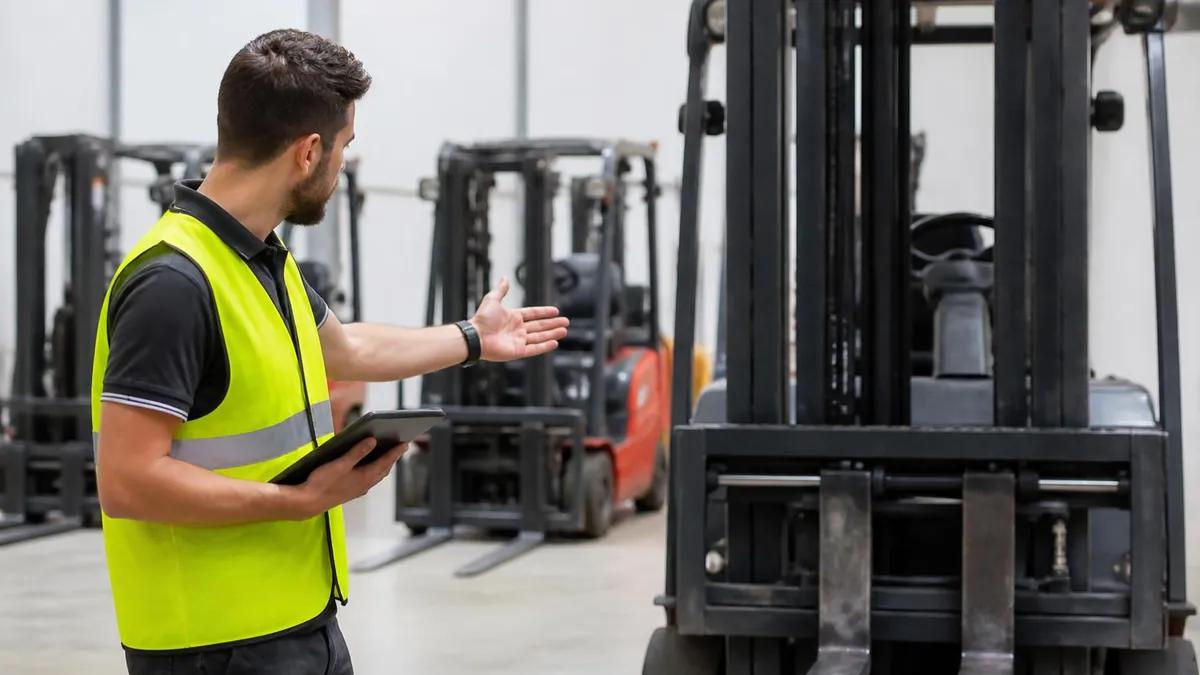
Holding a TLILIC0003 licence does not automatically authorise you to operate every forklift type. Australian work health and safety law requires that operators receive site- and machine-specific familiarisation before commercial use. Skipping this step exposes both operator and employer to prosecution, fines, and licence cancellation following any reportable incident on site.
From a career perspective, becoming proficient on multiple forklift types is one of the most reliable ways to increase your earning potential in the Australian logistics, warehousing, and construction sectors. Job advertisements on SEEK and Indeed consistently pay premiums of 10–25% for operators rated on reach trucks, order pickers, telehandlers, and container handlers compared to counterbalance-only operators. In specialised industries like ports, steel, and bulk-handling, multi-skilled operators can earn well over $90,000 annually plus shift loadings.
Licensing pathways in Australia are designed to encourage progression. The TLILIC0003 high-risk work licence covers most forktyne-equipped trucks, but additional units of competency exist for telehandlers (RIIHAN309), order pickers (TLILIC0004), and various crane-class machines. Building a portfolio of these tickets — combined with verifiable hours on each machine type — is the modern career roadmap for ambitious materials handling professionals. Employers will often subsidise additional training for committed operators.
Industry demand varies significantly by truck type. E-commerce growth has driven enormous demand for order picker operators in Sydney, Melbourne, and Brisbane distribution centres. The construction boom in Queensland and Western Australia keeps telehandler operators in short supply. Container handler operators at Australian ports earn some of the highest hourly rates in the forklift industry, often coupled with stevedoring allowances and superannuation top-ups under enterprise agreements with the MUA.
For operators considering long-term progression, supervisor and trainer pathways open up once you have substantial multi-type experience. Becoming a registered TLILIC0003 assessor through a Registered Training Organisation requires not just operator competence but the ability to coach others across multiple truck types. RTO trainer roles typically pay $80,000–$110,000 and offer regular weekday hours away from shift work — an attractive transition for experienced operators in their 40s and 50s.
Many Australian operators also find that understanding the full range of forklift types makes their everyday work easier even when they primarily use one machine. Knowing why a side loader exists, for example, helps you anticipate the kinds of long loads your warehouse might receive and prepare accordingly. Understanding telehandler limitations helps when coordinating with construction sites that share your yard during loading windows. The knowledge compounds across every operating decision you make.
If you are still in the early stages of your licensing journey, focus first on counterbalance — it is the most common, most flexible, and the foundation skill that other certifications build upon. Once you are confident, branch into reach trucks if you work indoors, telehandlers if you work on construction, or container handlers if you are near a major port. Each additional type opens new employers, new shift options, and new earning ceilings to pursue.
And remember: regardless of which forklift type you operate, the fundamentals never change. Pre-start checks, load assessment, controlled travel, smooth elevation, and constant situational awareness apply equally to a 1.5-tonne electric in a coolroom and a 45-tonne reach stacker at the wharf. Master the fundamentals, expand your machine ratings deliberately, and your career will scale with your competence over the years ahead in this rewarding industry.
Now that you understand the major forklift types, let's translate that knowledge into practical preparation strategies that will serve you in your TLILIC0003 assessment and your first months on the job. The verbal assessment portion of TLILIC0003 frequently includes scenario questions such as "Which forklift would you choose to unload a flatbed of timber in a 3-metre aisle?" or "Why would you reject a counterbalance truck for cold-storage food handling?" Practising these scenarios out loud with a study partner is far more effective than silent reading on its own.
Spend time at your local supplier's showroom or at a hire yard like Coates, Kennards, or United Forklift if you can. Many Australian dealers welcome learner operators who want to walk around different machines, sit in the cabin, and ask questions about controls, capacity plates, and visibility. Even thirty minutes of physical familiarisation with a reach truck or telehandler will cement concepts that hours of textbook reading cannot quite deliver. Bring a notebook and photograph the data plates for later review.
Build a personal capacity-plate library on your phone. Every time you see a different forklift, photograph its capacity plate, fuel type, mast configuration, and any attachments fitted. Over time you will develop an intuitive sense for which trucks pair with which industries, and you will recognise warning signs — missing plates, modified attachments without supplementary plates, or capacity ratings that don't match the load being handled. These observation skills are exactly what assessors look for.
Pay close attention to the pre-start inspection differences between truck types. An electric truck's daily check includes battery electrolyte levels (for lead-acid), cable integrity, and charger connection. An LPG truck requires gas-bottle inspection, hose checks, and regulator condition. A diesel telehandler needs hydraulic-fluid checks, outrigger inspection, and tyre-pressure verification. Knowing what to inspect on each type signals professional competence to any employer, supervisor, or RTO assessor evaluating your work.
Use practice questions strategically. Don't just answer them — review every option, including the wrong ones, and articulate why each incorrect answer is wrong. This builds the kind of deep understanding that survives the pressure of a live assessment day. Free practice tests are widely available, and working through them systematically across multiple sittings is far more effective than cramming the night before your scheduled TLILIC0003 evaluation appointment.
Talk to experienced operators. Most are happy to share war stories about close calls, near-tips, attachment surprises, and the lessons that come from real workplace experience. These conversations expose you to scenarios that no textbook covers, and they often shape your operating habits for the rest of your career. Find a mentor at your first job and ask for honest feedback after your first month — most operators welcome the chance to pass on what they know to others.
Finally, take care of yourself between sessions. Forklift operation is mentally demanding, especially while you are still learning. Stay well-rested, hydrated, and focused. Avoid attempting your first solo shifts on new truck types when you are fatigued, hungover, or distracted by personal issues. The Australian forklift industry rewards operators who treat the work with the seriousness it deserves — and the long, safe, lucrative careers prove the value of that respect every single day of your working life.
Sample Forklift Licence Practice Questions
Try these questions from our free Forklift Licence practice tests. The correct answer and an explanation follow each question.
How should Forklift Pre-Operational Checks incidents be reported in an Australian workplace?
- A. Ignore minor incidents
- B. Report immediately to the supervisor, with notifiable incidents reported to the regulator
- C. Wait until the weekly meeting
- D. Post on social media
Answer: B. Report immediately to the supervisor, with notifiable incidents reported to the regulator
Incidents must be reported promptly, with notifiable incidents requiring immediate regulator notification.
Under Australian law, what rights do workers have regarding Operating in Different Environments safety?
- A. No specific rights
- B. Rights to information, training, consultation, representation through HSRs, and to cease unsafe work
- C. Only the right to complain
- D. Rights depend on seniority
Answer: B. Rights to information, training, consultation, representation through HSRs, and to cease unsafe work
Workers have specific legal rights under WHS legislation including information, training, consultation, representation, and refusal of unsafe work.
How should Operating in Different Environments incidents be reported in an Australian workplace?
- A. Ignore minor incidents
- B. Report immediately to the supervisor, with notifiable incidents reported to the regulator
- C. Wait until the weekly meeting
- D. Post on social media
Answer: B. Report immediately to the supervisor, with notifiable incidents reported to the regulator
Incidents must be reported promptly, with notifiable incidents requiring immediate regulator notification.
What is the significance of Australian Standards for Operating in Different Environments?
- A. They are advisory only
- B. Many are referenced in legislation making compliance legally required, and they set minimum technical requirements
- C. They are outdated
- D. They only apply to imported products
Answer: B. Many are referenced in legislation making compliance legally required, and they set minimum technical requirements
Australian Standards referenced in WHS Regulations become legal requirements and set the minimum technical benchmarks for compliance.
TLILIC0003 Questions and Answers
Free Forklift Practice Test 2026 - Forklift Exam Questions
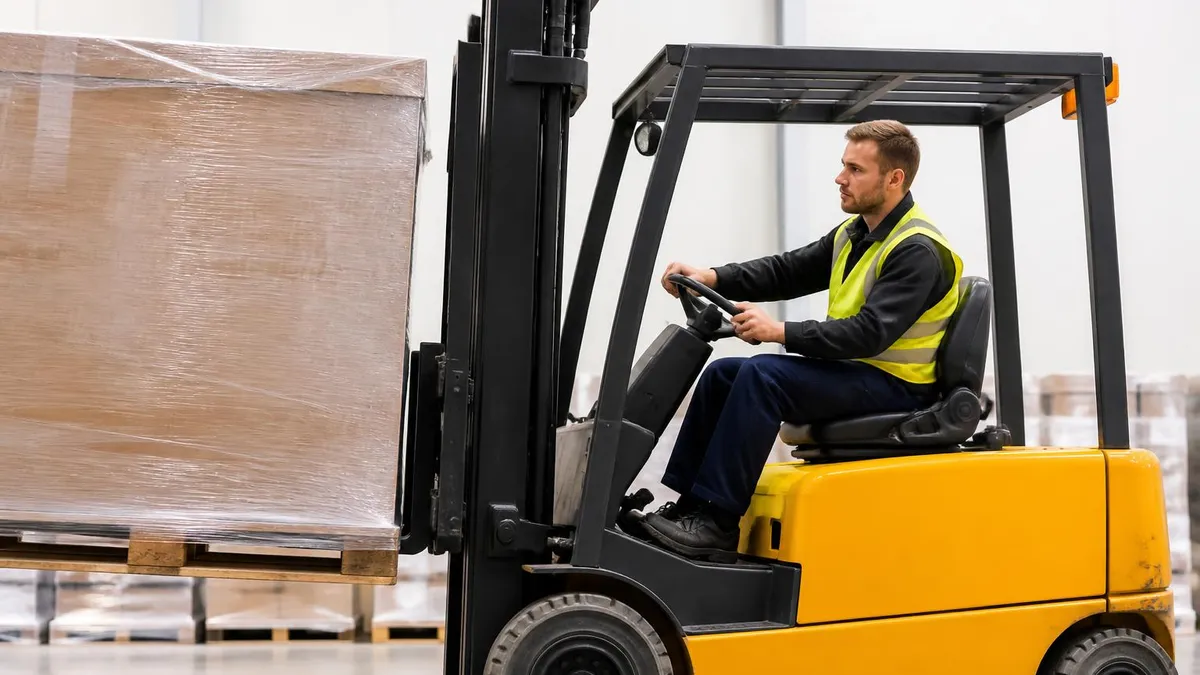
Forklift Licence Australia: How to Get Certified (TLILIC0003)

Forklift Safety, Types & Licensing Guide (Australia 2026)
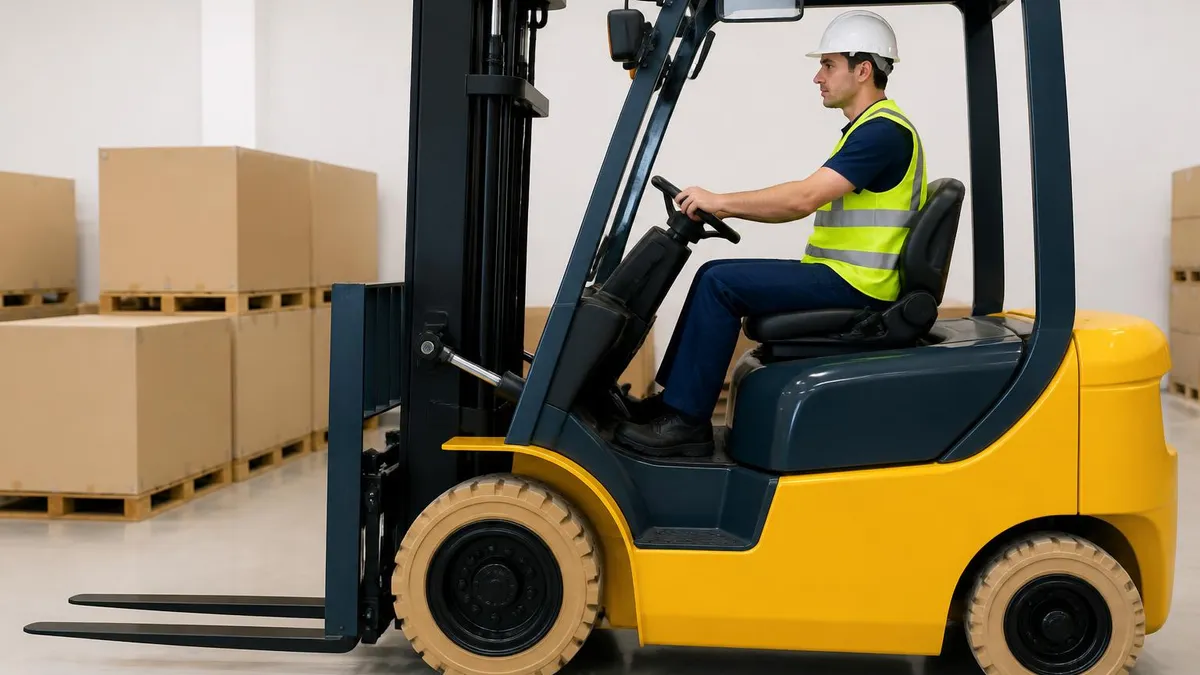
Forklift Rotators and Attachments: Complete TLILIC0003 Guide for Australian Operators

Forklift Licence Australia Practice Test PDF (Free Printable 2026)
About the Author

Certified Crane Operator & Skilled Trades Exam Specialist
Ferris State UniversityRobert Martinez is a Journeyman Ironworker, NCCCO-certified crane operator, and forklift trainer with a Bachelor of Science in Construction Technology from Ferris State University. He has 21 years of ironworking, rigging, and heavy equipment operation experience across high-rise and industrial construction sites. Robert prepares candidates for crane operator, rigger, forklift, and skilled trades certification examinations.