
Forklift Licence Cost Australia: Complete TLILIC0003 Pricing Guide (2026 September)
⏳ Find out the real forklift licence cost in Australia for 2026 September. Compare RTOs, understand what's included, and budget for your TLILIC0003 certification.

Understanding the forklift licence cost in Australia is one of the first practical steps anyone serious about working in warehousing, logistics, or manufacturing needs to take. The TLILIC0003 certification — formally titled Licence to Operate a Forklift Truck — is the nationally recognised qualification required across every Australian state and territory before you can legally operate a forklift in a workplace. Costs vary considerably depending on your chosen Registered Training Organisation, your state, and how quickly you need to complete the course, but most candidates pay somewhere between $350 and $700 for the full training package.
The price spread can be confusing when you first start shopping around. A provider advertising a $350 course and another quoting $650 may be offering very similar training, or there could be meaningful differences in class size, equipment quality, and post-course support. Before committing to any RTO, it pays to understand exactly what the fee covers — practical hours on a forklift, written assessment preparation, the licence application processing fee paid to your state regulator, and any follow-up competency support if you need a reassessment. Skipping the fine print at this stage can leave you with unexpected out-of-pocket expenses later.
State government licensing fees add a layer of cost on top of RTO training fees. In most states, the WorkSafe or SafeWork application fee ranges from roughly $65 to $130 depending on jurisdiction and whether you apply online or by paper. These fees are often bundled into the RTO quote, but not always — always ask the training provider directly whether the government licence card fee is included in their advertised price or charged separately at the end of the course.
Your existing skills and experience can also influence the final figure. Candidates who have prior experience operating machinery, hold a current high-risk work licence in a related class, or have completed recognition of prior learning (RPL) assessments may qualify for a reduced training pathway. RPL can cut both the training time and the cost significantly, though the RPL assessment itself usually carries a fee of $150–$250. For complete beginners with no materials handling background, the standard two-to-three day course is typically the most practical and cost-effective pathway.
Employer sponsorship is another avenue worth exploring before you reach for your own wallet. Many large warehousing, retail distribution, and construction employers will partially or fully fund TLILIC0003 training for employees they want to upskill. In some cases, the employer covers the full forklift licence cost and folds the training into the employee's onboarding program. If you are already employed and your role is likely to involve forklift use, raise the question with your supervisor or HR department before enrolling independently.
Government-subsidised training programs can further reduce costs for eligible candidates. In Queensland, Victoria, New South Wales, and Western Australia, funding schemes tied to the Certificate II or III in Logistics framework sometimes cover all or part of the TLILIC0003 unit. Eligibility is usually tied to age, employment status, and whether you have a prior qualification at the same or higher level. Checking with your state training authority — TAFE NSW, TAFE Queensland, Skills Assure, or equivalent — before enrolling is always worthwhile to see if you qualify for a fee reduction.
For candidates already exploring the full breadth of their TLILIC0003 coursework, understanding forklift licence cost considerations across different forklift classes is also useful context, since some add-on endorsements for specialised machines attract additional fees. This guide breaks down every cost component, compares training formats, and helps you build a realistic budget for your forklift certification in 2026.
Forklift Licence Cost by the Numbers

Forklift Licence Cost Breakdown by State (2026)
When an RTO quotes you a price for TLILIC0003 training, it is important to understand exactly which components are bundled inside that figure. The most reputable providers include pre-course theory study materials, the classroom or online theory component, all practical operating hours on their forklift equipment, the formal competency assessment, and the completion documentation required to lodge your state licence application. However, the government licence card application fee — paid directly to the state regulator — is sometimes excluded, so always ask upfront to avoid surprises on your final day of training.
Practical operating time is the component that most directly justifies the fee difference between cheaper and more expensive RTOs. A quality course will give you a minimum of six to eight hours of actual hands-on time operating a counterbalance forklift on the provider's premises, covering load handling, travel techniques, refuelling or recharging procedures, and safe parking. Some budget providers trim practical time to the absolute minimum required for assessment, which can leave candidates feeling underprepared for real workplace conditions — particularly when they move into a high-throughput environment on their first day of employment.
Theory content forms a significant portion of any properly delivered TLILIC0003 course. Topics covered include forklift stability and the stability triangle, load moment and rated capacity calculations, pre-operational checks, refuelling and battery management, pedestrian safety management, Australian workplace health and safety legislation, and incident reporting procedures. Well-resourced RTOs provide printed or digital study workbooks, practice assessment questions, and sometimes online pre-reading modules you can complete before arriving for your face-to-face training days, which maximises your practical time on the equipment.
Assessment and reassessment policies are another cost factor many candidates overlook. If you do not demonstrate competency in either the written knowledge assessment or the practical skills assessment on your first attempt, you will typically need to pay for a reassessment session. Reassessment fees at most RTOs range from $80 to $150 per attempt. Some providers include one free reassessment in their training package; others do not. Clarifying reassessment policy before you enrol — especially if you are new to operating machinery — can save you from an unexpected additional cost at a stressful moment.
The cost of the licence card itself deserves special mention because it is a separate regulatory transaction from the training. After you complete training and receive your statement of attainment, you apply to your state regulator for the high-risk work licence.
You fill out the application form (increasingly available online), attach your statement of attainment, provide identity documents, and pay the government processing fee. In most states the physical licence card arrives by post within two to three weeks. Some RTOs will lodge this application on your behalf as part of a concierge service, while others hand you the paperwork and leave the lodgement to you.
Uniform and personal protective equipment requirements are a minor but real cost. Most RTOs require you to arrive wearing steel-capped boots, long trousers, and a high-visibility vest. If you do not own these items, you will need to purchase them before your training day, which can add $50–$150 to your total expenditure depending on the quality you buy. A small number of RTOs loan hi-vis vests on the day, but steel-capped footwear is universally your own responsibility. Factor this into your total budget if you are not already working in an industry where you own this PPE.
Travel and accommodation costs can dwarf the training fee itself for candidates in regional or remote areas. If the nearest RTO is several hours away, you may need to budget for fuel, overnight accommodation, and meals across a two-to-three day training period.
Some RTOs offer mobile training services for corporate clients or groups, bringing qualified trainers and equipment to your site — though this option is generally only cost-effective for five or more trainees. For individuals in regional areas, contacting your local TAFE campus is usually the most affordable option, as TAFE institutions frequently operate subsidised training programs at satellite campuses throughout regional and rural Australia.
Training Format Options and Their Costs
The standard two-to-three day face-to-face course remains the most popular and widely available format for TLILIC0003 across Australia. You attend an RTO training facility, complete theory sessions in a classroom, and then move onto their outdoor or warehouse yard to operate their forklift under trainer supervision. Prices for this format typically range from $400 to $650, with the variation driven by location, class size, and the quality and age of the forklift equipment provided. Most RTOs run groups of four to eight students, which keeps the trainer-to-student ratio manageable for practical assessment.
One key advantage of the classroom format is the immediate feedback you receive during practical sessions. A qualified assessor watches your every move on the forklift and can correct technique in real time — correcting issues with mast tilt, load placement, or travel speed before they become ingrained habits. This interactive learning environment is particularly valuable for candidates with no prior machinery experience, as it reduces the likelihood of needing a reassessment and avoids the additional fee that comes with failing your first competency assessment attempt.

Is the Forklift Licence Cost Worth It for Your Career?
- +Opens access to a large and stable job market in warehousing, logistics, and construction
- +TLILIC0003 is nationally recognised, so your licence is valid in any Australian state or territory
- +Average forklift operator wages of $60,000–$75,000 per year mean fast ROI on the training investment
- +Licence is valid for five years, spreading the cost over a long working period
- +Formal certification eliminates employer liability concerns, making you a more attractive hire
- +Opens pathways to higher-class endorsements such as order picker and reach truck licences
- −Upfront cost of $400–$800 all-in can be a barrier for job seekers between roles
- −Training must be completed in person — cannot be done entirely online
- −Government licence processing times of 2–3 weeks mean you cannot start work immediately after training
- −RPL assessments still require a practical demonstration, so there is no purely paperwork pathway
- −Reassessment fees apply if you do not pass on the first attempt
- −Renewal every five years means ongoing cost that must be factored into long-term budgets
Pre-Enrolment Checklist: Before You Pay for Your Forklift Licence
- ✓Confirm the RTO is nationally registered on training.gov.au before paying any deposit.
- ✓Ask whether the government licence application fee is included or charged separately.
- ✓Check if one free reassessment attempt is included if you do not pass on the first try.
- ✓Verify the course includes a minimum of six hours of practical forklift operating time.
- ✓Ask which forklift classes and equipment types are covered in the practical component.
- ✓Confirm steel-capped boots and PPE requirements so you arrive fully prepared on day one.
- ✓Ask about state government subsidy eligibility before enrolling at full price.
- ✓Check whether the course is recognised by WorkSafe or SafeWork in your specific state.
- ✓Get a written quote that itemises all fees — training, assessment, materials, and government fee.
- ✓Ask your current or prospective employer if they have a preferred provider or will fund the training.
Budget $550–$900 All-In for Your First Forklift Licence
When you add the RTO training fee, government licence card application fee, PPE purchases, and travel to the RTO, the realistic all-in cost for most Australian candidates lands between $550 and $900. Always request a full itemised quote from your RTO before enrolling — hidden fees are the most common source of candidate frustration in the training marketplace.
There are several legitimate strategies for reducing the cost of your TLILIC0003 certification without cutting corners on the quality of training you receive. The most powerful lever for most people is checking eligibility for government-subsidised training before paying full price.
Every Australian state and territory runs vocational education funding schemes that can reduce or eliminate the cost of units like TLILIC0003, particularly for people who are job seekers, low-income earners, or under 25 years old. These schemes change annually, so checking directly with your state training authority — not just the RTO — is essential to get accurate, current information about what funding you may qualify for.
Smart timing of your enrolment can also deliver cost savings. RTOs often discount courses run in shoulder periods — mid-year when corporate training demand softens, or in January when construction and warehousing activity typically dips. Asking your chosen RTO directly whether they offer any early-bird discounts, group rates for multiple enrolees from the same workplace, or off-peak pricing can sometimes yield a reduction of $50–$150 off the standard rate without any reduction in course quality or content.
Group enrolment is particularly worth pursuing if you have colleagues who also need certification. Many RTOs price courses on a per-student basis up to their minimum viable class size, but will offer genuine discounts for guaranteed group bookings of three or more students. If you can coordinate with two or three coworkers who also need the licence, approaching an RTO with a group enquiry — especially for a less busy mid-week session — can unlock per-student savings of $75–$200. Some RTOs will even arrange an on-site session for groups of five or more, eliminating your travel costs entirely.
If you already have a high-risk work licence in a related machinery class — such as a boom-type elevating work platform (EWP) or a slewing mobile crane — some RTOs offer shortened training pathways that recognise the overlapping safety, pre-operational check, and workplace legislation knowledge you have already demonstrated. While this is not formal RPL, it can mean your course is condensed to a single day of forklift-specific practical training and assessment, reducing the fee accordingly. Always ask the RTO whether your existing licence qualifications could shorten your TLILIC0003 training pathway.
Comparing RTOs systematically rather than clicking the first Google result can save you hundreds of dollars. Use the training.gov.au website to identify all registered TLILIC0003 providers in your area, then ring at least three of them for a verbal quote before committing to any provider.
Ask each one the same set of questions: what is included in the fee, what is the student-to-trainer ratio, how many practical hours are included, and what happens if you need a reassessment. This structured comparison approach takes 30 minutes but often reveals a quality provider at a significantly lower price than the heavily advertised options.
Employer reimbursement schemes are an underused option even among people currently in employment. Many enterprise bargaining agreements in logistics, manufacturing, and retail distribution include clauses for employer-funded skills training including high-risk work licences.
Even where there is no formal EBA provision, approaching your manager with a clear business case — explaining that your TLILIC0003 certification will enable you to provide forklift cover during busy periods, reducing the employer's reliance on labour hire operators — is often enough to secure full or partial funding of the training cost. Framing the request around operational benefit to the employer rather than personal career development significantly improves the likelihood of a positive outcome.
Finally, checking whether your industry superannuation fund or union association offers training assistance or bursaries is a step many working Australians skip entirely. Industry funds in transport, logistics, and warehousing occasionally run skills funding programs for members, and some industry unions maintain training subsidies for financial members. The amounts available are typically modest — $100–$300 — but combined with other savings strategies, they can meaningfully reduce your out-of-pocket forklift licence cost and make the investment more manageable for workers on tight budgets.

TLILIC0003 requires a hands-on practical assessment conducted by a qualified assessor in person — any provider advertising a fully online or paper-only pathway is not delivering a compliant course and cannot legally issue a valid statement of attainment. Certificates issued without a witnessed practical component will be rejected by state regulators when you apply for your high-risk work licence card. Always verify your RTO is registered on training.gov.au before paying any deposit.
Building a realistic budget for your TLILIC0003 certification means accounting for every cost category rather than anchoring on the headline training fee you see advertised.
Start by identifying your base training cost from a shortlisted RTO — ideally two or three quotes — then add the government licence application fee for your state, your PPE if you do not already own compliant footwear and hi-vis gear, and any travel or accommodation costs if the nearest RTO is not local to you. Finally, build in a contingency of $100–$150 to cover the possibility of a reassessment or any administrative costs you did not anticipate.
Understanding the return on investment timeline helps contextualise the upfront cost. An entry-level forklift operator in Australia earns approximately $28–$34 per hour, meaning a candidate who pays $700 all-in for their certification and secures a full-time position will recover that investment within their first two to three days of paid work.
At the mid-career level, experienced operators with their TLILIC0003 and additional endorsements for reach trucks or order pickers can command $34–$42 per hour, often with penalty rates on top in shift-work environments. The licence fee is genuinely one of the best short-term returns on vocational training investment available in the Australian labour market.
Renewal costs are a longer-term budget consideration that new operators often overlook entirely when calculating the lifetime cost of their forklift licence. High-risk work licences in Australia expire after five years and must be renewed before the expiry date to remain valid.
The renewal process does not require you to repeat the full training course — you simply pay a renewal fee to your state regulator, which typically ranges from $50 to $100 depending on jurisdiction. If your licence lapses, however, you may be required to complete a full reassessment or even repeat the TLILIC0003 course, making timely renewal far more cost-effective than allowing expiry.
Wage negotiation strategy around your new qualification is a topic most training providers do not discuss, but it is directly relevant to the financial calculation you make when investing in your licence. Simply holding the TLILIC0003 qualification does not automatically trigger a pay rise — you need to actively negotiate based on your new capability.
Before completing your course, research current forklift operator award rates in your state under the relevant Modern Award (typically the Road Transport and Distribution Award or the Manufacturing and Associated Industries Award), so you can enter any wage negotiation with accurate benchmark data rather than accepting whatever your employer initially offers.
Multi-class licence planning is another financial consideration worth building into your budget from the outset. Many operators who begin with the standard TLILIC0003 counterbalance licence eventually seek additional endorsements for reach trucks (TLILIC0005), order pickers (TLILIC0004), or turret trucks (TLILIC0006). Each additional class requires a separate training and assessment process.
However, if you are already planning to pursue multiple classes, some RTOs offer discounted combined training packages — for example, TLILIC0003 and TLILIC0005 together at a lower combined price than the two courses booked separately. Discussing your longer-term licensing goals upfront with the RTO can unlock bundled pricing that reduces your overall cost of full operator certification.
Insurance and indemnity implications are a legal cost context that larger employers manage at an organisational level but that self-employed contractors and labour hire workers need to understand personally. Operating a forklift without a valid TLILIC0003 licence exposes you to personal liability if an incident occurs, regardless of any insurance your client or host employer carries.
The cost of defending a workplace prosecution — even if you are ultimately not found negligent — can vastly exceed the cost of the training. From a pure risk management perspective, the forklift licence cost is not just a career investment but a personal liability protection measure that every operator working near forklifts should take seriously.
For a comprehensive view of how your licence applies across different machine types and what modifications might affect your operating authority, reviewing the specifics of each forklift class in detail is strongly recommended before you finalise your training pathway. Understanding load capacity variations, tyre configurations, and mast types will also serve you well during your written assessment and practical evaluation, so arriving at training day with a broad conceptual understanding of the equipment landscape — not just the machine you will train on — gives you a meaningful advantage in the assessment process.
Preparing thoroughly for your TLILIC0003 assessment before your training day is one of the highest-leverage things you can do to protect your investment. Many candidates arrive at training without having done any pre-reading and spend the first half of day one absorbing foundational material they could have covered at home. Reading through the TLILIC0003 unit of competency document — freely available on training.gov.au — gives you a clear map of every knowledge and skill element the assessor is required to evaluate, so nothing comes as a surprise during the formal assessment component of your course.
Stability triangle theory is the single topic most candidates find most challenging in the written assessment, and it is worth spending dedicated time on before you arrive. The forklift stability triangle describes the three-point suspension system formed by the two front drive wheels and the single pivot point at the rear axle, with the combined centre of gravity — of both the machine and the load — needing to remain inside this triangle for the forklift to remain stable.
Understanding how forward tilting, high load elevation, cornering speed, and off-centre loads each shift the combined centre of gravity toward or beyond the triangle boundary is fundamental to safe operation and will be tested both in theory and in practice.
Load capacity plate reading is another assessment area where preparation before training day pays significant dividends. Every forklift has a data plate that specifies the rated capacity at a standard load centre (usually 500mm or 600mm from the fork face). When a load centre differs from the rated figure — because the load is unusually deep or an attachment is fitted — the effective capacity changes.
The assessment will require you to correctly interpret a data plate and calculate whether a given load is within the machine's capacity. Practising these calculations using the data plates of several different forklift models before your training day will build your confidence and speed during the assessment.
Pre-operational inspection procedures are a structured sequence rather than a random checklist, and memorising the correct sequence — not just the individual items — helps you complete this assessment task efficiently and without omissions.
The pre-operational check follows a logical walk-around pattern: you begin with the data plate and general structure inspection, move to the mast, forks, and hydraulic cylinders, check fluid levels and tyre condition, inspect the overhead guard and load backrest, verify the seatbelt and operator restraint system, check the horn, lights, and warning systems, and then conduct a static function test of all hydraulic controls before moving the machine. Practising this sequence verbally before your training day means you will perform it smoothly under assessor observation.
Understanding WHS legislation as it applies to forklift operation is an area of the written assessment many candidates underestimate. You will be expected to know the general duty of care obligations of workers under the relevant Work Health and Safety Act (harmonised legislation applies across most states), the specific obligations of employers and workers regarding plant licensing and maintenance, and the incident reporting obligations that apply after a near-miss or forklift-related incident in the workplace.
This is not examined at a detailed legal level, but you need to understand the framework and your personal obligations as an operator well enough to answer scenario-based questions accurately.
Mental preparation for the practical assessment reduces the anxiety that causes capable candidates to underperform. The assessor is not looking for perfection — they are evaluating whether you can operate the forklift safely and competently within normal operating parameters.
Arrive rested, wear your PPE correctly, listen carefully to any pre-assessment briefing, and ask the assessor to clarify any instruction you are not sure about before you begin rather than guessing. Communicate your actions clearly as you work — narrating what you are checking and why demonstrates your understanding of safe procedure even when your hands are still developing the muscle memory for smooth hydraulic control.
After your training, do not delay lodging your government licence application. Some candidates complete their course, receive their statement of attainment, and then fail to submit the licence application promptly — meaning they cannot legally work as an operator even though they have passed their assessment.
Set a calendar reminder to complete the application within one week of receiving your documentation, gather your identity documents and payment method, and submit online where your state regulator offers this option to minimise processing time. The sooner your application is lodged, the sooner your licence card arrives, and the sooner you can begin earning a return on the investment you have made in your TLILIC0003 certification.
TLILIC0003 Questions and Answers
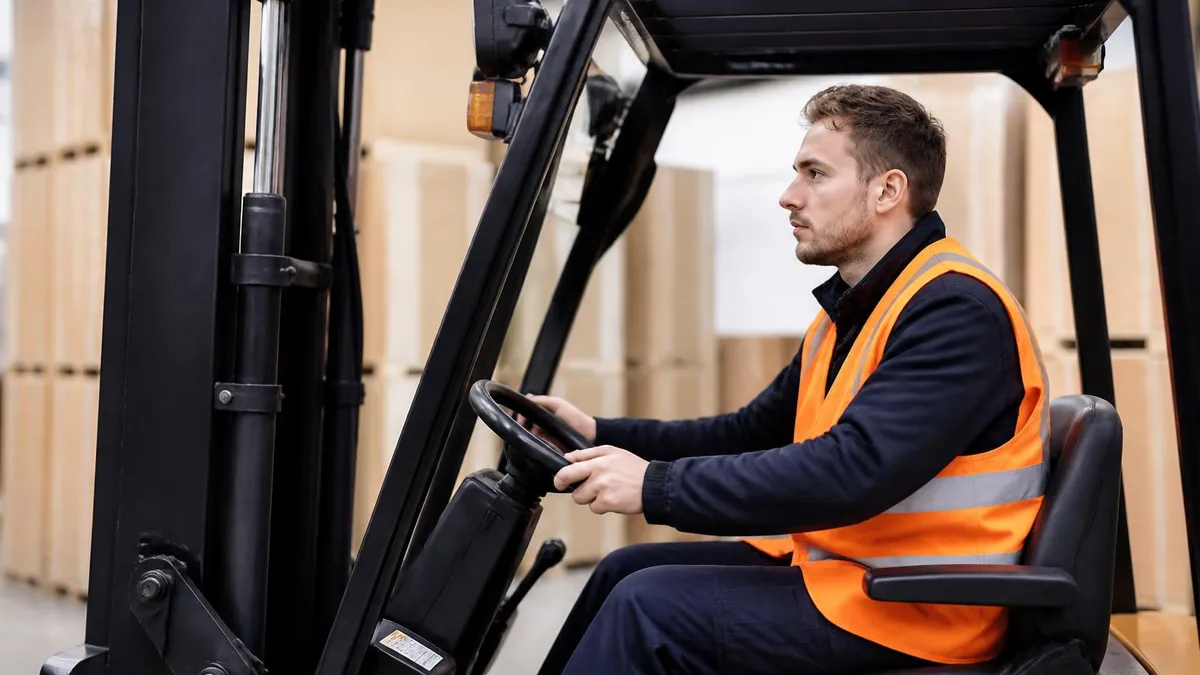
Forklift Models — Complete Guide (2026)
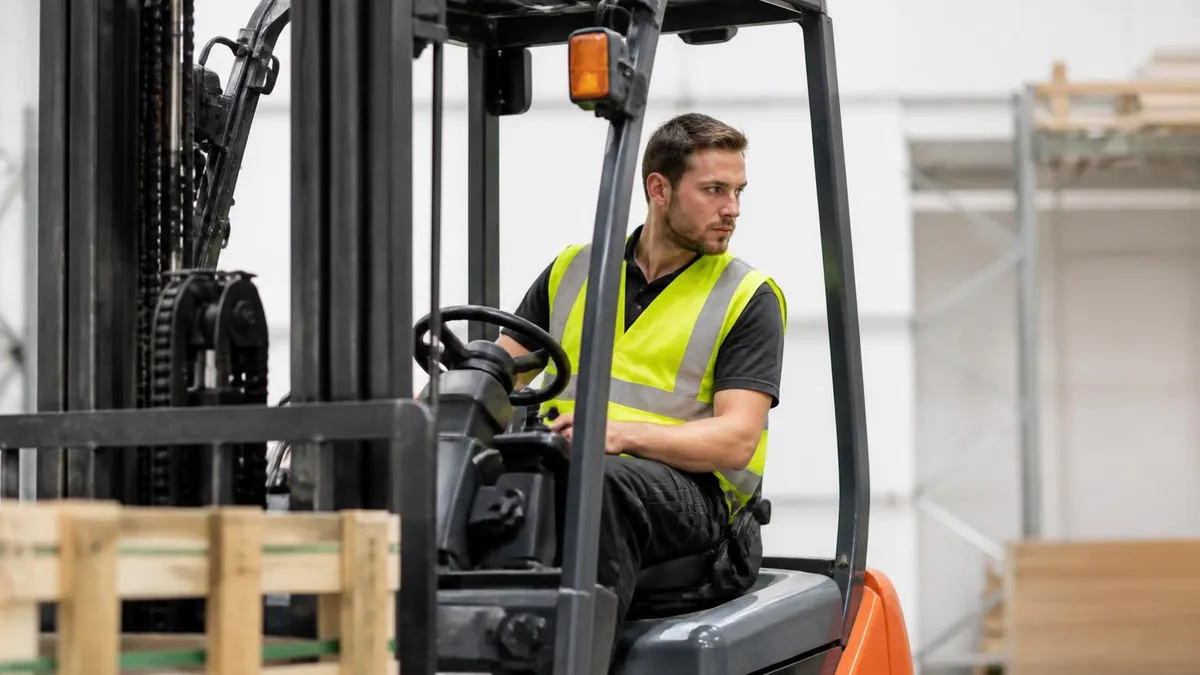
TLILIC0003 Forklift Maintenance: Pre-Shift Checks & Service Guide (2026)
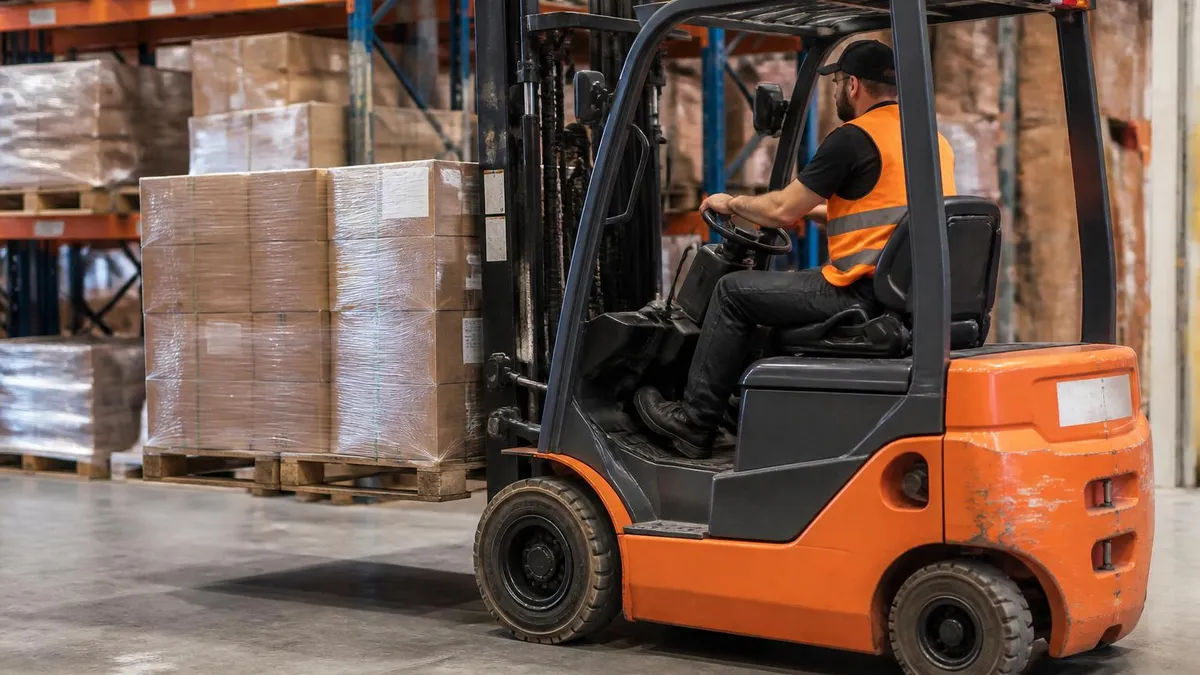
Forklift Licence Renewal Australia: Complete TLILIC0003 Guide (2026)
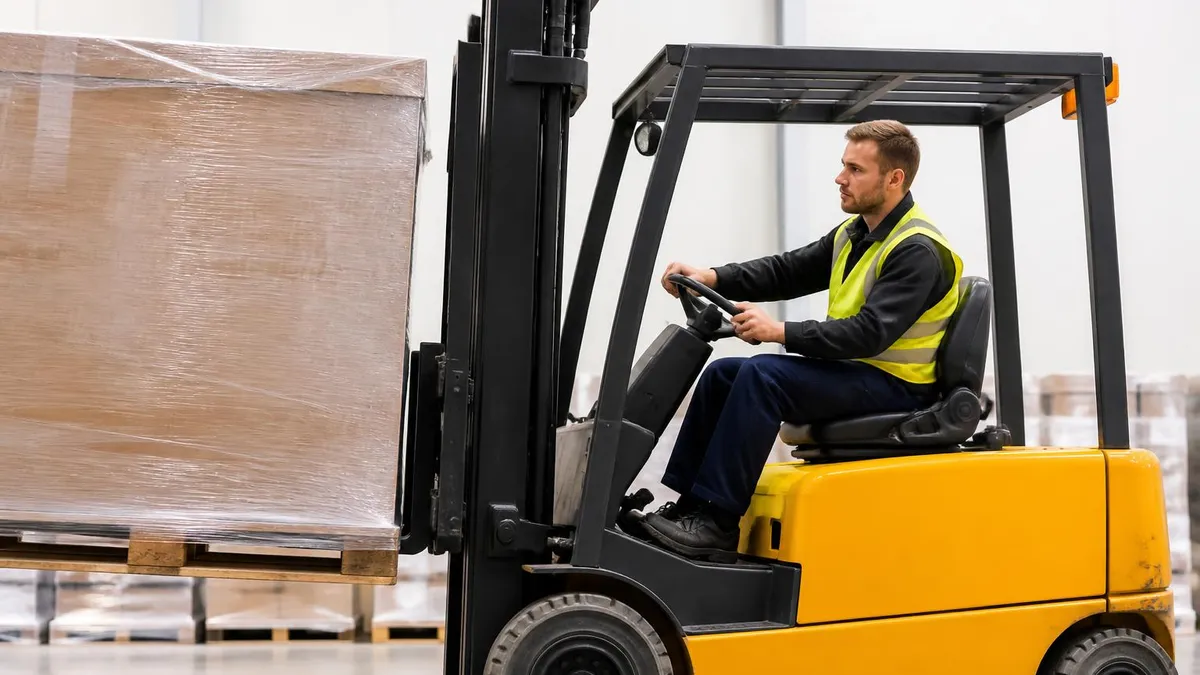
Forklift Licence Australia: How to Get Certified (TLILIC0003)
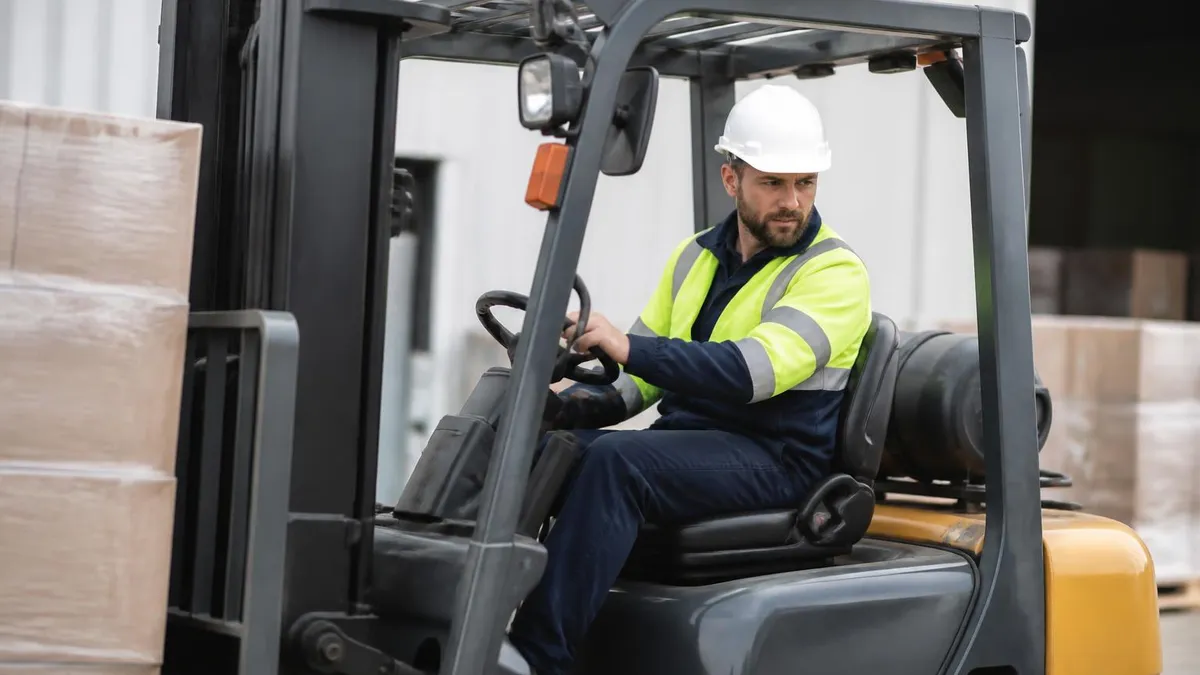
Electric 3 Wheel Forklift: Complete Guide to Electric Forklift Types for TLILIC0003 Operators in Australia
About the Author

Certified Crane Operator & Skilled Trades Exam Specialist
Ferris State UniversityRobert Martinez is a Journeyman Ironworker, NCCCO-certified crane operator, and forklift trainer with a Bachelor of Science in Construction Technology from Ferris State University. He has 21 years of ironworking, rigging, and heavy equipment operation experience across high-rise and industrial construction sites. Robert prepares candidates for crane operator, rigger, forklift, and skilled trades certification examinations.