
TLC Renewal NYC: Complete 2026 August Guide to Renewing Your Hack License and FHV Vehicle Registration
Complete TLC renewal guide for NYC drivers and vehicle owners. 🎯 Learn fees, deadlines, drug tests, defensive driving courses, and how to avoid lapses.

If you drive a yellow cab, green cab, livery, black car, or rideshare vehicle in New York City, your TLC renewal is the single most important administrative task on your calendar. The Taxi and nyc tlc phone number requires every licensed driver and every for-hire vehicle to renew on a strict schedule, and missing a deadline can suspend your ability to legally pick up passengers within hours. For 2026, the renewal process remains largely online through the LARS portal, but the documentation requirements, fees, and medical clearances have all been updated.
This complete guide walks you through every step of the tlc renewal process, whether you are renewing a driver license that expires every three years or a vehicle license that renews annually for most classes and every two years for medallion taxicabs. We will cover the exact paperwork the TLC inspectors want to see, the cost breakdown for 2026, the timing windows that let you avoid late fees, and the most common reasons applications get bounced back during review.
New York City currently has more than 200,000 active TLC drivers and roughly 100,000 licensed for-hire vehicles on the road. Each one of those licenses passes through the renewal pipeline on a rolling basis, which means the TLC processes thousands of applications every week. Understanding how to submit a clean, complete renewal package gets you back on the road faster, while sloppy paperwork can leave you sidelined for weeks waiting for a status update or a corrected document.
The renewal process changed meaningfully after the agency moved most services online during 2020 and 2021. Today, drivers complete fingerprinting through IdentoGO, drug screening through LabCorp Patient Service Centers, defensive driving through approved providers, and the actual application through LARS. Vehicle owners use a parallel track that includes DMV registration, insurance verification through PIP, hack-up inspections, and emissions testing at one of the city's TLC inspection facilities.
Whether you are a brand new driver getting ready for your very first renewal cycle or a 20-year medallion veteran who has done this dozens of times, the rules quietly shift every year. Application fees have climbed, drug test requirements were expanded to include broader panels, and the agency has tightened enforcement against drivers who let coverage lapse even briefly. This guide reflects the latest 2026 requirements pulled directly from TLC bulletins, industry trade groups, and verified driver experiences.
One small detail to know up front: TLC renewal is not the same as TLC initial licensing. If your license has been expired for more than 90 days, the agency may require you to restart the entire application process from scratch, including a fresh background check, a new fingerprint scan, and a complete defensive driving course. That is why renewing on time, even a few weeks early, almost always saves you money and headaches.
TLC Renewal by the Numbers (2026)

TLC Renewal Process Step-by-Step
Receive Renewal Notice
Complete Drug Screening
Finish Defensive Driving
Submit LARS Application
Pass Background Check
Receive Renewed License
The cost of TLC renewal varies significantly depending on which license class you hold and how prepared you are when application day arrives. The base driver renewal fee sits at $252 for the standard three-year cycle, but that is only the headline number. Once you add up the drug test, defensive driving course, medical questionnaire visit, fingerprinting (if your prints are more than three years old), and the cost of any DMV paperwork, the realistic out-of-pocket total ranges between $400 and $600 for most drivers.
Vehicle renewal fees are structured differently. Yellow medallion taxicabs pay roughly $1,100 every two years for the vehicle license itself, plus DMV registration, commercial insurance, and inspection fees. Green Boro taxi renewals run about $550 per year. For-hire vehicles attached to bases like Uber, Lyft, Carmel, and Dial 7 generally pay $275 to $550 annually depending on the affiliation. Black car and luxury limousine renewals follow a similar fee schedule with additional base affiliation costs layered on top.
Beyond the official fees, savvy drivers budget for the soft costs that show up around renewal time. Many shops charge $80 to $150 for a complete pre-renewal inspection and minor repairs. Brake jobs, tire replacements, and emissions system fixes can push a vehicle renewal into the thousands if you have deferred maintenance. Building these costs into your annual budget rather than scrambling at the last minute makes the renewal far less stressful.
Payment options through LARS include all major credit cards, debit cards, and ACH transfers from a checking account. The TLC does not accept cash or money orders for online bls renewals, and fees are nonrefundable once submitted. If your application is rejected or denied, you generally do not get the application fee back, which is why double-checking every uploaded document before clicking submit is so important. Errors cost real money.
For drivers experiencing financial hardship, the TLC has historically offered a limited fee waiver program, though it is not advertised widely and approval is discretionary. Drivers with documented unemployment, disability, or medical emergencies can contact the licensing division directly to ask about installment plans or fee deferrals. Industry advocacy groups like the Independent Drivers Guild and the New York Taxi Workers Alliance can sometimes help members navigate these conversations and identify additional relief programs.
If you carry your own commercial auto policy rather than buying through a base, your renewal cycle also intersects with insurance renewal. Most TLC-compliant policies cost between $5,000 and $9,000 per year for FHV drivers and significantly more for medallion taxis. Reviewing your tlc insurance at the same time you handle vehicle renewal lets you bundle paperwork, request multi-policy discounts, and confirm your liability limits still meet TLC minimums before you submit.
Finally, remember that defensive driving courses and medical exams have their own price tags that drivers sometimes forget to factor in. Six-hour defensive driving classes range from $35 online to $80 in a classroom. The Medical Examiner Certificate visit, required for many license classes, costs $60 to $150 depending on the provider. Adding these to your renewal budget early prevents the unpleasant surprise of unexpected charges in the last week before your deadline.
TLC Practice Test Questions
Prepare for the TLC - Taxi and Limousine Commission exam with our free practice test modules. Each quiz covers key topics to help you pass on your first try.
TLC Consumer Protection & Service Quality
TLC Exam Questions covering Consumer Protection & Service Quality. Master TLC Test concepts for certification prep.
TLC Defensive Driving Techniques
Free TLC Practice Test featuring Defensive Driving Techniques. Improve your TLC Exam score with mock test prep.
TLC Emergency Procedures & First Aid
TLC Mock Exam on Emergency Procedures & First Aid. TLC Study Guide questions to pass on your first try.
TLC Environmental Awareness & Conservation
TLC Test Prep for Environmental Awareness & Conservation. Practice TLC Quiz questions and boost your score.
TLC Licensing & Registration
TLC Questions and Answers on Licensing & Registration. Free TLC practice for exam readiness.
TLC Navigation & Route Planning
TLC Mock Test covering Navigation & Route Planning. Online TLC Test practice with instant feedback.
TLC Passenger Safety & Service
Free TLC Quiz on Passenger Safety & Service. TLC Exam prep questions with detailed explanations.
TLC Regulatory Oversight & Enforcement
TLC Practice Questions for Regulatory Oversight & Enforcement. Build confidence for your TLC certification exam.
TLC Safety & Compliance
TLC Test Online for Safety & Compliance. Free practice with instant results and feedback.
TLC Traffic Laws & Regulations
TLC Study Material on Traffic Laws & Regulations. Prepare effectively with real exam-style questions.
TLC Renewal Requirements by License Type
Driver license renewal requires a current DMV Class E or higher New York State driver license that has been valid for at least one year, a passed five-panel drug test administered within the previous 60 days through LabCorp, a six-hour defensive driving certificate dated within the past three years, and a completed medical questionnaire signed by a licensed physician confirming you are fit to operate a passenger vehicle commercially.
You must also clear a state and federal background check, have no open or unpaid TLC summonses or DMV violations exceeding seven points, and provide a current mailing address verified by recent utility bill, lease, or bank statement. The standard renewal cycle is three years, and the $252 application fee covers the full term. Lapsed drivers face additional requirements depending on the gap length.

Online LARS Renewal vs In-Person Office Visit
- +Submit application 24/7 from home or any internet-connected device
- +Upload documents instantly without printing or photocopying paperwork
- +Pay fees with credit or debit card with immediate confirmation
- +Track application status in real time through your LARS dashboard
- +Avoid travel time, parking costs, and waiting in long office lines
- +Receive automated email notifications at each processing milestone
- +Digital storage of all renewal records for future reference and audits
- −No live person available to answer complex eligibility questions quickly
- −Document upload errors can delay processing by one to two weeks
- −Older drivers unfamiliar with technology sometimes struggle with LARS interface
- −Internet outages or browser issues can interrupt application submission
- −Lost or forgotten passwords require account recovery that takes days
- −Drug test result delays from LabCorp can hold up everything else
- −Complex cases involving violations may still require in-person hearings
Complete TLC Renewal Document Checklist
- ✓Current TLC driver or vehicle license card with legible expiration date
- ✓Valid New York State DMV driver license, Class E or higher
- ✓Original passed LabCorp drug test result dated within last 60 days
- ✓Six-hour TLC-approved defensive driving completion certificate
- ✓Signed medical questionnaire from a licensed physician
- ✓Proof of current address such as utility bill, lease, or bank statement
- ✓Current commercial auto insurance ID card for vehicle renewals
- ✓DMV vehicle registration in correct legal owner name
- ✓Completed and signed TLC inspection report from approved facility
- ✓Payment method ready for the appropriate license-class application fee
- ✓Active base affiliation letter for FHV and black car drivers
- ✓Social Security number and any prior names for background check accuracy
Start your renewal 75 days before expiration
Experienced TLC drivers consistently recommend starting the renewal process 75 days before your license expires. This buffer absorbs LabCorp delays, inspection rescheduling, and the inevitable document re-upload requests. Drivers who wait until the final 30 days face significantly higher rates of lapsed coverage, late fees, and lost income from being temporarily sidelined.
Many drivers confuse vehicle renewal with driver renewal, but they are two completely separate processes governed by different rules and deadlines. dmv practice test nebraska — the laminated card with your photo and TLC number — covers your personal authorization to operate a for-hire vehicle commercially in New York City. Your vehicle license covers the specific car, SUV, or van that is permitted to pick up passengers. You can have a valid driver license and an expired vehicle license, or vice versa, and either scenario stops you from working legally.
Driver renewal runs on a three-year cycle for almost every license class. The fee is $252, the required components are drug test, defensive driving, medical clearance, and background check, and the entire process happens through your personal LARS account. Vehicle renewal runs on annual or biennial cycles depending on vehicle type. Medallions renew every two years, while FHVs, black cars, and commuter vans renew every year. Vehicle fees are higher, paperwork is more complex, and inspections happen in person at a TLC facility.
If you own your own car and drive it under a base affiliation like Uber or Lyft, you are responsible for both renewals — yours as a driver and the vehicle's as an FHV. If you rent or lease a TLC plate from an owner-operator or a fleet, the vehicle owner handles the vehicle renewal and you only worry about your personal driver license. Drivers who lease should still verify the vehicle status in LARS regularly because driving an expired-plate car puts your own license at risk.
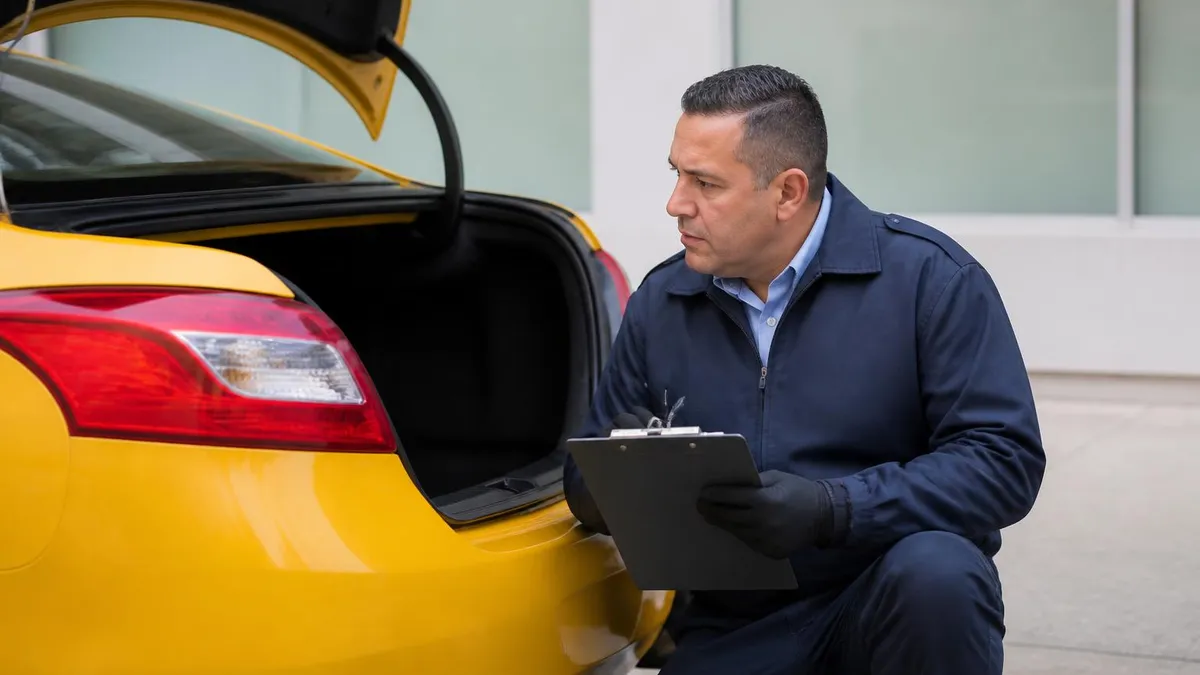
Inspections are the most visible difference between the two tracks. Driver renewals are almost entirely paperwork — uploads, fees, background checks. Vehicle renewals require a physical inspection at the Woodside, Long Island City, or Jamaica TLC facility, plus a separate DMV safety and emissions inspection at any licensed garage. The TLC inspection checks roof lights, partition glass, decals, fare-related equipment, and overall vehicle condition. Failing inspection means returning later, often with repairs completed and additional fees paid.
Drug testing applies only to drivers, not vehicles. Defensive driving applies only to drivers. Insurance applies primarily to vehicles, though some commercial policies are written in the driver's name when they own their own car. Medical clearance is a driver-side requirement that confirms you are physically fit to operate the vehicle. Understanding which requirements live on which track helps you avoid the frustration of finishing paperwork only to discover you missed a separate filing deadline.
Drivers who work for fleets sometimes assume the fleet handles everything. In reality, fleets handle their own vehicle paperwork but rarely renew driver licenses on behalf of drivers. The driver remains personally responsible for their LARS account, drug test, defensive driving, and renewal fee. Some larger fleets do offer optional administrative help, sometimes for a small fee, but treat that as a courtesy rather than an obligation. Your name is on the license, so your responsibility is to track it.
Vehicle owners who switch base affiliations during a renewal cycle face additional paperwork. Moving from a black car base to a livery base, for example, requires notification, possible vehicle modification, and updated insurance endorsements. Switching to or from accessibility-equipped vehicles changes fee structures and timeline. Plan base changes around your renewal date when possible, since aligning them reduces the total administrative work and lets you complete both processes with one inspection visit.

Operating with an expired TLC driver license or vehicle license is a serious violation that carries fines starting at $200 per occurrence and can escalate to license revocation for repeat offenses. Inspectors actively patrol airports, hotels, and high-traffic pickup zones looking for expired plates and licenses. If your renewal is in process but the physical card has not arrived, carry digital confirmation from LARS at all times.
Most TLC renewal rejections trace back to a small number of recurring mistakes that drivers make every cycle. Understanding these failure modes in advance lets you sidestep them entirely. The single most common rejection reason is mismatched name information across documents. If dmv practice test nebraska license says Robert Johnson and your insurance card says Bob Johnson, the system flags the discrepancy and pauses the application. Make sure every document uses your exact legal name as it appears on your DMV license and Social Security record.
The second most common issue is expired drug test results. Many drivers schedule their LabCorp visit too early, expecting to use the result months later, and discover the 60-day validity window has closed by the time they actually submit the application. Time your drug test to fall within 30 to 45 days of your planned LARS submission date. Booking the test online through the LabCorp Patient Service Center scheduler is the most reliable way to get a quick appointment.
Outdated address information is another frequent cause of delay. The TLC mails physical renewal cards and certain official notices to the address on file. If you moved within the last cycle and forgot to update LARS and the DMV, your renewal might be held pending verification. Update your address with both agencies at least 30 days before starting renewal, and bring a current proof of address document to any related appointments. Many drivers find it useful to visit a tlc office ny to handle address questions in person when they have a complicated situation.
Background check surprises catch drivers off guard more often than they should. Old arrests, dismissed charges, and even sealed cases can sometimes appear in the federal database the TLC uses. If you have any criminal history, even from decades ago, request your own background report before renewal so you know exactly what the agency will see. This lets you prepare an explanation letter in advance rather than scrambling for documentation after an application is paused.
Drivers who let licenses lapse face an entirely different and much more painful process. Once your c license has been expired for more than 90 days, the agency may require you to restart as a brand new applicant, including fresh fingerprinting, full classroom training, and a new exam. The cost difference between an on-time renewal and a lapsed restart can exceed $1,000, plus weeks of lost income while you wait for processing. Treat the renewal deadline as immovable.
Insurance lapses create similar disasters. Even a single day of uninsured operation can trigger automatic license suspension and notification to the DMV. If your insurance policy is canceled mid-cycle for any reason, including a missed premium payment, you must replace coverage immediately and notify the TLC. Drivers who carry their own policies should set up auto-pay or paper-billing reminders to prevent accidental cancellation. Bases that handle insurance for affiliated drivers usually manage this proactively, but verification is still your responsibility.
Finally, drivers who carry unpaid TLC summonses or DMV violations cannot renew until the matters are resolved. Open tickets, missed court dates, and unpaid fines all create holds that block LARS from accepting your application. Check your summons status through the TLC website and your DMV record through the New York DMV portal at least 60 days before renewal. Pay everything outstanding, request hearings on contested matters, and confirm the holds have cleared before clicking renew.
With the major requirements and pitfalls covered, the final stretch of your TLC renewal comes down to execution. Build a simple renewal folder, physical or digital, that contains every document you will need: your current TLC license, DMV license, Social Security card, recent utility bill, proof of insurance, vehicle registration if applicable, and your most recent defensive driving certificate. Having everything in one place transforms renewal from a scavenger hunt into a 20-minute online task.
Schedule your LabCorp drug test first because results take three to five business days to post. Use the LabCorp Patient Service Center locator to find a TLC-approved facility near home or work. Bring your TLC license card and a government-issued photo ID. Wear comfortable clothes, drink normally that morning, and arrive 10 minutes early to handle the intake paperwork. Most drivers complete the visit in under 30 minutes. For more detail on the procedure and locations, review the tlc drug test.
While waiting for drug test results to post, knock out the six-hour defensive driving course. Online providers like Improv, AAA, and the National Safety Council all offer TLC-approved courses you can complete from any computer or tablet. Break the six hours into two or three sittings so the material sticks. The course covers everything from speed management and following distance to passenger safety and accident avoidance, and the certificate posts to your LARS account within 24 hours of completion.
Once your drug test and defensive driving certificate are on file, log into LARS and start the application itself. Move slowly, read every prompt, and verify the uploaded files match what the form is asking for. Many rejections happen because drivers upload a medical questionnaire in the slot meant for a defensive driving certificate, or vice versa. The system uses file recognition to flag obvious mismatches, but subtle errors can slip through and trigger manual review delays.
If your renewal involves a vehicle, schedule the tlc inspection appointment as soon as your driver paperwork is moving. Inspection slots at Woodside and Jamaica fill up quickly during peak renewal seasons, especially the first and second quarters of each year. Use the online scheduler to book at least three weeks ahead. Arrive 15 minutes early with all required documents, a clean vehicle, and a full tank of gas. Inspectors check for working lights, brakes, tires, signage, and partition condition.
After submission, monitor your LARS dashboard daily. Status updates post throughout the day, and any required document re-upload requests come with short response windows. Drivers who check the portal every 24 to 48 hours rarely miss a notification, while those who set the application aside and assume everything is fine sometimes discover a pending hold weeks later. Treat the post-submission period as actively as the application itself, and most renewals close cleanly within two weeks.
The final practical tip from drivers who have done this many times: keep working through renewal whenever possible. Unless your license has already expired or your background check has flagged an issue, you generally remain authorized to drive while the renewal processes. Income loss during renewal is the most painful soft cost of all, so plan paperwork around your driving schedule, not the other way around. A well-organized renewal is just one more shift's worth of administrative work.
TLC Questions and Answers


About the Author

Educational Psychologist & Academic Test Preparation Expert
Columbia University Teachers CollegeDr. Lisa Patel holds a Doctorate in Education from Columbia University Teachers College and has spent 17 years researching standardized test design and academic assessment. She has developed preparation programs for SAT, ACT, GRE, LSAT, UCAT, and numerous professional licensing exams, helping students of all backgrounds achieve their target scores.