
TLC Inspection Appointment NYC: Complete 2026 October Guide to Scheduling, Preparing, and Passing Your Woodside Vehicle Inspection
📝 Book your TLC inspection appointment in NYC fast. Step-by-step guide to scheduling at Woodside, prep checklist, fees, common fails, and reinspection rules.

Booking a tlc inspection appointment is one of the most important administrative steps a New York City for-hire vehicle driver or owner must complete every year. The New York City Taxi and nyc tlc phone number requires every licensed vehicle, including yellow taxis, green street-hail liveries, black cars, livery vehicles, and high-volume for-hire vehicles operating with Uber and Lyft, to pass a thorough safety and emissions inspection conducted at the agency's Woodside, Queens facility. Missing or failing this appointment can pull your vehicle off the road overnight.
The inspection process exists because the TLC takes passenger safety seriously, and the agency has built one of the strictest commercial tlc inspection regimes in the United States. Inspectors examine more than 200 individual items, covering brakes, steering, suspension, tires, lights, emissions equipment, body integrity, interior cleanliness, taximeter accuracy, and rooftop equipment when applicable. Drivers who arrive unprepared, with worn tires, missing decals, or expired insurance cards, are sent home and forced to rebook, often losing several days of revenue in the process.
This complete 2026 guide walks you through every stage of the TLC inspection appointment process, from scheduling your initial slot through the LARS-360 online portal, to preparing your vehicle, navigating the Woodside facility on inspection day, understanding what inspectors mri for migraines and handling reinspection if your vehicle fails. Whether you are a first-time owner of a TLC-plated vehicle or a veteran driver who has been through the process a dozen times, this article will help you avoid the small mistakes that cost real money.
We will cover the latest 2026 fee schedule, the differences between scheduled and walk-in inspections, the documents you must bring, the most common reasons vehicles fail, and the rules around rejected inspections and reinspection windows. We will also address related topics like coordinating your inspection with your TLC insurance renewal so you avoid double trips to the agency.
The TLC inspection program changed significantly in recent years, with the agency moving away from semiannual inspections for most vehicle classes to a single annual inspection backed by spot enforcement on city streets. That shift placed more weight on each individual appointment, since a missed slot now means a longer wait before your next chance to keep your vehicle legally on the road. Treating the appointment as a serious deadline rather than a routine errand pays off.
Drivers who consistently pass on the first try share a few habits. They book their slot weeks in advance, they perform a pre-inspection walk-around the night before, they bring a folder of paperwork rather than searching their glove box at the inspection bay, and they pay attention to the small cosmetic items that inspectors flag regularly, like cracked windshield seals or faded decals. By the time you finish reading this guide, you will know exactly how to join that group.
If you are new to the for-hire vehicle industry in New York, take a moment to bookmark this page. Inspection day arrives faster than most owners expect, and having a reliable reference for the scheduling portal, required documents, and Woodside logistics can save you hours of confusion. Now let's walk through the process in detail.
TLC Inspections by the Numbers

How to Schedule Your TLC Inspection Appointment
Create or Log In to LARS-360
Select Vehicle and Inspection Type
Pick a Date and Time Slot
Pay the Inspection Fee
Receive Confirmation and Reminders
Arrive Early at Woodside
Walking into the Woodside inspection facility without the right paperwork is the fastest way to waste a morning and lose your appointment slot. Inspectors are not allowed to perform a vehicle inspection unless every required document is presented in physical or acceptable digital form. Even if your vehicle is in perfect mechanical condition, missing a single insurance card or registration page can result in your appointment being marked as a no-show and force you to rebook through the LARS-360 portal at the back of the queue.
Start with the vehicle registration. You must bring the current NY State DMV registration document showing the vehicle is registered under the correct ownership and that the registration has not expired. The registration must match the VIN of the vehicle being inspected exactly. If you recently transferred ownership, bring the updated DMV-issued registration, not the old one. A printed PDF from the DMV website is usually accepted, but a clean original is always safer.
Next, bring your TLC vehicle license. This is the small license card the TLC issues with your annual vehicle license renewal. The card lists your TLC plate number, the vehicle's class, and the expiration date. If you are bringing in a new vehicle for its first inspection as part of a hack-up, you will not have a c license card yet, but you must bring the approval letter or transaction record from your initial application.
You will also need proof of valid commercial insurance. The insurance card must list the vehicle's VIN, the policyholder's name, the policy effective and expiration dates, and the insurer's name. The TLC requires specific minimum liability limits that are higher than ordinary passenger car insurance, so confirm with your broker that your policy meets TLC standards. Coordinating renewal of your TLC renewal with your inspection date can save a trip.
For yellow medallion taxis, bring the medallion documentation and proof that the meter has been recently calibrated and sealed by an authorized meter shop. The TLC inspector will physically check the meter seal and confirm the calibration date matches the records in their system. For street-hail liveries, the rooftop light and color scheme decals must match your registration.
Finally, bring your personal TLC hack license or FHV driver license if you are the registered owner-operator. While the inspection is technically of the vehicle and not the driver, the agency uses the visit to confirm the driver in the vehicle is properly licensed and that no holds exist on your account. Outstanding fines, missed drug tests, or unresolved violations can pause your inspection until the issue is cleared.
One often overlooked item is the spare tire and jack. Inspectors check that the vehicle carries a functional spare or an approved tire repair kit, along with a jack and lug wrench. Vehicles without this equipment fail on the spot. Take five minutes the night before to confirm everything is in the trunk and that the jack actually works. It sounds small, but failed spare tire checks are one of the most common preventable causes of inspection rejections.
TLC Practice Test Questions
Prepare for the TLC - Taxi and Limousine Commission exam with our free practice test modules. Each quiz covers key topics to help you pass on your first try.
TLC Consumer Protection & Service Quality
TLC Exam Questions covering Consumer Protection & Service Quality. Master TLC Test concepts for certification prep.
TLC Defensive Driving Techniques
Free TLC Practice Test featuring Defensive Driving Techniques. Improve your TLC Exam score with mock test prep.
TLC Emergency Procedures & First Aid
TLC Mock Exam on Emergency Procedures & First Aid. TLC Study Guide questions to pass on your first try.
TLC Environmental Awareness & Conservation
TLC Test Prep for Environmental Awareness & Conservation. Practice TLC Quiz questions and boost your score.
TLC Licensing & Registration
TLC Questions and Answers on Licensing & Registration. Free TLC practice for exam readiness.
TLC Navigation & Route Planning
TLC Mock Test covering Navigation & Route Planning. Online TLC Test practice with instant feedback.
TLC Passenger Safety & Service
Free TLC Quiz on Passenger Safety & Service. TLC Exam prep questions with detailed explanations.
TLC Regulatory Oversight & Enforcement
TLC Practice Questions for Regulatory Oversight & Enforcement. Build confidence for your TLC certification exam.
TLC Safety & Compliance
TLC Test Online for Safety & Compliance. Free practice with instant results and feedback.
TLC Traffic Laws & Regulations
TLC Study Material on Traffic Laws & Regulations. Prepare effectively with real exam-style questions.
Inspection Rules by Vehicle Type
Yellow medallion taxis face the most comprehensive inspection requirements of any TLC vehicle class. Inspectors check the medallion attachment, the taximeter calibration and seal, the credit card processing equipment, the partition between driver and passenger, the rooftop light and number panel, and the official yellow paint scheme. Any modification from the approved hack-up specifications results in an immediate fail.
The annual inspection for yellow taxis costs $75 and must be completed within 30 days of the anniversary date assigned at hack-up. Owners who fail to schedule the inspection on time may have their medallion placed on hold, which prevents the vehicle from operating legally until the inspection is passed and any associated late fees are paid. Plan your booking well in advance.

Scheduled Appointment vs. Walk-In Inspection: Which Is Better?
- +Guaranteed inspection slot at a specific time
- +Significantly shorter wait at the Woodside facility
- +Email confirmation and 48-hour reminder reduce missed dates
- +Easier to coordinate with insurance renewal and meter calibration
- +Allows you to plan a half-day off work rather than a full day
- +Online payment means no fumbling for cash or cards at the gate
- −Must book two to three weeks ahead during peak season
- −Missing the appointment forfeits your slot entirely
- −Less flexibility if your vehicle is unexpectedly out of service
- −Reinspection appointments still require separate booking
- −Walk-in queues exist for emergency situations but offer no time guarantee
- −Some drivers prefer the spontaneity of walk-in when their schedule is unpredictable
Pros and Cons at a Glance
| Pros | Cons |
|---|---|
| Guaranteed inspection slot at a specific time | Must book two to three weeks ahead during peak season |
| Significantly shorter wait at the Woodside facility | Missing the appointment forfeits your slot entirely |
| Easier to coordinate with insurance renewal and meter calibration | Less flexibility if your vehicle is unexpectedly out of service |
| Allows you to plan a half-day off work rather than a full day | Reinspection appointments still require separate booking |
| Online payment means no fumbling for cash or cards at the gate | Walk-in queues exist for emergency situations but offer no time guarantee |
Pre-Inspection Vehicle Preparation Checklist
- ✓Wash the exterior and clean the interior including seats, carpets, and trunk
- ✓Check all exterior lights including headlights, brake lights, turn signals, and license plate lamp
- ✓Verify tires meet minimum tread depth of 4/32 inch and are evenly worn
- ✓Test wipers, washer fluid spray, horn, and seat belts for all positions
- ✓Confirm spare tire is present, properly inflated, with jack and lug wrench
- ✓Inspect windshield for cracks, chips, or distortions in the driver's line of sight
- ✓Verify TLC plates, base decals, and rate cards are displayed properly and legibly
- ✓Bring registration, insurance card, TLC license, and hack license documents
- ✓Check that meter is calibrated, sealed, and credit card reader is functional
- ✓Test brakes, parking brake, and listen for unusual noises during a short drive
If you can spot it in 60 seconds, an inspector will too
Walk around your vehicle the night before your appointment and give yourself one full minute to look at it as a stranger would. Any rust, dent, cracked light cover, faded decal, or worn tire that catches your eye in that minute will catch an inspector's eye too. Fix it that evening, not at 6 AM in Woodside.
The TLC publishes annual statistics on inspection outcomes, and the patterns rarely change. The same handful of issues account for the vast majority of vehicle failures, and almost all of them are preventable with basic maintenance and a careful pre-inspection walk-around. Understanding the most common fail reasons gives you a roadmap for what to fix before your appointment, rather than learning the hard way when an inspector hands you a rejection slip and tells you to book another visit.
The number one cause of inspection fails is tire wear. The TLC requires a minimum tread depth of 4/32 of an inch, which is significantly stricter than the 2/32 standard used for personal vehicles in many states. Inspectors use a calibrated gauge, not a visual estimate, and they check multiple points on each tire. Uneven wear caused by misaligned suspension or underinflation can fail a tire even if the average depth exceeds the minimum. Replacing tires preemptively is cheaper than rebooking the appointment.
Brake system issues come in second. Inspectors test brake pedal travel, parking brake function, and the responsiveness of the braking system on a dynamic test platform. Warning lights on the dashboard, leaking brake fluid, or audibly worn pads will all result in a fail. If your dashboard has any active warning indicators, you must clear them with a mechanic before the appointment because the inspector will not move past the diagnostic check.
Lighting and electrical problems account for a surprisingly large share of fails. A single burned-out bulb in a license plate light, a non-functional turn signal repeater, or a brake light that does not illuminate when the pedal is pressed will fail the inspection. These are five-dollar fixes that drivers routinely overlook because the bulbs are not in their normal field of view. Have a friend stand behind the car and confirm every light works while you operate the controls.
Body and frame issues are harder to fix at the last minute. Inspectors will fail a vehicle for excessive rust on structural components, panel damage that affects safety, or modifications that were not approved at hack-up. Aftermarket bumpers, lifted suspension, or non-stock wheels can all cause an immediate fail. If your vehicle has been in an accident since the last inspection, get an alignment and confirm all repairs were performed to manufacturer specifications.
Documentation failures are equally common but entirely preventable. Showing up without the right registration, an expired insurance card, or a mismatched VIN on the paperwork will result in your appointment being canceled before the vehicle even enters the bay. Keep a dedicated folder in the vehicle with current copies of every required document, and verify everything is in date the week before your appointment. Booking a separate trip to the TLC office NY to handle paperwork is a waste of a workday.
Finally, interior cleanliness fails are increasingly common among high-mileage HVFHV vehicles. Spilled drinks, stained upholstery, broken cup holders, or torn seat material can all be cited. Spend an hour the day before vacuuming, wiping down surfaces, and addressing minor cosmetic issues. Inspectors are not unreasonable, but they are required to enforce the standard that every TLC-licensed vehicle must present a clean, professional environment for paying passengers.
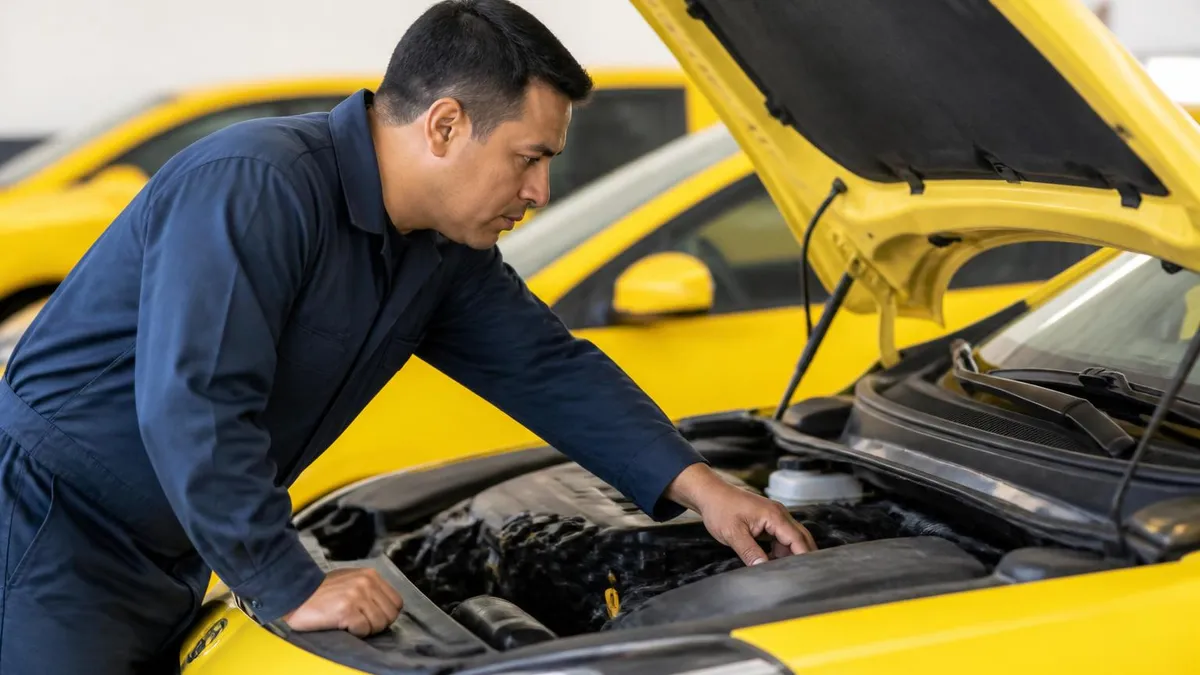
If you miss your scheduled TLC inspection appointment, the TLC may place your vehicle license on hold, preventing legal operation until you complete a new inspection. Repeated no-shows can result in additional fees and longer rebooking windows. Always cancel through LARS-360 at least 24 hours in advance if you cannot make your slot to preserve fee credits and avoid penalties.
Failing your TLC inspection appointment is not the end of the world, but it does start a clock that you need to manage carefully. The TLC provides a structured retlc inspection that gives owners a fair opportunity to fix the cited defects and return for a follow-up visit without paying the full inspection fee a second time. Understanding this process protects you from compounding a small problem into a much larger one that puts your vehicle out of service for weeks.
When a vehicle fails, the inspector issues a written rejection notice listing every specific defect that caused the fail. Read this notice carefully before leaving the facility, because the rejection paperwork is your roadmap for what must be fixed before you return. If anything on the notice is unclear, ask the inspector to clarify in writing. You will not be allowed back into the inspection bay for a reinspection unless every cited item has been corrected.
The TLC typically allows up to 30 days from the fail date to return for a free reinspection. If you come back within this window and the only items inspected are the ones cited on your original rejection notice, there is no additional fee. If you wait longer than 30 days, or if new defects appear that were not on the original notice, you will be charged for a full new inspection at the standard rate. Track your fail date carefully on your calendar.
Booking the reinspection works the same way as booking a first inspection. Log into LARS-360, select the vehicle, and choose a reinspection slot. The portal will recognize that you are returning within the eligible window and will not charge a fee if you qualify. Bring the original rejection notice with you to Woodside on the reinspection date, because the inspector will reference it to confirm that the cited defects were properly addressed.
If you believe the original rejection was issued in error, you have the right to appeal. The appeal process is handled through the TLC's adjudication office and requires a written submission explaining why you believe the inspection result should be overturned. Appeals are uncommon and rarely successful unless you have clear documentary evidence, such as a manufacturer's specification sheet showing that a part the inspector flagged as non-compliant was actually within tolerance. Most owners find it faster to simply fix the cited issue and rebook.
Some defects can be addressed on the same day at one of the many TLC-friendly repair shops near the Woodside facility. Local shops in Long Island City and Maspeth specialize in quick fixes for common fail reasons like tire replacement, bulb replacement, and minor exhaust repairs. If your fail involves a simple item and you have time before the facility closes, you can sometimes complete the repair and return for an on-the-spot reinspection that same afternoon, though this is at the inspector's discretion and not guaranteed.
For serious failures involving structural damage, emissions equipment, or major mechanical defects, plan for at least a few days of repair time and budget the parts and labor cost into your operating expenses. Avoiding the inspection by simply not driving the vehicle is not an option, because the TLC requires every licensed vehicle to maintain a current valid inspection status regardless of whether it is actively in service. Take the rejection seriously, address it promptly, and treat the experience as a learning opportunity for next year.
Veteran TLC drivers develop personal routines that turn the annual inspection from a stressful event into a predictable part of their business calendar. Adopting these habits early in your career will save you money, reduce missed work days, and dramatically increase the likelihood that you pass on the first try every year. The following practical tips come from drivers who have completed dozens of successful inspections at the Woodside facility over their careers.
First, build a year-round maintenance schedule rather than treating the inspection as the only time you look at the vehicle. Change your oil and filters on a regular interval, rotate your tires every 5,000 to 7,000 miles, replace brake pads before they reach the warning indicator, and address any dashboard warning lights within a week of their appearance. Vehicles that are maintained continuously rarely have surprise fail items at inspection time.
Second, schedule a pre-inspection visit with a trusted mechanic two to three weeks before your TLC appointment. A good mechanic familiar with TLC requirements can run through the same checklist the inspector will use and catch issues you might miss. Many shops in Queens specifically advertise TLC pre-inspection services for a flat fee, typically between $50 and $100. The investment pays for itself the first time it prevents a fail.
Third, treat documentation with the same care as mechanical preparation. Keep a permanent folder in your vehicle that contains current copies of your registration, insurance card, TLC vehicle license, hack license, and medallion paperwork if applicable. Add the most recent inspection certificate after each successful visit. Update the folder immediately whenever any document is renewed, so you never have an expired document sitting in your records on inspection day.
Fourth, plan inspection day logistics carefully. The Woodside facility is in an industrial area of Queens with limited public transit access for return trips. Bring a friend or family member to drive you back if your vehicle is held for any reason, or budget for a car service. Bring water, a charged phone, and a snack, because waits can extend longer than expected when the queue runs behind. Wear comfortable clothes and weather-appropriate layers.
Fifth, save your inspection confirmation, fee receipt, and pass certificate as digital files in cloud storage as well as physical copies. If you ever need to prove your inspection status to a TLC enforcement officer on the street, having instant access from your phone is faster than digging through paperwork. Keep your TLC drug test records in the same folder for easy access during any roadside check.
Sixth, network with other drivers in your base or platform. Experienced drivers share intelligence about which inspectors are stricter on certain items, which times of day have the shortest waits, and which nearby repair shops offer fast turnaround for common fail items. Joining a driver Facebook group or WhatsApp community for your specific vehicle class is one of the best free resources you can tap into for ongoing professional knowledge.
Sample Taxi and Limousine Commission Practice Questions
Try these questions from our free Taxi and Limousine Commission practice tests. The correct answer and an explanation follow each question.
During a TLC inspection, an officer notes your tires are worn below the minimum tread depth. From a defensive driving perspective, this is dangerous primarily because:
- A. It increases fuel consumption
- B. It reduces traction and extends stopping distance, especially in wet conditions
- C. It makes the vehicle harder to steer on highways
- D. It causes the vehicle to vibrate at high speeds
Answer: B. It reduces traction and extends stopping distance, especially in wet conditions
Worn tires dramatically reduce grip on wet roads and extend the distance needed to stop safely.
Which fluid level is checked as part of TLC vehicle inspection to ensure the engine does not overheat?
- A. Transmission fluid only
- B. Windshield washer fluid only
- C. Coolant/antifreeze level
- D. Power steering fluid only
Answer: C. Coolant/antifreeze level
Coolant/antifreeze level is inspected to confirm the cooling system can prevent engine overheating.
Under TLC rules, what is the consequence for a vehicle owner who repeatedly fails to correct violations cited at inspection?
- A. Progressive fines only, no license action
- B. Suspension or revocation of the vehicle's TLC license
- C. Mandatory enrollment in a safety course
- D. Referral to the DMV for a new vehicle registration
Answer: B. Suspension or revocation of the vehicle's TLC license
Repeated failure to correct cited violations can result in suspension or revocation of the TLC vehicle license by the Commission.
What is the role of documentation in Vehicle Inspection & Maintenance for Taxi and Limousine Commission?
- A. It is unnecessary paperwork
- B. It provides an accurate record for accountability and reference
- C. It should only be done monthly
- D. It is only for management review
Answer: B. It provides an accurate record for accountability and reference
Proper documentation in Vehicle Inspection & Maintenance ensures accountability, traceability, and serves as a reference for future decisions.
TLC Questions and Answers

TLC Renewal NYC: Complete 2026 Guide to Renewing Your Hack License and FHV Vehicle Registration

TLC Insurance NYC: Complete Guide to Coverage, Costs & Requirements for For-Hire Vehicle Drivers
Finding the Right NYC TLC Office for Your License or Vehicle
TLC Drug Test NYC: LabCorp Appointments & Locations

TLC Fines and Violations: How to Avoid Penalties
About the Author

Educational Psychologist & Academic Test Preparation Expert
Columbia University Teachers CollegeDr. Lisa Patel holds a Doctorate in Education from Columbia University Teachers College and has spent 17 years researching standardized test design and academic assessment. She has developed preparation programs for SAT, ACT, GRE, LSAT, UCAT, and numerous professional licensing exams, helping students of all backgrounds achieve their target scores.