
ServSafe Manager 7th Edition Book: Study Guide, Chapters 4–6, and Exam Prep Hub
🎓 ServSafe Manager 4_6 study guide: use the 7th edition book, exam format, a 4-week plan, and free practice questions to earn your ServSafe certification.
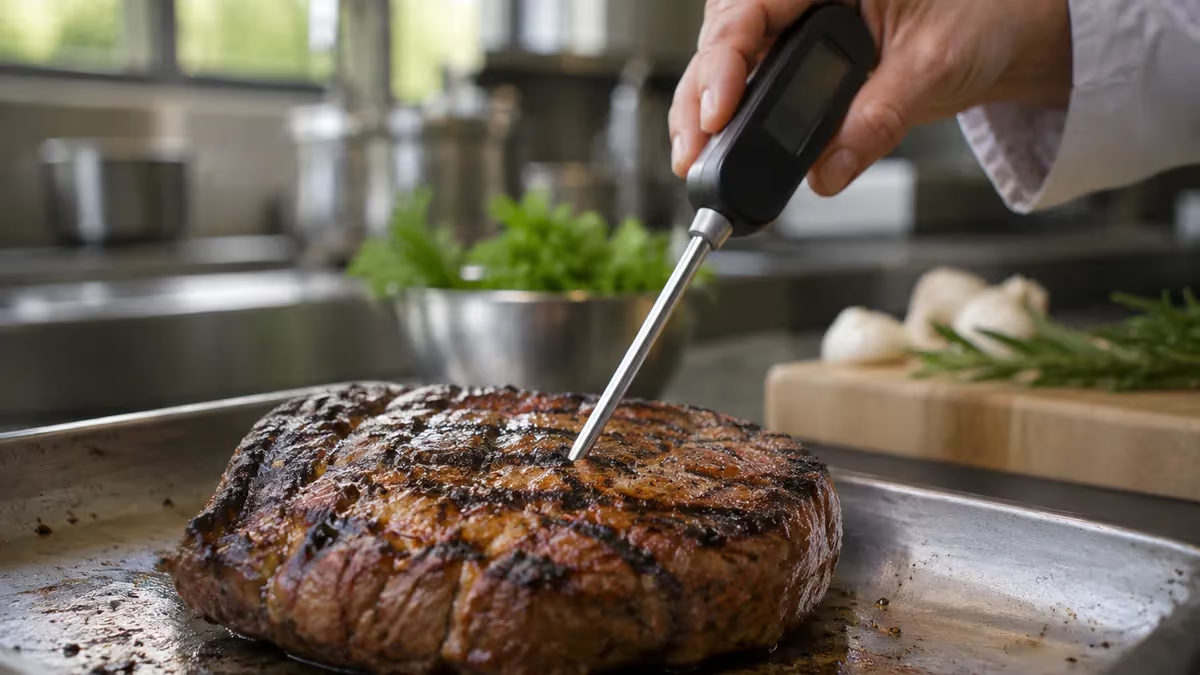
Every restaurant manager eventually asks the same question: which study materials will get me through the exam on the first attempt? If you are working through servsafe manager 4_6, the three chapters on the flow of food in the classic textbook, you are studying the section where many candidates drop points. Those chapters cover purchasing, receiving, and storage, and they are packed with temperatures, time limits, and shelf rules that the exam loves to rephrase as workplace scenarios.
The ServSafe Manager 7th Edition book was the standard print textbook for several years, and thousands of used copies still circulate through bookstores, community colleges, and kitchen break rooms. Many learners search for it because a former employer handed them a copy or a classmate offered it cheaply. Before you build a study plan around it, you should understand what it covers, what has changed since it was published, and how it compares with current ServSafe certification materials.
Here is the short version. The core science of food safety has not changed: time and temperature control, preventing cross-contamination, personal hygiene, and cleaning and sanitizing still drive the exam. What changes between editions is the underlying FDA Food Code, specific numbers, newer allergen rules, and the wording of exam items. This guide treats the 7th edition as a study aid, shows you what to verify against current sources, and gives you a realistic path to a ServSafe certificate.
Our recommended approach combines three habits. First, read the textbook chapter by chapter, spending extra time on chapters 4 through 6. Second, test yourself constantly with free practice questions instead of rereading highlighted pages. Third, check every temperature and time limit against current official ServSafe sources. If you want a state-focused companion to the servsafe manager 7th edition book, our California study hub shows how local rules layer on top of the national exam.
You will also find practical detail on the exam itself. The ServSafe Manager exam contains 90 multiple-choice questions, but only 80 are scored, and you have two hours to finish. A score of 75 percent or higher earns the credential. Because the exam must be taken with a registered proctor, you cannot simply read a book and certify yourself. Planning your exam appointment early is as important as learning the material, especially during busy hiring seasons.
Many readers also wonder how this credential relates to the ServSafe Food Handler program. The food handler course is a shorter, entry-level training for line cooks, servers, and dishwashers. The manager program is aimed at the person in charge, who must know why the rules exist, how to build a food safety management system, and how to train others. If you supervise staff or run a kitchen, the manager level is usually the one regulators and employers expect.
By the end of this article you will know what the 7th edition contains, how it differs from newer editions, how the exam is structured, and how to spread your study across four weeks. You will also find free quizzes, a practical checklist, and answers to common questions about the ServSafe certificate, renewal, and cost. Treat the book as one tool in a larger plan, and you will walk into the testing room prepared rather than hopeful.
Free ServSafe Food Safety Study Tools
Interactive ServSafe Food Safety resources on PracticeTestGeeks, free to start:
- ServSafe Alcohol Test - Primary and Advanced 1 — 16 questions with instant scoring and answer explanations
- ServSafe Food Safety flashcards — review key terms and concepts card by card
- ServSafe Food Safety study guide — topic-by-topic overview of what the exam covers
- ServSafe Food Safety cheat sheet — one-page printable summary for last-minute review
ServSafe Manager Exam by the Numbers

A 4-Week ServSafe Manager Study Schedule
- ▸Read the first three chapters and summarize each in your own words
- ▸Memorize the big six pathogens and the major food allergens
- ▸Take a short quiz on foodborne illnesses and allergens
- ▸Learn receiving temperatures for cold, frozen, and hot deliveries
- ▸Practice storage order, first in first out, and date marking rules
- ▸Build a one-page sheet of key temperatures and time limits
- ▸Study cooking, cooling, reheating, and holding requirements
- ▸Review HACCP principles and how to write corrective actions
- ▸Complete topic quizzes on cross-contamination and safe handling
- ▸Take two timed practice tests of about 90 questions each
- ▸Review every missed question and revisit the weakest chapters
- ▸Confirm your proctor appointment, ID, and technology check
The 7th edition is organized into twelve chapters that follow the path food takes through an operation. Early chapters introduce the importance of food safety, the forms of contamination, and the safe food handler. Middle chapters trace the flow of food from purchasing and receiving through storage, preparation, and service. Later chapters address food safety management systems, safe facilities and pest management, cleaning and sanitizing, and the role of regulatory agencies. Knowing this map helps you study in a logical order.
Chapters 4 through 6 deserve special attention. Chapter 4 introduces the flow of food, including time and temperature control for safety foods, the danger zone between 41°F and 135°F, and the correct use of thermometers. Chapter 5 covers purchasing and receiving, such as approved suppliers and delivery inspections. Chapter 6 covers storage, including first in, first out rotation and storage order. Together they supply many scenario questions, so treat them as the core of your preparation.
Receiving rules are a good example of exam detail. Cold TCS food should arrive at 41°F or lower, except live shellfish, which may arrive with an air temperature of 45°F and an internal temperature no higher than 50°F. Frozen food should arrive solidly frozen, with no signs of thawing and refreezing, such as ice crystals or liquid pooled at the bottom of the case. Hot food should arrive at 135°F or higher.
Storage rules come next. Store food at least six inches off the floor, keep it covered and labeled, and rotate stock using first in, first out so older product is used first. In refrigerators, place ready-to-eat food above raw animal products, then arrange raw items by minimum cooking temperature: seafood and whole cuts of beef and pork at 145°F, ground meat and fish at 155°F, and poultry at 165°F on the lowest shelf. This order stops drips from contaminating foods that will not be cooked again.
Now consider what changed after the 7th edition. Newer editions reflect updated versions of the FDA Food Code, expanded coverage of food allergens, and refreshed examples. A notable change is that sesame became the ninth major allergen recognized in US law in 2023, so older books list only eight. Some exam questions and terminology have also been adjusted. That does not make the 7th edition useless, but it does mean you should cross-check any allergen, regulation, or process detail.
Digital study tools can fill those gaps. Many learners search for a servsafe quizlet deck to drill terms such as TCS food, cross-contact, and HACCP, and flashcards are excellent for memorizing numbers. Be careful, though: user-made decks may be outdated or contain errors. Use them for repetition, then verify each figure against an official source. Our guide to the ServSafe Manager online course explains what the official digital package includes and how long it takes.
A smart workflow is to read a chapter, summarize it in your own words, and then answer practice questions on that topic immediately. When you miss a question, write down the rule and the reason behind it. Over a few weeks you will build a personal list of the facts that trip you up. That list becomes your final review sheet, and it is far more valuable than rereading the entire book the night before the exam.
ServSafe Manager Practice Test Options: Book, Online Course, or Quizzes
The printed textbook suits learners who retain information better on paper. You can annotate margins, tab the chapters on time and temperature, and carry the book to work for quick review during breaks. A used 7th edition copy is inexpensive, and the chapter summaries, case studies, and end-of-chapter questions mirror the logic of the exam. The main drawback is that you must supply your own discipline, because nothing tells you when you are ready.
If you choose the book, pair it with a dated schedule. Read one chapter at a time, complete the review questions, and then test yourself with outside questions. Confirm that your edition matches your exam version, since some printed material is newer than the 7th edition. Remember that owning the book does not register you for anything; you still need to buy an exam voucher and schedule a proctored session through an approved provider.

Is the ServSafe Manager 7th Edition Book Still Worth Using?
- +Used copies are inexpensive and easy to find
- +Chapters follow the flow of food in a logical order
- +Time and temperature fundamentals remain accurate and well explained
- +Case studies and review questions reinforce each concept
- +Paper format is easy to annotate and use away from a screen
- +Hygiene, cross-contamination, and sanitizing basics still apply
- −Based on an older version of the FDA Food Code
- −Lists eight major allergens instead of nine with sesame
- −Some terms, numbers, and exam wording may differ from today's test
- −Does not include an exam voucher or proctoring access
- −Older copies may lack a valid online access code
- −Cannot track your progress or tell you when you are ready
Pros and Cons at a Glance
| Pros | Cons |
|---|---|
| Used copies are inexpensive and easy to find | Based on an older version of the FDA Food Code |
| Chapters follow the flow of food in a logical order | Lists eight major allergens instead of nine with sesame |
| Time and temperature fundamentals remain accurate and well explained | Some terms, numbers, and exam wording may differ from today's test |
| Case studies and review questions reinforce each concept | Does not include an exam voucher or proctoring access |
| Paper format is easy to annotate and use away from a screen | Older copies may lack a valid online access code |
| Hygiene, cross-contamination, and sanitizing basics still apply | Cannot track your progress or tell you when you are ready |
ServSafe Manager Certification Checklist: Steps Before Exam Day
- ✓Confirm which edition of the book or course matches your exam version.
- ✓Read chapters 4 through 6 twice, focusing on receiving and storage.
- ✓Memorize the 41°F and 135°F limits and the key cooking temperatures.
- ✓Take a timed baseline practice test of about 90 questions.
- ✓Review every missed question and write down the rule behind it.
- ✓Check your local health department's certification requirements.
- ✓Buy your exam voucher and schedule a proctored session.
- ✓Verify your photo ID and run the system check for online testing.
- ✓Review your one-page temperature sheet the day before the exam.
- ✓Save and print your certificate after passing, then set a renewal reminder.
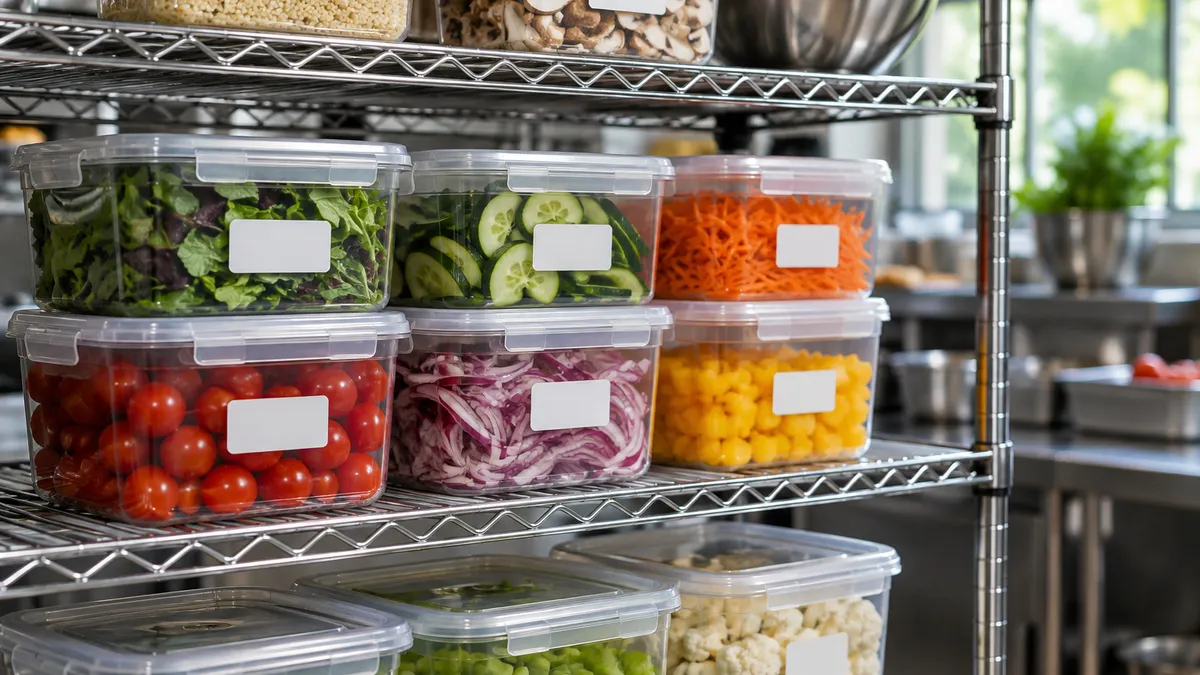
The numbers behind chapters 4 through 6
Keep cold TCS food at 41°F or lower and hot food at 135°F or higher. Cook poultry to 165°F, ground meat to 155°F, and whole cuts and seafood to 145°F. Cool food from 135°F to 70°F within two hours, then to 41°F within four more hours.
Understanding the exam format removes a lot of anxiety. The ServSafe Manager exam has 90 multiple-choice questions, and 80 of them count toward your score. The remaining ten are unscored pilot questions that ServSafe uses to test future items, and you cannot tell which are which. You get two hours, which works out to about 80 seconds per question. Most prepared candidates finish with time to spare, but pacing still matters.
You need at least 75 percent to pass, which means answering 60 of the 80 scored questions correctly. Because you do not know which items are scored, treat every question seriously. Questions are written as short scenarios, such as a delivery arriving at the wrong temperature or an employee reporting symptoms. They test whether you can apply a rule, not whether you can recite a definition, so memorization alone is rarely enough.
The exam must be taken with a proctor, either in person at a testing site or online with a remote proctor who watches through your webcam. Online testing requires a computer with a camera and microphone, a stable connection, a clear desk, and a government-issued photo ID. Read the technical requirements ahead of time, run the system check, and avoid using a work computer with restrictive firewalls that may block the proctoring software.
Topics span the whole operation. Expect questions on the big six pathogens that require exclusion of ill workers: norovirus, hepatitis A, Shigella, Salmonella Typhi, nontyphoidal Salmonella, and Shiga toxin-producing E. coli. You will also see questions on allergens, handwashing, cross-contamination, cooking and holding temperatures, cooling, pest control, HACCP plans, and inspections. Chapters 4 through 6 supply the receiving and storage questions that connect all of those topics.
Cooking temperatures are a favorite. Poultry, stuffed foods, and reheated leftovers must reach 165°F, ground meat and injected meats reach 155°F, and seafood, eggs for immediate service, and whole cuts of beef, pork, and lamb reach 145°F. Fruits, vegetables, and grains cooked for hot holding reach 135°F. Know the required hold times too, since the exam may pair a temperature with a time, such as 155°F for 17 seconds.
Cooling is another area where candidates trip. Cooked food must drop from 135°F to 70°F within two hours, then from 70°F to 41°F or lower within the next four hours, for a total of six hours. If food fails the first stage, it must be reheated to 165°F and cooled again, or discarded. Use ice baths, shallow pans, ice paddles, and blast chillers to speed the process, and verify progress with a calibrated thermometer.
Scoring arrives quickly. Online exams typically display a result right away, and the official certificate becomes available in your ServSafe account soon after passing. If you fail, you can retake the exam, but ServSafe applies waiting rules and a cap on attempts, so check the current policy before you pay for another voucher. A failed attempt is useful data: review the score report categories and focus your next study week on the weakest areas.
The exam follows current ServSafe content, which may differ from the 7th edition on allergens, regulations, and wording. Confirm requirements with ServSafe and your local health department, and remember that a proctored exam is required for the manager credential.
Passing the exam is only part of the process, because rules about who needs certification vary by location. Many states and counties require at least one certified food protection manager on site during operating hours, and the requirement often applies to every shift. Others accept ServSafe, along with competing programs, as long as the exam is accredited. Always check with your local health department, because inspectors enforce local law rather than the textbook.
Terminology causes confusion here. A ServSafe certificate usually refers to the document or digital record you receive after passing, while ServSafe certification describes the credential itself. Food handler training produces a food handler card or certificate, which is different from the manager credential. Employers and inspectors may ask for a specific one, so read job postings and local code carefully. A posting for a ServSafe certified manager means the manager exam, not the entry-level food handler course.
The manager certification is valid for five years, although some jurisdictions require earlier renewal or have their own recertification rules. Put the expiration date in your calendar the day you pass, and plan to start renewal study at least two months ahead. Renewal means retaking the current exam, so you will face updated content. Employers often reimburse these costs, so ask your supervisor whether your restaurant covers vouchers, courses, or study materials.
Cost depends on how you study. The exam alone is the cheapest component, while bundles that add the online course, the textbook, or both increase the price. Proctoring fees can add to the total, especially for online sessions or in-person test centers. Prices change from year to year, so look at our ServSafe certification cost guide for current figures. Budget for a possible retake as well, so a single miss does not become a financial setback.
Practical resources help after you test, too. Keep this servsafe food manager practice test and printing resource bookmarked, because it also walks you through downloading and printing your credential once your result posts. Print two copies: one for your personnel file and one to post where inspectors can see it. Store a digital copy in cloud storage so a lost document never delays a job offer.
Think about how the credential fits your career. Certified managers qualify for kitchen manager, general manager, catering, and school nutrition roles, and many multi-unit chains list the credential as mandatory for promotion. Even entry-level cooks who earn it stand out. Inspectors also respond differently when the person in charge can discuss HACCP plans, calibration logs, and corrective actions with confidence, which can make routine health inspections go more smoothly.
Finally, remember that the credential is a baseline, not a finish line. Real food safety depends on daily habits: checking thermometers, logging temperatures, training new hires, and correcting small errors before they become outbreaks. The best managers use what they learned in chapters 4 through 6 every shift, from inspecting deliveries to rotating stock. If you study with that mindset, the exam becomes a natural checkpoint rather than a hurdle to cram for.
Start your final preparation with an honest diagnostic. Take a full-length practice test under timed conditions, then sort every missed question into categories: temperatures, pathogens, allergens, hygiene, cleaning and sanitizing, facilities, or management systems. Two or three categories will usually account for most mistakes. Spend the next several days on those categories only, rather than rereading everything. Targeted review gives you the biggest score improvement for the time you invest.
Build memory aids for numbers. Group temperatures by theme: 41°F and 135°F bracket the danger zone, 165°F covers poultry and reheating, 155°F covers ground meat, and 145°F covers whole cuts and seafood. Create a one-page sheet and read it every morning. Say the numbers aloud while you cook or commute. Repetition across several short sessions beats a single long cram session, because spaced practice moves facts into long-term memory.
Use the kitchen as your classroom. Check your own walk-in cooler for date marking, since ready-to-eat TCS food held at 41°F or lower can be kept for a maximum of seven days when the day of preparation counts as day one. Verify that raw chicken sits below ready-to-eat food. Calibrate a thermometer in ice water, which should read 32°F. Applying rules to real shelves makes scenario questions feel familiar.
Do not neglect people skills. Many questions involve a manager responding to an ill employee, a rushed cook skipping handwashing, or a customer reporting an allergy. Know that handwashing takes at least 20 seconds in total, including 10 to 15 seconds of scrubbing, and that staff with vomiting, diarrhea, or jaundice must be excluded from the operation. Managers set the culture, so the best answer usually involves training, monitoring, and corrective action, not blame.
Manage the week before the exam carefully. Confirm your appointment, ID, and technology. Reduce new material and increase review. Sleep matters more than another late-night study session, because tired candidates misread scenario details. Eat a normal meal beforehand, arrive or log in early, and keep water nearby if the rules allow it. Reducing logistics stress leaves your full attention for the questions that actually count.
During the exam, read the whole question before looking at the choices. Note the key detail mentally: the food type, the temperature, the time, or the role of the person acting. Eliminate answers that violate a rule you know with certainty. If two answers seem correct, choose the one that best protects public health or follows the standard procedure. Flag difficult items, move on, and return with leftover time instead of burning minutes on one problem.
After the exam, celebrate, but also reflect. Save your certificate, share it with your employer, and set renewal reminders. If you did not pass, treat the score report as a map and plan your retake around the weakest domains, giving yourself at least a full study week. Many successful managers passed on a second attempt after changing methods, usually by adding more practice questions. Persistence, not perfection, is what earns the credential.
Sample ServSafe Food Safety Practice Questions
Try these questions from our free ServSafe Food Safety practice tests. The correct answer and an explanation follow each question.
A food handler wearing single-use gloves is chopping raw onions for a salad. The manager asks them to take a box of raw chicken from the walk-in cooler to the prep line. What is the correct procedure for the food handler to follow?
- A. Handle the raw chicken box with the same gloves and then continue chopping the onions.
- B. Remove the gloves, handle the raw chicken box, then put the same gloves back on.
- C. Remove the gloves and discard them, wash hands, handle the raw chicken box, then wash hands again and put on new gloves to continue chopping onions.
- D. Keep the gloves on, handle the chicken box, and then rinse the gloved hands under running water.
Answer: C. Remove the gloves and discard them, wash hands, handle the raw chicken box, then wash hands again and put on new gloves to continue chopping onions.
Gloves are a potential source of cross-contamination and must be changed before beginning a different task. Handling a box of raw chicken could contaminate the gloves. The correct procedure is to remove and discard the current gloves, wash hands, perform the new task, and then wash hands again and don a fresh pair of gloves before returning to handle ready-to-eat food like onions.
A manager observes an employee with a sore throat and fever. What is the correct action?
- A. Restrict the employee from working with exposed food
- B. Allow the employee to continue if they wear gloves
- C. Send the employee home only if they have a doctor's note
- D. Move the employee to dishwashing duties
Answer: A. Restrict the employee from working with exposed food
An employee with a sore throat and fever must be restricted from working with or around exposed food.
A foodservice manager is developing a HACCP plan for a new menu item. After assembling a team and creating a process flow diagram, what is the crucial first principle they must apply?
- A. Determine the critical control points (CCPs).
- B. Establish critical limits for each CCP.
- C. Conduct a hazard analysis.
- D. Establish monitoring procedures.
Answer: C. Conduct a hazard analysis.
The first of the seven HACCP principles is to conduct a thorough hazard analysis. This involves identifying any potential biological, chemical, or physical hazards at every step in the flow of food before any control measures can be determined.
A health inspector arrives unannounced. What should the manager do first?
- A. Ask them to return at a more convenient time
- B. Verify their identification and credentials
- C. Refuse entry until the owner is present
- D. Begin cleaning the kitchen immediately
Answer: B. Verify their identification and credentials
The manager should verify the inspector's identification before allowing access.
ServSafe Questions and Answers

How to Print Your ServSafe Certificate: Complete Step-by-Step Guide

ServSafe Manager Online Course: What's Included, How Long It Takes, and How to Pass

California ServSafe Practice Test: Complete Study Guide & Certification Prep Hub

ServSafe Certification Cost: Complete 2026 Pricing Guide for Food Handlers and Managers
ServSafe Customer Service: How to Get Help With Certification, Testing, and Account Issues
How this page was made: written with AI tools and published by Nathan Beja, founder of Practice Test Geeks, who is responsible for its content. Exam facts are checked against the official sources listed below. Not reviewed by a subject-matter expert. Editorial policy
Sources & references
Exam facts on this page (fees, format, dates, passing scores) are checked against these official sources; the date is our last check. Editorial policy
- servsafe.com — Test delivery, exam format, passing score, retake policy, time limit, fees, renewal, score validity, score release, retake fee · verified Oct 2026