
ServSafe Gloves: Complete Guide to Proper Glove Use in Food Service 2026
Master ServSafe gloves requirements for your food handlers card, permit, or manager exam. Learn when, how, and why gloves matter. ✅
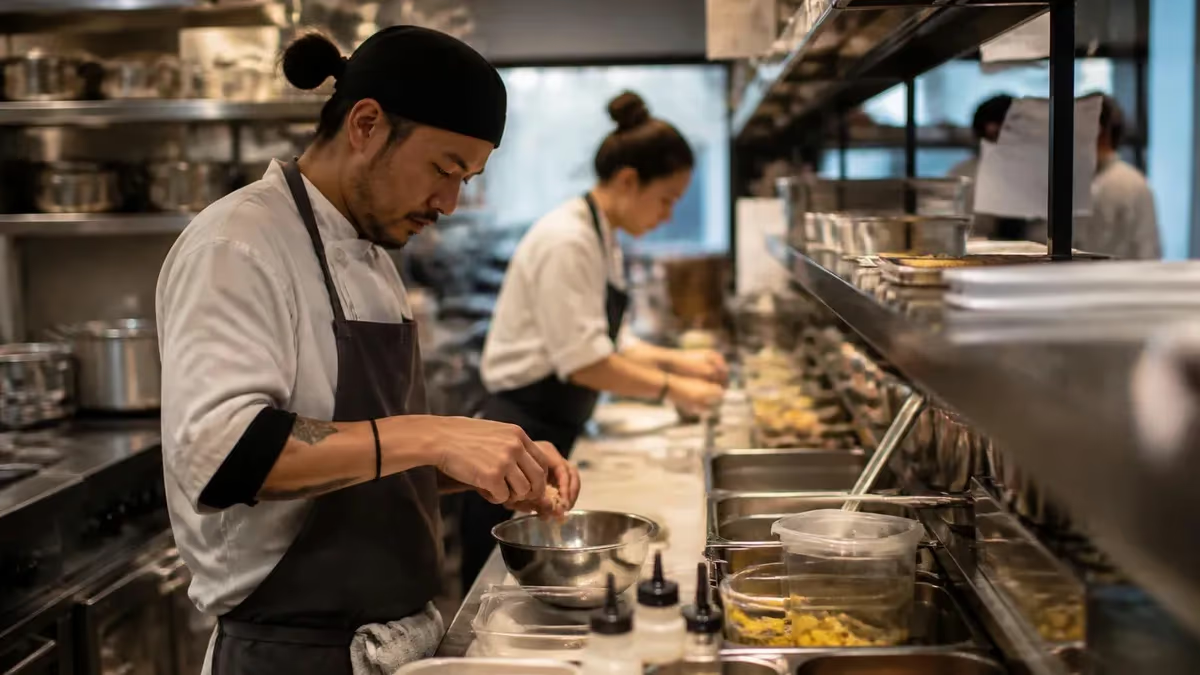
ServSafe gloves are one of the most tested and most misunderstood topics on the ServSafe exam — whether you are studying for a food handlers card, a food handlers certificate, or the full manager-level certification. Understanding exactly when gloves are required, which types are acceptable, and how to change them properly can mean the difference between passing your exam on the first attempt and having to reschedule. This article breaks down every rule the National Restaurant Association Educational Foundation expects food service workers to know about glove use in a commercial kitchen environment. Practice with the free ServSafe Certification Practice practice test on PracticeTestGeeks (7 questions with answer explanations).
In the United States, the use of gloves in food service is regulated at both the federal and state level, with ServSafe serving as the most widely recognized training standard for compliance. A food handlers permit in Texas, an oregon food handlers card, or a food handlers card arizona applicants all need to understand glove protocol because local health departments base their inspections on these same principles. The ServSafe curriculum teaches that bare-hand contact with ready-to-eat food is the primary risk gloves are designed to prevent, and that risk is taken seriously from coast to coast.
Many food service professionals are surprised to learn that wearing gloves incorrectly can actually increase contamination risk compared to thorough handwashing alone. The ServSafe framework is very clear on this point: gloves do not replace handwashing. They supplement it. Every time you put on a new pair of gloves, you must first wash your hands for the full 20-second procedure — scrubbing between fingers, under nails, and up the wrists. Skipping this step is one of the most common mistakes flagged during health inspections and on ServSafe practice exams.
The scope of glove rules in ServSafe extends beyond just putting them on and taking them off. Workers must understand glove material restrictions — latex is increasingly banned in many jurisdictions due to allergy risks — as well as size selection, contamination triggers that require an immediate glove change, and the difference between single-use gloves and reusable utility gloves. Each of these nuances appears regularly on the servsafe manager practice test, so a thorough understanding is essential for anyone pursuing certification at any level.
Food handlers working in establishments that serve highly susceptible populations — such as hospitals, nursing homes, and schools — face even stricter glove requirements under ServSafe guidelines. In these settings, bare-hand contact with ready-to-eat food is never permitted under any circumstances, and the ServSafe Manager exam may include scenario-based questions specifically about these high-risk environments. Understanding the layered nature of glove rules helps you answer those nuanced questions with confidence rather than guesswork.
This guide covers every glove-related concept you will encounter on the ServSafe exam: the types of gloves approved for food contact, the step-by-step process for proper use, the specific situations that require an immediate glove change, the rules around reusable utility gloves, and the broader context of how servsafe gloves connect to temperature control and foodborne illness prevention. By the end, you will have a complete picture of this topic that applies both in the exam room and on the job every single day.
Whether you are a new hire completing mandatory food safety training, a shift supervisor refreshing your knowledge before your food handlers certificate renewal, or a manager preparing for the 90-question ServSafe Manager exam, the information in this article applies directly to your situation. Glove rules are not abstract regulations — they reflect decades of foodborne illness data showing exactly how pathogens transfer from hands to food and how the right barriers, used correctly, stop that transfer in its tracks.
Free ServSafe Certification Practice Study Tools
Interactive ServSafe Certification Practice resources on PracticeTestGeeks, free to start:
- ServSafe Certification Practice flashcards — review key terms and concepts card by card
- ServSafe Certification Practice study guide — topic-by-topic overview of what the exam covers
- ServSafe Certification Practice cheat sheet — one-page printable summary for last-minute review
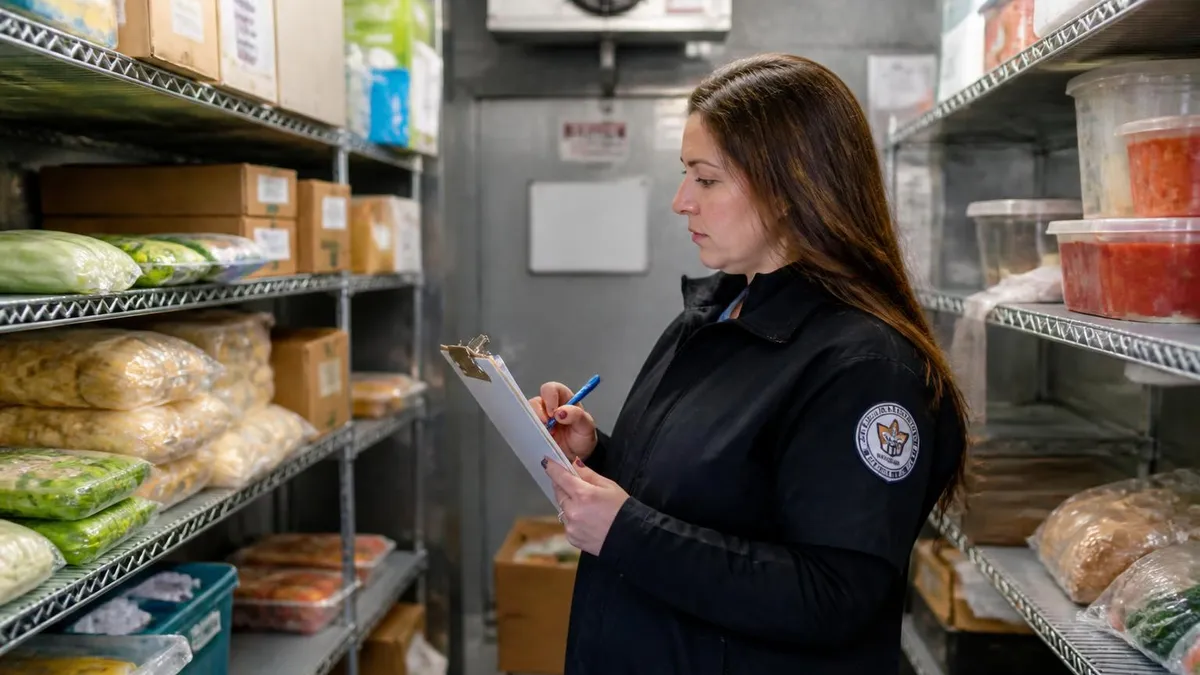
ServSafe Gloves by the Numbers
Types of Gloves Approved for Food Service Under ServSafe
The most commonly used glove in food service. Vinyl gloves are latex-free, making them safe for guests and staff with latex allergies. They are intended for light-duty tasks like assembling sandwiches or plating ready-to-eat items. They must be discarded after each task or contamination event.
Nitrile gloves offer superior puncture resistance and chemical protection compared to vinyl. They are the preferred choice for handling raw proteins, operating slicers, or working with cleaning chemicals. Nitrile is latex-free and is increasingly the industry standard in high-volume kitchens.
Latex gloves were once universal in food service but are now restricted or banned in many states due to severe allergic reactions they can trigger in both staff and guests. ServSafe does not recommend latex gloves for food contact and advises operators to switch to nitrile or vinyl alternatives.
Thick rubber utility gloves are approved for non-food-contact tasks such as washing dishes, handling chemicals, and cleaning surfaces. They must never be used for direct food handling. Utility gloves must be cleaned, sanitized, and stored properly between uses to prevent cross-contamination.
Cut-resistant gloves protect workers using mandolines, slicers, or knives from lacerations. However, they are not approved for direct food contact without a single-use glove worn over them, because cut-resistant materials are porous and cannot be effectively sanitized between uses.
Proper glove donning and doffing technique is tested on every level of ServSafe certification, from the basic food handlers card all the way through the manager exam. The process begins before the gloves even come out of the box. ServSafe requires a complete handwashing procedure — wet hands, apply soap, scrub for at least 20 seconds, rinse thoroughly, and dry with a single-use paper towel or air dryer — before touching any glove.
This rule exists because gloves worn over unwashed hands simply trap pathogens against the skin rather than eliminating them, and those pathogens can transfer onto the glove surface as soon as the gloves begin to degrade or develop pinholes.
Selecting the correct glove size is also a food safety issue, not just a comfort issue. Gloves that are too large bunch at the fingers and fingertips, creating pockets where contamination can collect and making it difficult to grip food items securely. Gloves that are too small stretch thin across the palm and knuckle areas, dramatically increasing the risk of tearing during normal food handling tasks.
ServSafe instructs food service operators to stock multiple glove sizes so that every employee can wear a properly fitted pair — this is particularly important during health inspections, which may include a check of available glove sizes.
When putting on gloves, the ServSafe-recommended technique involves handling the glove by the cuff or wrist area, never by the palm or finger sections that will come into contact with food. This keeps the food-contact surfaces sterile until the glove is fully on the hand. Many workers rush this step and inadvertently contaminate the exterior of the glove before it is even on, defeating the entire purpose of wearing gloves in the first place. ServSafe exam questions often describe these exact scenarios and ask test-takers to identify what went wrong.
Removing gloves correctly is equally important and equally tested. The ServSafe method for glove removal involves pinching the outside of one glove near the wrist without touching the skin, peeling it off so it turns inside out, and holding the removed glove in the still-gloved hand. Then, the remaining gloved hand slides two fingers inside the cuff of the remaining glove and peels it off inside-out over the first glove, encapsulating it. Both gloves are then disposed of without the bare hands ever touching the contaminated exterior surfaces. This technique prevents hand contamination during glove removal.
After removing gloves, ServSafe requires another full handwashing procedure before proceeding to any other task — including putting on a fresh pair of gloves. This two-wash protocol (wash before gloving, wash after removing gloves) is one of the most important hygiene loops in the entire ServSafe framework.
It ensures that even if the gloves developed microscopic tears during use, any pathogens on the hands are eliminated before they can be transferred. On the servsafe manager practice test, you will often see questions that describe a worker skipping one of these handwashing steps and ask you to identify the food safety violation.
Color-coded glove systems represent a best practice that ServSafe endorses for high-volume kitchens handling multiple types of food simultaneously. Under a color-coded system, each food category — raw beef, raw poultry, raw seafood, ready-to-eat items — is assigned a specific glove color.
Workers can see at a glance whether a colleague is handling the correct category of food for their station, and supervisors can quickly identify cross-contamination risks before they become foodborne illness incidents. While ServSafe does not mandate color coding as a minimum requirement, it does appear in the curriculum as a recommended best practice for managing allergens and preventing cross-contact.
Understanding how glove protocol connects to the broader ServSafe framework also means recognizing that gloves are part of a layered defense system. No single control measure eliminates all foodborne illness risk. Gloves work alongside proper handwashing, temperature control, cleaning and sanitization schedules, and employee health policies to create multiple overlapping barriers against contamination. This systems-thinking approach is central to the ServSafe philosophy and is reflected in exam questions that ask workers to evaluate entire workflows rather than just individual actions in isolation.
When to Change Gloves: ServSafe Rules Explained
ServSafe identifies contamination events as the primary trigger for an immediate glove change. These include touching your face, hair, or body; sneezing or coughing into or near your gloved hands; touching a raw protein and then moving to a ready-to-eat food station; handling garbage or dirty equipment; and answering a phone or touching any non-food-contact surface like a door handle or cash register. Any of these events instantly compromises glove integrity from a contamination standpoint.
The critical concept ServSafe emphasizes here is that contamination is not always visible. A worker who briefly touches a countertop edge while repositioning food on a cutting board may not see any visible dirt transfer, but that touch is still a contamination event requiring a glove change and handwash. ServSafe exam scenarios frequently describe exactly this kind of subtle contamination event and ask test-takers to identify the correct response — which is always to remove the gloves, wash hands, and don a fresh pair before continuing work.
Gloves vs. Bare-Hand Contact: What ServSafe Says
- +Gloves create a physical barrier that prevents direct skin-to-food pathogen transfer during ready-to-eat food handling
- +Gloves protect food from cuts, sores, or skin conditions that could introduce contaminants into the food supply
- +Gloves allow workers to handle high-acid or spicy foods that could irritate the skin during extended prep sessions
- +Color-coded glove systems provide a visual allergen and protein management tool that bare hands cannot replicate
- +Gloves reassure customers and health inspectors that hygienic practices are actively being followed in the kitchen
- +Wearing gloves during illness-related risk situations provides an additional barrier even when a worker has washed their hands thoroughly
- −Gloves create a false sense of security — workers who forget that gloves can tear or become contaminated may skip critical handwashing steps
- −Improperly worn or oversized gloves can bunch and trap contamination, making them less safe than careful bare-hand contact with thorough handwashing
- −Frequent glove changes generate significant plastic waste, creating an environmental and operational cost burden for food service establishments
- −Latex gloves pose a serious allergen risk to both food service workers and guests with latex sensitivities, limiting their use
- −Gloves reduce tactile sensitivity, which can affect food quality tasks like judging meat texture, dough consistency, or produce ripeness
- −Gloves that are not changed frequently enough can harbor more bacteria than properly washed bare hands, particularly after several hours of use
Pros and Cons at a Glance
| Pros | Cons |
|---|---|
| Gloves create a physical barrier that prevents direct skin-to-food pathogen transfer during ready-to-eat food handling | Gloves create a false sense of security — workers who forget that gloves can tear or become contaminated may skip critical handwashing steps |
| Gloves protect food from cuts, sores, or skin conditions that could introduce contaminants into the food supply | Improperly worn or oversized gloves can bunch and trap contamination, making them less safe than careful bare-hand contact with thorough handwashing |
| Gloves allow workers to handle high-acid or spicy foods that could irritate the skin during extended prep sessions | Frequent glove changes generate significant plastic waste, creating an environmental and operational cost burden for food service establishments |
| Color-coded glove systems provide a visual allergen and protein management tool that bare hands cannot replicate | Latex gloves pose a serious allergen risk to both food service workers and guests with latex sensitivities, limiting their use |
| Gloves reassure customers and health inspectors that hygienic practices are actively being followed in the kitchen | Gloves reduce tactile sensitivity, which can affect food quality tasks like judging meat texture, dough consistency, or produce ripeness |
| Wearing gloves during illness-related risk situations provides an additional barrier even when a worker has washed their hands thoroughly | Gloves that are not changed frequently enough can harbor more bacteria than properly washed bare hands, particularly after several hours of use |
ServSafe Glove Use Checklist for Food Handlers
- ✓Wash hands for the full 20-second procedure before putting on any pair of gloves.
- ✓Select the correct glove size to ensure a snug fit without excessive stretching or bunching.
- ✓Choose nitrile or vinyl gloves for food contact — avoid latex due to allergy risks.
- ✓Handle gloves by the cuff only when donning to keep food-contact surfaces sterile.
- ✓Change gloves immediately after touching your face, hair, body, or any non-food surface.
- ✓Change gloves when transitioning from raw proteins to ready-to-eat foods without exception.
- ✓Change gloves when switching between allergen-containing and allergen-free food preparation tasks.
- ✓Change gloves at least every four hours during continuous food handling, or more frequently per establishment policy.
- ✓Remove gloves using the inside-out pinch method to avoid contaminating bare hands.
- ✓Wash hands again after removing gloves before touching anything else, including a new pair of gloves.
Gloves Do Not Replace Handwashing — They Supplement It
ServSafe is explicit on this point: gloves are a supplement to handwashing, not a substitute. The ServSafe Manager textbook states that workers must wash their hands before putting on gloves and after removing them. Skipping either handwash step is a critical food safety violation that nullifies the protection gloves are supposed to provide. This principle appears on virtually every level of ServSafe certification and is one of the highest-priority concepts for exam success.
One of the most common mistakes food service workers make on the ServSafe exam — and in real kitchens — is misunderstanding the relationship between gloves and hand injuries. ServSafe is very clear that a worker with an open wound, cut, or sore on their hand must cover that wound with a bandage and then wear a glove over the bandage before handling food.
The bandage alone is not sufficient because bandages can fall off into food. The glove alone is not sufficient because open wounds harbor concentrated numbers of pathogens that can transfer through glove material if the glove tears. The two-layer approach — bandage plus glove — is the only ServSafe-compliant method for food handling when hand injuries are present.
The ServSafe framework also addresses the scenario of a worker with a wound on their finger specifically. In this case, a finger cot (a small sheath that covers just the injured finger) may be used under the glove as an additional barrier. Finger cots must be a bright, highly visible color — typically blue — so that if they fall off into food, they can be detected and the contaminated batch discarded. This brightly colored requirement is a ServSafe best practice for wound-covering devices and is worth memorizing because it appears in exam questions about contamination prevention.
Another frequently tested exam topic involves the handling of ready-to-eat foods. ServSafe defines ready-to-eat foods as foods that will be consumed without any further cooking step to reduce pathogens — this includes cooked foods, washed raw produce, deli meats, bakery items, sandwiches, and beverages. The ServSafe rule is that ready-to-eat foods must never come into contact with bare hands. Workers must use gloves, tongs, deli tissue, spatulas, or other utensils. This rule is stricter than the general glove policy because the absence of a kill step means any contamination introduced at this stage goes directly to the consumer.
Some ServSafe exam questions describe situations where a restaurant runs out of gloves mid-service and ask what the manager should do. The correct ServSafe answer is to stop food handling until a new supply of gloves is obtained — not to switch to bare-hand contact with ready-to-eat foods, not to use improvised alternatives like plastic bags, and not to continue service while hoping inspectors do not notice. This is a no-compromise position in ServSafe food safety training, and understanding the non-negotiable nature of the rule is important for exam success at the manager level.
Glove-related questions on the rbs certification exam — the Responsible Beverage Service certification required in California — overlap somewhat with ServSafe content because bar environments also involve food handling, particularly garnishes, cut fruit, and cocktail ingredients that meet the definition of ready-to-eat food. A bartender license candidate in states where food safety training is bundled with alcohol service training may encounter glove questions in both contexts. The same ServSafe principles apply: bare-hand contact with ready-to-eat bar garnishes is prohibited, and a glove change is required after handling garnishes if the bartender then touches any non-food surface.
The ServSafe curriculum also addresses the proper storage of unused gloves in the kitchen environment. Gloves must be stored in their original packaging or in a clean, covered container away from chemicals, raw proteins, and areas where they could become contaminated before use. Gloves stored near a chemical storage area can absorb fumes that then transfer to food during handling. Gloves left loose on counters near prep areas can become contaminated from splatter or direct contact. ServSafe expects managers to establish and enforce glove storage protocols as part of a comprehensive food safety management system.
For workers pursuing a texas food handlers license, the state-specific requirements align closely with ServSafe glove standards because Texas uses ServSafe as one of its approved training providers. Texas health code requires bare-hand contact prevention for ready-to-eat foods and mandates that food handlers be trained on proper glove use as part of their certification curriculum. Understanding that ServSafe glove rules are not just exam content but actual legal requirements in most jurisdictions gives them added importance and helps workers remember the rules in real-world settings where enforcement consequences are real.

Latex gloves are banned or restricted in several states and many food service establishments due to the risk of triggering severe allergic reactions in both employees and guests. If your establishment still stocks latex gloves, consult your local health department and consider switching to nitrile or vinyl alternatives immediately. ServSafe strongly advises against latex in food service environments, and this topic frequently appears on the manager-level certification exam as a regulatory compliance question.
Preparing for the ServSafe exam means understanding not just what the rules are but why they exist — and nowhere is that more true than with glove protocol. The reasoning behind every glove rule traces back to a specific category of foodborne illness risk.
Bare-hand contact with ready-to-eat food is prohibited because human skin naturally harbors bacteria like Staphylococcus aureus, which can be transferred to food even by workers who feel completely healthy and have no visible wounds or signs of illness. Staphylococcal food poisoning is one of the most common foodborne illnesses in commercial food service, and it is almost entirely preventable through consistent glove use and handwashing.
The four-hour glove change rule connects directly to the ServSafe time-temperature danger zone principles. Pathogens can multiply on the surface of gloves that have been in contact with food for extended periods, particularly if the gloves have developed micro-tears that allow organic matter to accumulate between the glove and the hand.
By requiring changes every four hours at a minimum, ServSafe aligns glove hygiene with the same time-based risk framework that governs food storage, cooling, and reheating. This conceptual consistency is by design and helps food handlers develop an integrated mental model of food safety rather than a collection of disconnected rules.
ServSafe exam questions about gloves often appear in scenario format — you are presented with a description of a worker's actions during a shift and asked to identify what was done correctly and what violated food safety protocol. To answer these questions accurately, you need to be able to evaluate a sequence of events and identify the precise moment when a food safety violation occurred.
Common scenarios include: a worker who changes gloves correctly but skips the handwash; a worker who wears gloves during raw protein prep but removes them before handling ready-to-eat items thinking bare hands are acceptable; and a worker who correctly identifies a contamination event but waits until a task is complete before changing gloves instead of stopping immediately.
The connection between glove protocol and the broader ServSafe food safety management system is also tested at the manager level. Managers are expected to establish written policies for glove use, train employees on those policies, monitor compliance during service, and take corrective action when violations are observed.
On the ServSafe Manager exam, scenario questions may describe a manager who observes a food safety violation — like an employee using the same gloves across multiple task transitions — and ask what the correct managerial response is. The answer always involves immediate corrective action, not deferred action, because foodborne illness risk is real-time.
Workers pursuing a food handlers card arizona should be aware that Arizona's Maricopa County Department of Environmental Services uses ServSafe-aligned content in its food handler training programs, meaning the glove rules in this guide are directly applicable to state-level certification requirements. Similarly, the oregon food handlers card program uses training that aligns with ServSafe principles, and glove protocol is a tested component in both states. Understanding that these state programs draw from the same ServSafe source material reinforces why mastering the core concepts in this guide gives you an advantage across multiple certification contexts simultaneously.
One advanced glove topic that appears on the ServSafe Manager exam but not always on basic food handlers card exams is the concept of single-use glove limitations in operations that use high-heat cooking equipment. Workers operating grills, fryers, or ovens need heat-protective gloves, but those gloves are utility gloves — not single-use food-contact gloves.
The ServSafe rule is that heat-protective gloves must never be used for direct food contact and must be cleaned and sanitized after each use. Understanding the functional distinction between glove types — and that different categories serve different purposes within the same kitchen — is a mark of the deeper food safety knowledge expected of a certified ServSafe Manager.
Finally, it is worth emphasizing that the ServSafe glove rules are not punitive regulations designed to make kitchen work harder — they are evidence-based practices developed in response to real foodborne illness outbreaks that sickened and killed people. Every rule in the ServSafe curriculum has a public health rationale behind it, and glove protocol is no exception.
Workers and managers who internalize this reasoning rather than memorizing rules as arbitrary requirements are better equipped to make correct judgment calls in novel situations, adapt to new health department guidance, and build the kind of safety culture that prevents illness before it starts. That is ultimately what ServSafe certification is designed to achieve.
If you want more targeted practice, the servsafe manager practice test pdf page covers the same material with additional questions and explanations.
When preparing for your ServSafe exam, the most effective study approach for glove-related content is to practice scenario-based questions rather than just memorizing individual rules. The reason is that ServSafe exams — especially the Manager-level 90-question test — are designed to test applied knowledge, not just recall.
A question might describe a detailed kitchen scenario with five or six worker actions and ask you which specific action created a food safety risk. To answer correctly, you need to mentally trace the contamination pathway through the scenario and identify the moment a rule was violated. Flashcards and definitions alone do not prepare you for this kind of analysis.
Create a mental framework for glove questions by organizing the rules into three categories: before (handwashing before gloving), during (contamination and time triggers for changes), and after (handwashing after removal and proper disposal). Every glove question on the exam fits into one of these three categories.
When you encounter a scenario question, your first step should be to mentally sort each described action into this framework and check whether the before, during, and after rules were followed in sequence. This systematic approach eliminates the need to rely on gut instinct and gives you a reliable method for evaluating even unfamiliar scenarios.
Practice questions from resources like PracticeTestGeeks are particularly valuable for glove content because they replicate the scenario-based format used on the actual ServSafe exam. Working through a bank of glove questions — especially those that include detailed explanations for both correct and incorrect answers — helps you build pattern recognition for the types of violations ServSafe test designers commonly include.
After working through twenty or thirty glove-related practice questions, you will begin to notice recurring patterns: the worker who skips the post-removal handwash, the supervisor who allows continuous glove use across task transitions, the kitchen that has run out of gloves and continues service anyway. These are the scenarios ServSafe returns to repeatedly because they represent real, common failure points in food service operations.
Time management on the ServSafe Manager exam is also relevant to glove questions because scenario-based questions take longer to read and process than straightforward recall questions. Each ServSafe Manager exam question is worth the same number of points, so spending too much time on complex scenarios at the expense of faster questions can hurt your overall score.
Practice reading scenario questions quickly while still identifying all the relevant details — this is a skill that improves with repetition. Aim to spend no more than 60 to 90 seconds per question on average, leaving time at the end to revisit flagged questions.
In addition to practice questions, review the ServSafe Manager textbook's chapter on personal hygiene, which covers handwashing, glove use, and health and hygiene policy in depth. Pay particular attention to the tables and summary boxes in that chapter, as they often contain the exact language used in exam questions. ServSafe exams are written directly from the textbook content, so familiarity with the textbook's specific phrasing can help you recognize correct answers even when questions are worded differently from how you might naturally phrase the same concept.
Real-world reinforcement of glove knowledge is also valuable exam preparation. If you are currently working in a food service environment, pay deliberate attention to the glove protocols in your kitchen — notice when colleagues change gloves, observe whether handwashing occurs before and after gloving, and mentally note any deviations from ServSafe standards. This active observation converts abstract exam content into concrete sensory memory, which is much more durable during a 90-question exam than rote memorization. Workers who have seen ServSafe principles in action consistently outperform those who studied only from text on scenario-based exam questions.
Finally, after you earn your ServSafe certification — whether a food handlers card, a food handlers certificate, or the full manager credential — continue treating glove protocol as a living practice rather than a checked box. Health departments update guidance, new pathogens emerge, and workplace conditions change.
The ServSafe framework is designed to be a foundation for ongoing food safety culture, not a one-time test. Workers who carry the habits described in this guide into every shift — washing before gloving, changing gloves at every trigger event, washing after removal — are the backbone of a food service industry that serves millions of meals safely every single day.
Sample ServSafe Certification Practice Practice Questions
Try these questions from our free ServSafe Certification Practice practice tests. The correct answer and an explanation follow each question.
What is the most common way pathogens are transferred to food in a food service operation?
- A. Contaminated water supply
- B. Improper ventilation in the kitchen
- C. Food handlers who practice poor personal hygiene
- D. Using expired cleaning chemicals
Answer: C. Food handlers who practice poor personal hygiene
Poor personal hygiene, such as unwashed hands, is the most common way pathogens are transferred to food in food service settings.
Hepatitis A is primarily spread in food service settings through which route?
- A. Contaminated cooking equipment and surfaces
- B. Infected food handlers contaminating ready-to-eat food with fecal matter
- C. Undercooked meat products harboring the virus
- D. Airborne transmission in poorly ventilated kitchens
Answer: B. Infected food handlers contaminating ready-to-eat food with fecal matter
Hepatitis A is primarily spread in food service when infected food handlers contaminate ready-to-eat foods through the fecal-oral route, often due to inadequate handwashing.
What is the primary danger of Clostridium botulinum in food service?
- A. It multiplies rapidly on exposed raw meat at room temperature
- B. It produces a deadly neurotoxin in low-acid, oxygen-free (anaerobic) environments
- C. It causes immediate and severe allergic reactions in consumers
- D. It thrives and multiplies at refrigeration temperatures
Answer: B. It produces a deadly neurotoxin in low-acid, oxygen-free (anaerobic) environments
Clostridium botulinum produces a deadly neurotoxin in low-acid, anaerobic environments such as improperly canned or vacuum-packed foods.
What is the maximum time food can be stored in a walk-in refrigerator at proper temperature?
- A. It varies by food type, but most cooked foods should be used within 7 days
- B. Indefinitely at any temperature
- C. 30 days for all foods
- D. Only 24 hours
Answer: A. It varies by food type, but most cooked foods should be used within 7 days
Storage times vary by food type, but most cooked foods should be dated and used within 7 days when stored at proper refrigeration temperatures (41°F or below).
ServSafe Questions and Answers

Temperature Danger Zone ServSafe: Preventing Time-Temperature Abuse When Transporting Food

ServSafe Certification Practice Test: Complete Prep Guide for Food Handlers and Managers

ServSafe Manager Certificate: Complete Study Guide and Certification Prep Hub for 2026
ServSafe Manager Certification: Complete 2026 Requirements, Exam, and Career Guide

National Restaurant Association Educational Foundation ServSafe: Complete Certification Organization Guide
About the Author

Registered Sanitarian & Food Safety Certification Expert
Cornell University College of Agriculture and Life SciencesThomas Wright is a Registered Sanitarian and HACCP-certified food safety professional with a Bachelor of Science in Food Science from Cornell University. He has 17 years of experience in food safety auditing, regulatory compliance, and foodservice management training. Thomas prepares food industry professionals for ServSafe Manager, HACCP certification, and state food handler examinations.