
ServSafe Food Storage Chart: Complete Temperature & Time Guide for the Manager Exam
🎓 Master the ServSafe food storage chart with temperature rules, time limits, and storage order. Includes practice test tips for the ServSafe manager exam.
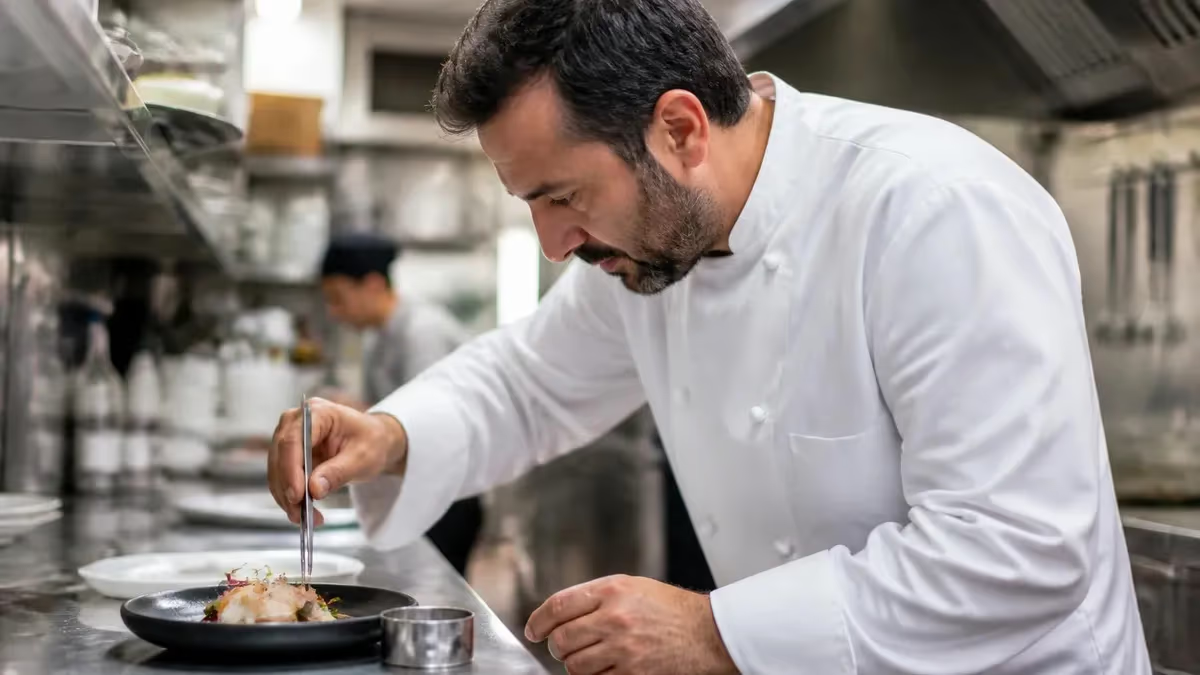
The ServSafe food storage chart is one of the most heavily tested topics on the ServSafe practice test, and for good reason — improper food storage is a leading cause of foodborne illness outbreaks in commercial kitchens. Whether you are studying for your ServSafe manager exam or brushing up on food handler fundamentals, understanding exactly how to store food safely at correct temperatures and in the right order will account for a significant portion of your exam score. This guide breaks down every rule you need to memorize before test day.
Food storage in a commercial kitchen is not simply a matter of putting items in the refrigerator. ServSafe regulations define precise temperature ranges, maximum storage times, and a mandatory stacking order inside coolers and walk-in refrigerators. The ServSafe manager test dedicates an entire domain to these rules because a single storage mistake — such as placing raw chicken above ready-to-eat vegetables — can contaminate an entire prep area and cause a serious outbreak. Knowing the chart cold is non-negotiable for passing the exam and for keeping your kitchen safe.
Temperature control for safety, commonly abbreviated as TCS, sits at the heart of the ServSafe food storage chart. TCS foods include meat, poultry, seafood, dairy, cooked starches, cut melons, cut tomatoes, and leafy greens. These foods must be held at or below 41°F (5°C) during cold storage or at or above 135°F (57°C) during hot holding. The danger zone — temperatures between 41°F and 135°F — is the range at which bacteria multiply fastest, doubling as quickly as every 20 minutes under ideal conditions.
One of the trickiest concepts on the servsafe test prep materials involves understanding storage times alongside temperatures. Even when food is kept at the correct temperature, it can only remain safe for a limited period. Ground beef, for example, must be used or discarded within one to two days of refrigeration, while whole muscle beef can last three to five days. Shell eggs must be used within three to five weeks when held at 41°F or below. ServSafe exam questions frequently test these windows, so committing specific timeframes to memory is critical.
The refrigerator storage order is another concept that consistently appears on the ServSafe manager practice test. Food items must be stored from top to bottom in a specific sequence based on their minimum internal cooking temperature. Ready-to-eat foods go on the top shelf because they require no cooking. Whole seafood comes next, followed by whole cuts of beef and pork, then ground meat and ground fish, and finally whole and ground poultry at the very bottom. This hierarchy ensures that if drips or spills occur, they fall onto items that will be cooked to a higher temperature, reducing cross-contamination risk.
Dry storage rules are equally important on the ServSafe food storage chart. Dry goods such as flour, sugar, cereals, and canned goods must be stored at least six inches off the floor on clean shelving, away from walls, and in a cool, dry area maintained between 50°F and 70°F. Items must never be stored under leaking pipes, near cleaning chemicals, or in areas where pests could access them. ServSafe inspector questions often describe a storage scenario and ask you to identify the violation, so understanding what correct dry storage looks like helps you spot the wrong answer quickly.
Freezer storage extends the safe life of most foods significantly but is not indefinitely safe. The ServSafe food storage chart notes that frozen storage at 0°F (-18°C) or below halts bacterial growth, but quality degrades over time. Ground beef stays at peak quality for three to four months frozen, while poultry can last up to twelve months.
For exam purposes, the key detail is that freezing does not kill most pathogens — it only suspends their activity. When food thaws and re-enters the danger zone, bacteria resume multiplying, making proper thawing methods equally important for your ServSafe manager sample test preparation.
Free ServSafe Study Tools
Interactive ServSafe resources on PracticeTestGeeks, free to start:
- ServSafe practice test — 1,350+ questions with instant scoring and answer explanations
- ServSafe flashcards — review key terms and concepts card by card
- ServSafe study guide — topic-by-topic overview of what the exam covers
- ServSafe cheat sheet — one-page printable summary for last-minute review
ServSafe Food Storage by the Numbers
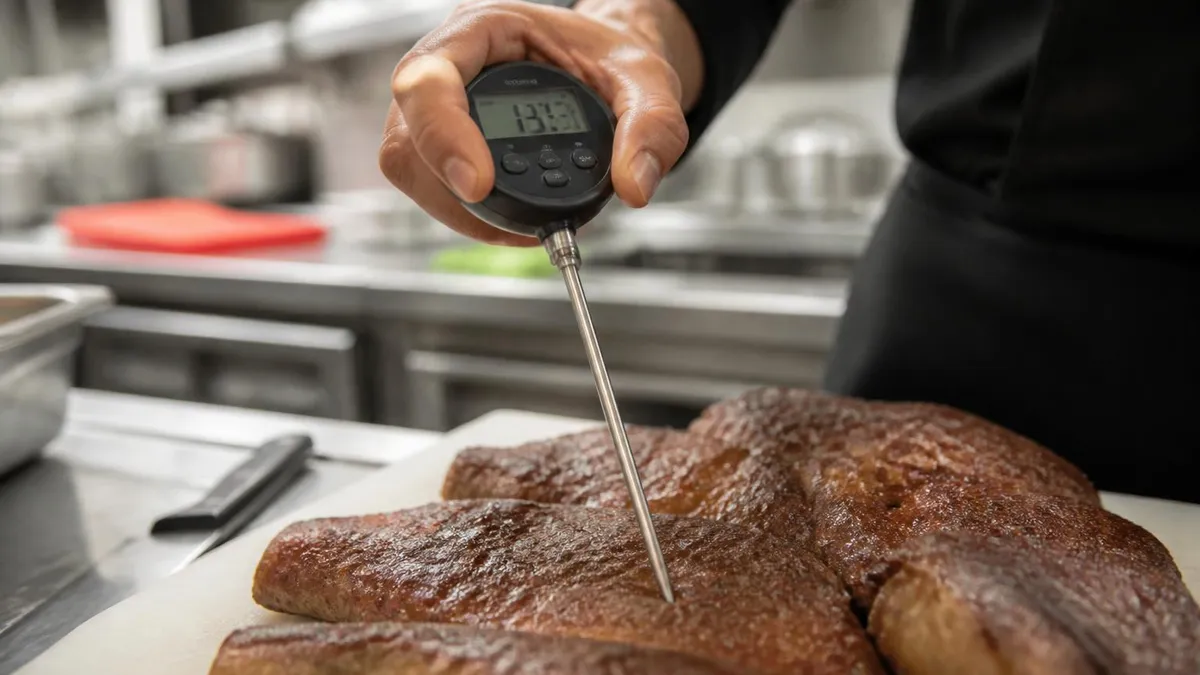
Temperature Requirements by Food Type
All temperature-control-for-safety foods in cold storage must stay at 41°F or below. This includes raw meats, poultry, seafood, dairy, cooked starches, cut produce, and anything previously cooked and cooled. Monitoring is required at least every two hours.
Cooked foods held for service — soups, gravies, casseroles, rice — must maintain 135°F or above at all times. A hot holding unit is not a cooking device; food must already reach its required internal cook temperature before being placed in the unit.
Frozen foods must be kept at 0°F or colder. Thawed and refrozen items are permissible only if the food never entered the danger zone during thawing. Freezer burn indicates quality loss but not necessarily a food safety violation per ServSafe standards.
Non-TCS dry goods must be stored in a cool, dry area between 50°F and 70°F with relative humidity below 60 percent. Containers must be sealed, stored 6 inches off the floor, and placed away from chemicals, pipes, and exterior walls.
Only non-TCS foods — whole uncut fruits, hard cheeses with rinds, commercially packaged chips and crackers — may be displayed at room temperature. Any cut, sliced, or opened TCS food must immediately move to temperature-controlled storage or service conditions.
Understanding the refrigerator storage order is arguably the single most important ServSafe food storage chart concept for the manager exam because it appears in multiple question formats — scenario-based, image-based, and straightforward recall. The National Restaurant Association developed this hierarchy specifically to minimize the risk of cross-contamination from raw protein dripping onto foods that will not reach a high enough cooking temperature to destroy pathogens. Getting this order wrong in a real kitchen can be catastrophic, which is why ServSafe tests it so thoroughly.
At the very top shelf of any refrigerator or walk-in cooler, you must store ready-to-eat foods. These include cooked dishes, deli meats, sliced cheeses, washed produce, and any food that will be consumed without further cooking. Because these items will not undergo any heat treatment to kill pathogens, they must be shielded from any possible contamination from raw proteins below. Even a single drop of raw poultry juice landing on a prepared salad can introduce Salmonella or Campylobacter at levels sufficient to cause illness.
The second shelf from the top is reserved for whole fish and seafood, including shrimp, scallops, and fillets. These items require a minimum internal cooking temperature of 145°F (63°C) held for 15 seconds. Below the seafood goes whole cuts of beef and pork — steaks, roasts, chops — which also cook to 145°F. Next come ground beef, ground pork, and ground fish, which require 155°F (68°C) for 15 seconds because grinding distributes surface bacteria throughout the product. The bottom shelf, always, is reserved for whole and ground poultry, which must reach 165°F (74°C) for 15 seconds.
A common trick question on the servsafe manager practice tests involves asking where to store a specific item and offering answer choices that seem plausible but violate the storage hierarchy. For instance, raw shrimp stored above raw ground beef appears safe since both are proteins, but the ServSafe storage chart places seafood above ground beef specifically because seafood has a lower minimum cook temperature. Storing items correctly by cook temperature ensures that any accidental cross-contamination involves food dripping onto an item that will be cooked to a higher temperature — not a lower one.
Date labeling is a mandatory companion to the storage order. Ready-to-eat TCS foods prepared on-site must be labeled with the date they were prepared and a use-by date that is seven days from preparation when stored at 41°F or below. If storage temperature rises above 41°F at any point, that seven-day window must be recalculated. Commercially packaged ready-to-eat foods, such as deli meats sold in sealed packages, can be stored for the manufacturer's stated shelf life but must be relabeled once opened and used within seven days.
First-in, first-out (FIFO) rotation is the standard method for managing refrigerator and freezer inventory described throughout the ServSafe food storage chart. Under FIFO, older stock is always placed at the front of shelves and used before newer deliveries. When receiving a delivery of ground beef, for example, the new packages go behind existing inventory, and kitchen staff pull from the front. This systematic approach prevents older products from being overlooked and spoiling before use, reducing both food waste and the risk of serving deteriorated product.
Cross-contamination between allergens also falls under the storage guidelines tested on the ServSafe manager exam. The top eight allergens — milk, eggs, fish, shellfish, tree nuts, peanuts, wheat, and soybeans — can trigger serious reactions even in trace amounts. ServSafe recommends storing allergen-containing foods in clearly labeled, sealed containers separate from allergen-free ingredients. This practice aligns with the broader storage order principles but adds an allergen-management layer that increasingly appears on updated exam versions. Combining storage order knowledge with allergen awareness gives you a comprehensive picture of commercial refrigerator best practices.
ServSafe Manager Test: Thawing, Cooling & Labeling Rules
ServSafe recognizes four approved thawing methods tested regularly on the ServSafe manager practice test. Refrigerator thawing is the gold standard — food moves from the freezer to a 41°F or colder cooler and thaws slowly over 24 to 48 hours. Running cold water thawing requires a continuous stream of potable water at 70°F or below, with food completely submerged and the process completed within a reasonable time. Microwave thawing is permitted only if food will be cooked immediately afterward. Finally, thawing as part of the cooking process is allowed when food goes directly from frozen state into an oven or on a grill.
The one method ServSafe explicitly prohibits — and that appears as a wrong answer in exam scenarios — is thawing at room temperature on a countertop. When food sits at room temperature during thawing, the outer layers quickly enter the danger zone (41°F–135°F) while the interior remains frozen. Bacteria on the surface can multiply for hours before the entire item thaws. A 10-pound turkey left on a counter overnight could accumulate dangerous bacterial loads on its surface before the center reaches 40°F. Always select a ServSafe-approved thawing method when answering exam questions.
Paper Chart vs. Digital Monitoring: What Works Best for ServSafe Compliance?
- +Paper temperature logs require no technology setup and are universally accepted by health inspectors as compliance documentation.
- +Digital monitoring systems send automatic alerts when temperatures drift into the danger zone, catching problems before food spoilage occurs.
- +Paper logs reinforce manual habits — checking the thermometer yourself builds the hands-on skills tested on the ServSafe manager exam.
- +Digital systems create tamper-resistant, timestamped records that are difficult to falsify and easy to retrieve during audits.
- +Paper-based FIFO labels are inexpensive, require no training, and are instantly understood by all kitchen staff regardless of tech literacy.
- +Digital labeling printers generate standardized, legible date labels that reduce handwriting errors and are faster for high-volume prep kitchens.
- −Paper logs can be lost, damaged by spills, or filled out retroactively rather than in real time, undermining their reliability as documentation.
- −Digital monitoring systems require upfront investment, ongoing maintenance, and staff training that may be cost-prohibitive for small operations.
- −Paper charts do not alert anyone when a failure occurs — a refrigerator warming overnight may go unnoticed until the morning check.
- −Digital sensors can malfunction or lose power, creating gaps in monitoring records unless a backup paper system is maintained simultaneously.
- −Neither paper nor digital systems replace the ServSafe requirement that food handlers visually inspect and probe food with a calibrated thermometer regularly.
- −Over-reliance on automated alerts may reduce how often staff physically engage with stored food, making it easier to miss non-temperature issues like spoilage odors or pest activity.
Pros and Cons at a Glance
| Pros | Cons |
|---|---|
| Paper temperature logs require no technology setup and are universally accepted by health inspectors as compliance documentation. | Paper logs can be lost, damaged by spills, or filled out retroactively rather than in real time, undermining their reliability as documentation. |
| Digital monitoring systems send automatic alerts when temperatures drift into the danger zone, catching problems before food spoilage occurs. | Digital monitoring systems require upfront investment, ongoing maintenance, and staff training that may be cost-prohibitive for small operations. |
| Paper logs reinforce manual habits — checking the thermometer yourself builds the hands-on skills tested on the ServSafe manager exam. | Paper charts do not alert anyone when a failure occurs — a refrigerator warming overnight may go unnoticed until the morning check. |
| Digital systems create tamper-resistant, timestamped records that are difficult to falsify and easy to retrieve during audits. | Digital sensors can malfunction or lose power, creating gaps in monitoring records unless a backup paper system is maintained simultaneously. |
| Paper-based FIFO labels are inexpensive, require no training, and are instantly understood by all kitchen staff regardless of tech literacy. | Neither paper nor digital systems replace the ServSafe requirement that food handlers visually inspect and probe food with a calibrated thermometer regularly. |
| Digital labeling printers generate standardized, legible date labels that reduce handwriting errors and are faster for high-volume prep kitchens. | Over-reliance on automated alerts may reduce how often staff physically engage with stored food, making it easier to miss non-temperature issues like spoilage odors or pest activity. |
ServSafe Food Storage Compliance Checklist for the Manager Exam
- ✓Verify all cold TCS foods register 41°F or below with a calibrated probe thermometer at least every two hours.
- ✓Confirm refrigerator shelves follow the correct top-to-bottom storage order: ready-to-eat, seafood, whole beef/pork, ground meat, poultry.
- ✓Ensure every ready-to-eat TCS food prepared on-site is labeled with both the prep date and a discard date no more than seven days out.
- ✓Apply FIFO rotation during every receiving delivery — new product placed behind existing inventory on every shelf.
- ✓Store all dry goods at least six inches off the floor on clean, non-porous shelving in a 50–70°F environment.
- ✓Confirm frozen storage maintains 0°F or below and that no food shows signs of thaw-and-refreeze (large ice crystals, liquid accumulation).
- ✓Check that no raw meat, poultry, or seafood is stored above or adjacent to ready-to-eat foods at any point during prep or storage.
- ✓Verify hot holding equipment maintains all cooked foods at 135°F or above using a thermometer — not relying on the equipment's built-in gauge.
- ✓Ensure all storage containers holding allergen-containing ingredients are sealed and clearly labeled to prevent cross-contact with allergen-free foods.
- ✓Document cooling logs for all large-batch cooked foods, confirming the two-hour and four-hour stage milestones were met before placing in the cooler.
The 4-Hour Rule Applies Cumulatively — Not Per Incident
Many ServSafe manager exam candidates misread the four-hour danger zone rule as applying separately each time food is removed from temperature control. ServSafe is explicit: the four-hour limit is cumulative across the food's entire service period. A soup removed from hot holding for 90 minutes during a buffet, returned, then removed again for another 90 minutes has now spent three cumulative hours in the danger zone — not 90 minutes twice. Once the total reaches four hours, the food must be discarded immediately, regardless of how it looks or smells.
Passing the ServSafe manager exam requires more than memorizing a single chart — it demands that you understand why each storage rule exists and how violations lead to actual outbreaks. The exam frequently presents multi-step scenarios where a single storage error cascades into a foodborne illness event, and your job is to identify the original mistake in the chain. Studying the reasoning behind temperature requirements, not just the numbers themselves, helps you answer these applied reasoning questions confidently even when the wording differs from your study materials.
The ServSafe food storage chart intersects directly with HACCP — Hazard Analysis and Critical Control Points — which is another heavily tested framework on the manager exam. Critical control points (CCPs) are the specific steps in food preparation where a control measure can be applied to prevent, eliminate, or reduce a food safety hazard to an acceptable level. Cold storage is a CCP because maintaining 41°F or below is a measurable, controllable action that prevents bacterial growth. Understanding this connection helps you answer questions about monitoring procedures, corrective actions, and documentation requirements.
ServSafe exam questions about receiving and inspecting deliveries overlap significantly with storage chart knowledge. When a delivery of ground beef arrives, a food manager must check that the product is at 41°F or below, that packaging is intact and free of damage, that there are no signs of temperature abuse such as ice crystals indicating refreezing, and that the use-by date has not passed.
Accepting an out-of-temperature delivery and placing it directly in cold storage does not reset the clock — if ground beef arrives at 48°F, the time it spent above 41°F in transit counts toward its cumulative danger zone exposure.
Pest control and storage practices are closely related on ServSafe manager test scenarios. Improper dry storage — cardboard boxes on the floor, open grain sacks leaning against walls, items stored near exterior drainage — creates harborage areas for rodents and insects. Pests can contaminate stored food with feces, urine, fur, and the pathogens they carry. ServSafe requires that all storage areas be sealed, cleaned regularly, and inspected for signs of pest activity including gnaw marks on packaging, droppings, and unusual odors. Recognizing a pest-related storage violation in a scenario question requires combining storage chart knowledge with pest management principles.
Chemical storage rules are tested separately from food storage but often appear in the same scenario questions because violations typically involve chemicals stored near or above food. ServSafe requires that all cleaning agents, sanitizers, pesticides, and other chemicals be stored in their original labeled containers, in a designated locked or secured area away from food and food contact surfaces, below food and never in food storage areas, and never in containers that previously held food.
A scenario describing bleach stored on a shelf above canned goods is a clear ServSafe violation, and identifying it correctly requires knowing both the food storage hierarchy and chemical storage rules.
Temperature monitoring equipment accuracy is a topic that bridges the ServSafe food storage chart with equipment maintenance. A thermometer that reads two degrees low could lead a manager to believe food is safely stored when it is actually in the danger zone. ServSafe requires that thermometers used for checking food temperatures be calibrated regularly using the ice-point method (32°F in a properly prepared ice slurry) or the boiling-point method (adjusted for altitude). Bimetallic stemmed thermometers, digital thermocouples, and infrared surface thermometers each have specific use cases and accuracy limitations tested on the exam.
One of the most nuanced areas of the ServSafe food storage chart involves time as a public health control, sometimes called TPHC. Under this approach, an operation may choose to track time rather than temperature for specific foods — for example, sushi rice held at room temperature.
To use TPHC, the operation must have a written procedure, label food with the time it was removed from temperature control, and discard food after four hours regardless of appearance. This method is increasingly tested on updated ServSafe exam versions because it represents a legitimate but strictly regulated exception to standard temperature control requirements.
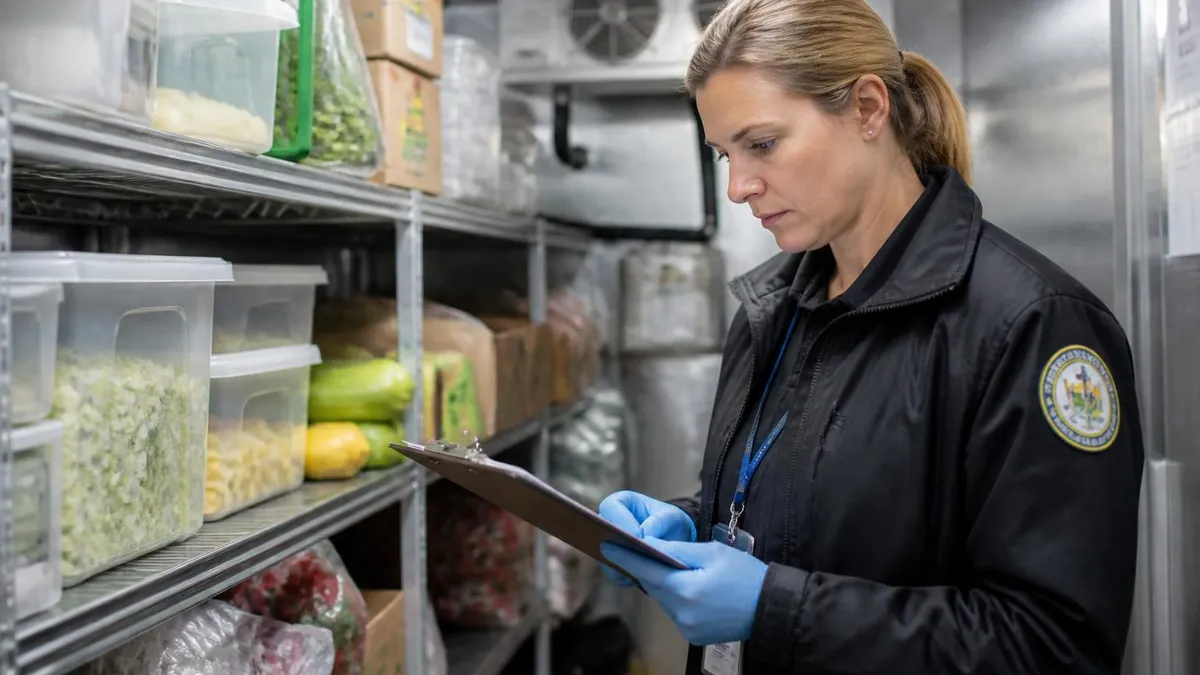
The ServSafe exam specifically tests whether candidates understand that most dangerous pathogens — including Salmonella, E. coli O157:H7, and Listeria — produce no visible changes in food appearance, texture, or odor. Food can look fresh, smell normal, and taste fine while containing bacterial loads high enough to cause serious illness. Always use a calibrated thermometer to verify temperature compliance, and always discard food that has exceeded safe time-temperature limits regardless of how it appears. This principle appears in multiple question formats across the ServSafe manager exam.
Preparing strategically for the ServSafe food storage chart section means identifying the specific question types that the exam uses to test this knowledge and practicing each format deliberately. The ServSafe manager exam uses four primary question formats: knowledge-based recall (what is the maximum cold storage temperature for TCS foods?), application questions (a cook places raw chicken on a shelf above sliced tomatoes — what is the violation?), analysis questions (a manager finds leftover soup at 55°F after overnight storage — what action should be taken?), and synthesis questions that require combining multiple food safety concepts to reach a conclusion).
The ServSafe manager practice test resources available through the National Restaurant Association and third-party providers like PracticeTestGeeks offer extensive coverage of food storage scenarios. When you work through these practice exams, pay particular attention to questions you answer incorrectly and trace each wrong answer back to a specific gap in your storage chart knowledge. Was it a temperature number you misremembered? A storage order position? A time limit for a specific food? Targeted review of those specific gaps is far more effective than re-reading entire chapters of the ServSafe textbook.
The servsafe practice tests at PracticeTestGeeks are designed to mirror the actual exam format and difficulty level. Each question set covers the food storage chart in context with related topics — receiving, temperature monitoring, HACCP, and cross-contamination — so you build the integrated knowledge the real exam demands. Completing multiple full-length practice exams under timed conditions helps you develop the pace and mental stamina needed for the 90-question ServSafe manager exam, which must be completed in a set time without reference materials.
Flashcard-based memorization works well for the numerical values on the ServSafe food storage chart because these are the facts most likely to be tested in direct recall format. Create one card per critical temperature: 41°F cold hold maximum, 135°F hot hold minimum, 165°F poultry cook temp, 155°F ground meat cook temp, 145°F whole seafood and whole beef cook temp, 70°F two-hour cooling milestone, 0°F frozen storage. Add the corresponding Celsius values since the exam occasionally presents temperatures in metric. Review these cards daily during the two weeks before your exam.
Practice scenarios that combine storage chart rules with receiving inspection protocols help reinforce how these topics connect on the actual exam. For example: a delivery of ground beef arrives at 46°F. The box shows no signs of damage, and the use-by date is four days away. Should the manager accept or reject the delivery? The correct answer is reject — ground beef must arrive at 41°F or below, and the product's elevated temperature suggests it has already spent time in the danger zone. Practicing dozens of these scenarios builds the rapid pattern recognition that makes the difference on timed exams.
Group study sessions focused on the ServSafe food storage chart are particularly effective because verbally explaining storage rules to another person forces you to articulate your reasoning rather than simply recognizing correct answers. When a study partner asks you to explain why poultry goes on the bottom refrigerator shelf, having to explain the cook temperature hierarchy out loud reinforces the concept more deeply than passive reading. Many ServSafe candidates find that their weakest areas become clear only when they try to explain them to someone else, making group study an efficient diagnostic tool.
The ServSafe manager test covers food storage across multiple domains including foodborne illness, the flow of food, facilities and equipment, and cleaning and sanitation. The storage chart knowledge you build for one domain pays dividends across all of them. A manager who truly understands why 41°F is the cold storage threshold can answer questions about cooling procedures, temperature monitoring equipment, HACCP critical limits, and foodborne illness prevention from the same underlying knowledge base. Building deep conceptual understanding rather than surface-level memorization is the most efficient path to a passing score and to genuine food safety competence in the kitchen.
On exam day, time management on food storage questions requires a specific approach. These questions often contain a lot of detail — specific temperatures, specific foods, specific actions — and it is easy to spend too long parsing every element. Develop a habit of reading the question stem first to understand exactly what is being asked before reading the answer choices.
Most food storage questions ask you to identify a violation, select the correct storage position, determine whether food is safe or must be discarded, or choose the right corrective action. Knowing which type of question you are answering before you look at the choices saves valuable seconds.
Eliminating obviously wrong answers is a powerful strategy for food storage questions where you are uncertain of the exact answer. If a question asks where to store raw ground pork in a refrigerator and one answer choice is the top shelf, you can eliminate it immediately because the top shelf is always reserved for ready-to-eat foods.
If another choice places it below raw chicken, you can eliminate that as well because chicken requires a higher cook temperature and must go on the bottom. This process of elimination often narrows four choices down to two, dramatically improving your odds even on difficult questions.
The ServSafe 90 questions and answers PDF resources that circulate online can supplement your study routine, but verify that any third-party resource aligns with the current edition of the ServSafe textbook. ServSafe periodically updates temperature guidelines, allergen lists, and regulatory requirements as food safety science evolves. The ServSafe Manager Book, 9th edition, is the current authoritative source, and any practice material should reflect its standards. Out-of-date resources may contain superseded temperature values or deprecated procedures that could lead you to answer current exam questions incorrectly.
Building a personal reference chart summarizing all key food storage temperatures, times, and the refrigerator storage order in a single visual document is one of the most effective final review tools for the ServSafe manager exam. Organize the chart with three columns: Food Category, Safe Temperature, and Maximum Storage Time.
Add a separate section for the refrigerator storage order from top to bottom. Post this chart somewhere you will see it daily during your final study week. Visual repetition reinforces memory more effectively than reading and re-reading text, and having everything on one page helps you identify gaps in your knowledge.
After passing your ServSafe manager exam, the food storage knowledge you developed does not become obsolete — it becomes the foundation of your daily management practice. Food safety managers who genuinely understand the ServSafe food storage chart catch refrigerator failures before they cause outbreaks, train kitchen staff to follow the storage order instinctively, and maintain the documentation records that protect their establishment during health inspections. The certification is a credential, but the knowledge is a professional tool that protects your guests, your staff, and your business every single day.
Staying current with ServSafe food storage requirements after certification means monitoring FDA Food Code updates, which ServSafe incorporates into new textbook editions typically every few years. Temperature requirements and regulatory guidance on specific topics like time-as-a-public-health-control and allergen management have evolved in recent years, and a credentialed manager is expected to apply current standards. Consider bookmarking the ServSafe website and the FDA Food Code page for periodic review, and connect with your local health department for jurisdiction-specific requirements that may exceed federal baseline standards.
The investment you make in mastering the ServSafe food storage chart pays returns that extend far beyond the exam. Kitchens managed by ServSafe-certified professionals have measurably lower rates of foodborne illness outbreaks, fewer health code violations, and stronger reputations among guests who increasingly scrutinize food safety practices. Restaurants and foodservice operations post their ServSafe certifications visibly because certification signals a commitment to standards that goes beyond the minimum required by law. Your preparation today builds the professional credibility that will serve you throughout your entire foodservice career.
Sample ServSafe Practice Questions
Try these questions from our free ServSafe practice tests. The correct answer and an explanation follow each question.
Which temperature range is considered the 'temperature danger zone' for food storage?
- A. 0°F to 32°F (-18°C to 0°C)
- B. 32°F to 70°F (0°C to 21°C)
- C. 41°F to 135°F (5°C to 57°C)
- D. 50°F to 165°F (10°C to 74°C)
Answer: C. 41°F to 135°F (5°C to 57°C)
The temperature danger zone is 41°F to 135°F (5°C to 57°C), the range in which most pathogens grow rapidly.
What is the maximum time allowed for ready-to-eat TCS food held without temperature control if it started at 41°F, for cold holding using time as a public health control?
- A. 6 hours, as long as it never exceeds 70°F
- B. 4 hours with no temperature limit
- C. 2 hours regardless of temperature
- D. 8 hours if labeled
Answer: A. 6 hours, as long as it never exceeds 70°F
Cold TCS food held without temperature control may be kept up to 6 hours if it stays at or below 70°F and is discarded afterward.
What is the maximum amount of time cooked potentially hazardous food (TCS food) can remain in the temperature danger zone during the cooling process?
- A. 6 hours total (135°F to 70°F in 2 hours, then to 41°F in 4 more hours)
- B. 4 hours total at any point in the cooling process
- C. 8 hours total provided the food stays below 70°F within 3 hours
- D. 2 hours total from 135°F to 41°F
Answer: A. 6 hours total (135°F to 70°F in 2 hours, then to 41°F in 4 more hours)
According to the FDA Food Code, TCS food must be cooled from 135°F to 70°F within 2 hours, then from 70°F to 41°F or below within the next 4 hours — a total maximum cooling time of 6 hours. The two-stage process is designed to move food quickly through the range where bacterial growth is fastest (between 70°F and 125°F).
A food manager is conducting a routine temperature check and finds a roast beef at 125°F (52°C) in the hot-holding unit. What is the correct response?
- A. Discard the roast beef immediately
- B. Return the roast to the oven to reheat to 165°F (74°C) within 2 hours, then hot-hold at 135°F (57°C) or above
- C. Add more heat to the unit and check again in 30 minutes
- D. Serve it immediately since it is only slightly below temperature
Answer: B. Return the roast to the oven to reheat to 165°F (74°C) within 2 hours, then hot-hold at 135°F (57°C) or above
Food that drops below 135°F (57°C) in hot-holding must be reheated to 165°F (74°C) within 2 hours before being returned to hot-holding.
ServSafe Questions and Answers


About the Author

Registered Sanitarian & Food Safety Certification Expert
Cornell University College of Agriculture and Life SciencesThomas Wright is a Registered Sanitarian and HACCP-certified food safety professional with a Bachelor of Science in Food Science from Cornell University. He has 17 years of experience in food safety auditing, regulatory compliance, and foodservice management training. Thomas prepares food industry professionals for ServSafe Manager, HACCP certification, and state food handler examinations.
Join the Discussion
Connect with other students preparing for this exam. Share tips, ask questions, and get advice from people who have been there.
View discussion (7 replies)