
A Cook Steams Shrimp for a Seafood Salad: ServSafe Cooking & Cooling Explained
A cook steams shrimp for a seafood salad ServSafe rules explained. Learn safe cooking temps, cooling methods & exam tips. ✅
When a cook steams shrimp for a seafood salad, ServSafe guidelines require that the shrimp reach an internal temperature of 145°F (63°C) and hold at that temperature for at least 15 seconds. This critical rule sits at the heart of the ServSafe cooking and cooling domain, and it shows up frequently on the Food Handler and Manager certification exams. Understanding why that specific temperature matters — and how to verify it properly — is the foundation of every safe commercial kitchen operation in the United States.
Seafood, including shrimp, crab, lobster, and scallops, belongs to a category of foods that the FDA Food Code classifies as requiring a minimum internal cook temperature of 145°F. Unlike ground beef, which must reach 155°F, or poultry, which requires 165°F, seafood can be safely consumed at a lower threshold because its protein structure denatures and pathogenic bacteria like Vibrio parahaemolyticus — one of the leading causes of seafood-related illness in the U.S. — are destroyed at 145°F when held properly. For anyone studying servsafe cooking and cooling topics, memorizing these tiered temperatures is non-negotiable.
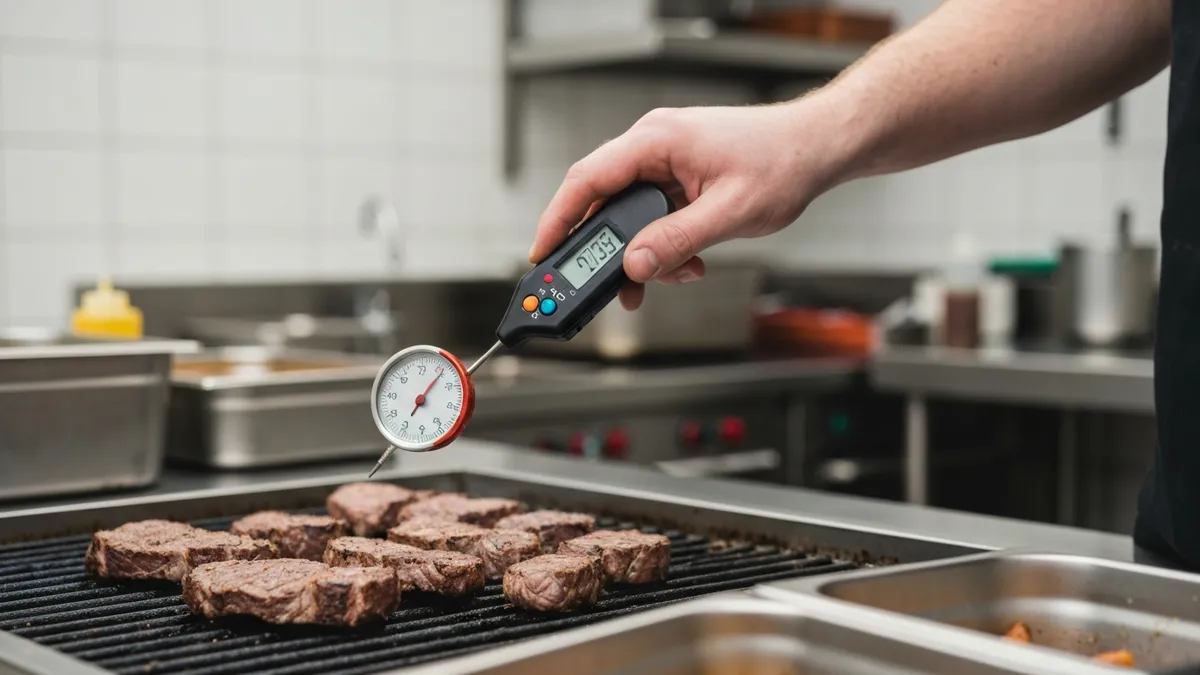
The steaming method is actually one of the safer cooking techniques for shrimp because the moist heat penetrates evenly and quickly. However, even with steaming, a food handler must still verify the internal temperature using a calibrated, cleaned, and sanitized probe thermometer inserted into the thickest part of the shrimp. Visual cues — the classic pink color change and curl — are not acceptable substitutes for thermometer verification under ServSafe standards. Relying on appearance alone has led to numerous foodborne illness outbreaks in real kitchens.
Beyond the cooking step, the exam scenario often extends into what happens after the shrimp are cooked. If the seafood salad is prepared in advance and held cold, those cooked shrimp must be rapidly cooled before being mixed with other ingredients. The ServSafe two-stage cooling method requires food to move from 135°F down to 70°F within the first two hours, and then from 70°F down to 41°F or lower within the next four hours — for a total cooling window of six hours maximum. Violating this timeline creates a dangerous opportunity for bacterial regrowth.
Many test-takers are surprised to learn that cooked shrimp intended for a cold seafood salad must be treated with the same cooling rigor as a large pot of soup or a roasted turkey. The logic is identical: any cooked TCS (Temperature Control for Safety) food that passes back through the temperature danger zone of 41°F–135°F gives pathogens a chance to multiply to unsafe levels. A seafood salad served at a buffet that was improperly cooled before service has caused documented outbreaks of Staphylococcus aureus and Vibrio infections across the country.
ServSafe exam questions related to shrimp steaming and seafood salad preparation test several interconnected concepts simultaneously: the correct minimum internal temperature, the acceptable cooling timeline, proper cold holding temperatures after preparation, and cross-contamination prevention when cooked seafood is handled near raw proteins. Candidates who understand the reasoning behind each rule — not just the numbers — consistently perform better on these multi-step scenario questions than those who memorize facts in isolation.
This article breaks down every aspect of ServSafe cooking and cooling rules you need to know, from minimum internal temperatures and thermometer use to two-stage cooling procedures and cold holding requirements. Whether you are preparing for your first exam or refreshing knowledge before recertification, mastering these concepts will protect both your certification and the people you serve.
ServSafe Cooking & Cooling by the Numbers
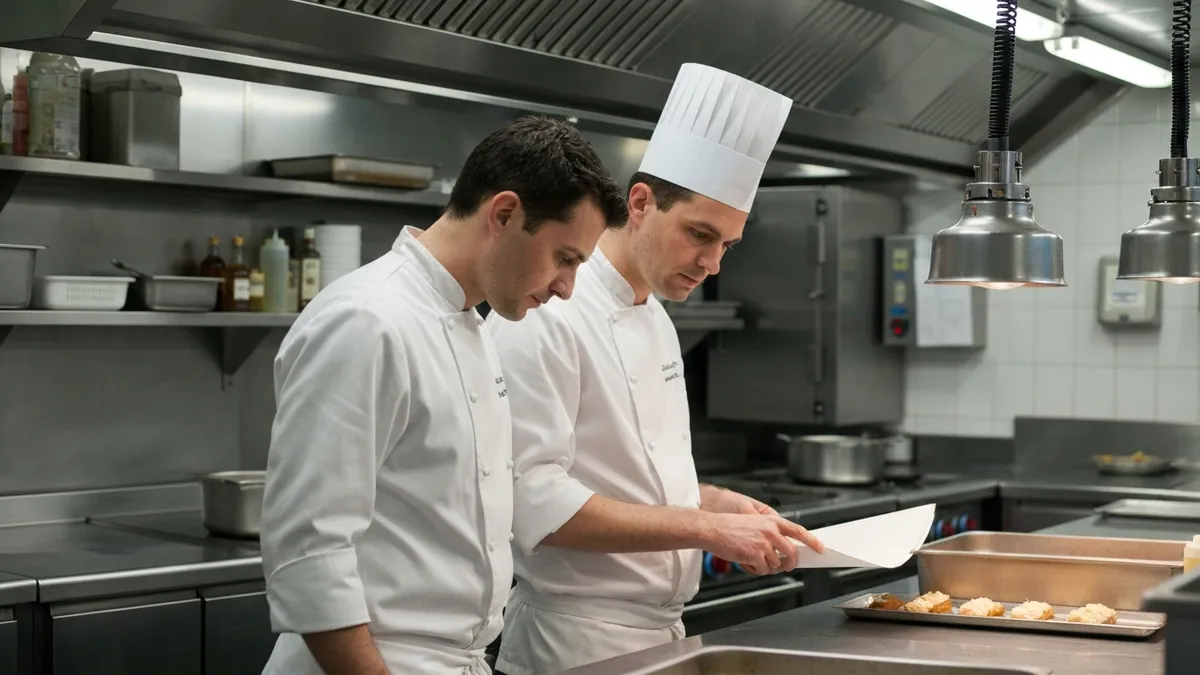
Minimum Internal Cooking Temperatures You Must Know
Applies to fish, shellfish (shrimp, crab, lobster), and whole muscle beef, pork, veal, and lamb. Must be held at this temperature for a minimum of 15 seconds. This is the standard used when a cook steams shrimp for a seafood salad under ServSafe rules.
Required for ground beef, pork, and lamb; mechanically tenderized or injected meats; and ratites like ostrich and emu. The higher threshold compensates for pathogens that may have been introduced into the interior of the meat during processing or mechanical action.
The highest mandatory cooking temperature, applying to all poultry, stuffed fish and meats, pasta stuffed with TCS ingredients, and any TCS food reheated for hot holding. Foods must reach this temperature instantaneously — no hold time required at 165°F.
Plant-based foods, legumes, pasta, rice, and commercially processed ready-to-eat items that will be hot held must reach 135°F. This is also the upper boundary of the temperature danger zone and the starting point for the ServSafe two-stage cooling process.
The ServSafe two-stage cooling method is one of the most tested and most frequently violated food safety procedures in commercial kitchens. After shrimp or any other cooked TCS food is removed from heat, it immediately begins cooling, but the rate of cooling is what separates a safe operation from a dangerous one. The rule is straightforward: food must drop from 135°F to 70°F within two hours, and then continue cooling from 70°F to 41°F or below within the remaining four hours, for a total maximum cooling time of six hours.
The reason cooling is split into two stages reflects the biology of pathogenic bacteria. Between 135°F and 70°F, most bacteria capable of causing illness — including Clostridium perfringens, Bacillus cereus, and Staphylococcus aureus — are not yet in their optimal growth range, but they can begin multiplying.
Below 70°F, the window narrows significantly, and once food reaches 41°F or lower, bacterial growth slows to a rate that is considered safe for short-term storage. If a large pan of cooked shrimp is left on a counter to cool for four hours before being refrigerated, it almost certainly spent too much time in the danger zone regardless of what the final temperature reads.
Approved cooling methods under ServSafe include placing food in an ice water bath, using ice paddles or ice wands stirred through the food, portioning food into shallow containers no more than two to four inches deep, using a blast chiller or tumble chiller, and adding ice as an ingredient when appropriate.
Each of these methods works by increasing the surface area exposed to cold or by actively removing heat from the product. Stacking full hotel pans of hot shrimp in a walk-in cooler, by contrast, insulates the interior and can allow the center to remain in the danger zone for hours.
Shallow pans are among the most practical cooling tools available to most operations. ServSafe recommends portioning cooked foods into pans that are no more than two to four inches deep so that heat dissipates evenly from the interior to the surface. A full two-inch hotel pan of steamed shrimp will cool much faster than a four-inch pan because the ratio of surface area to volume is greater. This principle explains why large batches of food — entire stockpots of chowder, sheet pans of cooked shellfish — must be broken into smaller portions before being placed in refrigeration.
Temperature monitoring during the cooling process is just as important as monitoring during cooking. ServSafe recommends checking the temperature of cooling foods at the two-hour mark to confirm that the first stage target of 70°F has been reached. If food has not reached 70°F within two hours, it must be reheated to 165°F and the cooling process must be restarted, or the food must be discarded. Many operations use temperature logs to document cooling times, which also provides a record for health inspectors and supports a HACCP-compliant food safety management system.
Ice water baths are particularly effective for cooling shrimp and other seafood because water conducts heat away from food approximately 25 times more efficiently than still air. To set up a proper ice bath, fill a container with a 50/50 mixture of ice and water, place the food container inside so that the ice water level reaches or exceeds the food level, and stir the food frequently to prevent warm spots from developing at the center. The temperature of the ice bath itself should be monitored; as it warms, additional ice must be added to maintain its cooling effectiveness.
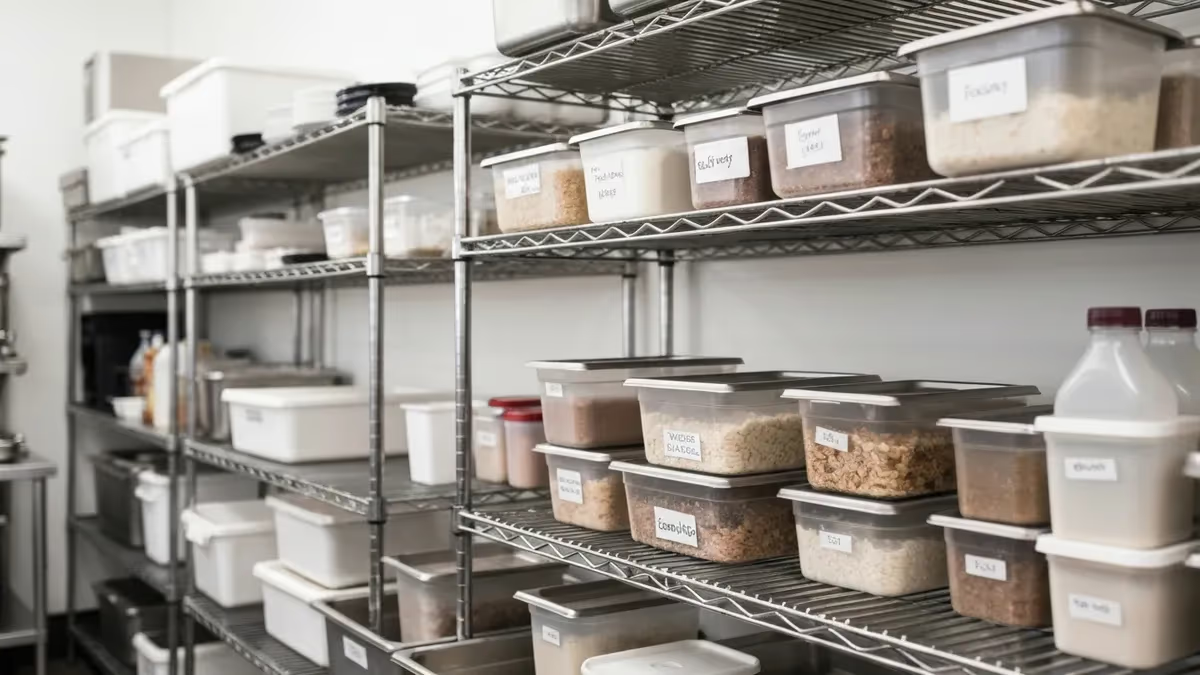
One common misconception among food handlers is that placing hot food directly into a standard refrigerator or walk-in cooler is a reliable cooling method. While refrigeration will eventually cool the food, a large batch of hot seafood can actually raise the ambient temperature of the cooler, endangering other foods stored nearby.
More critically, the center of a thick portion of food — a deep pan of shrimp, for example — may remain above 70°F for well over two hours even as the surface cools. ServSafe explicitly cautions against this approach and requires active cooling methods for large volumes of TCS food before refrigeration.
Thermometers, Verification & Temperature Logs
ServSafe recognizes several types of thermometers for measuring internal food temperatures: bimetallic stemmed thermometers, thermocouples, thermistors, and infrared thermometers. Bimetallic stemmed thermometers are the most common in food service and must be inserted to the sensing area — typically the bottom two to three inches of the stem — to get an accurate reading. They are inexpensive and durable but slower to respond than digital options and must be regularly calibrated using the ice-point or boiling-point method.
Thermocouples and thermistors are digital thermometers that provide fast, accurate readings and are preferred in high-volume operations where speed matters. Infrared thermometers measure surface temperature only and cannot verify internal doneness — they are useful for checking equipment temperatures or detecting hot spots on surfaces but are never acceptable for verifying the internal temperature of cooked seafood or other TCS foods. Every thermometer used in a ServSafe-compliant kitchen must be cleaned and sanitized before and after each use to prevent cross-contamination.
Steaming vs. Boiling Shrimp: What ServSafe Considerations Apply?
- +Steaming delivers even, consistent moist heat that penetrates shrimp quickly and uniformly, reducing the risk of undercooked cold spots
- +Steam temperatures above 212°F at standard pressure ensure the cooking environment itself exceeds the 145°F minimum, helping the shrimp reach the safe zone faster
- +Steaming requires less water, which means the cooking liquid does not dilute or carry away surface pathogens the way submerging in a large water bath might redistribute contamination
- +Steamed shrimp retains flavor compounds and firm texture, making it preferable for high-quality seafood salads where product integrity matters alongside food safety
- +Smaller batch steaming is easier to monitor and verify than large boiling vats, supporting more accurate thermometer readings and quicker corrective action
- +Steaming equipment is easy to clean and sanitize between uses, reducing cross-contamination risk between raw and cooked seafood batches
- −Steam burns are a significant kitchen safety hazard — ServSafe-trained handlers must use appropriate PPE and understand safe equipment operation to avoid injury
- −Steaming is typically a batch process; high-volume operations may find it slower than continuous-boil methods when preparing large quantities of shrimp for a buffet or catering event
- −Uneven loading of a steamer basket can create cold spots where shrimp do not reach 145°F, requiring careful arrangement and mid-cook temperature checks
- −Steam equipment requires regular maintenance and calibration to ensure consistent heat delivery; a malfunctioning steamer may produce lower-than-expected temperatures without obvious visual cues
- −Shrimp cooked by steaming still requires the same rigorous cooling protocol as any other method — the cooking technique does not reduce post-cook food safety obligations
- −Cross-contamination risk exists if the steamer is used for raw and cooked products without thorough cleaning and sanitizing between uses
Pros and Cons at a Glance
| Pros | Cons |
|---|---|
| Steaming delivers even, consistent moist heat that penetrates shrimp quickly and uniformly, reducing the risk of undercooked cold spots | Steam burns are a significant kitchen safety hazard — ServSafe-trained handlers must use appropriate PPE and understand safe equipment operation to avoid injury |
| Steaming requires less water, which means the cooking liquid does not dilute or carry away surface pathogens the way submerging in a large water bath might redistribute contamination | Steaming is typically a batch process; high-volume operations may find it slower than continuous-boil methods when preparing large quantities of shrimp for a buffet or catering event |
| Steamed shrimp retains flavor compounds and firm texture, making it preferable for high-quality seafood salads where product integrity matters alongside food safety | Steam equipment requires regular maintenance and calibration to ensure consistent heat delivery; a malfunctioning steamer may produce lower-than-expected temperatures without obvious visual cues |
| Smaller batch steaming is easier to monitor and verify than large boiling vats, supporting more accurate thermometer readings and quicker corrective action | Shrimp cooked by steaming still requires the same rigorous cooling protocol as any other method — the cooking technique does not reduce post-cook food safety obligations |
| Steaming equipment is easy to clean and sanitize between uses, reducing cross-contamination risk between raw and cooked seafood batches | Cross-contamination risk exists if the steamer is used for raw and cooked products without thorough cleaning and sanitizing between uses |
ServSafe Cooking & Cooling Compliance Checklist
- ✓Verify shrimp and all seafood reaches a minimum internal temperature of 145°F for at least 15 seconds before service or salad assembly.
- ✓Use a calibrated, cleaned, and sanitized probe thermometer to measure the internal temperature at the thickest part of the shrimp.
- ✓Calibrate thermometers at the start of each shift using the ice-point method (32°F) or boiling-point method (212°F at sea level).
- ✓Begin the two-stage cooling process immediately after cooking — food must drop from 135°F to 70°F within the first two hours.
- ✓Complete cooling from 70°F to 41°F or below within the remaining four hours, for a total maximum cooling window of six hours.
- ✓Use shallow pans (no more than two to four inches deep), ice water baths, or a blast chiller to achieve rapid cooling of cooked shrimp.
- ✓Check and record the food temperature at the two-hour cooling mark and take corrective action if the first stage target has not been met.
- ✓Store cooled shrimp at 41°F or below in covered, labeled containers with the date and time of preparation clearly marked.
- ✓Prevent cross-contamination by keeping cooked shrimp separated from raw proteins using separate equipment, color-coded tools, and designated storage areas.
- ✓Document all cook temperatures, cooling timestamps, and corrective actions taken in a temperature log for health department review.
The 15-Second Hold Rule Changes Everything
Reaching 145°F is only half the requirement — shrimp must be held at that temperature for a minimum of 15 seconds. This hold time allows heat to penetrate and destroy any residual pathogens that survived the initial temperature spike. On the exam, questions often present scenarios where food reached the target temperature but was immediately removed from heat; the correct answer will always require the hold time to be satisfied before the food is considered safely cooked.
One of the most common areas where food handlers make mistakes on both the ServSafe exam and in real kitchens is understanding the distinction between cooking temperatures and reheating temperatures.
When shrimp or any other cooked TCS food is reheated for hot holding — for example, pre-cooked shrimp that was stored cold and will now be served warm at a buffet — it must reach an internal temperature of 165°F within two hours, not the original 145°F cooking minimum. This higher reheating standard exists because the food may have passed through the temperature danger zone during storage or transport, and pathogens may have begun to multiply.
Reheating for immediate service is treated differently. If a food handler reheats shrimp specifically to serve it right away — not to hold it in a steam table or on a buffet — ServSafe allows it to be reheated to any temperature as long as it is served immediately. However, in practice, most commercial operations reheat to 165°F as a universal standard to eliminate ambiguity and reduce risk. The exam tests both scenarios, so candidates should know both the general rule (165°F for hot holding) and the exception (immediate service only, any temperature).
Cold holding rules are equally important when shrimp is prepared for a seafood salad that will be displayed at a salad bar, buffet, or deli case. Once cooled, the shrimp must be maintained at 41°F or below at all times during display.
ServSafe requires that cold food on display be checked with a calibrated thermometer at a minimum frequency established by the operation's food safety plan — typically every two hours for buffet and salad bar items. If the temperature of the seafood salad rises above 41°F, a corrective action must be taken immediately: either discard the food or rapidly re-cool it.
Time as a public health control (TPHC) is an alternative to temperature monitoring that some operations use for specific foods. Under TPHC, cold food that is removed from temperature control must be marked with a discard time and consumed or discarded within four hours.
This approach is sometimes used at buffets or salad stations where continuous temperature monitoring is impractical. However, once a food is placed under TPHC, it cannot be returned to temperature control — it must be used within the time window or discarded. Shrimp-based seafood salads are a common candidate for TPHC in casual dining and catering settings.
Cross-contamination is a major risk in any operation that handles both raw and cooked shrimp. Raw shrimp carries Vibrio parahaemolyticus, Salmonella, and other pathogens that can easily be transferred to cooked product through shared cutting boards, utensils, or even food handler hands. ServSafe's guidance is clear: cooked shrimp must be stored above raw seafood in the refrigerator (following the storage hierarchy), handled with dedicated equipment, and never placed on surfaces that have contacted raw product without thorough cleaning and sanitizing in between. These cross-contamination principles appear on virtually every ServSafe exam in some form.
The ServSafe exam also tests knowledge of what to do when food temperatures are out of range. Corrective actions are a key component of a functioning food safety management system. If shrimp fails to reach 145°F, the corrective action is to continue cooking until the safe temperature is achieved — never to serve undercooked seafood.
If cooling food fails to reach 70°F within two hours, the options are to reheat to 165°F and restart the cooling process using a faster method, or to discard the food. Knowing these corrective actions confidently — not just the temperature targets — is what separates candidates who pass the exam from those who need to retake it.
Food safety culture plays a broader role in cooking and cooling compliance than any single rule. Operations where managers model proper thermometer use, where staff are empowered to discard food that fails temperature checks without fear of punishment, and where logs are completed honestly rather than for show consistently outperform operations that treat food safety as a compliance checkbox. ServSafe training is designed not just to teach facts for an exam but to build the judgment and habits that prevent foodborne illness outbreaks in real-world kitchens every day of the year.
Placing large volumes of hot cooked shrimp or other TCS food directly into a refrigerator or walk-in cooler is one of the most common cooling violations cited by health inspectors. The bulk of hot food insulates itself and can remain above 70°F for four or more hours, far exceeding the two-hour first-stage limit. Always use an ice water bath, shallow pans, or a blast chiller before transferring food to refrigeration. Failure to comply can result in food discards, failed inspections, and serious foodborne illness liability.
Understanding the ServSafe exam format helps candidates allocate their study time more efficiently when preparing for cooking and cooling questions. The ServSafe Manager Certification Exam contains 90 questions, of which 10 are unscored pilot questions embedded throughout the test. Of the 80 scored questions, the cooking and cooling domain — which includes temperature control for safety foods, cooking temperatures, cooling procedures, and hot and cold holding — typically accounts for a meaningful portion of the exam content. Candidates who master this domain give themselves a significant advantage toward the 70% passing score required for certification.
Scenario-based questions are the hallmark of the ServSafe Manager Exam, and the shrimp steaming scenario is a perfect example of how these questions are structured. Rather than simply asking "what is the minimum internal temperature for seafood," the exam presents a realistic kitchen situation — a cook preparing a seafood salad — and asks the candidate to identify the correct temperature, the correct thermometer technique, or the correct corrective action if something goes wrong. These multi-layered questions reward candidates who understand the reasoning behind the rules, not just the rules themselves.
Time management during the exam is important. The ServSafe Manager Exam is administered with a 90-minute time limit for the paper version (though most testing centers allow additional time as needed). Candidates who have internalized temperature charts and cooling timelines — rather than having to reconstruct them during the exam — save valuable time for the more complex scenario questions that require careful reading and analysis. Flashcards with temperature thresholds, cooling stages, and corrective actions are among the highest-return study tools for this domain.
Practice tests are indispensable for cooking and cooling exam prep. Working through practice questions exposes candidates to the specific phrasing the exam uses, the types of distractors that appear in answer choices, and the level of detail required to select the correct answer.
For instance, a question about shrimp cooling might offer four answer choices that all sound reasonable to an untrained reader but differ by one or two degrees or by one hour — precisely the kind of detail that separates a passing score from a failing one. Repeated exposure to these question types builds the pattern recognition that makes exam day feel familiar rather than surprising.
For anyone who needs to stay current on food safety requirements, understanding the complete picture of certification maintenance is just as important as passing the initial exam. Mastering servsafe cooking and cooling regulations not only helps you pass the test but ensures your knowledge remains valid and actionable throughout your career in food service. ServSafe Manager Certifications are valid for five years, and many employers require recertification before expiration to maintain compliance with local health codes.
Study groups are an underutilized resource for ServSafe cooking and cooling preparation. Working through scenario questions with colleagues who have different kitchen backgrounds — a line cook, a pastry chef, a catering manager — exposes each person to perspectives and applications of the rules they might not have considered. The shrimp steaming scenario, for example, plays out differently in a sushi restaurant than in a hospital cafeteria, and discussing those differences deepens understanding of the underlying principles rather than just the memorized facts.
Finally, the practical application of everything covered in a ServSafe course comes down to building habits. A food handler who automatically reaches for a thermometer when shrimp changes color, who reflexively checks the clock when hot food goes into a cooling container, and who documents temperatures without being reminded has internalized food safety in a way that truly protects public health.
That level of automatic competence is the real goal of ServSafe training — and it starts with understanding exactly why a cook who steams shrimp for a seafood salad must verify 145°F before that shrimp ever goes into the bowl.
Practical tips for mastering ServSafe cooking and cooling begin with building a personal temperature reference card. Write out all five major minimum internal cooking temperatures — 135°F, 145°F, 155°F, 165°F for immediate service, and 165°F for reheating — along with their hold times and the specific foods they apply to. Keep this card in your study space and quiz yourself daily until you can recall each threshold without hesitation. On the actual exam, you will not have access to reference materials, so these numbers must be automatic.
When studying the two-stage cooling method, practice drawing the timeline from memory: food starts at 135°F or above; within two hours it must reach 70°F; within four more hours it must reach 41°F. Sketch this as a simple number line or timeline diagram and annotate it with the approved cooling methods at each stage. Visual learners consistently find that diagramming the cooling progression helps them recall it more accurately under exam pressure than text-based notes alone.
Use real cooking scenarios from your own workplace or from culinary training to anchor the abstract rules to concrete images. If you have ever seen a walk-in cooler packed with uncovered hotel pans of hot food, you now know exactly what ServSafe warns against. If you have ever used an ice bath at a catering event, you have personally applied the two-stage cooling method. Connecting textbook rules to real experiences creates memory anchors that are far more durable than rote memorization of numbers.
When reviewing thermometer calibration, actually perform the ice-point calibration method at home or in your training kitchen. Fill a glass with crushed ice and water, submerge your thermometer, wait 30 seconds, and confirm the reading is 32°F. Then adjust if necessary. This hands-on practice takes five minutes and creates a physical memory of the procedure that written descriptions alone cannot replicate. The boiling-point method is harder to practice safely, but understanding the elevation adjustment (subtract one degree for every 550 feet above sea level) is worth memorizing for the exam.
Focus particularly on corrective action questions, which appear frequently on the ServSafe Manager Exam and are often missed by candidates who know the temperatures but not what to do when those temperatures are not met. Create a simple decision tree: if the cook temperature is not reached, continue cooking; if the first cooling stage is missed, reheat to 165°F and re-cool using a faster method or discard; if cold holding temperature rises above 41°F, rapidly recool or discard. Drilling these corrective actions alongside the temperature targets ensures you can answer the full scenario, not just the first step.
Allocate extra study time to the interaction between cooking, cooling, and cross-contamination concepts, because exam questions frequently combine two or three domains in a single scenario. A question might describe a cook who steams shrimp, places it near raw chicken to cool, and checks the temperature two hours later — requiring the candidate to identify multiple violations simultaneously. Practicing with these compound scenario questions from reputable ServSafe prep resources will prepare you for the actual complexity of exam questions far better than studying each domain in complete isolation.
In the days before your exam, shift from intensive learning to active recall. Instead of re-reading your notes, cover them and write out everything you remember about cooking temperatures, cooling stages, thermometer calibration, and corrective actions. Check your answers against your notes. Repeat with the topics where gaps appear. This retrieval practice technique is one of the most evidence-based study methods available and is particularly effective for the type of precise, detail-oriented information that ServSafe cooking and cooling questions require. Walk into your exam confident that you know not just the rules but the reasoning behind them.
Sample ServSafe Food Safety Test Practice Questions
Try these questions from our free ServSafe Food Safety Test practice tests. The correct answer and an explanation follow each question.
What is the most important competency assessed in Food Preparation & Cooking Standards for professionals in this field?
- A. Applied knowledge and practical problem-solving ability
- B. Memorization of textbook definitions only
- C. Years of experience without demonstrated skill
- D. Academic credentials without practical application
Answer: A. Applied knowledge and practical problem-solving ability
Food Preparation & Cooking Standards assessment focuses on applied knowledge and practical problem-solving ability, ensuring professionals can effectively perform in real-world situations.
A food handler's ServSafe Food Handler certificate is typically valid for how long?
- A. 3 years
- B. 1 year
- C. 5 years
- D. 2 years
Answer: A. 3 years
The ServSafe Food Handler certificate is valid for 3 years from the date of successful completion.
Cold food at a self-service salad bar must be maintained at or below which temperature?
- A. 32°F (0°C)
- B. 41°F (5°C)
- C. 45°F (7°C)
- D. 50°F (10°C)
Answer: B. 41°F (5°C)
Cold food must be held at 41°F (5°C) or below to keep it out of the temperature danger zone and prevent pathogen growth.
What is the minimum age requirement to become a ServSafe Food Protection Manager?
- A. There is no minimum age requirement specified by ServSafe
- B. Must be at least 18 years old
- C. Must be at least 21 years old
- D. Must be at least 16 years old
Answer: A. There is no minimum age requirement specified by ServSafe
ServSafe does not specify a minimum age requirement for the Food Protection Manager certification exam.
ServSafe Questions and Answers

Do ServSafe Certifications Expire? Complete Guide to Renewal, Validity & Staying Compliant

Which Is an Example of Possible Chemical Contamination ServSafe: Complete Guide

ServSafe Manager Exam Flushing Queens Location: Complete Guide to Finding & Booking Your Test

ServSafe Montana: Complete Food Handler Training & Certification Guide

ServSafe Video Training: How Video-Based Learning Accelerates Your Food Safety Certification
About the Author

Registered Sanitarian & Food Safety Certification Expert
Cornell University College of Agriculture and Life SciencesThomas Wright is a Registered Sanitarian and HACCP-certified food safety professional with a Bachelor of Science in Food Science from Cornell University. He has 17 years of experience in food safety auditing, regulatory compliance, and foodservice management training. Thomas prepares food industry professionals for ServSafe Manager, HACCP certification, and state food handler examinations.
Join the Discussion
Connect with other students preparing for this exam. Share tips, ask questions, and get advice from people who have been there.
View discussion (8 replies)