
How to Apply for Marine ROTC Scholarship: Complete Step-by-Step Guide
Learn how to apply for Marine ROTC scholarship — eligibility, deadlines, essays, interviews, and tips to win funding. 🎯 Complete 2026 September guide.

Knowing how to apply for Marine ROTC scholarship can be the single most important step in your journey toward becoming a commissioned officer in the United States Marine Corps without bearing the full cost of a college education. The Marine Corps Scholarship Foundation and the Naval ROTC (NROTC) program together offer several types of competitive scholarships that cover tuition, fees, and a monthly stipend — but the window to apply is narrow, requirements are rigorous, and the competition is fierce. Starting early and understanding the full timeline gives you a decisive advantage over other candidates.
The NROTC Marine Option scholarship is the primary federal award available to students who wish to pursue a commission as a Marine Corps officer through a college ROTC program. Managed by the Navy, this merit-based scholarship can cover up to four years of tuition at hundreds of participating colleges and universities across the country. Recipients also receive a uniform allowance, a book stipend of roughly $900 per semester, and a tax-free monthly subsistence allowance that increases each year. Understanding the exact scope of these benefits helps you build an accurate financial picture before committing.
Eligibility for the scholarship is more nuanced than most applicants expect. You must be a U.S. citizen, between 17 and 23 years old at the time of enrollment, have at minimum a cumulative GPA of 2.5 (though competitive applicants typically carry a 3.5 or higher), and score at or above the 50th percentile on the SAT or ACT. In addition, you must meet the Marine Corps physical fitness standards, pass a medical evaluation through the Department of Defense Medical Examination Review Board (DoDMERB), and demonstrate strong moral character through a background review process.
The application cycle for the NROTC Marine Option scholarship opens each fall, typically in July or August, with the first selection board convening as early as November. There are generally three board cycles, meaning the final deadline often falls in January or February of the year you intend to enroll. Missing the first board is not fatal — many outstanding candidates receive awards from the second or third board — but applying early maximizes your options for school selection and gives you more time to correct any deficiencies before a final decision is made.
One frequently overlooked piece of the marine rotc scholarship application is the physical fitness assessment. Applicants must complete the Marine Corps Physical Fitness Test (PFT), which includes pull-ups or push-ups, crunches or planks, and a three-mile run. Scoring well on the PFT — aiming for 225 out of 300 or higher — signals to selection boards that you are genuinely committed to military service and not just seeking a tuition subsidy. Many candidates underestimate this component and lose competitive edge to peers who trained consistently in the months leading up to their evaluation.
Beyond the numeric scores, the scholarship application requires two to three letters of recommendation, a personal statement essay, and in some cases, a formal interview conducted by a local Marine officer. Each of these narrative elements allows the board to evaluate leadership potential, community involvement, resilience under pressure, and alignment with Marine Corps values such as honor, courage, and commitment. A strong academic record means little if the personal statement reads as generic or the letters of recommendation fail to speak to specific moments of character under stress.
This guide walks you through every stage of the application process — from creating your online profile in the Naval ROTC Scholarship Management Information System (SMIS), to submitting transcripts and PFT scores, to preparing for interviews and managing multiple school applications simultaneously. Whether you are a high school junior starting the process early or a rising senior racing toward a first-board deadline, the information here gives you the most current, accurate roadmap available for securing one of the military's most valuable educational investments.
Marine ROTC Scholarship by the Numbers

Marine ROTC Scholarship Application Timeline
July–August: Application Opens
September–October: Complete Core Materials
October–November: First Board Deadline
December–January: Second Board
February: Final (Third) Board
March–May: Award Notification and Enrollment
Understanding the eligibility requirements for the NROTC Marine Option scholarship in precise detail separates candidates who submit strong applications from those who discover disqualifying issues after they have already invested months of preparation. The age requirement — 17 to 23 at the time of college enrollment — is strictly enforced, and there are very limited waiver pathways. Prior service members and prior college-enrolled students should contact an NROTC unit directly to clarify how their specific timeline interacts with this cap before beginning a full application.
Academic standards are evaluated on two dimensions: cumulative GPA and standardized test scores. The published minimum GPA is 2.5, but in practice, first-board scholarship recipients routinely present GPAs above 3.6. If your cumulative GPA falls between 2.5 and 3.2, you are not automatically disqualified, but you will need significantly stronger PFT scores, leadership credentials, and recommendation letters to compensate. The selection board uses a holistic review model, but academic performance remains the heaviest weighted factor in the initial screening phase.
Standardized test requirements have shifted since 2021. As of the most recent program guidance, the NROTC Marine Option scholarship accepts either SAT or ACT scores. Competitive candidates typically present a composite SAT score above 1200 or an ACT composite above 26. The board looks specifically at the Math and Evidence-Based Reading and Writing sections of the SAT, and the English and Math sections of the ACT. If your existing scores fall short, retaking the test in the summer before your senior year gives you the best chance to improve before the first-board deadline.
The DoDMERB medical examination is non-negotiable and cannot be waived except in extraordinary circumstances with congressional intervention. The examination screens for vision, hearing, cardiovascular health, musculoskeletal conditions, and mental health history. Common disqualifying conditions include uncorrected visual acuity below certain thresholds, asthma diagnosed after age 13, and certain prescription medication histories. However, many initially flagged conditions can be reviewed and cleared through a process called a waiver. If DoDMERB flags a condition, do not assume you are automatically out — consult directly with the NROTC unit about whether a waiver application is appropriate.
Moral character requirements are assessed through a background investigation that examines criminal history, drug use, and social media conduct. Any arrest record, regardless of whether charges were filed or a conviction resulted, must be disclosed. Failure to disclose known history is treated as a more serious disqualifying issue than the original incident itself. The Marine Corps expects complete honesty, and the consequences of misrepresentation discovered later in your military career are far more severe than a brief notation on a youthful record that might have been reviewable with proper disclosure.
Physical fitness eligibility is evaluated formally through the Marine Corps PFT, but selection boards also consider your physical training history and any athletic participation at the high school or club level. Candidates who demonstrate sustained athletic commitment — through varsity sports, martial arts, endurance racing, or consistent physical training logs — signal readiness to handle the demanding physical culture of Officer Candidates School (OCS) and The Basic School (TBS). A single high PFT score without any contextual training history carries less weight than a consistent record of physical achievement over multiple years.
Citizenship is the final hard eligibility gate. You must be a U.S. citizen by the time you accept the scholarship. Permanent residents and DACA recipients are not eligible for the NROTC federal scholarship, though some state-level and private military scholarship programs have different eligibility rules. Dual citizens are generally eligible as long as U.S. citizenship was obtained through birth or naturalization and is their primary legal status for purposes of the application. If there is any uncertainty about citizenship documentation, obtaining a certified copy of your U.S. passport or naturalization certificate before beginning the application eliminates potential delays.
Marine ROTC Scholarship Types and Benefits Explained
The four-year NROTC Marine Option scholarship is the most prestigious and financially substantial award available to incoming freshmen. It covers 100% of tuition and mandatory fees at the host institution, provides a uniform allowance of approximately $450 upon enrollment, grants a book stipend of roughly $900 per semester, and delivers a monthly tax-free subsistence allowance that begins at $350 as a freshman and scales up to $500 as a senior. Recipients must maintain a 2.5 GPA each semester and complete all NROTC lab and classroom requirements.
This scholarship is awarded before college entry and is tied to specific participating NROTC host or consortium schools. Recipients choose from a list of approved institutions and must enroll at one of them to activate the award. The scholarship obligates the recipient to complete the NROTC program and accept a commission as a Marine Corps Second Lieutenant upon graduation, followed by at least four years of active duty service. Early withdrawal from the program typically triggers a repayment obligation for scholarship funds already disbursed.

Is the Marine ROTC Scholarship Worth It?
- +Covers 100% of tuition and mandatory fees at participating schools for four years
- +Monthly tax-free stipend provides real living expense support throughout college
- +Commissioning as a Second Lieutenant upon graduation with no debt from tuition
- +Access to world-class leadership training that is valued in both military and civilian careers
- +Networking with a tight-knit community of future Marine officers across the country
- +Guaranteed career placement and employment immediately after graduation
- −Four-year active duty service obligation limits early civilian career flexibility
- −Strict GPA maintenance requirements (2.5 minimum each semester) risk scholarship loss
- −Physical demands of the program are significant and sustained throughout all four years
- −School selection is limited to NROTC host and consortium institutions, restricting choices
- −Early program withdrawal triggers repayment of disbursed scholarship funds
- −DoDMERB medical disqualification can eliminate eligibility despite strong academic credentials
Marine ROTC Scholarship Application Checklist
- ✓Create your NROTC SMIS account at the official Navy portal as soon as applications open in July.
- ✓Request official high school transcripts and have them sent directly to the NROTC processing center.
- ✓Submit your SAT or ACT scores through the testing agency — do not rely on self-reported scores.
- ✓Schedule your DoDMERB medical examination at least 10 weeks before the first-board deadline.
- ✓Complete the Marine Corps PFT under official conditions and record your score with a certifying officer.
- ✓Identify three recommenders (teachers, coaches, or community leaders) and brief them on your goals and timeline.
- ✓Draft, revise, and finalize your personal statement essay with at least two rounds of feedback from trusted mentors.
- ✓Research NROTC host and consortium schools and rank your top five choices before the application is submitted.
- ✓Review your social media accounts for any content that may conflict with Marine Corps values and remove it proactively.
- ✓Contact the nearest Marine officer recruiter or NROTC unit to request an informational interview and verify application status.
The First Board Is Your Best Board
Applicants selected in the November first-board cycle have access to the full range of NROTC host schools and typically receive scholarship offers with the most favorable terms. Each subsequent board draws from a smaller remaining pool of school slots. If your application is 95% ready by late September, submit it — do not wait for a perfect last 5% that costs you a first-board shot.
The personal statement essay is where many otherwise competitive Marine ROTC scholarship applications succeed or fail. Selection boards read hundreds of essays, and the difference between a memorable statement and a forgettable one is almost never intelligence or vocabulary — it is specificity. The most effective essays open with a concrete scene: a moment in a leadership role, a physical challenge overcome, a decision made under pressure that revealed something about the writer's character. Generic openers about wanting to serve the country since childhood trigger immediate skepticism from experienced readers who have seen that same sentence thousands of times.
Effective personal statements for the Marine Option scholarship do three things in roughly 500 to 750 words. First, they establish a credible, specific reason why the Marine Corps specifically — not the Army, Air Force, or civilian career path — is the right fit for the applicant. Second, they demonstrate self-awareness by acknowledging a real limitation or challenge the applicant has faced and describing how they addressed it. Third, they connect past leadership experiences to the specific traits the Marine Corps values most: decisiveness, composure, physical toughness, and the ability to develop those qualities in others.
Letters of recommendation carry more weight than most applicants expect. A letter from a prominent community figure who knows the applicant superficially is almost always less effective than a letter from a high school coach, science teacher, or employer who can speak in vivid, specific detail about witnessed performance under pressure. Ask your recommenders to describe a specific incident, not just list your qualities. Brief them on what the board is looking for — leadership potential, resilience, and alignment with Marine values — and give them enough lead time to write a thoughtful letter rather than a last-minute, generic endorsement.
Interview preparation deserves dedicated practice. Some NROTC units conduct formal interviews with local Marine officers as part of the selection process, particularly for candidates near the cutoff for the next board. These interviews are not trick sessions — they are structured conversations designed to assess communication clarity, self-awareness, and genuine motivation.
Common questions include why you chose the Marine Corps over other services, how you handled a situation where your team failed to meet a goal, and what you would do differently if given the chance to relive a past leadership experience. Practice out loud with someone who can provide honest feedback.
Physical preparation for the PFT should begin no later than three months before you plan to test. The three-mile run is the most time-consuming component to improve and also carries the highest point value differential between average and excellent performance. A three-mile time under 21 minutes puts you in competitive territory; under 20 minutes signals exceptional readiness.
Pull-ups are the second most differentiating element — candidates who can complete 20 or more pull-ups in a single set consistently outperform the average applicant pool. Train with a structured program that includes long slow runs, tempo runs, and upper-body strength work at least four days per week.
One underutilized preparation strategy is attending a local NROTC unit's public events or open houses before submitting your application. Meeting the Professor of Naval Science and speaking directly with current midshipmen gives you firsthand insight into the culture, academic requirements, and daily experience of the program. It also gives the unit a face to associate with your application file — a meaningful advantage in a process where qualified applicants are numerous and distinguishing details matter. Some applicants have credited this type of early engagement with accelerating their selection when board decisions were close.
Managing multiple college applications simultaneously with the NROTC scholarship process requires deliberate calendar management. NROTC scholarship applications and college admission applications share many of the same documents but have completely separate submission systems and deadlines. Use a master spreadsheet tracking every requirement, every deadline, and every submission status for both tracks simultaneously. Missing a transcript request deadline for the NROTC application because you were focused on a college's early decision portal is a preventable error that has cost otherwise strong candidates their first-board consideration.

The first-board deadline for the NROTC Marine Option scholarship typically falls in late October or early November — and DoDMERB medical examinations can take 8–10 weeks to complete. If you have not scheduled your medical exam by mid-August, you risk missing the first board entirely. Do not wait until your application feels otherwise complete before booking the exam — schedule it on the same day you create your SMIS account.
Receiving a Marine ROTC scholarship award notification is a significant milestone, but the work does not stop there. Within a few days of receiving your official award letter, you must formally accept the scholarship through the SMIS portal and select your intended NROTC host or consortium school from the approved list attached to your offer.
Failure to respond within the acceptance window — which is often as short as two weeks — can result in the award being rescinded and offered to the next candidate on the waitlist. Treat the acceptance deadline with the same urgency as the application deadline itself.
After accepting, your next immediate task is completing enrollment paperwork with the NROTC unit at your chosen school. This includes submitting proof of enrollment, completing the oath of office as a midshipman, and confirming that your DoDMERB medical clearance is fully processed and recorded in the system. Any outstanding medical issues flagged during the DoDMERB examination must be fully resolved and documented before the unit can formally activate your scholarship funding. Follow up with the unit's administrative officer weekly if your medical processing is still pending after you accept the award.
The summer before your freshman year is your last opportunity to build the physical and academic foundation that will define your first semester performance in the NROTC program. Most NROTC units begin the fall semester with a unit PFT within the first two weeks. Arriving out of shape after receiving a scholarship sends a clear negative signal to the unit's training staff and puts you in an immediate hole socially and professionally with your peers. Maintain or improve your PFT pace through the summer, and read any required texts the unit assigns during its pre-enrollment communication.
Financial logistics around the scholarship deserve careful attention. The scholarship covers tuition and mandatory fees paid directly to the institution, but there is typically a delay of several weeks between the start of the semester and when the Navy's reimbursement processes. Make sure you understand your school's billing cycle and whether you need to establish a short-term payment plan during that gap period. The monthly subsistence allowance is paid directly to your bank account and generally begins within the first month of the semester once enrollment is confirmed with the NROTC program office.
Academic performance standards during the scholarship period are enforced rigorously. A GPA drop below 2.5 in any single semester triggers a formal review and can result in scholarship suspension pending improvement. Most units offer academic support resources and mandatory study hours for midshipmen who are struggling, but the expectation is that scholarship recipients self-manage their academic performance proactively rather than waiting for intervention. If you find yourself struggling in a course early in the semester, visit the professor during office hours and alert your NROTC unit advisor — do not wait until grades are posted.
The Marine Corps ROTC curriculum itself runs in parallel with your academic coursework throughout all four years. You will attend a Naval Science course each semester, participate in two or more physical training sessions per week, and complete a summer training requirement between your junior and senior year at Officer Candidates School in Quantico, Virginia. OCS is a formal screening event — not all NROTC candidates pass on the first attempt. Understanding this reality early motivates consistent preparation rather than assuming the scholarship guarantees a commission automatically.
For students who want to build their knowledge of military leadership and operational concepts before enrolling in the NROTC program, practicing with structured assessments is one of the most efficient preparation strategies available. Working through the kinds of questions covered in a comprehensive marine rotc scholarship application study resource reinforces the leadership vocabulary, tactical awareness, and values-based reasoning that selection boards and NROTC instructors expect you to demonstrate from day one of the program.
Building strong study habits before you arrive at an NROTC unit pays dividends that compound across all four years of the program. The Naval Science curriculum covers topics ranging from navigation and seamanship to leadership theory, military history, and ethics in command. While many of these subjects are new to incoming midshipmen, candidates who arrive with foundational knowledge of military organization, the chain of command, and the Marine Corps rank structure adapt more quickly and perform better in early evaluations. Even two to three months of pre-enrollment self-study creates a meaningful competitive advantage.
Time management is the single most common challenge that causes otherwise capable midshipmen to struggle or lose their scholarships. The NROTC program adds approximately 8 to 12 additional hours per week of required military training, physical conditioning, and leadership laboratory activities on top of a full college course load. Students who manage this load successfully share a common trait: they build weekly schedules during the first two weeks of each semester, identify their highest-stress weeks in advance, and proactively communicate with instructors when competing obligations arise. Reactive time management consistently fails in this environment.
Leadership development within the NROTC program accelerates as you advance through the years. Freshmen and sophomores are primarily observers and followers, learning by executing the guidance of senior midshipmen. Juniors and seniors take on progressively more responsibility — planning training events, leading physical training sessions, and mentoring junior midshipmen. The quality of your leadership performance in these roles is formally evaluated and directly shapes the recommendation your PNS writes for your commissioning package. Treat every leadership assignment as a graded performance, not a casual extracurricular.
Peer relationships within the NROTC unit are among the most professionally and personally significant relationships you will form in college. The midshipmen you train with, compete against in PFT evaluations, and collaborate with on leadership labs become your first professional network in the Marine Corps. Officers frequently describe their NROTC cohort as a formative group whose standards and culture set the baseline for how they approached every subsequent assignment in their careers. Investing in those relationships — showing up early, staying late, volunteering for extra duties — builds a reputation that precedes you at OCS and TBS.
Preparing for Officer Candidates School between your junior and senior year should begin no later than the spring of your sophomore year. OCS is a physically and mentally intense 10-week screening course at Marine Corps Base Quantico. Candidates who arrive in peak physical condition with strong leadership fundamentals and composure under stress consistently outperform peers who relied solely on the NROTC curriculum without additional targeted preparation. Running multiple days per week, practicing land navigation, studying the Marine Corps warfighting philosophy, and developing resilience under physical stress are all tangible preparation activities you can pursue throughout your junior year.
Post-OCS, The Basic School (TBS) is where newly commissioned Marine Second Lieutenants complete six months of officer combat training before receiving their Military Occupational Specialty (MOS) assignment. Performance at TBS shapes your initial MOS options — the highest performers have the widest selection, while lower-performing graduates receive assignments from a narrower pool. Understanding this pipeline early clarifies why performance throughout the NROTC program matters beyond scholarship retention — it directly determines which career within the Marine Corps you will have access to as a new officer.
The Marine Corps offers a variety of MOS options for officers, from infantry and aviation to logistics, intelligence, and communications. The MOS assignment process at TBS considers your academic record at the NROTC level, your OCS performance scores, your physical fitness record, your personal preferences, and the needs of the Marine Corps at the time of your commissioning. Researching MOS options early — during your freshman or sophomore year — allows you to make informed choices about elective coursework, extracurricular activities, and summer training opportunities that align with your intended career path within the Corps.
ROTC Questions and Answers

Ace Your ROTC Assessment: Practice Test Guide
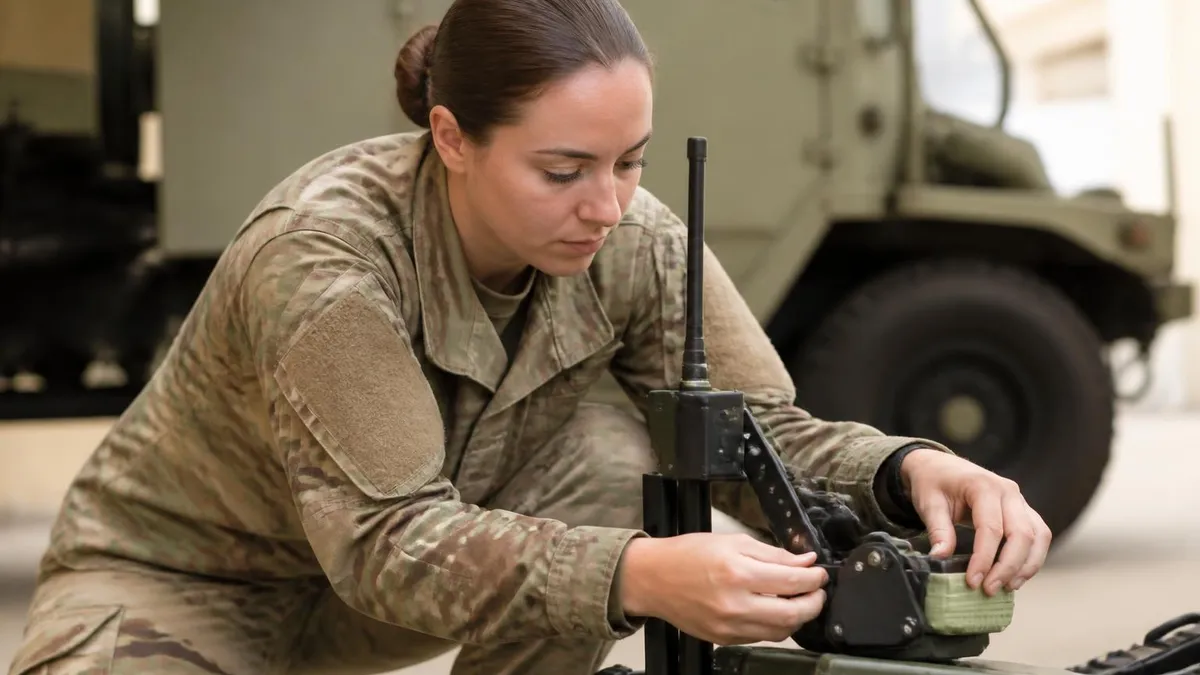
Marine ROTC: Duties, Career Path, and Life as a Marine Corps Officer

What Colleges Have ROTC Programs: The Complete Guide to Finding Your School

Army Junior ROTC Cadet Creed: Full Text, Meaning, and How to Master It

How to Get Into Air Force ROTC: Complete Requirements and Training Guide
About the Author

Educational Psychologist & Academic Test Preparation Expert
Columbia University Teachers CollegeDr. Lisa Patel holds a Doctorate in Education from Columbia University Teachers College and has spent 17 years researching standardized test design and academic assessment. She has developed preparation programs for SAT, ACT, GRE, LSAT, UCAT, and numerous professional licensing exams, helping students of all backgrounds achieve their target scores.
Join the Discussion
Connect with other students preparing for this exam. Share tips, ask questions, and get advice from people who have been there.
View discussion (9 replies)