
What Is an RDA? Registered Dental Assistant Career Overview, Duties & Certification Guide
Learn what is an RDA, what registered dental assistants do, how to get RDA certification, and what salary you can expect in 2026 September. ❓
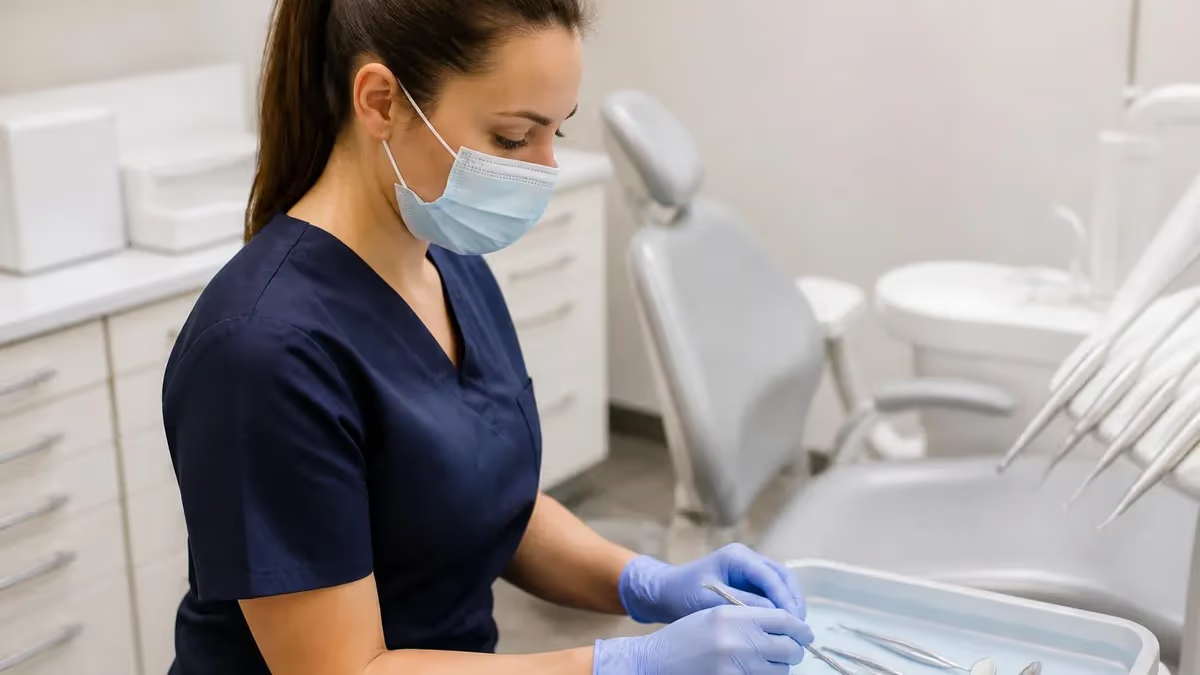
A registered dental assistant — commonly abbreviated as RDA — is a licensed dental healthcare professional who works alongside dentists to deliver safe, efficient, and high-quality patient care in clinical settings. Understanding what is an RDA is the first step for anyone considering this rewarding allied-health career. Unlike a basic dental assistant who may learn on the job, an RDA holds a state-issued credential that confirms they have met specific educational, examination, and ethical standards required by their state dental board.
The RDA meaning goes far beyond a simple job title. It represents a formal commitment to professional competency in areas such as chairside assisting, infection control, radiography, and patient communication. In states like California, the RDA designation is a legally protected title — only individuals who have passed the required written and practical examinations and fulfilled all continuing education requirements may use it. This legal distinction protects patients and ensures dental offices employ qualified clinical staff.
The definition RDA carries in the dental industry is one of versatility and clinical skill. Registered dental assistants are trained to perform expanded functions that standard assistants cannot, including placing and finishing dental restorations under direct or general supervision, applying topical anesthetics, and conducting preliminary oral evaluations in some states. This expanded scope of practice makes RDAs especially valuable in busy multi-chair practices where the dentist cannot personally handle every preparatory or finishing task.
To understand the what does rda stand for question in its fullest sense, you need to look at the credential through both a professional and regulatory lens. Professionally, RDA stands for Registered Dental Assistant — a nationally recognized category of dental workforce. Regulatorily, it represents successful completion of coursework approved by your state dental board, passage of a written jurisprudence exam, and often a separate clinical skills examination administered by organizations such as DANB (Dental Assisting National Board) or the California Dental Assisting Examination.
Choosing a career as a registered dental assistant means entering a field with strong job security. The U.S. Bureau of Labor Statistics projects employment for dental assistants to grow approximately 7 percent through 2032 — faster than the average for all occupations. With an aging population requiring more restorative and preventive dental work, demand for skilled RDAs will continue rising in private practices, community health centers, specialty clinics, and even public health departments across the country.
The pathway to becoming an RDA is more accessible than many healthcare careers. Most candidates complete an accredited dental assisting program that runs anywhere from nine months to two years, depending on whether they pursue a certificate, diploma, or associate degree. Hands-on externship hours are typically required alongside classroom instruction. After graduation, candidates must pass their state's required examinations and submit an application with the appropriate fees to their dental board before legally practicing as an RDA.
If you are weighing this career path, it helps to know that the registered dental assistant credential is also a gateway to further advancement. Many RDAs eventually become dental office managers, dental hygienists, dental educators, or dental sales representatives. The foundation of clinical knowledge, patient interaction, and office workflow management that the RDA credential provides makes it one of the most flexible entry points in the entire dental profession. The sections below walk through every dimension of this career in detail so you can make a fully informed decision.
Registered Dental Assistant by the Numbers
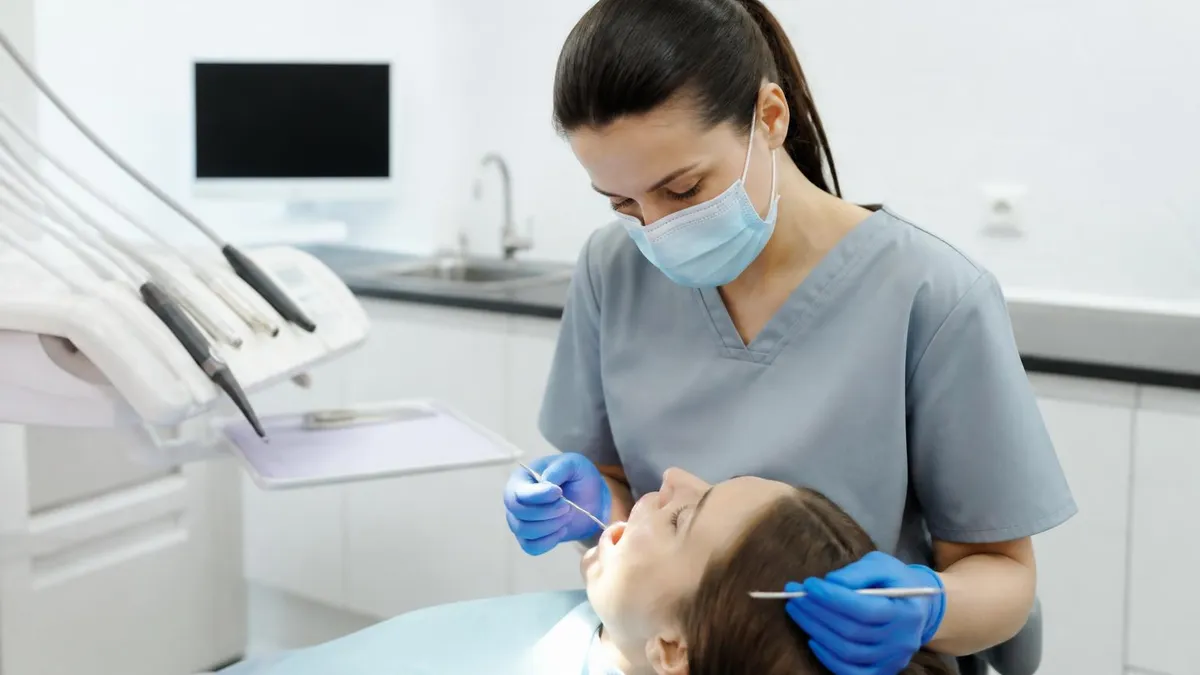
Core Duties of a Registered Dental Assistant
RDAs work directly beside the dentist during procedures, passing instruments, maintaining the operating field with suction and retraction, and monitoring patient comfort. This four-handed dentistry approach speeds treatment and improves clinical outcomes for patients.
Taking and processing dental X-rays is a core RDA competency. RDAs must demonstrate safe radiation practices, proper film or sensor placement, and accurate exposure settings. Many states require a separate radiography certificate or endorsement as part of RDA licensure.
RDAs are responsible for instrument processing, sterilization monitoring, and maintaining OSHA and CDC compliance standards. Proper chemical and autoclave sterilization protocols protect both patients and clinical staff from cross-contamination.
Depending on state law, RDAs may place and finish amalgam and composite restorations, apply sealants, take impressions, apply topical anesthetics, and perform coronal polishing — duties not permitted for unlicensed dental assistants.
RDAs document clinical findings, update patient health histories, explain post-operative instructions, and review oral hygiene techniques. Strong communication skills and meticulous record-keeping are essential components of daily RDA responsibilities.
Becoming a registered dental assistant requires careful planning across three key phases: education, examination, and licensure. The educational phase typically begins with enrollment in a Commission on Dental Accreditation (CODA)-approved dental assisting program. These programs exist at community colleges, vocational schools, and some four-year universities. Coursework covers dental anatomy, radiography, dental materials, infection control, chairside procedures, dental law, and ethics. Accredited programs also require a supervised clinical externship of several hundred hours so students gain real-world chairside experience before sitting for any licensing examination.
Once you complete your educational program, the examination phase begins. Requirements vary significantly by state, so it is essential to check your specific state dental board's website for the most current rules. In California, for example, candidates must pass the California RDA Written Examination (covering dental law, ethics, and clinical knowledge), the California RDA Written Law and Ethics Examination, and the California RDA Practical Examination, which tests hands-on clinical skills directly observed by licensed examiners. Other states rely on DANB's nationally recognized RDA examination, which assesses similar competencies through a computer-administered format.
The DANB RDA examination is structured around four major content domains: general chairside assisting (approximately 33 percent of questions), radiation health and safety (approximately 25 percent), infection control (approximately 22 percent), and dental sciences (approximately 20 percent). Candidates who understand the weighting of each domain can prioritize their study time more strategically, spending the most hours on chairside assisting content while ensuring they do not neglect the science foundation that underpins all clinical decision-making.
Preparing for the written examination often involves a combination of textbook review, online practice tests, and flashcard systems. Practice questions are particularly valuable because they familiarize candidates with the multiple-choice format and the clinical scenario style that examination writers frequently use. Many candidates discover that working through a few hundred practice questions reveals specific knowledge gaps — for example, in dental charting notation or sterilization cycle parameters — that they can then address through targeted review before their actual test date.
For those wondering about what is the rda for potassium in nutritional science — a completely different context — it is worth noting that "RDA" stands for Recommended Dietary Allowance in nutrition, meaning the daily intake level sufficient to meet the needs of most healthy individuals. The potassium RDA for adults is approximately 2,600–3,400 mg per day. This nutritional definition is entirely separate from the dental credential, but both uses of the acronym appear in search results, which can cause initial confusion for people entering either field.
After passing all required examinations, candidates submit their licensure application to the state dental board along with official exam score transcripts, proof of completion of required coursework, CPR certification, and application fees. Processing times vary from a few weeks to several months depending on the state. Some candidates choose to apply for temporary permits that allow supervised practice while their full license application is reviewed, enabling them to begin working and building clinical experience without unnecessary delay.
Maintaining RDA licensure requires completing continuing education (CE) hours on a biennial or annual basis depending on your state. California, for example, requires 25 hours of CE every two years for RDA license renewal, including mandatory hours in infection control, California dental law, and other specified topics. Staying current with CE not only satisfies legal requirements but also keeps RDAs informed about evolving clinical best practices, updated radiography guidelines, new dental materials, and emerging infection control protocols — all of which directly benefit patient care quality.
RDA Practice Test Questions
Prepare for the RDA - Registered Dental Assistant exam with our free practice test modules. Each quiz covers key topics to help you pass on your first try.
RDA Assisting with Administration of Anest...
RDA Exam Questions covering Assisting with Administration of Anesthesia and Sedation. Master RDA Test concepts for certification prep.
RDA Dental Charting, Tooth Morphology, and...
Free RDA Practice Test featuring Dental Charting, Tooth Morphology, and Occlusion. Improve your RDA Exam score with mock test prep.
RDA Dental Instruments and Tray Setups
RDA Mock Exam on Dental Instruments and Tray Setups. RDA Study Guide questions to pass on your first try.
RDA Instrument Processing, Sterilization, ...
RDA Test Prep for Instrument Processing, Sterilization, and Monitoring. Practice RDA Quiz questions and boost your score.
RDA Radiographic Techniques and Errors
RDA Questions and Answers on Radiographic Techniques and Errors. Free RDA practice for exam readiness.
RDA Recognition and Management of Medical ...
RDA Mock Test covering Recognition and Management of Medical Emergencies. Online RDA Test practice with instant feedback.
RDA Restorative and Impression Materials
Free RDA Quiz on Restorative and Impression Materials. RDA Exam prep questions with detailed explanations.
RDA State Dental Practice Act and Legal/Et...
RDA Practice Questions for State Dental Practice Act and Legal/Ethical Responsibilities. Build confidence for your RDA certification exam.
RDA Job Responsibilities and Duties
RDA Test Online for Job Responsibilities and Duties. Free practice with instant results and feedback.
RDA Skills and Personal Attributes
RDA Study Material on Skills and Personal Attributes. Prepare effectively with real exam-style questions.
RDA Certification: Pathways, Exams & Requirements
The Dental Assisting National Board (DANB) offers the RDA Written Examination accepted in many states as the primary credentialing assessment. The computer-based test covers general chairside assisting, radiation health and safety, infection control, and dental sciences. Candidates receive a scaled score immediately after completing the exam, and a passing score of 400 or higher (on a 200–800 scale) is required. The examination fee typically runs around $260, and candidates who do not pass may retake the exam after a mandatory waiting period.
To be eligible for the DANB RDA exam, candidates must have graduated from a CODA-accredited dental assisting program or have a combination of education and work experience that meets DANB's eligibility criteria. Current CPR certification at the healthcare provider level is also required at the time of application. DANB provides detailed candidate handbooks on its website that outline all current eligibility pathways, fees, testing center locations, and accommodation procedures for candidates with documented disabilities.

Is Becoming a Registered Dental Assistant Worth It?
- +Shorter training period than many healthcare careers — most programs complete in under two years
- +Strong and growing job demand with 340,000+ positions nationwide and 7% projected growth
- +Expanded scope of practice allows hands-on clinical procedures beyond basic assisting duties
- +Clear pathway for career advancement into hygiene, office management, or dental education
- +Stable work schedule with predictable daytime hours in most private practice settings
- +Professional credential that is legally recognized and protects your status in the dental workforce
- −Licensing requirements differ by state, complicating interstate career moves
- −Salary ceiling can be lower than dental hygienists without additional credentials
- −Exam fees, program tuition, and CE costs add up over the course of a career
- −Physical demands include prolonged standing, repetitive motion, and radiation exposure management
- −Some expanded functions require additional endorsements or separate certifications beyond the basic RDA
- −Patient anxiety and emergency situations require strong emotional resilience and clinical quick-thinking
RDA Certification Prep Checklist
- ✓Confirm your state dental board's specific RDA examination and licensure requirements before applying to any program.
- ✓Enroll in a CODA-accredited or state-board-approved dental assisting program with a required clinical externship.
- ✓Obtain current CPR certification at the healthcare provider (BLS) level from an AHA or ARC-approved course.
- ✓Review the DANB or state examination candidate handbook to understand content domains and question weighting.
- ✓Complete at least 300–500 practice exam questions across all content areas before your scheduled test date.
- ✓Study radiographic technique and safety rules thoroughly — this domain accounts for roughly 25% of DANB exam questions.
- ✓Master infection control protocols including sterilization cycles, chemical disinfection levels, and OSHA bloodborne pathogen standards.
- ✓Memorize dental charting symbols, procedure codes, and tooth numbering systems used in the Universal and Palmer notation systems.
- ✓Prepare a two-page summary of your state's dental practice laws and permissible RDA expanded functions for final-week review.
- ✓Submit your licensure application with all required documents — transcripts, exam scores, CPR card, and fees — promptly after passing.
Practice Tests Are Your Most Powerful Study Tool
Research on dental assisting exam preparation consistently shows that candidates who complete 400 or more practice questions before their examination date pass at significantly higher rates than those who rely on reading alone. Active recall through practice testing builds both knowledge retention and exam-day confidence — two factors that directly impact your score. Start practicing early and track your weak categories so you can focus your final study weeks where they matter most.
The salary and job outlook for registered dental assistants make this one of the most financially accessible healthcare credentials available. According to the U.S. Bureau of Labor Statistics Occupational Employment and Wage Statistics program, the median annual wage for dental assistants nationwide was approximately $44,820 as of the most recent survey data. However, RDAs with expanded function endorsements, several years of experience, or positions in high-cost metropolitan areas often earn substantially more — with total compensation reaching $60,000 to $70,000 annually in markets like San Francisco, Los Angeles, New York City, and Seattle.
Geographic location is the single largest determinant of RDA salary beyond individual experience. States in the Pacific West and Northeast consistently report the highest average wages for dental assistants, while states in the South Central region tend to report the lowest. California, for instance, frequently posts average dental assistant wages above $24 per hour for credentialed RDAs — a premium driven by the state's rigorous licensure standards, higher cost of living, and the expanded scope of practice that makes California RDAs more clinically valuable per chair-hour than basic assistants in other markets.
Specialty dental offices often pay more than general practices. RDAs working in oral surgery, orthodontics, periodontics, or endodontics frequently command wage premiums of 10 to 20 percent over general practice peers, because specialty environments involve more complex procedures, higher patient acuity, and a need for specialized clinical knowledge. An orthodontic RDA who is proficient at placing and removing brackets, taking digital scans, and managing Invisalign workflows, for example, is a highly sought-after professional in today's increasingly technology-driven orthodontic practices.
Benefits packages represent a significant component of total RDA compensation that raw salary figures often obscure. Most full-time RDA positions in private dental practices include dental care for the employee and immediate family members, health insurance, paid vacation and sick leave, and CE reimbursement. Some practices also offer retirement plan contributions or profit-sharing arrangements. When evaluating a job offer, candidates should calculate the total value of the benefits package, which can add $8,000 to $15,000 per year to effective compensation beyond the stated hourly or annual wage.
For those curious about what is an rda in terms of where they actually work, dental assistants are employed across a wide range of settings. The vast majority — approximately 93 percent — work in offices of dentists, according to BLS data. The remaining workforce is distributed across offices of physicians, state and local government health agencies, outpatient care centers, and educational institutions that train future dental professionals. Federal government facilities including VA dental clinics and military dental commands also employ credentialed RDAs at competitive pay grades.
The job market for RDAs remains favorable even during economic downturns because dental care is considered an essential health service. While elective cosmetic procedures may decrease during recessions, restorative and emergency dental care demand stays relatively stable, helping insulate RDA employment from cyclical job market volatility. Additionally, the ongoing retirement of baby boomer dentists is expected to reshape the dental workforce in coming years, creating opportunities not just for new dentists but for the entire dental team — including RDAs who can bridge clinical gaps during transitions in practice ownership.
Long-term career trajectories for registered dental assistants are often underappreciated by those entering the field. With additional education, an RDA can become a registered dental hygienist — a path that typically requires two years of community college coursework but leads to a median salary of approximately $81,000 nationally.
Others move into dental office management roles that leverage their clinical credibility to improve team communication, patient flow, and billing accuracy. A smaller but meaningful number of experienced RDAs become dental assisting program instructors, DANB exam item writers, or dental industry consultants, using their frontline clinical expertise to shape the next generation of dental professionals.

Never perform expanded dental assisting functions before your RDA license is officially issued and active in your state's database. Working under the RDA title or performing restricted procedures without a valid license is considered unlicensed practice of dentistry in most states and can result in criminal penalties, fines, and permanent disqualification from dental licensure. Always verify your license status is active on your state dental board's official portal before beginning employment.
Advancing your registered dental assistant career after initial licensure involves both vertical and lateral growth opportunities. Vertical advancement — moving into higher-paying or more clinically complex roles — often begins with earning expanded function endorsements specific to your state. In California, for example, an RDA can pursue the RDAEF (Registered Dental Assistant in Extended Functions) or RDAEF2 designation, which authorizes even broader procedures including taking final impressions for fabrication of indirect restorations and performing more complex restorative finishing tasks. These endorsements require additional coursework and examination but translate directly into higher earning potential.
Lateral career moves allow RDAs to apply their clinical credential in non-chairside roles without necessarily taking on more clinical complexity. Dental sales positions with manufacturers of equipment, materials, and technology represent one popular lateral path. Companies selling instruments, digital scanners, autoclave systems, and dental software specifically seek sales representatives with clinical backgrounds because RDAs can speak credibly with dentist customers about real-world product performance. These roles often include a base salary plus commission, travel, and a company vehicle — making total compensation potentially higher than chairside practice for experienced RDAs with strong interpersonal skills.
Clinical education is another growth avenue. Community college dental assisting programs across the country regularly seek experienced RDAs as adjunct instructors for both didactic lecture and clinical lab courses. Teaching offers intellectual fulfillment, schedule flexibility, and a sense of professional legacy — the ability to directly shape how the next generation of dental professionals approaches patient care, ethics, and clinical technique. Some RDA educators eventually earn associate or bachelor's degrees in education or healthcare administration to transition into full-time faculty or program director roles.
Professional association membership accelerates career growth in ways that are easy to underestimate early in a career. Organizations like the American Dental Assistants Association (ADAA) and state-level dental assisting societies offer CE courses, networking events, professional advocacy, and job boards that connect RDAs with premium employers. ADAA membership also opens access to the DANB's Certified Dental Assistant (CDA) credential and other specialty certifications in orthodontics, oral maxillofacial surgery, and dental management — credentials that signal advanced professional commitment to employers.
Tracking your own performance metrics is a habit that separates elite RDAs from average ones. Clinical efficiency measurements — like time-to-setup for common procedure trays, patient throughput per session, and sterilization cycle pass rates — give RDAs concrete data to present during performance reviews or salary negotiations. An RDA who can demonstrate that their precise instrument passing technique reduced average procedure time by three minutes per patient, across 18 patients per week, can quantify their value to a practice in terms any dentist-owner will immediately appreciate as a bottom-line contribution.
Staying current with technology is increasingly non-negotiable for career-forward RDAs. Digital radiography, cone-beam CT imaging, intraoral scanners, CAD/CAM milling systems, and laser dentistry tools are now common in mid-to-large dental practices. RDAs who invest time in learning these technologies through manufacturer training programs, CE courses, and hands-on practice become the go-to clinical team members when a practice upgrades its equipment — and those skill sets command higher wages and more job security than assistants who remain anchored to analog workflows.
If you want to explore how far the RDA credential can take you, reviewing what happens when u beat all rda bases on our comprehensive RDA test guide gives you a vivid picture of the full examination landscape. Understanding each domain of the RDA examination from start to finish — from dental sciences through infection control to expanded functions law — positions you not just to pass the test but to enter clinical practice with the depth of knowledge that makes you a genuinely valuable member of any dental team from your very first day chairside.
Building an effective RDA exam study plan requires more than simply reading a textbook cover-to-cover. The most successful candidates treat exam preparation like a clinical project: they set a specific target date, audit their current knowledge baseline with a diagnostic practice test, identify their three weakest content domains, and allocate the majority of their study hours to closing those specific gaps. This targeted approach is far more efficient than generalized review, and it mirrors the systematic problem-solving mindset that defines excellence in clinical dental practice itself.
Time management during the actual written examination is a skill that must be practiced, not assumed. Many RDA examination candidates report that they run out of time on at least a few questions during their first attempt, particularly in the dental sciences section where anatomy questions can require careful analysis.
Practice with timed mock exams — ideally 50 to 100 questions in a single sitting — trains your brain to process clinical scenarios at the pace the real examination demands. Aim for an average of 60 to 75 seconds per question when practicing so you build the stamina and pace needed for the full-length test.
Infection control and sterilization questions deserve special attention in your study plan because they appear across multiple content domains and are frequently the source of preventable errors on examination day. Know the difference between sterilization, high-level disinfection, and low-level disinfection. Understand which instruments require each level of processing, how spore testing works, what the parameters of a standard steam autoclave cycle are, and how to document sterilization logs correctly. This knowledge cluster is both heavily tested and directly applicable to patient safety in your daily clinical work as an RDA.
Radiographic technique is another high-yield study area. The radiation health and safety domain typically accounts for 22 to 25 percent of examination questions in DANB-based state exams. Key topics include the paralleling versus bisecting-angle technique, film/sensor placement for each type of intraoral radiograph, the ALARA principle (as low as reasonably achievable), exposure factor adjustments for patient size, and the identification and correction of common radiographic errors like elongation, foreshortening, cone cuts, and overlapping contacts. Flashcards with visual examples of each error type are particularly effective study tools for this domain.
Dental materials content covers a broad range of clinical products that RDAs must know how to manipulate, store, and assist with. Study the properties and manipulation of zinc phosphate cement, glass ionomer, composite resin, amalgam, alginate impression material, polyvinyl siloxane, and zinc oxide eugenol.
Know the working time and setting time for each material, what environmental factors affect those times (humidity, temperature), and the proper proportioning and mixing technique required for clinical accuracy. Examination questions on dental materials often present scenario-based situations where you must identify the correct material for a specific procedure or troubleshoot a material that failed to set correctly.
The days immediately before your examination should focus on consolidation rather than new content. Avoid introducing new study materials in the final 72 hours before your test. Instead, review your personal notes, re-work questions you previously answered incorrectly, and do a light timed review of 30 to 50 practice questions per day to stay mentally sharp without inducing fatigue. Ensure you know your testing center's location, check-in procedures, required identification documents, and prohibited items policy so there are no logistical surprises on examination morning.
After you pass and receive your RDA license, treat your first clinical year as an extended learning experience. No amount of classroom instruction or examination preparation fully replaces the nuanced judgment that develops through real patient interactions, real instrument handling, and real team communication in a working dental office.
Seek out experienced RDA mentors in your first workplace, ask questions proactively, and review clinical cases that challenge you. The RDA credential is your starting line — not your finish line — and the dental professionals who build the strongest long-term careers are those who approach every workday as an opportunity to deepen the expertise that their credential first recognized.
RDA Questions and Answers

RDA (Registered Dental Assistant) Test: Your Guide

RDA Certification: Complete Guide to Becoming a Registered Dental Assistant in 2026
Registered Dental Assistant Jobs: Complete 2026 Career Guide
What Does RDA Stand For? Complete Guide to Meanings, Roles & Uses

RDA Exam Study Guide — Dental Assistant License Prep
About the Author

Educational Psychologist & Academic Test Preparation Expert
Columbia University Teachers CollegeDr. Lisa Patel holds a Doctorate in Education from Columbia University Teachers College and has spent 17 years researching standardized test design and academic assessment. She has developed preparation programs for SAT, ACT, GRE, LSAT, UCAT, and numerous professional licensing exams, helping students of all backgrounds achieve their target scores.
Join the Discussion
Connect with other students preparing for this exam. Share tips, ask questions, and get advice from people who have been there.
View discussion (8 replies)