
Registered Dental Assistant Jobs: Complete 2026 October Career Guide
Explore registered dental assistant jobs in 2026 October: 📗 salary, duties, certification paths, top employers, and how to launch your RDA career fast.
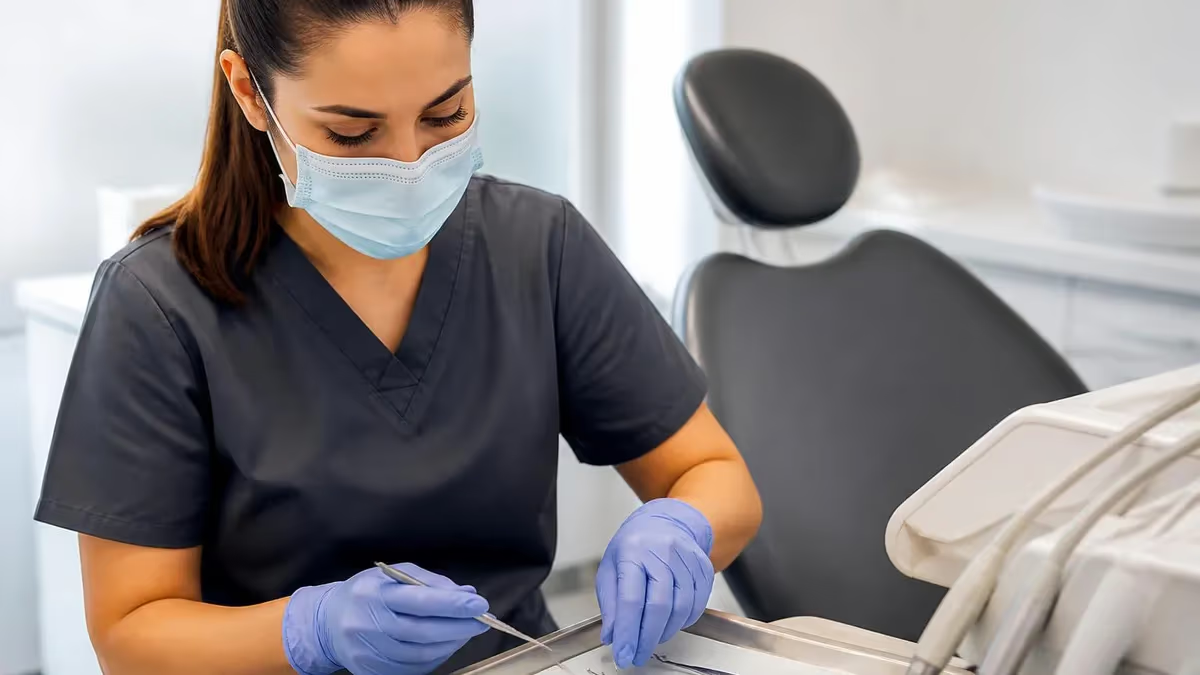
Registered dental assistant jobs sit at one of the most accessible entry points in modern American healthcare, offering steady demand, competitive pay, and a real path to advancement. Across the United States, more than 350,000 dental assistants currently work in private practices, group clinics, specialty offices, and community health centers. The Bureau of Labor Statistics projects continued job growth through 2032, driven by an aging population, expanded dental insurance coverage, and a rising emphasis on preventive oral care that requires trained chairside support.
The rda meaning varies by state, but the core concept is consistent: a Registered Dental Assistant is a licensed or certified professional authorized to perform clinical tasks beyond what an unlicensed assistant can legally do. These extended duties might include placing sealants, taking impressions, exposing radiographs, applying topical fluoride, or assisting with sedation procedures. The title carries weight with employers because it signals formal training, passed examinations, and documented competency that a general assistant typically cannot demonstrate.
If you are searching for a healthcare career that does not require a four-year degree, registered dental assistant jobs are worth serious consideration. Most candidates complete training in eight to eighteen months through community colleges, vocational schools, or accredited online-hybrid programs. After training, candidates pass state licensure or national certification exams to earn the registered dental assistant credential, then begin applying to clinics that pay anywhere from $22 to $34 per hour depending on geography and specialty.
What makes this career genuinely appealing is the variety. One day you might assist with a pediatric extraction; the next you could be coronal polishing for a hygiene patient, exposing bitewing radiographs, or sterilizing instruments using an autoclave. The work is hands-on, social, and grounded in tangible patient outcomes. You will see patients return for follow-ups, build trust with families, and develop technical skills that translate directly into clinical confidence and higher earning potential over time.
The geography of registered dental assistant jobs also matters. California and New York consistently lead in total job postings, but states like Texas, Florida, Washington, Colorado, and North Carolina post some of the largest year-over-year increases. Rural areas often pay sign-on bonuses of $1,500 to $5,000 to attract certified candidates, while urban centers offer denser networks of specialty practices including orthodontics, oral surgery, periodontics, endodontics, and pediatric dentistry, each of which carries unique skill premiums.
This guide walks through everything you need to know about pursuing registered dental assistant jobs in 2026: salary data by state and specialty, the duties you will actually perform on a typical day, the certifications employers expect, the interview process, advancement opportunities, and the resources you should bookmark while preparing. Whether you are a high school senior weighing options, a career changer in your thirties, or a current dental assistant ready to upgrade to RDA status, the path is more navigable than most people realize when they first start researching.
By the end of this article, you will have a clear picture of which programs to evaluate, which exams apply in your state, what hiring managers actually look for in resumes, and how to position yourself for the best registered dental assistant jobs available. You will also know which red flags to watch for in job postings, how to negotiate starting pay, and which continuing education investments produce the highest return once you are working in the field.
Registered Dental Assistant Jobs by the Numbers

Core Duties in Registered Dental Assistant Jobs
Pass instruments, manage suction and isolation, prepare materials, and anticipate the dentist's next move during restorative, surgical, and preventive procedures throughout the workday.
Expose, process, and mount intraoral and panoramic radiographs using digital sensors or film while following strict ALARA safety protocols and state-specific licensure requirements.
Sterilize instruments, disinfect operatories, monitor autoclave biological indicators, and maintain OSHA-compliant logs for every cycle and surface used during patient care.
Review post-operative instructions, demonstrate oral hygiene techniques, explain billing or treatment plans, and reassure anxious patients before and after clinical procedures.
Place sealants, apply topical fluoride, take impressions for study models, perform coronal polishing, and assist with sedation monitoring depending on your state's scope of practice.
Salary expectations for registered dental assistant jobs depend heavily on geography, specialty, years of experience, and the credentials a candidate brings to the table. The national median sits around $48,250 per year according to the most recent Bureau of Labor Statistics data, but that headline number hides significant variation. Entry-level RDAs in lower cost-of-living states might start at $36,000, while experienced RDAs in California specialty practices can clear $75,000 with overtime and bonuses included in total compensation.
The rda meaning in compensation terms is straightforward: holding the credential typically raises pay by $3 to $7 per hour compared to an unlicensed assistant doing similar work in the same office. That premium reflects the legal authority to perform expanded functions, the reduced supervision required, and the lower liability exposure clinics carry when employing licensed personnel. Hiring managers calculate these factors into pay scales because RDAs allow dentists to delegate more tasks and see additional patients per day, directly boosting practice revenue and productivity.
Specialty practices generally pay more than general dentistry offices. Oral surgery practices, for example, often pay 15 to 25 percent above general dentistry rates because of the increased complexity and sedation involvement. Orthodontic offices may pay slightly less per hour but offer steadier schedules, fewer emergencies, and predictable Monday-through-Thursday workweeks that many RDAs prefer for work-life balance. Pediatric specialty practices balance higher pay with the emotional intensity of working with anxious children and their parents throughout each clinical day.
Geographic differences matter enormously when evaluating registered dental assistant jobs. California, Massachusetts, Washington, Oregon, Alaska, and Hawaii top the salary charts, with hourly rates frequently exceeding $30. Texas, Florida, Tennessee, Georgia, and Arizona offer lower hourly rates but stretch further given local housing costs and zero or low state income tax structures. Reviewing the rda meaning in your specific state, including scope of practice rules, helps clarify what employers will actually pay for your credential and skill set.
Beyond base pay, benefits packages can add $8,000 to $18,000 in annual value when fully utilized. Most private practices offer paid time off, holiday pay, and uniform allowances. Larger group practices and dental service organizations frequently add health insurance, dental coverage for the employee and family members, 401(k) matching up to 4 percent, continuing education stipends, and even paid parental leave. Always evaluate the full package rather than focusing solely on the hourly rate quoted during the interview process.
Sign-on bonuses have become increasingly common in registered dental assistant jobs since 2022, particularly in markets where hiring has been competitive. Bonuses of $1,000 to $5,000 are now standard for RDAs who commit to a one-year minimum tenure with a new employer. Some rural practices and dental service organizations offer relocation assistance, student loan repayment programs, and even housing stipends to attract candidates from out of state, especially in underserved communities where dental access remains limited.
Negotiating pay requires preparation. Bring a written list of your credentials, expanded functions certifications, years of chairside experience, software proficiencies, languages spoken, and references from previous employers. Ask about pay reviews, raise schedules, and bonus structures during the interview rather than after accepting the offer. Most clinics expect some negotiation and have built flexibility into their initial offers, so polite advocacy for fair compensation rarely costs candidates the job and frequently produces noticeably better starting terms.
RDA Practice Test Questions
Prepare for the RDA - Registered Dental Assistant exam with our free practice test modules. Each quiz covers key topics to help you pass on your first try.
RDA Assisting with Administration of Anest...
RDA Exam Questions covering Assisting with Administration of Anesthesia and Sedation. Master RDA Test concepts for certification prep.
RDA Dental Charting, Tooth Morphology, and...
Free RDA Practice Test featuring Dental Charting, Tooth Morphology, and Occlusion. Improve your RDA Exam score with mock test prep.
RDA Dental Instruments and Tray Setups
RDA Mock Exam on Dental Instruments and Tray Setups. RDA Study Guide questions to pass on your first try.
RDA Instrument Processing, Sterilization, ...
RDA Test Prep for Instrument Processing, Sterilization, and Monitoring. Practice RDA Quiz questions and boost your score.
RDA Radiographic Techniques and Errors
RDA Questions and Answers on Radiographic Techniques and Errors. Free RDA practice for exam readiness.
RDA Recognition and Management of Medical ...
RDA Mock Test covering Recognition and Management of Medical Emergencies. Online RDA Test practice with instant feedback.
RDA Restorative and Impression Materials
Free RDA Quiz on Restorative and Impression Materials. RDA Exam prep questions with detailed explanations.
RDA State Dental Practice Act and Legal/Et...
RDA Practice Questions for State Dental Practice Act and Legal/Ethical Responsibilities. Build confidence for your RDA certification exam.
RDA Job Responsibilities and Duties
RDA Test Online for Job Responsibilities and Duties. Free practice with instant results and feedback.
RDA Skills and Personal Attributes
RDA Study Material on Skills and Personal Attributes. Prepare effectively with real exam-style questions.
Specialty Options for Registered Dental Assistants
Oral and maxillofacial surgery practices employ RDAs who can assist with extractions, implant placement, bone grafting, and IV sedation monitoring. These roles require additional certifications in anesthesia assistance and basic life support, and they pay among the highest hourly rates in the field due to procedural complexity and longer appointment lengths.
Expect a fast-paced environment with significant exposure to surgical instrumentation, hemostasis techniques, and sterile field maintenance. Oral surgery RDAs frequently mention strong team bonds and rapid skill acquisition as career highlights, though the emotional weight of working with traumatic injuries and complex pathology cases requires resilience and clear professional boundaries throughout each shift.

Pros and Cons of Registered Dental Assistant Jobs
- +Quick training pathway compared to nursing or hygiene degrees
- +Strong job security with consistent nationwide demand
- +Hands-on patient care without years of graduate education
- +Clear advancement options into hygiene, office management, or sales
- +Predictable weekday schedules in most practice settings
- +Sign-on bonuses and relocation packages common in 2026 market
- +Transferable skills across states with reciprocity agreements
- −Physically demanding with repetitive motion injury risks
- −Exposure to bloodborne pathogens and sharp instruments daily
- −State licensure rules vary widely and complicate relocation
- −Smaller practices may offer limited benefits packages
- −Difficult patients and dental anxiety require emotional labor
- −Continuing education costs can add up over a career
- −Pay ceiling lower than hygienists or dental therapists eventually
Pros and Cons at a Glance
| Pros | Cons |
|---|---|
| Quick training pathway compared to nursing or hygiene degrees | Physically demanding with repetitive motion injury risks |
| Strong job security with consistent nationwide demand | Exposure to bloodborne pathogens and sharp instruments daily |
| Hands-on patient care without years of graduate education | State licensure rules vary widely and complicate relocation |
| Clear advancement options into hygiene, office management, or sales | Smaller practices may offer limited benefits packages |
| Predictable weekday schedules in most practice settings | Difficult patients and dental anxiety require emotional labor |
| Transferable skills across states with reciprocity agreements | Continuing education costs can add up over a career |
Registered Dental Assistant Job Search Checklist
- ✓Verify your state's current RDA scope of practice and licensure requirements
- ✓Compile transcripts, certification letters, and CPR card copies into one folder
- ✓Update your resume with quantified accomplishments and specialty experience
- ✓Build a LinkedIn profile listing all credentials and expanded function permits
- ✓Identify 10 target practices within your preferred commute radius
- ✓Research employer reviews on Glassdoor, Indeed, and dental-specific forums
- ✓Prepare two professional references willing to speak about your chairside skills
- ✓Practice answering common dental interview questions out loud beforehand
- ✓Bring printed copies of credentials and a notepad to every in-person interview
- ✓Send personalized thank-you emails within 24 hours of every interview meeting
Working interviews matter more than resumes
Most dental practices invite finalists to a paid working interview lasting four to eight hours. This is your real audition. Show up early, ask thoughtful questions, anticipate the dentist's needs, demonstrate impeccable infection control, and treat every staff member like a future colleague. Practices hire based on team fit far more than credentials alone.
Earning the credential to qualify for registered dental assistant jobs depends entirely on the state where you plan to work. California, New York, Texas, and Florida each maintain distinct examination and licensure structures, while smaller states often defer to national credentials like the Dental Assisting National Board's Certified Dental Assistant designation. Researching your specific state board website should be the first step before enrolling in any program, because requirements vary in ways that meaningfully affect your training timeline and final cost.
In California, for example, candidates must complete an approved RDA program or qualify through documented work experience, then pass both the written and law-and-ethics components administered by the Dental Board of California. The state also requires fingerprinting, a background check, and proof of CPR certification before issuing a license. Other states like Texas and Florida use combinations of national exams, state-specific jurisprudence tests, and continuing education requirements to verify ongoing competency throughout a career in clinical practice.
National credentials like the CDA and the National Entry Level Dental Assistant designation through DANB carry weight across most state lines and signal to employers that you have passed standardized competency exams. Many candidates pursue the CDA even when their state does not require it, because the credential makes resumes more competitive and supports interstate mobility if life circumstances eventually demand relocation to a different region with stricter or more lenient assistant scope rules.
Expanded function certifications add even more earning potential. Coronal polishing, sealant placement, restorative function permits, and nitrous oxide monitoring each require specific coursework and exam completion beyond the base RDA credential in many states. Hiring managers explicitly list these expanded functions in job postings, and candidates who hold them often receive priority interview slots and starting pay bumps of $2 to $5 per hour above peers who lack the additional documented qualifications and clinical authorization.
Continuing education is mandatory in almost every state, typically requiring 12 to 25 credit hours every renewal cycle. Topics range from infection control updates and OSHA compliance refreshers to advanced subjects like dental implant assisting, digital workflow integration, and trauma response protocols. Most employers cover or reimburse continuing education costs because keeping staff current protects the practice from compliance issues and supports better clinical outcomes for the patients walking through the front door each week.
For candidates already working as unlicensed assistants, several states offer experience-based pathways that bypass formal program enrollment. California, for example, allows candidates with documented work experience to sit for the RDA exam after completing approved continuing education courses in specific subject areas. This route saves tuition but requires careful documentation and supervisor verification, so plan ahead and request signed letters from current and previous employers as soon as you decide to pursue licensure through the alternative pathway available.
Reciprocity rules add another layer of complexity. Some states honor licenses from neighboring jurisdictions, while others require complete re-examination regardless of prior credentials. If you anticipate moving across state lines during your career, document everything from day one: keep copies of your transcripts, continuing education certificates, exam score reports, and employer verification letters in a digital folder you can access from anywhere. This habit pays dividends when you eventually need to demonstrate competency to a new state board reviewing your application carefully.

Most state boards require RDA license renewal every two years with documented continuing education hours. Missing the deadline can result in lapsed status, late fees, and even temporary loss of clinical privileges. Set calendar reminders 90 days before each expiration date and track all CE certificates in a single folder to avoid scrambling when renewal time arrives.
Career growth from registered dental assistant jobs takes many forms, and the credential opens more doors than most candidates initially realize when they enter the field. Some RDAs spend decades happily chairside in a single practice, deepening clinical expertise and earning steady raises along the way. Others use the role as a stepping stone toward dental hygiene programs, office management, dental sales, public health roles, or even dental school admissions for those drawn toward the dentist career path long term.
The most common upward path leads to dental hygiene. Many community colleges accept RDA work experience as prerequisites for hygiene program admission, and some employers offer tuition assistance for assistants pursuing the Registered Dental Hygienist credential. Hygienists earn significantly more than RDAs, often $40 to $55 per hour depending on region, and the role offers greater clinical autonomy. The trade-off is two to three additional years of education and the licensing exam process that follows.
Office management is another popular pathway. RDAs who develop strong interpersonal skills, learn practice management software, and demonstrate financial literacy often transition into front-office leadership roles overseeing scheduling, insurance billing, treatment coordination, and staff training. Reviewing additional rda promart study materials, financial reports, and leadership courses prepares candidates for the broader business responsibilities that management positions require throughout the dental industry today.
Dental sales and territory management roles increasingly recruit former RDAs because manufacturers value reps who genuinely understand clinical workflows, sterilization protocols, and the daily realities of running a dental operatory. Companies like Henry Schein, Patterson Dental, Dentsply Sirona, and 3M actively hire former assistants for outside sales positions paying $65,000 to $120,000 with commission structures, company vehicles, and significant travel opportunities throughout regional and sometimes national sales territories.
Public health and corporate dental careers also welcome experienced RDAs. Community health centers, federally qualified health centers, Indian Health Service clinics, and the United States Public Health Service hire credentialed assistants for roles serving underserved populations. These positions often include loan repayment programs, federal benefits, and a strong sense of mission. Corporate dental service organizations similarly employ RDAs in regional training, compliance auditing, and clinical operations management roles across their growing portfolios of partner practices.
Education and instruction represent another rewarding path. Community colleges, vocational schools, and dental assisting programs hire experienced RDAs to teach clinical skills, supervise student rotations, and develop curriculum materials. Teaching often pays less per hour than clinical work but offers academic schedules, summer breaks, and the satisfaction of mentoring the next generation of dental professionals entering the field. Some instructors split time between teaching and continued clinical practice for variety throughout their work.
Whichever path attracts you, the foundation built in registered dental assistant jobs remains valuable for life. The clinical knowledge, infection control expertise, patient communication skills, and procedural fluency transfer into every adjacent dental career. Document your accomplishments carefully, build relationships with mentors and colleagues, and stay curious about emerging technologies like digital scanners, CAD/CAM systems, and AI-assisted diagnostic tools that are reshaping daily workflows in modern dental practices across the United States right now.
Practical tips for landing strong registered dental assistant jobs begin long before you submit an application. Start by auditing your online presence. Hiring managers routinely Google candidate names before interviews, and a professional LinkedIn profile, neutral social media presence, and clean digital footprint help convey the seriousness employers expect from healthcare workers handling sensitive patient information and operating in regulated clinical environments every single day they show up for work.
Tailor every resume submission to the specific job posting. Generic resumes get filtered out by applicant tracking systems and rarely earn a callback from busy office managers reviewing dozens of applications. Mirror the language of the job description, list your specific expanded function permits, and quantify accomplishments with numbers wherever possible. For example, instead of writing simply that you assisted with restorative procedures, write that you assisted with an average of 18 restorative procedures per week across two operatories simultaneously.
Prepare a portfolio of credentials you can hand the interviewer. This should include your active RDA license, CPR card, expanded function certificates, x-ray certification, infection control training records, and any continuing education certificates from the past two years. Having a tidy folder ready demonstrates organization and respect for the hiring process, while making it easy for the office manager to verify your qualifications without delay during the conversation about your background and availability.
Reviewing the rda vape mistake patterns from past exams and common interview questions also pays dividends. Brush up on instrument identification, charting symbols, tray setups, sterilization monitoring, and emergency protocols. Interviewers frequently quiz candidates with quick scenarios like asking what instruments belong on a composite tray or how you would respond to a vasovagal syncope episode. Confident answers separate prepared candidates from those who only memorized resume bullets without deeper context.
Ask thoughtful questions during the interview. Inquire about the practice's patient volume, typical procedure mix, software platforms, sterilization protocols, continuing education support, and growth opportunities. Avoid asking only about pay and time off in the first conversation. Smart questions about clinical workflow and team dynamics signal that you care about doing the job well, not just collecting a paycheck, which is exactly the impression every hiring manager hopes to receive from a finalist they invite back for a working interview opportunity.
Follow up with a brief thank-you email within 24 hours mentioning a specific moment from the conversation. Reference a clinical observation you noticed, a team dynamic you appreciated, or a question they asked that resonated. This small effort puts your name back on top of the hiring manager's inbox and demonstrates the kind of professional polish dental practices value highly. Many candidates skip this step entirely, which means a thoughtful thank-you note often becomes the deciding factor between two otherwise equally qualified finalists.
Finally, be patient with the process. Strong registered dental assistant jobs sometimes take several weeks of searching, interviewing, and follow-up to land. Stay organized with a spreadsheet tracking applications, contacts, interview dates, and outcomes. Celebrate small wins along the way and keep building skills through volunteer work, continuing education courses, and professional networking events. The right opportunity is out there, and candidates who maintain momentum almost always find positions that match their preferences, pay expectations, and long-term career growth ambitions.
Sample Registered Dental Assistant Practice Questions
Try these questions from our free Registered Dental Assistant practice tests. The correct answer and an explanation follow each question.
Before sterilizing dental instruments, why is pre-cleaning or scrubbing essential?
- A. To remove the protective coating from new instruments
- B. To eliminate organic material that can shield microorganisms from sterilization
- C. To activate the sterilizer's chemical indicators
- D. To sort instruments by procedure type
Answer: B. To eliminate organic material that can shield microorganisms from sterilization
Organic debris such as blood and saliva creates a barrier that can prevent sterilizing agents from contacting and killing all microorganisms.
A 'cone cut' error on a radiograph appears as a clear, unexposed crescent or straight line and is caused by:
- A. The patient swallowing during exposure
- B. The PID not being centered over the film
- C. Using exhausted developer solution
- D. Reversing the film in the mouth
Answer: B. The PID not being centered over the film
A cone cut occurs when the primary x-ray beam is not aimed at the center of the film or sensor. As a result, part of the film is not exposed to radiation, leaving a clear, unexposed area that corresponds to the shape of the PID (Position Indicating Device) opening.
An RDA notices a frayed electrical cord on the dental unit. The correct immediate action is to:
- A. Tape the cord temporarily and continue use
- B. Report it to the dentist and take the unit out of service
- C. Replace the cord yourself between patients
- D. Continue using it carefully until the end of the day
Answer: B. Report it to the dentist and take the unit out of service
Damaged electrical equipment must be taken out of service and reported immediately to prevent electrical shock or fire hazards.
A patient's medical history reveals they are HBV surface antigen positive. What infection control changes should be made for their appointment?
- A. The patient must be seen at the end of the day to allow extra time for disinfection
- B. Standard precautions already account for this; no additional changes are required
- C. Double-gloving and N95 respirators are required for all procedures
- D. The patient should be referred to a specialist facility
Answer: B. Standard precautions already account for this; no additional changes are required
Standard precautions are designed to treat all patients as potentially infectious, so an HBV-positive patient requires no additional infection control measures beyond routine standard precautions.
RDA Questions and Answers


About the Author

Educational Psychologist & Academic Test Preparation Expert
Columbia University Teachers CollegeDr. Lisa Patel holds a Doctorate in Education from Columbia University Teachers College and has spent 17 years researching standardized test design and academic assessment. She has developed preparation programs for SAT, ACT, GRE, LSAT, UCAT, and numerous professional licensing exams, helping students of all backgrounds achieve their target scores.
Join the Discussion
Connect with other students preparing for this exam. Share tips, ask questions, and get advice from people who have been there.
View discussion (8 replies)