
What Is the RCMP? Royal Canadian Mounted Police Explained 2026 September
🔎 What is the RCMP? Learn about Canada's national police force, its history, duties, career paths, and how to pass the RCMP entrance exam.
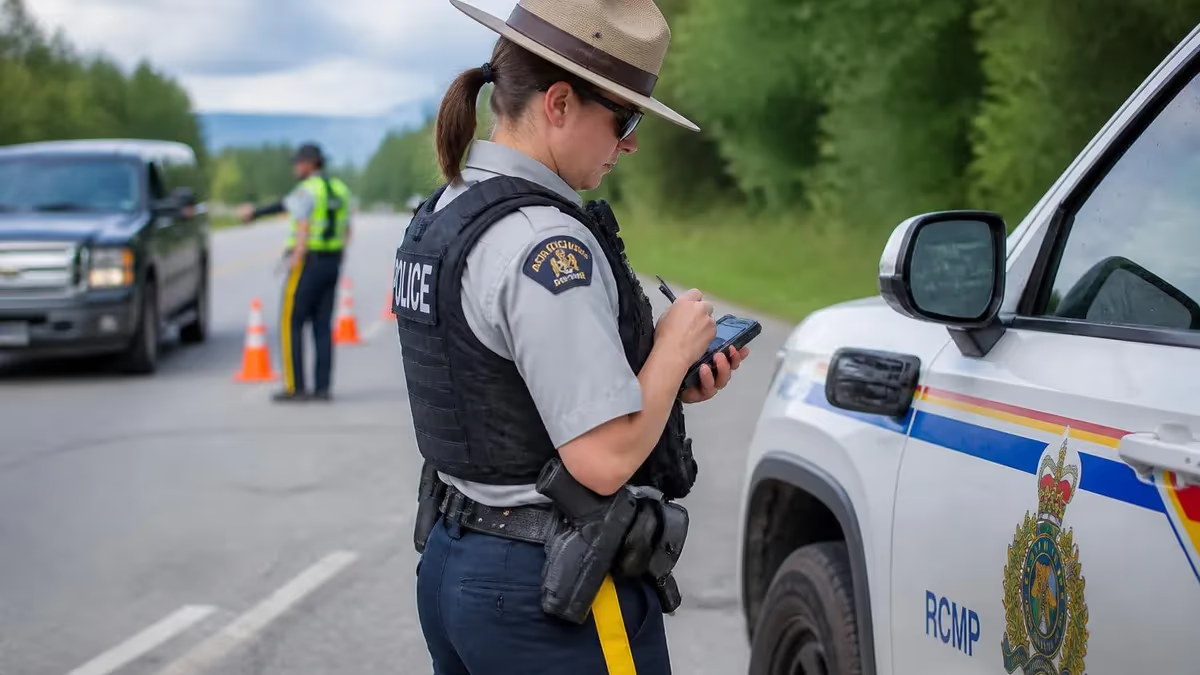
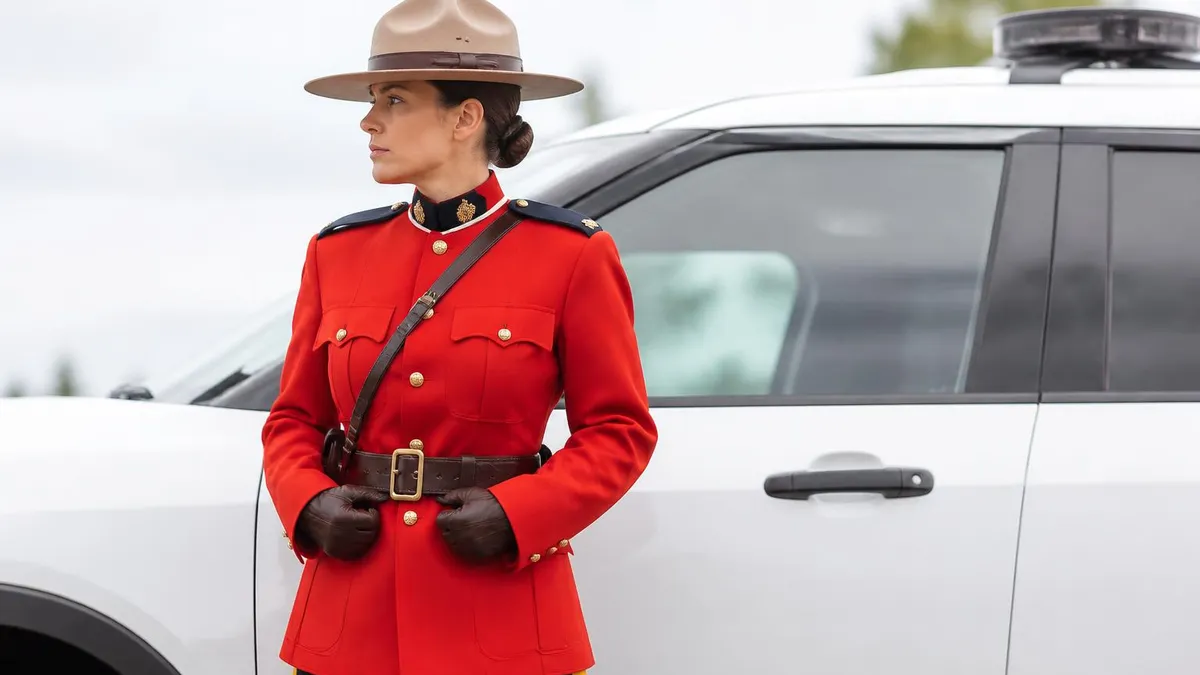
What is the RCMP? The Royal Canadian Mounted Police is Canada's federal, national law enforcement agency — one of the most recognized police forces in the world. Founded in 1873 as the North-West Mounted Police, the RCMP today employs approximately 30,000 people, including roughly 19,000 regular members and 3,000 civilian employees, serving communities from the Atlantic coast to the Pacific and far into the Arctic. Its iconic red serge uniform and Stetson hat have become global symbols of Canadian identity and law enforcement excellence.
The RCMP operates on multiple levels simultaneously, a feature that sets it apart from virtually every other national police service in the world. At the federal level it enforces acts of Parliament, investigates national security threats, and combats organized crime and cybercrime. At the provincial and territorial level it serves as the primary police force in eight of Canada's ten provinces and all three territories, replacing what would otherwise be provincial police forces. At the municipal level, hundreds of Canadian towns and cities contract RCMP detachments to handle day-to-day policing duties their local governments prefer not to run independently.
Understanding the RCMP's structure and mission is critically important for anyone preparing for a career in Canadian law enforcement or studying for the RCMP entrance exam. The organization's breadth means that recruits must be comfortable with everything from rural patrol work in remote northern communities to sophisticated financial crime investigations in major urban centers. The training program at Depot Division in Regina, Saskatchewan, is one of the most comprehensive paramilitary police academies in North America, running six months of intense instruction.
For American readers, the closest analogy to the RCMP is a combination of the FBI, the DEA, and a state highway patrol all rolled into one agency. But even that comparison falls short, because the RCMP also provides municipal policing in small towns and First Nations communities — a boots-on-the-ground community service role that the FBI, for instance, never performs. This layered mandate makes RCMP officers some of the most versatile law enforcement professionals on the continent, trained to pivot from traffic stops to terrorism investigations within a single career.
Aspiring recruits from the United States who hold Canadian citizenship or permanent resident status are eligible to apply, making the RCMP a genuine career pathway for North Americans on both sides of the border. The application process is rigorous: candidates must pass a battery of written tests, physical fitness assessments, polygraph examinations, and extensive background investigations.
Preparing thoroughly for the written components — logic, reading comprehension, memory, and Canadian law — can make the difference between advancing to the next stage and being screened out early. Resources such as the what is the rcmp practice test PDF can be invaluable study tools.
The RCMP's mandate also extends internationally. Canadian officers serve in peacekeeping missions around the globe, train foreign police forces, and collaborate with agencies like the FBI, Interpol, and Europol on cross-border investigations. This international dimension reflects Canada's commitment to global security and gives RCMP officers career opportunities that extend well beyond Canadian borders. Officers with specialized language skills or international relations backgrounds are particularly valued for these postings.
Whether you are a student researching Canadian institutions, a prospective recruit weighing your options, or someone preparing for the RCMP entrance exam, this guide will walk you through everything you need to know: the organization's history, command structure, key duties, career paths, pay scales, and the most effective ways to prepare for the competitive selection process. By the end, you will have a thorough, practical understanding of what the RCMP is, what it does, and what it takes to join its ranks.
RCMP by the Numbers
RCMP Organizational Structure
Enforces federal statutes, investigates national security threats, combats organized crime, cybercrime, and financial fraud, and liaises with international agencies including Interpol and the FBI on cross-border investigations.
Serves as the primary police force in eight provinces and all three territories under contract, covering vast rural and remote areas where no other provincial police service operates, including Indigenous communities.
Provides contract policing services to over 150 municipalities across Canada, handling day-to-day law enforcement, community policing, crime prevention programs, and emergency response in towns and small cities.
Includes the Emergency Response Team (ERT), Forensic Identification Services, the Canadian Police Information Centre (CPIC), the Financial Crime Unit, and the National Security Enforcement Teams (NSET) among others.
Deploys officers in United Nations peacekeeping missions, trains foreign police forces, and stations Liaison Officers in key countries to facilitate intelligence sharing and coordinate transnational criminal investigations.
The core duties of an RCMP officer span an extraordinarily wide range compared to most other law enforcement agencies in North America. On any given day, a regular member might respond to a domestic disturbance call in a small prairie town, execute a search warrant related to a drug trafficking network, interview witnesses in a homicide investigation, or conduct a traffic enforcement operation on a remote highway. This variety is one of the most frequently cited reasons officers choose the RCMP over a municipal force, but it also demands a high level of adaptability and continuous learning throughout a career.
Community policing forms a significant pillar of the RCMP's day-to-day operations, particularly in rural and remote areas. Officers in small detachments often become deeply embedded in the communities they serve, participating in school programs, attending community events, and working alongside Indigenous band councils to address local safety concerns. The RCMP has made reconciliation with Indigenous peoples a stated priority, acknowledging the organization's complex historical role in enforcing colonial policies and committing to a more collaborative, respectful partnership model with First Nations, Métis, and Inuit communities across Canada.
Criminal investigations represent another major category of RCMP work. At the federal level, RCMP investigators pursue some of Canada's most complex cases: money laundering networks that move billions of dollars through offshore accounts, cybercriminals targeting critical infrastructure, human trafficking rings operating across provincial and international borders, and terrorists motivated by foreign or domestic ideologies. These investigations can span years, require fluency in digital forensics and legal wiretap procedures, and demand close coordination with prosecutors, intelligence agencies, and foreign law enforcement partners.
The RCMP also plays a critical role in protecting high-value targets. The Protective Policing section is responsible for the security of the Governor General, the Prime Minister, cabinet ministers, and visiting heads of state. This dignitary protection work requires officers with exceptional situational awareness, firearms proficiency, and the ability to operate seamlessly with other security agencies including the Canadian Security Intelligence Service (CSIS) and foreign protective details. It is one of the most prestigious and demanding specializations within the organization.
Highway patrol and traffic enforcement, while perhaps less glamorous than national security work, account for a substantial portion of RCMP activity in rural provinces and territories. Officers monitor Trans-Canada Highway corridors, investigate fatal collisions, enforce commercial vehicle regulations, and conduct impaired driving checkpoints. Traffic safety is not a secondary concern — road deaths in Canada's rural regions significantly outpace those in urban centers, and the RCMP's visibility on rural roads has a measurable deterrent effect on speeding, distracted driving, and impaired operation.
Border integrity is another area where the RCMP plays an active role, working alongside the Canada Border Services Agency (CBSA) to interdict illegal crossings, smuggling operations, and the movement of weapons and controlled substances across the Canada–United States border. Officers stationed near border regions develop specialized expertise in immigration law, customs violations, and the tactics used by smuggling networks — knowledge that feeds directly into broader organized crime investigations handled by federal policing units.
Finally, RCMP officers spend considerable time on administrative and court-related duties: writing detailed occurrence reports, preparing court briefs, testifying as witnesses, and maintaining the evidentiary chain of custody for seized materials. Accurate, legally defensible documentation is as important as any operational skill, and recruits who underestimate the paperwork burden of policing often find the adjustment challenging during their first years on the job.
How to Become an RCMP Officer
To apply for the RCMP, candidates must be Canadian citizens or permanent residents, at least 19 years old, and hold a valid Canadian driver's license. A secondary school diploma is the minimum education requirement, though a post-secondary degree significantly strengthens an application. Candidates must be proficient in either English or French, pass a vision and hearing standards test, and have no prior criminal convictions for which a pardon has not been granted.
Physical fitness is assessed using the RCMP Physical Abilities Requirement Evaluation (PARE), which includes an obstacle course, a push-and-pull component, and a weight carry, all completed within a strict time limit of under four minutes and 45 seconds. Candidates are also required to successfully complete a polygraph examination, a psychological assessment, and an extensive background investigation covering personal history, finances, and references going back at least five years.
RCMP Career: Advantages and Challenges
- +Highly competitive salary starting above $64,000 CAD with significant raises in the first three years
- +Defined-benefit pension plan providing retirement security unavailable in most private-sector careers
- +Extraordinary variety of work — from community patrol to national security investigations
- +Opportunities for international deployments, peacekeeping missions, and foreign liaison postings
- +Comprehensive health, dental, and disability benefits for officers and their families
- +Career-long training and development programs including leadership courses and specialist certifications
- −First posting is rarely in your home province — geographic relocation is mandatory for new members
- −Six-month Depot training is physically and mentally demanding with genuine attrition risk
- −Shift work, on-call duties, and irregular hours are permanent features of frontline policing
- −Exposure to traumatic events creates significant long-term mental health risks; PTSD rates are elevated
- −Extensive application process — background checks, polygraph, psychological testing can take 12-24 months
- −Public scrutiny and controversy around RCMP conduct and Indigenous relations add institutional stress
RCMP Application Checklist
- ✓Confirm Canadian citizenship or permanent resident status before beginning your application.
- ✓Obtain a certified copy of your birth certificate, passport, and any education diplomas.
- ✓Request a certified driving abstract from your provincial motor vehicle registry.
- ✓Begin training for the PARE obstacle course — aim to complete it in under 3 minutes 45 seconds.
- ✓Review the Canadian Charter of Rights and Freedoms and major sections of the Criminal Code.
- ✓Gather employment references and personal references covering at least the last five years.
- ✓Prepare a detailed personal history covering all addresses, employers, and travel since age 16.
- ✓Practice memory and observation exercises to prepare for the written entrance test.
- ✓Complete a recognized First Aid/CPR course — it is required before Depot attendance.
- ✓Review your social media history and ensure your online presence reflects professional standards.
The RCMP Application Timeline Is Longer Than Most Expect
From submitting your initial online application to receiving a conditional offer of employment, most RCMP applicants wait between 12 and 24 months. Background investigations are exhaustive and cannot be rushed. Start preparing for the written tests and PARE immediately — do not wait for your application file to progress before beginning your fitness and academic preparation.
Compensation is one of the most frequently researched aspects of an RCMP career, and the numbers are genuinely competitive by North American law enforcement standards. A new Regular Member Constable begins at approximately $64,000 CAD per year during the first twelve months of service. After three years on the job — once an officer has moved through the early incremental pay steps — regular member compensation reaches approximately $106,000 CAD annually. This progression is contractual and guaranteed, not subject to individual performance reviews, which provides new officers with strong income certainty during the formative years of their careers.
The RCMP's defined-benefit pension plan is one of the most valuable components of the total compensation package, though it is frequently overlooked by candidates focused on base salary. Officers contribute approximately 9.83 percent of their salary to the plan and can retire with an unreduced pension after 25 years of service or at age 60. Given that most officers join in their early twenties, this means a potential retirement in their late forties with full benefits — a retirement timeline that simply does not exist in most civilian career paths or private-sector jobs.
Beyond salary and pension, RCMP officers receive comprehensive health and dental coverage, vision care, a long-term disability plan, and access to the Employee and Family Assistance Program (EFAP), which provides confidential counseling and mental health support. The organization has significantly expanded its psychological health resources in recent years following public attention on elevated rates of post-traumatic stress disorder among first responders. Officers dealing with operational trauma now have more structured pathways to care than at any previous point in the RCMP's history.
Housing allowances and isolated post allowances supplement base pay for officers stationed in remote communities, where the cost of living is often substantially higher than in southern Canadian cities. Officers assigned to the territories or isolated northern detachments can receive additional annual allowances ranging from several thousand dollars to over $30,000 CAD depending on the remoteness classification of their post. These supplements make remote postings financially attractive for officers willing to serve outside major urban areas, and many choose to leverage them for accelerated savings during early career years.
Overtime compensation and acting pay add further layers to an officer's total annual income. Officers who regularly work beyond their scheduled hours or who perform duties above their rank for extended periods are entitled to additional pay under the collective agreement negotiated between the RCMP and the National Police Federation (NPF), which became the officers' official bargaining agent in 2019 — the first time in the RCMP's history that regular members had formal union representation. The NPF has since negotiated improved working conditions, back-pay settlements, and enhanced mental health provisions.
Career advancement also brings meaningful salary increases at each rank. A Corporal earns roughly $115,000 to $120,000 CAD, while a Sergeant can earn between $130,000 and $145,000 CAD including supervisory premiums. At the Inspector level and above, total compensation including executive benefits can exceed $180,000 CAD annually. These upper-rank salaries are comparable to mid-level management positions at major Canadian corporations and significantly exceed the compensation available at most municipal police forces outside of Toronto, Vancouver, or Calgary.
Retirement benefits extend beyond the pension itself. Officers who retire after 25 or more years of service receive full pension payments, continued health and dental coverage through the Public Service Health Care Plan (PSHCP), and access to a range of veterans' support programs. The combination of early retirement eligibility and post-retirement benefits means that a career-long RCMP officer's total lifetime compensation — including the net present value of pension income — is substantially higher than the headline annual salary figures suggest, making it one of the most financially secure career paths available in Canadian public service.
Only Canadian citizens and permanent residents of Canada are eligible to apply to the RCMP. Holding a US green card or US citizenship alone does not qualify you. If you are a dual Canadian-American citizen, you must provide proof of your Canadian citizenship. Permanent residents must ensure their status is valid and in good standing throughout the entire application process, which can take one to two years to complete.
Preparing for the RCMP entrance exam requires a structured, multi-month study plan because the written assessment covers a broader range of cognitive skills than most standardized tests. The RCMP Police Aptitude Battery (RPAB) measures written communication, composition, memory, judgment, reasoning, and observation — six distinct skill domains tested through different question formats under timed conditions. Candidates who walk in without targeted preparation consistently underperform relative to their actual intellectual capacity, simply because the format is unfamiliar and the time pressure is unforgiving.
The written communication and composition sections assess grammar, sentence structure, spelling, and the ability to organize written information clearly — skills that are directly relevant to the report writing demands of operational policing. Many candidates are surprised to discover that grammar and punctuation questions appear on a police entrance exam, but these sections reflect the real-world requirement that officers produce legally defensible, court-ready documentation throughout their careers. Brushing up on grammar fundamentals is not busywork; it directly maps to on-the-job requirements.
The memory and observation component of the RPAB is where many otherwise well-prepared candidates struggle. This section presents candidates with a scenario — a photograph, a set of written facts, or a description of a simulated event — and then tests recall accuracy after the stimulus has been removed.
The challenge is not the difficulty of what is being remembered, but the volume of detail and the short encoding window. Practicing deliberate observation exercises in daily life — noticing license plates, describing strangers' clothing, recalling the order of events in a news story — builds the neural habits that improve performance on this section.
Judgment and reasoning questions present candidates with policing scenarios and ask them to select the most appropriate response from several options. These questions are not designed to test knowledge of the Criminal Code — they assess the candidate's common sense, ethical reasoning, and understanding of proportionate police responses.
The best preparation is reading real RCMP case studies, reviewing the RCMP's core values and code of conduct, and working through sample scenario questions that expose you to the logic the examiners are looking for. Simply knowing the right answer is less important than understanding why the correct option is more appropriate than the plausible-sounding alternatives.
Canadian law knowledge, while not a dominant section of the initial written exam, becomes critically important at Depot and in operational policing. Candidates who arrive with even a basic familiarity with the Canadian Charter of Rights and Freedoms, the Criminal Code of Canada, the Youth Criminal Justice Act, and key provincial statutes have a significant advantage in academic training at Depot. Many successful applicants spend several months before Depot reviewing these legal frameworks so they can focus their attention at the academy on practical skills rather than catching up on foundational doctrine.
Physical preparation for the PARE test deserves as much attention as academic preparation, particularly for candidates who are not currently in athletic conditioning. The PARE circuit includes sprinting, vaulting, stair climbing, crawling, and a controlled-falls component, followed immediately by a push-and-pull machine exercise and a 35-pound bag carry — all completed in sequence under time pressure. Functional fitness training emphasizing explosive power, cardiovascular endurance, and body-weight control is more valuable than traditional gym lifting programs for this specific test. Many RCMP recruitment centers offer practice PARE sessions; booking one well in advance of your actual assessment is strongly recommended.
Online practice tests are among the most efficient preparation tools available for candidates at every stage of the application process. Working through timed practice questions that mirror the RPAB's format builds both content knowledge and test-taking confidence.
Reviewing each wrong answer in detail — not just noting what the right answer was, but understanding why the other options were incorrect — produces compounding learning gains over a sustained study period. Candidates who complete several hundred practice questions across all RPAB domains before their test date consistently report feeling calmer, more focused, and better prepared than those who relied primarily on reviewing study notes.
The most effective RCMP exam candidates treat their preparation as a dedicated project with milestones, not a background activity they squeeze in between other commitments. Start by downloading the official RCMP recruitment guide and identifying every stage of the process, from online application through to the conditional offer of employment.
Map each stage against a realistic timeline — typically 12 to 18 months from start to finish — and work backward to set preparation deadlines for the RPAB, the PARE, the polygraph, and the medical examination. Having a written plan significantly reduces the anxiety that comes from uncertainty about what is next.
For the memory and observation component specifically, build a daily habit of structured recall practice. Each morning, read a short news article and then close it and write down every specific fact you can remember — names, numbers, locations, sequence of events. Do the same with photographs: study an image for 60 seconds, then describe it in writing without looking.
These exercises feel simple but directly train the attentional and encoding processes that the RPAB memory section evaluates. Within four to six weeks of consistent daily practice, most people notice a measurable improvement in their ability to retain and accurately report observed details.
For the judgment and scenario questions, practice thinking out loud in structured terms: identify the legal issue, identify the competing interests of the people involved, identify the risks of each available action, and select the response that best balances legal compliance, officer safety, and community welfare. This four-step framework mirrors the actual decision-making process that good police officers use in the field, and applying it consistently during practice will make the exam-day reasoning feel natural rather than forced. Candidates who develop this framework early are also better prepared for scenario-based interviews later in the application process.
The polygraph examination intimidates many candidates, but the best preparation is simply thorough honesty throughout your application. The polygraph is not primarily a lie-detector test; it is a structured interview that covers your background in extreme detail — drug use history, criminal history, financial problems, and personal conduct. Candidates who have disclosed everything accurately in their written application have nothing to fear. Problems arise when candidates omit or minimize information they think might be disqualifying, then find themselves appearing deceptive on the polygraph when those topics come up. Honesty from the very first form is always the correct strategy.
Reference preparation is an often-overlooked part of a successful RCMP application. Your references — both personal and professional — will be contacted and interviewed in depth. Brief them early, well before they receive the investigator's call. Explain the nature of the RCMP's background investigation, the questions they are likely to be asked, and the types of information you are expecting them to confirm. References who are surprised by the call, unclear on what to say, or unable to recall specific details about you can inadvertently delay or complicate your file even when there is nothing genuinely concerning in your background.
During the Depot training phase, study consistently from week one rather than waiting for pressure to build before exams. The academic material accumulates quickly, and officers who fall behind in the first few weeks of a six-month program often struggle to recover without sacrificing performance in the practical training components. Form study groups with fellow cadets early — teaching material to a peer is one of the most effective memory consolidation techniques known to learning science, and the collaborative relationships formed at Depot often become lasting professional networks throughout an officer's career.
Finally, maintain perspective on the timeline. The RCMP application process is deliberately long and demanding because the organization is selecting people who will carry firearms, make high-stakes decisions under pressure, and represent the Canadian government in some of the most difficult moments of people's lives.
Every step of the process — the tests, the interviews, the background checks, the physical assessments — is designed to identify candidates with the character, resilience, and judgment that the job genuinely requires. Candidates who understand this and embrace the rigor of the process rather than resenting it arrive at Depot with the right mindset to succeed.
RCMP Questions and Answers


About the Author

Educational Psychologist & Academic Test Preparation Expert
Columbia University Teachers CollegeDr. Lisa Patel holds a Doctorate in Education from Columbia University Teachers College and has spent 17 years researching standardized test design and academic assessment. She has developed preparation programs for SAT, ACT, GRE, LSAT, UCAT, and numerous professional licensing exams, helping students of all backgrounds achieve their target scores.
Join the Discussion
Connect with other students preparing for this exam. Share tips, ask questions, and get advice from people who have been there.
View discussion (7 replies)