
FBI vs RCMP: Key Differences Between Two Elite Police Forces 2026 September
FBI vs RCMP compared side by side — jurisdiction, powers, hiring, salary & structure. 🎯 Essential reading for anyone interested in North American law...

The debate over FBI vs RCMP comes up constantly among law enforcement enthusiasts, prospective officers, and anyone curious about how policing works across North America. On the surface, both agencies project authority, professionalism, and an elite reputation — but they operate under fundamentally different legal frameworks, serve different national mandates, and attract candidates through very distinct hiring pipelines. Understanding those differences matters whether you are considering a career in federal law enforcement or simply want a clearer picture of how the two giants of North American policing compare.
The Federal Bureau of Investigation is a domestic intelligence and law enforcement agency under the United States Department of Justice. Founded in 1908, the FBI focuses on federal crimes, counterterrorism, cybercrime, and national security threats inside the United States. It employs roughly 35,000 people — including approximately 13,000 special agents — and operates from its Washington, D.C. headquarters with 56 field offices spread across every American state and territory. Its singular national scope makes it one of the most recognized law enforcement brands in the world.
The Royal Canadian Mounted Police, or RCMP, occupies a strikingly different role. Unlike the FBI, which is purely a federal investigative body, the RCMP serves simultaneously as Canada's national police force, a provincial police service in eight of ten provinces, and the primary municipal police provider in hundreds of smaller communities. That triple mandate — federal, provincial, and municipal — makes the rcmp vs fbi comparison especially nuanced, because the RCMP's operational footprint extends far deeper into everyday Canadian life than the FBI does into American daily policing.
Structurally, the two agencies reflect their home countries' constitutional arrangements. The United States maintains a highly decentralized policing model: cities have their own departments, counties have sheriffs, states have highway patrols, and the FBI handles only matters that cross state lines or involve federal statutes. Canada, by contrast, has historically relied on the RCMP to fill gaps where provincial and municipal governments lack capacity or funding for their own dedicated forces. This means an RCMP officer might spend a career investigating organized crime at the federal level or patrolling rural highways in Saskatchewan — sometimes both.
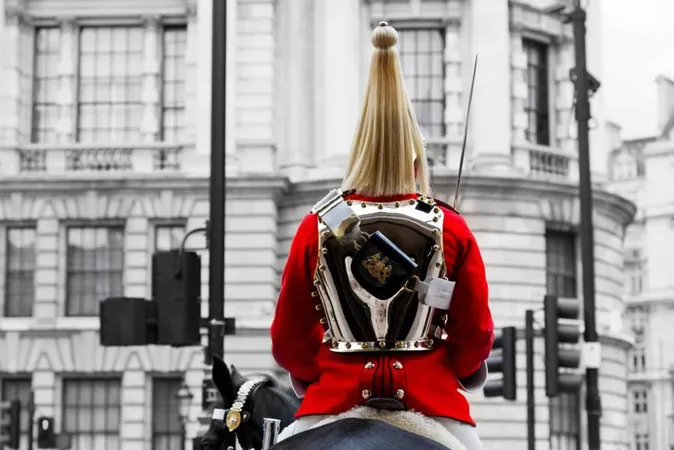
Both agencies have cultivated powerful cultural identities. The FBI's image in popular culture leans heavily on the suit-clad special agent with a badge and a Glock, projecting the cool efficiency of a modern intelligence-driven organization. The RCMP's identity is anchored in the iconic red serge uniform and Stetson hat — imagery that dates back to the North-West Mounted Police of the 1870s and remains one of Canada's most recognized national symbols worldwide. Yet both organizations are modernizing rapidly, investing in forensic technology, cyber capabilities, and community-based policing strategies that would have been unrecognizable to their founders.
For Americans researching North American law enforcement or Canadians thinking about federal policing careers, the FBI-RCMP comparison provides a revealing window into how two neighboring democracies with shared values have built very different law enforcement institutions. The following sections break down jurisdiction, powers, hiring standards, salaries, training regimens, and day-to-day operations so you can see exactly where the two agencies overlap, where they diverge sharply, and what it actually takes to join either one.
FBI vs RCMP by the Numbers

Jurisdiction and Mandate: How Each Agency is Structured
The FBI investigates violations of more than 200 federal laws but does not serve as a local or state police force. It relies on partnerships with state and local agencies to address crime at every level, focusing its resources on national security, cyber threats, and organized crime.
The RCMP operates as a federal, provincial, and municipal police force simultaneously. It provides contract policing services to eight provinces, three territories, and over 150 municipalities, giving it a far broader operational footprint than any single American federal agency.
Post-9/11 reforms transformed the FBI into a domestic intelligence organization that prioritizes threat prevention over prosecution. It shares intelligence with the CIA, NSA, and Department of Homeland Security through the National Counterterrorism Center and Joint Terrorism Task Forces nationwide.
Alongside national security responsibilities, the RCMP deploys officers to remote and Indigenous communities across Canada where no other police force operates. This community policing tradition dates to the force's founding in 1873 and remains central to its identity and public mandate.
When you dig into the hiring requirements for each agency, the differences become immediately apparent. The FBI requires special agent candidates to be U.S. citizens between 23 and 36 years old at the time of appointment, hold a four-year degree from an accredited university, and possess at least three years of professional work experience. The FBI also requires candidates to pass a rigorous physical fitness test, a polygraph examination, a comprehensive background investigation, and a structured clinical interview. The entire process from application to academy acceptance can take anywhere from one to three years.
The RCMP's path is different in several meaningful ways. Canadian citizenship or permanent residency is required, and candidates must be at least 19 years old — meaning the RCMP recruits younger than the FBI. While a post-secondary degree is not strictly mandatory, the RCMP strongly prefers candidates with relevant education in criminology, law, social sciences, or related fields. All RCMP applicants must complete the RCMP Police Aptitude Battery (RPAB), which tests problem-solving, logic, composition, and judgment — the exact skills covered in structured practice materials available to candidates preparing for the process.
Both agencies conduct extensive background checks that examine financial history, drug use, criminal records, and personal character. The FBI's security clearance process is particularly intensive: it requires a top-secret clearance that involves interviews with neighbors, former colleagues, and family members. The RCMP's security clearance process is equally thorough by Canadian federal standards, requiring candidates to disclose all foreign travel, associations, and any past contact with law enforcement. A single undisclosed speeding ticket or omitted foreign trip can derail an otherwise strong application at either agency.
Physical fitness standards represent another meaningful difference. FBI candidates must meet baseline push-up, sit-up, sprint, and 1.5-mile run standards scored on an age-adjusted scale. The RCMP uses the PARE — Physical Abilities Requirement Evaluation — a job-simulation test modeled on real police scenarios involving obstacle courses, push-pull resistance exercises, and a controlled foot pursuit. The PARE must be completed in under 4 minutes and 45 seconds regardless of age or gender, making it a standardized, mission-relevant benchmark rather than an age-adjusted fitness score.
Language requirements also differ sharply. The FBI does not require bilingualism, though language skills in Arabic, Mandarin, Farsi, Spanish, or Russian are highly valued and can accelerate placement in sought-after divisions. The RCMP, operating in officially bilingual Canada, values French-English bilingualism highly — particularly for candidates interested in serving in Quebec, New Brunswick, or the National Capital Region. While unilingual anglophone candidates can still join, bilingual officers have access to a wider range of postings and promotion opportunities.
Both agencies perform psychological screening, but the instruments differ. The FBI uses a clinical interview and standardized psychological assessments to evaluate emotional stability, judgment under pressure, and suitability for high-stakes decision-making. The RCMP administers the RPAB's situational judgment component alongside a psychological interview designed to assess integrity, community orientation, and resilience. Candidates who study the cognitive and situational components of both processes consistently perform better, which is why dedicated test preparation — covering everything from problem-solving to verbal reasoning — is strongly recommended for anyone pursuing either path.
Training Academies: FBI Quantico vs RCMP Depot
The FBI Academy at Quantico, Virginia is one of the most recognized law enforcement training facilities in the world. New agent trainees spend approximately 20 weeks in residence covering firearms proficiency, defensive tactics, legal studies, investigative techniques, and behavior science. Trainees live on campus and operate under a structured schedule designed to build both professional competence and team cohesion under stress.
Quantico's curriculum integrates classroom instruction with realistic scenario-based exercises conducted in Hogan's Alley, a purpose-built mock town where trainees practice arrests, search warrants, and undercover operations. Academic failure, physical fitness shortfalls, or conduct issues can result in dismissal at any stage — approximately 10–15 percent of trainees do not complete the program on their first attempt.

Joining the RCMP vs FBI — Advantages and Tradeoffs
- +RCMP offers broader day-to-day experience across federal, provincial, and municipal policing roles
- +FBI special agents earn higher base salaries on average, especially at senior GS levels
- +RCMP recruits at 19, giving younger candidates access to a federal law enforcement career earlier
- +FBI's national security mandate provides unmatched exposure to counterterrorism and intelligence work
- +RCMP postings across Canada offer geographic variety from Arctic detachments to urban major crimes units
- +FBI's global partnerships with Interpol and foreign liaison offices create international career pathways
- −RCMP relocation requirements can disrupt family life — officers are frequently transferred across provinces
- −FBI hiring process can take 1–3 years from application to academy, testing candidate patience severely
- −RCMP salaries in rural postings may feel low relative to cost-of-living adjustments in major cities
- −FBI requires U.S. citizenship, immediately excluding large pools of qualified international candidates
- −RCMP officers in contract policing roles may find the work less specialized than they expected
- −FBI demands a minimum of three years of prior professional experience, raising the barrier to entry
RCMP Application Preparation Checklist
- ✓Confirm Canadian citizenship or permanent residency before starting your application
- ✓Complete the RCMP Police Aptitude Battery (RPAB) study program at least 8 weeks in advance
- ✓Run the PARE circuit under 4 minutes 45 seconds consistently in practice before your test date
- ✓Gather all required documents: birth certificate, SIN, education transcripts, and employment records
- ✓Disclose all prior law enforcement contact honestly — omissions disqualify more candidates than incidents
- ✓Practice situational judgment questions covering use-of-force decisions, ethics, and community scenarios
- ✓Review the Criminal Code of Canada and key federal statutes tested on the knowledge battery
- ✓Request character reference letters from non-family supervisors or community leaders well in advance
- ✓Prepare a detailed personal history statement covering all residences, travel, and employment since age 16
- ✓Book your vision and medical screening early — wait times for approved physicians can be several weeks
Preparation Time Makes the Biggest Difference
Candidates who spend at least 8–12 weeks in structured preparation for the RCMP Police Aptitude Battery consistently score in the top percentiles. The RPAB is not an IQ test — it rewards practiced pattern recognition and time-management under pressure. Starting practice early and simulating real test conditions is the single highest-return investment any RCMP applicant can make before their exam date.
Salary is one of the most frequently searched dimensions of any law enforcement career comparison, and the FBI vs RCMP gap is real but more nuanced than raw numbers suggest. FBI special agents start on the General Schedule pay scale at the GS-10 level, which translates to approximately $56,000 to $65,000 per year before locality pay adjustments.
When locality pay for high-cost cities like New York, Los Angeles, or Washington D.C. is factored in, first-year agent compensation can rise to $80,000 or more. Senior agents at the GS-13 level earn between $95,000 and $125,000 annually, with supervisory special agents pushing toward $140,000.
RCMP regular members start at a cadet pay rate during Depot training — roughly $38,000 Canadian dollars annually — and move to the Constable-1 pay rate upon graduation, which currently sits around $53,000 CAD. Pay rises predictably through the constable pay grid, reaching approximately $100,000 CAD after six years of service. Senior non-commissioned officers and commissioned officers can earn considerably more, and specialized roles in integrated national security teams carry additional allowances. Adjusted for purchasing power parity between Canada and the United States, the salary gap between the two agencies is narrower than it appears at face value.
Both agencies offer defined-benefit pension plans that significantly enhance total compensation. FBI agents participate in the Federal Employees Retirement System (FERS) and can retire with a full pension after 20 years of service if they have reached age 50, or after 25 years at any age. The RCMP pension plan — the Royal Canadian Mounted Police Superannuation Act — provides a similar indexed defined-benefit pension tied to years of service and highest average earnings, with voluntary retirement possible after 25 years of service regardless of age.
Benefits beyond salary are substantial at both agencies. FBI agents receive federal health insurance through the Federal Employees Health Benefits program, life insurance, paid leave, and access to the FBI's recreation facilities. RCMP members receive comprehensive provincial health coverage through their employer, group life insurance, disability benefits, housing assistance in remote postings, and access to the RCMP's employee assistance programs. In remote northern detachments, RCMP officers also receive northern living allowances that can add $15,000–$20,000 CAD annually to their base pay.
Career advancement trajectories differ notably between the two agencies. FBI agents advance along a specialist or supervisor track — exceptional agents can move into senior leadership roles in counterterrorism, cybercrime, or organized crime, while others become unit chiefs, special agents in charge of field offices, or ultimately assistant directors at headquarters. The RCMP's commissioned officer corps is selected through a separate process from non-commissioned ranks, meaning that constables who aspire to officer status must apply competitively for the Inspector and above levels, a structure that mirrors military career progression more closely than the FBI's relatively flat special-agent hierarchy.
Geographic mobility requirements affect lifestyle and family planning significantly at both agencies. FBI agents are assigned to field offices based on operational needs and can expect to relocate at least once or twice during a career. Declining a transfer to a priority field office can stall advancement. RCMP officers face even more frequent transfers, particularly in the early years of service when members are assigned based on national staffing needs rather than personal preference. This mobility requirement is one of the most common concerns raised by RCMP recruits and is worth weighing carefully against the career's considerable rewards.

All RCMP salary figures in this article are quoted in Canadian dollars (CAD). As of 2026, one U.S. dollar buys approximately 1.36 Canadian dollars, meaning RCMP salaries are lower in USD terms than the raw numbers suggest. When comparing FBI and RCMP compensation, always convert to a common currency and factor in each country's tax rates and cost of living before drawing conclusions.
Coming back to the central question — when you put the full picture together — the FBI vs RCMP comparison reveals two outstanding agencies that reflect their countries' distinct approaches to governance, federalism, and public safety. The FBI is a specialist organization: highly trained, intelligence-driven, and laser-focused on federal crime and national security. It recruits experienced professionals, trains them intensively at one of the world's finest law enforcement academies, and deploys them into cases that have measurable national significance. The trade-off is a narrower operational experience during a career's early years and a lengthy, demanding hiring process.
The RCMP is a generalist organization that has also built elite specialist capabilities. Its contract policing mandate means that a newly graduated constable might spend their first three years policing a rural community in British Columbia before moving to an integrated drug enforcement team in Calgary and eventually to a major crimes unit in Ottawa. That breadth of experience builds versatility, community connection, and practical policing skills that are genuinely rare in national law enforcement organizations. The trade-off is frequent transfers and a starting salary that, especially in Canada's expensive urban centers, can feel tight in the early years.
For Americans considering Canadian law enforcement as a career path, the RCMP represents a genuinely accessible option — particularly for dual citizens or individuals who have obtained Canadian permanent residency. The RCMP's hiring process, while thorough, is less opaque than the FBI's, and the force publishes clear, consistent information about the RPAB, PARE, and medical standards. Candidates who invest time in structured test preparation and physical conditioning have a realistic chance of clearing every benchmark in the hiring pipeline on their first attempt.
For Canadians curious about the FBI, the reality is that unless you hold U.S. citizenship, the FBI is not an option. However, understanding the FBI's structure, capabilities, and investigative priorities is valuable for anyone working in or studying North American law enforcement, because the two agencies collaborate extensively. The RCMP and FBI share intelligence on organized crime, terrorism, and cyber threats through bilateral law enforcement agreements, and RCMP officers regularly participate in joint task forces with American federal counterparts along the shared border.
The question of which agency is more prestigious is ultimately unanswerable in any objective sense — and probably the wrong question to ask. Both organizations attract exceptional talent, both have distinguished histories of innovation in policing and intelligence, and both carry enormous public trust in their respective countries. A more useful question is which agency aligns with your citizenship, your career goals, your tolerance for geographic mobility, and your professional interests. That alignment — not prestige — is what makes for a fulfilling law enforcement career over a 25- or 30-year span.
If the RCMP is your target, the most important decision you can make right now is to start preparing seriously and specifically. The RCMP Police Aptitude Battery, the PARE physical test, and the medical and psychological assessments are all highly predictable in their format and content.
Every hour you spend on structured practice is an hour building an advantage over candidates who walk in cold. The resources available on PracticeTestGeeks — covering problem-solving, verbal reasoning, Canadian law, and physical fitness standards — are precisely calibrated to the RCMP's actual testing requirements and represent the fastest path to a competitive application package.
Practical preparation for the RCMP begins with understanding the RPAB in detail. The battery contains five subtests: written composition, reading comprehension, verbal reasoning, quantitative reasoning, and problem-solving judgment. Most candidates find the problem-solving and situational judgment sections the most challenging because they require applying logical reasoning to ambiguous, realistic policing scenarios rather than retrieving memorized facts. The best way to get comfortable with those sections is sustained, deliberate practice under timed conditions — not passive reading of study guides.
Physical preparation should begin at least 12 weeks before your scheduled PARE date. The obstacle course component requires explosive speed and coordination that does not develop overnight. Structure your training to include sprint intervals twice a week, push-pull resistance work three times a week, and full PARE circuit simulations starting in week six. Aim to complete the circuit consistently in under four minutes and twenty seconds — giving yourself a 25-second buffer against the official cutoff time. That buffer protects you on test day when nerves and adrenaline alter your pace and coordination.
Your personal history statement deserves more attention than most candidates give it. The RCMP's background investigation is thorough, and investigators will verify every significant claim in your statement. The safest approach is to be exhaustively honest about everything — minor traffic violations, past cannabis use before legalization, any contact with police as a young person. Investigators are trained to detect inconsistencies and omissions, and a single undisclosed incident that surfaces later is treated far more seriously than an honestly disclosed one. Completeness is a character signal, not just a procedural requirement.
References matter more than candidates typically realize. Choose referees who have directly supervised your work — a former employer, a volunteer coordinator, a coach or instructor — and brief them on the role you are applying for and the qualities the RCMP is looking for. Generic character references that describe you as a good person carry little weight. References that describe specific situations where you demonstrated integrity, sound judgment, community commitment, or leadership under pressure are the ones that move applications forward at the suitability review stage.
If you are also tracking the FBI as a potential career path, start building your resume now for the three-year professional work experience requirement. Roles in law enforcement, military service, accounting, finance, law, information technology, or foreign language work are all directly relevant entry points that the FBI recruits from heavily. Completing a relevant graduate degree — law school, an MBA, or a master's in cybersecurity — while accumulating that work experience positions you among the most competitive candidates in the FBI's applicant pool. The time to start that preparation is years before you submit an application.
Whichever agency you ultimately pursue, the investment in knowledge and preparation pays compounding dividends. Candidates who understand the FBI's investigative priorities and the RCMP's operational mandate arrive at interviews, polygraphs, and character assessments projecting the kind of informed, motivated confidence that both organizations actively look for. Reading this comparison is a first step. Converting that knowledge into structured preparation — through practice tests, physical training, and an honest personal inventory — is how you turn curiosity into a career wearing a badge.
RCMP Questions and Answers



About the Author

Educational Psychologist & Academic Test Preparation Expert
Columbia University Teachers CollegeDr. Lisa Patel holds a Doctorate in Education from Columbia University Teachers College and has spent 17 years researching standardized test design and academic assessment. She has developed preparation programs for SAT, ACT, GRE, LSAT, UCAT, and numerous professional licensing exams, helping students of all backgrounds achieve their target scores.
Join the Discussion
Connect with other students preparing for this exam. Share tips, ask questions, and get advice from people who have been there.
View discussion (7 replies)