
RCMP Logo: History, Symbolism, and What It Represents 2026 September
Discover the RCMP logo's rich history, design elements, and symbolism. Learn what Canada's iconic Mountie crest represents. ✅

The rcmp logo is one of the most recognized symbols in North America, instantly calling to mind the iconic image of Canada's national police force — the Royal Canadian Mounted Police. Featuring a bison head, a crown, maple leaves, and the Latin motto Maintiens le droit ("Maintain the Right"), the RCMP crest is a carefully composed emblem that carries over 150 years of law enforcement tradition. For anyone studying the RCMP — whether as a recruit or a curious observer — understanding the logo's elements reveals a great deal about the organization's values and heritage.
The RCMP was founded in 1873 as the North-West Mounted Police (NWMP), established by the Canadian government to bring law and order to the vast western territories. From its earliest days, the force used visual symbols to project authority and legitimacy across remote regions of the country. The original crest underwent several evolutions before arriving at the distinctive design Americans and Canadians recognize today. Each update reflected shifts in the organization's mandate, national identity, and institutional pride.
At first glance, the logo's circular design may seem straightforward, but every element within it was deliberately chosen. The bison head at the center of the crest pays homage to the prairies of western Canada, where the NWMP first patrolled. Bison were central to the economies and cultures of Indigenous peoples across the Great Plains, and their inclusion in the emblem acknowledges the geographic and historical context in which the force was born. The image also evokes strength, endurance, and the rugged nature of frontier policing.
Above the crest sits a royal crown, which signifies that the RCMP operates as a Crown corporation under the authority of the Canadian federal government. The crown ties the organization directly to the monarchy — Canada remains a constitutional monarchy with the British sovereign as head of state — and places the RCMP squarely within the tradition of Crown law enforcement dating back to colonial times. This royal connection is one reason the force retains the word "Royal" in its name long after most countries abandoned such titles.
The maple leaves arranged around the crest are unmistakably Canadian. The maple leaf has served as a symbol of Canada since the 18th century and was formally adopted as part of the national flag in 1965. Its inclusion in the RCMP logo reinforces the organization's identity as a distinctly Canadian institution. Each leaf in the arrangement is rendered with botanical precision, lending the emblem a formal, heraldic quality that separates it from modern minimalist law-enforcement logos.
The Latin motto Maintiens le droit — "Maintain the Right" — encircles the bottom of the crest and serves as the philosophical foundation of the entire organization. This phrase is not merely decorative; it captures the RCMP's core mission of upholding justice, protecting citizens, and enforcing law with integrity. Recruits learn this motto early in training, and it is frequently invoked in speeches, ceremonies, and official communications as a guiding principle for officer conduct.
For Americans, the RCMP logo is often associated with the famous red serge uniform and the image of the Mountie — a cultural icon that has appeared in countless films, television shows, and advertisements. Understanding the actual symbolism behind the crest helps separate the pop-culture caricature from the real institution. The RCMP is a serious federal law enforcement body responsible for national security, organized crime investigations, border enforcement, and policing in many Canadian provinces that lack their own provincial forces.
RCMP Logo and Organization by the Numbers

Key Elements of the RCMP Crest Explained
Representing the western Canadian prairies, the bison head at the center of the RCMP crest honors the geographic origins of the force. It symbolizes strength, endurance, and the vast landscape the North-West Mounted Police were first charged with policing.
Positioned at the top of the crest, the crown acknowledges the RCMP's status as a federal Crown institution under the Canadian monarchy. It links the force to over a century of British Commonwealth law-enforcement tradition and royal authority.
The maple leaves surrounding the crest mark the RCMP as an explicitly Canadian institution. Long a national symbol, the maple leaf ties the logo to Canadian identity, nature, and the country's multicultural, coast-to-coast geographic span.
This French Latin motto — "Maintain the Right" — encircles the base of the emblem and defines the RCMP's core purpose. The phrase guides officer conduct, recruitment standards, and institutional decision-making at every level of the organization.
The rounded heraldic border unifies all crest elements into a cohesive, formal seal. Circular seals have long been used in government and military institutions to convey authority, completeness, and official legitimacy across legal and administrative documents.
The symbolism embedded in the RCMP logo goes beyond simple decoration — it tells a story of institutional evolution, national identity, and public trust. When the North-West Mounted Police was established in 1873, Canada was a young confederation still asserting sovereignty over its vast western territories. The original force's visual identity was drawn from British military heraldry, which emphasized hierarchy, authority, and allegiance to the Crown. These influences remain visible in the modern crest, even after numerous revisions over the intervening decades.
One of the most historically significant shifts came in 1904, when King Edward VII granted the title "Royal" to the North-West Mounted Police, creating the Royal North-West Mounted Police. This royal patronage was a formal acknowledgment of the force's service during the Northwest Resistance and the Klondike Gold Rush. The crown in the logo gained heightened significance at this moment, transitioning from a general monarchical symbol to a specific marker of royal favor and federal prestige that set the RCMP apart from provincial and municipal police agencies.
By 1920, the force was reorganized and renamed the Royal Canadian Mounted Police, absorbing the Dominion Police and taking on expanded national security responsibilities. This merger brought new visual refinements to the crest to reflect a truly coast-to-coast mandate. The maple leaves in the emblem took on greater prominence, symbolizing the force's reach from British Columbia to the Atlantic provinces. The bison head remained, connecting the modern institution to its frontier roots even as its responsibilities grew far more complex.
Color plays an important role in the RCMP logo's visual language. The dominant use of gold and deep blue in official renderings conveys authority, professionalism, and loyalty — colors with long histories in military and governmental heraldry. The red serge uniform worn by RCMP officers in ceremonial contexts shares this color vocabulary, creating a unified visual identity that spans uniform, crest, and official materials. When the red and gold palette appears together, viewers immediately associate the combination with Canadian federal law enforcement.
Typography in official RCMP branding is deliberately restrained. The organization's name appears in clean, authoritative lettering that prioritizes legibility over stylistic flourish. This conservatism in type reflects the force's institutional culture: serious, professional, and resistant to trends that might undermine public confidence. Government agencies worldwide tend toward similar typographic conservatism, but the RCMP's approach is particularly consistent, appearing unchanged across decades of official publications, websites, and signage.
The RCMP's use of its logo is governed by strict intellectual property protections. The crest is a registered official mark under Canadian law, meaning unauthorized reproduction or commercial use is prohibited. This legal protection matters because the RCMP logo carries enormous brand equity — it is immediately recognized not just in Canada but across the United States and internationally, thanks largely to decades of cultural representation in film and television. Protecting the logo from misuse is part of maintaining public trust in the institution it represents.
For recruits and applicants, the logo represents the aspirational dimension of RCMP service. Wearing the crest — whether on a uniform, badge, or official identification — is a privilege earned through rigorous training, background investigation, and demonstrated commitment to the force's values. Cadets at Depot Division in Regina, Saskatchewan, work toward the moment when they officially become members of a force that has carried this emblem for over a century. Understanding what each element represents helps applicants connect their personal motivations to the institution's broader historical mission.
RCMP Logo: Design, Heritage, and Official Standards
The RCMP crest has evolved through several distinct phases since the force's founding in 1873. Early versions borrowed heavily from British military heraldry, featuring the Crown prominently and using formal Victorian design conventions. Over time, the crest incorporated more distinctly Canadian symbols, including the maple leaf arrangements that give the modern emblem its recognizable silhouette. The transition from the North-West Mounted Police to the Royal Canadian Mounted Police in 1920 marked the most significant redesign, establishing the foundational version still in use today.
Subsequent decades brought incremental refinements rather than wholesale changes. Color standardization in official reproductions, improvements in printing technology, and the shift to digital formats each required adaptation while preserving the original heraldic elements. The bison head, crown, maple leaves, and motto have remained constant through all versions — a testament to the institution's commitment to continuity and the recognition value these elements have built over more than a century of public visibility across North America and beyond.

RCMP Logo: Strengths as a Institutional Emblem vs. Limitations
- +Immediately recognizable across North America due to 150+ years of consistent use in public and media contexts
- +Rich layering of Canadian national symbols — bison, maple leaves, crown — creates deep cultural resonance
- +The Latin motto provides a clear, memorable statement of the force's philosophical mission
- +Heraldic design tradition conveys authority, stability, and institutional longevity to the public
- +Strong legal protection as an official mark prevents brand dilution or unauthorized commercial misuse
- +Unifies the organization's visual identity across uniforms, vehicles, documents, and digital platforms
- −The complex heraldic design loses clarity at very small sizes, creating challenges for digital and mobile applications
- −Latin motto may not be immediately understood by the general public without translation or context
- −Colonial-era visual elements may be viewed critically by Indigenous communities with complex histories involving the RCMP
- −The crest's traditional style contrasts with modern minimalist logo trends used by contemporary law-enforcement agencies
- −Strict usage restrictions can limit creative partnerships or public education campaigns that would otherwise benefit from logo inclusion
- −International audiences outside Canada may misinterpret specific symbols without accompanying cultural context
What Every RCMP Applicant Should Know About the Force's Identity
- ✓Memorize the RCMP motto Maintiens le droit and be able to explain what it means in your own words.
- ✓Learn the founding year of 1873 and the original name — North-West Mounted Police — for history section questions.
- ✓Understand the significance of the bison head as a symbol of western Canadian heritage and the force's geographic origins.
- ✓Recognize that the crown in the crest signifies the RCMP's status as a federal Crown institution under Canadian sovereignty.
- ✓Know the year 1920 as the date the force was renamed Royal Canadian Mounted Police after merging with the Dominion Police.
- ✓Study why maple leaves appear in the crest and how they reflect the RCMP's national — not just regional — mandate.
- ✓Be aware that the RCMP logo is legally protected as an official mark and cannot be reproduced commercially without authorization.
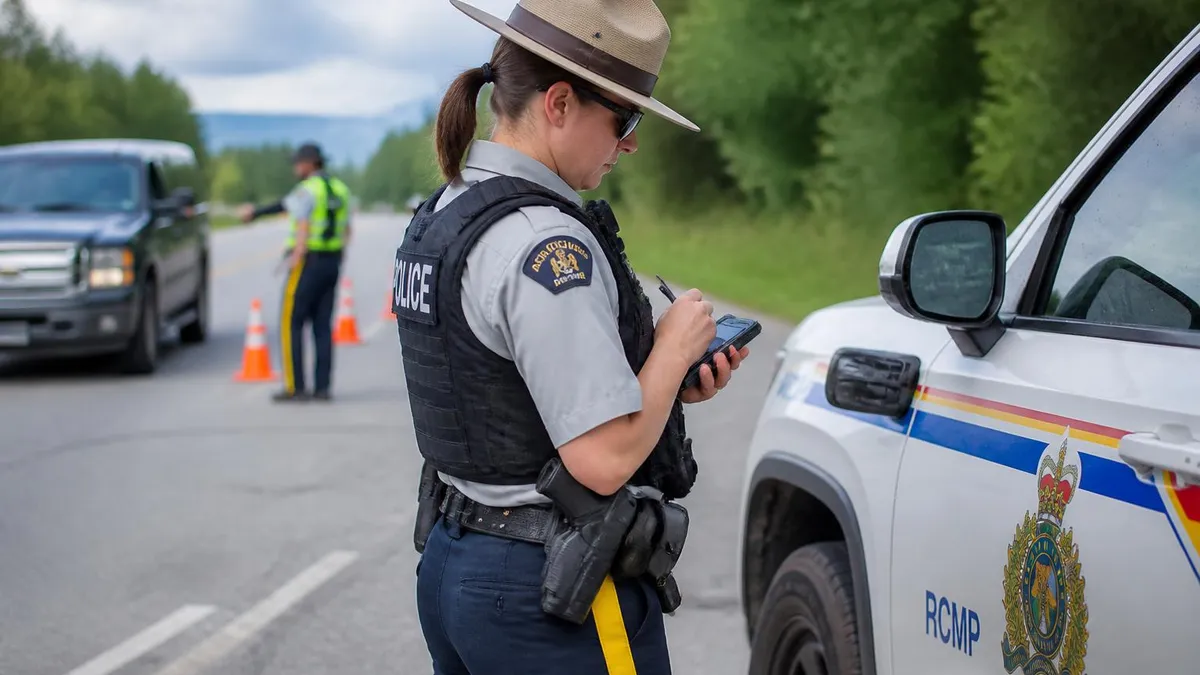
- ✓Understand the difference between the ceremonial red serge uniform and the standard operational uniform worn in the field.
- ✓Research Depot Division in Regina, Saskatchewan, as the site of RCMP basic training where all cadets earn the right to wear the crest.
- ✓Connect the organization's visual identity to its core values: integrity, honesty, professionalism, and respect for human rights.
The RCMP Logo Is One of Canada's Most Legally Protected Symbols
Unlike many organizational logos, the RCMP crest is classified as an official mark under Canadian law — a higher level of protection than standard trademarks. This means that even non-competing organizations cannot register marks that are confusingly similar, and unauthorized commercial use carries serious legal consequences. For RCMP exam candidates, knowing this reflects the force's commitment to institutional integrity at every level.
The RCMP logo's presence in popular culture has shaped how millions of Americans and Canadians perceive both the symbol and the organization behind it. From Hollywood films featuring the iconic Mountie to animated series aimed at children, the image of a red-uniformed officer bearing the RCMP crest has become a shorthand for Canadian identity itself. This cultural saturation has made the logo simultaneously one of law enforcement's most beloved emblems and one of its most frequently misrepresented, with caricatures often emphasizing the ceremonial red serge over the force's actual investigative and operational roles.
American audiences in particular have a long relationship with RCMP imagery. The classic refrain "always gets their man" — a phrase often attributed to the RCMP though its exact origins are debated — helped cement the force's reputation for dogged, principled law enforcement in the popular imagination. Films from the silent era onward portrayed Mounties as heroic frontier lawmen, and this archetype fed directly into broader North American mythology about the taming of wilderness and the civilizing power of institutions. The RCMP logo appeared repeatedly as visual shorthand for these values, earning recognition far beyond Canada's borders.
Television has reinforced this presence well into the modern era. The Canadian series Due South, which aired from 1994 to 1999 and attracted a significant American audience, featured an RCMP constable navigating Chicago's urban environment — a premise that drew explicit contrast between Canadian and American law-enforcement cultures. The show's lead character wore the red serge prominently, displaying the RCMP crest in virtually every episode. American viewers who had never visited Canada developed familiarity with the logo through this fictional lens, contributing to the crest's recognition in markets where the force has no direct operational presence.
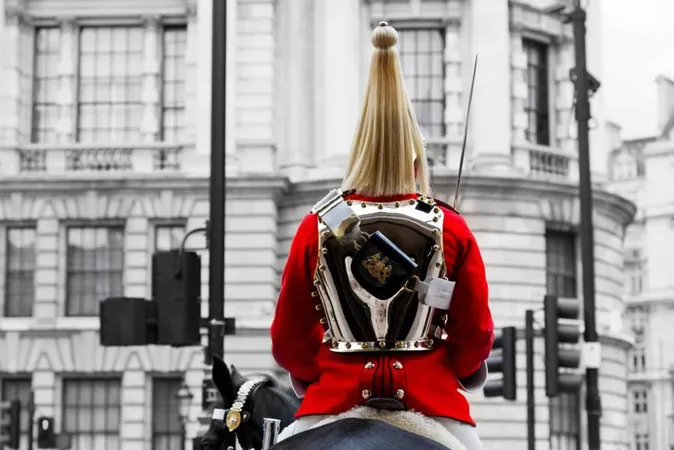
Tourism has amplified this effect. The RCMP Musical Ride — a precision equestrian performance that tours Canada and occasionally appears at international events — brings the force's visual identity to live audiences in a celebratory context. The riders wear the full red serge, displaying the RCMP crest on their uniforms and equipment. For many American visitors attending performances near the Canadian border or at special events, the Musical Ride provides their first direct encounter with RCMP branding outside of media representations. The experience tends to leave strong positive impressions that reinforce the logo's associations with tradition, precision, and national pride.
Commercial uses of RCMP imagery have tested the limits of the official mark protections. Over the decades, numerous companies have incorporated Mountie imagery — including stylized versions of the crest — into souvenirs, clothing, and food packaging marketed to tourists. Some of these uses have been licensed through official RCMP channels; others have faced legal challenge. The ongoing management of these cases illustrates how seriously Canadian authorities treat the logo's integrity and how complex it can be to police a symbol that has achieved genuine cultural ubiquity across two countries and dozens of media contexts.
In the digital era, the RCMP logo appears constantly across social media, news coverage, and government communications. The force maintains active accounts on major platforms and uses its official imagery consistently to maintain brand coherence. Digital media has created new challenges for trademark protection — images spread rapidly and are frequently cropped, resized, or modified before reaching secondary audiences — but it has also provided opportunities for the RCMP to engage directly with international audiences who previously had only fictional representations to draw on. Official digital content showing the crest in operational contexts helps balance the ceremonial-heavy popular culture depictions.
For students preparing for RCMP entrance exams, understanding the logo's cultural footprint provides useful context for the organization's public-facing mission. The RCMP is not just a law-enforcement body but a national institution with significant soft-power responsibilities — representing Canadian values abroad, building public trust domestically, and maintaining a visual identity that connects the present-day force to its historical origins. Officers who understand this broader role are better equipped to serve as ambassadors for the institution as well as effective law-enforcement professionals in their day-to-day duties.

Questions about RCMP history, organizational structure, and institutional symbols — including the meaning of the motto Maintiens le droit — regularly appear in the history and organization sections of RCMP entrance assessments. Candidates who study the crest's symbolism alongside operational procedures are better prepared for the full range of knowledge questions on the exam.
Understanding how the RCMP logo connects to the recruitment and training process gives prospective officers a meaningful way to approach their preparation. The crest is not merely a bureaucratic identifier — it is the visual distillation of the values, history, and professional standards that every RCMP member is expected to uphold. When candidates study the logo's symbolism alongside their exam preparation materials, they develop a richer understanding of the organization they are seeking to join, which in turn strengthens interview performance and professional commitment.
The RCMP's formal recruitment process includes written examinations that test candidates on a range of subjects, including Canadian law, verbal reasoning, problem solving, and — critically — knowledge of RCMP history and organizational structure. Questions about the force's founding, its mandate, its relationship to the Canadian government, and the meaning of its symbols are standard components of these assessments. A candidate who can articulate what the bison head represents, why the motto is in French Latin, and what the crown signifies demonstrates the kind of institutional knowledge that recruiters value in applicants who will eventually wear the crest professionally.
Beyond the written exam, the RCMP's extensive background investigation process evaluates candidates' character, integrity, and alignment with the force's stated values. These values — captured in the motto Maintiens le droit — include honesty, respect for human rights, professional accountability, and service to community. Candidates who can connect these abstract values to concrete examples from their own lives, and who can discuss how the RCMP's history and symbolism inform contemporary policing practice, are well positioned to succeed in interview panels and character assessments that probe far deeper than surface-level knowledge.
Training at Depot Division reinforces the logo's significance from the first day of instruction. Cadets learn about the force's history, study the development of Canadian law, and internalize the organizational culture that the crest represents.
Ceremonial elements of training — including formal parades where the red serge and RCMP crest are displayed prominently — are deliberately designed to connect cadets to the institution's traditions and build pride in the uniform they will eventually wear operationally. This emphasis on institutional identity is unusual by international law-enforcement standards and reflects the RCMP's unique role as both a police force and a national symbol.
Successful graduates of Depot Division receive formal authorization to display the RCMP crest in their professional capacity — a privilege that carries specific responsibilities. Officers are expected to uphold the reputation associated with the logo in all aspects of their conduct, both on and off duty. Disciplinary processes within the force explicitly reference the obligation to maintain public trust in the institution, which is understood as inseparable from the visual identity that the crest projects. An officer's conduct reflects not just on themselves but on the entire organization and on the national symbol that organization represents.
For American students preparing for career changes or international law-enforcement research, studying the RCMP's approach to institutional identity offers useful comparative perspective. American federal agencies like the FBI and the US Marshals Service maintain their own distinctive seals and crests, each carrying historical symbolism comparable to the RCMP's emblem. Comparing these symbols — in terms of what historical events they commemorate, what values they express, and how they are protected by law — reveals how law-enforcement agencies across North America use visual identity to establish legitimacy and build public confidence over time.
Whether you are a dedicated applicant working through practice materials or a curious reader drawn to the cultural history of Canadian institutions, the RCMP logo offers a genuinely rich subject for study. Its longevity — more than 150 years of continuous use in various forms — is itself a testament to the enduring power of well-designed institutional symbolism. The best way to honor that history, for anyone considering a career in the RCMP, is to understand what the crest represents and to commit personally to the values it embodies before the first day of training ever begins.
Practical preparation for the RCMP entrance process requires more than memorizing facts about the logo and organizational history — it demands a structured, multi-week study approach that integrates knowledge of Canadian law, reasoning skills, and institutional awareness. Candidates who begin preparation at least three months before their planned application date consistently report higher confidence levels and better performance on all components of the assessment. Building knowledge incrementally allows the brain to consolidate information between sessions rather than cramming, which is particularly important for the verbal reasoning and problem-solving sections that test applied thinking rather than recall.
Start your preparation by establishing a baseline understanding of RCMP history and structure. Read the force's official website thoroughly — it contains detailed information about mandate, organizational hierarchy, recruitment standards, and values. Take notes on key dates: 1873 (founding as NWMP), 1904 (royal designation), 1920 (current name adopted), and major historical events like the Northwest Resistance and Klondike Gold Rush policing that shaped the institution's development. These dates appear regularly on history and organization sections of entrance assessments and serve as useful anchors for understanding how the RCMP evolved over time.
Move next to Canadian law fundamentals. The Criminal Code of Canada governs much of what RCMP officers do operationally, and familiarity with its key provisions — categories of offenses, arrest powers, search and seizure standards, and charter rights protections — is essential for both the written exam and professional effectiveness. Many candidates find it helpful to work through the code thematically rather than linearly: study property offenses together, then offenses against the person, then procedural provisions. Practice applying these rules to hypothetical scenarios, since exam questions frequently present situations requiring judgment about legal classification and appropriate officer response.
Verbal reasoning preparation should focus on reading comprehension, inference, and argument analysis. RCMP assessments typically present passages from legal documents, news reports, or policy texts and ask candidates to identify main ideas, draw inferences, evaluate argument strength, and identify logical fallacies. The best way to prepare for these tasks is extensive reading practice with diverse materials — not just law-enforcement texts but editorials, analytical reports, and academic articles that require careful attention to argument structure and evidence quality. Timed practice sessions that simulate exam conditions are particularly valuable in the final weeks before assessment.
Problem-solving questions test quantitative reasoning, pattern recognition, and logical deduction. These questions assess the kind of analytical thinking that effective police work requires — the ability to evaluate incomplete information, identify relevant facts from irrelevant detail, and reach sound conclusions under time pressure. Work through practice question sets systematically, reviewing every incorrect answer to understand not just the right response but the reasoning process that leads to it. Many candidates find that their problem-solving scores improve significantly with targeted practice, since the underlying cognitive skills are trainable rather than fixed.
Physical fitness preparation runs in parallel with academic study for most RCMP applicants. The Physical Abilities Requirement Evaluation (PARE) is a timed obstacle course that tests the physical demands of policing duties. Candidates who neglect fitness preparation while focusing exclusively on written components often find themselves advancing through written assessments only to struggle at the physical stage. A balanced preparation schedule allocates time for both intellectual and physical development, treating them as equally important components of a single integrated application process.
Finally, preparation for interviews and character assessments requires genuine reflection on personal values and motivations. RCMP interviewers look for candidates who can articulate why they want to serve, what integrity means in practice, and how they have handled ethical challenges in past experiences.
Candidates who have genuinely studied the force's history — including its institutional symbolism, its motto, and the values the crest represents — are better positioned to give authentic, specific answers that resonate with experienced interviewers. The goal is not to memorize talking points but to develop a sincere understanding of the organization and a clear sense of how your personal values align with its mission.
RCMP Questions and Answers


About the Author

Educational Psychologist & Academic Test Preparation Expert
Columbia University Teachers CollegeDr. Lisa Patel holds a Doctorate in Education from Columbia University Teachers College and has spent 17 years researching standardized test design and academic assessment. She has developed preparation programs for SAT, ACT, GRE, LSAT, UCAT, and numerous professional licensing exams, helping students of all backgrounds achieve their target scores.
Join the Discussion
Connect with other students preparing for this exam. Share tips, ask questions, and get advice from people who have been there.
View discussion (7 replies)