
RCMP Meaning: What the Royal Canadian Mounted Police Really Is 2026 October
🔎 RCMP meaning explained: history, duties, ranks, jurisdiction, and how to join the Royal Canadian Mounted Police. Full career overview for 2026 October.
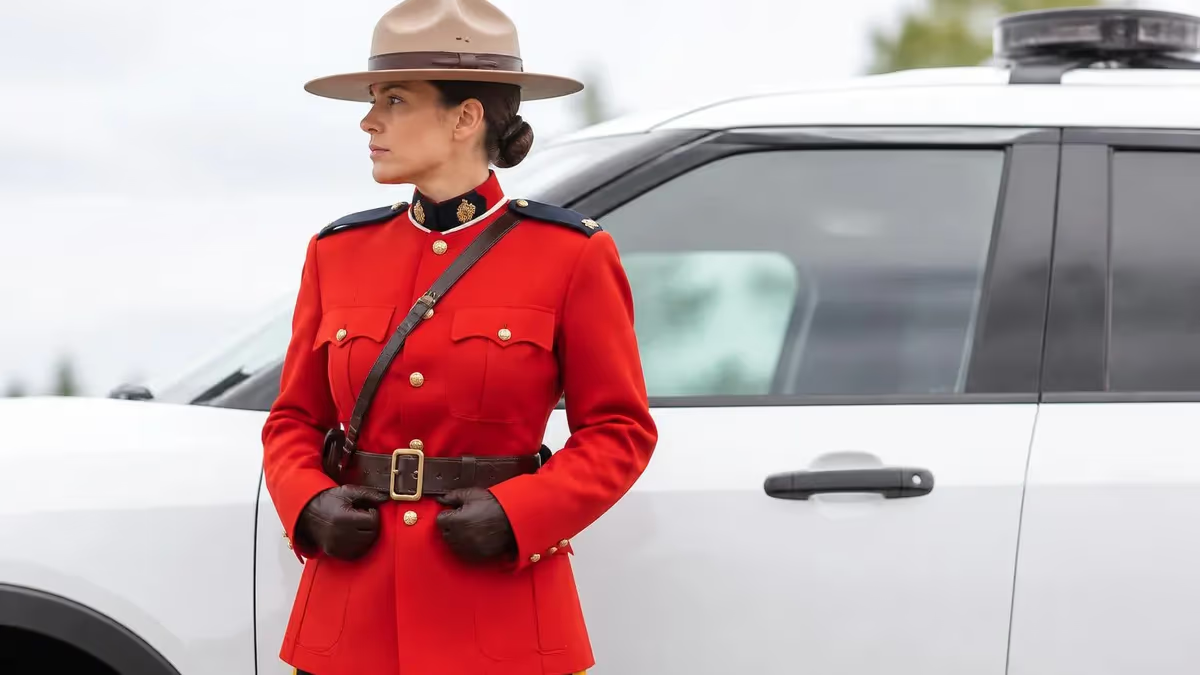
The rcmp meaning is straightforward at first glance: RCMP stands for the Royal meaning of rcmp, the national police service of Canada. But behind those four letters lies one of the most unusual law enforcement agencies on the planet, blending federal, provincial, territorial, and municipal duties into a single uniformed force. For Americans curious about how policing works north of the border, understanding the RCMP is the easiest way to grasp Canada's entire criminal justice landscape and its frontier history.
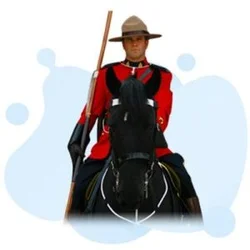
Founded in 1873 as the North-West Mounted Police, the force was created to bring order to the western prairies during a period of rapid settlement and tense Indigenous relations. The word "Mounted" survives in the name because the original recruits patrolled vast distances on horseback. Today, members drive cruisers, fly helicopters, and operate cyber forensics labs, yet the iconic Red Serge tunic and Stetson hat remain part of ceremonial dress and global brand recognition.
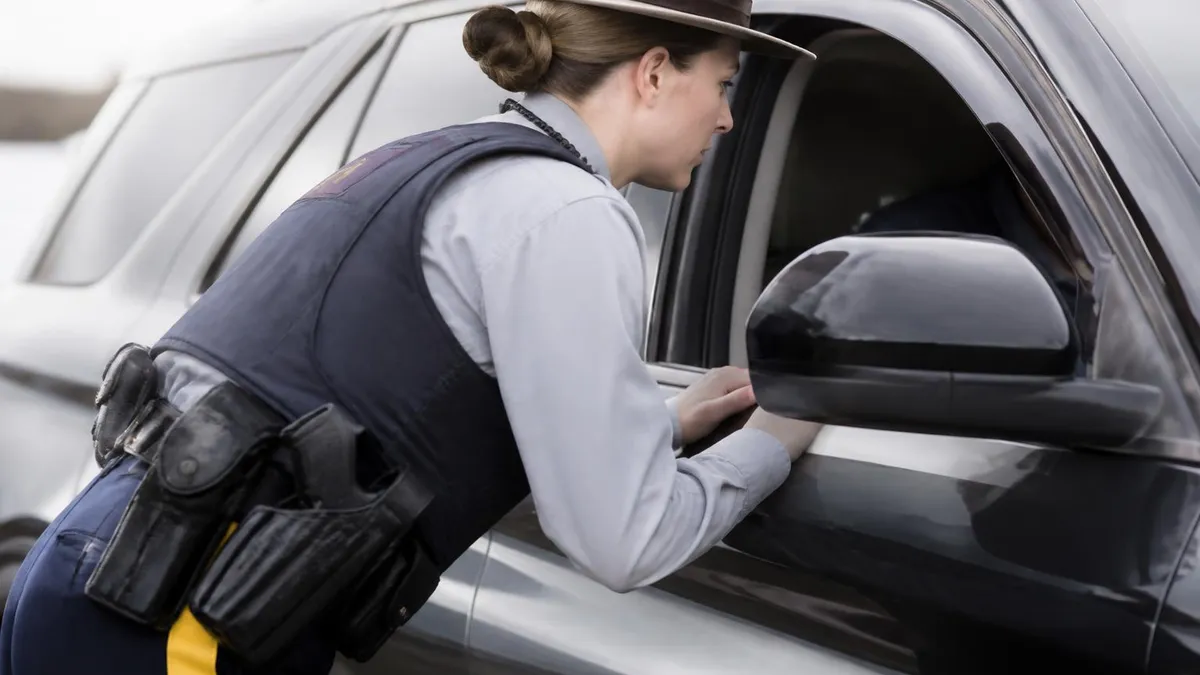
What makes the RCMP unique is jurisdictional reach. Unlike the FBI, which handles only federal offenses, the RCMP enforces federal law nationwide and also serves under contract as the provincial police in eight of ten provinces and all three territories. It additionally polices roughly 150 municipalities and over 600 Indigenous communities. That combination means a single "Mountie" might investigate organized crime one week and respond to a domestic dispute the next.
The agency reports to the Minister of Public Safety and is led by a Commissioner appointed by the federal cabinet. Headquarters sits in Ottawa, while the famed training academy known as Depot operates in Regina, Saskatchewan. New cadets undergo a 26-week residential program that mixes academics, fitness, applied policing, and drill. Graduates are sworn in as peace officers with authority anywhere in Canada, a power few national agencies in the world possess.
For prospective recruits, journalists, students, and travelers, knowing the rcmp meaning is more than trivia. It clarifies who responds when you dial 911 in rural Alberta, who guards Parliament Hill, who escorts the Prime Minister, and who patrols Canada's coasts and northern borders. The same officers handle counterterrorism files at the federal level and traffic stops at the local level, all under one chain of command.
This article walks through the full picture: the historical origins, the current organizational structure, daily duties, ranks and pay, training pathway, and the public perception of Canada's most recognizable institution. Whether you are exploring a career, studying for an exam, or simply satisfying curiosity sparked by a photograph of a scarlet-clad rider, the next sections give you the complete, accurate context behind those four famous letters.
The RCMP by the Numbers

RCMP Structure and Divisions
Located in Ottawa, NHQ houses the Commissioner, executive command, federal policing programs, and specialized services like forensic labs and the Canadian Police College.
The force is split into 15 divisions, each led by a Commanding Officer. Provincial divisions like E Division (British Columbia) and K Division (Alberta) handle contract policing for entire regions.
Depot in Regina is the sole cadet training academy. Every new Regular Member completes the 26-week residential program here before posting to a detachment anywhere in Canada.
Investigates organized crime, national security, cybercrime, and financial integrity. Handles protective services for VIPs, foreign dignitaries, and Canadian embassies abroad.
Includes the Musical Ride, Marine Services, Air Services, Police Dog Services, and the Emergency Response Team. These units support frontline detachments across the country.
The story behind the rcmp meaning begins in 1873, when Prime Minister Sir John A. Macdonald created the North-West Mounted Police to assert Canadian sovereignty over the prairies. American whiskey traders had been crossing the border into what is now southern Alberta, fueling violence with Indigenous communities. The Cypress Hills Massacre that same year accelerated the plan, and within months a 300-strong column of red-coated riders set out on the famous March West toward Fort Whoop-Up.
The deliberate choice of red tunics was symbolic. Officers wanted to distinguish themselves from the blue-coated U.S. Cavalry and signal peaceful intent to Indigenous nations who associated red with British treaty-makers. That decision still shapes the brand today, and the Red Serge remains the most photographed uniform in Canadian government service. Early Mounties also negotiated key numbered treaties and policed the Klondike Gold Rush of 1898 with remarkably low crime statistics for a boomtown frontier.
In 1904, King Edward VII granted the prefix "Royal" in recognition of distinguished service, creating the Royal North-West Mounted Police. The modern name emerged in 1920 when the force merged with the Dominion Police and absorbed federal policing responsibilities east of Manitoba. Headquarters shifted to Ottawa, and the agency began its evolution from a frontier cavalry into a modern national investigative service with offices in every province.
Through the twentieth century, the RCMP expanded into counterintelligence, drug enforcement, and contract policing. It signed its first provincial agreement with Saskatchewan in 1928, and other provinces followed during the Depression when local forces could not afford to operate. The Security Service handled domestic intelligence until 1984, when the civilian Canadian Security Intelligence Service was spun off after the McDonald Commission criticized RCMP intelligence practices during the FLQ crisis.
The force has also weathered scrutiny over Indigenous relations, harassment within the ranks, and high-profile failures like the 2020 Nova Scotia mass shooting. Each event has spurred reforms, civilian oversight bodies, and ongoing debates about whether contract policing should continue. Despite these challenges, public recognition of the Musical Ride, the Stetson, and the slogan "Maintiens le droit" (Maintain the right) remains strong both inside Canada and internationally.
Reading the history clarifies why the modern agency looks the way it does. Frontier roots explain the wide jurisdiction; the Royal warrant explains the ceremonial pageantry; the merger of 1920 explains the federal mandate; and the spin-off of CSIS explains why the RCMP focuses on criminal investigations rather than pure intelligence. Together these threads form an identity unmatched by any single American agency.
For exam candidates, expect questions about founding dates, key historical figures like Sam Steele, and the constitutional basis of the meaning of rcmp Police Act. A short timeline of milestones — 1873, 1904, 1920, 1928, 1984, 2014 (when the Supreme Court recognized RCMP collective bargaining rights) — covers most of what is tested on the History and Organization knowledge sections.
RCMP Practice Test Questions
Prepare for the RCMP - Royal Canadian Mounted Police exam with our free practice test modules. Each quiz covers key topics to help you pass on your first try.
RCMP Problem Solving
RCMP Exam Questions covering Problem Solving. Master RCMP Test concepts for certification prep.
RCMP Verbal Reasoning
Free RCMP Practice Test featuring Verbal Reasoning. Improve your RCMP Exam score with mock test prep.
RCMP Canadian Law and Criminal Code Knowledge
RCMP Mock Exam on Canadian Law and Criminal Code Knowledge. RCMP Study Guide questions to pass on your first try.
RCMP History and Organization
RCMP Test Prep for RCMP History and Organization. Practice RCMP Quiz questions and boost your score.
RCMP - Royal Canadian Mounted Police Ethic...
RCMP Questions and Answers on - Royal Canadian Mounted Police Ethical Decision-Making. Free RCMP practice for exam readiness.
RCMP - Royal Canadian Mounted Police Logic...
RCMP Mock Test covering - Royal Canadian Mounted Police Logical Reasoning Puzzles. Online RCMP Test practice with instant feedback.
RCMP - Royal Canadian Mounted Police Memor...
Free RCMP Quiz on - Royal Canadian Mounted Police Memory and Observation. RCMP Exam prep questions with detailed explanations.
RCMP - Royal Canadian Mounted Police Numer...
RCMP Practice Questions for - Royal Canadian Mounted Police Numerical Reasoning and Computation. Build confidence for your RCMP certification exam.
RCMP - Royal Canadian Mounted Police RCMP ...
RCMP Test Online for - Royal Canadian Mounted Police RCMP Core Competencies. Free practice with instant results and feedback.
RCMP - Royal Canadian Mounted Police Readi...
RCMP Study Material on - Royal Canadian Mounted Police Reading Comprehension Skills. Prepare effectively with real exam-style questions.
RCMP - Royal Canadian Mounted Police Situa...
Free RCMP Test covering - Royal Canadian Mounted Police Situational Judgement Scenarios. Practice and track your RCMP exam readiness.
RCMP - Royal Canadian Mounted Police Spati...
RCMP Exam Questions covering - Royal Canadian Mounted Police Spatial Skills and Visualization. Master RCMP Test concepts for certification prep.
Core Duties Behind the RCMP Meaning
Federal Policing is the original mandate of the Royal Canadian Mounted Police and operates nationwide. Officers investigate organized crime, drug trafficking, money laundering, cybercrime, foreign interference, terrorism, and crimes against the integrity of the Canadian government. Teams often work with international partners such as the FBI, Interpol, and Europol on transnational files that cross borders and currencies.
This branch also handles protective policing, guarding the Prime Minister, the Governor General, foreign diplomats, and visiting dignitaries. Specialized federal units run financial crime task forces, the National Child Exploitation Crime Centre, and the Integrated National Security Enforcement Teams. Postings here typically require several years of frontline experience and frequently lead to plain-clothes investigative careers rather than uniformed patrol assignments.
Joining the RCMP: Advantages and Trade-offs
- +Strong starting salary that climbs to over $100,000 within three years of service
- +Defined-benefit pension considered among the best in Canadian public service
- +Postings available in every province and territory, from big cities to remote outposts
- +Wide career mobility into federal, forensic, intelligence, or international roles
- +Comprehensive medical, dental, and family relocation benefits
- +Iconic uniform and institutional prestige recognized worldwide
- +Paid 26-week training at Depot with room, board, and uniform supplied
- −Mandatory first posting may send recruits far from home and family
- −Shift work, on-call duty, and exposure to traumatic incidents
- −Competitive application process that can take 12 to 18 months
- −Periodic transfers required for career advancement
- −Public scrutiny and complaint mechanisms can feel intense
- −Bilingual postings may require French proficiency for promotion
- −Physical and psychological demands remain high throughout the career
Pros and Cons at a Glance
| Pros | Cons |
|---|---|
| Defined-benefit pension considered among the best in Canadian public service | Mandatory first posting may send recruits far from home and family |
| Postings available in every province and territory, from big cities to remote outposts | Shift work, on-call duty, and exposure to traumatic incidents |
| Wide career mobility into federal, forensic, intelligence, or international roles | Periodic transfers required for career advancement |
| Comprehensive medical, dental, and family relocation benefits | Public scrutiny and complaint mechanisms can feel intense |
| Iconic uniform and institutional prestige recognized worldwide | Bilingual postings may require French proficiency for promotion |
RCMP Eligibility Checklist: Do You Qualify?
- ✓Hold Canadian citizenship or permanent resident status with 10 years in Canada
- ✓Be at least 19 years old at the time of engagement
- ✓Possess a Canadian high school diploma or recognized equivalent
- ✓Hold a valid unrestricted driver's licence
- ✓Demonstrate proficiency in English or French
- ✓Pass a thorough background, financial, and security clearance check
- ✓Meet vision and hearing standards specified by RCMP medical guidelines
- ✓Pass the Physical Abilities Requirement Evaluation (PARE) in under 4 minutes 45 seconds
- ✓Successfully complete the RCMP Police Aptitude Battery (RPAB) written test
- ✓Pass the suitability interview and polygraph examination
Mountie is a nickname, not a rank
You will not find "Mountie" anywhere on an RCMP organizational chart. It is an affectionate public nickname that dates back to the horseback origins of the force. The actual entry-level title is Constable, and members refer to one another as "Regular Members" in official correspondence.
The rank structure of the RCMP closely follows military tradition, reflecting the force's nineteenth-century cavalry roots. New graduates emerge from Depot as Constables and wear two chevrons after roughly three years of service. Promotion to Corporal usually comes with a supervisory role over a small team or a specialty assignment such as forensic identification, drug enforcement, or general investigations. Each step requires both time-in-rank and successful completion of competitive promotional processes.
Above Corporal sits Sergeant, the backbone of detachment leadership, followed by Staff Sergeant who often acts as the detachment commander in mid-sized communities. Commissioned officer ranks begin with Inspector, then Superintendent, Chief Superintendent, Assistant Commissioner, Deputy Commissioner, and finally the Commissioner of the RCMP, who reports to the Minister of Public Safety. The Commissioner holds the rank of Deputy Minister within the federal government for protocol purposes.
Pay scales reflect that progression. As of the most recent collective agreement, a Cadet earns an allowance of roughly $525 per week during training. Upon graduation, a Constable starts near $73,000 and reaches the top step around $109,000 after three years. Corporals earn approximately $115,000 to $125,000, while senior commissioned officers command salaries between $140,000 and well above $200,000 depending on rank and posting. Northern and isolated post allowances add thousands more annually.
Benefits extend beyond base salary. Members enjoy a generous defined-benefit pension, paid leave that grows with seniority, comprehensive medical and dental coverage, and family relocation funding when transferred. Officers stationed in remote communities receive subsidized housing and travel allowances. The RCMP also covers continuing education in many cases, allowing members to pursue degrees in criminology, public administration, or law while serving.
Promotion is not automatic. The force uses a competency-based assessment system requiring written submissions, interviews, and reference checks. Members must also meet language requirements: bilingual capability in English and French significantly improves promotion prospects, especially for headquarters or eastern Canadian postings. Some specialty roles such as emergency response, undercover operations, or air services require additional medical and psychological screening on top of the standard process.
The career arc therefore mirrors that of the U.S. military or large federal agencies more than a typical American city police department. A motivated recruit can realistically reach Sergeant within ten to fifteen years, Inspector within twenty, and senior command within twenty-five if they pursue specialized files, geographic mobility, and ongoing education. That structured pathway is a major reason candidates choose the RCMP over municipal alternatives where promotion ceilings come faster.
Members also have a union representative through the National Police Federation, certified in 2019 after the Supreme Court ruled that excluding Mounties from collective bargaining was unconstitutional. The NPF negotiates pay, benefits, and working conditions while preserving the apolitical nature of the force. This shift modernized labor relations within the RCMP and brought compensation closer to parity with municipal police salaries in major Canadian cities.
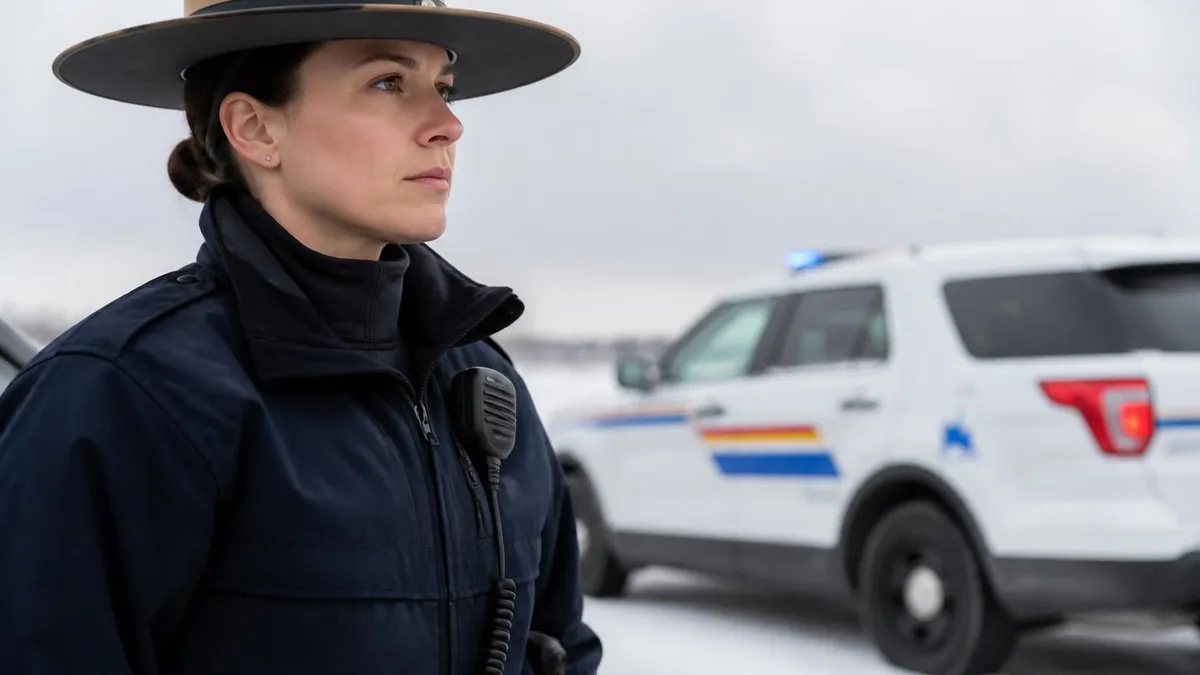
The full RCMP recruiting process typically takes 12 to 18 months from initial online application to swearing in at Depot. Candidates must clear the RPAB written test, PARE physical, suitability interview, polygraph, medical, security clearance, and reference checks. Plan finances, employment, and family logistics accordingly.
Understanding the rcmp meaning in modern Canadian society requires looking beyond uniforms and history into current debates. The agency is simultaneously the most photographed symbol of the country and one of its most scrutinized institutions. Polls regularly show that more than 70 percent of Canadians view the RCMP favorably, yet relationships with Indigenous communities, racialized Canadians, and former members reporting workplace harassment remain ongoing reform priorities highlighted in several federal reviews.
The Civilian Review and Complaints Commission for the RCMP investigates public complaints and recommends policy changes. Reports following the 2020 Nova Scotia mass casualty event prompted the Mass Casualty Commission, whose 2023 recommendations include modernizing critical incident response, improving public alerting, and rethinking contract policing structures. The federal government has signaled that some provinces, notably Alberta and Saskatchewan, may explore independent provincial police services within the next decade.
Technology and specialization also define the modern force. Cybercrime now ranks among the top growth areas, with dedicated units investigating ransomware, child exploitation networks, and financial fraud schemes that move millions across cryptocurrencies. The RCMP runs Canada's National Cybercrime Coordination Unit, partners with the Canadian Centre for Cyber Security, and maintains liaison officers in dozens of countries to track transnational criminal organizations operating online and offline.
Indigenous reconciliation is reshaping training and policy. Depot now devotes significant curriculum hours to Canadian history from Indigenous perspectives, treaty obligations, and trauma-informed policing. The First Nations and Inuit Policing Program funds Community Tripartite Agreements that place dedicated officers in self-identifying Indigenous communities. Critics argue these programs need more funding and community control; the federal government has committed to legislative reforms recognizing First Nations policing as an essential service.
Diversity within the ranks has also expanded. Women, who were first admitted to the regular force only in 1974, now make up over 22 percent of Regular Members and a growing share of senior officers. The force actively recruits from visible-minority, LGBTQ2S+, and Indigenous communities, though representation still trails the national demographic mix. Class-action settlements in recent years addressed historical discrimination and harassment, and ongoing initiatives aim to make the workplace genuinely inclusive.
For Americans, the closest parallel might be a hybrid of the FBI, U.S. Marshals, state troopers, and small-town sheriffs all rolled into one agency answering to a single commissioner. That breadth gives the RCMP unique strength in coordinated investigations but creates challenges in resource allocation, accountability, and local responsiveness. Each policy reform attempts to balance those competing demands without losing the cohesive national identity that distinguishes the force.
Whether the RCMP retains contract policing, narrows its focus to federal duties, or evolves into something new, its meaning will keep shifting. What stays constant is the symbolic weight of those four red letters: a national institution born on horseback, tested across one and a half centuries, and still front and center every time Canada introduces itself to the world.
If the rcmp meaning has sparked genuine career interest, your preparation should start months before you submit the online application. The RCMP recruiting portal walks candidates through self-assessment quizzes, but the real differentiation happens in three areas: written aptitude, physical readiness, and behavioral interview performance. Investing time evenly across all three avoids the common trap of strong recruits failing late in the process on a single weak component.
Begin with the RPAB written exam. It tests problem solving, verbal reasoning, written composition, and observation. Free practice questions, timed drills, and reading comprehension exercises mimic the actual format. Aim for at least four weeks of structured prep, working in 45-minute blocks several times a week. Track scores on each subsection so weaknesses become visible early, then concentrate revision on those areas rather than spreading effort thin across topics you already master.
Physical training should target the Physical Abilities Requirement Evaluation, known as PARE. The test combines an obstacle course, push-pull stations using a 36-kilogram weight, and a 36-kilogram bag carry, all completed within four minutes and 45 seconds. Build a routine that mixes interval cardio, functional strength, and grip endurance. Many candidates underestimate the cumulative fatigue, so practice the full circuit at least once weekly rather than only training components individually in the gym.
Background preparation is just as important. Pull your own driving record, credit report, and any court documents. Be ready to disclose past drug use, financial difficulties, and relationships honestly during the polygraph. Recruiters look for integrity, not perfection; documented honest answers move applications forward faster than vague responses that later contradict written records. Speak with current or retired members through Facebook groups or official ride-along programs to get realistic insights.
Interview preparation rewards storytelling. Prepare specific examples using the situation-task-action-result framework that demonstrate teamwork, ethical decision-making, conflict de-escalation, and adaptability. Avoid hypotheticals; recruiters reward concrete past experiences. Practice answers aloud with a friend or coach until they feel conversational rather than rehearsed. Confidence under pressure mirrors the calm operators look for in actual policing scenarios on the job.
Lifestyle planning also matters. Successful cadets typically save at least three months of expenses before Depot to handle delays, equipment purchases, and post-graduation relocation. Coordinate with employers about leave or resignation timing, and discuss the move openly with family. Remember the initial posting may be anywhere in Canada, often rural, and frequently bilingual; flexibility on this point dramatically increases hiring odds and shortens overall waiting time.
Finally, treat your application as a long-term project rather than a single submission. Keep practicing, stay physically fit through every clearance month, and update recruiters proactively about new certifications, languages, or volunteer experience. Applicants who treat the wait time as continued preparation arrive at Depot stronger, finish the 26-week program in better standing, and step into their first detachment ready to embody the rcmp meaning in everyday service.
Sample RCMP - Royal Canadian Mounted Police Practice Questions
Try these questions from our free RCMP - Royal Canadian Mounted Police practice tests. The correct answer and an explanation follow each question.
Read the passage: 'Victim services officers work alongside frontline RCMP members to provide immediate emotional support, crisis intervention, and referrals to community resources for crime victims. Their role is supportive, not investigative, and they do not have police powers.' What is the role of victim services officers according to the passage?
- A. Providing emotional support, crisis intervention, and community referrals
- B. Conducting follow-up interviews to gather additional evidence
- C. Supervising frontline officers during sensitive investigations
- D. Replacing frontline members at scenes involving vulnerable victims
Answer: A. Providing emotional support, crisis intervention, and community referrals
The passage explicitly describes the victim services officer role as supportive — emotional support, crisis intervention, and community referrals.
What was the name of the force that merged with the Dominion Police in 1920 to form the RCMP?
- A. Canadian Federal Police
- B. Dominion Mounted Police
- C. Royal North-West Mounted Police
- D. Canadian Mounted Constabulary
Answer: C. Royal North-West Mounted Police
The Royal North-West Mounted Police merged with the Dominion Police in 1920 to create the Royal Canadian Mounted Police.
In what year was the North-West Mounted Police (NWMP), the predecessor to the RCMP, established?
- A. 1873
- B. 1885
- C. 1867
- D. 1900
Answer: A. 1873
The North-West Mounted Police was established in 1873 by the Canadian Parliament to bring law and order to the western territories.
The RCMP code of conduct emphasizes 'integrity.' What does integrity mean in a professional context?
- A. Physical strength
- B. The quality of being honest and having strong moral principles
- C. Following orders without question
- D. Seniority within the organization
Answer: B. The quality of being honest and having strong moral principles
Integrity means adhering to strong ethical and moral principles, particularly honesty and fairness in professional conduct.
Take the full RCMP - Royal Canadian Mounted Police practice test
RCMP Questions and Answers
About the Author

Educational Psychologist & Academic Test Preparation Expert
Columbia University Teachers CollegeDr. Lisa Patel holds a Doctorate in Education from Columbia University Teachers College and has spent 17 years researching standardized test design and academic assessment. She has developed preparation programs for SAT, ACT, GRE, LSAT, UCAT, and numerous professional licensing exams, helping students of all backgrounds achieve their target scores.
Join the Discussion
Connect with other students preparing for this exam. Share tips, ask questions, and get advice from people who have been there.
View discussion (7 replies)