
Construction Project Manager Interview Questions: Complete Prep Guide 2026 September
Ace construction project manager interview questions in 2026 September. PMP tips, google project management certificate advice & practice quizzes. 🏆

Construction project manager interview questions are among the most technically demanding in the entire project management field, requiring candidates to demonstrate mastery of scheduling, budgeting, safety compliance, subcontractor coordination, and stakeholder communication — all at once. Whether you are pursuing your first role on a commercial job site or aiming for a senior position overseeing a multi-million-dollar infrastructure build, the interview process will probe your real-world judgment as sharply as your textbook knowledge. Employers want more than buzzwords; they want evidence that you can keep a project on schedule when subcontractors fall behind and costs creep past budget.
Many candidates preparing for these interviews also hold or are pursuing the google project management certificate, which has rapidly become one of the most recognized entry-level credentials in the industry. Offered through Coursera, the certificate covers Agile, Scrum, and traditional Waterfall methods, giving candidates a versatile foundation that resonates well with interviewers from residential developers to large general contractors. However, the certificate alone is not enough — you must translate its lessons into concrete, site-specific narratives that convince a hiring manager you can lead a crew through real adversity.
Understanding the interview landscape means recognizing three broad question categories: behavioral, situational, and technical. Behavioral questions — framed as "Tell me about a time when..." — test how you handled past challenges like budget overruns, design changes, or schedule compression. Situational questions pose hypothetical crises: what do you do when an inspection fails the day before a concrete pour? Technical questions assess your knowledge of CPM scheduling, earned value management, OSHA standards, and contract administration. Strong candidates prepare structured answers for all three categories before walking into the room.
The construction industry has experienced significant growth and disruption in recent years. Supply chain volatility following the pandemic era pushed material costs up sharply, making budget management a top concern for every hiring manager. At the same time, labor shortages have intensified the pressure on project managers to retain skilled workers and maintain morale on long-duration projects. Interviewers will probe how you navigated these real-world pressures, so generic answers drawn purely from a textbook will fall flat against candidates who have concrete, numbers-backed stories to share.
Certification credentials matter significantly during shortlisting. The project management professional pmp credential from PMI is widely viewed as the gold standard, and many job postings for senior construction PM roles list it as preferred or required. The PMP exam tests knowledge across the entire project lifecycle — initiating, planning, executing, monitoring, controlling, and closing — and its predictive, Agile, and hybrid domains map directly onto the kind of flexibility construction managers need daily. Candidates who hold the PMP and can discuss its frameworks in the context of site work consistently outperform those who cannot.
Preparation strategy matters as much as raw knowledge. The most effective approach combines three elements: a thorough review of the job description to identify the employer's specific priorities, a library of STAR-format stories drawn from your own experience, and regular practice answering questions aloud under timed conditions. Silent rehearsal in your head is far less effective than speaking answers to a friend, a mirror, or a recording device. Interviewers evaluate fluency, confidence, and the logical structure of your thinking — all qualities that only improve through repeated oral practice.
This guide covers the most common and high-impact construction project manager interview questions, explains the reasoning behind each question, and provides frameworks for crafting winning answers. You will also find coverage of credential pathways, salary benchmarks, and the practical tools — from Primavera P6 to Procore — that interviewers increasingly expect candidates to know. Work through each section systematically and use the practice quizzes embedded throughout to test your conceptual foundation before your interview date.
Construction Project Management by the Numbers

Core Skill Areas Tested in Construction PM Interviews
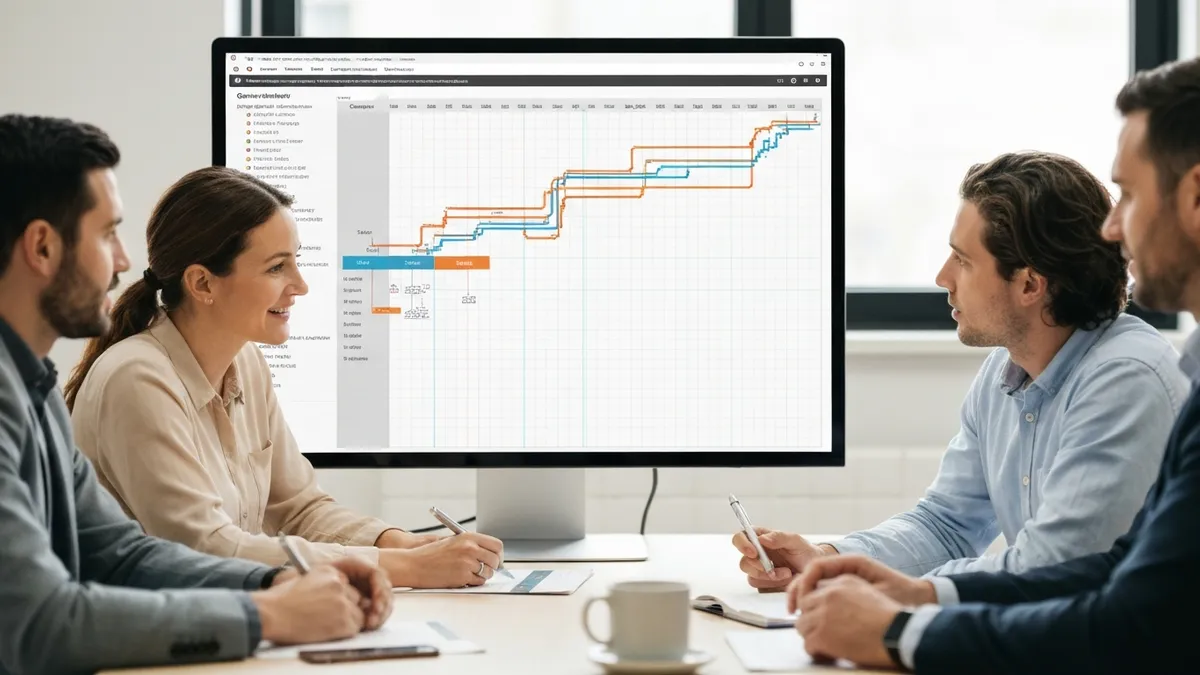
Interviewers expect fluency with Critical Path Method scheduling, Gantt charts, float analysis, and tools like Primavera P6 or MS Project. Candidates must explain how they identify the critical path, manage float, and recover schedule when milestones slip due to weather or delivery delays.
Construction PM roles live and die by budget discipline. Expect questions on earned value management, cost-at-completion forecasting, change order evaluation, and strategies for controlling subcontractor billing. Real numbers from past projects — percentage under budget, dollars saved — make answers memorable and credible to interviewers.
OSHA regulations, site safety plans, incident investigation, and toolbox talks are non-negotiable knowledge areas. Interviewers probe whether candidates lead safety culture proactively rather than reactively. Concrete examples of safety initiatives you launched — and measurable outcomes like reduced incident rates — demonstrate genuine leadership on this front.
Managing owners, architects, engineers, subcontractors, inspectors, and local authorities simultaneously requires exceptional communication and negotiation skills. Interviewers assess how you handle scope disputes, manage RFIs and submittals, and maintain productive relationships under deadline pressure across complex, multi-party construction contracts.
Construction projects carry inherent risks — geotechnical surprises, material shortages, permit delays, and weather disruptions among them. Strong candidates demonstrate systematic risk registers, mitigation plans with contingency budgets, and clear escalation protocols. Stories of risks you identified early and neutralized before they became costly incidents resonate strongly.
Certifications function as shortlist filters before you ever reach the interview room. In the construction project management world, the credential hierarchy is clear: the PMP sits at the top, the Certified Associate in Project Management (CAPM) serves as an entry-level stepping stone, and specialized construction credentials from the Construction Management Association of America (CMAA) — such as the CCM — carry weight with owners and public agencies. Understanding which credential matters most for your target role is the first step in a coherent interview preparation strategy.
The construction project manager credential landscape shifted considerably in 2021 when PMI updated the PMP exam to reflect Agile and hybrid approaches alongside traditional predictive methods. Today, roughly half the PMP exam content is Agile or hybrid, reflecting the industry's adoption of iterative delivery methods even in traditionally sequential construction workflows. Candidates who can discuss where Agile sprints or Kanban boards have practical application on a construction site — perhaps in design coordination phases or prefabrication workflows — demonstrate forward-thinking fluency that impresses interviewers.
The Certified Associate in Project Management (CAPM) is particularly valuable for candidates who lack the 36 months of project management experience required for the PMP. The CAPM requires only a secondary diploma and 23 hours of project management education, making it accessible to recent graduates and career changers. While it carries less weight than the PMP for senior roles, it signals commitment to the profession and familiarity with PMI's PMBOK framework — a solid foundation that interviewers at mid-tier general contractors actively appreciate and reward during the hiring process.
Beyond PMI credentials, the Construction Management Association of America's Certified Construction Manager (CCM) designation is particularly respected for roles involving public infrastructure and large institutional projects. The CCM requires documented field experience and a rigorous examination covering project controls, procurement, safety, and legal issues specific to construction. Candidates with both a PMP and a CCM are exceptionally competitive and command premium salaries in markets where public agencies dominate construction spending, such as transportation, water utilities, and educational facilities.
Staying current with project management news is itself an interview differentiator. Hiring managers appreciate candidates who can discuss industry trends — the integration of BIM (Building Information Modeling), the growing use of drones for site inspections, the adoption of AI-powered schedule risk analysis tools, or the surge in modular construction. Mentioning a recent industry development and explaining its implications for your discipline signals genuine professional engagement that separates motivated candidates from those who are simply executing a job search without deeper intellectual investment in the field.
Project management courses continue to evolve rapidly, and interviewers increasingly ask about candidates' ongoing learning habits. Whether you completed a Lean Construction Institute workshop, earned a specialty certificate in contract law, or finished an online course in Procore administration, continuing education demonstrates adaptability and self-direction. The construction industry's technology stack changes faster than most candidates expect — three years ago, drone-based progress photography was a novelty; today it is expected on many commercial projects. Demonstrating awareness of this pace of change positions you as a candidate who will grow with the organization rather than stagnate in outdated practices.
One often-overlooked credential for construction professionals is the OSHA 30-Hour Construction certification. While not a project management credential in the traditional sense, its presence on a resume signals that you take safety leadership seriously — a quality that resonates powerfully with risk-conscious hiring managers and owners. In fact, many large general contractors require the OSHA 30 for any management-level hire. Pairing it with your PMP or CAPM creates a profile that covers both the planning and execution dimensions that construction roles demand, giving you a significant competitive edge over candidates who hold only one type of credential.
Construction Project Manager Interview Questions by Type
Behavioral questions follow the "Tell me about a time when..." format and require structured STAR responses — Situation, Task, Action, Result. Common examples include: "Describe a time you recovered a project that was significantly behind schedule," "Tell me about a conflict with a subcontractor and how you resolved it," and "Give an example of a cost overrun you prevented through early intervention." Each answer should name the project type, quantify the challenge, describe your specific actions, and state a measurable outcome such as days recovered or dollars saved.
The most impactful behavioral answers connect your individual actions to team outcomes without taking sole credit for collaborative wins. Interviewers want to see leadership and accountability, but they also want candidates who acknowledge team contributions honestly. Responses that use "I" for decisions and "we" for execution — "I made the call to accelerate the concrete pour schedule; our crew completed the work two days ahead of revised milestone" — strike the right balance between personal ownership and team awareness that strong project managers genuinely demonstrate in real workplace situations.

Pursuing a Construction Project Manager Career: Pros and Cons
- +High earning potential — senior construction PMs earn $90K–$140K+ annually depending on project scale and geography
- +Tangible results — you can physically point to buildings, bridges, and infrastructure you helped deliver
- +Strong demand — construction PM vacancies remain elevated due to infrastructure investment and labor shortages nationwide
- +Diverse specializations available — from residential and commercial to healthcare, transportation, and industrial projects
- +Clear credential pathway — CAPM to PMP to CCM provides a structured professional development ladder
- +Leadership and autonomy — construction PMs typically have significant decision-making authority on complex, high-stakes projects
- −High stress environment — managing schedules, budgets, safety, and stakeholders simultaneously creates sustained pressure
- −Irregular hours — early morning site visits, weekend inspections, and deadline crunches are common and often unpredictable
- −Physical demands — frequent site visits in varying weather conditions require physical stamina and appropriate attire year-round
- −Certification investment — PMP exam fees, study materials, and required education hours represent significant upfront cost and time
- −Accountability for others' mistakes — PMs own project outcomes even when subcontractors, suppliers, or designers cause problems
- −High stakes decisions — errors in schedule, budget, or safety judgment can result in significant financial loss or physical harm
Construction Project Manager Interview Prep Checklist
- ✓Prepare five STAR-format stories covering schedule recovery, budget control, safety leadership, conflict resolution, and stakeholder communication.
- ✓Research the company's recent projects, project types, and any news about their pipeline or recent contract wins.
- ✓Review CPM scheduling fundamentals including float calculation, critical path identification, and schedule compression techniques.
- ✓Study earned value management formulas: SV, CV, SPI, CPI, EAC, and VAC — be ready to calculate on a whiteboard.
- ✓Refresh your knowledge of OSHA 1926 construction safety standards, fall protection, excavation requirements, and scaffolding rules.
- ✓Prepare a clear explanation of how you manage subcontractors — prequalification, scope review, progress meetings, and payment application review.
- ✓Practice describing at least one major risk you identified and mitigated before it impacted the project's schedule or budget.
- ✓Know the difference between lump-sum, GMP, cost-plus, and unit-price contracts and when each is appropriate for different project scenarios.
- ✓Prepare two or three questions to ask the interviewer about team structure, current project challenges, and success metrics for the role.
- ✓Confirm your familiarity with the software tools listed in the job description — Procore, Primavera P6, Bluebeam, or Autodesk Build.
The Single Most Common Reason Construction PM Candidates Fail Interviews
Most rejected candidates know the right frameworks but cannot attach real numbers to their stories. Interviewers remember candidates who say "I reduced rework costs by 18% over six months" far longer than those who say "I improved quality on my projects." Before every interview, audit your experience for specific percentages, dollar amounts, days recovered, and incident rate reductions — then lead with those numbers every time you tell a story.
Understanding salary benchmarks and career trajectory transforms your negotiation position and helps you target the right roles from the outset. Entry-level construction project managers — typically those with two to five years of field experience and a CAPM or early PMP credential — earn between $62,000 and $78,000 annually in most US markets. Mid-level managers overseeing projects in the $5 million to $25 million range commonly earn $80,000 to $105,000. Senior and executive-level PMs managing major infrastructure or large commercial portfolios can command $120,000 to $160,000 or more, particularly in high-cost metros like New York, San Francisco, Seattle, and Boston.
Geography shapes compensation as dramatically as experience level. A construction PM in rural Alabama managing a $10 million school renovation might earn $75,000, while a peer in the San Francisco Bay Area overseeing a comparable project could earn $115,000 — reflecting the vast difference in local cost of living and market competition for skilled managers. Understanding your regional market before entering salary negotiations is essential; tools like the PMI Earning Power Salary Survey, the ENR Top Contractors annual report, and Bureau of Labor Statistics data for Construction Managers (SOC 11-9021) provide reliable benchmarks for US submarkets.
The technology stack expected of construction PMs has expanded significantly over the past five years. Proficiency with Procore for document control and subcontractor management, Primavera P6 or MS Project for scheduling, Bluebeam Revu for markup and submittal review, and PlanGrid or Autodesk Build for field management is now expected rather than exceptional.
Emerging tools include Matterport for 3D site documentation, drone platforms like DJI with photogrammetry software for progress monitoring, and AI-powered risk analytics tools from vendors like Togal.AI and Alice Technologies. Mentioning familiarity with any of these advanced tools in an interview immediately signals that you are current and forward-thinking.
Career progression in construction project management typically follows a well-defined arc: field engineer or assistant PM, project engineer, project manager, senior project manager, and project executive or VP of operations. Each step requires not only expanded technical depth but also growing business development and client relationship skills. The transition from senior PM to project executive is particularly pivotal — it requires demonstrating that you can win work, not just execute it. Interviewers for senior roles will probe your business development experience, client relationship history, and ability to contribute to proposal writing and preconstruction efforts.
The construction sector's labor dynamics also affect interview strategy. With experienced PMs in short supply nationally, candidates with three or more years of verifiable project management experience hold considerable negotiating power in 2025 and 2026. Many employers are willing to support PMP study and examination costs for strong candidates who lack the credential but demonstrate the underlying competencies. Asking about professional development support during an interview is not only acceptable — it signals that you are thinking about long-term growth with the organization, which most hiring managers view as a sign of genuine interest rather than opportunism.
Specialization within construction project management offers another lever for career advancement and salary growth. Candidates who develop deep expertise in a specific sector — healthcare construction with its strict infection control requirements, data center construction with its critical power and cooling infrastructure, or transportation with its complex right-of-way and traffic management demands — command premium compensation and face less competition than generalists. Specialization also makes interview preparation more focused, since you can develop a highly curated set of stories and technical knowledge that precisely matches the employer's portfolio and pain points.
Networking remains the single most efficient path to construction PM interviews. The Associated General Contractors (AGC), the Construction Management Association of America (CMAA), and local chapters of the Project Management Institute all host regular events where hiring managers and senior leaders are accessible. LinkedIn's construction-focused groups and the ENR community forums also generate interview opportunities that never appear on public job boards. Industry relationships consistently outperform cold applications for senior roles, making conference attendance and professional association involvement a genuine career investment rather than optional extracurricular activity for ambitious construction professionals.
The PMP exam requires 36 months of project management experience (or 60 months without a four-year degree) documented before your application is submitted. PMI audits a random sample of applications and requests supporting documentation including employer contact information and project descriptions. Falsifying experience records results in permanent exam ineligibility, so audit your documented experience carefully and resolve any gaps before submitting your application to avoid disqualification at a critical career moment.
Practical interview performance depends on more than knowing the right answers — it depends on delivering them clearly, confidently, and concisely under the pressure of real-time evaluation. Most construction PM interviews last 45 to 90 minutes and include two to four interviewers representing HR, operations leadership, and sometimes a client-side representative. Preparing for a panel format specifically — where different interviewers probe different knowledge domains simultaneously — prevents the disorientation that catches candidates off-guard when they expect a one-on-one conversation and walk into a room with four decision-makers.
Mock interviews are the single most effective preparation tool available, yet most candidates skip them in favor of silent review of notes and frameworks. The difference between a candidate who has rehearsed answers aloud twenty times and one who has only reviewed them mentally is immediately apparent to experienced interviewers.
Fluency, appropriate pacing, clear transitions between the Situation, Task, Action, and Result components of each story, and confident eye contact with multiple panelists simultaneously — all of these qualities develop through repetition, not reading. Recruit a colleague, mentor, or career coach for at least two full mock sessions before your actual interview date.
Understanding the employer's business model is a powerful differentiator that most candidates underestimate. A family-owned general contractor and a publicly traded construction management firm have fundamentally different cultures, risk tolerances, client relationships, and internal processes. Researching their recent project portfolio, reading their press releases, checking their Glassdoor reviews, and reviewing their bonding capacity and surety relationships on public records databases tells you what drives their business decisions — information you can then use to frame your experience as precisely relevant to their specific context and priorities.
The final 10 minutes of most interviews — the "Do you have any questions for us?" segment — is a missed opportunity for the majority of candidates who ask generic questions about company culture or benefits. High-impact candidates ask about current project challenges, the composition and dynamics of the project team they would join, how success is measured for someone in this role during the first six months, and what the company's backlog looks like for the next 12 to 18 months. These questions demonstrate business acumen and genuine interest in the role's substance rather than its surface-level perks.
Following up after an interview with a specific, substantive thank-you note — referencing a particular exchange from the conversation — reinforces your professionalism and keeps your candidacy salient while the hiring team deliberates. Generic thank-you templates are immediately recognizable and add no value.
A note that says "I appreciated your insight about the HVAC coordination challenges on hospital renovation projects — it reinforced my interest in this role because of the parallel coordination work I described from my medical office build-out" demonstrates attentiveness and genuine engagement. In a competitive finalist pool, this kind of follow-through can tip a close decision in your favor.
Reference preparation is an often-neglected final step in interview readiness. Strong construction PM references are former owners, architects, or senior leaders who observed your work on specific projects and can speak to concrete outcomes — not colleagues who will offer vague praise.
Brief your references before providing their contact information: share the job description, remind them of specific project details you discussed in your interview, and ask them to emphasize the outcomes most relevant to this role. A well-prepared reference who speaks to the exact competencies the employer prioritizes can transform a borderline offer into an enthusiastic one and occasionally rescue a candidacy that the interviewing panel had mixed feelings about after the room conversation concluded.
Salary negotiation is the final skill in the interview process, and construction PMs consistently leave compensation on the table by accepting initial offers without negotiation. Research confirms that the first offer is rarely the best offer for experienced PM candidates in a tight labor market.
Framing your negotiation around market data — PMI salary surveys, Bureau of Labor Statistics figures, regional benchmarks — rather than personal need demonstrates professional confidence and grounds the conversation in objective reference points. Most employers expect negotiation and budget for a margin above the initial offer, so failing to negotiate is simply leaving already-allocated compensation unrealized on the table.
The final phase of your preparation should focus on consolidating your knowledge into a portable, rapidly accessible mental framework you can deploy under interview pressure without hesitation. The most effective technique is to build what experienced interviewers call a "story bank" — a curated collection of eight to twelve project narratives organized by competency theme rather than by project. Each story should be adaptable to multiple question types: a budget overrun recovery story can answer questions about financial stewardship, problem-solving under pressure, stakeholder communication, and risk management — four different question types from one well-developed narrative.
Technical fluency requires active refreshment rather than passive review. If you have not opened Primavera P6 in six months, spend two hours rebuilding a sample schedule from scratch before your interview. If you have not calculated earned value metrics since your PMP prep course, work through five or six practice problems the week before.
Technical skills degrade faster than conceptual knowledge, and interviewers who probe technical depth will notice immediately if your answers have the quality of remembered theory rather than practiced application. Treat technical review as skill maintenance, not knowledge recall, and your answers will have the fluency and confidence that distinguishes practitioners from students.
Preparation for construction project manager interviews also means preparing for assessments that increasingly accompany the interview process. Many employers now administer take-home schedule analysis exercises, cost-at-completion calculation problems, or written case studies before the final interview round.
These assessments typically give candidates 24 to 48 hours and ask them to analyze a realistic project scenario — perhaps a school construction project that is 30% complete, 15% over budget, and 10% behind schedule — and propose a recovery plan. Candidates who practice earned value analysis and schedule compression techniques regularly are far better positioned to produce compelling, professional-quality responses to these assignments than those who prepare solely for oral Q&A.
Mindset management on interview day is a legitimate preparation topic that most guides omit. Construction PM interviews are evaluative by design, and some interviewers use deliberate pressure techniques — extended silences after your answers, skeptical follow-up questions, or challenges to your stated approach — to assess how you perform under stress.
Recognizing these techniques for what they are prevents the anxiety spiral that causes otherwise well-prepared candidates to second-guess accurate answers or abandon sound positions under mild pushback. Practice maintaining your position calmly when challenged: "That is a fair challenge — here is my reasoning for that approach" is a more effective response than immediately capitulating to an interviewer's skepticism.
Physical preparation matters more than candidates typically acknowledge. A construction PM interview often involves a site tour after the office meeting, which means you may be evaluating drainage conditions, reviewing structural framing, or walking an active job site in street clothes.
Dressing in business professional attire that still allows physical mobility — and bringing a hard hat and safety vest if the invitation mentions a site visit — signals field awareness and professionalism simultaneously. Interviewers notice candidates who are visibly uncomfortable on a job site or who ask what the colored lines on the floor mean, and these observations factor into their assessment of your practical competence alongside your oral answers.
Building relationships with the people you meet throughout the interview process — the HR coordinator, the project executive, the site superintendent who gave you a tour — creates informal advocates inside the organization who can speak positively about your engagement and professionalism when the hiring team deliberates.
Genuine, specific curiosity about each person's role and experience is not strategic flattery; it is a demonstration of the interpersonal skill that construction project management demands daily. Treat every moment of an interview day as part of the evaluation, because in most organizations, it is — the administrative assistant's informal impressions of candidates are often solicited by hiring managers who value team fit as highly as technical qualifications.
Continuous preparation — treating interview readiness as an ongoing professional habit rather than a one-time event before a specific application — is ultimately what separates construction project managers who consistently land their target roles from those who struggle despite solid experience.
Maintaining an updated portfolio of project outcomes, keeping your STAR stories current with recent work, staying engaged with industry news and technology trends, and regularly testing your technical knowledge through practice assessments ensures that you are always six weeks from interview-ready rather than six months. The construction industry's project-based nature means opportunities emerge quickly, and the candidates who capitalize on them are invariably those who were already prepared before the opportunity appeared.
Project Management Questions and Answers
About the Author

Educational Psychologist & Academic Test Preparation Expert
Columbia University Teachers CollegeDr. Lisa Patel holds a Doctorate in Education from Columbia University Teachers College and has spent 17 years researching standardized test design and academic assessment. She has developed preparation programs for SAT, ACT, GRE, LSAT, UCAT, and numerous professional licensing exams, helping students of all backgrounds achieve their target scores.
Join the Discussion
Connect with other students preparing for this exam. Share tips, ask questions, and get advice from people who have been there.
View discussion (6 replies)