
Personal Care Assistant for Seniors: Complete Guide to PCA Skin, Medical, and Caregiving Services in 2026 September
Learn what a personal care assistant for seniors does, PCA meaning, medical roles, and how to find quality pca skin care. ✅ Full 2026 September guide.

A personal care assistant for seniors is one of the most in-demand caregiving roles in America today, and understanding exactly what PCA skin care, pca medical support, and daily assistance look like can help families make confident decisions about elder care. Whether you are a senior exploring home-based support, a family caregiver trying to navigate options, or a job seeker wondering what a PCA does, this guide covers every dimension of the role — from the pca meaning and scope of duties to how programs are funded and what training is required in 2026.
The term PCA stands for Personal Care Assistant, a title used across healthcare systems, state Medicaid programs, and private agencies to describe a trained worker who helps older adults and people with disabilities complete activities of daily living. In the skincare world, PCA also refers to a professional-grade brand known for products like the pca hydrating toner, but in the caregiving context the abbreviation carries a deeply human meaning: a professional who shows up every day to preserve a senior's dignity, independence, and quality of life inside their own home.
Understanding what is a pca in the medical and elder-care context matters because the role varies significantly by state, funding source, and client need. Some PCAs perform hands-on personal hygiene assistance, while others focus on mobility support, medication reminders, or light housekeeping. The pca medical designation in certain states allows trained assistants to perform limited clinical tasks — such as wound care, catheter maintenance, or ventilator support — under nursing supervision, dramatically expanding the scope of care available outside a nursing facility.
The demographic pressure driving demand for pca for seniors is unmistakable. The U.S. Census Bureau projects that by 2030 all baby boomers will be over age 65, creating a cohort of roughly 73 million older Americans who prefer aging in place rather than transitioning to institutional settings. Home-based care through personal care assistants is not only emotionally preferable for most seniors — research consistently shows better health outcomes, lower rates of depression, and reduced hospitalization when older adults can remain in familiar environments with appropriate support.
Funding for personal care services typically flows through Medicaid waiver programs, the Veterans Administration, long-term care insurance, or private pay arrangements. Each funding stream carries its own eligibility criteria, service hour limits, and documentation requirements. Families who understand these structures early are far better positioned to secure consistent, high-quality care without unexpected gaps or billing surprises. This guide walks through pca stats, state-by-state variations, training expectations, and practical steps for getting started — whether you are hiring, applying, or simply trying to understand pca meaning in your state's benefit system.
Quality of care hinges on the relationship between the senior and their PCA, and that relationship is built on clarity about roles and expectations from day one. Strong PCAs combine technical competence — knowing how to safely transfer a client, monitor for skin breakdown, or assist with adaptive equipment — with genuine interpersonal warmth.
Seniors thrive when their assistant respects their preferences, listens to their stories, and treats every interaction as an opportunity to reinforce autonomy rather than dependency. The best pca skin care routines, for example, are not just about hygiene — they are daily rituals that connect caregivers and clients and signal that the senior's comfort is the highest priority.
This comprehensive resource is designed to give you the full picture: what PCAs do, what training they need, how programs differ across states, what working in the field is actually like, and how to prepare for PCA certification exams if you are pursuing the career path yourself.
Read through each section for a thorough understanding, or use the table of contents on the right to jump directly to your most pressing question. Either way, you will leave with a clear, accurate view of what a personal care assistant for seniors means in practice — and what excellent care looks like in action.
Personal Care Assistant for Seniors — By the Numbers

Core Responsibilities of a Personal Care Assistant for Seniors
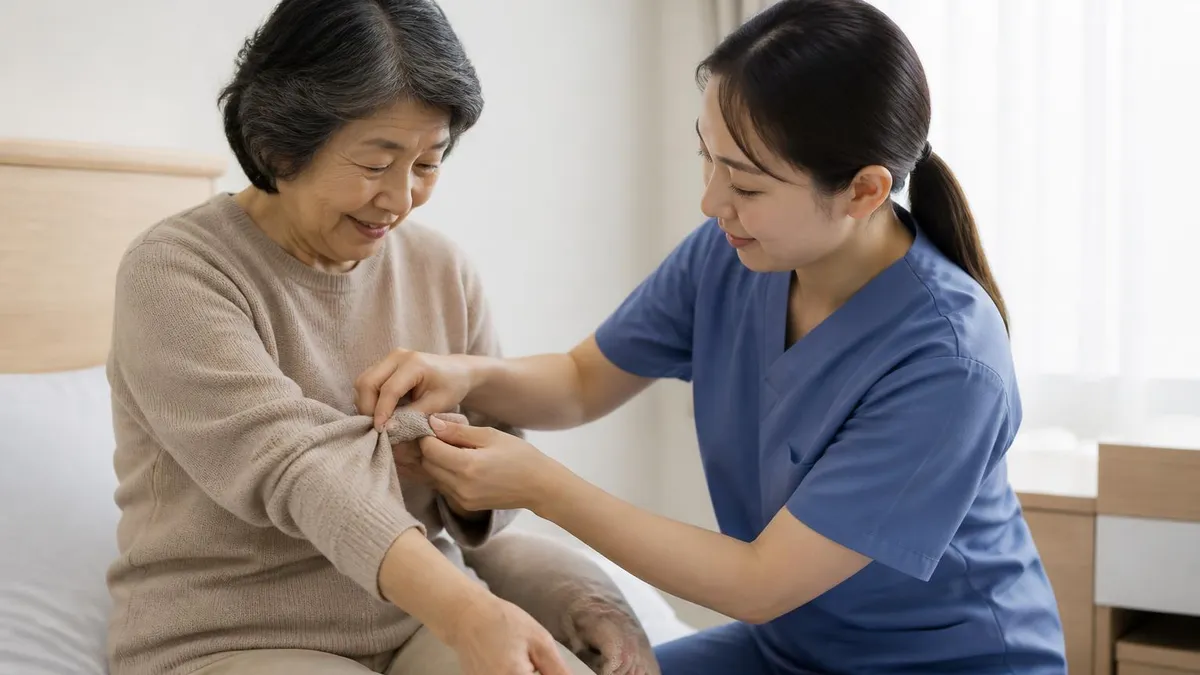
PCAs assist seniors with bathing, oral hygiene, hair care, nail care, and dressing. These routines are carried out with sensitivity to dignity and privacy, adapting techniques to the client's mobility level and personal preferences every single day.
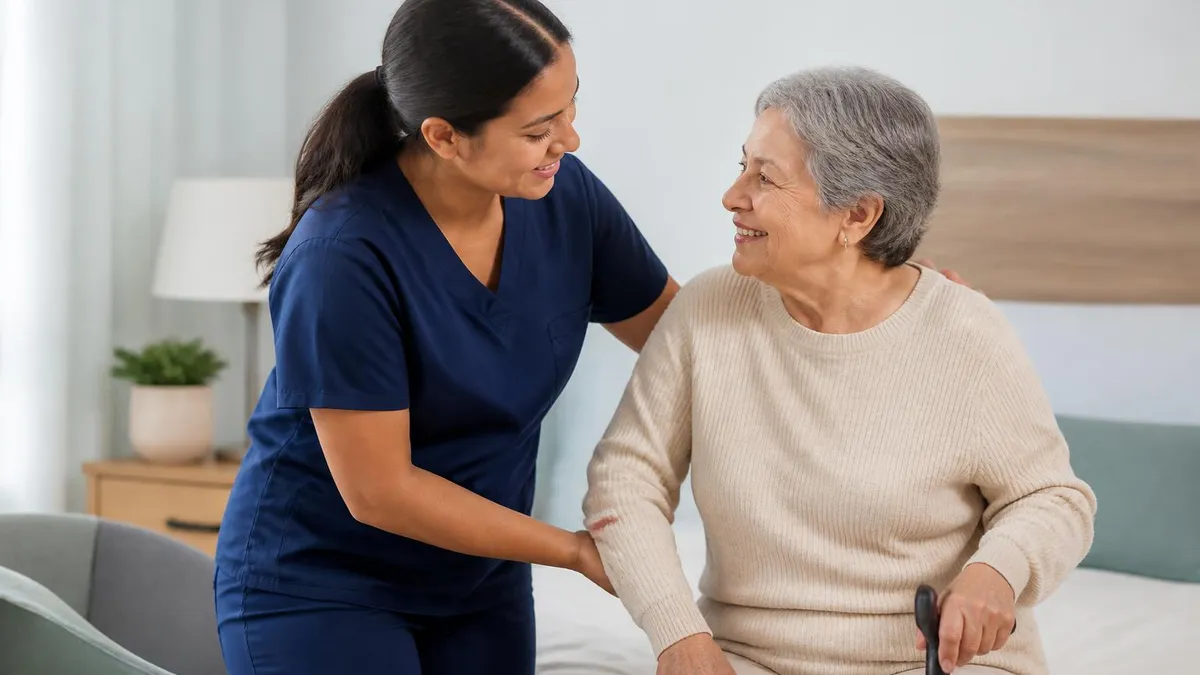
Safe transfers between bed, wheelchair, and toilet prevent falls and injuries. PCAs learn proper body mechanics, gait-belt usage, and mechanical lift operation to keep both client and caregiver safe during every movement.
PCAs plan, cook, and serve meals that align with dietary restrictions such as low-sodium, diabetic-friendly, or pureed diets. Monitoring intake and reporting nutritional concerns to supervisors is a key part of the daily routine.
While PCAs typically cannot administer medications, they provide reminders and observe and document vital signs, behavioral changes, or early warning signs of illness to relay to nursing or medical professionals promptly.
Isolation is a serious health risk for older adults. PCAs provide conversation, accompany clients on outings, assist with hobbies, and serve as a consistent human connection that reduces anxiety, depression, and cognitive decline.
Training requirements for a personal care assistant vary considerably by state, but most programs require between 40 and 120 hours of instruction covering anatomy, infection control, emergency procedures, communication skills, and hands-on clinical techniques. In states with a pca medical designation — including Massachusetts, Minnesota, and California — additional competency checks are required before an assistant can perform delegated nursing tasks under supervision. This expanded scope reflects the reality that many seniors have complex chronic conditions that demand more than basic custodial support.
The pca skincare component of training often surprises new students: skin integrity is a serious medical concern for older adults because aging skin is thinner, more fragile, and more prone to breakdown from moisture, pressure, or friction. PCAs learn to inspect for early signs of pressure injuries during bathing and repositioning, and to apply barrier creams and moisture management techniques that protect at-risk areas. These are not cosmetic concerns — a stage 2 or 3 pressure ulcer can hospitalize a senior and significantly worsen their prognosis, which makes daily skin observation a genuinely critical clinical function.
Certification exams for PCAs typically include both a written component covering theoretical knowledge and a skills evaluation in which the candidate demonstrates core competencies in front of an examiner. Common tested skills include handwashing technique, proper gloving and gowning, safe transfer procedures, and documentation of care activities. Understanding pca stats about pass rates and exam formats helps candidates allocate their study time effectively — most state exams report pass rates between 70 and 85 percent on the first attempt, with candidates who completed formal training programs outperforming self-study applicants by a wide margin.
Ongoing education is increasingly a requirement rather than a recommendation. Many Medicaid-funded programs and private agencies mandate annual competency updates, abuse and neglect prevention training, and CPR recertification every two years. Staying current not only maintains employment eligibility but also directly improves client outcomes — PCAs who receive regular training identify medical emergencies faster, communicate more effectively with multidisciplinary care teams, and experience lower rates of on-the-job injury from improper lifting or transfer techniques.
Supervision structures differ depending on the care setting and funding source. In agency-based models, a registered nurse typically conducts an initial care plan assessment, defines the scope of tasks the PCA may perform for a specific client, and revisits that plan at regular intervals — often every 60 or 90 days or whenever the client's condition changes significantly. In consumer-directed programs, where the senior or their designated surrogate acts as the employer of record, supervision is less formal, making self-directed PCAs responsible for a higher degree of independent judgment and professional accountability.
Many seniors and their families first encounter the world of elder care through a crisis — a fall, a hospitalization, a sudden decline — and find themselves navigating program eligibility, training requirements, and care planning simultaneously under significant stress. Understanding how pca meaning translates into a practical service delivery model before a crisis arises gives families the advantage of planning thoughtfully. Families who research programs early can complete intake paperwork, conduct interviews, and establish care routines gradually, producing a far smoother transition than emergency placements that leave everyone scrambling for adequate support.
For those pursuing the PCA career path, the combination of formal training, hands-on supervised practice, and ongoing professional development creates a foundation for long-term career growth. Many PCAs eventually pursue additional credentials in home health aide, certified nursing assistant, or licensed practical nurse programs, building on the foundational competencies developed in their PCA role. The field offers genuine upward mobility for workers willing to invest in their education, and the emotional rewards of a career defined by meaningful daily impact on vulnerable individuals' lives are cited by experienced PCAs as a primary reason they stay in the profession long-term.
PCA Medical, Skincare, and Church Program Models Explained
In the pca medical model, personal care assistants operate under the supervision of a licensed nurse or physician and may perform delegated clinical tasks that go beyond standard custodial care. These can include suctioning, catheter care, gastrostomy tube feeding, wound dressing changes, and respiratory support — tasks once reserved exclusively for licensed nurses. This model is particularly valuable for seniors with complex medical conditions who wish to remain at home rather than enter a skilled nursing facility, as it brings clinical-grade support directly into the home environment without requiring a full-time nursing presence.
States that have adopted the medical PCA model typically require additional training hours — often 80 to 160 hours beyond the standard PCA curriculum — and mandate documented competency evaluations for each delegated task. Programs in Massachusetts and Minnesota are frequently cited as national models for how medical PCA frameworks can safely expand home-based care capacity. Families considering this option should verify that their state's Medicaid waiver or private insurance covers medically delegated PCA services and confirm that a supervising nurse will conduct the required competency assessment before any clinical task is performed in the home.

Pros and Cons of Hiring a Personal Care Assistant for Seniors
- +Seniors remain in their own homes, preserving independence and emotional wellbeing
- +One-on-one care is more personalized than facility-based staffing ratios allow
- +Consumer-directed programs let seniors choose assistants from trusted personal networks
- +Home care is typically less expensive per hour than assisted living or nursing facility placement
- +PCAs can adapt schedules and routines to match the senior's natural preferences and rhythms
- +Regular PCA visits provide consistent safety monitoring and early detection of health changes
- −Finding, vetting, and retaining reliable PCAs requires ongoing effort from families
- −PCAs cannot perform all medical tasks — complex clinical needs may still require nursing visits
- −Consumer-directed programs place significant administrative burden on seniors or family surrogates
- −PCA turnover is high industry-wide, creating continuity-of-care challenges for seniors
- −Geographic shortages mean rural seniors often face long waits or limited availability of workers
- −Medicaid program eligibility criteria and hour limits may not fully cover assessed care needs
PCA Certification and Employment Readiness Checklist
- ✓Complete your state's required PCA training hours (typically 40–120 hours depending on state)
- ✓Pass both the written knowledge exam and the hands-on skills evaluation
- ✓Submit to a criminal background check through your state's registry system
- ✓Obtain current CPR and First Aid certification from an approved provider
- ✓Gather valid government-issued photo ID and Social Security documentation for employment eligibility
- ✓Complete any state-required health screenings, including tuberculosis testing
- ✓Register with your state's PCA or home care aide registry if required
- ✓Review your state's specific rules about which tasks PCAs may and may not perform
- ✓Identify whether you will work through an agency or a consumer-directed program
- ✓Prepare professional references from instructors, supervisors, or clinical placement coordinators
Consumer-Directed Programs Let Seniors Hire Family Members as Their PCA
In most states with Medicaid-funded consumer-directed personal care programs, eligible seniors can hire a family member — including an adult child or sibling — as their paid PCA. This keeps care within the family unit while ensuring the worker receives a fair wage. Contact your state Medicaid office or a fiscal intermediary like Tempus Unlimited to confirm eligibility rules and excluded relationships (spouses and legal guardians are typically ineligible in most states).
Funding for personal care assistant services for seniors flows through several distinct channels, and understanding each one helps families access the right program for their situation. Medicaid Home and Community-Based Services (HCBS) waivers are the largest single payer for PCA services in the United States, covering roughly 4.8 million individuals annually.
These waivers are state-specific, meaning eligibility criteria, service hour limits, and covered tasks vary dramatically depending on where a senior lives. In high-coverage states like Minnesota, a senior with significant functional limitations may receive up to 60 or even 80 hours of PCA support per week — enough to remain safely at home even with complex care needs.
The pca stats picture becomes more complicated when you examine waiting lists. As of 2025, more than 700,000 Americans are on waiting lists for HCBS waiver services, according to KFF Health Policy data. These waiting periods range from a few months in better-funded states to several years in states with constrained Medicaid budgets. Families should apply for Medicaid waiver programs immediately upon identifying a need, even if the senior currently manages independently — being on the waitlist early often determines whether support is available when the need becomes acute rather than after a crisis has already unfolded.
Veterans have access to a separate funding stream through the VA's Program of Comprehensive Assistance for Family Caregivers (PCAFC) and the Program of General Caregiver Support Services (PGCSS). These programs can provide stipends to family caregivers, respite services, and in some cases direct funding for professional PCA hours. The VA's Aid and Attendance benefit, available to veterans or surviving spouses who need help with daily activities, can provide up to $2,295 per month to help cover the cost of personal care services — a substantial resource that many eligible veterans fail to claim because they are unaware of it.
Long-term care insurance is another important funding source, particularly for middle- and upper-income families who purchased policies before needing care. Modern long-term care policies typically cover a defined dollar amount per day toward qualifying care services, including PCA hours, with a benefit period ranging from two to five years. Policyholders who need PCA services should file a claim as soon as they meet the activities-of-daily-living trigger specified in their policy — typically defined as needing assistance with two or more ADLs — because policies have elimination periods (often 60 or 90 days) before benefits begin.
Private pay arrangements, where families pay for PCA services out of pocket, provide maximum flexibility but significant financial exposure. Agency-based private pay PCA services currently run between $27 and $45 per hour depending on region, geographic market, and level of care complexity. In high-cost metros like New York City, San Francisco, or Boston, hourly rates can exceed $50. Independent-hire arrangements — where families recruit and employ a PCA directly — typically cost 20 to 30 percent less than agency rates, but the family assumes full responsibility for payroll taxes, workers' compensation insurance, backup coverage, and performance management.
State plan personal care services — as distinct from waiver-funded PCA programs — are available in some states as a mandatory Medicaid benefit, meaning eligible individuals do not face a waitlist and can access services as soon as their application is approved and a care plan is established.
This distinction matters enormously for families in urgent need of support. Checking whether your state offers both state plan personal care and HCBS waiver PCA services — and understanding the differences in eligibility, scope, and administration — is one of the most valuable early steps in navigating the elder care landscape for a loved one.
Emerging payment models like managed Medicaid and Medicare Advantage supplemental benefits are increasingly covering personal care assistant hours as a strategy for reducing hospitalizations and emergency department visits. Medicare Advantage plans vary widely in what supplemental benefits they offer, but some plans now include limited personal care hours, caregiver support services, or social determinants of health interventions that complement traditional PCA services.
Seniors enrolled in Medicare Advantage should review their plan's supplemental benefits at each annual enrollment period and specifically ask whether personal care or home support services are included — a benefit that goes unclaimed is effectively the same as a benefit that does not exist.

Do not wait for a health crisis before applying for Medicaid HCBS waiver PCA services. In states like Florida, Texas, and Georgia, waiting lists for home-based personal care services have historically stretched two to four years for non-emergency applicants. Apply as early as possible and document all functional limitations thoroughly on the application — incomplete assessments are a leading cause of delayed or denied eligibility determinations that extend the wait even further.
Choosing the right personal care assistant for a senior family member is one of the most consequential decisions a family will make, and approaching it with a structured process dramatically improves outcomes.
The first step is completing a thorough needs assessment — documenting every task the senior needs help with, the frequency and duration of that help, and any specific clinical requirements such as wound care, insulin monitoring, or assistance with medical devices. This assessment becomes the blueprint for the care plan and the basis for determining how many PCA hours per week are required and what qualifications the ideal candidate must possess.
Interviewing PCA candidates requires asking questions that reveal both technical competence and interpersonal fit. Ask candidates to describe how they have handled a client who refused care, how they respond when they notice a change in a client's condition, and what they do when asked to perform a task they are not trained or authorized to do. These scenario-based questions elicit much more useful information than credentials alone, because the real-world judgment a PCA exercises in ambiguous situations is often the most important factor in whether care goes well or poorly over time.
Reference checks are non-negotiable. Request contact information for at least two previous employers or supervisors in care settings, and ask those references specifically about reliability, compassion, boundary maintenance, and how the candidate responds to feedback. For agency hires, confirm that the agency conducts background checks, maintains liability insurance, and provides replacement coverage when a scheduled PCA is unable to work — because backup coverage is one of the most practical distinctions between a high-quality agency and a less reliable one. Families using consumer-directed programs must conduct their own background checks through their state's registry.
Once a PCA is selected, a structured onboarding process sets the relationship up for success. Walk the PCA through the home, explain the senior's daily routine and preferences in detail, review emergency procedures including who to call and when to call 911, and establish clear communication protocols for reporting concerns or changes. Many families create a simple care binder that includes the care plan, medication list, emergency contacts, physician information, and a daily task checklist — this binder becomes the operational reference document that any substitute caregiver can pick up and follow immediately without a lengthy orientation.
Monitoring and quality assurance should be ongoing rather than episodic. Family members who visit regularly, maintain an open dialogue with their loved one about how care is going, and communicate proactively with the agency or supervising nurse are far more likely to catch problems early before they escalate into serious care failures. Seniors who are cognitively intact should be directly asked — privately, without the PCA present — whether they feel comfortable, respected, and well cared for. Seniors with cognitive impairment require family or surrogate advocates who stay actively engaged in observing care interactions and reviewing documentation.
Technology can play a meaningful supporting role in PCA care coordination. Electronic visit verification (EVV) systems, now mandated by federal Medicaid law, use GPS and time-stamping to document when PCAs arrive and depart from client homes, providing an automatic accountability check that protects both seniors and workers.
Telehealth platforms allow supervising nurses or care managers to conduct virtual check-ins, review care logs, and consult with families without requiring an in-person visit — increasing the frequency of professional oversight without proportionally increasing cost. Remote monitoring sensors that detect activity patterns, door usage, and sleep quality provide an additional safety layer for seniors between scheduled PCA visits.
If you are a senior or family caregiver exploring options for the first time, connecting with your local Area Agency on Aging (AAA) is the most efficient first step available. AAAs are federally mandated local organizations that serve as navigators for the entire elder care system — they can conduct needs assessments, explain local program eligibility, provide referrals to vetted agencies, help with applications, and connect families with legal and financial planning resources.
Every county in the United States is served by an AAA, and their services are typically available at no cost. Finding your local AAA through the Eldercare Locator (eldercare.acl.gov) takes less than five minutes and opens the door to the full landscape of PCA and elder care resources available in your community.
For aspiring PCAs preparing for certification exams, consistent and strategic study practice makes an enormous difference in both first-attempt pass rates and long-term job performance. The domains tested on PCA exams — personal care techniques, safety procedures, infection control, communication, clients' rights, and documentation — reflect exactly the competencies employers and clients rely on every day. Studying these domains not as abstract test content but as practical skills you will use in real care situations makes learning both more effective and more motivating, because every concept connects directly to a client's safety or comfort.
Time management during the written exam is a skill that must be practiced, not assumed. PCA exams typically give candidates 90 to 120 minutes to answer 60 to 100 multiple-choice questions, and many candidates who know the material well still struggle under timed conditions. Practicing with timed quizzes — setting a firm clock and simulating real exam pressure — trains you to read questions efficiently, eliminate clearly wrong answers, and make confident decisions without second-guessing every item. This kind of deliberate practice is consistently associated with higher exam scores than passive re-reading of study materials.
The skills evaluation component of PCA certification is where many candidates feel the most anxiety, because it requires demonstrating procedures correctly in front of an evaluator. The most common reasons candidates fail skills evaluations are procedural omissions — forgetting to wash hands before and after a procedure, skipping the step of explaining what you are about to do to the client, or failing to check for client comfort at the end of the task.
These steps feel obvious in training but are easy to omit when nerves are running high. Practicing each skill in its complete sequence, including every setup and wrap-up step, until it becomes automatic is the most reliable preparation strategy.
Building a study group with classmates from your PCA training program provides accountability, creates opportunities to practice skills on willing partners, and generates discussion that deepens understanding beyond what reading alone can achieve. Study partners can quiz each other on terminology, take turns playing the evaluator role during skills practice, and share notes from their respective clinical placement experiences. The social dimension of group study also reduces the isolation that can make intensive exam preparation feel overwhelming, particularly for students who are balancing training with existing work or family obligations.
Practice tests are among the most powerful study tools available, and the PCA exam practice questions available on PracticeTestGeeks.com are specifically designed to mirror the format, difficulty level, and content distribution of state PCA certification exams.
Working through full-length practice exams under realistic conditions reveals knowledge gaps, familiarizes you with question phrasing patterns, and builds the exam-taking stamina needed to stay focused and accurate through the final questions of a long test. Review every question you answer incorrectly — not just to learn the right answer, but to understand why each wrong answer was wrong, which reinforces conceptual understanding rather than memorization of specific items.
Nutrition, sleep, and physical preparation in the days leading up to your exam are not trivial considerations. Sleep deprivation measurably impairs recall, processing speed, and decision accuracy — the exact cognitive functions being evaluated in a certification exam.
Candidates who attempt their exam after a full night's sleep consistently outperform equivalently prepared candidates who stayed up late reviewing materials the night before. Eat a solid meal before the exam, arrive at the testing site early enough to settle in without rushing, and use any pre-exam time to do slow, deliberate breathing rather than last-minute cramming that adds anxiety without adding knowledge.
After passing your certification exam, the real learning begins. Every senior you work with has a unique medical history, set of preferences, communication style, and life story, and adapting your skills and approach to each individual client is the ongoing professional challenge that keeps the PCA role engaging over a long career.
The most effective PCAs are lifelong learners — curious about new techniques, open to feedback, and committed to deepening their understanding of aging, disability, and the science of compassionate care. If you approach the work that way, the PCA certification exam is not a finish line but a starting gate, opening the door to one of the most meaningful careers in American healthcare.
PCA Questions and Answers

PCA Duties: Complete Guide to Personal Care Assistant Responsibilities, Daily Tasks, and Care Standards in 2026
Personal Care Assistant Jobs Near Me: How to Find Local PCA Positions, Apply Successfully, and Start Your Caregiving Career in 2026
Personal Care Assistant Salary 2026: Complete Pay Guide by State, Experience, and Setting

Tempus Unlimited PCA: Complete Guide to Personal Care Assistant Services, Eligibility, and How to Get Started in 2026

Massachusetts PCA Directory: Complete Guide to the PCA Skin, Medical, and Personal Care Assistant Landscape
About the Author

Registered Nurse & Healthcare Educator
Johns Hopkins University School of NursingDr. Sarah Mitchell is a board-certified registered nurse with over 15 years of clinical and academic experience. She completed her PhD in Nursing Science at Johns Hopkins University and has taught NCLEX preparation and clinical skills courses for nursing students across the United States. Her research focuses on evidence-based exam preparation strategies for healthcare certification candidates.