
PCA Duties: Complete Guide to Personal Care Assistant Responsibilities, Daily Tasks, and Care Standards in 2026 October
Master PCA duties with our complete guide covering daily responsibilities, 🔎 hygiene care, mobility help, documentation, and safety standards every

Understanding pca duties is the foundation of becoming a confident, competent personal care assistant in today's expanding home health and long-term care industry. A PCA is the frontline caregiver who supports clients with activities of daily living, basic comfort needs, and the small but critical observations that keep vulnerable people safe in their homes, assisted living suites, hospital rooms, and group homes across the country. The role blends practical hands-on care with emotional presence, communication, and disciplined documentation.
If you are exploring this career or studying for a certification exam, knowing the full scope of pca duties helps you anticipate what each shift will require. Most PCAs work under the direction of a registered nurse, case manager, or care coordinator who builds a written care plan tailored to the client's diagnosis, mobility level, and household environment. The PCA's job is to follow that plan with consistency, flag changes early, and treat every client with dignity regardless of cognitive status, age, or background.
The Bureau of Labor Statistics projects that home health and personal care aide positions will grow by roughly 21% between 2023 and 2033, far faster than the average for all occupations. That demand is driven by the aging baby boomer generation, the strong consumer preference to age in place, and a steady shift away from institutional nursing home care toward community-based services. PCAs are the workforce making that shift possible, one shower assist and one medication reminder at a time.
This guide breaks down what PCAs actually do during a typical shift, the personal hygiene and grooming tasks involved, mobility and transfer responsibilities, light housekeeping, meal preparation, vital sign monitoring, documentation requirements, and the scope-of-practice boundaries every aide must respect. For a broader career overview, our pca hydrating toner resource walks through the full study guide structure used by training programs nationwide.
You will also see how pca duties differ from those of a certified nursing assistant, a home health aide, and a private companion. Each role overlaps significantly with the others, yet each operates under different state regulations, training hours, and supervision requirements. Knowing where your authority begins and ends protects clients, protects you legally, and helps you communicate clearly with families who often blur these titles together.
Whether you are preparing for a competency exam, applying for your first agency position, or returning to caregiving after time away, mastering these core duties gives you the structure to perform every shift safely. The sections below cover stats, tabbed task categories, pros and cons of the role, practical checklists, common questions, and quick-reference resources you can return to whenever a new client situation arises during your week.
Read the entire article, take the linked practice quizzes, and bookmark this page as a reference. Personal care assistants who treat their duties as a discipline — not just a job — build careers that lead into LPN programs, RN bridge pathways, care coordinator roles, and supervisory positions within home health agencies and assisted living communities.
PCA Duties by the Numbers

Core PCA Duty Categories
Bathing, grooming, oral care, toileting, dressing, and skin checks. These intimate tasks demand patience, privacy, and strict infection control to protect clients with fragile skin or limited mobility.
Safe transfers using gait belts, repositioning every two hours, ambulation assistance, wheelchair management, and fall prevention monitoring throughout each shift and during overnight rounds.
Meal preparation following dietary restrictions, feeding assistance, hydration tracking, and recognizing swallowing difficulties or appetite changes that need to be reported to the supervising nurse.
Laundry, dishwashing, bed-making, vacuuming the client's immediate living area, and sanitizing high-touch surfaces. Tasks are limited to the client's environment, not the entire household.
Conversation, reading aloud, walks, hobbies, and memory-care engagement. Emotional connection reduces isolation, slows cognitive decline, and often matters more to families than any single physical task.
Personal hygiene and grooming sit at the heart of pca duties because they directly affect comfort, dignity, infection risk, and skin integrity. A morning routine usually starts with hand hygiene, gathering supplies, then offering the client choice wherever possible — soap scent, water temperature, clothing options for the day. Even clients with advanced dementia respond to small choices, and giving control back to the person being cared for is one of the easiest ways to reduce agitation during personal care.
Bed baths, shower assists, and partial sponge baths each follow a structured sequence: face first, then arms, chest, abdomen, legs, back, and perineal care last. Water temperature should sit between 105°F and 110°F, and the PCA must keep one hand on the client during shower transfers to prevent falls. Skin inspection happens simultaneously — PCAs watch for redness over bony prominences, broken skin, bruises, rashes, and any wound that was not documented on the prior shift.
Oral care is required at minimum twice daily, including for clients who are unconscious or on tube feedings. Dry mouth raises pneumonia risk in bed-bound clients, so PCAs use foam swabs, alcohol-free mouthwash, or a soft toothbrush depending on the care plan. Dentures get removed nightly, brushed separately, and stored in labeled cups. Hair, nails, and shaving complete the grooming routine, though clipping toenails is restricted in many states and almost always restricted for diabetic clients.
Toileting assistance includes scheduled bathroom trips, bedpan and urinal use, incontinence brief changes, and catheter care emptying — never insertion. A common scope-of-practice question covered in our porsche experience overview is whether PCAs can perform catheter insertion; in nearly every state the answer is no, and crossing that line can void liability coverage and trigger licensure complaints.
Dressing assistance follows the rule of "weak side in, strong side out." For a client with right-sided weakness from a stroke, the PCA dresses the right arm first, then the left, and reverses the sequence when undressing. Clothing should match the weather, the client's social plans, and personal preference. Adaptive clothing with Velcro closures, magnetic buttons, or side-zip pants makes dressing faster and reduces frustration for clients with arthritis or limited fine motor control.
Privacy is non-negotiable. Doors stay closed, curtains stay drawn, and only the body part being cared for is exposed at any given moment. PCAs knock before entering, introduce themselves by name and role at every shift even with familiar clients, and explain each step before performing it. These habits build trust quickly and reduce the resistance behaviors that often surface in dementia care, post-surgical recovery, and end-of-life situations.
Finally, every personal care task ends with documentation. Even a routine shower with no issues becomes data — was the client cooperative, was the skin intact, was bowel or bladder output normal, did the client report any pain. That documentation is what the supervising nurse uses to adjust the care plan, and what the agency uses to defend its work if a question ever arises.

PCA Practice Test Questions
Prepare for the PCA - Personal Care Assistant exam with our free practice test modules. Each quiz covers key topics to help you pass on your first try.
PCA Duties and Responsibilities
Free PCA Practice Test featuring Duties and Responsibilities. Improve your PCA Exam score with mock test prep.
PCA Qualifications
PCA Mock Exam on Qualifications. PCA Study Guide questions to pass on your first try.
PCA Working Conditions
PCA Test Prep for Working Conditions. Practice PCA Quiz questions and boost your score.
PCA Assisting with Daily Living Activities
PCA Questions and Answers on Assisting with Daily Living Activities. Free PCA practice for exam readiness.
PCA Basic Nursing Skills
PCA Mock Test covering Basic Nursing Skills. Online PCA Test practice with instant feedback.
PCA Basic Patient Care Skills
Free PCA Quiz on Basic Patient Care Skills. PCA Exam prep questions with detailed explanations.
PCA Communication and Interpersonal Skills
PCA Practice Questions for Communication and Interpersonal Skills. Build confidence for your PCA certification exam.
PCA Ethical and Legal Responsibilities
PCA Test Online for Ethical and Legal Responsibilities. Free practice with instant results and feedback.
PCA Health and Safety Procedures
PCA Study Material on Health and Safety Procedures. Prepare effectively with real exam-style questions.
PCA Health & Safety Protocols
Free PCA Test covering Health & Safety Protocols. Practice and track your PCA exam readiness.
PCA Infection Control
PCA Exam Questions covering Infection Control. Master PCA Test concepts for certification prep.
PCA Mental Health & Emotional Support
Free PCA Practice Test featuring Mental Health & Emotional Support. Improve your PCA Exam score with mock test prep.
PCA Nutrition & Hydration
PCA Mock Exam on Nutrition & Hydration. PCA Study Guide questions to pass on your first try.
PCA Patient Mobility & Transfers
PCA Test Prep for Patient Mobility & Transfers. Practice PCA Quiz questions and boost your score.
PCA Medical Support Within Scope of Practice
PCAs routinely measure temperature, pulse, respiration rate, and in many states blood pressure when trained and authorized by the care plan. Readings are documented and any value outside the client's baseline gets reported to the supervising nurse before the PCA leaves the home or finishes the shift. Trend tracking matters more than single readings.
Common red flags include a temperature above 100.4°F, pulse above 100 or below 60, respirations above 24, and systolic blood pressure above 160 or below 90. PCAs do not diagnose or recommend treatment — they observe, document, and escalate. Knowing the normal pca medical baseline for each client is what makes early detection of infection, dehydration, or cardiac events possible.
Pros and Cons of Performing PCA Duties Daily
- +Direct impact on client quality of life and independence
- +Low barrier to entry with paid training in many states
- +Flexible schedules including evenings, weekends, and overnight
- +High job security with 21% projected growth through 2033
- +Clear career ladder into CNA, LPN, and RN bridge programs
- +Variety — every client home is a different work environment
- +Emotional rewards from long-term client and family relationships
- −Physically demanding with frequent lifting and bending
- −Emotional toll from end-of-life and dementia care
- −Modest pay compared to other healthcare entry roles
- −Inconsistent hours when clients are hospitalized or pass away
- −Exposure to infectious illness and bodily fluids
- −Driving between clients on personal mileage with limited reimbursement
- −Limited paid time off and benefits at smaller agencies
Pros and Cons at a Glance
| Pros | Cons |
|---|---|
| Direct impact on client quality of life and independence | Physically demanding with frequent lifting and bending |
| Low barrier to entry with paid training in many states | Emotional toll from end-of-life and dementia care |
| Flexible schedules including evenings, weekends, and overnight | Modest pay compared to other healthcare entry roles |
| Clear career ladder into CNA, LPN, and RN bridge programs | Inconsistent hours when clients are hospitalized or pass away |
| Variety — every client home is a different work environment | Exposure to infectious illness and bodily fluids |
| Emotional rewards from long-term client and family relationships | Driving between clients on personal mileage with limited reimbursement |

Daily PCA Shift Checklist
- ✓Review the care plan and prior shift notes before starting
- ✓Perform hand hygiene and introduce yourself by name and role
- ✓Take and document baseline vital signs as required
- ✓Assist with morning hygiene, grooming, and dressing
- ✓Prepare breakfast following any dietary restrictions on file
- ✓Provide medication reminders and observe self-administration
- ✓Reposition bed-bound clients every two hours and inspect skin
- ✓Complete light housekeeping in the client's living area
- ✓Document intake, output, mood, and any incidents in real time
- ✓Communicate any changes in condition to the supervising nurse before leaving
Observe, document, and escalate — never diagnose or treat
The single most protective habit a PCA can build is reporting concerning changes the same shift they occur. Skin redness, refused meals, new confusion, or a fall without injury all need a written note and a call to the supervising nurse. Waiting until the next shift turns a small observation into a missed early warning, and most agency incident reviews trace back to delayed communication rather than clinical errors.
Documentation is the legal backbone of pca duties and the part of the job most new aides underestimate. Every task performed during a shift — vital signs, meals offered and consumed, toileting, repositioning, ambulation distance, medication reminders, mood, behaviors, visitors, phone calls from family — gets recorded in the client's chart, either on paper or through an electronic visit verification system. If it is not documented, regulators and insurers treat it as if it never happened.
Electronic Visit Verification, often called EVV, became federally required for Medicaid-funded personal care services under the 21st Century Cures Act. PCAs clock in and out using a smartphone app, a landline call, or a fixed device in the client's home. The system captures GPS location, time stamps, and the specific tasks completed during the visit. EVV reduces fraud, but it also means PCAs cannot fudge times or skip duties without the agency seeing the discrepancy on the daily report.
Beyond electronic time tracking, narrative notes describe what actually happened during the visit. Good notes are factual, objective, and specific. "Client ate 75% of breakfast, refused medication at 8:15 stating stomach upset, ambulated to bathroom with one-person assist" is far stronger than "client had a good morning." Vague notes cannot be defended in a survey or court proceeding and they leave the next caregiver without useful context.
Incident reporting is a separate documentation track. Falls, medication errors, skin tears, missing client property, family complaints, and any safety concern must be written up immediately on an incident form. Most agencies require the report within 24 hours, and serious incidents trigger same-shift notification to the supervising nurse and case manager. Learning the agency's incident protocol on your first day prevents costly delays later.
HIPAA confidentiality applies to every word a PCA writes, says, or types about a client. That includes social media posts, conversations in the car between visits, and text messages to family members about your day. Even mentioning a client's first name in a public setting can trigger a privacy complaint. Smart PCAs build the habit of speaking about "a client" or "my morning shift" rather than naming people, dates, or addresses.
Care plan compliance is the third pillar of documentation. The care plan is built by the supervising nurse based on a physician's order and the client's assessment. PCAs follow the plan exactly — they do not add tasks, skip tasks, or substitute their judgment for what is written. If a task is not on the plan, the PCA requests an update from the nurse rather than improvising. This protects the client and keeps the PCA inside the legal scope of practice.
Finally, documentation feeds quality improvement. Agencies review aggregated data to spot patterns — clients with rising fall rates, caregivers with frequent late starts, neighborhoods with safety concerns. Strong documentation makes the PCA visible to leadership in positive ways, supports raises and promotions, and builds the written record that matters when a client transitions between home, hospital, and skilled nursing facility.
Performing tasks outside your authorized scope — inserting catheters, administering injections, changing sterile dressings, crushing medications when not permitted — can result in termination, loss of certification, civil liability, and in serious cases criminal charges. Always confirm with the supervising nurse before performing any task you are not 100% sure is authorized in your state and on your client's care plan.
Safety underpins every category of pca duties, starting with body mechanics and ending with infection control. PCAs lift, transfer, and reposition adults who often weigh more than they do, and back injuries are one of the leading causes of caregiver disability in the United States. Proper technique means bending at the knees, keeping the load close to the body, never twisting the spine, and using mechanical lifts whenever the care plan calls for them. "It's just this one time" is the phrase that ends careers.
Gait belts, slide sheets, transfer boards, sit-to-stand lifts, and full Hoyer lifts each have specific use cases. A gait belt works for clients who can bear weight and follow simple instructions. A sit-to-stand lift works for clients with leg strength but poor balance. A full mechanical lift is required for non-weight-bearing clients. Using the wrong device is a documented safety violation, even if the transfer goes well.
Infection control follows standard precautions on every shift regardless of diagnosis. Gloves for any contact with body fluids, hand hygiene before and after every client contact, gowns and masks for clients on isolation, and proper disposal of sharps and soiled linens. The pandemic permanently raised the bar for PPE compliance, and surveyors check it on every audit. Understanding the broader pca meaning within the nursing care team helps PCAs see how their infection control habits protect the entire household and the agency's other clients.
Home safety assessment is part of every visit. PCAs scan for loose rugs, blocked exits, expired smoke detectors, hoarded pathways, unsafe heating sources, medication clutter, and signs of elder abuse or neglect. Mandatory reporter laws in most states require PCAs to report suspected abuse to adult protective services and the supervising nurse the same day they observe it. Failure to report can result in personal liability separate from the agency.
Emergency preparedness includes knowing the location of the nearest exit, the client's emergency contact list, the directions to the home for paramedics, and basic first aid and CPR. Many agencies require active BLS certification for hire, and even those that do not require it strongly recommend it. Choking, falls, seizures, and cardiac events happen in client homes regularly, and the PCA is usually the only trained person present when they do.
Personal safety matters too. PCAs work alone in unfamiliar homes, sometimes in neighborhoods they do not know, and occasionally with clients or family members who are intoxicated, hostile, or armed. Trust your instincts — if a situation feels unsafe, leave and call the agency. No task on a care plan is worth your life. Agencies are required to support caregiver safety, and they should never pressure you to remain in a hostile environment.
Finally, ongoing education keeps your duty knowledge current. State regulations, infection control protocols, dementia care techniques, and documentation systems all change regularly. Strong PCAs complete more than the minimum continuing education hours, attend in-service training offered by their agency, and pursue voluntary certifications in dementia care, hospice support, or rehabilitation. That investment compounds over a career and opens doors into specialist roles.
Practical success in pca duties comes from building habits that survive your busiest, most exhausting shifts. New aides often perform beautifully when they are rested and have one easy client, then struggle when the day stacks up. Veteran PCAs build routines and templates that protect quality even on twelve-client weeks. Below are field-tested tips from agency directors, supervising nurses, and senior caregivers across multiple states.
Pre-shift preparation matters more than most aides realize. Review the care plan the night before, pack a clean uniform and backup supplies, charge your documentation device, fuel your car if you drive between clients, and bring water and a packed lunch. A PCA who arrives prepared loses less time mid-shift, has fewer documentation errors, and faces fewer small frustrations that compound into burnout over months.
Communication with the supervising nurse should be proactive, not reactive. Send a quick end-of-week summary on each client even when nothing dramatic happened. Note small trends — slightly lower appetite, a new sleeping pattern, a family member who seems stressed. Nurses appreciate aides who give them early intelligence, and that reputation builds into more hours, better assignments, and faster promotions when supervisor roles open up. To find agencies that value this style of communication, our pca medical guide explains how to research and evaluate local employers before accepting an offer.
Build rapport with families slowly and professionally. Families are anxious, often grieving the version of their loved one who existed before illness, and they will sometimes redirect that grief at the caregiver in the home. Stay calm, stay factual, redirect clinical questions to the nurse, and never make promises about prognosis or outcomes. Boundaries protect both the PCA and the family relationship over the long arc of care.
Pace yourself through the shift. Personal care is repetitive, and the temptation to rush through morning tasks to free up afternoon time often backfires — rushed transfers cause falls, rushed showers cause skin tears, rushed documentation creates errors. A steady, methodical pace with short rest breaks produces better outcomes than sprints followed by collapse. Hydrate, snack between visits, and use any quiet time for charting rather than scrolling.
Take care of your own health like a professional athlete. Stretch before shifts, sleep at least seven hours, see a primary care provider annually, stay current on vaccinations, and build a personal support network of caregivers who understand the unique stress of the job. Compassion fatigue is real, and the aides who thrive long-term invest in their own resilience as deliberately as they invest in their clients' care.
Finally, set career goals beyond the current role. PCAs who plan to bridge into CNA, LPN, or RN programs use their daily duties as living curriculum — every dressing change is wound care practice, every vital sign is clinical assessment practice, every difficult family conversation is therapeutic communication practice. With that mindset, every shift becomes both a paycheck and tuition toward the next step of a healthcare career.
Sample Personal Care Assistant Practice Questions
Try these questions from our free Personal Care Assistant practice tests. The correct answer and an explanation follow each question.
Why is Patient Mobility & Transfers crucial for daily care?
- A. It is not relevant for daily care.
- B. It is crucial for providing comprehensive and effective care.
- C. It only applies to patients with physical disabilities.
- D. It is only necessary during emergencies.
Answer: B. It is crucial for providing comprehensive and effective care.
Patient mobility and transfers are integral to daily care because they enable PCAs to assist with essential activities like hygiene, feeding, and repositioning. Without safe and effective transfer techniques, providing comprehensive care becomes challenging, potentially compromising patient safety and the quality of care delivered.
Why is Personal Hygiene & Grooming crucial for daily care?
- A. It is not relevant for daily care.
- B. It is crucial for providing comprehensive and effective care.
- C. It only applies to patients with physical disabilities.
- D. It is only necessary during emergencies.
Answer: B. It is crucial for providing comprehensive and effective care.
Personal hygiene and grooming are not merely cosmetic; they are foundational components of holistic patient care. Integrating these practices into daily routines helps maintain skin integrity, prevent infections, and promote a sense of well-being, all of which are vital for a patient's overall health and recovery. It ensures that care is thorough, comprehensive, and addresses fundamental human needs.
Why is Assisting with Daily Living Activities crucial for daily care?
- A. It is not relevant for daily care.
- B. It is crucial for providing comprehensive and effective care.
- C. It only applies to patients with physical disabilities.
- D. It is only necessary during emergencies.
Answer: B. It is crucial for providing comprehensive and effective care.
Assisting with Daily Living Activities is crucial for daily care because it forms the foundation of comprehensive and effective patient support. These tasks address basic human needs, and when properly managed, they contribute to the patient's physical well-being, hygiene, and comfort. Neglecting ADLs can lead to a decline in health, increased risk of infection, and a diminished quality of life for the patient.
When providing oral care to an unconscious patient, the PCA should position the patient in which way?
- A. Flat on their back (supine)
- B. Side-lying (lateral) position
- C. High Fowler's (90 degrees)
- D. Prone (face down)
Answer: B. Side-lying (lateral) position
Side-lying position allows fluids and secretions to drain out of the mouth, preventing aspiration.
PCA Questions and Answers

PCA - Personal Care Assistant: Complete Study Guide 2026
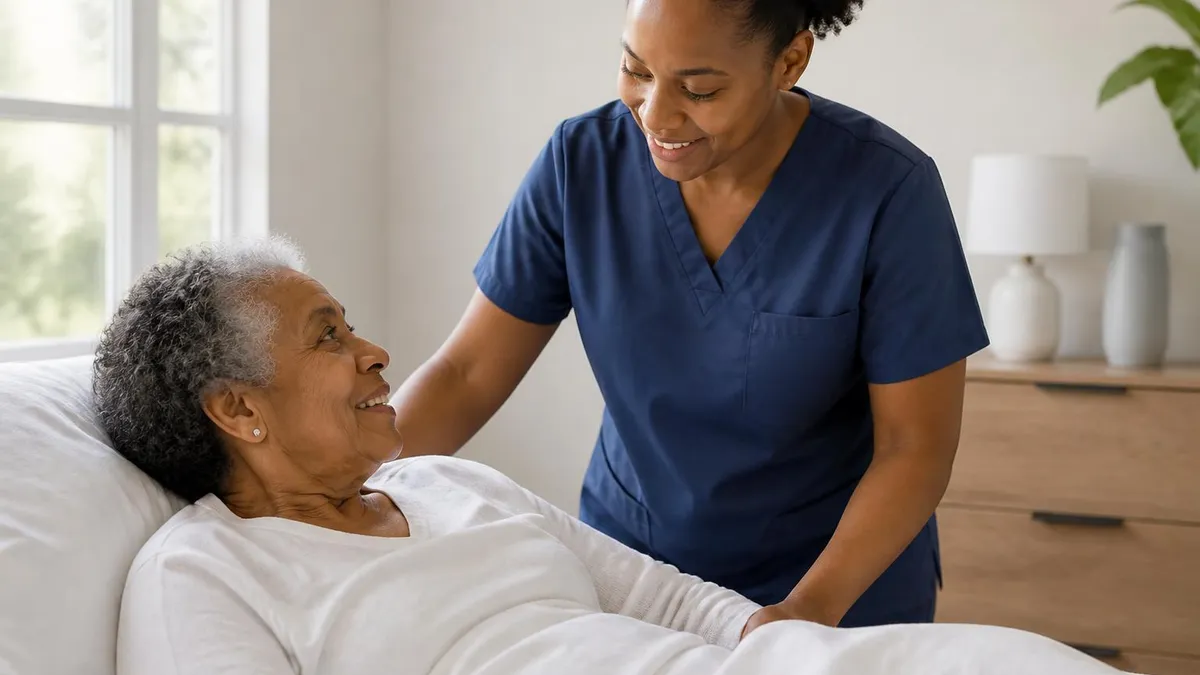
What Does a PCA Do? Complete Guide to Personal Care Assistant Duties and Daily Responsibilities
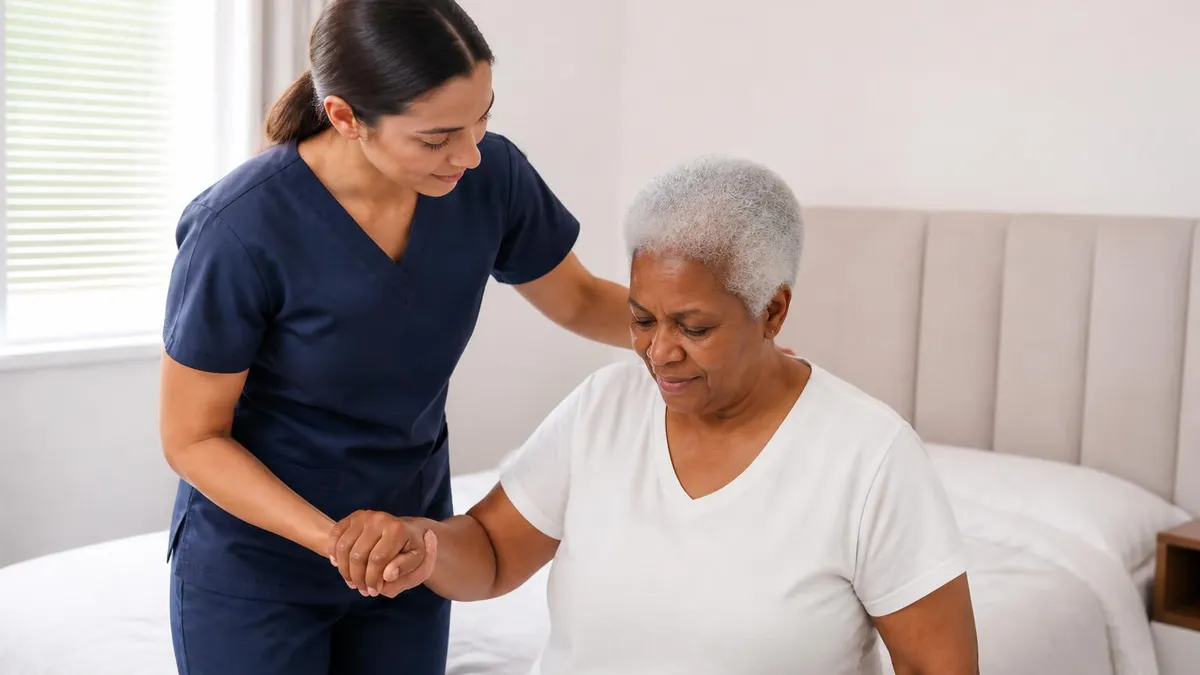
PCA Nurse: Complete Guide to the Personal Care Assistant Role in Modern Nursing Teams
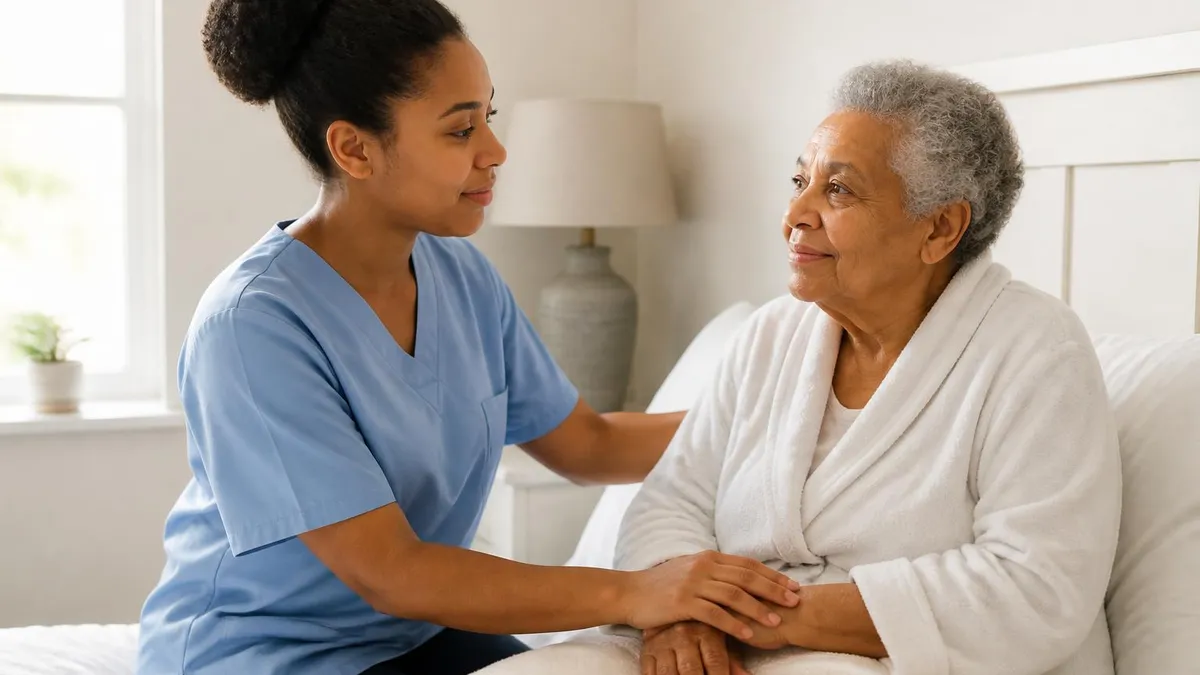
PCA Agencies Near Me: How to Find, Evaluate, and Choose a Local Personal Care Assistant Agency in 2026
PCA - Personal Care Assistant: Career Paths, Salary, and Requirements 2026
About the Author

Registered Nurse & Healthcare Educator
Johns Hopkins University School of NursingDr. Sarah Mitchell is a board-certified registered nurse with over 15 years of clinical and academic experience. She completed her PhD in Nursing Science at Johns Hopkins University and has taught NCLEX preparation and clinical skills courses for nursing students across the United States. Her research focuses on evidence-based exam preparation strategies for healthcare certification candidates.