
Free PCA Classes: Complete Guide to Personal Care Assistant Training, Requirements, and Certification in 2026 September
Find free PCA classes near you, understand PCA meaning, requirements, and training options. ✍🏼 Complete guide for becoming a certified personal care assistant...

Free PCA classes are one of the fastest entry points into the healthcare workforce, and demand for personal care assistants continues to outpace supply across nearly every U.S. state. Whether you are exploring what is a PCA for the first time or you have already done some research and want to understand the true cost of training, this guide walks you through every realistic pathway to earning your credentials without paying tuition out of pocket.
The PCA meaning in a healthcare context refers to a trained professional who assists clients with activities of daily living, personal hygiene, mobility, and medication reminders under the supervision of a registered nurse or licensed care coordinator.
Understanding PCA medical requirements is the essential first step. Each state sets its own minimum training hours, competency evaluation standards, and background check rules, which means free PCA classes that are approved in California may not satisfy New York Medicaid requirements.
The good news is that Medicaid waiver programs, community colleges, nonprofit workforce development organizations, and home care agencies all offer no-cost training to qualified candidates, and the options have expanded significantly since 2020 as federal funding for direct-care workforce development increased. You can also explore free pca classes that lead directly to job placement through agency-sponsored programs that pay you to train.
The PCA skin care aspect of the role is sometimes overlooked in training discussions, yet it accounts for a significant portion of daily duties. Proper skin assessment, moisture management, pressure ulcer prevention, and applying prescribed creams — including following protocols similar to using a pca hydrating toner — are all competencies tested in most state certification exams. Candidates who understand skin integrity from day one tend to progress faster in supervised clinical hours and earn stronger evaluations from their training supervisors.
PCA stats from the Bureau of Labor Statistics paint an optimistic picture for anyone entering this field in 2026. The occupation is projected to grow by 22 percent through 2032, adding more than 700,000 positions nationwide. Median annual wages hover around $33,000 to $36,000 for full-time PCAs, with experienced workers in high-demand metropolitan areas earning considerably more. Agency-sponsored free training programs exist precisely because turnover is expensive for employers, so investing in your education upfront gives agencies a motivated, loyal workforce while giving you a debt-free credential.
The structure of a typical free PCA training program involves both classroom instruction and hands-on clinical hours. Classroom topics include anatomy basics, infection control, communication techniques, documentation requirements, emergency procedures, and the legal and ethical boundaries of the PCA role. Clinical rotations — often conducted in skilled nursing facilities, assisted living communities, or private homes — give trainees direct practice under the supervision of licensed nurses. Most state-approved programs require between 75 and 120 total hours of combined instruction, though some states, particularly those with robust Medicaid home and community-based services, mandate closer to 150 hours.
PCA church and faith-based community organizations have also emerged as a surprising but valuable source of free training funding. Nonprofits affiliated with religious organizations often administer Workforce Innovation and Opportunity Act grants that cover tuition, textbooks, transportation stipends, and childcare assistance for low-income trainees. These programs are worth researching in your local area because they tend to have smaller cohorts, more personalized mentorship, and higher job placement rates than large community college programs. Searching your county's workforce development board website alongside terms like pca skincare training or personal care aide certification will surface many of these hidden opportunities.
A final introductory note on the pca pump concept: in clinical and home care settings, the term refers to patient-controlled analgesia devices, which PCAs may encounter when assisting clients who manage chronic pain at home.
While PCAs are never authorized to program or adjust these devices, understanding how they function — and when to contact a nurse — is covered in advanced free training programs and reflects the broader clinical awareness this career requires. The depth and breadth of free training available in 2026 make this one of the most accessible pathways into healthcare, with real earning potential and strong job security from day one.
PCA Training and Career by the Numbers

Types of Free PCA Training Programs Available in 2026
Home care agencies recruit trainees, pay for state-approved instruction, and guarantee employment upon completion. You may receive a training stipend. In exchange, most agencies ask for a 12-month employment commitment after certification.
State Medicaid waiver programs — such as HCBS waivers — fund PCA training for individuals who commit to serving Medicaid-eligible clients. Applications go through your state's department of health or aging services office.
Federally funded Workforce Innovation and Opportunity Act (WIOA) grants cover tuition, books, and sometimes childcare or transportation for income-eligible applicants. Apply through your local American Job Center or One-Stop Career Center.
Many community colleges offer PCA certificate programs at low or no cost to students who qualify for Pell Grants, SNAP Employment & Training funds, or state-specific healthcare workforce scholarships. The FAFSA is your starting point.
Organizations like Jewish Vocational Services, Catholic Charities, and local community action agencies administer grants covering PCA training costs. These programs often include job placement support and peer mentoring for new graduates.
State requirements for PCA training vary widely, and understanding your specific state's rules is non-negotiable before you enroll. The pca meaning in a regulatory context refers to a Medicaid-defined role, and states that receive federal Medicaid funding must meet minimum federal standards for training their direct-care workforce.
As of 2026, the federal minimum is 75 hours of training for home health aides, and most states apply the same or higher standards to PCAs who work in Medicaid-funded programs. States like New York (130 hours), California (120 hours), and Massachusetts (100 hours) exceed the federal floor, so always verify your state's specific rules before choosing a program.
Eligibility requirements for free PCA classes typically include a minimum age of 16 or 18 depending on the state, a valid government-issued ID, authorization to work in the United States, a satisfactory criminal background check, and in some states a negative tuberculosis test or proof of certain immunizations. Some programs also require a high school diploma or GED, particularly those offered through community colleges. Agency-sponsored programs tend to have more flexible educational prerequisites because the agency's investment is in your reliability and interpersonal skills rather than academic background.
Background check requirements deserve special attention because a prior conviction does not automatically disqualify you from PCA training in most states. States that have adopted the Individual Assessment approach under Section 19(c) of the Fair Chance Business Pledge evaluate each applicant's conviction on factors including the nature and severity of the offense, how much time has passed, and evidence of rehabilitation. If you have a prior record, contacting your state's home care worker advocacy organization before applying can help you understand your options and identify programs with supportive intake processes.
The application process for most free PCA programs involves completing an intake form, attending an orientation session, passing a basic reading and math screening (at roughly a 6th-grade level), and undergoing a background check. Some programs also conduct a brief interview to assess communication skills and motivation. The timeline from application to training start date typically ranges from two to six weeks, depending on cohort availability and background check processing times. Planning ahead is important if you have a target start date tied to a job offer or financial need.
Continuing education requirements after initial certification are another factor to understand. Most states require PCAs to complete between six and twelve hours of annual in-service training to maintain their active status on the state registry. Many employers cover the cost of this continuing education, and some states allow online completion for a significant portion of the hours. Understanding these ongoing requirements upfront helps you budget your time and ensures your certification never lapses unexpectedly between employers.
Reciprocity agreements between states allow some certified PCAs to transfer their credentials when they relocate without repeating the entire training program. As of 2026, approximately 30 states have formal reciprocity or endorsement processes for home care workers who are already certified in another state. The process usually requires submitting proof of your original certification, a copy of your transcript or training completion record, and a new background check conducted in the receiving state. If you are planning to relocate, confirming reciprocity eligibility before your move can save you significant time and avoid employment gaps.
For those interested in advancing beyond entry-level PCA work, free training programs are increasingly being offered on a stackable credential model. This means your initial PCA certificate can be credited toward a Home Health Aide (HHA) certificate, which can then be applied toward a Certified Nursing Assistant (CNA) credential, and eventually toward Licensed Practical Nurse (LPN) coursework. Many community colleges and workforce boards now design their free PCA programs specifically with this ladder structure in mind, allowing you to build your career progressively without returning to square one financially at each stage of advancement.
PCA Medical Training: What You Will Learn in Free PCA Classes
Core clinical skills covered in free PCA classes include vital signs monitoring, proper body mechanics for safe client transfers, infection control procedures, skin integrity assessment, and catheter and ostomy care awareness. Trainees also learn to recognize and report changes in a client's condition, including signs of infection, dehydration, respiratory distress, and medication side effects. Understanding PCA medical protocols for these situations is tested in both written and skills competency evaluations before certification is issued.
Hands-on practice is central to clinical skills mastery. Programs provide simulation equipment including mannequins, hospital beds, lifts, and transfer boards so trainees can practice techniques safely before working with real clients. Instructors evaluate each trainee on standardized competency checklists that mirror the evaluation criteria used by state surveyors, ensuring that graduates are consistently prepared for real-world assignments regardless of which agency or facility hires them.

Pros and Cons of Free Agency-Sponsored PCA Training Programs
- +Zero tuition cost — no student debt to repay after certification
- +Guaranteed job offer upon successful program completion
- +Training stipends or hourly pay during clinical hours at many agencies
- +Direct mentorship from experienced PCAs and supervising nurses
- +Immediate access to employer benefits including health insurance after hire
- +Stackable credential pathways toward HHA and CNA certifications
- −Employment commitment requirements typically range from 12 to 24 months
- −Early departure may trigger repayment of training costs in some contracts
- −Limited choice of first assignment location or client caseload
- −Program cohorts may have infrequent start dates — waits of 4 to 8 weeks are common
- −Some agency programs only cover minimum state hours, not advanced specializations
- −Background check disqualifications are possible even for minor or old offenses
PCA Enrollment Checklist: Everything You Need Before Your First Class
- ✓Confirm your state's minimum training hours and approved program requirements
- ✓Gather a valid government-issued photo ID and Social Security card
- ✓Complete a federal background check authorization form for the program
- ✓Schedule a TB test or gather proof of a negative result within the past 12 months
- ✓Obtain immunization records showing up-to-date hepatitis B, flu, and MMR vaccines
- ✓Complete the FAFSA if applying to a community college free or low-cost program
- ✓Apply for WIOA funding through your local American Job Center if income-eligible
- ✓Research agency-sponsored training programs in your metro area and submit applications
- ✓Review your state's PCA registry rules and understand how to look up your record after training
- ✓Prepare a simple work history summary or resume highlighting reliability and any caregiving experience
Many Agency-Sponsored Programs Include a Training Stipend
A growing number of home care agencies now pay trainees an hourly rate during clinical hours — typically $12 to $15 per hour — as a recruitment strategy in a tight labor market. This means free PCA classes can actually generate income from day one, covering transportation and childcare costs while you complete your certification. Always ask about stipend policies before committing to a specific program.
PCA salary data from 2025 and 2026 reflects a labor market that is finally beginning to compensate direct-care workers more competitively. The national median hourly wage for personal care aides as reported by the Bureau of Labor Statistics reached $16.38 in 2025, with the top 10 percent of earners making $21 or more per hour.
In high-cost-of-living states like Connecticut, Massachusetts, Washington, and California, state minimum wage increases combined with Medicaid rate reforms have pushed entry-level PCA wages closer to $18 to $20 per hour. Understanding how to leverage free training to enter this market at the highest available wage tier is a strategic career decision.
PCA stats on full-time versus part-time employment reveal an important nuance. Approximately 45 percent of the PCA workforce works part-time, often by choice, because the flexible scheduling model allows caregivers to manage their own health needs, family responsibilities, or enrollment in further education.
Full-time PCAs who work 40 hours per week and pick up occasional overtime can realistically earn $38,000 to $44,000 annually in mid-wage states, and higher in states with strong union contracts or publicly funded wage enhancement programs. The Massachusetts Direct Care Worker Council and similar organizations in other states actively negotiate for higher Medicaid reimbursement rates that translate directly into caregiver wages.
Benefits packages for PCAs employed by larger agencies have improved substantially in recent years. Many agencies now offer paid time off, dental and vision coverage, 401(k) plans with employer matching, and tuition assistance for continuing education after hire. Some agencies also provide free access to telehealth services, employee assistance programs covering mental health counseling, and monthly transit benefits. When comparing job offers after completing free training, factoring in the total compensation package — not just the hourly rate — often changes which offer is the most financially advantageous.
The porsche experience analogy that some workforce trainers use to motivate PCA students is apt: just as the Porsche driving experience immerses participants in a high-performance environment from their very first session, agency-sponsored PCA training immerses new caregivers in real clinical environments with guided supervision from the start. This immersive model accelerates competency development compared to purely academic programs, and graduates consistently report higher confidence levels entering their first independent assignments. The parallel between high-performance automotive training and high-quality PCA clinical training is that both prioritize doing over watching.
Career advancement statistics for PCAs who complete free agency-sponsored training are encouraging. Data from workforce development reports indicates that 68 percent of PCAs who complete employer-sponsored training are still employed in direct care two years later, compared to 42 percent of PCAs who paid for training independently. This retention advantage reflects the relationship-based onboarding that agency programs provide, including dedicated preceptors, regular check-ins during the first 90 days, and clear pathways to advancement. Agencies invest in retention because replacing a trained PCA costs an estimated $3,500 to $5,000 in recruitment and onboarding expenses.
Geographic demand patterns for PCAs in 2026 are shaped by two intersecting trends: an aging baby boomer population concentrated in sunbelt retirement communities and northeastern urban areas, and an expansion of consumer-directed care models that allow individuals with disabilities to hire and manage their own PCAs. Consumer-directed programs — available in nearly all 50 states through Medicaid self-direction waivers — sometimes allow family members or close friends to be paid as a client's PCA, opening up employment pathways that are distinct from agency employment. Free training for consumer-directed PCAs is available through state intermediary organizations that administer these programs.
For anyone weighing whether a PCA career is right for them, the pca church community model offers an interesting parallel. Faith communities that have organized care networks for elderly or disabled members understand the relational and spiritual dimensions of caregiving that clinical training alone does not fully address.
The most effective PCAs combine technical competency with genuine empathy, patience, and cultural humility — qualities that are cultivated through experience, reflection, and connection to community as much as through formal instruction. Free PCA classes teach the mechanics; the meaning of the work deepens over time through the relationships you build with the clients you serve.

Not all free PCA training programs are approved by your state's Medicaid agency or department of health. Completing an unapproved program means your certificate may not be accepted by Medicaid-funded employers, leaving you unable to work in the highest-paying care settings. Always verify a program's approval status on your state's official home care aide training registry before submitting your application or signing any employment agreement.
Succeeding in a free PCA program requires more than simply showing up to class — it demands consistent effort, professional behavior, and a growth mindset from the very first orientation session. Instructors evaluate trainees not only on written tests and skills demonstrations but also on attendance, punctuality, communication style, and teamwork during clinical rotations. Programs that are funded by agencies or workforce grants have a genuine stake in placing every trainee successfully, which means instructors are invested in your success and will provide extra support if you ask for it early rather than waiting until you are struggling.
Time management is one of the most commonly cited challenges for adult learners in PCA programs. Many trainees are balancing children, second jobs, and other family responsibilities while completing their training hours. Building a weekly study schedule at the beginning of the program — before the workload intensifies — helps prevent the last-minute cramming that tends to reduce retention and increase test anxiety.
Digital flashcard tools like Anki, free YouTube anatomy review videos, and the practice quizzes available on this site are all effective supplements to classroom instruction that can be used in short study sessions during commutes or lunch breaks.
Skills lab preparation is particularly important because the hands-on competency evaluation is where most trainees feel the highest anxiety. The key to performing well in a skills lab checkoff is repetition: practice each skill — bed bath, transfer, vital signs, range of motion exercises — until the steps are automatic. Study with a training partner if possible, taking turns being the trainee and the evaluating observer. The observer role is especially valuable because explaining and correcting a peer's technique forces you to internalize the correct sequence at a deeper level than solo practice alone achieves.
Understanding the pca hydrating toner and broader skincare protocol relevance in your clinical work will set you apart from trainees who focus only on mobility and documentation tasks. Skin breakdown is one of the most common and preventable complications in home care, and PCAs who approach every client encounter with a skin assessment mindset — checking bony prominences, noting moisture levels, repositioning at-risk clients, and applying barrier creams correctly — dramatically reduce adverse outcomes. Instructors notice this level of clinical awareness, and it translates directly into stronger performance reviews and faster access to higher-acuity client assignments after hire.
Networking during your free PCA program is an underutilized strategy for accelerating your post-graduation career. The nurses, supervisors, and experienced PCAs you meet during clinical rotations are your future professional references, mentors, and sources of job leads. Introduce yourself professionally, ask thoughtful questions, and follow up after rotations with a brief thank-you email. Many PCA jobs — particularly the ones with the best clients, schedules, and wages — are filled through internal referrals before they ever appear on a public job board. Building your network during training is the most cost-effective career investment you can make.
After completing your free PCA classes and passing your state competency evaluation, your next step is getting your name placed on the state's home care aide or nurse aide registry. This registry is the official record that employers check before making a hire, and it is separate from any certificate the training program issues. The registration process typically involves submitting proof of your training completion, paying a small administrative fee (usually $10 to $25), and waiting for processing — which can take between one and three weeks. Plan for this delay when negotiating your start date with a new employer.
Long-term career planning is worth thinking about from your very first week of training. The stackable credential model means that the skills and hours you accumulate as a PCA can be applied toward higher-level certifications with relatively modest additional investment. A PCA who works for two years in home care and then enrolls in a free or low-cost CNA bridge program can complete the CNA in as few as four to six additional weeks of training.
From CNA, the path to LPN requires roughly 12 months of full-time schooling, and from LPN to RN requires an additional 12 to 18 months. Each step up the ladder approximately doubles your earning potential, making the free PCA entry point one of the smartest investments in a healthcare career available today.
Practical preparation for your first day on the job as a certified PCA involves several logistical steps that free training programs do not always cover explicitly. First, assemble a professional care bag with the tools you will use on every shift: a digital blood pressure cuff, a pulse oximeter, disposable gloves in your size, a small notebook, a reliable watch with a second hand, and a travel-size bottle of hand sanitizer. While agencies often provide some supplies, having your own equipment ensures you are never caught unprepared on an early assignment.
Understanding your scope of practice boundaries is the single most important professional habit you can develop as a new PCA. Scope of practice defines the specific tasks you are legally authorized to perform based on your certification level and state law. As a PCA, you may assist with activities of daily living, provide companionship, perform light housekeeping, prepare simple meals, and monitor and report changes in condition.
You may NOT administer medications by injection, perform wound care beyond skin cleaning and bandage changes under nurse supervision, diagnose conditions, or make independent care decisions. When in doubt, call your supervising nurse — that phone call protects both you and your client.
Building resilience is a less-discussed but critical aspect of PCA career longevity. Compassion fatigue is a recognized occupational hazard in direct care, affecting an estimated 40 percent of home care workers at some point in their career. Protecting your own mental health through regular physical activity, peer support networks, clear boundaries between work and personal time, and periodic consultation with an employee assistance counselor is not a luxury — it is a professional responsibility. Agencies that offer robust employee wellness programs are not just being generous; they are protecting the workforce that their business model depends on.
Digital literacy is increasingly important for PCAs working in technology-enabled home care environments. Many agencies now use mobile apps for visit verification, care plan access, real-time communication with supervisors, and electronic visit notes. If you are not comfortable with smartphones or tablets, most agency onboarding programs include a brief technology orientation, and free resources like Khan Academy's digital literacy courses can build your baseline confidence before you start. Demonstrating comfort with technology signals to employers that you are adaptable and prepared for the modern care environment.
Scheduling preferences and self-advocacy are skills that new PCAs often underestimate. After completing free training, you will typically have some flexibility to request shift times, geographic zones, and client types that fit your life. Being specific and professional about your preferences from the start — while also demonstrating willingness to be flexible during the transition period — sets a tone of mutual respect with your scheduling coordinator. PCAs who advocate for themselves clearly and early tend to retain better schedules and lower burnout rates over time than those who quietly accept whatever is assigned.
The PCA meaning in a broader social context goes beyond the clinical tasks and regulatory definitions. Personal care assistants enable individuals with disabilities, chronic illness, and age-related limitations to remain in their homes and communities rather than moving to institutional care settings.
This is not a small thing: research consistently shows that people who age or recover in their own homes have better mental health, slower cognitive decline, and higher reported life satisfaction than comparable individuals in nursing facilities. The work you do as a PCA is the practical mechanism by which that better outcome becomes possible for real people, and that purpose is worth anchoring to when the work is physically or emotionally demanding.
Finally, staying current on PCA skin care protocols, documentation standards, and state regulatory updates is a career-long responsibility. Subscribe to your state home care association's newsletter, follow the National Association for Home Care and Hospice for federal policy updates, and check in with your agency's in-service training calendar regularly.
The field evolves continuously — new Medicaid billing codes, updated infection control guidelines post-pandemic, expanded scope of practice for PCAs in several states, and growing integration of telehealth into home care are all developments that affect your daily work. Professionals who stay informed advance faster and are better equipped to advocate for their clients and themselves when systems fall short.
PCA Questions and Answers
PCA Jobs: What They Pay, Where to Find Them, and How to Start
What Does a PCA Do? Complete Guide to Personal Care Assistant Duties and Daily Responsibilities
Personal Care Assistant Job Description: Complete Guide to PCA Duties, Skills, and Responsibilities in 2026
Difference Between PCA and HHA: Complete Career Comparison Guide for 2026
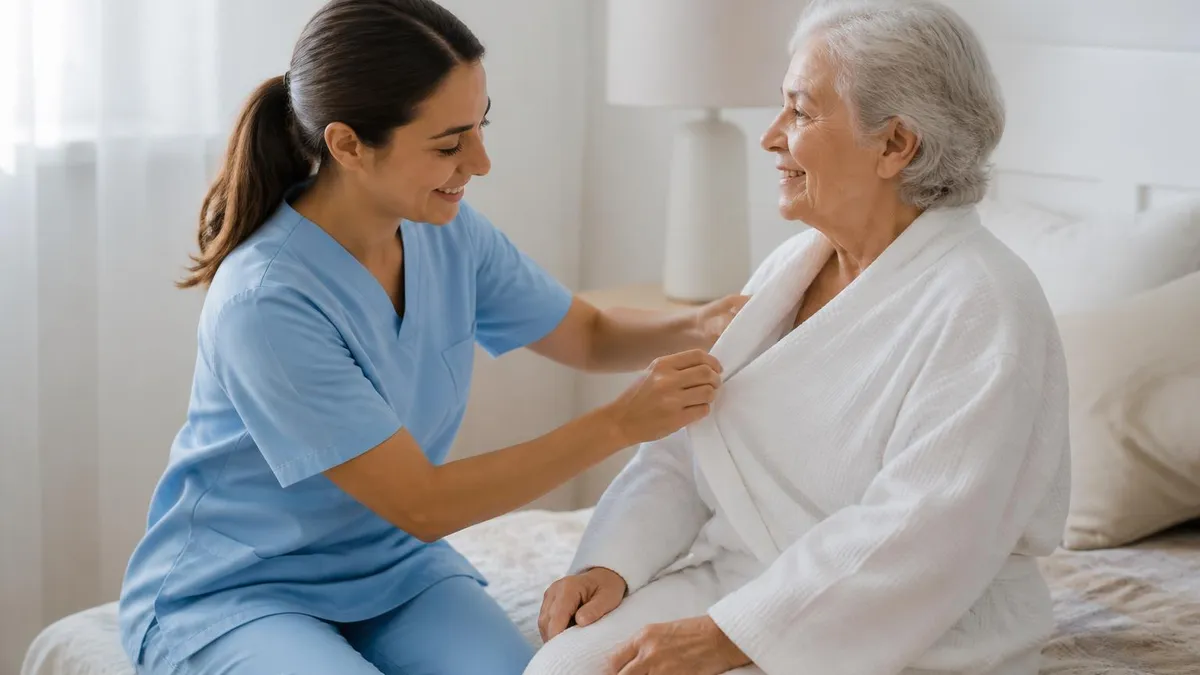
What Is a Personal Care Assistant? Complete Career Overview, Duties, Requirements, and Pathways for 2026
About the Author

Registered Nurse & Healthcare Educator
Johns Hopkins University School of NursingDr. Sarah Mitchell is a board-certified registered nurse with over 15 years of clinical and academic experience. She completed her PhD in Nursing Science at Johns Hopkins University and has taught NCLEX preparation and clinical skills courses for nursing students across the United States. Her research focuses on evidence-based exam preparation strategies for healthcare certification candidates.