
Assisted Living vs Personal Care: What Every PCA Needs to Know in 2026 October
Assisted living vs personal care explained for PCAs. Learn key differences, duties, settings & more. ✅ Includes practice quiz links.

Understanding the difference between assisted living vs personal care is one of the most important distinctions any working or aspiring Personal Care Assistant (PCA) can master. While both terms describe support for individuals who need help with daily activities, they refer to very different service models, settings, and levels of care. If you are preparing for a PCA certification exam or starting a new caregiving role, getting this distinction right will sharpen your clinical thinking and strengthen your patient interactions considerably.
PCA medical knowledge forms the backbone of quality caregiving. When clients, families, and healthcare teams use the term "personal care," they typically mean hands-on assistance provided in a private home or community setting — bathing, dressing, grooming, meal preparation, and mobility support. Assisted living, by contrast, refers to a residential facility-based model where multiple residents receive tiered care packages under one roof, often with licensed nursing oversight available around the clock.
What is a PCA in this context? A Personal Care Assistant is a trained paraprofessional who delivers non-medical and some medical-adjacent support to individuals who cannot fully care for themselves due to age, disability, or chronic illness. PCAs operate across both assisted living facilities and private-home personal care programs, making it essential that they understand the rules, expectations, and scope of practice associated with each environment.
PCA meaning extends well beyond just physical tasks. It encompasses dignity, advocacy, and individualized care planning. Whether you work for a home health agency, a Medicaid waiver program, or directly for a family through a consumer-directed model, your role is shaped by the setting you work in. Knowing how assisted living regulations differ from in-home personal care standards helps you stay compliant and deliver safer, better-coordinated support.
The concept of assisted living vs personal care also matters for career planning. PCAs who understand facility-based care may find more opportunities for advancement into supervisory or specialized roles within larger residential communities. Those who prefer one-on-one relationships and flexible scheduling often gravitate toward home-based personal care programs funded through state Medicaid waivers or private pay arrangements.
PCA stats show rapid job growth across all care settings. The U.S. Bureau of Labor Statistics projects that home health and personal care aides — a category that includes most PCAs — will see employment grow by approximately 21 percent through 2033, adding more than 700,000 positions nationwide. This growth is driven primarily by an aging baby boomer population, expanded Medicaid funding, and a broad societal preference for aging in place rather than moving to institutional facilities.
Whether you are studying for your first certification or brushing up on care-setting knowledge before an employer interview, this guide will walk you through every meaningful distinction between assisted living and personal care, helping you become a more confident, informed, and effective caregiver in whichever setting you choose.
Assisted Living vs Personal Care by the Numbers

Two Worlds of Care: Understanding Each Setting
Services delivered inside the client's own residence. PCAs assist with daily living activities such as bathing, dressing, and meal preparation. Care is individualized, flexible, and often funded through Medicaid waiver programs, private pay, or insurance.
A licensed residential community housing multiple residents who need help with daily activities but do not require full skilled nursing care. Staff ratios, care plans, and safety standards are regulated by state licensing agencies.
Specialized wings within assisted living communities or standalone facilities serving residents with Alzheimer's and dementia. PCAs in these settings receive additional behavioral training and work within secured, structured environments.
Medicaid-funded models where the client or their family hires and directs their own PCA. The worker may be a family member. Programs like Tempus Unlimited support fiscal management for these arrangements.
When comparing assisted living vs personal care as a PCA professional, the most important starting point is understanding what each environment demands from its front-line workers. In a private-home setting, a PCA is often the client's primary — and sometimes only — daily human contact. This creates a deeply personal, trust-based relationship that requires strong communication skills, emotional intelligence, and the ability to work independently without constant supervision from a nurse or supervisor on-site.
Assisted living facilities, by contrast, operate much more like a team-based medical environment. PCAs or similarly titled care aides work alongside licensed nurses, activity directors, dietary staff, and social workers. Shift reports, care plan updates, and incident documentation are standard expectations. A PCA who thrives in this environment tends to be highly organized, comfortable with structured routines, and skilled at collaborating within an interdisciplinary team.
PCA skincare duties illustrate a practical difference between the two settings. In a home setting, a PCA might apply a prescribed moisturizer or pca skin care product as part of a daily grooming routine, following instructions left by a visiting nurse or documented in the care plan. In an assisted living facility, skin care protocols are standardized across all residents, documented in electronic health records, and regularly audited by nursing supervisors for compliance with state regulations and wound prevention standards.
The physical demands of each setting also differ meaningfully. Home-based PCAs may perform transfers and mobility assists with minimal equipment because private homes are not always equipped with ceiling lifts or Hoyer systems. This places greater responsibility on the PCA to assess the environment, use proper body mechanics, and know when to request adaptive equipment through the supervising agency. Facility-based PCAs typically have access to better equipment but manage higher client volume per shift.
Scheduling structures vary significantly between the two settings as well. Home care PCAs often work irregular hours across multiple clients, traveling between residences throughout the day. They must manage their own time effectively and remain flexible when client needs change unexpectedly. Assisted living PCAs typically work fixed shifts — days, evenings, or nights — within one location, offering more schedule predictability but also requiring continuous availability on the unit for the full duration of each shift.
Documentation responsibilities are generally heavier in assisted living. State regulations require facilities to maintain detailed records of each resident's condition, care delivered, medications administered, and any behavioral or physical changes noted during each shift. Home care documentation requirements exist but may be less burdensome, often consisting of a daily visit log, activity checklist, and periodic progress notes submitted to the supervising home health agency or Medicaid program for billing purposes.
Regardless of setting, all PCAs must understand their scope of practice boundaries. Neither home care PCAs nor facility aides are permitted to perform tasks reserved for licensed nurses, such as administering injections, changing sterile wound dressings, or altering medication regimens. Understanding these boundaries protects both the client and the worker, and is a core topic on virtually every PCA certification examination administered across the United States.
PCA Medical, Skincare, and Broader PCA Meanings Explained
In pca medical terminology, the acronym most commonly stands for Patient-Controlled Analgesia — a pain management system used in hospital settings where patients self-administer doses of pain medication via a pump. This is entirely separate from the Personal Care Assistant role, but PCAs working in transitional or post-hospital care settings should understand the distinction. Knowing that a client was recently on a PCA pump helps the caregiver ask the right questions about pain management during the transition home.
Understanding pca pump protocols — even at a basic awareness level — also helps PCAs communicate accurately with nursing staff during handoffs. If a client returning from a hospital stay mentions they had a PCA pump, the home care PCA can flag any ongoing pain management concerns to the supervising nurse. This kind of informed communication bridges gaps between institutional care and home-based personal care, ultimately reducing the risk of complications or readmissions after discharge.

Assisted Living vs In-Home Personal Care: Pros and Cons for PCAs
- +Assisted living offers stable, predictable shift schedules in one location
- +Facility settings provide access to nursing supervision and interdisciplinary team support
- +Better access to medical equipment such as Hoyer lifts and electronic health records
- +In-home care offers deeper one-on-one relationships with individual clients
- +Home-based PCAs enjoy greater autonomy and flexible scheduling across multiple clients
- +Consumer-directed home care programs allow family members to serve as paid PCAs
- −Assisted living shifts can be physically demanding with high resident-to-staff ratios
- −Facility-based PCAs may have limited input into care plan decisions compared to nurses
- −In-home PCAs work in isolation without immediate supervisor support during emergencies
- −Home environments may lack proper adaptive equipment, increasing injury risk
- −Traveling between multiple home care clients adds unpaid commute time and costs
- −Documentation requirements in assisted living facilities can be extensive and time-consuming
Pros and Cons at a Glance
| Pros | Cons |
|---|---|
| Assisted living offers stable, predictable shift schedules in one location | Assisted living shifts can be physically demanding with high resident-to-staff ratios |
| Facility settings provide access to nursing supervision and interdisciplinary team support | Facility-based PCAs may have limited input into care plan decisions compared to nurses |
| Better access to medical equipment such as Hoyer lifts and electronic health records | In-home PCAs work in isolation without immediate supervisor support during emergencies |
| In-home care offers deeper one-on-one relationships with individual clients | Home environments may lack proper adaptive equipment, increasing injury risk |
| Home-based PCAs enjoy greater autonomy and flexible scheduling across multiple clients | Traveling between multiple home care clients adds unpaid commute time and costs |
| Consumer-directed home care programs allow family members to serve as paid PCAs | Documentation requirements in assisted living facilities can be extensive and time-consuming |
PCA Certification Readiness Checklist: What to Know Before Your Exam
- ✓Define the difference between assisted living, personal care, and skilled nursing facility care
- ✓Identify which tasks fall within PCA scope of practice versus licensed nurse responsibilities
- ✓Describe proper handwashing technique and infection control procedures for both home and facility settings
- ✓Explain how to document daily care activities accurately in visit logs and care plans
- ✓Demonstrate knowledge of safe client transfer and mobility assist techniques
- ✓List the signs of abuse, neglect, and exploitation and know mandatory reporting requirements
- ✓Identify five or more activities of daily living (ADLs) that PCAs commonly assist with
- ✓Understand Medicaid waiver program basics and how they fund in-home personal care services
- ✓Know the key differences between consumer-directed and agency-directed PCA program models
- ✓Explain the purpose of an individualized care plan and who participates in its development
- ✓Recognize early warning signs of pressure injuries and describe appropriate skin inspection protocols
- ✓State the steps to take when a client has a fall, medical emergency, or sudden change in condition
Scope of Practice Is the Most Tested Topic
On virtually every PCA certification exam nationwide, questions about scope of practice — what a PCA may and may not do — appear more frequently than any other single topic. Knowing the line between personal care tasks and skilled nursing tasks, and understanding how that line shifts slightly between home and facility settings, can be the difference between passing and failing your exam on the first attempt.
Choosing between an assisted living career path and an in-home personal care career path is one of the most consequential early decisions a new PCA will make. Both settings offer meaningful, stable employment with strong growth prospects — but they attract different personalities, work styles, and long-term career goals. Understanding the nuances of each path helps you make a choice that aligns with your strengths and sustains your motivation over a long caregiving career.
PCAs who prefer structured environments tend to flourish in assisted living settings. These facilities operate on consistent schedules, clearly defined role boundaries, and established clinical protocols. If you enjoy working as part of a larger team, appreciate having a nurse immediately available when clinical questions arise, and find it rewarding to build relationships with a stable roster of residents over months or years, an assisted living position may be an excellent fit for your professional temperament and caregiving style.
In-home personal care attracts PCAs who value autonomy, variety, and the depth of one-on-one relationships. Home-based work requires strong self-direction — you will make many independent judgment calls about how to adapt care routines to a client's changing environment or fluctuating health status. PCAs who excel in home care tend to be resourceful problem-solvers who can think creatively within the constraints of a private residence and manage their time effectively across multiple clients each day.
Salary and compensation structures also differ between the two settings. While average hourly wages are comparable across most states, assisted living facilities may offer more consistent hours, employer-provided benefits such as health insurance and paid time off, and clearer pathways to advancement into lead aide or supervisory roles. Home care agencies and consumer-directed programs may offer more scheduling flexibility but less access to benefits, particularly in states where the PCA works as an independent contractor rather than a direct employee.
State regulations play a major role in shaping the day-to-day experience of PCAs in both settings. Each state licenses and regulates assisted living facilities independently, meaning staffing ratios, training requirements, and documentation standards can vary considerably from one state to another. Home care personal care assistant programs funded through Medicaid are similarly state-administered, with wide variation in service hours authorized, tasks permitted, and oversight requirements. PCAs who relocate should research their new state's specific standards before assuming their prior training fully meets local requirements.
Career advancement looks different in each setting as well. Assisted living PCAs who pursue additional credentials — such as a Certified Nursing Assistant (CNA) license or a Medication Aide certification — can move into higher-paying roles with expanded clinical responsibilities. Home care PCAs who develop specialized skills in areas like dementia care, pediatric personal care, or traumatic brain injury support can command higher rates and take on more complex cases, often leading to roles as care coordinators or program supervisors within home health agencies.
No matter which setting you choose, continuous education is essential for long-term success. Participating in PCA training refreshers, attending agency in-services, and using practice test resources like those available on PracticeTestGeeks.com helps you stay current with evolving best practices, regulatory changes, and clinical standards that affect the quality and safety of the care you deliver to every individual client you serve.

PCA training hour requirements range from as few as 8 hours in some states to more than 120 hours in others. If you completed your training in one state and plan to work in another, do not assume your certification automatically transfers. Contact the Medicaid agency or licensing board in your new state to verify reciprocity policies and any additional requirements before accepting a client assignment.
Exam preparation is where the theoretical knowledge you have built about assisted living vs personal care gets tested under pressure. Most PCA certification exams are competency-based, meaning they assess not just whether you know the right answer but whether you can apply correct caregiving judgment in realistic scenarios. Questions frequently present a brief clinical vignette — a client situation with specific details — and ask you to identify the most appropriate PCA response from among four options.
Effective exam prep starts with knowing your state's specific PCA competency framework. Some states administer written exams only, while others require a skills demonstration component where you perform tasks such as handwashing, bed bath assistance, or safe transfer technique in front of an evaluator. Check with your training program or the state Medicaid agency to confirm the exact format of the exam you will take, and tailor your study approach accordingly so you do not over-prepare for components that are not evaluated.
Practice questions are among the most effective study tools available to PCA candidates. Answering practice questions forces active recall — the process of pulling information from memory rather than simply re-reading notes — which research consistently shows leads to stronger long-term retention than passive review. Working through scenario-based questions also helps you develop the clinical reasoning skills needed to eliminate obviously wrong answers quickly and confidently select the best option under time pressure.
Time management during the actual exam matters more than many candidates realize. Most PCA written exams allow approximately one to two minutes per question. If you spend too long on a difficult question early in the exam, you risk running short on time for questions you would otherwise answer correctly. A proven strategy is to move through the exam at a steady pace, mark any questions you are uncertain about, and return to them after completing all the items you can answer with confidence on the first pass.
Understanding how the exam distinguishes between assisted living and in-home personal care standards may give you an edge on scenario-based questions. When a question describes a client in a residential facility, the expected answer often involves following facility protocol, consulting a supervisor, or documenting in the electronic health record. When a scenario describes a home-based client, the correct answer more often involves independent problem-solving, calling the supervising nurse for guidance, or adapting care to the home environment with available resources.
Nutrition and rest in the days before your exam matter as much as your study strategy. Cognitive fatigue significantly impairs test performance, so avoid cramming the night before. Instead, do a light review of your most challenging topics, get a full night of sleep, eat a nutritious meal before the exam, and arrive at the testing site early enough to settle your nerves. Being physically comfortable during the exam frees your cognitive resources for answering questions rather than managing stress or discomfort.
After you pass your initial certification, the learning does not stop. Most states require PCAs to complete continuing education hours at regular intervals — typically every one to two years — to maintain active status. Using resources like PracticeTestGeeks.com between certification cycles helps you stay sharp on core topics, identify any knowledge gaps before they affect your practice, and demonstrate to employers the kind of professional commitment that distinguishes exceptional caregivers from average ones throughout an entire career.
Practical success as a PCA in either an assisted living or personal care setting begins long before you arrive for your first shift. It starts with developing strong professional habits around communication, documentation, self-care, and boundary-setting that will protect you, your clients, and your career over the long term. Many experienced PCAs describe the first ninety days of a new position as the most important period — the time when you establish your reputation, learn the unwritten norms of your workplace, and build the trust relationships that make the rest of your tenure more rewarding.
Communication is the single most transferable skill across both care settings. In assisted living, this means giving clear, accurate shift reports to incoming staff, flagging concerns to nursing supervisors before they become crises, and documenting observations in language that is specific and objective rather than vague or interpretive. In home care, good communication means keeping the client and their family well-informed, maintaining a transparent relationship with your supervising agency, and knowing exactly how and when to escalate urgent situations to a clinician.
Boundary management is a particular challenge in home-based personal care, where the relational intimacy of the work can blur professional lines. PCAs must consistently maintain the distinction between a professional caregiving relationship and a personal friendship. This means not sharing personal contact information with clients outside the agency system, not accepting significant gifts or being included in wills, and not making financial transactions on behalf of clients outside of documented and supervised arrangements. These boundaries protect both parties and are regularly assessed by ethics-focused exam questions.
Physical self-care is non-negotiable in a profession that demands significant physical labor. Back injuries are among the most common occupational injuries reported by PCAs and home health aides. Consistently using proper body mechanics — maintaining a wide base of support, keeping the load close to your body, never twisting while lifting — reduces cumulative wear on your spine and joints. Investing in supportive footwear, staying hydrated throughout your shift, and taking permitted rest breaks when available are simple habits that dramatically extend a PCA's healthy working years.
Building a personal professional development plan helps PCAs grow intentionally rather than waiting for opportunities to appear. Set specific goals for each year — a new specialty training, a CNA credential, a supervisory role — and take concrete monthly steps toward each goal. Informing your agency or facility employer of your professional goals often results in being considered first when advancement opportunities arise, since supervisors value workers who demonstrate long-term commitment to the field and a desire to grow their skills.
Connecting with peers through professional networks and caregiver associations provides support, job leads, and continuing education resources that can accelerate your growth considerably. State home care associations, local Medicaid agency newsletters, and online caregiver communities are all valuable sources of real-world information about regulatory changes, new research on best practices, and advocacy efforts that affect PCA pay rates and working conditions at the policy level.
Whether you ultimately build your career in assisted living, in-home personal care, or move fluidly between both settings over time, the investment you make today in mastering the foundational knowledge of your profession pays dividends throughout your entire working life. Use every available study resource, take every practice question seriously, and bring that same commitment to learning into every client encounter — because the very best PCAs never stop growing, no matter how many years of experience they accumulate.
Sample Personal Care Assistant Practice Questions
Try these questions from our free Personal Care Assistant practice tests. The correct answer and an explanation follow each question.
A male client needs perineal care. Which direction should the PCA clean?
- A. From the perineum toward the urethral opening
- B. From the urethral opening outward in a circular motion
- C. From back to front to cover the largest area first
- D. Direction does not matter if soap is used
Answer: B. From the urethral opening outward in a circular motion
Cleaning from the urethral opening outward prevents introducing bacteria from surrounding areas into the urethra, reducing infection risk.
When monitoring a patient's vital signs, which of the following would indicate the need to notify a healthcare professional?
- A. A pulse rate of 80 beats per minute in an adult.
- B. A body temperature of 101.5°F (38.6°C).
- C. A blood pressure of 120/80 mmHg.
- D. A respiratory rate of 18 breaths per minute.
Answer: B. A body temperature of 101.5°F (38.6°C).
A body temperature of 101.5°F (38.6°C) indicates a fever, which is an abnormal vital sign and warrants immediate notification of a healthcare professional. Elevated temperatures can signify infection or other medical issues that require prompt assessment and intervention. The other options (pulse 80 bpm, BP 120/80 mmHg, resp rate 18 bpm) are generally within normal adult ranges.
A patient tells you they need to use the bathroom but their call light is out of reach. What should the PCA do first?
- A. Tell the patient to wait until the next scheduled check
- B. Assist the patient immediately and report the call light issue
- C. Ask a passing visitor to help
- D. Document the incident and continue other tasks
Answer: B. Assist the patient immediately and report the call light issue
Patient safety and needs take priority; assist immediately, then report the equipment problem to the charge nurse.
Why is documentation important in Assisting with Daily Living Activities?
- A. It is unnecessary if the patient’s condition is stable.
- B. It provides a legal record of care provided and ensures accurate patient information.
- C. It is not important for daily patient care.
- D. It only matters when requested by insurance companies.
Answer: B. It provides a legal record of care provided and ensures accurate patient information.
Documentation in Assisting with Daily Living Activities is crucial for maintaining a legal record of the care provided and ensuring accurate, up-to-date patient information. This record allows healthcare teams to track progress, identify patterns, and adjust care plans as needed, promoting continuity and consistency. It also serves as evidence of adherence to care standards, protecting both the patient and the caregiver.
PCA Questions and Answers

PCA Duties: Complete Guide to Personal Care Assistant Responsibilities, Daily Tasks, and Care Standards in 2026
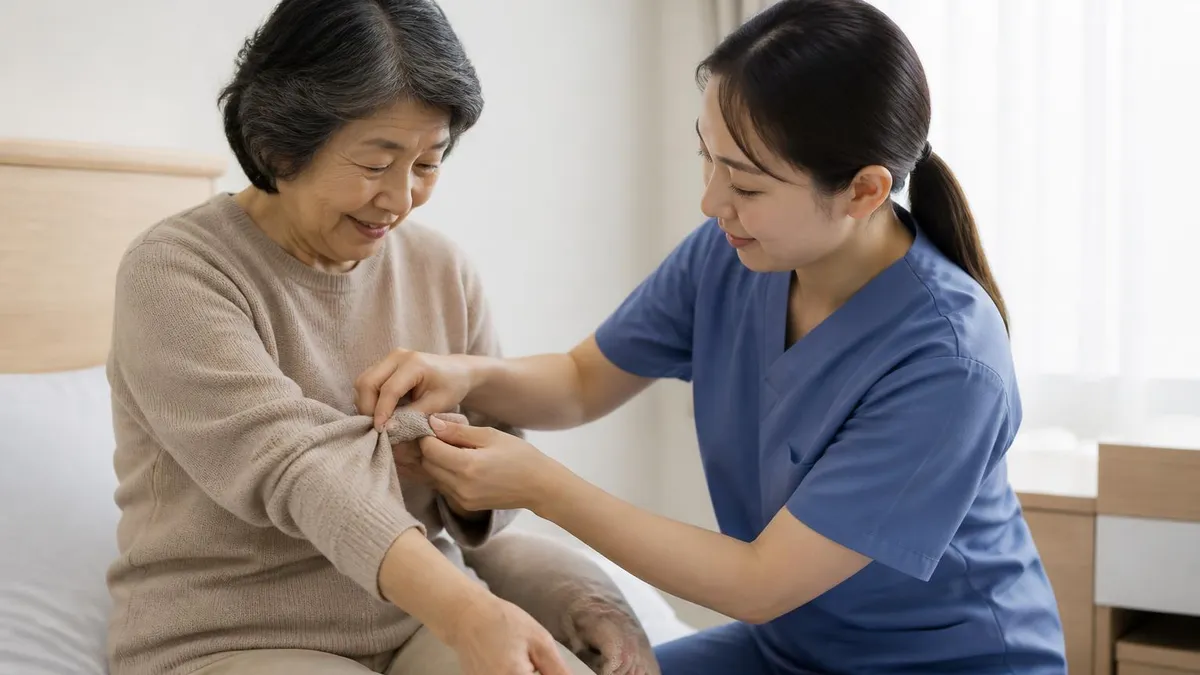
Personal Care Assistant Jobs Near Me: How to Find Local PCA Positions, Apply Successfully, and Start Your Caregiving Career in 2026
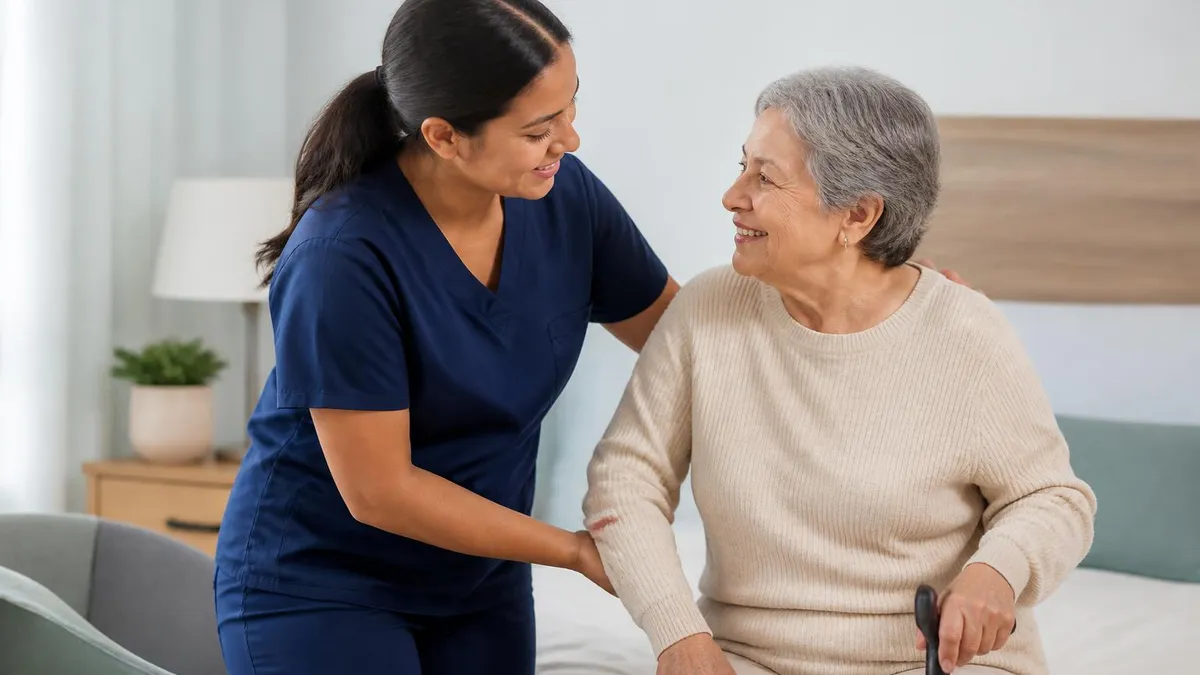
Personal Care Assistant Salary 2026: Complete Pay Guide by State, Experience, and Setting

Tempus Unlimited PCA: Complete Guide to Personal Care Assistant Services, Eligibility, and How to Get Started in 2026

PCA Benefits Center: Complete Guide to Personal Care Assistant Programs, Eligibility, and How to Apply in 2026
About the Author

Registered Nurse & Healthcare Educator
Johns Hopkins University School of NursingDr. Sarah Mitchell is a board-certified registered nurse with over 15 years of clinical and academic experience. She completed her PhD in Nursing Science at Johns Hopkins University and has taught NCLEX preparation and clinical skills courses for nursing students across the United States. Her research focuses on evidence-based exam preparation strategies for healthcare certification candidates.