
What Happens When Airway Resistance Increases: PALS Guide to Pediatric Respiratory Physiology
What happens when airway resistance increases PALS? Learn pediatric airway physiology, clinical signs & exam tips. ✅ Practice questions included.

Understanding what happens when airway resistance increases is one of the most clinically critical concepts tested on the PALS certification exam. When resistance rises inside a child's airway — whether from bronchospasm, mucus plugging, edema, or a foreign body — the amount of pressure the respiratory muscles must generate to move the same volume of air increases dramatically. Poiseuille's Law tells us that resistance is inversely proportional to the fourth power of the radius, which means even a tiny reduction in airway diameter causes an enormous jump in resistance and work of breathing.
In healthy pediatric patients, airway resistance is naturally higher than in adults because children's airways are absolutely smaller. A 1 mm layer of mucosal edema that barely affects an adult airway can reduce the cross-sectional area of an infant's trachea by up to 75 percent. This physiological reality is why conditions like croup, bronchiolitis, and asthma are so dangerous in young children and why PALS-trained providers must recognize the signs of increased resistance quickly, before the child decompensates into respiratory failure.
When resistance increases, the body's first compensatory response is to increase respiratory rate and recruit accessory muscles. You will see nasal flaring, intercostal retractions, suprasternal retractions, and paradoxical chest movement in severe cases. The child is working harder to generate the same — or less — tidal volume. Oxygen saturations may initially be preserved because hypoxic vasoconstriction and increased respiratory effort can compensate, but this compensation is finite and exhausting, particularly in infants who have limited respiratory reserve.
From a PALS exam perspective, you need to understand the difference between upper airway obstruction and lower airway obstruction, because each produces distinct clinical findings. Upper airway obstruction — such as croup or a foreign body above the carina — causes inspiratory stridor and prolonged inspiratory time. Lower airway obstruction — such as asthma or bronchiolitis — causes expiratory wheezing and prolonged expiratory time because the small airways collapse during forced exhalation, trapping air and leading to hyperinflation.
The physiological consequences of sustained elevated airway resistance extend beyond the lungs. As the child struggles to breathe, oxygen consumption by the respiratory muscles themselves increases dramatically, stealing oxygen from the heart and brain. Pulsus paradoxus — a drop in systolic blood pressure of more than 10 mmHg during inhalation — is a measurable sign of severe airway obstruction. Carbon dioxide retention occurs when the child can no longer maintain the elevated minute ventilation needed to clear CO2, and a rising PaCO2 in a child with obstructive disease is an ominous, pre-arrest finding that demands immediate intervention.
If you are preparing for your certification, working through pals airway resistance content alongside your practice questions will help you connect the physiology to the clinical scenarios you will encounter on the exam. The PALS algorithm specifically directs providers to identify whether respiratory distress is primarily from upper airway obstruction, lower airway obstruction, lung tissue disease, or disordered control of breathing — because the treatment differs significantly for each. Knowing what elevated resistance does to the child's cardiovascular and respiratory physiology allows you to anticipate the correct intervention before the algorithm even prompts you.
Recognition of increased airway resistance must be rapid. The PALS framework emphasizes a structured Evaluate-Identify-Intervene sequence. Providers should categorize severity as respiratory distress, respiratory failure, or respiratory arrest. Increased airway resistance most commonly causes respiratory distress first, but without appropriate intervention — supplemental oxygen, positioning, bronchodilators, nebulized epinephrine, or airway opening maneuvers — it progresses to failure and arrest. Understanding the underlying physiology is not just exam preparation; it is the cognitive foundation that makes every intervention decision faster and more confident at the bedside.
Pediatric Airway Resistance by the Numbers

How Increased Airway Resistance Progresses in Pediatric Patients
Compensated Respiratory Distress
Increased Work of Breathing
CO2 Retention & Fatigue
Respiratory Failure
Respiratory Arrest → Cardiac Arrest
Clinical assessment of a child with suspected increased airway resistance follows a structured PALS approach: appearance, work of breathing, and circulation. The Pediatric Assessment Triangle (PAT) gives providers a rapid, hands-off first impression within 30 seconds of seeing the child. Abnormal appearance — such as a child who is limp, inconsolable, or staring blankly — combined with increased work of breathing immediately flags the situation as a potential respiratory emergency, regardless of what the pulse oximeter reads at that moment.
Work of breathing is the most telling component when airway resistance is elevated. Providers should systematically assess respiratory rate against age-appropriate norms, noting that a rate above 60 breaths per minute in any age group signals serious distress. Retractions are graded by location: subcostal and intercostal retractions indicate moderate obstruction, while suprasternal and sternal retractions indicate severe obstruction. Head bobbing in infants — caused by the sternocleidomastoid muscle being recruited as a primary breathing muscle — is a sign of extreme respiratory compromise and should never be minimized.
Auscultation provides essential information about where the obstruction is occurring. Inspiratory stridor localizes the problem to the extrathoracic upper airway, where the negative intraluminal pressure during inhalation collapses the obstructed segment further. Expiratory wheezing localizes the problem to the intrathoracic lower airways, which are compressed by positive pleural pressure during exhalation. Diminished or absent breath sounds on one side suggest pneumothorax, pleural effusion, or complete airway obstruction with atelectasis — each requiring a different PALS response.
Pulse oximetry is a valuable but imperfect tool in the context of elevated airway resistance. Because oxygen dissociates more readily from hemoglobin than carbon dioxide does, a child can maintain a normal or near-normal SpO2 while silently accumulating dangerously high CO2 levels. This disconnect is especially pronounced in children receiving supplemental oxygen, which can keep the saturation artificially normal long after ventilation has become severely impaired. Never use SpO2 alone to judge whether a child with obstructive disease is safe — assess clinical work of breathing continuously.
Capnography, when available, provides a real-time, non-invasive window into ventilation. An end-tidal CO2 waveform that shows a characteristic shark-fin or plateau shape indicates air trapping from lower airway obstruction. A rising ETCO2 value in a child with obstructive respiratory disease should prompt immediate re-evaluation and escalation of care. PALS courses increasingly emphasize waveform capnography as an adjunct to clinical assessment, and exam questions may test your ability to interpret these waveforms in clinical vignettes.
Heart rate is another indirect but important indicator of the cardiovascular strain imposed by elevated airway resistance. Sustained tachycardia in a child with respiratory distress reflects sympathetic activation and increased myocardial oxygen demand. Bradycardia in this context is far more alarming — it is a preterminal sign in children and typically reflects profound hypoxia affecting the cardiac conduction system. The PALS bradycardia algorithm specifically asks: is there cardiopulmonary compromise? In a child with obstructive disease who develops bradycardia, the answer is almost always yes, and the root cause is the airway.
Skin color and perfusion complete the assessment picture. Pallor suggests compensatory vasoconstriction as the body redirects blood to vital organs. Mottling indicates failing perfusion. Cyanosis is a late and dangerous sign — by the time a child looks blue, significant hemoglobin desaturation has already occurred, because the human eye cannot detect cyanosis until approximately 5 grams of deoxygenated hemoglobin per deciliter are present in capillary blood. Central cyanosis, assessed on the tongue and mucous membranes, is more reliable than peripheral cyanosis for estimating true hypoxemia in the context of high airway resistance.
Upper vs Lower Airway Obstruction: Key PALS Distinctions
Upper airway obstruction occurs above or at the level of the carina and includes conditions such as croup (laryngotracheobronchitis), epiglottitis, retropharyngeal abscess, anaphylaxis with angioedema, and foreign body aspiration proximal to the carina. The hallmark clinical finding is inspiratory stridor — a high-pitched, harsh sound generated as turbulent airflow passes through the narrowed extrathoracic segment. During inhalation, negative intraluminal pressure actively collapses the obstruction site, worsening the resistance dynamically with each breath.
Treatment of upper airway obstruction in PALS focuses on opening or bypassing the obstructed segment. For croup, nebulized racemic epinephrine provides rapid but temporary relief by causing mucosal vasoconstriction, reducing subglottic edema; dexamethasone addresses the underlying inflammatory cause. For epiglottitis, the priority is securing a definitive airway — ideally in the operating room with anesthesia present — while keeping the child calm and avoiding anything that increases agitation. For foreign body aspiration with complete obstruction in a conscious child, back blows and chest thrusts (infants) or abdominal thrusts (children over 1 year) are the immediate PALS interventions.

Advantages and Limitations of Current PALS Airway Assessment Tools
- +Pediatric Assessment Triangle provides a rapid, non-invasive 30-second screen that identifies severity before any equipment is attached
- +Waveform capnography distinguishes obstructive from restrictive patterns by waveform shape, not just numeric values
- +Age-specific respiratory rate norms allow providers to identify tachypnea before clinical deterioration becomes obvious
- +Auscultation reliably differentiates upper from lower airway obstruction by timing and character of abnormal sounds
- +Pulsus paradoxus measurement quantifies severity of obstruction non-invasively using a standard blood pressure cuff
- +Structured PALS algorithms guide treatment decisions even when the exact etiology of obstruction is uncertain
- −Pulse oximetry can remain falsely normal in children with high-flow supplemental oxygen despite severe hypoventilation and CO2 retention
- −Capnography is not universally available in all pre-hospital and emergency settings where PALS skills are needed
- −Young infants may not exhibit classic stridor or wheezing even with significant airway obstruction due to inability to generate sufficient flow
- −Auscultation findings can be misleading in obese patients or those with thick chest walls, underestimating severity
- −Pulsus paradoxus measurement is difficult in tachycardic, non-cooperative, or hemodynamically unstable children
- −Anxiety and agitation from assessment itself can worsen obstruction in upper airway conditions like epiglottitis and croup
PALS Airway Resistance Assessment Checklist
- ✓Apply the Pediatric Assessment Triangle (appearance, work of breathing, circulation) within the first 30 seconds of patient contact.
- ✓Count the respiratory rate for a full 60 seconds and compare to age-appropriate normal ranges.
- ✓Identify and document the location of retractions: subcostal, intercostal, suprasternal, or sternal.
- ✓Auscultate all lung fields to determine whether abnormal sounds are inspiratory (upper airway) or expiratory (lower airway).
- ✓Attach continuous pulse oximetry and interpret SpO2 in context of supplemental oxygen delivery and clinical appearance.
- ✓Apply waveform capnography when available and note both the numeric ETCO2 value and the waveform shape.
- ✓Assess heart rate for tachycardia (sympathetic stress) or bradycardia (pre-arrest hypoxia) relative to age norms.
- ✓Check skin color, temperature, and capillary refill time to evaluate the cardiovascular impact of respiratory compromise.
- ✓Categorize the child as respiratory distress, respiratory failure, or respiratory arrest to direct the correct PALS pathway.
- ✓Reassess clinical response within 2–5 minutes after each intervention and escalate treatment if no improvement is observed.
A Normal SpO2 Does NOT Rule Out Respiratory Failure
Children receiving supplemental oxygen can maintain SpO2 above 95% even as their PaCO2 climbs to dangerous levels — a phenomenon called oxygenation-ventilation dissociation. On the PALS exam and at the bedside, always evaluate work of breathing, mental status, and capnography in addition to pulse oximetry. A child with severe asthma who suddenly appears calm may not be improving — they may be exhausted and retaining CO2.
Treatment of increased airway resistance in the PALS framework is organized by the type and level of obstruction. For upper airway obstruction caused by croup, the mainstay is inhaled racemic epinephrine (0.5 mL of 2.25% solution diluted in 3 mL normal saline via nebulizer) for immediate mucosal vasoconstriction, combined with a single dose of dexamethasone (0.15–0.6 mg/kg, maximum 10 mg) for sustained anti-inflammatory effect.
The benefit of epinephrine is visible within 10–20 minutes but wears off after 2–3 hours — the rebound phenomenon — so children who receive it in the emergency department require observation for at least 2–4 hours before discharge can be considered safe.
For lower airway obstruction from asthma, the PALS severity framework drives escalating treatment. Mild-to-moderate exacerbations are treated with inhaled short-acting beta-2 agonists (albuterol via metered-dose inhaler with spacer or nebulizer), with systemic corticosteroids added early because their anti-inflammatory effect takes 4–6 hours to become clinically apparent.
Severe exacerbations add ipratropium bromide, continuous albuterol nebulization, IV magnesium sulfate (25–75 mg/kg, maximum 2 g infused over 20–30 minutes), and consideration of heliox in facilities where it is available. Life-threatening asthma with impending respiratory arrest may require non-invasive positive pressure ventilation (CPAP or BiPAP) or intubation, though intubation in severe asthma carries significant risk of barotrauma and dynamic hyperinflation.
For bronchiolitis — the most common cause of lower airway obstruction in infants under 12 months — the PALS approach is largely supportive. Evidence does not support routine bronchodilator use in RSV bronchiolitis, though a trial of albuterol is reasonable in infants with a family or personal history of atopy, where bronchospasm may be contributing.
Hypertonic saline (3%) nebulization has modest benefit in reducing hospital length of stay. High-flow nasal cannula oxygen (HFNC) has become a widely used intervention for infants with moderate-to-severe bronchiolitis, providing gentle positive airway pressure, humidified oxygen, and washout of nasopharyngeal dead space, effectively reducing airway resistance without the risks of intubation.
Foreign body aspiration requires special attention in PALS because the management depends critically on whether the obstruction is partial or complete and whether the child is conscious. For a conscious child with a partial obstruction who is coughing effectively, the recommended approach is to encourage coughing and avoid blind finger sweeps or aggressive airway instrumentation that could convert a partial obstruction into a complete one.
For a child with complete airway obstruction who is conscious, back blows and chest thrusts (infants) or abdominal thrusts (children over 1 year) are performed in cycles of five until the object is expelled or the child loses consciousness.
If a child with foreign body obstruction loses consciousness, PALS directs providers to begin CPR, looking for the object in the airway before each ventilation attempt and removing it only if it is clearly visible. Blind finger sweeps are never performed. Laryngoscopy may allow direct visualization and removal of a supraglottic foreign body with Magill forceps, which is a valuable skill for advanced providers. If the foreign body is below the cords and causing complete obstruction, emergent bronchoscopy in the operating room is the definitive intervention, and bridging with bag-mask ventilation around the obstruction may be necessary while arranging transport.
Anaphylaxis with upper and lower airway involvement represents a dual-obstruction emergency requiring epinephrine as the primary intervention. Intramuscular epinephrine (0.01 mg/kg of 1:1000 concentration, maximum 0.5 mg) into the anterolateral thigh is the first and most critical step — antihistamines and corticosteroids are adjuncts, not replacements. In children with severe anaphylactic laryngeal edema who do not respond to IM epinephrine, IV epinephrine infusion and emergency airway management may be needed. PALS providers should always have epinephrine immediately accessible when managing any child with a known allergy history presenting with respiratory symptoms.
Non-invasive positive pressure ventilation has transformed the management of many obstructive respiratory conditions in children. CPAP and BiPAP work by applying positive pressure to the airway throughout the respiratory cycle, stenting open collapsible airways, reducing the work of breathing, improving oxygenation, and in the case of BiPAP, augmenting tidal volume during inspiration. In children with moderate-to-severe asthma, croup with impending respiratory failure, or bronchiolitis requiring escalating support, early initiation of HFNC or BiPAP may prevent the need for intubation and its associated risks, including post-extubation stridor from airway trauma and ventilator-associated complications.

In children, bradycardia during respiratory compromise is caused by hypoxia, not a primary cardiac arrhythmia. The PALS protocol is clear: support ventilation and oxygenation first. Do not give atropine as the primary intervention if the bradycardia is clearly driven by inadequate airway management. Failure to recognize the respiratory cause of pediatric bradycardia is one of the most common errors on PALS exams and at the bedside.
PALS exam questions on airway resistance frequently use clinical vignettes that require you to identify the type and severity of obstruction, select the correct intervention, and anticipate the next step if initial treatment fails. A common question pattern presents a 2-year-old with sudden onset stridor at rest, drooling, and a tripod position, and asks you to distinguish this from croup.
The answer hinges on recognizing epiglottitis: the drooling suggests the child cannot swallow secretions due to pain, the tripod position optimizes airway diameter, and the sudden onset without prodromal URI symptoms differentiates it from the gradual onset of viral croup. The correct PALS response is to keep the child calm, provide blow-by oxygen if tolerated, and arrange emergency airway management with anesthesia present.
Another high-yield question pattern presents a 6-year-old with known asthma who has received two albuterol treatments but remains in severe distress with SpO2 of 89% and a ETCO2 rising from 35 to 48 mmHg over 20 minutes. The rising ETCO2 tells you ventilation is worsening despite treatment — this child is moving from severe to life-threatening asthma. The PALS-aligned next steps are IV magnesium sulfate, consideration of BiPAP or HFNC, and preparation for possible intubation. Recognizing the trajectory — not just the absolute value — is what separates passing and failing PALS test-takers.
Scenario-based questions also test your ability to sequence interventions correctly under time pressure. In a rapid sequence, you might be asked: you walk in to find a 4-month-old with marked retractions, grunting, SpO2 of 84%, heart rate 185, and poor tone. What do you do first? The PALS answer is to open the airway, reposition, and begin bag-mask ventilation with high-flow oxygen immediately — not to call for labs, not to apply a monitor, not to place an IV. Airway-breathing-circulation always drives the sequence in pediatric emergencies.
Calculation questions test knowledge of age-appropriate respiratory rate norms, weight-based drug dosing, and equipment sizing. For airway-related drugs, PALS commonly tests albuterol dosing (0.15 mg/kg/dose minimum 2.5 mg), epinephrine dosing for anaphylaxis (0.01 mg/kg IM of 1:1000), and racemic epinephrine for croup.
Equipment sizing questions ask you to select the correct endotracheal tube size using the formula: (age in years ÷ 4) + 4 for uncuffed tubes, or subtract 0.5 for cuffed tubes — a formula that reflects the developmental anatomy of the pediatric subglottis, the narrowest point of the pediatric upper airway where increased resistance from tube-tissue contact is clinically significant.
Image-based questions on PALS exams may show a child's airway radiograph and ask you to interpret it. The classic steeple sign on an AP neck X-ray — a symmetric subglottic narrowing resembling a church steeple — confirms subglottic croup. The classic thumb sign on a lateral neck X-ray — a thick, rounded epiglottis — confirms epiglottitis. These radiographs should only be obtained when the diagnosis is uncertain and the child is stable; a child with suspected epiglottitis should never be sent to radiology unaccompanied by a provider capable of immediately securing the airway.
Waveform interpretation questions may present a capnography tracing with a shark-fin waveform — where the expiratory plateau slopes upward rather than forming a flat plateau — indicating air trapping from lower airway obstruction. You may be asked what this indicates and what treatment is appropriate. The correct answer identifies bronchospasm as the cause and selects bronchodilator therapy. A flat-line capnography waveform in an intubated child should prompt immediate verification of tube position, because it indicates either esophageal intubation or complete airway obstruction — one of the most critical PALS scenarios to recognize and correct within seconds.
Time management on the PALS written exam is important. Questions about airway resistance physiology tend to be longer vignettes, but the answer almost always reduces to a small set of key physiological principles: resistance rises with the fourth power of radius reduction, children decompensate faster than adults, the distinction between upper and lower obstruction drives treatment selection, and a rising CO2 in an obstructed child is a pre-arrest finding. Anchoring on these principles helps you eliminate distractors quickly and select the correct answer with confidence even under exam pressure.
Building mastery in PALS airway resistance content requires more than memorizing facts — it requires internalizing the physiology so that clinical decisions feel automatic. The most effective study strategy is to work through high-quality practice questions that present realistic pediatric vignettes and then thoroughly review the explanations, paying particular attention to why the wrong answers are wrong. Distractors in PALS questions are deliberately designed to exploit common misunderstandings, such as confusing the etiology of bradycardia in children, misjudging the significance of a normal SpO2 in an oxygen-supplemented child, or selecting the wrong drug for the wrong type of obstruction.
Use the Evaluate-Identify-Intervene loop as your mental scaffold when working through any practice scenario. Before selecting an intervention, ask yourself: have I correctly classified this as upper or lower airway obstruction? Have I identified the severity — distress, failure, or arrest? Have I checked my intervention against the correct PALS algorithm pathway? This disciplined cognitive sequence mirrors what the exam is testing and what experienced PALS providers do automatically at the bedside. Practicing it explicitly during study sessions hard-wires it before exam day.
Spaced repetition is particularly effective for memorizing the drug doses, equipment sizes, and age-specific norms that appear on PALS exams. Create flashcards for key thresholds: normal respiratory rates by age group, albuterol and epinephrine doses, the formula for ETT sizing, the definition of pulsus paradoxus, and the distinguishing features of croup versus epiglottitis. Reviewing these cards at increasing intervals — one day, three days, one week, two weeks — exploits the memory consolidation curve and produces durable retention rather than short-term cramming that evaporates under exam stress.
Simulation-based practice, when available, dramatically accelerates skill development for airway resistance scenarios. High-fidelity pediatric simulators allow providers to physically perform bag-mask ventilation, position the head-tilt chin-lift, deliver nebulized medications, and make real-time decisions as the simulated patient's condition evolves. Even low-fidelity simulation — walking through a scenario verbally with a study partner, taking turns playing the provider and the instructor — activates higher-order clinical reasoning that passive reading cannot replicate. PALS courses themselves include simulation stations precisely because physiology knowledge alone does not translate into competent performance without practice.
Group study with other PALS candidates provides the additional benefit of hearing different clinical reasoning approaches and filling knowledge gaps you did not know you had. When you can explain why airway resistance follows the fourth-power law, why expiratory wheezing means lower airway disease, and why a child with severe asthma might need magnesium sulfate when bronchodilators fail — and when you can explain it clearly to someone else — you have reached the level of understanding that earns a passing PALS score and translates into confident real-world performance.
On exam day, read every question stem carefully, especially the age of the child and the sequence of events. A 3-month-old with RSV and a 7-year-old with asthma may both have lower airway obstruction, but their initial management pathways and the specific interventions recommended by PALS differ in important ways.
Pay attention to trending data in multi-step vignettes — a heart rate that was 160 and is now 95 after two minutes of bag-mask ventilation tells you the intervention is working and the correct answer likely involves continuing current management. A heart rate that was 160 and is now 60 tells you the child is deteriorating and the answer involves escalation.
Finally, remember that PALS certification is renewed every two years, and the guidelines are updated periodically to reflect evolving evidence. The 2020 AHA PALS guidelines and their updates are the current authoritative source for exam content.
Major algorithm changes and updated drug dosing recommendations are always reflected in recertification exams, so if you are renewing rather than taking PALS for the first time, review the specific changes from the previous guidelines to ensure your knowledge base is current. Airway resistance physiology does not change, but the recommended treatment protocols for specific conditions like bronchiolitis and severe asthma have been refined with new evidence over time.
PALS Questions and Answers

PALS Certification Cost: Complete 2026 Pricing Guide for Healthcare Professionals
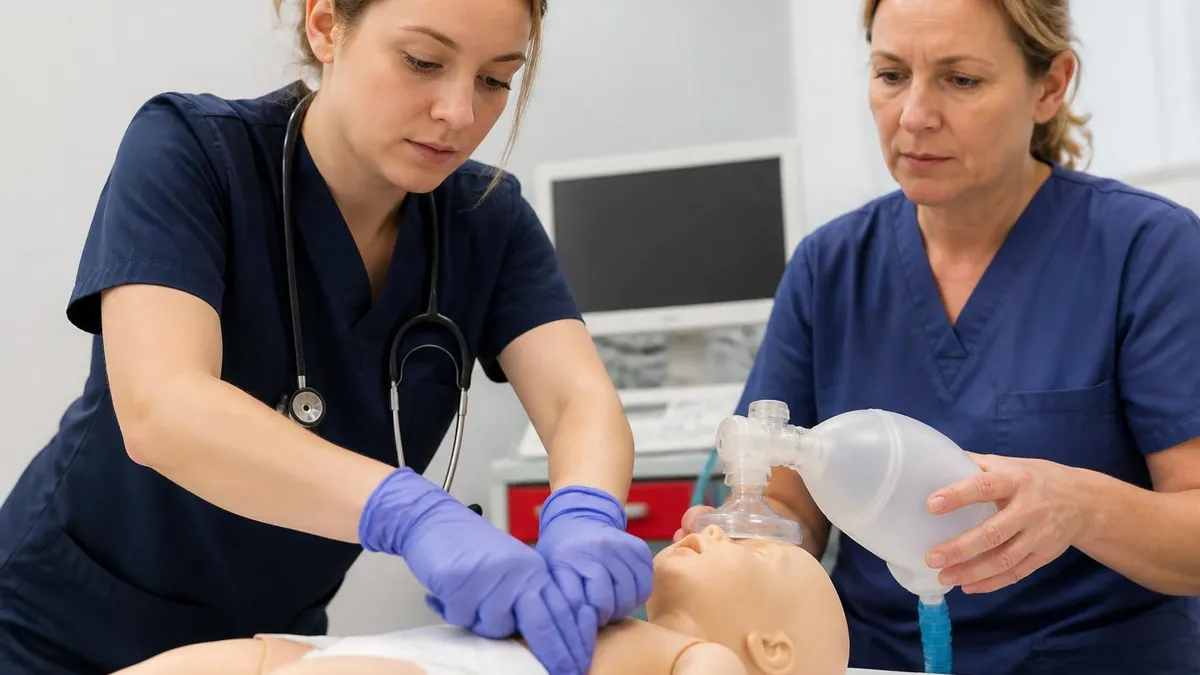
PALS Online Course: Complete 2026 Certification & Study Guide

PALS Instructor Course: Complete Training Guide & Requirements for 2026

PALS Pretest Answers: Complete Practice Guide for Pediatric Advanced Life Support

PALS Training: Complete Guide to Pediatric Advanced Life Support Certification
About the Author

Registered Nurse & Healthcare Educator
Johns Hopkins University School of NursingDr. Sarah Mitchell is a board-certified registered nurse with over 15 years of clinical and academic experience. She completed her PhD in Nursing Science at Johns Hopkins University and has taught NCLEX preparation and clinical skills courses for nursing students across the United States. Her research focuses on evidence-based exam preparation strategies for healthcare certification candidates.
Join the Discussion
Connect with other students preparing for this exam. Share tips, ask questions, and get advice from people who have been there.
View discussion (8 replies)