
PALS Online Course: Complete 2026 September Certification & Study Guide
Compare PALS online course options, costs, and study plans. 🗨️ Free practice questions, exam tips, and AHA-aligned certification prep for 2026 September.
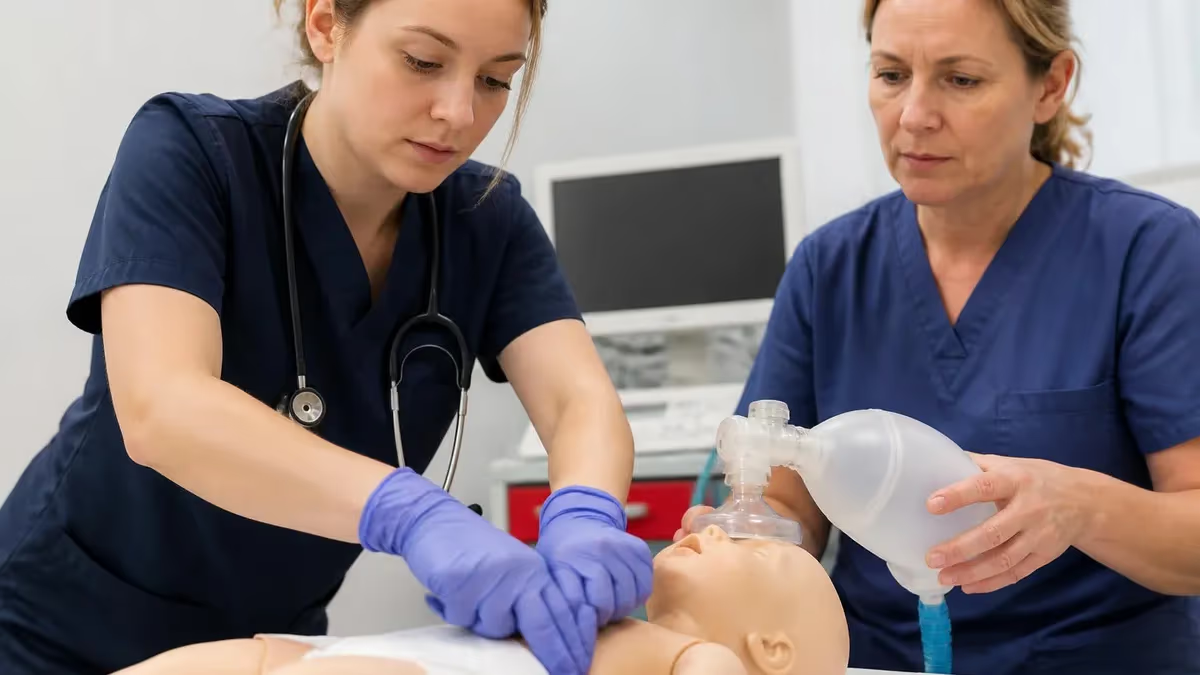
A PALS online course is the fastest, most flexible way for nurses, paramedics, respiratory therapists, and physicians to earn or renew Pediatric Advanced Life Support certification in 2026. Going pals online lets you complete the cognitive portion at home on your own schedule, then finish a short hands-on skills session with an instructor — so a process that used to consume two full workdays now fits comfortably around twelve-hour shifts and family obligations. This guide breaks down every credible option and what to expect from each one.
The American Heart Association (AHA) blended learning model is the dominant format, but providers such as the American Red Cross, ACLS Medical Training, ProMed Certifications, and several state-recognized alternatives also issue cards accepted by most US hospitals. Course length ranges from roughly 6.5 to 8.5 hours of self-paced modules, plus a 60- to 90-minute skills check. Pricing in 2026 sits between $115 and $350 depending on whether you choose the full initial course or a renewal, and whether the skills session is in person or virtual.
Choosing the right course is not just about price. You need to verify three things before you click buy: the issuing organization, hospital acceptance at your specific employer, and whether a hands-on skills validation is required for your role. A clinician working in a Level I pediatric trauma center has different requirements than a school nurse renewing for compliance, and the wrong card can mean re-taking the entire course at your own expense.
This article walks you through course formats, costs, eligibility, what is actually tested, study schedules, common failure points, and the exact algorithms you must memorize. You will also find six free PALS practice quizzes embedded throughout — written to match the 2020 AHA Guidelines update that remains the current standard for the November 2025 through 2026 testing cycle. By the end, you will know which provider fits your situation and exactly how many study hours to budget.
If you are renewing, expect the online cognitive portion to feel familiar but updated. The 2020 Guidelines refined high-quality CPR metrics, simplified the bradycardia algorithm, and emphasized capnography for confirming endotracheal tube placement and chest compression quality. Even experienced providers routinely miss questions on respiratory failure versus respiratory distress, the cardiac arrest H's and T's, and weight-based epinephrine dosing — all of which are covered in detail below.
For first-time candidates, plan on 20 to 30 study hours spread across two to four weeks. You will need solid baseline knowledge of pediatric BLS, basic ECG rhythm recognition (sinus, supraventricular tachycardia, ventricular tachycardia, ventricular fibrillation, asystole), and the AHA pediatric chain of survival. If any of those feel shaky, build a foundation with BLS review and our Pediatric Advanced Life Support Training Guide 2026 before starting the online modules — it will dramatically reduce the time you spend stuck on case simulations.
Below, we cover providers, accreditation, pricing, format, study schedules, the exam itself, and frequently asked questions about taking PALS fully online versus the blended-learning model. Use the table of contents to jump to whatever you need most.
PALS Online Course by the Numbers
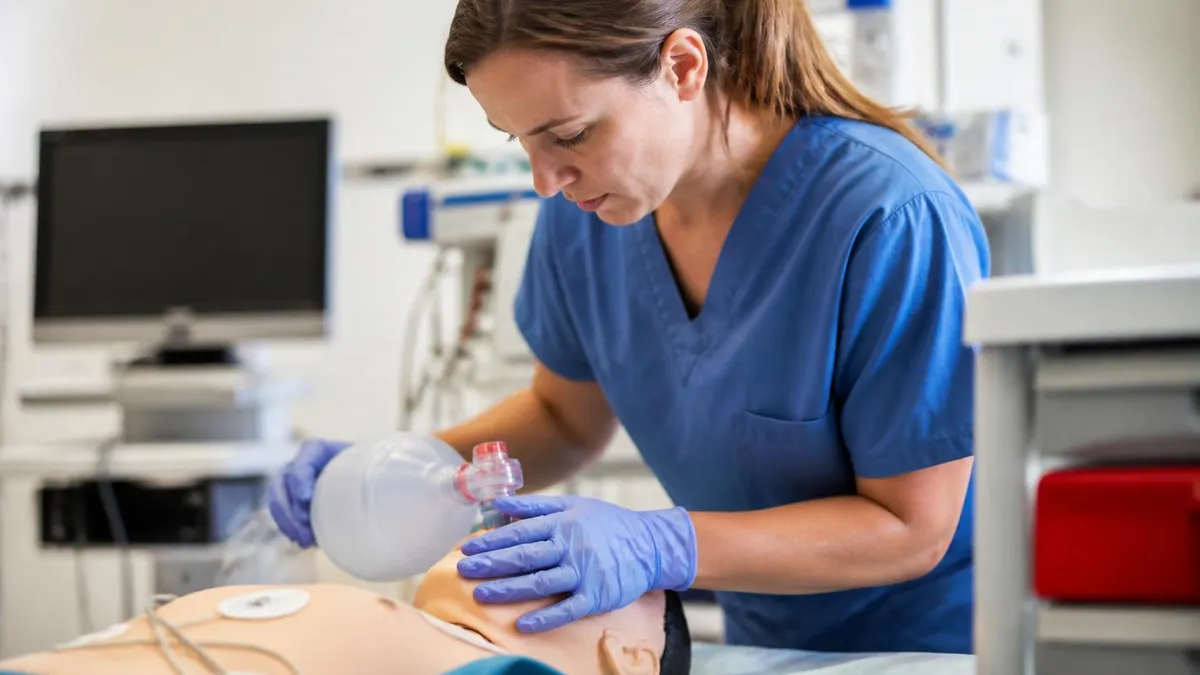
PALS Online Course Formats Explained
The gold-standard option. Roughly 6.5 hours of interactive online modules with simulated patient cases, followed by an in-person skills session of about 90 minutes with an authorized AHA instructor. Issues an official AHA eCard accepted by virtually every US hospital.
Companies like ACLS Medical Training and ProMed offer a fully online experience with no skills check. Cheaper and faster, but acceptance varies — many hospitals, especially large health systems, will not accept these for clinical privileging. Always verify with your employer first.
Uses a similar blended model with online cognitive learning plus a virtual or in-person skills session. Issues a digital certificate that is increasingly accepted at hospitals nationwide. Slightly lower cost than AHA in some regions and includes free re-takes.
Renewals (also called update or recertification) are shorter — about 5–6 hours of online content — and slightly cheaper because skills are already established. You must renew before your card expires; once expired, you must retake the full initial course.
PALS online course pricing in 2026 ranges from a budget $115 for fully online non-AHA providers to roughly $350 for AHA HeartCode bundled with an in-person skills session at a hospital training center. The AHA online portion alone runs $148 to $185, and skills sessions are billed separately — usually $75 to $150 depending on geography. Urban centers in California, New York, and Massachusetts trend higher; rural Midwest and Southern states tend to run $50 to $80 lower for the equivalent course.
Accreditation is where most students get confused. The phrase "accredited" means different things to different employers. The AHA card is the universal standard and is required by The Joint Commission for most clinical roles. The American Red Cross card is accepted at a growing number of hospitals — over 70% as of 2025 — but you should verify with your specific facility's education department before enrolling. Non-AHA, non-Red Cross courses are widely marketed online and often advertise CE credit, but acceptance for hospital privileging is inconsistent.
Continuing education (CE) credit is another consideration. The AHA PALS course typically awards 8.0 contact hours through the American Nurses Credentialing Center (ANCC) and similar credit through the Accreditation Council for Continuing Medical Education (ACCME) for physicians. If you need CE for state licensure renewal, confirm the provider lists your accrediting body explicitly — generic "approved for nursing CE" language is often state-dependent.
A common cost-saving tactic is checking with your employer first. Most hospitals, EMS agencies, and large clinics either provide PALS internally at no cost or reimburse external courses up to a set amount. If your facility is an AHA Training Center, the online code is often distributed for free and you only pay for the skills check. Don't pay out of pocket until you have asked your education department or supervisor — for the full breakdown of the standard AHA pathway and what each step costs, see our complete AHA Pediatric Advanced Life Support Algorithms: Complete 2026 Reference.
Refund policies vary widely. AHA HeartCode access codes are non-refundable once activated, which is the single biggest source of buyer's remorse. Many third-party providers offer a 30-day money-back guarantee but only if you have not started the modules. Read the terms carefully — once you click "begin course," you usually own it. The same applies to the skills session: cancellation within 48 hours typically forfeits the fee.
Finally, beware of overly cheap offers. If a site advertises "PALS certification in 1 hour for $89," that is a red flag. Legitimate online courses require a minimum of 6 hours because they include simulated case scenarios that take time to complete. Anything shorter is almost certainly not hospital-accepted, and you will end up paying twice when you have to retake a real course.
Bottom line: budget $200 to $300 for an initial AHA PALS course with skills, $150 to $225 for renewal, and confirm acceptance with your employer before you click purchase. A wrong-provider mistake costs you an entire course fee plus the time to redo it.
PALS Practice Test Questions
Prepare for the PALS - Pediatric Advanced Life Support exam with our free practice test modules. Each quiz covers key topics to help you pass on your first try.
PALS Cardiac Arrest
PALS Exam Questions covering Cardiac Arrest. Master PALS Test concepts for certification prep.
PALS Tachycardia
Free PALS Practice Test featuring Tachycardia. Improve your PALS Exam score with mock test prep.
PALS - Pediatric Advanced Life Support Bra...
PALS Mock Exam on - Pediatric Advanced Life Support Bradycardia With a Pulse. PALS Study Guide questions to pass on your first try.
PALS - Pediatric Advanced Life Support Car...
PALS Test Prep for - Pediatric Advanced Life Support Cardiac Arrest Algorithm. Practice PALS Quiz questions and boost your score.
PALS - Pediatric Advanced Life Support Hig...
PALS Questions and Answers on - Pediatric Advanced Life Support High-Quality Pediatric BLS. Free PALS practice for exam readiness.
PALS - Pediatric Advanced Life Support Man...
PALS Mock Test covering - Pediatric Advanced Life Support Managing Respiratory Emergencies. Online PALS Test practice with instant feedback.
PALS - Pediatric Advanced Life Support PAL...
Free PALS Quiz on - Pediatric Advanced Life Support PALS Pharmacology. PALS Exam prep questions with detailed explanations.
PALS - Pediatric Advanced Life Support Ped...
PALS Practice Questions for - Pediatric Advanced Life Support Pediatric Shock Management. Build confidence for your PALS certification exam.
PALS - Pediatric Advanced Life Support Ped...
PALS Test Online for - Pediatric Advanced Life Support Pediatric Systematic Assessment. Free practice with instant results and feedback.
PALS - Pediatric Advanced Life Support Pos...
PALS Study Material on - Pediatric Advanced Life Support Post-Cardiac Arrest Care. Prepare effectively with real exam-style questions.
PALS - Pediatric Advanced Life Support Res...
Free PALS Test covering - Pediatric Advanced Life Support Resuscitation Team Dynamics. Practice and track your PALS exam readiness.
PALS - Pediatric Advanced Life Support Tac...
PALS Exam Questions covering - Pediatric Advanced Life Support Tachycardia With a Pulse. Master PALS Test concepts for certification prep.
What the PALS Online Course Covers
The online curriculum walks you through every major PALS algorithm: pediatric cardiac arrest (shockable and non-shockable arms), bradycardia with a pulse, tachycardia with a pulse and adequate perfusion, tachycardia with a pulse and poor perfusion, and post-cardiac arrest care. You will practice each in interactive case simulations that branch based on your decisions, mimicking the real-time pressure of a resuscitation.
Expect heavy emphasis on the pediatric systematic approach — evaluate, identify, intervene — and the difference between respiratory distress and respiratory failure. The course also covers shock recognition (hypovolemic, distributive, cardiogenic, obstructive) and the corresponding fluid resuscitation strategy. Mastering these algorithm decision points is the single biggest predictor of passing the written exam on the first attempt.
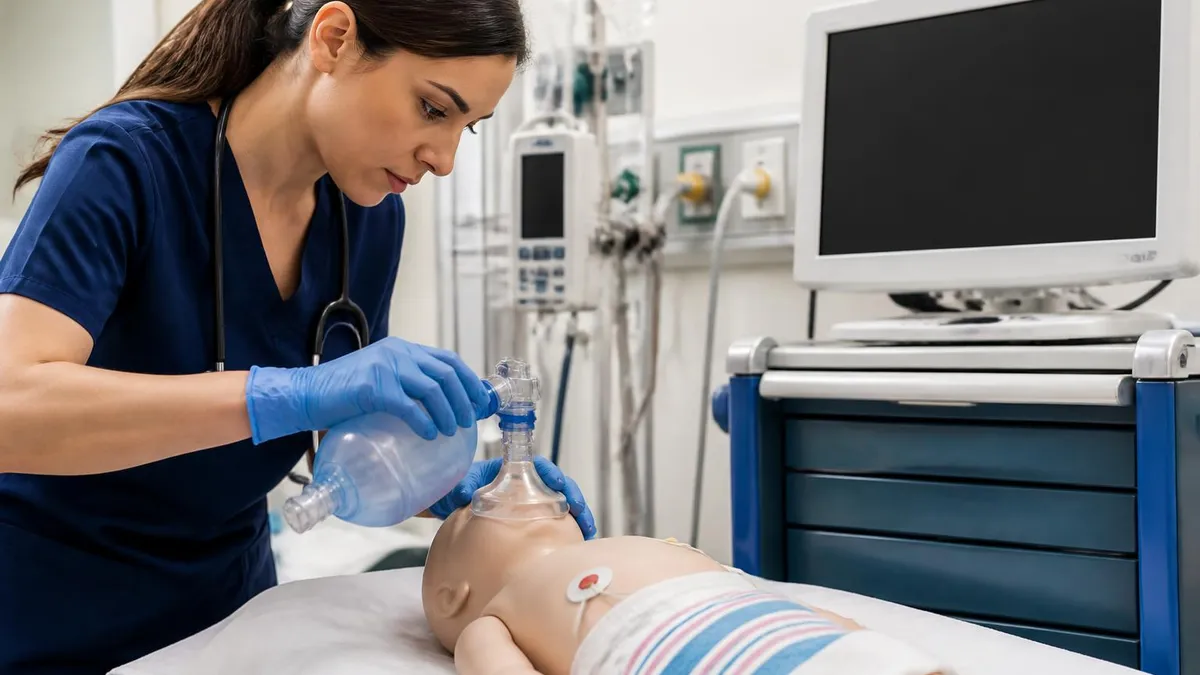
Is a PALS Online Course Right for You?
- +Self-paced — pause, save, and resume around your schedule
- +Lower total time commitment than traditional two-day courses
- +Interactive case simulations reinforce algorithm decision-making
- +AHA HeartCode and Red Cross blended options are universally accepted at most US hospitals
- +No travel time for the cognitive portion — complete from home or workplace
- +Built-in practice tests and remediation before the final exam
- −Requires self-discipline — easy to underestimate study time and rush through modules
- −Skills session still required for AHA and Red Cross certification (not 100% online)
- −Fully online non-AHA cards may not be accepted at your hospital
- −Limited ability to ask real-time questions during cognitive learning
- −Technical issues with browser compatibility can interrupt module progress
- −Non-refundable access codes mean buyer's remorse is expensive
PALS Online Course Pre-Enrollment Checklist
- ✓Confirm your employer accepts the specific provider's certification card
- ✓Verify your current BLS/CPR card is valid (required for AHA PALS)
- ✓Check that the online platform supports your browser (Chrome and Edge work best)
- ✓Reserve 20–30 study hours over 2–4 weeks before the skills session
- ✓Schedule the in-person skills session within 60 days of starting the online course
- ✓Download or print the AHA Pediatric Emergency Crash Cart medication card
- ✓Review pediatric ECG rhythm strips (sinus, SVT, VT, VF, asystole)
- ✓Refresh your knowledge of pediatric vital sign ranges by age group
- ✓Ask your employer about reimbursement or internally-provided codes before paying
- ✓Have a reliable internet connection and headphones for case simulation audio
The single most common failure point is drug doses.
Candidates who pass on the first attempt almost universally report drilling weight-based dosing every single day during prep. Make a one-page drug card, tape it inside your locker, and quiz yourself out loud. If you can recite epinephrine, amiodarone, adenosine, and atropine doses without thinking, you are 80% of the way to passing.
The PALS final written exam contains 50 multiple-choice questions covering case scenarios, algorithms, drug doses, ECG interpretation, and team dynamics. You need a minimum score of 84% — that translates to no more than 8 wrong answers out of 50. The exam is delivered through the AHA online portal at the end of your blended learning modules, and most candidates complete it in 45 to 60 minutes. You get two attempts; if you fail both, you must purchase a new access code and start over.
The cognitive exam pass rate hovers near 90% for candidates who complete all online modules thoroughly, but drops to roughly 60% for those who skim or skip the case simulations. The most-missed topics, in order, are: differentiating respiratory distress from respiratory failure (and choosing oxygen delivery accordingly), the 6 H's and 6 T's of reversible cardiac arrest causes, choosing synchronized cardioversion versus defibrillation, and post-cardiac arrest temperature management (32–34°C or 36–37.5°C targeted).
Questions are heavily case-based. Expect a vignette like "A 4-year-old presents with HR 220, BP 80/40, weak pulses, and altered mental status. The monitor shows narrow-complex tachycardia without P waves. What is your next action?" You must recognize this as unstable SVT requiring synchronized cardioversion at 0.5–1 J/kg (not adenosine, because the child has poor perfusion and altered mental status). The exam rewards algorithm thinking, not memorization.
The skills station is separately graded as pass/fail. You will be evaluated as both team leader and team member during a simulated mega-code scenario. Common skills failure points include inadequate compression depth or rate, not switching compressors every 2 minutes, failure to close the loop on verbal orders, and forgetting to assign roles before the resuscitation begins. The instructor will remediate any missed skill on the spot — they want you to pass.
If you fail the cognitive exam twice, the AHA requires you to retake the entire course (you cannot just retake the exam). This is the single most expensive mistake in PALS, so do not rush. Take all the practice tests built into the modules, review every incorrect answer, and don't sit for the final exam until you are consistently scoring 90%+ on the module quizzes.
For 2026 candidates, the exam continues to be based on the 2020 AHA Guidelines and the 2023 focused update. Key changes since the previous edition: emphasis on capnography for both intubation confirmation and CPR quality monitoring, simplification of the post-arrest care algorithm, and updated dosing for refractory ventricular arrhythmias. If your last PALS course was before 2021, expect noticeable differences.
The good news: every question on the exam comes directly from material covered in the online modules. There are no "trick" questions or off-textbook content. If you complete the modules attentively, take notes during case simulations, and review your weak areas, passing is genuinely achievable for any healthcare provider with baseline pediatric experience.
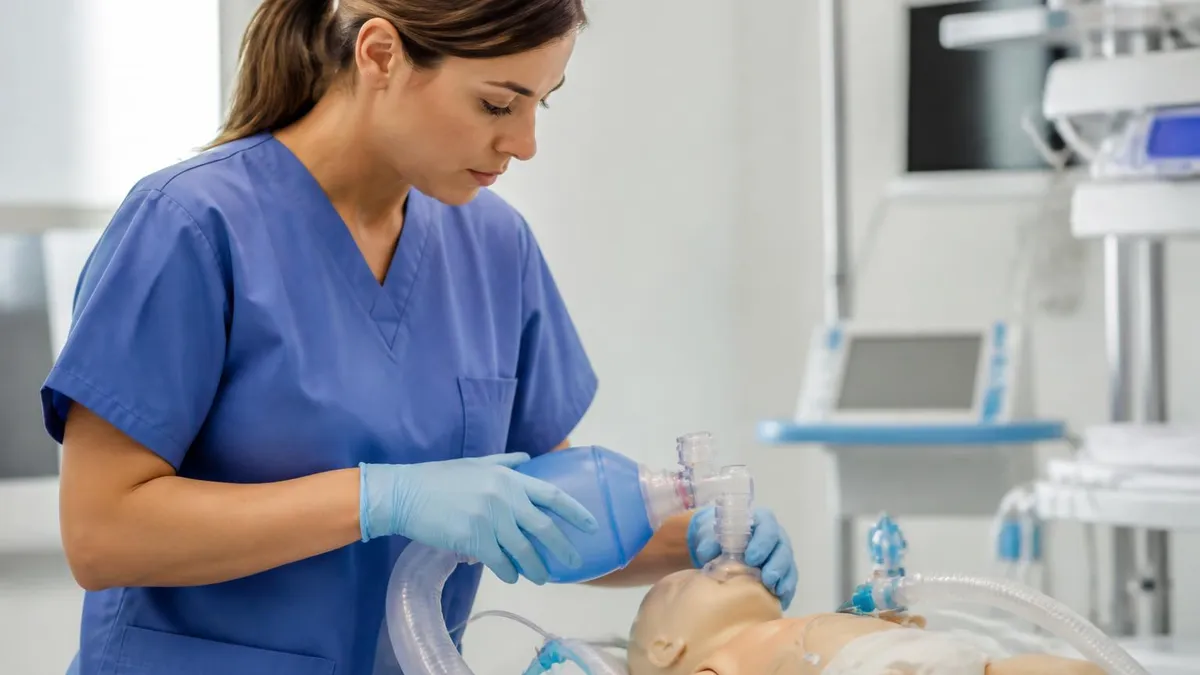
PALS certification is valid for exactly 2 years from issue date. If you let it expire by even one day, you must retake the full initial course at full price — renewal pricing does not apply. Set a calendar reminder 90 days before expiration, and schedule your renewal early to avoid scrambling.
Building a structured study schedule is the difference between passing comfortably and stressing through the final exam. For initial certification, plan four weeks of preparation. Week one: review pediatric BLS and high-quality CPR metrics (compression depth, rate, recoil, ventilation ratio). Week two: tackle the pediatric systematic approach and shock recognition. Week three: master each algorithm in detail, drilling drug doses daily. Week four: complete the online modules and take practice exams until you score 90% or higher consistently.
For renewal candidates, two weeks is usually sufficient. Spend week one reviewing what's changed since your last course (new guideline updates, simplified algorithms) and brushing up on drug doses. Spend week two completing the pals recertification modules and practice questions. Even experienced clinicians benefit from a structured plan — overconfidence is the #1 reason seasoned providers fail PALS renewal on the first attempt.
Use multiple study resources, not just the AHA modules. The provider manual (digital or print) is your single best reference — it contains every detail tested. Supplement with free online practice quizzes (we offer six embedded in this article), the AHA Pocket Reference Card, and a copy of the algorithm wall poster. Watching real pediatric resuscitation videos on YouTube — particularly from major children's hospitals — helps lock the team dynamics into long-term memory.
Active recall beats passive reading every time. Don't just re-read the manual; quiz yourself out loud, write algorithms from memory on a whiteboard, and explain each step to a colleague or family member as if teaching them. The act of teaching forces you to identify gaps in your understanding. Pair up with a study buddy if possible — ideally another provider who is also preparing — and run mock case scenarios on each other.
Sleep, hydration, and exam-day logistics matter more than you might think. Get a full night's sleep before your skills session — fatigue dramatically reduces performance during high-stakes case scenarios. Eat a moderate meal beforehand, avoid excessive caffeine, and arrive 15 minutes early to settle in. For the online cognitive exam, choose a quiet time when you won't be interrupted, close all other browser tabs, and have water and a snack at your desk.
If you struggle with test anxiety, do at least three full-length timed practice tests before your real exam. Familiarity with the question format and time pressure removes most of the anxiety. The questions on our practice quizzes are specifically modeled on the real AHA exam format and difficulty level. Also keep a copy of practice test on your phone so you can review during commute time or short breaks at work.
Finally, after you pass: print or screenshot your eCard immediately and email a copy to your employer's HR or education department. Don't wait — eCards have been known to be misplaced or accidentally deleted, and you need proof of certification on file for clinical privileging. Save the card in cloud storage so you can retrieve it from anywhere.
On the day of your skills session, bring your photo ID, your printed online course completion certificate, and your current BLS card. Most training centers will not let you complete the skills check without all three. Dress in comfortable, professional clothing — scrubs are perfectly acceptable — and wear closed-toe shoes since you may be kneeling on the floor for CPR demonstration. Avoid long necklaces or dangling jewelry that could get in the way during bag-mask ventilation.
During the skills session, the instructor will run you through a series of stations: high-quality pediatric BLS, AED/defibrillator use, airway management with bag-mask ventilation, and a final mega-code scenario where you lead a simulated resuscitation. Stay calm, verbalize every step out loud ("I'm checking for a pulse for no more than 10 seconds, I feel no pulse, beginning compressions"), and use closed-loop communication when giving orders to teammates.
If you make a mistake — pause, acknowledge it, and correct it. Instructors are looking for clinical judgment and the ability to self-correct, not perfection. Some of the highest-scoring candidates miss a step early in a scenario but recover gracefully. The worst thing you can do is freeze or pretend you didn't notice. Treat the scenario the way you would treat a real resuscitation: focused, methodical, and team-oriented.
After passing both the cognitive and skills components, your AHA eCard is typically available within 24 to 48 hours through the AHA Atlas portal. You will receive an email with login credentials. Download the PDF, save it in three places (email, cloud storage, phone), and print at least one physical copy for your work badge holder if your facility requires it. The card includes a QR code that employers can scan for instant verification.
Common mistakes to avoid in the final 48 hours before testing: cramming new material the night before (review only — no new content), skipping breakfast on test day, and trying to memorize obscure dosing for drugs you'll never use. The exam focuses on high-frequency, high-impact knowledge: the core algorithms, the 4–5 most-used drugs, and the systematic approach. Stay focused on the fundamentals.
If you don't pass on the first attempt, take it in stride. Review every incorrect answer carefully — the AHA platform shows you which questions you missed and the correct rationale. Most second-attempt failures happen because candidates retake the exam too quickly without reviewing the explanations. Wait 24 to 48 hours, study your weak areas, then retest. The retest fee is typically $50 to $100 if your provider charges separately.
One last tip: after passing, sign up for the AHA's update notifications. Guideline changes happen every 5 years (next major update expected in 2025–2026), with focused updates more frequently. Staying current means you're not blindsided on your next renewal. Bookmark the AHA professional site and check it every 6 months — it takes 5 minutes and saves you from learning a major change the hard way mid-resuscitation.
PALS Questions and Answers
About the Author

Registered Nurse & Healthcare Educator
Johns Hopkins University School of NursingDr. Sarah Mitchell is a board-certified registered nurse with over 15 years of clinical and academic experience. She completed her PhD in Nursing Science at Johns Hopkins University and has taught NCLEX preparation and clinical skills courses for nursing students across the United States. Her research focuses on evidence-based exam preparation strategies for healthcare certification candidates.
Join the Discussion
Connect with other students preparing for this exam. Share tips, ask questions, and get advice from people who have been there.
View discussion (8 replies)