
OSHA Toolbox Talks: A Complete Guide to Safety Meetings That Actually Work 2026
🔎 Learn how OSHA toolbox talks work, what topics to cover, how to run them effectively, and why they matter for workplace safety compliance.
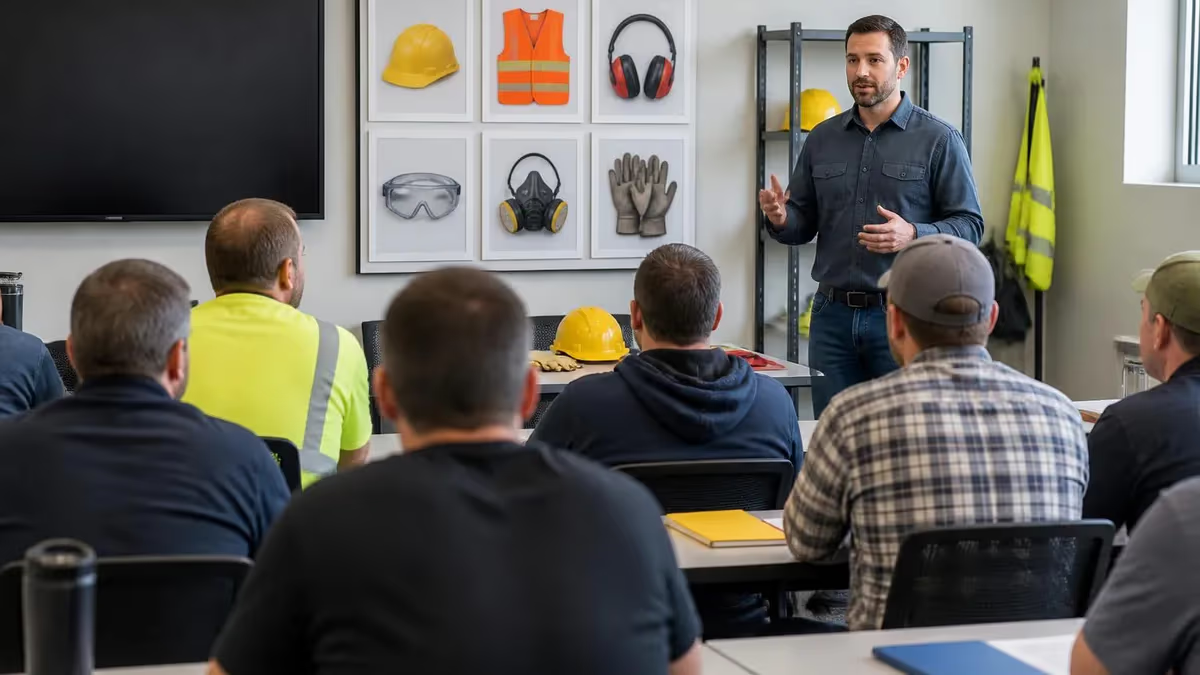
OSHA toolbox talks are short, focused safety meetings held at the worksite — typically lasting 10 to 15 minutes — where supervisors and workers discuss a specific hazard, procedure, or safety topic relevant to the day's tasks. The term "toolbox talk" comes from the construction industry tradition of gathering workers around a toolbox before a shift, but the format has expanded into virtually every industry, from manufacturing plants and oil rigs to hospitals and warehouses. These brief conversations are one of the most cost-effective safety tools available to employers of any size.
Unlike formal OSHA training courses that cover broad regulatory requirements, toolbox talks zero in on immediate, job-specific hazards. A crew pouring concrete in freezing temperatures might spend ten minutes reviewing cold-stress prevention. An electrical crew might talk through lockout/tagout procedures before working on a new panel. The specificity of the topic — tied directly to what workers are doing that day — is what makes these talks effective at actually changing behavior rather than just satisfying a paperwork requirement.
OSHA does not mandate toolbox talks by name in most standards, but the agency strongly encourages them as part of an effective Safety and Health Program. More importantly, many OSHA standards — including those governing confined spaces, fall protection, hazard communication, and scaffolding — require that workers receive task-specific instruction before performing certain work. Toolbox talks are often the mechanism employers use to deliver that instruction and document compliance. Understanding osha toolbox talks in the context of your injury rate metrics can help you measure whether your safety communication is actually reducing incidents on the ground.
For workers preparing for OSHA certification exams or seeking to understand OSHA compliance better, toolbox talks represent a practical window into how the regulations translate to everyday jobsite behavior. The topics covered in a good toolbox talk program mirror the hazard categories that appear on OSHA 10-Hour and 30-Hour course outlines: fall hazards, electrical safety, struck-by hazards, caught-in/between hazards, personal protective equipment, and emergency response. Understanding the structure and purpose of toolbox talks can help you connect regulatory text to real-world application.
There is also a legal dimension to toolbox talks that employers cannot ignore. When OSHA investigators arrive after an incident, one of the first things they examine is the safety training record. Documented toolbox talks demonstrate that the employer made a good-faith effort to communicate hazards to workers. In enforcement proceedings, this documentation can be the difference between a willful violation — carrying penalties up to $165,514 per violation as of 2024 — and a lesser serious or other-than-serious citation. The paperwork is not just bureaucracy; it is evidence of a safety culture.
This article covers everything you need to know about running effective toolbox talks: what topics OSHA recommends, how to structure a talk, who should lead them, how to document attendance, and how to measure whether your program is making a difference. Whether you are a safety professional building out a new program, a foreman who has been handing out pre-printed sheets without much engagement, or a worker who wants to understand why these meetings matter, this guide gives you a complete picture of one of safety's most underrated tools.
We will also walk through common mistakes that drain toolbox talks of their effectiveness — the generic handouts read aloud without discussion, the sign-in sheets that exist only for compliance, the 8 a.m. talks scheduled so early that workers are still waking up. Understanding what separates a talk that changes behavior from one that merely checks a box is the foundation of any serious safety communication program.
Free OSHA Safety Certificate Study Tools
Interactive OSHA Safety Certificate resources on PracticeTestGeeks, free to start:
- OSHA Safety Certificate flashcards — review key terms and concepts card by card
- OSHA Safety Certificate study guide — topic-by-topic overview of what the exam covers
- OSHA Safety Certificate cheat sheet — one-page printable summary for last-minute review
OSHA Toolbox Talks by the Numbers

Core Categories of OSHA Toolbox Talk Topics
Falls are the leading cause of death in construction. Topics include proper use inspection, anchor point selection, ladder safety, scaffold guardrails, and the hierarchy of fall protection controls — elimination, passive systems, and fall arrest.
Covers ground fault protection, lockout/tagout procedures, safe work distances from energized lines, extension cord inspection, and recognition of electrical hazards before starting work. OSHA 29 CFR 1910 Subpart S governs these requirements.
Explains the GHS labeling system, how to read Safety Data Sheets, chemical storage requirements, and proper PPE selection for chemical exposure. Relevant for any workplace where workers handle or are exposed to hazardous substances.
Reviews proper selection, fit, inspection, and replacement of PPE including hard hats, safety glasses, gloves, high-visibility vests, respirators, and hearing protection. Emphasizes that PPE is the last line of defense, not the first.
Covers site-specific emergency action plans, muster point locations, fire extinguisher classes and locations, first aid resources, and how to report an incident. Ensures every worker knows what to do before a crisis occurs.
Running an effective toolbox talk is a skill that takes deliberate practice — it is not simply a matter of reading a handout to a group of workers. The most successful talks begin before the meeting itself, with the supervisor or safety professional selecting a topic that is directly relevant to the work being performed that day or that week. A talk about heat illness prevention delivered in January in Minnesota misses the point entirely; that same talk in June on a roofing project in Phoenix could save a life. Relevance is the first pillar of effectiveness.
The structure of the talk matters almost as much as the content. Safety professionals recommend a simple three-part format: open with a question or a brief story that grabs attention, deliver the core information in clear plain language without jargon, and close with a discussion question that invites workers to share their own experience with the hazard. That closing discussion is where the real value lives. Workers on the front line often know hazards that supervisors have never encountered, and creating space for that knowledge to surface improves the entire team's situational awareness.
The physical setting of the talk deserves more thought than most organizations give it. Workers standing in bright sunlight squinting at a handout, or gathered in a noisy break room next to a running compressor, are absorbing very little of what is being said. Whenever possible, hold toolbox talks in a shaded, reasonably quiet area where workers can see any visual aids being used. Morning is generally the best time — before the pace of work accelerates and before workers accumulate fatigue. Some organizations schedule talks immediately after the morning safety briefing to create a natural segue.
Visual aids dramatically improve retention. A photograph of an improperly rigged sling, a short video clip showing a near-miss incident, or even a physical demonstration of correct use donning all engage different learning pathways than spoken words alone. OSHA and the National Safety Council both publish free toolbox talk materials with supporting visuals for dozens of common hazard categories. Using these resources is not lazy — it is efficient, and the content has been vetted for regulatory accuracy.
Language accessibility is a critical and often overlooked dimension of toolbox talk effectiveness. On many US worksites, significant portions of the workforce speak languages other than English as their primary language. OSHA requires that safety training be conducted in a language and vocabulary that workers can understand. Providing toolbox talk materials in Spanish, Portuguese, Vietnamese, or other relevant languages is not optional when those workers are present — it is a legal requirement. Many of the most serious incidents in recent years have occurred in part because safety information was not communicated in a way that all workers could understand.
Documentation is the final, non-negotiable component of an effective toolbox talk. Every talk should be recorded with the date, topic, name of the presenter, and signatures or printed names of all attendees. This record serves multiple purposes: it demonstrates compliance to OSHA inspectors, it creates a training history for each employee, it supports workers' compensation and liability claims, and it provides data for your safety program's continuous improvement process. Digital documentation platforms have made this easier — apps like iAuditor, Safesite, and others allow supervisors to capture signatures and automatically archive records.
One practical tip that experienced safety managers consistently recommend: keep a running list of topics that come up organically in the field — near-misses workers report, unusual tasks that come up unexpectedly, seasonal hazards that rotate with the calendar — and use that list to build your toolbox talk schedule for the next quarter. A talk schedule built from real field experience is almost always more relevant and more engaging than one built from a generic annual calendar template.
OSHA Practice Test Questions
Prepare for the OSHA - Safety Certificate exam with our free practice test modules. Each quiz covers key topics to help you pass on your first try.
OSHA Basic OSHA Practice
OSHA Exam Questions covering Basic OSHA Practice. Master OSHA Test concepts for certification prep.
OSHA Confined Space Entry
Free OSHA Practice Test featuring Confined Space Entry. Improve your OSHA Exam score with mock test prep.
OSHA Fall Protection
OSHA Mock Exam on Fall Protection. OSHA Study Guide questions to pass on your first try.
OSHA - Safety Certificate Electrical Safet...
Free OSHA Quiz on OSHA - Safety Certificate Electrical Safety Standards Questions and Answers. OSHA Exam prep questions with detailed explanations.
OSHA - Safety Certificate Emergency Action...
OSHA Practice Questions for OSHA - Safety Certificate Emergency Action and Fire Plans Questions and Answers. Build confidence for your OSHA certification exam.
OSHA - Safety Certificate Hazard Communica...
OSHA Test Online for OSHA - Safety Certificate Hazard Communication Standard Questions and Answers. Free practice with instant results and feedback.
OSHA - Safety Certificate Introduction to ...
OSHA Study Material on OSHA - Safety Certificate Introduction to OSHA Questions and Answers. Prepare effectively with real exam-style questions.
OSHA - Safety Certificate Lockout/Tagout P...
Free OSHA Test covering OSHA - Safety Certificate Lockout/Tagout Procedures Questions and Answers. Practice and track your OSHA exam readiness.
OSHA - Safety Certificate Machine Guarding...
OSHA Exam Questions covering OSHA - Safety Certificate Machine Guarding Requirements Questions and Answers. Master OSHA Test concepts for certification prep.
OSHA - Safety Certificate OSHA Recordkeepi...
Free OSHA Practice Test featuring OSHA - Safety Certificate OSHA Recordkeeping and Reporting Questions and Answers. Improve your OSHA Exam score with mock test prep.
OSHA - Safety Certificate Personal Protect...
OSHA Mock Exam on OSHA - Safety Certificate Personal Protective Equipment (PPE) Questions and Answers. OSHA Study Guide questions to pass on your first try.
OSHA - Safety Certificate Walking and Work...
OSHA Test Prep for OSHA - Safety Certificate Walking and Working Surfaces Questions and Answers. Practice OSHA Quiz questions and boost your score.
OSHA - Safety Certificate Electrical Safet...
OSHA Mock Test covering - Safety Certificate Electrical Safety Standards. Online OSHA Test practice with instant feedback.
OSHA - Safety Certificate Emergency Action...
Free OSHA Quiz on - Safety Certificate Emergency Action and Fire Plans. OSHA Exam prep questions with detailed explanations.
OSHA - Safety Certificate Hazard Communica...
OSHA Practice Questions for - Safety Certificate Hazard Communication Standard. Build confidence for your OSHA certification exam.
OSHA - Safety Certificate Introduction to ...
OSHA Test Online for - Safety Certificate Introduction to OSHA. Free practice with instant results and feedback.
OSHA - Safety Certificate Lockout/Tagout P...
OSHA Study Material on - Safety Certificate Lockout/Tagout Procedures. Prepare effectively with real exam-style questions.
OSHA - Safety Certificate Machine Guarding...
Free OSHA Test covering - Safety Certificate Machine Guarding Requirements. Practice and track your OSHA exam readiness.
OSHA - Safety Certificate OSHA Recordkeepi...
OSHA Exam Questions covering - Safety Certificate OSHA Recordkeeping and Reporting. Master OSHA Test concepts for certification prep.
Toolbox Talk Approaches by Industry
Construction toolbox talks are the most codified in US industry, partly because construction accounts for roughly 20 percent of all worker fatalities despite employing a much smaller share of the workforce. OSHA's Focus Four hazards — falls, struck-by, caught-in/between, and electrocution — form the backbone of most construction toolbox talk programs. General contractors on large projects often require subcontractors to submit toolbox talk logs as part of weekly safety reporting, making documentation particularly critical in this sector.
Effective construction talks are highly task-specific. A crew beginning steel erection work needs a talk on rigging inspection and hand signals before the iron goes up — not a generic reminder to wear PPE. Concrete crews benefit from talks on struck-by hazards from delivery trucks and from silica dust exposure controls before sawing or grinding operations begin. The more tightly a talk is coupled to the specific work planned for that day, the more likely workers are to translate the information into changed behavior on the job.
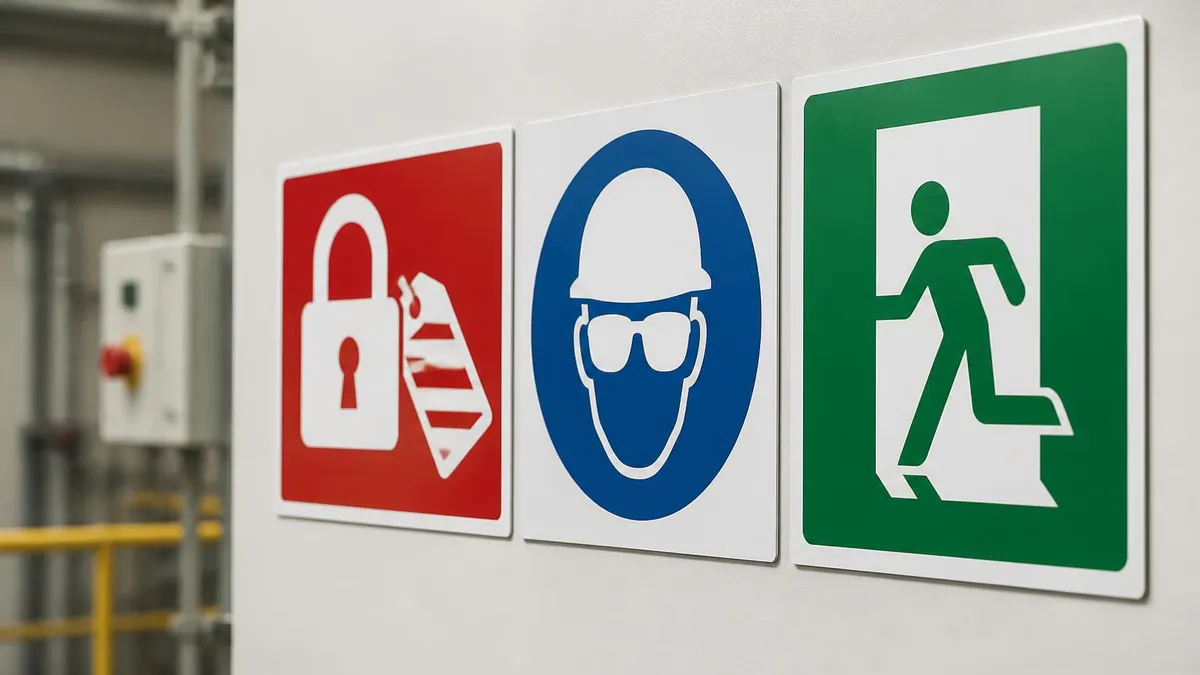
Toolbox Talks: Benefits and Limitations
- +Low cost — requires no specialized equipment, paid software, or outside trainers
- +Highly flexible and can be adapted to any hazard, industry, or workforce size
- +Creates consistent, documented record of safety communication with workers
- +Encourages two-way communication and surfaces hazards supervisors may not know about
- +Reinforces formal OSHA training by applying concepts to current, specific work tasks
- +Builds safety culture incrementally through regular, normalized safety conversation
- −Effectiveness depends heavily on presenter skill and preparation — poor delivery wastes time
- −Generic, pre-printed talks disconnected from actual work tasks have minimal impact
- −Workers may sign in without genuinely engaging if talks feel like a mandatory ritual
- −Does not substitute for formal OSHA-required training on specific high-hazard activities
- −Language and literacy barriers can prevent full participation if materials are not translated
- −Inconsistent scheduling or skipped talks undermine the habit and culture you are trying to build
Pros and Cons at a Glance
| Pros | Cons |
|---|---|
| Low cost — requires no specialized equipment, paid software, or outside trainers | Effectiveness depends heavily on presenter skill and preparation — poor delivery wastes time |
| Highly flexible and can be adapted to any hazard, industry, or workforce size | Generic, pre-printed talks disconnected from actual work tasks have minimal impact |
| Creates consistent, documented record of safety communication with workers | Workers may sign in without genuinely engaging if talks feel like a mandatory ritual |
| Encourages two-way communication and surfaces hazards supervisors may not know about | Does not substitute for formal OSHA-required training on specific high-hazard activities |
| Reinforces formal OSHA training by applying concepts to current, specific work tasks | Language and literacy barriers can prevent full participation if materials are not translated |
| Builds safety culture incrementally through regular, normalized safety conversation | Inconsistent scheduling or skipped talks undermine the habit and culture you are trying to build |
OSHA Toolbox Talk Documentation Checklist
- ✓Record the date, start time, and approximate duration of the talk.
- ✓Write the full topic title — specific enough that a future reviewer knows exactly what was covered.
- ✓List the name and job title of the person who led the talk.
- ✓Collect legible signatures or printed names of every worker who attended.
- ✓Note the number of workers present and the total number on shift for that day.
- ✓Attach or reference any handout, visual aid, or video used during the talk.
- ✓Document any worker questions, comments, or hazard reports raised during discussion.
- ✓Record any corrective actions that were identified and assigned during the meeting.
- ✓File the completed record in a dedicated safety training binder or digital records system.
- ✓Retain all toolbox talk records for a minimum of three years per OSHA recordkeeping guidance.
OSHA Can Request Your Toolbox Talk Records During an Inspection
During a programmed or unprogrammed OSHA inspection, compliance officers routinely request safety training documentation going back three to five years. Employers who cannot produce toolbox talk records — even for topics where no specific OSHA standard explicitly requires them — are at a significant disadvantage in demonstrating good-faith compliance. A simple, consistent sign-in sheet system is the minimum required to protect your organization.
One of the most common reasons toolbox talks fail is that the person delivering them was never taught how to do it well. Many organizations hand a new foreman a stack of pre-printed safety cards and tell them to read one every Monday morning, which produces exactly the kind of listless, disengaged safety culture that leads to incidents. Investing in toolbox talk delivery skills — through the OSHA 30-Hour construction or general industry course, through safety leadership workshops, or simply through coaching from an experienced safety manager — pays dividends far beyond the cost of the training itself.
The most damaging mistake in toolbox talk programs is disconnecting the topic from the actual work. When a carpenter crew receives a talk about confined space entry on a day they are hanging drywall, the implicit message is that safety talks are generic formality, not real communication. Workers are perceptive; they know when a supervisor has grabbed a random card from a box rather than thought about what hazards they actually face. That perception corrodes credibility, and once workers have decided that toolbox talks are not worth paying attention to, rebuilding engagement is genuinely difficult.
Another common failure is the one-way lecture format. Safety communication research consistently shows that active participation — asking workers questions, inviting them to share near-miss experiences, having them demonstrate a procedure — produces significantly better retention than passive listening.
A talk where the supervisor does all the talking and workers do all the listening is better than no talk at all, but it leaves substantial value on the table. Simple techniques like posing a scenario and asking workers how they would respond, or asking who has personally experienced the hazard being discussed, can transform a lecture into a genuine safety conversation.
Timing failures are more impactful than most safety managers acknowledge. A toolbox talk delivered at the end of a ten-hour shift competes with exhaustion, hunger, and distraction in ways that an early-morning talk does not. Similarly, a talk squeezed into three minutes because the crew is already late to the worksite communicates through its urgency that the safety information is less important than getting started. If talks are consistently rushed or held at poor times, rescheduling them is often more effective than improving the content.
The frequency of toolbox talks matters as much as their quality. Once-weekly talks that total fifty-two interactions per year create a fundamentally different safety culture than monthly talks that total twelve. Each talk is an opportunity to reinforce that safety is a consistent organizational priority, not an occasional check-in. Leading safety organizations in high-hazard industries often hold toolbox talks daily, particularly when the work is complex, the crew is new, or conditions are changing. Daily talks do not need to be elaborate — even five minutes on a single specific hazard is enough to establish the habit and the expectation.
One underused strategy for improving talk effectiveness is involving workers in topic selection. When workers know their input shapes the safety conversation, they are more likely to pay attention and to raise issues proactively. A simple mechanism — a whiteboard where workers can suggest topics, or a monthly survey — gives the safety program legitimacy and often surfaces hazards that supervisors would not have identified through a top-down approach. Workers who have personally experienced a near-miss with a particular hazard are often more effective at communicating its reality than any pre-printed handout.
Finally, the culture around toolbox talks — how leadership treats them, whether attendance is enforced consistently, whether corrective actions identified during talks are actually followed up — determines whether talks are a genuine safety tool or a compliance ritual. When workers see that a hazard they raised during a toolbox talk was actually corrected, they learn that speaking up matters. When they see that nothing ever changes regardless of what is discussed, they learn to disengage. Leadership consistency in following through on talk outcomes is the single most powerful driver of long-term program effectiveness.

For certain high-hazard activities — confined space entry, lockout/tagout, respiratory protection, powered industrial trucks, and others — OSHA standards mandate specific formal training that must be documented separately from toolbox talks. A ten-minute toolbox talk on confined spaces does not satisfy the entry training requirements under 29 CFR 1910.146. Employers who rely solely on toolbox talks for these topics remain out of compliance and exposed to serious citation liability. Always check the specific standard for training requirements before relying on toolbox talks alone.
Measuring the effectiveness of your toolbox talk program requires looking beyond attendance records and topic completion logs. Those metrics tell you whether talks are happening; they say nothing about whether the talks are changing behavior or reducing incidents.
A more meaningful measurement framework connects toolbox talk activity to the leading and lagging indicators your safety program already tracks: near-miss reports, first-aid incidents, recordable injury rates, OSHA 300 log entries, and audit findings. If you run a strong talk program for twelve months and none of those metrics improve, that is important information about your talk quality or delivery, not a reason to stop talking.
Leading indicators are particularly valuable for evaluating toolbox talk programs. Near-miss and hazard observation reporting rates are among the best leading indicators available — they measure workers' willingness to communicate about safety, which is exactly the behavior that toolbox talks are designed to cultivate.
An increase in near-miss reporting after implementing a more consistent talk program is generally a positive sign: it suggests workers are paying more attention to hazards and feel comfortable raising them, not that the worksite has suddenly become more dangerous. Tracking the topics covered in your talks against the topics appearing in near-miss reports can also reveal gaps in your program.
Safety audits and inspection findings provide another valuable feedback loop. If your talk program has covered fall protection three times in the past quarter and your monthly safety walk still finds workers not tied off on improved surfaces, the talk format, content, or enforcement accountability needs to change. Connecting audit findings to recent talk topics creates a test-and-learn loop that continuously improves program relevance. Some organizations formally incorporate this feedback by requiring supervisors to note any field observations related to the talk topic within twenty-four hours of delivery.
Behavioral observation programs, sometimes called Behavior-Based Safety (BBS) programs, are a natural complement to toolbox talks. In a BBS approach, trained observers watch workers performing their tasks and record whether specific target behaviors — the ones covered in recent talks — are being performed correctly. The data from these observations reveals whether talk content is translating to jobsite behavior, which is the ultimate test of any safety communication program. Organizations that combine regular toolbox talks with structured behavioral observation consistently achieve better safety outcomes than those using either tool alone.
Worker feedback surveys are an underutilized evaluation tool. A brief quarterly survey — five to ten questions about talk relevance, presenter effectiveness, and actionability of content — provides direct data from the audience about what is and is not working. Workers who feel their feedback is genuinely solicited and acted upon are significantly more likely to engage with the program. Anonymous surveys tend to produce more candid responses, particularly in environments where workers may fear that criticizing the safety program could reflect poorly on them.
Return on investment calculations can help make the case for investing in toolbox talk program improvements to organizational leadership that focuses on cost. OSHA's Safety Pays calculator estimates that a single lost-time injury can cost an employer between $28,000 and several hundred thousand dollars in direct and indirect costs, depending on severity.
If improving your toolbox talk program from twice-monthly to weekly reduces your lost-time incident rate by even one incident per year, the program pays for itself many times over. Framing safety communication as a financial investment rather than a compliance burden is often the most effective way to secure resources for program improvement.
The relationship between consistent toolbox talks and a company's OSHA TRIR (Total Recordable Incident Rate) is well-documented in safety research. Organizations with structured, documented safety communication programs consistently achieve lower TRIRs than comparable organizations without them, which matters for pre-qualification on commercial construction projects, bid eligibility on federal contracts, and EMR (Experience Modification Rate) calculations that affect workers' compensation insurance premiums. A strong toolbox talk program is not just a safety initiative — it is a business advantage that shows up directly on the bottom line.
Building a toolbox talk library that your supervisors will actually use requires thinking carefully about format, accessibility, and specificity. A single 500-page binder of generic safety topics looks comprehensive but is nearly impossible to use in practice — no foreman flipping through it at 6:45 a.m. is going to find the right talk for the day and deliver it effectively.
The most usable libraries are organized by hazard category and searchable by task type, and each talk fits on a single page in large, readable type. Digital libraries accessible on a phone or tablet are increasingly the standard in organizations that have invested in their programs.
The one-page format works best when it follows a consistent template: a headline stating the hazard and the key message, two to three bullet points covering the key facts a worker needs to know, one scenario or story illustrating the real-world stakes, and two to three discussion questions to close. This structure lets a supervisor quickly scan the content, anticipate the discussion questions, and deliver the talk confidently even without extensive preparation. Consistency in format also helps workers know what to expect and follow along more easily.
Seasonal and task-specific triggers should be built into your talk calendar rather than left to individual supervisor judgment. Hot work permits and heat illness prevention talks should appear on the calendar every year beginning in late April. Winter weather talks covering ice, cold stress, and visibility issues should appear in October. Talks on specific chemicals, equipment, or procedures should be scheduled whenever that work is planned. A calendar-driven approach ensures that critical topics do not fall through the cracks because no one thought to schedule them.
New employee integration is a critical moment for toolbox talks. Workers in their first year on a job — and particularly in their first month — face dramatically improved injury risk compared to experienced workers. A structured onboarding toolbox talk sequence that covers site-specific hazards, emergency procedures, and basic PPE requirements in the first week provides an essential foundation. Some organizations pair new workers with experienced mentors specifically for the purpose of walking through toolbox talk topics and explaining how the content applies to the actual work environment, which dramatically accelerates competency.
Toolbox talks are also an effective vehicle for communicating near-miss incidents in a way that produces learning without blame. When a near-miss occurs on a worksite, converting it into an anonymized toolbox talk topic within twenty-four to forty-eight hours creates a powerful learning moment — workers recognize the scenario as real and relevant, and the rapid response signals that the organization takes close calls seriously. Research on high-reliability organizations consistently identifies near-miss learning as one of the most effective injury prevention mechanisms available, and toolbox talks are one of the best channels for distributing that learning quickly across a workforce.
Technology is transforming toolbox talk delivery in ways that expand both reach and effectiveness. Video toolbox talks — recorded by safety managers or industry experts and distributed via mobile apps — allow organizations to deliver consistent content to dispersed workforces across multiple sites simultaneously. Interactive digital talks can include knowledge checks, photo submissions of hazard conditions, and automated documentation.
Some platforms integrate with safety management systems to automatically track completion, flag overdue talks, and generate compliance reports. These tools do not replace the human conversation element, but they dramatically improve consistency and documentation in organizations with large or geographically dispersed workforces.
For workers pursuing OSHA certification — whether the 10-Hour card, the 30-Hour course, or a Certified Safety Professional credential — understanding toolbox talks is more than practical field knowledge. It reflects the core OSHA philosophy that safety is a shared responsibility requiring constant, proactive communication between workers and management. Every standard in the OSHA regulatory framework ultimately depends on that communication loop functioning reliably. Toolbox talks, at their best, are where abstract regulatory requirements become concrete jobsite behavior — and where the culture of safety that prevents fatalities is built, one conversation at a time.
Sample OSHA Safety Certificate Practice Questions
Try these questions from our free OSHA Safety Certificate practice tests. The correct answer and an explanation follow each question.
Which of the following is an example of a hazard that machine guarding is designed to protect against?
- A. Slippery floors near the machine
- B. Flying chips and sparks from the point of operation
- C. Improper lighting in the work area
- D. Noise levels above 85 decibels
Answer: B. Flying chips and sparks from the point of operation
Machine guarding protects workers from hazards at the point of operation, including flying chips, sparks, and debris generated during the machining process.
Which type of PPE is specifically required when working with chemicals that may splash?
- A. Steel-toed boots
- B. Chemical splash goggles
- C. Hard hat
- D. Hearing protection
Answer: B. Chemical splash goggles
Chemical splash goggles create a seal around the eyes to prevent hazardous liquids from reaching them during splash events.
What should happen to PPE that is defective or damaged?
- A. Continue using it carefully
- B. Remove it from service and replace it
- C. Tape over the damage
- D. Use it only for light tasks
Answer: B. Remove it from service and replace it
Defective or damaged PPE must not be used and should be replaced.
What should be done with a machine guard that is found bent, cracked, or missing fasteners?
- A. Continue using the machine
- B. Tag the machine out of service until repaired
- C. Tape the guard temporarily
- D. Ignore it if the machine still runs
Answer: B. Tag the machine out of service until repaired
A damaged guard no longer provides protection, so the machine must be taken out of service until repaired.
OSHA Questions and Answers

OSHA TRIR Calculator: Formula, Calculation Steps, and Industry Benchmarks

OSHA Approved Hard Hats: Complete 2026 Guide to ANSI Z89.1 Compliance, Types, and Workplace Requirements

OSHA.gov: Your Complete Guide to the Official OSHA Website

OSHA 510: Course Content, Path to Trainer, and Realistic Path

OSHA Eyewash Requirements: Complete 2026 Guide to Eye Wash Stations, ANSI Z358.1 Compliance, and Workplace Standards
About the Author

Certified Safety Professional & OSHA Compliance Expert
Indiana University of Pennsylvania Safety SciencesDr. William Foster holds a PhD in Safety Science from Indiana University of Pennsylvania and is a Certified Safety Professional (CSP) and Certified Hazardous Materials Manager. With 20 years of occupational health and safety management experience across construction, manufacturing, and chemical industries, he coaches safety professionals through OSHA certification, CSP, CHST, and safety management licensing programs.
Join the Discussion
Connect with other students preparing for this exam. Share tips, ask questions, and get advice from people who have been there.
View discussion (8 replies)