
OSHA Slips, Trips, and Falls: Complete Guide to Workplace Fall Prevention and Compliance
Master OSHA slip and fall prevention standards. Learn common hazards, employer responsibilities, and practical strategies to prevent workplace falls. 🗨️

Workplace slips, trips, and falls remain among the most common causes of occupational injuries across every industry in the United States. Understanding OSHA slip and fall regulations is essential for employers and employees who want to maintain safe working environments and avoid costly incidents. The Occupational Safety and Health Administration addresses these hazards through multiple standards covering walking-working surfaces, fall protection systems, and housekeeping requirements that apply to general industry and construction settings alike.
According to the Bureau of Labor Statistics, falls on the same level and falls to a lower level consistently rank among the top causes of days away from work each year. In 2023 alone, over 211,000 nonfatal workplace injuries resulted from slips, trips, and falls, costing employers billions of dollars in workers' compensation claims, medical expenses, and lost productivity. These numbers underscore why OSHA places tremendous emphasis on preventing these seemingly simple but potentially devastating incidents across all workplace environments.
OSHA's regulatory framework for preventing slips, trips, and falls spans several key standards. For general industry, 29 CFR 1910 Subpart D covers walking-working surfaces including floors, platforms, ladders, and stairways. Construction industry standards under 29 CFR 1926 Subpart M specifically address fall protection requirements for workers operating at heights of six feet or more. Together these regulations establish minimum requirements that employers must follow to protect their workforce from preventable injuries and fatalities.
The financial impact of slip and fall incidents extends far beyond immediate medical costs. When a worker suffers a fall-related injury, employers face direct expenses including emergency medical treatment, ongoing rehabilitation, and workers' compensation premiums that often increase substantially after claims are filed. Indirect costs such as hiring temporary replacements, retraining, administrative time for incident investigations, and potential OSHA citations add significantly to the overall financial burden that organizations must absorb following these incidents.
Many workers underestimate the severity of slip and fall hazards because falls seem like minor events compared to other workplace dangers. However, falls from even relatively low heights or on level surfaces can cause traumatic brain injuries, spinal cord damage, broken bones, and soft tissue injuries that permanently alter a worker's quality of life. OSHA recognizes this reality and has made fall prevention a perennial focus area in its enforcement and outreach initiatives across all sectors.
Whether you are a safety professional developing a comprehensive fall prevention program, an employer seeking to understand your legal obligations, or a worker studying for an OSHA safety certification, this guide provides the essential information you need. We explore the specific OSHA standards governing slip, trip, and fall hazards, examine common workplace conditions that create these dangers, and outline practical strategies for building a culture of fall prevention throughout your organization.
Fall prevention consistently appears on OSHA's annual list of most frequently cited standards, highlighting the ongoing challenge that workplaces face in controlling these hazards. By understanding the regulatory requirements and implementing proven prevention strategies, organizations can dramatically reduce their incident rates, protect their workers from serious harm, and avoid the substantial penalties that OSHA imposes for violations of walking-working surface and fall protection standards.
OSHA Slips, Trips, and Falls by the Numbers
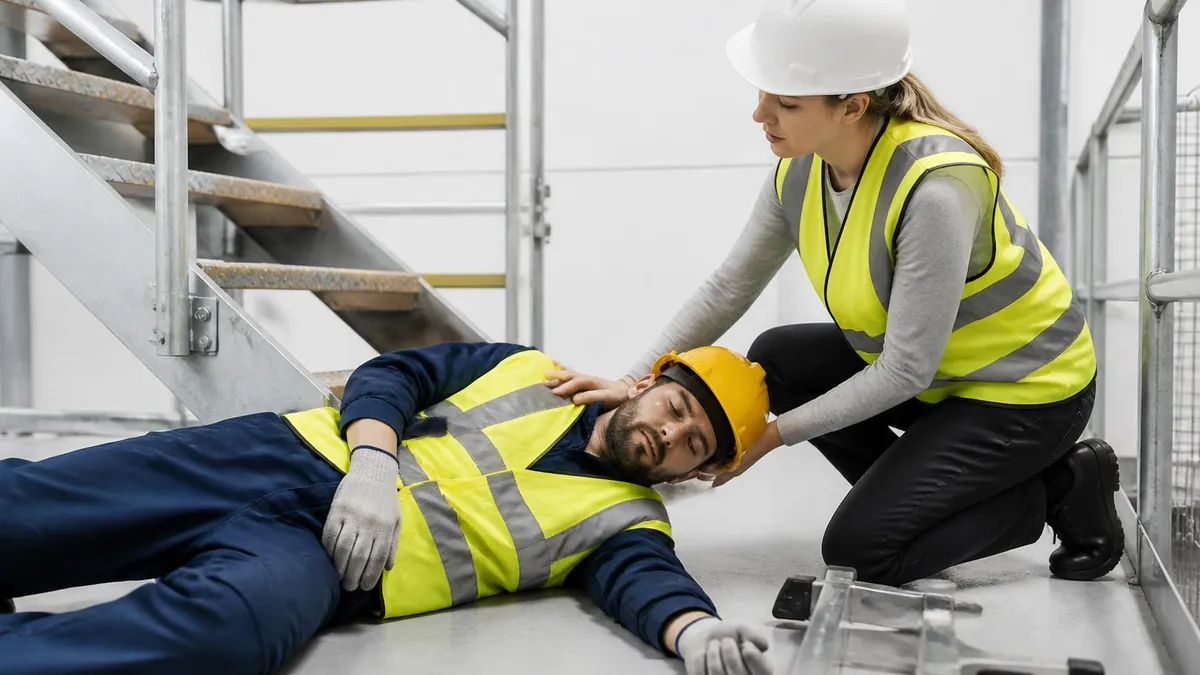
Key OSHA Standards for Slips, Trips, and Falls
Covers general industry requirements for floors, platforms, ladders, stairways, and dockboards. Updated in 2017 to include modern personal fall protection system requirements for non-construction workplaces.
Mandates fall protection for construction workers at heights of six feet or more. Requires guardrails, safety nets, or personal fall arrest systems for leading edge work, roofing, and steel erection.
Requires employers to maintain all walking surfaces in clean, orderly, and sanitary condition. Addresses wet floors, cluttered aisles, drainage, and passageway obstruction prevention across all general industry settings.
Establishes specific design, construction, maintenance, and use requirements for fixed and portable ladders, stairways, scaffolding, and elevated platforms used in general industry to prevent falls.
Understanding the root causes of workplace slips, trips, and falls is the first step toward effective prevention. OSHA investigations consistently reveal that the vast majority of these incidents result from identifiable and correctable hazards rather than unavoidable accidents. Wet or contaminated floors represent the single most common cause of same-level falls, with spills from manufacturing processes, cleaning operations, weather-related moisture tracked indoors, and leaking equipment creating dangerously slippery surfaces throughout workplaces.
Cluttered walkways and obstructed pathways contribute significantly to trip hazards in virtually every work environment. Extension cords stretched across walking areas, tools and materials left on floors, improperly stored inventory, and open desk drawers in office settings all create trip points that workers may not notice, especially when focused on carrying loads or moving quickly between tasks. OSHA requires employers to maintain clear passageways and ensure that aisles and walkways remain unobstructed at all times under standard housekeeping requirements.
Uneven surfaces present another major category of slip and trip hazards that OSHA addresses through its walking-working surface standards. Damaged flooring tiles, transitions between different floor materials, raised thresholds, potholes in parking lots, and uneven concrete surfaces create unexpected changes in elevation that can cause workers to lose their balance. Construction sites face particularly acute challenges with uneven terrain, excavations, and temporary surfaces that may shift or deteriorate rapidly during active work activities.
Inadequate lighting contributes to falls by preventing workers from seeing hazards that they would otherwise avoid. Poorly lit stairwells, parking garages, loading docks, and storage areas force workers to navigate without full visual awareness of their surroundings. OSHA's general duty clause requires employers to provide adequate illumination in all work areas, and specific standards mandate minimum lighting levels for various workplace settings including construction sites where temporary lighting installations are frequently necessary.
Improper footwear remains an overlooked factor in many workplace fall incidents. Workers wearing shoes without adequate traction, with worn-out soles, or inappropriate for the specific work environment face significantly elevated risk of slipping on surfaces that properly equipped workers would navigate safely. While OSHA does not mandate specific footwear for all industries, employers are expected to assess slip hazards and require appropriate personal protective equipment, including slip-resistant footwear, when hazard assessments identify the need.
Weather conditions create seasonal spikes in slip and fall incidents that employers must anticipate and manage proactively. Rain, snow, ice, and fallen leaves all create hazardous conditions on outdoor walking surfaces, entrances, and loading docks where workers transition between indoor and outdoor environments. Employers in regions with harsh winters must implement comprehensive ice and snow removal programs, provide drainage mats at building entrances, and ensure that outdoor walkways receive timely treatment to maintain safe conditions.
Elevated work surfaces including ladders, scaffolds, roofs, and platforms account for the most serious fall-related injuries and fatalities. OSHA's fall protection standards require employers to provide guardrail systems, safety net systems, or personal fall arrest systems whenever workers operate at heights of six feet or more in construction and four feet in general industry. Improper ladder use, including using damaged ladders and failing to maintain three points of contact, remains a persistent violation cited during OSHA inspections.
OSHA Practice Test Questions
Prepare for the OSHA - Safety Certificate exam with our free practice test modules. Each quiz covers key topics to help you pass on your first try.
OSHA Basic OSHA Practice
OSHA Exam Questions covering Basic OSHA Practice. Master OSHA Test concepts for certification prep.
OSHA Confined Space Entry
Free OSHA Practice Test featuring Confined Space Entry. Improve your OSHA Exam score with mock test prep.
OSHA Fall Protection
OSHA Mock Exam on Fall Protection. OSHA Study Guide questions to pass on your first try.
OSHA - Safety Certificate Electrical Safet...
Free OSHA Quiz on OSHA - Safety Certificate Electrical Safety Standards Questions and Answers. OSHA Exam prep questions with detailed explanations.
OSHA - Safety Certificate Emergency Action...
OSHA Practice Questions for OSHA - Safety Certificate Emergency Action and Fire Plans Questions and Answers. Build confidence for your OSHA certification exam.
OSHA - Safety Certificate Hazard Communica...
OSHA Test Online for OSHA - Safety Certificate Hazard Communication Standard Questions and Answers. Free practice with instant results and feedback.
OSHA - Safety Certificate Introduction to ...
OSHA Study Material on OSHA - Safety Certificate Introduction to OSHA Questions and Answers. Prepare effectively with real exam-style questions.
OSHA - Safety Certificate Lockout/Tagout P...
Free OSHA Test covering OSHA - Safety Certificate Lockout/Tagout Procedures Questions and Answers. Practice and track your OSHA exam readiness.
OSHA - Safety Certificate Machine Guarding...
OSHA Exam Questions covering OSHA - Safety Certificate Machine Guarding Requirements Questions and Answers. Master OSHA Test concepts for certification prep.
OSHA - Safety Certificate OSHA Recordkeepi...
Free OSHA Practice Test featuring OSHA - Safety Certificate OSHA Recordkeeping and Reporting Questions and Answers. Improve your OSHA Exam score with mock test prep.
OSHA - Safety Certificate Personal Protect...
OSHA Mock Exam on OSHA - Safety Certificate Personal Protective Equipment (PPE) Questions and Answers. OSHA Study Guide questions to pass on your first try.
OSHA - Safety Certificate Walking and Work...
OSHA Test Prep for OSHA - Safety Certificate Walking and Working Surfaces Questions and Answers. Practice OSHA Quiz questions and boost your score.
OSHA - Safety Certificate Electrical Safet...
OSHA Mock Test covering - Safety Certificate Electrical Safety Standards. Online OSHA Test practice with instant feedback.
OSHA - Safety Certificate Emergency Action...
Free OSHA Quiz on - Safety Certificate Emergency Action and Fire Plans. OSHA Exam prep questions with detailed explanations.
OSHA - Safety Certificate Hazard Communica...
OSHA Practice Questions for - Safety Certificate Hazard Communication Standard. Build confidence for your OSHA certification exam.
OSHA - Safety Certificate Introduction to ...
OSHA Test Online for - Safety Certificate Introduction to OSHA. Free practice with instant results and feedback.
OSHA - Safety Certificate Lockout/Tagout P...
OSHA Study Material on - Safety Certificate Lockout/Tagout Procedures. Prepare effectively with real exam-style questions.
OSHA - Safety Certificate Machine Guarding...
Free OSHA Test covering - Safety Certificate Machine Guarding Requirements. Practice and track your OSHA exam readiness.
OSHA - Safety Certificate OSHA Recordkeepi...
OSHA Exam Questions covering - Safety Certificate OSHA Recordkeeping and Reporting. Master OSHA Test concepts for certification prep.
OSHA Fall Protection Standards by Industry
OSHA's general industry standards under 29 CFR 1910 Subpart D establish comprehensive requirements for walking-working surfaces that all non-construction employers must follow. These regulations cover floor conditions, platforms, fixed ladders, stairways, dockboards, and scaffolds used in manufacturing, warehousing, retail, and office environments. The 2017 update modernized requirements to align with current safety practices and introduced new provisions for personal fall protection systems in general industry settings.
Key provisions require employers to maintain floors in clean, dry, and orderly condition. Aisles and passageways must remain clear and in good repair with adequate width for safe passage. Fixed ladders exceeding twenty-four feet must incorporate cage or well systems or personal fall arrest systems. Employers must ensure that elevated platforms and runways have standard guardrails and toeboards to prevent falls and protect workers below from falling objects and debris.
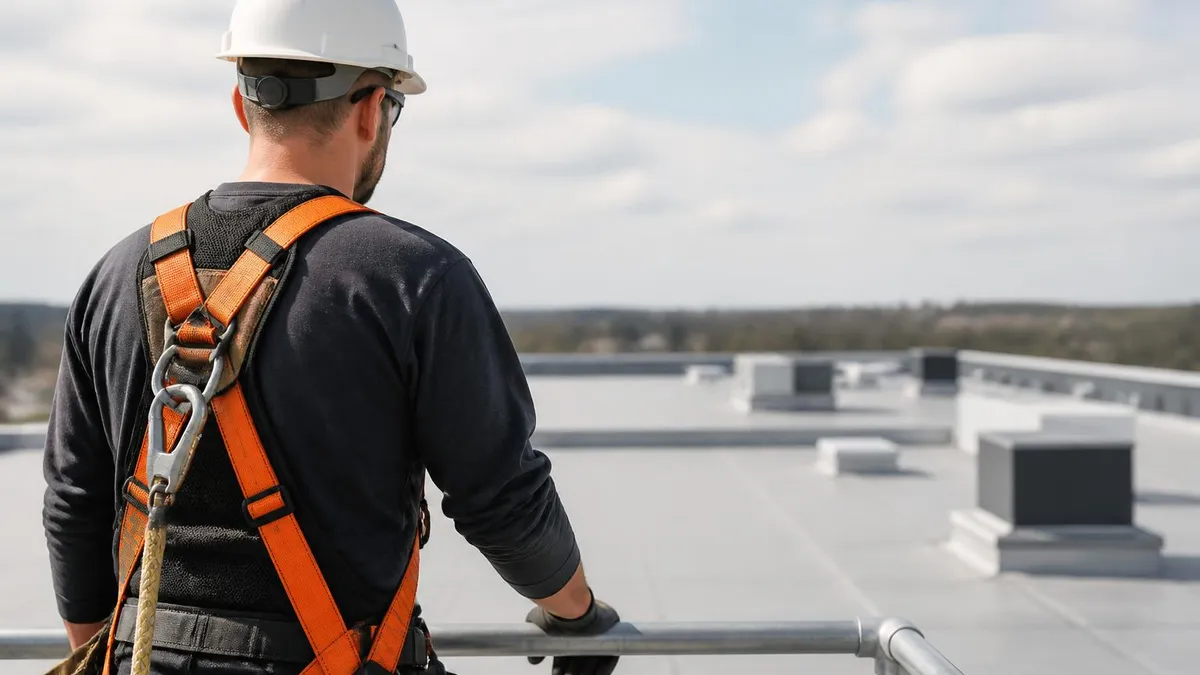
Implementing a Comprehensive Fall Prevention Program
- +Reduces workplace injuries and workers' compensation costs significantly
- +Demonstrates regulatory compliance and avoids costly OSHA citations and penalties
- +Improves employee morale and retention by showing commitment to worker safety
- +Lowers insurance premiums through documented safety improvement records
- +Creates a proactive safety culture that extends to all workplace hazards
- +Provides documented evidence of due diligence for litigation defense
- −Requires upfront investment in equipment, training, and engineering controls
- −Demands ongoing management time for inspections and documentation
- −May encounter worker resistance to new procedures or PPE requirements
- −Engineering controls like floor replacement can disrupt operations temporarily
- −Training requirements consume productive work hours during rollout
- −Maintaining consistent enforcement across all shifts can be challenging
OSHA Slip and Fall Prevention Checklist
- ✓Conduct a comprehensive hazard assessment of all walking-working surfaces in your facility.
- ✓Ensure all floors are maintained in clean, dry, and orderly condition throughout every shift.
- ✓Verify that aisles, passageways, and emergency exits remain clear and unobstructed at all times.
- ✓Inspect all ladders, stairways, and guardrails for structural integrity and OSHA compliance.
- ✓Confirm that adequate lighting is provided in all work areas, stairwells, and outdoor walkways.
- ✓Provide slip-resistant footwear or require appropriate footwear based on hazard assessment results.
- ✓Install fall protection systems including guardrails, safety nets, or harnesses for elevated work.
- ✓Train all employees on fall hazard recognition, prevention procedures, and proper equipment use.
- ✓Establish a spill response protocol with supplies and signage readily accessible throughout the facility.
- ✓Document all inspections, training sessions, and incident investigations in organized safety records.
Fall Protection Is OSHA's Most Cited Standard Every Year
Fall protection violations under 29 CFR 1926.501 have topped OSHA's most frequently cited standards list for over a decade. In fiscal year 2023, OSHA issued more than 7,200 fall protection citations, with penalties for serious violations reaching $16,131 per instance. Willful violations can result in penalties exceeding $161,323 per violation, making fall prevention compliance both a safety imperative and a major financial priority for every employer.
Employers bear primary responsibility under OSHA regulations for identifying and controlling slip, trip, and fall hazards in their workplaces. The General Duty Clause of the Occupational Safety and Health Act requires every employer to furnish a workplace free from recognized hazards that are causing or likely to cause death or serious physical harm. This overarching obligation applies to fall hazards even when no specific OSHA standard addresses a particular condition, giving enforcement officers broad authority to cite employers.
Conducting thorough hazard assessments represents the foundation of an effective fall prevention program. Employers should systematically evaluate every area of their facility, including floors, stairs, ramps, loading docks, elevated work areas, and outdoor walkways. These assessments must account for routine conditions as well as non-routine situations such as maintenance activities, emergency responses, and weather events that may temporarily create additional fall hazards requiring immediate intervention and temporary protective measures.
Engineering controls represent the most effective method for eliminating slip, trip, and fall hazards. Installing slip-resistant flooring in areas prone to wet conditions, adding handrails to stairs and ramps, improving drainage systems to prevent water accumulation, repairing damaged walking surfaces, and installing adequate lighting all address hazards at their source. OSHA's hierarchy of controls prioritizes engineering solutions over administrative controls and personal protective equipment because they provide consistent protection without relying on individual worker behavior.
Administrative controls supplement engineering solutions by establishing policies, procedures, and practices that reduce fall risk. Implementing regular cleaning schedules to address spills promptly, establishing housekeeping standards that keep walkways clear, creating designated storage areas to prevent clutter, and posting warning signs in areas with temporary hazards all fall within this category. Well-implemented administrative measures significantly reduce incident rates when workers consistently follow established procedures throughout their daily activities.
Personal protective equipment for fall prevention includes items ranging from slip-resistant footwear for same-level fall hazards to complete personal fall arrest systems for elevated work. Employers must provide required fall protection equipment at no cost to workers and ensure that all equipment meets applicable OSHA and ANSI standards. Regular inspection programs must verify that harnesses, lanyards, self-retracting lifelines, and anchor points remain in serviceable condition and are removed from service when damaged or after arresting a fall.
Documentation requirements extend beyond basic recordkeeping to include written fall protection plans, hazard assessment records, equipment inspection logs, and training documentation. OSHA inspectors routinely review these records during workplace investigations, and the absence of proper documentation can result in citations even when physical conditions appear satisfactory. Maintaining organized safety records demonstrates due diligence and provides valuable evidence that employers have taken reasonable steps to identify and control fall hazards.
Worker participation is essential for effective fall prevention programs because frontline employees often possess the most detailed knowledge of specific hazards in their work areas. OSHA encourages employers to establish safety committees, implement hazard reporting systems that allow workers to identify dangerous conditions without fear of retaliation, and involve employees in developing solutions. Programs that actively engage workers in safety processes consistently achieve better outcomes than top-down approaches that exclude employee input from decision-making.
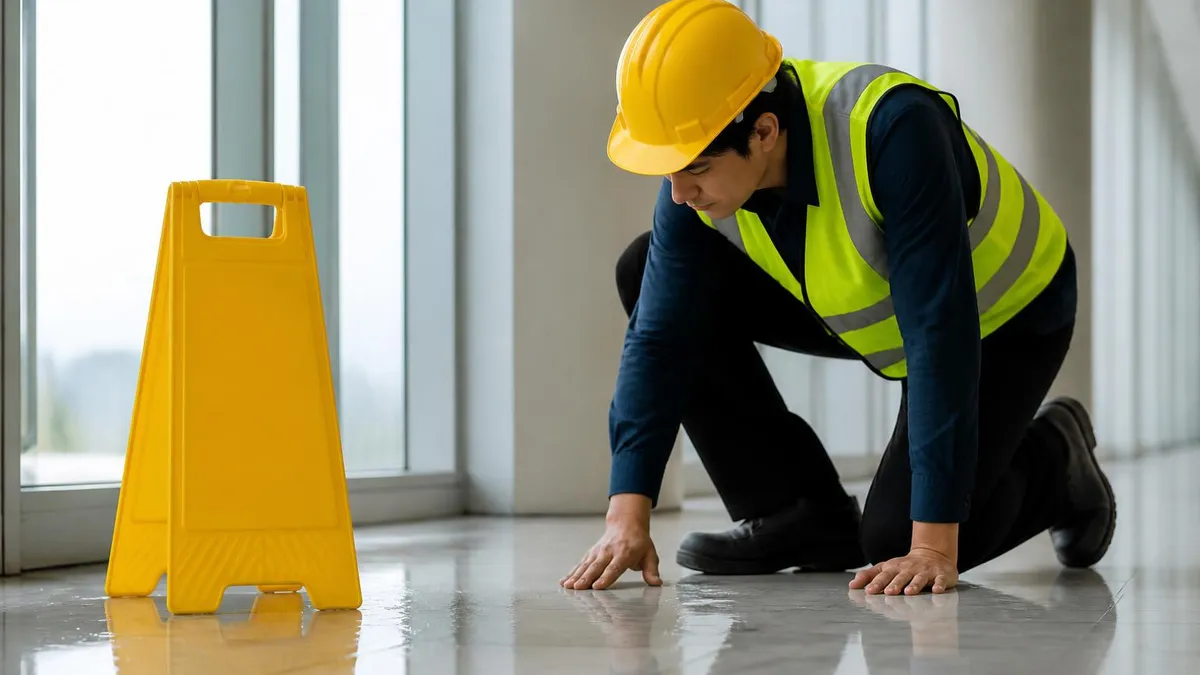
As of 2026, OSHA penalties for serious violations can reach $16,550 per instance, while willful or repeated violations carry maximum penalties exceeding $165,000 per violation. Fall protection citations frequently result in multiple violations issued simultaneously, meaning a single inspection can generate tens of thousands of dollars in fines. Treat fall prevention compliance as an urgent priority to avoid these consequences.
Comprehensive training programs form a critical component of OSHA-compliant fall prevention strategies. OSHA requires employers to train each worker who may be exposed to fall hazards on recognizing the hazards of falling, understanding the procedures to minimize those hazards, and correctly using fall protection systems and equipment. Training must be conducted by a competent person and delivered in a language and vocabulary that workers understand, with retraining required whenever workplace changes render previous training inadequate.
Effective fall prevention training goes beyond simple classroom instruction to include hands-on practice with equipment and site-specific hazard recognition exercises. Workers must learn to properly inspect, don, and adjust personal fall arrest systems before each use. They need practical experience identifying environmental conditions that create slip and trip hazards, understanding the limitations of different fall protection methods, and knowing when to stop work because conditions have become too dangerous to proceed without additional measures.
Competent person requirements under OSHA standards mandate that employers designate qualified individuals to oversee fall protection programs. A competent person must be capable of identifying existing and predictable fall hazards in the workplace, possess authorization to take prompt corrective measures to eliminate those hazards, and have sufficient training and experience to make informed decisions about fall protection methods. This designation carries significant responsibility because osha pfas depends directly on their professional judgment.
Regular workplace inspections should be conducted to identify new or recurring fall hazards before they cause injuries. Daily walk-through inspections by supervisors, weekly formal inspections by safety personnel, and comprehensive quarterly audits of the entire facility provide multiple layers of hazard detection. Inspection checklists should address floor conditions, lighting adequacy, housekeeping standards, equipment condition, guardrail integrity, and weather-related hazards to ensure nothing is overlooked during routine assessments.
Incident investigation procedures must be established to analyze falls and near-misses thoroughly and implement corrective actions that prevent recurrence. Every fall incident, regardless of severity, should trigger a formal investigation that examines root causes rather than simply attributing the event to worker carelessness. Near-miss reporting programs are particularly valuable because they identify hazardous conditions before injuries occur, providing opportunities for proactive intervention that can prevent serious incidents.
Technology increasingly supports fall prevention efforts through innovations in equipment design, hazard detection, and safety management systems. Wearable sensors can detect when workers enter fall-prone positions or approach unprotected edges and provide immediate alerts. Digital inspection platforms streamline documentation and enable real-time hazard reporting from mobile devices. Advanced flooring materials with enhanced slip resistance and improved personal fall arrest system designs all contribute to reducing fall risks in modern workplaces.
Building a culture of safety requires sustained commitment from leadership, consistent enforcement of safety policies, and meaningful recognition of safe work practices. Organizations that treat fall prevention as a core business value rather than a compliance obligation consistently achieve lower incident rates and better overall safety performance. Senior management must visibly support safety initiatives through resource allocation, personal participation, and holding all levels of the organization accountable for maintaining safe conditions.
Implementing practical housekeeping measures represents one of the most cost-effective strategies for reducing slip, trip, and fall incidents in any workplace. Establishing a spill response protocol that requires immediate cleanup of any liquid on walking surfaces prevents the accumulation of slip hazards. Providing absorbent materials, wet floor signs, and designated spill kits at strategic locations throughout the facility empowers workers to address spills quickly without waiting for maintenance personnel to arrive and resolve the dangerous situation.
Selecting appropriate flooring materials for specific work areas can dramatically reduce slip incidents without requiring ongoing administrative controls. High-traffic areas prone to moisture should feature flooring with coefficient of friction ratings above 0.6 to provide adequate traction even when surfaces become wet. Anti-slip coatings, textured floor treatments, and slip-resistant mats placed at entrances, near sinks, and in food preparation areas provide additional traction where smooth flooring surfaces present unacceptable slip risk for workers.
Proper footwear programs deserve greater attention from employers seeking to reduce same-level fall incidents. Conducting a footwear hazard assessment for each job role helps identify which positions require slip-resistant shoes and what specifications those shoes must meet. Many employers subsidize the purchase of approved slip-resistant footwear through payroll deduction programs or direct purchases, recognizing that the modest cost of proper footwear is far less than the expense of a single workers' compensation claim and associated lost productivity.
Stairway safety requires attention to both physical conditions and worker behavior to prevent falls effectively. Handrails must be provided on both sides of stairs with four or more risers and must be maintained in secure, graspable condition. Adequate lighting on stairways should illuminate each step clearly, and high-visibility nosing strips help workers distinguish individual steps. Employers should prohibit carrying loads that obstruct vision while using stairs and encourage maintaining three points of contact when ascending or descending.
Outdoor walking surface maintenance demands proactive attention, particularly during seasonal weather changes that create ice, snow, and wet leaf accumulations. Establishing contracts with snow removal services, maintaining supplies of ice melt products, and assigning responsibility for monitoring outdoor walkways during inclement weather prevents hazardous conditions from developing. Drainage improvements that eliminate standing water on sidewalks, parking lots, and loading docks address recurring hazards that weather alone cannot resolve during heavy precipitation events.
Creating effective signage and visual warnings helps workers navigate areas with known or temporary hazards safely. Permanent warning signs should mark areas with inherent fall risks such as changes in floor elevation, low-clearance areas, and wet process zones. Temporary signage including wet floor cones and barrier tape should be deployed immediately when cleaning operations or spills create temporary hazards. Floor markings using contrasting colors can highlight step-downs, ramp transitions, and elevation changes that workers might otherwise overlook.
Regularly reviewing and updating your fall prevention program ensures it remains effective as workplace conditions evolve. Annual program reviews should incorporate analysis of recent incident data, changes in work processes or facility layout, new equipment that affects walking surfaces, and updates to applicable OSHA standards or industry best practices. Engaging workers in the review process through surveys, safety committee discussions, and hazard reporting feedback helps identify gaps that management reviews alone might miss.
OSHA Questions and Answers

OSHA Approved Hard Hats: Complete 2026 Guide to ANSI Z89.1 Compliance, Types, and Workplace Requirements
OSHA.gov: Your Complete Guide to the Official OSHA Website

OSHA 510: Course Content, Path to Trainer, and Realistic Path

OSHA Process Safety Management: Complete Guide to PSM Standard 1910.119 for 2026

OSHA Forklift Regulations: Complete 2026 Guide to 29 CFR 1910.178 Compliance, Training, and Workplace Safety Requirements
About the Author

Certified Safety Professional & OSHA Compliance Expert
Indiana University of Pennsylvania Safety SciencesDr. William Foster holds a PhD in Safety Science from Indiana University of Pennsylvania and is a Certified Safety Professional (CSP) and Certified Hazardous Materials Manager. With 20 years of occupational health and safety management experience across construction, manufacturing, and chemical industries, he coaches safety professionals through OSHA certification, CSP, CHST, and safety management licensing programs.
Join the Discussion
Connect with other students preparing for this exam. Share tips, ask questions, and get advice from people who have been there.
View discussion (8 replies)