
OSHA 30 Classes: Complete Guide to Certification, Topics, Cost, and What to Expect
Everything about OSHA 30 classes: ✏️ topics covered, cost, format, and how to prepare. Complete guide for construction workers and crane operators.
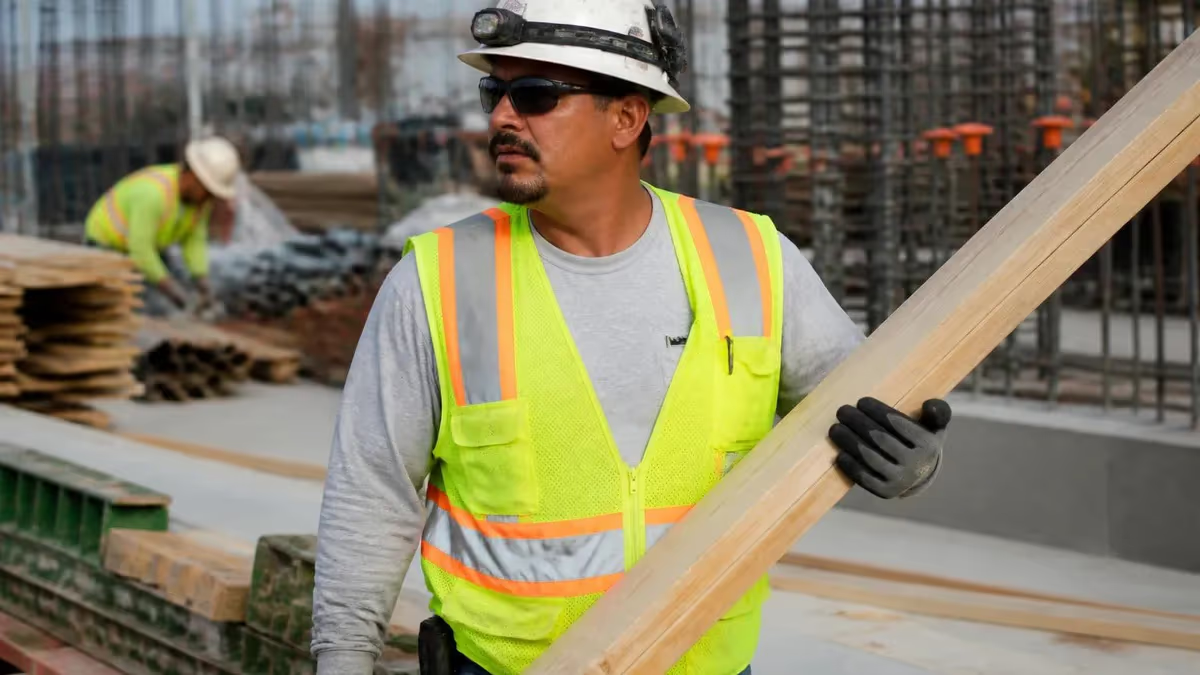
OSHA 30 classes are the gold standard for workplace safety training in the United States, providing 30 hours of comprehensive instruction designed for supervisors, foremen, managers, and workers in safety-sensitive roles. Whether you work in construction, general industry, maritime, or operate heavy equipment like cranes, completing an OSHA 30-hour course signals to employers that you understand federal safety regulations, hazard recognition, and your rights and responsibilities under the Occupational Safety and Health Act. For anyone seeking to advance in their field, these osha 30 classes are often a prerequisite for promotion or a job requirement on major project sites.
The OSHA 30-hour outreach training program was developed by the Occupational Safety and Health Administration and is delivered through authorized trainers certified by the OSHA Training Institute. The program is distinct from the 10-hour version in both depth and intended audience.
While the 10-hour course gives workers a solid foundation in hazard awareness, the 30-hour course goes substantially deeper, covering topics like electrical safety, fall protection systems, scaffolding, materials handling, struck-by and caught-in hazards, personal protective equipment selection, and site-level safety program management. This additional coverage is what makes the credential so valuable for supervisors who must enforce compliance on a daily basis.
One of the most common questions people ask is whether OSHA 30 classes are mandatory. The answer depends heavily on your state, employer, and the nature of your project. Many state and city governments — including New York City, Massachusetts, Nevada, and Missouri — mandate OSHA 30-hour training for supervisors on public works contracts. Private project owners and general contractors frequently require it as well, particularly on large commercial or industrial construction sites. Federal contractors working under certain procurement rules may also find that OSHA 30 completion is written into the contract terms as a condition of employment.
The format of OSHA 30 classes has evolved considerably in recent years. Traditionally, training was delivered in-person over four to five days, with classroom instruction, group exercises, and hands-on activities. Today, OSHA authorizes online delivery for most of the coursework, allowing workers to complete modules at their own pace over up to six months. This flexibility has made the credential far more accessible for workers who cannot take a week away from a job site. However, certain optional hands-on components are still best completed in a live classroom setting, especially topics like fire extinguisher use and first aid response.
For crane operators, riggers, signal persons, and other workers in the lifting industry, OSHA 30 training is especially relevant. The construction industry standard under 29 CFR 1926 Subpart CC imposes detailed operator qualification and certification requirements, and the OSHA 30 curriculum includes dedicated modules on crane safety, rigging, and materials handling. Workers who pair their OSHA 30 card with a National Commission for the Certification of Crane Operators (NCCCO) credential position themselves as exceptionally well-qualified candidates in a competitive labor market where certified professionals command significantly higher wages.
Cost is another major consideration when evaluating OSHA 30 classes. In-person training from a private provider typically runs between $150 and $350 per person, while online courses from authorized providers generally cost between $89 and $200. Some employers, unions, and apprenticeship programs cover the cost entirely, and a number of states and local workforce development agencies offer subsidized or free training for eligible workers. When you factor in the earning potential that comes with the credential and the potential liability avoided by having trained supervisors on site, the return on investment is clear and substantial for both individuals and employers.
Completing your OSHA 30 training earns you a wallet-sized completion card and a certificate from the OSHA Training Institute Education Center. These credentials do not expire in the traditional sense, but OSHA strongly recommends refreshing your training every five years to stay current with regulatory updates and changes in industry best practices.
Many employers and project owners now treat five-year refreshers as a practical requirement, even when not mandated by law. Starting your preparation by understanding both the content and the structure of the course will make your 30 hours far more productive and help you pass any employer-administered knowledge checks at the end of the program.
OSHA 30 Classes by the Numbers
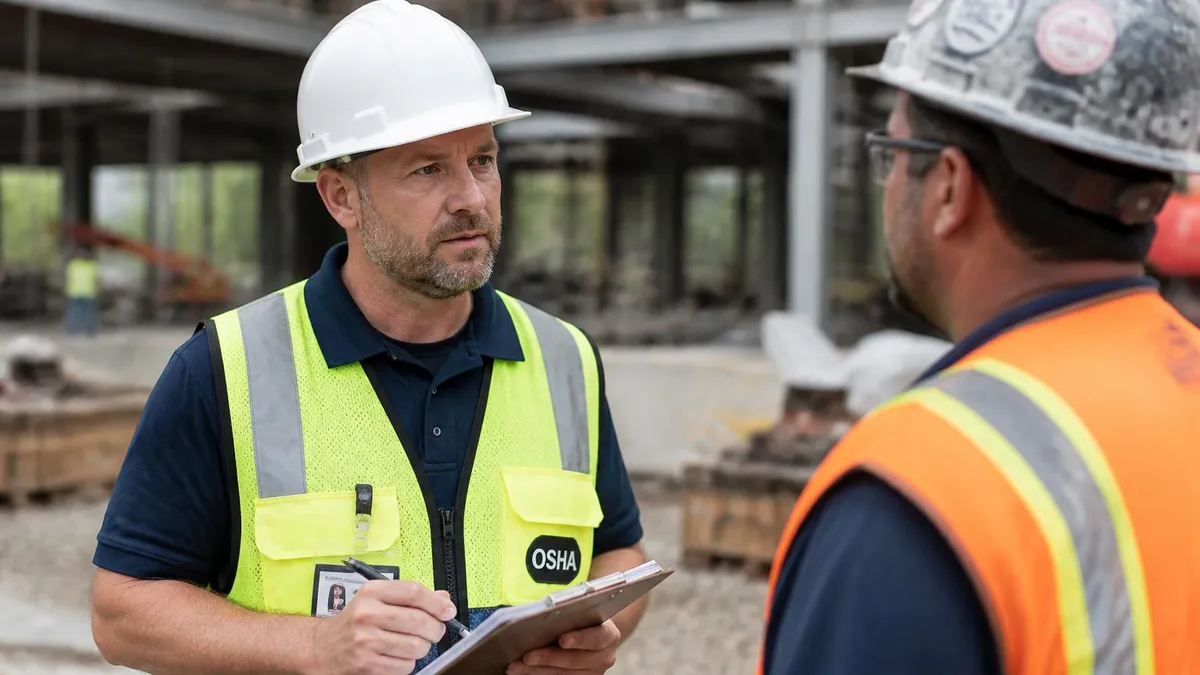
How OSHA 30 Classes Are Structured
OSHA 30 courses include mandatory core topics such as Introduction to OSHA, fall protection, and electrical safety, plus elective topics chosen by the trainer. At least seven and a half hours must cover elective subjects selected from an approved topic list.
OSHA limits training to a maximum of 7.5 hours per day to ensure genuine comprehension. In-person courses typically run four to five days, while online courses allow self-paced progress as long as daily module limits are respected by the provider.
All OSHA 30 outreach training must be delivered by a trainer who holds a current OSHA 30-hour Outreach Trainer card in the relevant industry. Trainers must complete a trainer course at an OSHA Training Institute Education Center before they are authorized to issue student completion cards.
After finishing the course and meeting attendance requirements, trainers submit a class roster to OSHA. Completion cards are then mailed directly to the student from the Department of Labor, typically within two to three weeks after the trainer submits the paperwork.
Understanding exactly what topics are covered in OSHA 30 classes helps workers and supervisors arrive prepared and get the most from their training investment. The course is divided into required topics and elective topics, and while trainers have some flexibility in choosing electives, the core content is standardized across all authorized providers.
For construction workers, the required modules include an introduction to OSHA and the OSH Act, managing safety and health on a job site, fall hazards and fall protection systems, electrical hazards and lockout/tagout procedures, personal protective equipment, and health hazards in construction such as silica exposure, heat illness, and noise-induced hearing loss.
Fall protection is one of the most heavily weighted topics in the OSHA 30 curriculum because falls consistently represent the leading cause of construction fatalities in the United States. The training goes well beyond simply telling workers to wear a use.
Participants learn how to conduct pre-use inspections of fall arrest systems, how to calculate fall clearance distances, the differences between guardrail systems, safety net systems, and personal fall arrest systems, and how to develop a written fall protection plan that satisfies 29 CFR 1926 Subpart M requirements. Supervisors come away with the knowledge needed to enforce fall protection compliance at every level of a project.
Electrical safety modules cover the hazards of overhead power lines, underground utilities, temporary wiring, ground fault circuit interrupters, and lockout/tagout procedures for controlling hazardous energy during maintenance tasks. For crane operators, the proximity of booms and load lines to energized overhead power lines represents one of the most lethal hazards on any construction site. The OSHA 30 training provides a detailed framework for establishing safe work zones around power lines, following the minimum approach distances defined in 29 CFR 1926.1408, and coordinating with utility companies when work must take place near energized conductors.
Materials handling and storage is another critical module, particularly for workers in the lifting and rigging industry. Participants learn the principles of safe rigging, including how to calculate sling angles, select the appropriate rigging hardware for a given load, inspect slings and lifting devices for defects, and communicate effectively with crane operators using standardized hand signals or radio protocols. This content directly complements the operator qualification and certification requirements found in the crane safety standard, making OSHA 30 an ideal companion credential for workers preparing for or currently working in the crane and rigging sector.
Scaffolding is a dedicated elective module that many construction-focused trainers include because scaffold-related falls and collapses account for a significant number of serious injuries each year. The training covers the three main types of scaffolding — supported, suspended, and aerial lifts — along with inspection requirements, load capacity calculations, fall protection requirements specific to each scaffold type, and the competent person responsibilities that OSHA assigns to employers. Workers who complete this module are far better equipped to recognize the warning signs of an improperly erected or overloaded scaffold before a catastrophic failure occurs.
Health hazards in construction receive substantial attention in the 30-hour curriculum, distinguishing this course from more basic safety orientations that focus only on physical injury hazards. Workers learn about permissible exposure limits for silica dust under 29 CFR 1926.1153, the medical surveillance requirements that apply to workers with significant silica exposures, the hierarchy of controls for reducing dust concentrations, and how to select and properly use respiratory protective equipment.
Heat illness prevention, cold stress, noise-induced hearing loss, and lead and asbestos exposure in renovation work are also covered, giving supervisors a comprehensive toolkit for protecting workers from both acute and chronic occupational health hazards.
Personal protective equipment selection and use rounds out the core curriculum, covering the hierarchy of controls framework, the limitations of PPE as a last line of defense, and the specific standards that apply to hard hats, safety glasses, hearing protection, respiratory protection, high-visibility vests, gloves, and safety footwear.
Supervisors learn how to conduct a PPE hazard assessment, document their findings in writing as required by OSHA standards, select appropriate PPE based on the specific hazards present, and train workers on correct use, care, and storage. This knowledge is immediately applicable on any job site and forms the backbone of an effective daily safety program.
Online vs. In-Person OSHA 30 Training Options
Online OSHA 30 classes from authorized providers allow workers to complete the 30-hour requirement at their own pace over a maximum of six months. Most platforms break the content into bite-sized modules of 30 to 60 minutes, making it easy to fit training around a busy work schedule. Reputable online providers must be authorized by OSHA through an accredited Training Institute Education Center, and their completion cards carry the same legal recognition as cards earned in a classroom setting.
The primary advantages of online training are flexibility and cost. Workers can log in from any device, replay modules they find challenging, and pause and resume without losing progress. Online courses typically cost between $89 and $175, which is significantly less than in-person options. The main limitation is that some hands-on demonstrations — such as fire extinguisher operation or first aid technique — cannot be fully replicated in a virtual format, which is why some employers still prefer blended or fully in-person delivery for safety-critical roles.
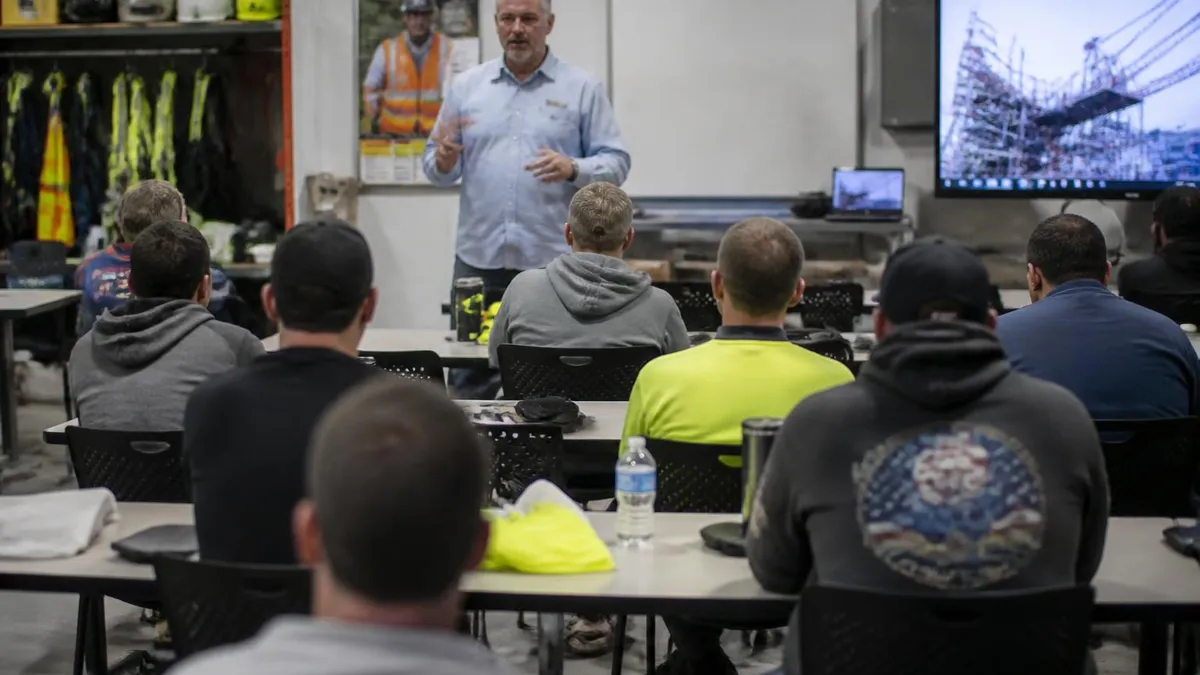
Pros and Cons of Taking OSHA 30 Classes
- +Increases your value to employers and supports career advancement into supervisory roles
- +Satisfies mandatory training requirements on public works and major commercial projects in many states
- +Provides in-depth knowledge of federal OSHA standards that reduces personal liability as a supervisor
- +Flexible online delivery options allow completion around a busy work schedule without taking time off
- +Credentials are recognized nationwide and transfer between employers and project sites
- +Reduces incident rates on sites where supervisors have completed 30-hour training, according to OSHA data
- −30-hour time commitment is significant, especially for workers with demanding schedules
- −Course costs of $89–$350 can be a barrier for workers whose employers do not offer reimbursement
- −Online-only delivery may not satisfy employer or contract requirements that specify in-person training
- −Completion card takes two to three weeks to arrive after the trainer submits paperwork to OSHA
- −Content must be refreshed every five years to stay current, adding ongoing time and cost obligations
- −The credential alone does not substitute for operator-specific certifications required by OSHA for crane operation and other specialized trades
Pros and Cons at a Glance
| Pros | Cons |
|---|---|
| Increases your value to employers and supports career advancement into supervisory roles | Online-only delivery may not satisfy employer or contract requirements that specify in-person training |
| Satisfies mandatory training requirements on public works and major commercial projects in many states | Completion card takes two to three weeks to arrive after the trainer submits paperwork to OSHA |
| Provides in-depth knowledge of federal OSHA standards that reduces personal liability as a supervisor | Content must be refreshed every five years to stay current, adding ongoing time and cost obligations |
| Flexible online delivery options allow completion around a busy work schedule without taking time off | The credential alone does not substitute for operator-specific certifications required by OSHA for crane operation and other specialized trades |
OSHA 30 Course Preparation Checklist
- ✓Verify your chosen provider is authorized by an OSHA Training Institute Education Center before enrolling.
- ✓Confirm whether your employer or union offers reimbursement or sponsored training before paying out of pocket.
- ✓Check your state and local requirements to determine whether in-person or online delivery is accepted.
- ✓Review the OSHA 10 course content first if you have not previously completed 10-hour training.
- ✓Download and review 29 CFR 1926 (construction) or 29 CFR 1910 (general industry) before your first session.
- ✓Prepare a list of site-specific questions to bring to your trainer, especially for crane, rigging, or confined space topics.
- ✓Block adequate study time on your calendar — plan for at least 30 hours plus review time spread over several weeks.
- ✓Set up your online learning account and complete the orientation module before the formal training clock starts.
- ✓Keep notes organized by topic so you can reference them easily when reviewing for knowledge assessments.
- ✓After completing the course, verify your trainer has submitted your roster to OSHA and follow up if your card has not arrived within four weeks.
OSHA 30 + NCCCO = Maximum Employability
Crane operators who hold both an OSHA 30-hour completion card and a current NCCCO certification are among the most in-demand workers in the construction industry. Employers on large infrastructure, industrial, and commercial projects routinely list both credentials as preferred or required qualifications, and workers who hold both consistently report higher hourly rates and more stable year-round employment than those who hold only one or neither credential.
The cost of OSHA 30 classes varies widely depending on format, provider, and geographic location, but understanding the full landscape of funding options can make the training accessible to virtually any worker regardless of financial situation.
At the high end, private training companies offering in-person instruction in major metropolitan areas may charge $300 to $350 per person, reflecting the cost of renting classroom space, providing printed materials, and compensating a highly qualified OSHA-authorized trainer. At the low end, online courses from reputable providers like 360training, the National Safety Council, and ClickSafety frequently run promotions that bring the price to under $100.
Many workers are unaware that their employer may be legally or contractually obligated to provide OSHA 30 training at no cost. When a state law, municipal ordinance, or project labor agreement requires OSHA 30 certification as a condition of working on a specific project, the employer is generally responsible for ensuring workers can meet that requirement. Workers who are asked to complete OSHA 30 training as a condition of employment on a new project should ask their employer whether the training cost will be covered before enrolling and paying out of pocket.
Union apprenticeship programs are one of the most generous sources of free or heavily subsidized OSHA 30 training. The International Union of Operating Engineers, the Laborers' International Union of North America, the United Brotherhood of Carpenters, and other building trades unions regularly offer OSHA 30 courses to apprentices and journeymen as part of their ongoing education programs. These programs are funded through joint apprenticeship training funds negotiated in collective bargaining agreements, so members typically pay nothing out of pocket. Contact your local union business office or apprenticeship coordinator to find out about scheduled training sessions.
State workforce development agencies and community colleges offer another avenue for subsidized training. Programs funded through the Workforce Innovation and Opportunity Act, state apprenticeship offices, or economic development initiatives frequently offer OSHA 30 courses at reduced rates or no cost to eligible workers who meet income or employment criteria. Some states have specific set-aside funding for safety training in high-hazard industries, and workers in construction, manufacturing, and transportation are often prioritized. A quick search through your state's department of labor website or a call to your local American Job Center can identify available funding in your area.
For self-employed contractors, small business owners, and workers whose employers will not cover the cost, the expense of OSHA 30 training should be treated as a professional investment. In most cases, the cost of training is tax-deductible as a business or professional development expense, which reduces the effective out-of-pocket cost. More importantly, workers who hold OSHA 30 certification typically command higher hourly rates on projects where the credential is valued, and the increased earning potential often recoups the training cost within a matter of weeks on the job site.
When comparing providers, price alone should not be the deciding factor. The most important consideration is whether the provider is genuinely authorized by an OSHA Training Institute Education Center to conduct outreach training in your industry. Unauthorized providers cannot issue official OSHA completion cards, and workers who complete training through unrecognized vendors may discover that their certificate is rejected by employers or project owners. Always verify a provider's authorization status through the OSHA website or the OSHA Training Institute's directory of authorized outreach trainers before enrolling in any course.
Group rates are another way to reduce per-person costs substantially. Employers who need to train multiple supervisors at once can often negotiate significant discounts with private training providers, particularly for on-site delivery where the provider sends a trainer to the job location. On-site training eliminates travel and lodging costs for workers, reduces lost productivity from travel time, and allows the trainer to incorporate site-specific hazard examples that make the content directly relevant to participants' daily work environment. For construction firms with five or more supervisors who need OSHA 30 certification, on-site group training is almost always the most cost-effective option.

OSHA has issued multiple warnings about fraudulent completion cards being sold online without any actual training taking place. Employers who discover that a worker obtained an OSHA 30 card without completing a legitimate course can face significant liability, and the worker may be disqualified from projects. Always verify that your provider is listed as an authorized outreach trainer through the official OSHA Training Institute Education Center directory before completing payment or beginning any coursework.
After completing your OSHA 30 classes, the next steps you take will determine how much career benefit you extract from the credential. The most immediate action for most workers is to update their resume, online professional profiles, and contractor qualification documents to reflect the completion. Many project owners and general contractors use pre-qualification platforms like ISNetworld, Avetta, or Browz to vet subcontractors and their key personnel, and having a current OSHA 30 card on file can mean the difference between being approved to bid on a project or being rejected during the qualification screening process.
For crane operators specifically, OSHA 30 completion should be paired with a review of the current crane safety standard under 29 CFR 1926 Subpart CC, which establishes the operator qualification and certification requirements that took full effect in November 2018. The standard requires crane operators to be either certified by an accredited third-party certifier like NCCCO, CIC, or NCCER, or qualified through an employer-based program that meets specific performance standards.
OSHA 30 training does not substitute for operator certification, but it provides the regulatory framework knowledge that makes the certification process significantly more approachable for workers who have not previously studied OSHA standards in depth.
Maintaining your OSHA 30 credential over the long term requires staying current with regulatory changes and industry developments. OSHA issues new standards, updates existing rules, and publishes enforcement guidance on an ongoing basis, and a five-year-old completion card may not reflect current requirements in areas that have changed significantly.
OSHA recommends refresher training every five years, and many large contractors, project owners, and qualification platforms now treat five-year currency as a practical requirement even when not mandated by applicable law. Building refresher training into your professional development calendar ensures that your knowledge remains current and that your credential continues to be recognized as evidence of meaningful safety competence.
Networking with other OSHA-trained supervisors and safety professionals is another often-overlooked benefit of completing 30-hour training. The people you meet in your training cohort — whether in a classroom or through the discussion forums of an online platform — are working through the same regulatory challenges you face every day.
Building relationships with safety directors, compliance officers, and experienced site supervisors can open doors to new employment opportunities, provide a sounding board when you encounter an unusual regulatory question on the job, and give you access to a professional community that keeps you informed about industry trends, new OSHA enforcement priorities, and emerging best practices.
If you find that you have a strong interest in workplace safety after completing your OSHA 30 training, consider pursuing additional credentials that build on your foundation. The OSHA 500 and 510 courses qualify trainers to deliver OSHA 10 and 30-hour outreach training themselves, which creates new professional and income opportunities.
The Construction Health and Safety Technician (CHST) credential offered by the Board of Certified Safety Professionals is a respected mid-level safety certification that becomes attainable for workers with several years of safety experience and a solid regulatory foundation. The Certified Safety Professional (CSP) and Associate Safety Professional (ASP) designations represent higher-level professional credentials for those who wish to pursue a full-time career in occupational safety and health.
Teaching what you have learned to the workers under your supervision is arguably the most impactful thing an OSHA 30-trained supervisor can do. Effective safety leadership requires not just personal knowledge of OSHA standards but the ability to translate that knowledge into concrete daily behaviors on the job site.
Using the toolbox talk format to review one safety topic per day, conducting pre-task planning meetings that identify hazards before work begins, performing regular inspections using checklists derived from OSHA standards, and holding workers accountable for PPE use and safe work practices are all direct applications of the skills developed in OSHA 30 training. Supervisors who adopt these habits consistently report reductions in near-miss incidents and recordable injuries on their projects.
The long-term career trajectory for workers with OSHA 30 certification is markedly better than for those without it. Studies consistently show that safety-certified supervisors earn more, experience less involuntary unemployment during industry downturns, and advance to senior leadership roles more quickly than their uncertified peers.
In industries with tight labor markets and strong demand for proven supervisory talent — like crane and rigging, heavy civil construction, and industrial maintenance — the OSHA 30 card combined with solid field experience and strong leadership skills makes a worker genuinely difficult to replace and provides substantial negotiating use when it comes to compensation and working conditions.
Preparing effectively for OSHA 30 classes means arriving on day one with a basic understanding of how OSHA works, what the most common construction hazards are, and how the regulatory framework is organized. Workers who invest even a few hours in preliminary review typically find the coursework more comprehensible and retain the material more effectively than those who walk in cold. Start by reviewing the OSHA Construction Industry Regulations pocket guide, which summarizes the key standards in an easily digestible format and helps you build a mental map of the regulatory landscape before your trainer begins filling in the details.
One of the most effective preparation strategies is to review incident reports and case studies from OSHA's website. OSHA publishes detailed summaries of fatal accidents under its fatality and catastrophe reporting requirement, and reading these accounts gives the abstract regulatory requirements a visceral, human dimension that makes them far more memorable. When you understand that a particular fall protection requirement exists because workers have died in exactly the scenario it was designed to prevent, the rule stops feeling like bureaucratic compliance theater and starts feeling like a meaningful safeguard worth enforcing vigorously on your own projects.
Practice questions and quizzes are another powerful preparation tool, particularly for workers who are preparing for employer-administered knowledge assessments at the end of the course. While OSHA 30 outreach training does not include a formal pass-fail exam, many employers and project owners use brief assessments to verify that participants have absorbed the key concepts from each module.
Working through practice questions before and during the course helps you identify the topics where your knowledge is weakest and direct additional study time to those areas before the assessment. The quiz tools available on PracticeTestGeeks are specifically designed to reinforce the OSHA concepts most commonly assessed by employers in the construction and crane industries.
Time management is one of the most practical challenges workers face when completing OSHA 30 training, especially in the online format where self-discipline drives progress. The six-month completion window sounds generous, but workers who do not establish a structured schedule from the start frequently find themselves rushing through the final modules in the last two weeks before a project start date.
Treat your 30 hours of training like any other professional commitment: block specific times on your calendar, log your completed hours after each session, and set intermediate milestone targets to ensure you are on pace to finish well before you need the card.
Study groups can significantly enhance the learning experience for in-person and even online OSHA 30 training. When workers from the same crew or employer take the course together, they can discuss how the concepts apply to their specific work environment, challenge each other with scenario-based questions, and hold each other accountable for completing modules on schedule. Supervisors who go through OSHA 30 training together also emerge with a shared vocabulary and framework for discussing safety issues on the job site, which makes safety communication more consistent and effective across the project team.
After each training session, take ten to fifteen minutes to write down the three most important concepts you learned and one specific change you plan to make to how you supervise safety on your job site. This reflection practice dramatically improves retention and helps you build a personal safety playbook that evolves as you complete the course. When you return to the job site with your OSHA 30 card, you will have a concrete list of actionable improvements ready to implement rather than a vague sense that you attended a worthwhile training program.
Finally, remember that OSHA 30 training is the beginning of your safety education, not the end. The most knowledgeable and effective safety professionals in the construction industry are those who treat safety learning as a continuous career-long process.
Subscribe to OSHA's QuickTakes newsletter for regulatory updates, follow industry safety organizations and trade publications, attend local safety council meetings, and remain curious about every incident and near-miss you observe on the job site. The workers and supervisors who advance furthest in their careers are those who take their OSHA 30 training seriously as a foundation and build consistently on it every year they are in the field.
Sample OSHA - OSHA Certified Crane Operator Practice Questions
Try these questions from our free OSHA - OSHA Certified Crane Operator practice tests. The correct answer and an explanation follow each question.
Which of the following is a required component of the NCCCO written certification exam?
- A. A live rigging practical
- B. Core knowledge plus equipment-specific module
- C. A site-specific safety plan review
- D. OSHA 30-hour course completion
Answer: B. Core knowledge plus equipment-specific module
NCCCO certification requires passing a core written exam plus an equipment-type-specific written module.
How often must a crane operator's certification be renewed under OSHA standards?
- A. Every year
- B. Every 3 years
- C. Every 5 years
- D. Every 10 years
Answer: C. Every 5 years
OSHA 29 CFR 1926.1427 requires crane operator certification renewal every five years.
Under OSHA 1926.1427, an employer may use which alternative to third-party certification?
- A. An in-house written test only
- B. An audit-based qualification program accredited by an ANSI/ASTM-approved body
- C. A state DMV-issued crane license
- D. A 40-hour on-the-job training record
Answer: B. An audit-based qualification program accredited by an ANSI/ASTM-approved body
Employers may use an audited employer program that meets ANSI/ASTM F2082 as an alternative to third-party certification.
What environmental protection measure applies to technical measurements?
- A. Environmental concerns do not apply to this field
- B. Proper handling, storage, and disposal of materials according to environmental regulations
- C. Environmental rules only apply to large corporations
- D. Follow environmental rules only if specifically asked
Answer: B. Proper handling, storage, and disposal of materials according to environmental regulations
Proper handling, storage, and disposal of all materials according to environmental regulations is a legal obligation in all trades.
Take the full OSHA - OSHA Certified Crane Operator practice test
OSHA Questions and Answers

Can OSHA Enter Your Workplace? Complete Guide to General OSHA Questions, Inspections, Rights, and Compliance for Crane Operators and Construction Workers

OSHA Railing Requirements: Complete Guide to Guardrail Standards, Heights, Loads, and Fall Protection Compliance for Construction and General Industry

OSHA (OSHA Certified Crane Operator) Test Guide

OSHA Restaurant Safety: Complete Guide to Workplace Compliance, Hazard Prevention, and Employee Training for Food Service Operations

Confined Space Definition OSHA: Complete Guide to Permit-Required Spaces, Entry Procedures, Hazard Identification, and Crane Operator Safety Requirements Under 29 CFR 1910.146 and 1926 Subpart AA
About the Author

Certified Safety Professional & OSHA Compliance Expert
Indiana University of Pennsylvania Safety SciencesDr. William Foster holds a PhD in Safety Science from Indiana University of Pennsylvania and is a Certified Safety Professional (CSP) and Certified Hazardous Materials Manager. With 20 years of occupational health and safety management experience across construction, manufacturing, and chemical industries, he coaches safety professionals through OSHA certification, CSP, CHST, and safety management licensing programs.
Join the Discussion
Connect with other students preparing for this exam. Share tips, ask questions, and get advice from people who have been there.
View discussion (8 replies)