

OSHA Practice Test
Updated October 2026Facts verified Oct 29, 2026 against National Commission for the Certification of Crane Operators
Understanding crane operation and getting certified can seem tough. But this guide is here to make it easier. The OSHA Certified Crane Operator Test is key for those wanting to operate cranes in the U.S. It keeps construction sites, workplaces, and the public safe. We'll cover the important rules, standards, and steps to pass the OSHA test and become a skilled crane operator. Practice with the free OSHA - OSHA Certified Crane Operator practice test on PracticeTestGeeks (9 questions with answer explanations).
- The NCCCO Mobile Crane Operator Core written exam has 95 multiple-choice questions.[1]
- Each NCCCO Mobile Crane Operator Specialty written exam has 26 multiple-choice questions.[1]
- Candidates get 90 minutes to complete the NCCCO Mobile Crane Operator Core written exam.[1]
- Candidates get 60 minutes for each NCCCO Mobile Crane Operator Specialty written exam.[1]
- NCCCO crane operator written exams are criterion-referenced, so candidates must reach a passing score set in advance by CCO content experts; NCCCO does not publish the number.[2]
- The NCCCO Mobile Crane Operator Core written exam costs $140.[3]
- Each NCCCO Mobile Crane Operator practical exam costs $70.[3]
- Candidates who fail an NCCCO exam must reapply and pay the retest fees, and must wait at least four weeks before retaking the same written exam.[2]
- Under OSHA's crane rule (29 CFR 1926.1427), an operator certification from an accredited crane operator testing organization such as NCCCO is valid for 5 years.[4]
Numbers in brackets link to the official sources listed under Sources & last verified. Dates that have passed are removed automatically.
OSHA Exam at a Glance
| Item | Detail | Source · Verified |
|---|---|---|
| Number of questions (Core written exam) | 95 multiple-choice questions[1] | National Commission for the Certification of Crane Operators · Oct 27, 2026 |
| Number of questions (Specialty written exam) | 26 multiple-choice questions per Specialty[1] | National Commission for the Certification of Crane Operators · Oct 27, 2026 |
| Time limit (Core written exam) | 90 minutes[1] | National Commission for the Certification of Crane Operators · Oct 27, 2026 |
| Time limit (Specialty written exam) | 60 minutes per Specialty[1] | National Commission for the Certification of Crane Operators · Oct 27, 2026 |
| Passing score | Predetermined criterion-referenced passing score (number not published)[2] | National Commission for the Certification of Crane Operators · Oct 27, 2026 |
| Exam fee (Core written exam) | $140[3] | National Commission for the Certification of Crane Operators · Oct 27, 2026 |
| Exam fee (Practical exam) | $70 per Practical exam[3] | National Commission for the Certification of Crane Operators · Oct 27, 2026 |
| Exam fee (Specialty written exam) | $80 per Specialty[3] | National Commission for the Certification of Crane Operators · Oct 27, 2026 |
| Retake policy | Reapply and pay retest fees; wait at least 4 weeks to retake a written exam[2] | National Commission for the Certification of Crane Operators · Oct 27, 2026 |
| Validity | 5 years[4] | osha.gov · Oct 28, 2026 |
| Delivery | Written: online proctored (OPT), test center (TCT) or Event Online Testing (EOT); Practical: hands-on crane exam[1] | National Commission for the Certification of Crane Operators · Oct 27, 2026 |
| Score release | Preliminary results immediately after testing[2] | National Commission for the Certification of Crane Operators · Oct 27, 2026 |
| Registration deadline | Apply at least 2 business days before testing; test within 6 months of applying[2] | National Commission for the Certification of Crane Operators · Oct 27, 2026 |
What changed for OSHA in 2026
- Oct 27, 2026: Delivery changed to Written: online proctored (OPT), test center (TCT) or Event Online Testing (EOT); Practical: hands-on crane exam (previously Written: online proctored, test center or event online; Practical: hands-on).[1]
- Oct 27, 2026: Registration deadline changed to Apply at least 2 business days before testing; test within 6 months of applying (previously Apply at least 2 business days before testing).[2]
- Oct 27, 2026: Passing score changed to Predetermined criterion-referenced passing score (number not published) (previously Predetermined criterion-referenced passing score (number not published on this page)).[2]
According to National Commission for the Certification of Crane Operators, “Each Specialty Examinations consists of 26 multiple-choice questions.”[1]
OSHA content outline and where to practise each area
The content areas below are copied from the official OSHA content outline published by National Commission for the Certification of Crane Operators, with the share of the exam each area carries. The right-hand column shows which of our practice sets covers it.
OSHA Practice Test Questions
Prepare for the OSHA - OSHA Certified Crane Operator exam with our free practice test modules. Each quiz covers key topics to help you pass on your first try.
OSHA Crane Operation Controls & Signal Com...
OSHA Exam Questions covering Crane Operation Controls & Signal Communication. Master OSHA Test concepts for certification prep.
OSHA Crane Safety Procedures & Hazard Prev...
Free OSHA Practice Test featuring Crane Safety Procedures & Hazard Prevention. Improve your OSHA Exam score with mock test prep.
OSHA Load Handling & Rigging Techniques
OSHA Mock Exam on Load Handling & Rigging Techniques. OSHA Study Guide questions to pass on your first try.
OSHA Regulations & Equipment Inspection St...
OSHA Test Prep for Regulations & Equipment Inspection Standards. Practice OSHA Quiz questions and boost your score.
OSHA Code Compliance
OSHA Questions and Answers on Code Compliance. Free OSHA practice for exam readiness.
OSHA Crane Operator Certification & Qualif...
OSHA Mock Test covering Crane Operator Certification & Qualification Requirements. Online OSHA Test practice with instant feedback.
OSHA Electrical Hazards & Power Line Safety
Free OSHA Quiz on Electrical Hazards & Power Line Safety. OSHA Exam prep questions with detailed explanations.
OSHA Environmental Standards
OSHA Practice Questions for Environmental Standards. Build confidence for your OSHA certification exam.
OSHA Equipment Operation
OSHA Test Online for Equipment Operation. Free practice with instant results and feedback.
OSHA Maintenance Protocols
OSHA Study Material on Maintenance Protocols. Prepare effectively with real exam-style questions.
OSHA Material Selection
Free OSHA Test covering Material Selection. Practice and track your OSHA exam readiness.
OSHA Pre-Lift Planning & Load Chart Interp...
OSHA Exam Questions covering Pre-Lift Planning & Load Chart Interpretation. Master OSHA Test concepts for certification prep.
OSHA Quality Inspection
Free OSHA Practice Test featuring Quality Inspection. Improve your OSHA Exam score with mock test prep.
Worked examples: how to reason through OSHA questions
These are practice questions written for this site, not questions from the real exam. Each explanation shows why the right answer is right and why the others are wrong.
Example 1
Question: In a pre-lift plan, the 'pick radius' differs from the 'set radius' when:
- The load will be lifted and swung to a different location at a different distance from the crane
- The load is symmetrical
- Only one crane is used
- The load weighs less than 1,000 lbs
Answer: A. The load will be lifted and swung to a different location at a different distance from the crane
Explanation:
Correct: A. The pick radius is the horizontal distance from the crane's center of rotation to the load where it is lifted. The set radius is the same distance where the load is placed. If the load is swung to a spot nearer or farther from the crane, the two radii are different. Rated capacity drops as radius grows, so you have to check the load chart at both radii and at every radius in between.
B is wrong because a symmetrical load affects how you rig it, not where it is lifted or set. C is wrong because a single crane can still pick at one radius and set at another. D is wrong because the load's weight has nothing to do with its position.
Rule to remember: plan the lift at the worst-case radius along its whole path.
Example 2
Question: How often should crane safety devices be inspected?
- Every week
- Every month
- Before each shift
- Only after incidents
Answer: C. Before each shift
Explanation:
Correct: C. Safety devices such as limit switches, brakes, alarms and indicators are checked in the shift inspection, before the crane is used. A device that fails during a lift can cause a two-block, an overload or a dropped load. Checking at the start of each shift catches problems before anyone is exposed to them.
A and B are wrong because weekly or monthly checks leave too long a gap. Those intervals belong to the more detailed periodic inspections, which are done on top of shift checks, not in place of them. D is wrong because waiting for an incident means a fault is found only after it has done harm.
Rule to remember: a competent person checks safety devices before each shift, and the crane is not used until any defect affecting safe operation is fixed.
Example 3
Question: Under OSHA 1926.1425, when may a worker be directly under a suspended load?
- Never, under any circumstances
- When hooking, unhooking, or guiding the load, or during initial attachment
- Any time a qualified rigger is present
- When the load is under 1,000 lb
Answer: B. When hooking, unhooking, or guiding the load, or during initial attachment
Explanation:
Correct: B. OSHA 1926.1425 keeps workers out from under a suspended load. The exceptions are workers who are hooking, unhooking or guiding the load, or doing the initial attachment. Even then, the rule sets further conditions on how the load is rigged and secured.
A is wrong because the standard does allow these limited exceptions, so 'never' is too strict. C is wrong because having a qualified rigger present does not, on its own, make it acceptable to stand under the load. D is wrong because the standard does not exempt loads by weight. A light load can still cause serious injury if it falls.
Rule to remember: the default is that no one is under the load. Only the people who must handle it during hooking, unhooking, guiding or initial attachment may be there, and only when the standard's conditions are met.
How to use these practice tests
Start by reading the official NCCCO candidate material for the Core exam and the Specialty you plan to take. Note which content areas carry the most weight. Next, take one practice set from each area without a time limit, just to see where you stand. Don't look anything up during this first round.
Go through every question you missed and read the explanation. Then find the matching section of OSHA's crane standard or the NCCCO reference material and read it there too. Keep a short list of rules you got wrong, such as inspection intervals, power line clearances and when workers may be under a load.
Spend extra time on load charts. Use the Pre-Lift Planning and Load Chart Interpretation set, and for every lift, work out capacity at both the pick and the set radius. Mix in the Load Handling and Rigging and Safety Procedures sets so the rules stay fresh.
In the last stretch before your exam, take timed sets that match the real limits: 90 minutes for the Core and 60 minutes for each Specialty. Practise reading each question all the way through before you look at the options. The day before, review your list of missed rules instead of taking new sets.
Free OSHA - OSHA Certified Crane Operator Study Tools
Interactive OSHA - OSHA Certified Crane Operator resources on PracticeTestGeeks, free to start:
- OSHA - OSHA Certified Crane Operator flashcards — review key terms and concepts card by card
- OSHA - OSHA Certified Crane Operator study guide — topic-by-topic overview of what the exam covers
- OSHA - OSHA Certified Crane Operator cheat sheet — one-page printable summary for last-minute review
Key Takeaways
Free OSHA Practice Test Online
- Understand OSHA crane safety regulations and standards
- Importance of obtaining OSHA crane operator certification
- Prepare for the OSHA certification test through structured training programs
- Familiarize yourself with study materials and resources to ace the exam
- Ensure compliance with OSHA requirements for crane inspection, rigging, and signal communication
Gain practical knowledge on safe load handling and rigging procedures
Learn proper use of crane control systems and emergency stop protocols
Build confidence to operate cranes in compliance with OSHA regulations on real job sites.
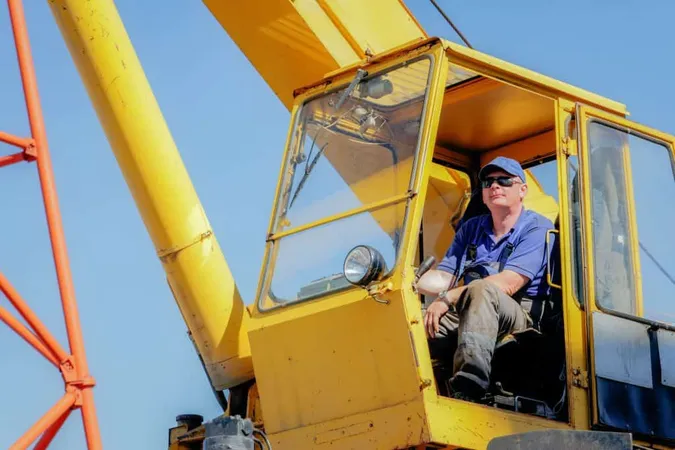
Understanding OSHA Crane Operator Certification
Keeping a construction site safe and following rules is key. At the center of this is the OSHA crane operator certification. This certification makes sure crane operators know how to use these big machines safely. They follow crane safety regulations and osha compliance standards.
Crane Safety Regulations and Standards
OSHA's crane safety rules aim to keep workers safe on construction sites. They set clear rules for using cranes. Topics include crane checks, how much weight they can hold, training for operators, and what to do in emergencies. Following these rules is not just the law. It's also essential for a safe and productive construction crane operations.
Importance of Certified Crane Operators
Having an osha certified crane operator on site is crucial for crane accident prevention. They are trained to spot and avoid dangers. They also know how to use the crane safely and handle emergencies. Their work is vital for keeping everyone safe and the project on track.
Preparing for the OSHA (OSHA Certified Crane Operator) Test
To become an OSHA Certified Crane Operator, you need to prepare well and focus on safety. We'll show you how to get ready for the OSHA certification exam. This includes everything from crane operator training programs to study materials and resources.
Crane Operator Training Programs
Starting with a good crane operator training program is key. These programs, taught by experts, mix hands-on practice with classroom learning. They cover all the skills and knowledge you need to operate cranes safely.
By finishing a certified program, you'll feel more confident and ready for the OSHA test.
Study Materials and Resources
- OSHA's crane operator certification study guides and practice exams
- Industry-specific heavy equipment training manuals and textbooks
- Online resources, such as webinars and tutorials, focusing on construction equipment certification and OSHA crane regulations
- Networking with experienced crane operators and attending industry events to stay up-to-date on heavy machinery licensing requirements
Using these study materials and resources will help you pass the crane operator exams. You'll earn the OSHA Certified Crane Operator credential.
Understanding the Importance of OSHA Standards in Crane Operation
The Occupational Safety and Health Administration (OSHA) sets the benchmark for safety regulations in the construction and crane operation industry. For crane operators, understanding and complying with these standards is not optional—it’s a legal and professional requirement. OSHA’s guidelines, particularly those outlined in 29 CFR 1926 Subpart CC, cover everything from crane assembly and disassembly to signal communication and operator qualifications. These rules are designed to reduce risks associated with crane use, such as tip-overs, electrical hazards, and equipment failures.
An OSHA Certified Crane Operator demonstrates that they have received proper training and have passed evaluations proving their capability to operate cranes safely. This includes knowing how to perform daily inspections, interpret load charts, and respond appropriately to hazardous situations. Compliance with OSHA standards ensures not only the operator's safety but also the safety of all personnel on a job site. Employers prioritize certified operators because it significantly lowers liability, improves efficiency, and helps maintain a culture of safety across projects.

Exam Overview and Requirements
The OSHA Certified Crane Operator Test checks your knowledge and skills in crane operation. This includes overhead and mobile cranes, load charts, rigging, and signals. You need to know crane safety rules, industry standards, and best practices to pass.
The test has written and practical parts. The written part has questions on crane types, load capacities, and safe use. The practical part lets you operate a crane under an OSHA-approved evaluator's watch. You'll do tasks like setting up the crane and rigging loads.
Remember, the test rules can change based on the crane type. You also need to have medical certifications and training records ready. This ensures you meet all the exam's requirements.
Conclusion
Becoming an OSHA Certified Crane Operator is more than just passing an exam—it's a commitment to safety, responsibility, and technical precision on every job site. With the increasing demand for qualified professionals in construction and heavy equipment industries, this certification sets you apart as a competent and compliant operator who prioritizes best practices in crane operations.
By mastering safety protocols, understanding proper load handling, and adhering to inspection and maintenance standards, certified crane operators play a vital role in minimizing workplace risks. Maintaining this certification ensures that your knowledge stays current with evolving OSHA regulations, ultimately contributing to a safer and more efficient work environment for everyone involved.
FAQ
What are the OSHA crane safety regulations and standards?
OSHA has set strict rules for crane use. These include needing certified crane operators, regular crane checks, and clear communication signals. The goal is to keep workers safe and avoid accidents.

Why is it important to have OSHA certified crane operators?
Certified crane operators are key to site safety. They know how to use cranes safely and follow important safety rules. This reduces the chance of accidents, keeping everyone safe.
What does the OSHA (OSHA Certified Crane Operator) Test cover?
The OSHA Test checks if someone knows how to safely use cranes. It covers things like how to read load charts and use communication signals. It makes sure they understand OSHA rules and can operate cranes safely.
What types of crane operator training programs are available?
There are many training options for crane operators. You can learn in a classroom, online, or by doing hands-on training. These programs teach the basics of crane use, like safety rules and how to rig loads. Getting trained is a big step towards passing the OSHA test.
What study materials and resources are available to help prepare for the OSHA (OSHA Certified Crane Operator) Test?
There are many resources to help you study for the OSHA Test. You can find practice exams, study guides, online courses, and industry publications. These materials cover all the important topics, like safety rules and communication signals. They help you get ready to pass the test.
OSHA: Pros and Cons
- +OSHA certification validates expertise recognized by employers nationwide
- +Certified professionals typically earn 15-20% higher salaries
- +Opens doors to advanced positions and leadership roles
- +Demonstrates commitment to professional standards and ethics
- +Builds a strong professional network through certification communities
- −Exam preparation typically requires 2-4 months of dedicated study
- −Certification and exam fees can range from $150-$500+
- −Must complete continuing education to maintain active certification
- −Pass rates vary — thorough preparation is essential for success
- −Some certifications require prerequisite experience or education
Pros and Cons at a Glance
| Pros | Cons |
|---|---|
| OSHA certification validates expertise recognized by employers nationwide | Must complete continuing education to maintain active certification |
| Opens doors to advanced positions and leadership roles | Pass rates vary — thorough preparation is essential for success |
| Demonstrates commitment to professional standards and ethics | Some certifications require prerequisite experience or education |
Sample OSHA - OSHA Certified Crane Operator Practice Questions
Try these questions from our free OSHA - OSHA Certified Crane Operator practice tests. The correct answer and an explanation follow each question.
If a crane boom accidentally contacts an energized overhead power line, what should the crane operator do immediately?
- A. Exit the cab as quickly as possible
- B. Stay in the cab and call for emergency help
- C. Ask ground workers to push the boom away
- D. Lower the load to the ground and then exit
Answer: B. Stay in the cab and call for emergency help
The crane cab acts as a Faraday cage; exiting creates a path for current through the operator's body to ground, so staying inside is safer until power is deenergized.
When a new crane model is introduced that differs significantly from what an operator is certified on, what must the employer do?
- A. Nothing additional is needed if the operator holds any valid certification
- B. Evaluate the operator on the new equipment before unsupervised operation
- C. Require a completely new NCCCO exam
- D. File a variance request with OSHA
Answer: B. Evaluate the operator on the new equipment before unsupervised operation
Employers must evaluate and document operator qualification on equipment that differs significantly from what they are already certified on.
Under OSHA rules, a crane operator trainee must be supervised by whom?
- A. Any experienced worker on site
- B. A qualified evaluator or journeyman operator
- C. The site safety officer only
- D. A licensed structural engineer
Answer: B. A qualified evaluator or journeyman operator
Trainees must be supervised by a qualified evaluator or journeyman operator who holds proper certification for that crane type.
What must an employer do if a certified crane operator is found to be operating unsafely?
- A. Immediately revoke their certification
- B. Retrain, evaluate, and document before returning to crane operation
- C. Issue a written warning and continue operations
- D. Nothing, as OSHA only requires initial certification
Answer: B. Retrain, evaluate, and document before returning to crane operation
OSHA requires employers to retrain, re-evaluate, and document the process before allowing an operator back on the crane.
Take the full OSHA - OSHA Certified Crane Operator practice test
(OSHA) OSHA Certified Crane Operator Questions and Answers
Sources & last verified
- National Commission for the Certification of Crane Operators — number of questions, time limit, delivery (official source). “The Core Examination has 95 multiple-choice questions.” Verified Oct 27, 2026 · source checked Oct 19, 2026.
- National Commission for the Certification of Crane Operators — passing score, retake policy, score release, registration deadline (official source). “In a criterion-referenced examination, a candidate must obtain a score equal to or higher than a predetermined passing score to pass the test.” Verified Oct 27, 2026 · source checked Oct 19, 2026.
- National Commission for the Certification of Crane Operators — exam fee (official source). “Core Exam$140” Verified Oct 27, 2026.
- osha.gov — validity (official source). “A certification issued under this paragraph is valid for 5 years.” Verified Oct 28, 2026 · source checked Oct 28, 2026.
- National Commission for the Certification of Crane Operators — other (official source). “domain 1 site” Verified Oct 29, 2026.
How we verify: editorial & fact-checking policy. Report an error: contact us.
How this page was made: written with AI tools and published by Nathan Beja, founder of Practice Test Geeks, who is responsible for its content. Exam facts are checked against the official sources listed below. Not reviewed by a subject-matter expert. Editorial policy
Sources & references
Exam facts on this page (fees, format, dates, passing scores) are checked against these official sources; the date is our last check. Editorial policy