
Online OSHA Certification: Complete Guide to Requirements, Courses, and Crane Operator Compliance
💡 Everything about online OSHA certification: course types, costs, crane operator requirements, and how to stay compliant. Updated for 2026 October.
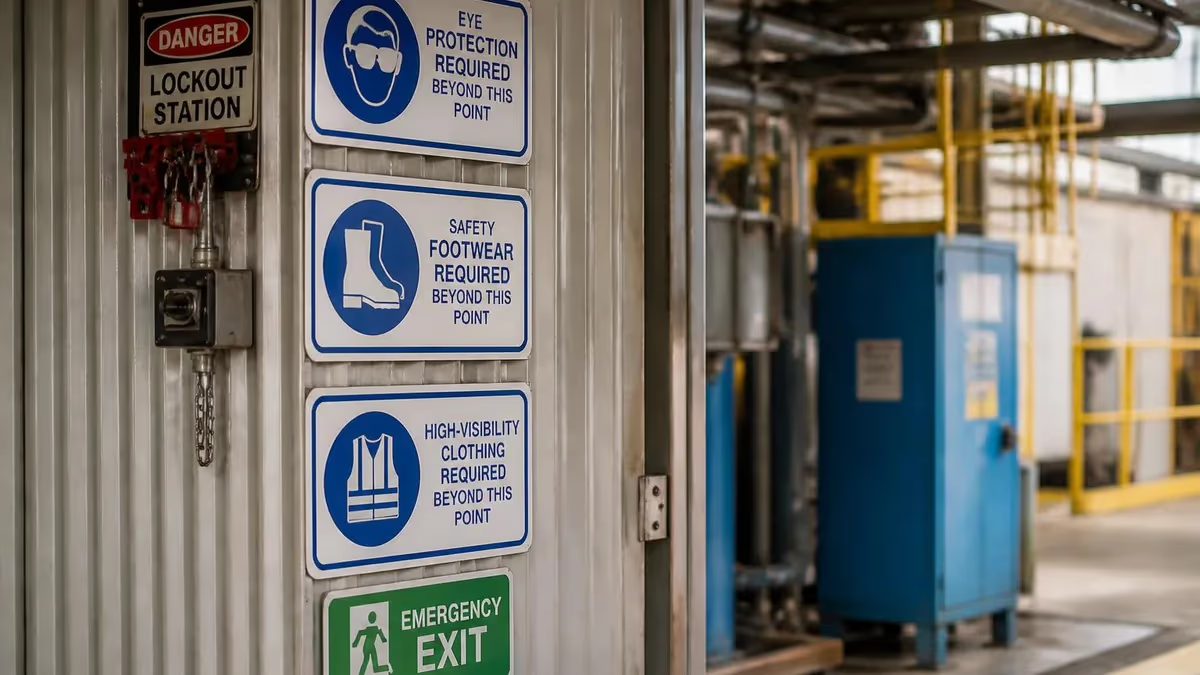
Pursuing an online OSHA certification has become one of the most accessible paths for workers across construction, manufacturing, and heavy equipment industries to meet federal workplace safety requirements without stepping away from their jobs for extended periods. The Occupational Safety and Health Administration sets the legal framework for safe working conditions in the United States, and holding recognized credentials signals to employers, project owners, and regulators that you understand the rules that govern your industry. For crane operators especially, understanding OSHA's certification landscape is not optional — it is a professional and legal necessity backed by federal regulation.
The landscape of online OSHA training has expanded dramatically over the past decade. Workers can now complete OSHA 10-hour and 30-hour courses entirely via computer or mobile device, earning their Department of Labor-recognized wallet cards upon completion. These programs cover hazard recognition, fall protection, electrical safety, personal protective equipment, and dozens of other critical topics. While online outreach training cards are widely accepted for general compliance purposes, crane operators must also understand where additional hands-on certification requirements apply and how online study fits into that broader picture.
Crane operators face one of the most regulated certification environments in the construction industry. OSHA's Subpart CC regulations under 29 CFR 1926.1427 require that crane operators be certified by an accredited third-party organization, qualify under an employer program, or hold a relevant state or local license.
Online study plays a crucial supporting role in this process — helping candidates master the regulatory knowledge tested on certification exams — but the certification itself requires both a written exam and a practical component. Understanding which parts of the process can be done online and which cannot is the first step toward building a compliant career.
Cost and scheduling flexibility are two of the most commonly cited reasons workers choose online OSHA training programs. A traditional classroom-based OSHA 10 course might require a full two days away from the job site, travel to a training center, and schedule coordination with a cohort of other students. Online versions of the same course allow workers to progress at their own pace, pausing and resuming between shifts, completing modules on a smartphone during a lunch break, or finishing coursework on a weekend. For workers in remote areas without nearby training centers, online delivery is often the only practical option.
Employers also benefit significantly when their workforce pursues online OSHA training. Companies can track completion rates, schedule training around project demands, and maintain digital records of certifications far more easily than managing stacks of paper credentials. When OSHA inspectors arrive on a job site, having readily accessible digital records of worker training can mean the difference between a citation and a clean inspection report. Many larger contractors now require OSHA 10 at a minimum for all workers and OSHA 30 for supervisory roles, making online delivery a logistical necessity at scale.
For crane operators specifically, online osha certification study resources have proven particularly valuable for mastering the dense regulatory content covered on third-party certification exams. Accredited certification bodies like the National Commission for the Certification of Crane Operators (NCCCO) test candidates on load charts, rigging, signal communication, equipment inspection, and dozens of other technical domains. Online practice tests, video lessons, and study guides allow candidates to identify knowledge gaps before sitting for the proctored exam, improving both first-time pass rates and overall exam confidence.
This guide covers everything you need to know about online OSHA certification — from the types of courses available and what they cover, to the specific requirements crane operators must meet, the costs involved, and the practical steps to earning and maintaining your credentials. Whether you are just entering the construction trades or are an experienced operator looking to formalize your qualifications, this resource will give you a clear roadmap for navigating OSHA's certification requirements in the digital age.
Online OSHA Certification by the Numbers

Types of Online OSHA Certification Courses
The entry-level OSHA outreach program covering core hazard recognition, fall protection, electrical safety, and PPE. Designed for construction and general industry workers. Completion earns a Department of Labor wallet card valid indefinitely, though many employers require periodic refreshers.
An expanded program aimed at supervisors, foremen, and safety officers. Covers all OSHA 10 topics in greater depth plus additional modules on safety program management, incident investigation, and site-specific hazard protocols. Widely required for supervisory roles on federal and commercial projects.
Online study courses specifically designed to prepare candidates for NCCCO or other accredited crane operator certification exams. Covers load charts, rigging, signal communication, equipment inspection, and OSHA Subpart CC regulations. Does not replace the required proctored written and practical exams.
Online qualification training for riggers and signal persons working alongside crane operators. OSHA 1926.1428 requires signal persons to be qualified, and online programs help workers master hand signals, voice communication protocols, and load management fundamentals before on-site evaluation.
Advanced online courses for workers seeking OSHA competent person status in specific areas such as excavation, scaffolding, or fall protection. These designations require documented training and demonstrated knowledge, and online coursework provides the foundational instruction needed before hands-on assessment.
Understanding the specific certification requirements for crane operators under OSHA regulations requires separating two distinct but related concepts: OSHA outreach training cards and third-party operator certification. The OSHA 10 and OSHA 30 wallet cards issued through the Department of Labor's Outreach Training Program demonstrate that a worker has completed safety awareness training. They are widely respected across the construction industry and are often required by general contractors as a condition of site access. However, for crane operators, these cards alone do not satisfy the operator certification mandate under 29 CFR 1926.1427.
OSHA's Subpart CC regulations, which govern cranes and derricks in construction, require that operators of equipment with a rated hoisting or lifting capacity of over 2,000 pounds be certified or qualified through one of four accepted pathways.
The first and most common pathway is certification by an accredited crane operator testing organization, such as the NCCCO, the Crane Institute Certification (CIC), or the National Center for Construction Education and Research (NCCER). The second pathway is qualification through an employer program that meets specific OSHA criteria. The third is licensure by a state or local government with requirements at least as stringent as OSHA's. The fourth applies to operators of equipment used in non-construction activities under OSHA's general industry standards.
Third-party certification through bodies like the NCCCO is the most widely used and recognized pathway nationwide. The NCCCO offers written examinations in multiple crane types — mobile, tower, overhead, and others — as well as a practical examination that must be administered at an approved test site.
Online study and practice testing is an excellent way to prepare for the written component of these exams, which test knowledge of load charts, rigging calculations, signal communication, equipment inspection, and applicable OSHA regulations. Candidates who invest time in online practice consistently report higher confidence and better first-time pass rates on the proctored exams.
Employer qualification programs offer an alternative for companies that prefer to maintain in-house certification infrastructure. Under OSHA's rules, these programs must include a written examination and a practical demonstration of operator skill. The employer must document the process, maintain records, and ensure that qualifications are specific to the type and capacity of equipment the operator will use. Online training can serve as a foundational component of employer qualification programs, providing standardized instruction before the in-person practical assessment takes place.
State and local licensing requirements add another layer of complexity for crane operators working in jurisdictions with their own certification rules. States such as California, New York, and Maryland require crane operators to hold state-issued licenses in addition to or instead of third-party certifications. These state programs often include their own written and practical exams, fees, and renewal requirements. Operators working across multiple states must be familiar with the specific rules in each jurisdiction where they perform work, as federal OSHA standards set a floor but do not preempt stricter state requirements under OSHA-approved State Plan programs.
The medical fitness requirements that accompany crane operator certification are another area where online resources can help candidates prepare. The NCCCO requires operators to pass a medical examination confirming adequate vision, hearing, and physical fitness to safely operate equipment. Online resources explain what the medical exam covers, how to find an authorized examiner, and what conditions might disqualify a candidate or require further evaluation. Being informed about these requirements before beginning the certification process helps candidates avoid surprises and plan their timeline realistically.
Renewal and continuing education requirements ensure that crane operators stay current with evolving regulations and best practices throughout their careers. NCCCO certifications are valid for five years and require renewal through a combination of written re-examination and documented continuing education hours. Online continuing education courses make it practical for operators to accumulate the required hours without disrupting their work schedules, covering new regulatory developments, updated load chart standards, and emerging safety technologies in the crane industry.
How to Choose the Right Online OSHA Program
When evaluating any online OSHA training provider, accreditation is the single most important factor to verify first. Legitimate OSHA 10 and OSHA 30 online courses must be delivered through an Authorized Outreach Trainer who holds current OSHA authorization. The trainer's credentials can be verified through OSHA's official website, and reputable providers display their trainer authorization prominently. Courses offered by unauthorized providers will not result in valid Department of Labor wallet cards, regardless of how polished the course platform appears or how affordable the pricing seems.
For crane operator certification preparation, look for programs developed in partnership with NCCCO or aligned to NCCCO's published candidate handbook competency areas. Programs that reference specific CFR citations, use current load chart examples, and include timed practice exams that mimic the actual certification test format are far more valuable than generic safety overviews. Checking provider reviews on industry forums, union training boards, and employer feedback channels gives you real-world data on pass rates and course quality before committing your time and money.

Online OSHA Certification: Advantages and Limitations
- +Complete training on your own schedule without leaving your job or traveling to a training center
- +Lower cost than classroom instruction — OSHA 10 online starts around $30 versus $100+ for in-person courses
- +Instant digital access to course materials, allowing you to review content multiple times at no extra charge
- +Progress tracking and digital record-keeping makes it easy to provide proof of training during OSHA inspections
- +Wide availability means workers in rural or remote areas can access the same quality training as those near major cities
- +Online practice exams allow you to identify and target specific knowledge gaps before sitting for proctored certification tests
- −Online OSHA outreach cards alone do not satisfy the third-party certification requirement for crane operators under 29 CFR 1926.1427
- −Self-paced formats require strong self-discipline; workers who struggle with independent study may retain less than in classroom settings
- −Hands-on skills — rigging, crane inspection, signal communication — cannot be adequately learned through online instruction alone
- −Some employers, union halls, and project owners specifically require classroom-based OSHA training and will not accept online cards
- −Quality varies significantly between providers; poorly designed courses may not adequately prepare workers for real job hazards
- −Technical issues such as poor internet connectivity can disrupt course progress, particularly in rural or remote work locations
Online OSHA Certification Preparation Checklist
- ✓Verify your chosen OSHA outreach provider is authorized by checking the trainer's current OSHA authorization status online.
- ✓Confirm whether your employer or project owner requires classroom-based OSHA training or accepts online completion cards.
- ✓Determine which crane type certification you need (mobile, tower, overhead) before selecting your study program.
- ✓Download the official NCCCO Candidate Handbook and review all competency areas listed for your target certification.
- ✓Schedule your proctored written exam at least 4–6 weeks out to allow adequate online study time before the test date.
- ✓Book your NCCCO-approved medical examination early, as some examiners have wait times of several weeks.
- ✓Complete at least three full-length timed practice exams before your certification test date to simulate real exam conditions.
- ✓Review all load chart types covered in your certification exam and practice calculating rated capacity at various radii.
- ✓Study OSHA 29 CFR 1926 Subpart CC in detail, focusing on operator requirements, inspections, and assembly/disassembly rules.
- ✓Confirm practical exam availability at an approved test site in your area well before your desired certification date.
Online Training Prepares You — Certification Still Requires a Proctored Exam
No online course, regardless of the provider, can substitute for the proctored written examination and practical skills test required for NCCCO or other accredited crane operator certification. Online training is an excellent — and often the most efficient — way to build the knowledge base you need to pass those exams, but the credential itself must be earned through an approved testing process with identity verification and in-person practical assessment.
Maintaining your OSHA credentials and crane operator certification over the course of a career requires ongoing attention to renewal deadlines, continuing education requirements, and regulatory updates. OSHA's outreach training wallet cards — the 10-hour and 30-hour cards — do not technically expire under federal rules, but many employers, particularly large commercial contractors and federal project contractors, require workers to renew every three to five years to demonstrate that their training reflects current regulations. Staying ahead of these employer requirements means tracking when you completed your last course and planning refresher training proactively.
The NCCCO certification renewal cycle is five years, with renewal beginning up to one year before the expiration date. To renew, operators must complete a Recertification Written Examination covering the same core competencies as the initial exam. There is no practical examination required for standard renewal, provided the operator has not had their certification suspended or revoked. The renewal written exam can be scheduled at the same network of testing centers used for initial certification, and online study resources are equally valuable for exam preparation during renewal as they are for first-time candidates.
Continuing Education Units (CEUs) are increasingly integrated into the certification maintenance programs of various accrediting bodies and state licensing authorities. Some state crane licensing programs require operators to document a specific number of CEU hours in relevant technical topics — equipment developments, new rigging standards, updated load chart methodologies — before their license can be renewed. Online CEU courses offered by accredited providers count toward these requirements in most jurisdictions, making it practical to accumulate required hours incrementally throughout the certification period rather than cramming all the study into the weeks immediately before a renewal deadline.
Regulatory changes are a constant feature of the OSHA compliance landscape, and online resources make it substantially easier to stay current. OSHA issues new standards, enforcement guidance documents, letters of interpretation, and compliance directives on an ongoing basis.
Reputable online training providers update their course content when significant regulatory changes occur, and subscribing to OSHA's own email update service ensures you receive direct notification when new rules affecting your work are published. For crane operators, key areas to monitor include updates to Subpart CC, new ASME B30 standards for crane design and operation, and revisions to OSHA's guidance on proximity to power lines.
Documentation practices are an underappreciated but critically important aspect of certification maintenance. Every training course, continuing education module, medical examination, and certification renewal should be documented with original records stored in a secure location. Digital backup copies — stored in cloud services, email archives, or employer HR systems — protect against the loss or damage of paper records. When OSHA citations are contested or when workers change employers, having complete and well-organized documentation of all training and certification history is essential for demonstrating compliance and defending your professional record.
Employers have legal obligations under OSHA regulations to verify that crane operators they put to work are properly certified for the specific equipment being operated. The certification must be type-specific and capacity-specific — an operator certified for mobile cranes of a particular capacity cannot simply be assigned to operate a larger crane without additional certification. Online tools, including certification lookup databases maintained by accrediting bodies, allow employers to instantly verify the status, type, and expiration date of a worker's certification before placing them in the operator's cab.
Career advancement in the crane operation industry is closely tied to the breadth and currency of your certification portfolio. Operators who hold multiple equipment-type certifications, maintain current OSHA training cards, and document consistent continuing education are more competitive in the labor market and more valuable to employers managing diverse equipment fleets. Online study resources make it realistic to expand your certification portfolio over time without taking extended leaves from paid employment, building your professional qualifications incrementally as your career develops.
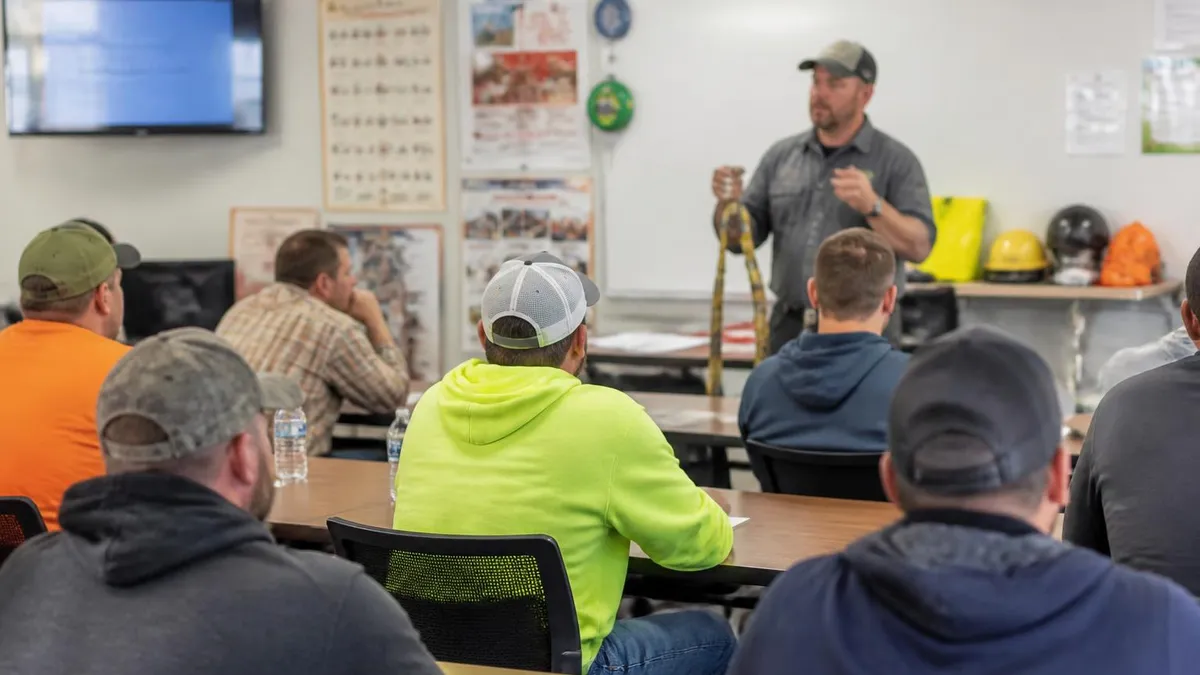
Completing an OSHA 10 or OSHA 30 online course satisfies safety awareness training requirements but does NOT fulfill the crane operator certification mandate under OSHA 29 CFR 1926.1427. Operating a crane over 2,000 lbs capacity on a construction site without valid third-party certification or an approved employer qualification can result in OSHA citations with penalties up to $16,131 per willful violation. Always verify which specific credentials are required for your role and jurisdiction before accepting an operator assignment.
Practical preparation strategies for online OSHA certification and crane operator exam success draw on a combination of structured study, active recall practice, and simulation of real exam conditions. Workers who treat online study casually — clicking through slides without active engagement — consistently underperform on proctored exams compared to those who take a disciplined approach. Building a structured study schedule, setting aside dedicated time each day or week, and tracking your progress through practice test scores are the foundations of an effective preparation program regardless of the certification you are pursuing.
Active recall — the practice of testing yourself rather than simply re-reading material — is one of the most research-supported study techniques available. Online OSHA certification preparation sites that offer question banks, flashcards, and timed practice exams use this principle directly.
Rather than reviewing a module and immediately moving to the next one, pause after each section to answer practice questions covering the material you just studied. If you get a question wrong, research the correct answer using the underlying regulation or standard rather than simply memorizing that the answer was B instead of C. Understanding why an answer is correct builds durable knowledge.
Load chart interpretation is consistently identified by first-time NCCCO exam takers as one of the most challenging areas on the written examination. Online courses that include interactive load chart exercises — where you must calculate rated capacity for a given radius, boom length, and configuration — provide the kind of practice that translates directly to exam performance. Print out sample load charts from crane manufacturer websites and practice reading them offline as well, since the exam may present load chart questions in formats slightly different from what your study course used.
Rigging calculations, including determining the weight of loads, selecting appropriate slings, and calculating tension based on sling angles, are another area where consistent practice pays significant dividends. Online resources that include worked examples with full step-by-step calculations help learners understand the underlying math rather than just memorizing formulas. Practice enough rigging problems that the calculation process becomes automatic, because exam time pressure can undermine performance on mathematical questions if the underlying methodology is not fully internalized.
Signal communication — both hand signals and voice communication procedures — is a domain where online video resources are particularly valuable. Watching demonstrations of standard ASME and OSHA-recognized hand signals, and then testing your recall by covering the label and identifying each signal, builds the visual memory that translates to both exam success and real-world safe operations. Online practice tests that present images of hand signals and ask you to identify the correct corresponding command mimic the format of actual certification exam questions in this area.
Time management during the actual certification exam is a skill that online practice tests help develop. The NCCCO written examination for most crane types includes 90 to 100 questions with a three-hour time limit. At first glance, that sounds generous — but candidates who get stuck on difficult load chart or rigging calculation questions can quickly find themselves behind pace. During online practice sessions, simulate exam conditions by setting a timer and committing to moving on from questions you cannot answer quickly, flagging them for review rather than spending disproportionate time on a single item.
In the final weeks before your scheduled certification exam, consolidate your preparation by taking full-length timed practice tests under conditions as close to the real exam as possible. Sit at a desk rather than on a couch, eliminate phone distractions, and work through the entire practice exam without pausing. Score your results immediately and review every question you answered incorrectly in detail. This kind of deliberate final-stage practice, combined with the foundational knowledge built through earlier online study, gives candidates the preparation depth needed to approach the certification exam with genuine confidence rather than wishful thinking.
Building a long-term strategy for OSHA compliance success means going beyond the minimum requirements and developing habits that keep you informed, documented, and prepared throughout every phase of your career. Workers who treat OSHA certification as a one-time checkbox to satisfy an employer requirement often find themselves scrambling when their card expires, when regulations change, or when a new employer has stricter documentation standards than the last. A proactive approach — treating certification maintenance as an ongoing professional responsibility rather than a bureaucratic hurdle — distinguishes truly safety-conscious operators from those who view compliance as an afterthought.
Joining professional associations in the crane and rigging industry is one of the most effective ways to stay informed about regulatory changes, emerging best practices, and new training resources. Organizations like the Specialized Carriers and Rigging Association (SC&RA), the Associated General Contractors of America (AGC), and the Crane Owners Association of America provide members with regulatory update alerts, training program discounts, and access to industry experts who can answer specific compliance questions. Many of these organizations offer online educational content and webinars that count toward continuing education requirements, making membership doubly valuable.
Mentorship from experienced crane operators and safety professionals accelerates learning in ways that online courses alone cannot fully replicate. If you are new to the industry or preparing for your first certification exam, seek out operators at your company or job site who hold advanced certifications and are willing to explain how they approach equipment inspection, load planning, and communication protocols in real-world conditions.
The regulatory knowledge you build through online study is more valuable when combined with practical wisdom about how those regulations apply in the field — with the equipment quirks, site constraints, and communication challenges that textbooks and online modules cannot fully simulate.
Staying informed about OSHA enforcement trends in the crane and construction sectors helps you understand which violations inspectors are prioritizing and where your compliance documentation needs to be strongest. OSHA publishes annual enforcement statistics and issues press releases about significant citations and fatalities. Reviewing these reports — available free on OSHA's website — reveals patterns in where accidents occur and what documentation failures contributed to citation outcomes. This intelligence helps you prioritize your training efforts and focus your documentation practices on the areas of highest regulatory scrutiny.
Investing in simulation-based training, where available, bridges the gap between online knowledge acquisition and real equipment operation. Several training centers now offer crane simulation software that puts operators in realistic virtual environments where they can practice load movements, respond to simulated emergencies, and develop muscle memory for crane controls without the risk of damaging equipment or injuring personnel. Online theory study combined with simulator practice and field mentorship creates a comprehensive training foundation that serves operators well throughout demanding certification processes and long careers in the industry.
Finally, maintain a professional portfolio documenting your complete credential history — every OSHA training card, every certification, every continuing education course, and every renewal. Include copies of your medical examination results, your employer qualification records if applicable, and any state or local licenses you hold. Organize this portfolio chronologically and keep both physical and digital copies in secure, accessible locations. This portfolio is your professional credential record, your legal protection in the event of an OSHA investigation, and your competitive advantage when applying for new positions or higher-responsibility operator roles throughout your career in the crane and construction industry.
OSHA Questions and Answers
OSHA Railing Requirements: Complete Guide to Guardrail Standards, Heights, Loads, and Fall Protection Compliance for Construction and General Industry
OSHA (OSHA Certified Crane Operator) Test Guide

Can OSHA Enter Your Workplace? Complete Guide to General OSHA Questions, Inspections, Rights, and Compliance for Crane Operators and Construction Workers

General Duty Clause OSHA: Complete Guide to Section 5(a)(1), Employer Obligations, and Crane Safety Compliance
OSHA Restaurant Safety: Complete Guide to Workplace Compliance, Hazard Prevention, and Employee Training for Food Service Operations
About the Author

Certified Safety Professional & OSHA Compliance Expert
Indiana University of Pennsylvania Safety SciencesDr. William Foster holds a PhD in Safety Science from Indiana University of Pennsylvania and is a Certified Safety Professional (CSP) and Certified Hazardous Materials Manager. With 20 years of occupational health and safety management experience across construction, manufacturing, and chemical industries, he coaches safety professionals through OSHA certification, CSP, CHST, and safety management licensing programs.
Join the Discussion
Connect with other students preparing for this exam. Share tips, ask questions, and get advice from people who have been there.
View discussion (8 replies)