
Can OSHA Enter Your Workplace? Complete Guide to General OSHA Questions, Inspections, Rights, and Compliance for Crane Operators and Construction Workers
Can OSHA inspect, fine, or shut down your site? Get answers ✍🏼 to the most common general OSHA questions for crane operators and contractors.

Can OSHA walk onto your jobsite without warning, issue citations on the spot, and shut down crane operations until violations are fixed? The short answer is yes, and understanding exactly how the Occupational Safety and Health Administration operates is one of the most important things a crane operator, rigger, signal person, or site supervisor can learn. General OSHA questions come up daily in toolbox talks, certification exams, and real-world enforcement scenarios, and getting them wrong can cost workers their jobs, contractors their licenses, and companies hundreds of thousands of dollars in penalties.
OSHA was created by the Occupational Safety and Health Act of 1970, and since then it has issued thousands of standards covering everything from fall protection to crane assembly to respiratory hazards. For crane operators specifically, the agency enforces 29 CFR 1926 Subpart CC, which governs cranes and derricks in construction, along with 29 CFR 1910.179 for overhead and gantry cranes in general industry. These regulations dictate operator certification, inspection schedules, signal communication protocols, and load-handling procedures.
This complete guide answers the general OSHA questions that crane professionals and construction workers ask most often. We cover inspection rights, worker protections, citation processes, employer responsibilities, recordkeeping obligations, training requirements, and the specific rules that apply to crane operations under Subpart CC. Whether you are preparing for the NCCCO certification exam, training a new apprentice, or simply trying to understand your rights on a busy jobsite, the information below will give you a working knowledge of how OSHA actually functions.
One of the most misunderstood aspects of OSHA enforcement involves the difference between federal OSHA and state-plan states. Roughly 22 states operate their own OSHA-approved programs that must be at least as effective as federal standards but can be stricter. California's Cal/OSHA, for example, has additional crane operator requirements and unique tower crane rules that exceed federal minimums. Knowing which agency has jurisdiction over your worksite matters enormously when responding to an inspection or filing a complaint.
Another common area of confusion is the relationship between OSHA standards and other regulatory bodies. ASME B30.5 governs mobile and locomotive cranes, ANSI standards cover signal communication, and the Department of Transportation regulates crane transport. OSHA frequently incorporates these consensus standards by reference, meaning a violation of ASME B30.5 can become an OSHA citation under the General Duty Clause even when no specific standard is cited.
Throughout this article you will find practical answers, real penalty figures, citation examples, and exam-ready facts. Use the table of contents to jump to specific topics, take the embedded quizzes to test your knowledge, and review the FAQ section at the bottom for the questions that come up most often during OSHA inspections and certification testing.
Before diving into the specifics, it helps to know that OSHA's mission is preventive rather than punitive. The agency would rather help an employer fix a hazard than write a citation, which is why programs like the On-Site Consultation Program exist for small businesses. Still, when violations are willful, repeated, or result in serious injury, OSHA does not hesitate to pursue maximum penalties, criminal referrals, and even imminent danger orders that halt work immediately.
OSHA by the Numbers in 2026

How OSHA Inspections Actually Work
The compliance officer presents credentials, explains why the inspection was triggered, and identifies employer and employee representatives who will participate in the walkaround.
OSHA examines the site, takes photos, interviews workers privately, samples air quality, and reviews equipment. Crane logs, inspection records, and operator certifications are commonly requested.
Inspectors review the OSHA 300 log, written safety programs, training records, hazard communication files, and certification cards for crane operators, riggers, and signal persons.
OSHA discusses apparent violations, abatement timelines, and the citation process. Employers may contest findings within 15 working days of receiving formal citations.
Within six months, OSHA issues written citations specifying standards violated, abatement deadlines, and proposed penalties. Categories include other-than-serious, serious, willful, and repeat.
Workers have powerful rights under the OSH Act that many employees do not realize they possess. Section 11(c) of the Act prohibits any form of retaliation against workers who report safety concerns, refuse imminently dangerous work, or participate in OSHA inspections. If you are fired, demoted, reassigned, or harassed for raising safety issues, you have 30 days to file a whistleblower complaint with OSHA, and successful complaints can result in reinstatement, back pay, and punitive damages against the employer.
Every worker has the right to receive training in a language they understand, to access the OSHA 300 injury log for their workplace, to see records of personal exposure to hazardous substances, and to request an OSHA inspection if they believe a serious hazard exists. Complaints can be filed online, by phone, by mail, or in person at any OSHA area office, and the worker's identity is kept confidential when they request anonymity on the complaint form.
For crane operators specifically, the right to refuse unsafe work is critical. If a crane has a known defect, if the wind speed exceeds manufacturer limits, if the load chart cannot be located, or if the operator has not received required certification, the operator can refuse to continue operations until the hazard is corrected. OSHA generally protects this refusal when the worker has a reasonable, good-faith belief that performing the work would cause serious injury or death and there is insufficient time to use normal hazard reporting procedures.
Employers are required to post the OSHA "Job Safety and Health" poster in a conspicuous location, maintain the annual summary of work-related injuries from February 1 through April 30, and provide employees with copies of OSHA standards upon request. They must also provide personal protective equipment at no cost to workers, with the narrow exception of certain specialty footwear and prescription safety glasses that are personal items.
The General Duty Clause, Section 5(a)(1) of the OSH Act, requires employers to furnish a workplace free from recognized hazards likely to cause death or serious physical harm, even when no specific OSHA standard applies. This catch-all provision is frequently used in crane incidents involving struck-by hazards, electrocution from contact with power lines, and falls from elevated work platforms suspended from cranes.
Workers also have the right to participate in the walkaround portion of an OSHA inspection through an authorized employee representative. On union sites this is typically a shop steward or business agent. On non-union sites the workers can designate a coworker to accompany the inspector. The representative can point out hazards, identify witnesses, and ensure the inspector sees the actual working conditions rather than a sanitized version arranged by management.
Finally, every worker has the right to file a discrimination complaint if they believe an employer has retaliated against them for exercising their OSHA rights. The 30-day filing window is strict and cannot be extended for most reasons, so workers who experience retaliation must act quickly to preserve their legal remedies under federal law.
OSHA Practice Test Questions
Prepare for the OSHA - OSHA Certified Crane Operator exam with our free practice test modules. Each quiz covers key topics to help you pass on your first try.
OSHA Crane Operation Controls & Signal Com...
OSHA Exam Questions covering Crane Operation Controls & Signal Communication. Master OSHA Test concepts for certification prep.
OSHA Crane Safety Procedures & Hazard Prev...
Free OSHA Practice Test featuring Crane Safety Procedures & Hazard Prevention. Improve your OSHA Exam score with mock test prep.
OSHA Load Handling & Rigging Techniques
OSHA Mock Exam on Load Handling & Rigging Techniques. OSHA Study Guide questions to pass on your first try.
OSHA Regulations & Equipment Inspection St...
OSHA Test Prep for Regulations & Equipment Inspection Standards. Practice OSHA Quiz questions and boost your score.
OSHA Code Compliance
OSHA Questions and Answers on Code Compliance. Free OSHA practice for exam readiness.
OSHA Crane Operator Certification & Qualif...
OSHA Mock Test covering Crane Operator Certification & Qualification Requirements. Online OSHA Test practice with instant feedback.
OSHA Environmental Standards
Free OSHA Quiz on Environmental Standards. OSHA Exam prep questions with detailed explanations.
OSHA Equipment Operation
OSHA Practice Questions for Equipment Operation. Build confidence for your OSHA certification exam.
OSHA Maintenance Protocols
OSHA Test Online for Maintenance Protocols. Free practice with instant results and feedback.
OSHA Material Selection
OSHA Study Material on Material Selection. Prepare effectively with real exam-style questions.
OSHA Pre-Lift Planning & Load Chart Interp...
Free OSHA Test covering Pre-Lift Planning & Load Chart Interpretation. Practice and track your OSHA exam readiness.
OSHA Quality Inspection
OSHA Exam Questions covering Quality Inspection. Master OSHA Test concepts for certification prep.
Crane-Specific OSHA Standards Every Operator Must Know
29 CFR 1926 Subpart CC is the primary federal regulation governing cranes and derricks used in construction. It became effective in November 2010 and applies to virtually every powered crane used to lift loads at a construction site, including tower cranes, mobile cranes, articulating cranes, derricks, and side-boom tractors. The standard establishes assembly and disassembly requirements, ground condition standards, power line clearance rules, and inspection schedules.
Critically, Subpart CC requires that crane operators be certified or qualified through one of four approved methods, including certification from an accredited testing organization such as NCCCO. Operators must demonstrate both written and practical proficiency on each type of crane they will operate. Employers must also evaluate operator competency for the specific work to be performed before allowing independent operation of any crane on a construction site.

Calling OSHA: Should Workers File a Complaint?
- +Worker identity is kept confidential by federal law when requested on the complaint form
- +Section 11(c) protects against retaliation, including firing, demotion, or harassment
- +Inspections often force employers to fix hazards that have been ignored for months or years
- +Successful whistleblower claims can result in reinstatement and full back pay
- +Anonymous online and phone complaints are accepted at any OSHA area office
- +Imminent danger reports can result in same-day inspections to stop the hazard
- +Crane-specific violations often result in stop-work orders that protect operators immediately
- −Retaliation, while illegal, does happen and can be difficult to prove without documentation
- −Investigations can take months, during which the underlying hazard may continue
- −Some state plan states have weaker whistleblower protections than federal OSHA
- −Filing requires the worker to identify themselves to OSHA, even if confidential to employer
- −Penalties paid by the employer go to the government, not to injured workers
- −Small employers may face the largest impact, hurting coworker job security
- −Strict 30-day window for retaliation complaints is easy to miss without legal help
Pros and Cons at a Glance
| Pros | Cons |
|---|---|
| Worker identity is kept confidential by federal law when requested on the complaint form | Retaliation, while illegal, does happen and can be difficult to prove without documentation |
| Inspections often force employers to fix hazards that have been ignored for months or years | Investigations can take months, during which the underlying hazard may continue |
| Successful whistleblower claims can result in reinstatement and full back pay | Some state plan states have weaker whistleblower protections than federal OSHA |
| Anonymous online and phone complaints are accepted at any OSHA area office | Filing requires the worker to identify themselves to OSHA, even if confidential to employer |
| Imminent danger reports can result in same-day inspections to stop the hazard | Penalties paid by the employer go to the government, not to injured workers |
| Crane-specific violations often result in stop-work orders that protect operators immediately | Small employers may face the largest impact, hurting coworker job security |
OSHA Compliance Checklist for Crane Operations
- ✓Verify operator certification from accredited body matches the type of crane being used
- ✓Confirm signal person qualification documentation is current and on file
- ✓Complete and document daily shift inspection before placing crane in service
- ✓Verify ground conditions are firm, drained, and properly graded for crane setup
- ✓Maintain minimum 20-foot clearance from energized power lines up to 350 kV
- ✓Conduct site-specific assembly and disassembly plan review with the A/D director
- ✓Verify load chart for current configuration is in operator cab and legible
- ✓Maintain monthly inspection records and annual third-party inspection documentation
- ✓Ensure all rigging gear has current inspection tags and capacity stamps
- ✓Post the OSHA Job Safety and Health poster in a conspicuous workplace location
- ✓Maintain the OSHA 300 injury log and post 300A summary February through April
- ✓Train all workers in a language they understand and document training records
Penalties Adjust for Inflation Every January
OSHA civil penalties are indexed to inflation under the Federal Civil Penalties Inflation Adjustment Act and increase every January. For 2026, the maximum penalty for a serious or other-than-serious violation is $16,550 per violation, while willful and repeat violations can reach $165,514 each. A single crane site with multiple violations can easily face six-figure aggregate penalties, and willful violations resulting in worker death can trigger criminal referral to the Department of Justice for prosecution.
Understanding the citation process is essential for any employer, operator, or supervisor who may receive OSHA findings. Citations are categorized into four primary types, each with different penalty structures and abatement requirements. Other-than-serious violations involve hazards unlikely to cause death or serious injury but with a direct relationship to job safety. Serious violations involve substantial probability of death or serious physical harm. Willful violations involve intentional disregard or plain indifference. Repeat violations occur within five years of a similar citation becoming final.
When citations are issued, employers receive an official document specifying the standards violated, the proposed penalty amount, the abatement date, and instructions for contesting findings. The contest period is strict: employers have 15 working days from receipt to file a Notice of Contest with the OSHA area director, after which the matter is referred to the Occupational Safety and Health Review Commission for formal adjudication. Failure to contest within this window means the citation becomes final and cannot be challenged later.
Many employers participate in informal conferences with the OSHA area director before filing a formal contest. These conferences allow for settlement discussions, including reductions in penalty amounts, reclassification of violations from serious to other-than-serious, extended abatement periods, and removal of citations that cannot be supported by evidence. Settlement agreements are common, with many cases resolved at this stage rather than proceeding to full administrative hearings.
Penalty calculations consider four factors under OSHA's Field Operations Manual: severity, probability, employer size, history, and good faith. Small employers with fewer than 10 workers may receive penalty reductions of up to 80 percent based on size alone, while large employers with established safety programs may receive good-faith reductions of up to 25 percent. Companies with prior citations within five years receive history-based increases that can double the base penalty.
For crane-specific violations, OSHA tends to treat operator certification failures, signal communication gaps, and power line contact incidents as serious or willful. A typical crane site cited for multiple violations might face $50,000 to $150,000 in initial penalties, often reduced through informal conference to $20,000 to $60,000. Repeated violations across multiple jobsites in the same company can quickly accumulate into the millions, as seen in several high-profile enforcement actions over the past decade.
Beyond civil penalties, OSHA can refer cases to the Department of Justice for criminal prosecution when a willful violation results in a worker's death. Criminal penalties under the OSH Act are capped at six months imprisonment and modest fines, but parallel state prosecutions for involuntary manslaughter or criminally negligent homicide have resulted in much longer sentences for executives and supervisors in egregious cases.
Finally, OSHA citations are public records and can affect bidding eligibility on federal projects, debarment from federal contracts, and increased insurance premiums. Many general contractors now require subcontractors to disclose their OSHA citation history before being awarded crane work, and EMR (Experience Modification Rating) scores reflect citation costs that follow the company for years.
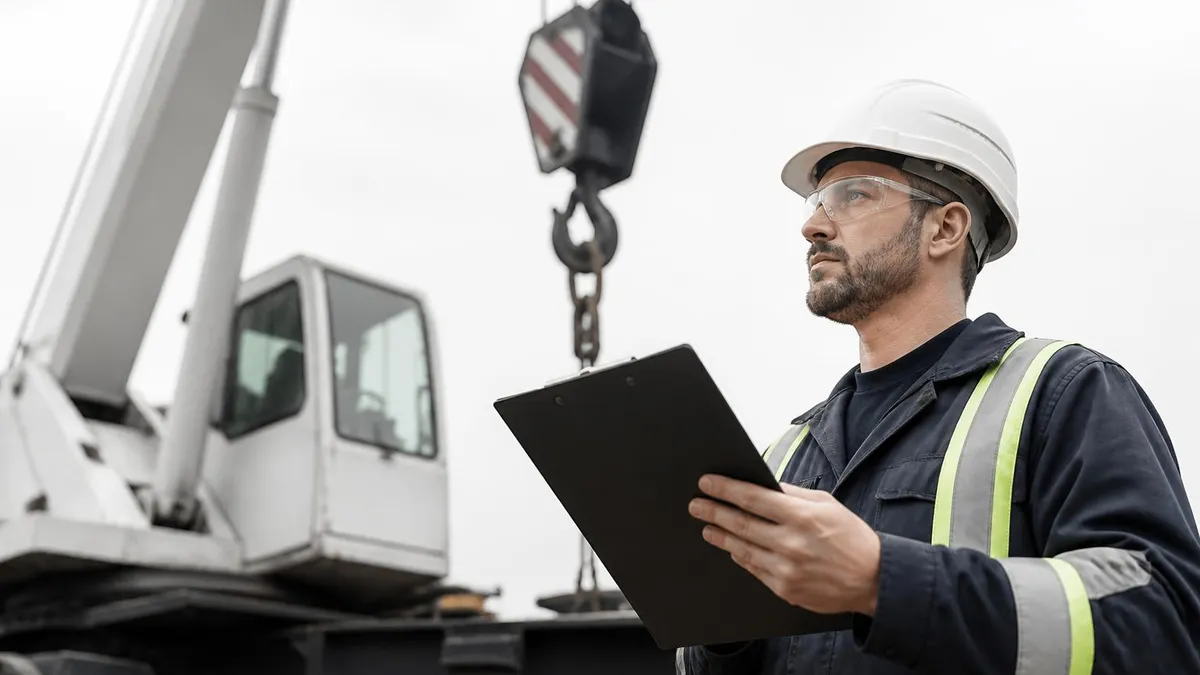
Employers have only 15 working days from the date of receiving an OSHA citation to file a formal Notice of Contest. If this deadline is missed, the citation becomes a final order of the Occupational Safety and Health Review Commission and cannot be challenged in court. Penalty amounts, abatement requirements, and violation classifications all become permanently locked in. Mark the deadline immediately upon receipt and consult counsel before the window expires.
Training and certification requirements under OSHA vary significantly between general industry and construction, and crane operators face some of the most stringent qualification standards in either sector. Under Subpart CC, every crane operator must be certified or qualified through one of four approved methods: certification by an accredited testing organization such as NCCCO, qualification by an audited employer program, qualification by the military for federal employees, and licensing by a state or local government where such licensing meets specific federal criteria.
The certification process typically requires passing both a written core examination and a written specialty examination covering the specific type of crane to be operated, followed by a practical skills test demonstrating safe operation of that crane type. NCCCO certification is valid for five years and requires recertification through continuing education, retesting, or both. Operators must also be evaluated by their employer for competency on the specific equipment and tasks they will perform before being permitted to operate independently.
Beyond operator certification, signal persons must be qualified to communicate with the operator using standard signals. Riggers must be qualified to perform rigging tasks during assembly, disassembly, and load handling. Crane inspectors must be qualified persons with knowledge of the specific equipment type. Each role carries distinct qualification requirements that the employer must document and maintain in personnel files for the duration of employment plus the period required by recordkeeping rules.
For general industry crane work under 1910.179, formal third-party certification is not federally required, but the employer must designate operators as qualified based on training and demonstrated competence. Most large industrial employers nonetheless require NCCCO or equivalent certification for liability and insurance reasons, and many state plan states have imposed certification requirements that exceed federal minimums for both construction and general industry crane operations.
OSHA also requires general workplace training under various standards. The Hazard Communication Standard requires training on chemical hazards. The Personal Protective Equipment standard requires training on selection, use, and care of PPE. The Fall Protection standard requires training for workers exposed to fall hazards at six feet or more in construction. Each training program must be documented with the worker's name, the date of training, the topics covered, and the trainer's qualifications.
OSHA outreach training, including the 10-hour and 30-hour Construction and General Industry courses, is voluntary at the federal level but mandatory in many state and local jurisdictions. New York City, Connecticut, Missouri, and several other locations require OSHA 30 cards for supervisors on public works projects, and many private general contractors require OSHA 10 cards for all workers on their jobsites. These cards do not expire under federal rules but some states require renewal every five years.
Finally, refresher training is required whenever a worker demonstrates lack of skill, whenever new equipment or processes are introduced, whenever standards change, and whenever an injury or near-miss indicates a training deficiency. Documenting refresher training is just as important as initial training, and inspectors routinely request both during workplace investigations involving injuries or fatalities on crane sites.
Preparing for an OSHA inspection or for the NCCCO certification exam requires more than memorizing standards. It requires understanding how OSHA thinks, how inspectors evaluate hazards, and how the agency prioritizes its limited enforcement resources. Inspections are triggered most often by worker complaints, referrals from other agencies, follow-up on prior citations, programmed inspections in high-hazard industries, and reports of fatalities or catastrophes. Construction sites with active crane operations fall into multiple priority categories simultaneously, making them frequent inspection targets.
The single most important practical tip for crane sites is documentation discipline. OSHA inspectors are trained to begin every inspection by requesting written records, and the quality of those records often determines whether a hazard becomes a citation. Daily inspection logs should be filled out completely, signed and dated by the inspector, and stored in the crane cab or site safety office where they can be produced on demand. Monthly and annual inspection records should be similarly maintained with photographs of inspected components when feasible.
Another critical practice is conducting site-specific pre-task planning before every lift. The pre-lift meeting should cover the load weight, the rigging configuration, the crane capacity at the planned radius, the path of the load, the location of obstacles and power lines, the signal communication method, and the emergency response plan. Documenting these meetings in writing not only improves safety but creates a record that supports the employer's good-faith compliance posture during any subsequent investigation.
Operators should also practice the habit of stopping work whenever conditions change. Wind speed exceeding manufacturer limits, ground softening from rain, the arrival of unexpected workers in the swing radius, or any equipment malfunction all warrant immediate suspension of operations until the condition is corrected and reassessed. OSHA inspectors look favorably on operators who err on the side of caution and look unfavorably on supervisors who pressure operators to continue working through unsafe conditions.
For exam preparation, focus on the numbers. Memorize the 20-foot minimum clearance from energized power lines up to 350 kV, the 14-day periodic inspection requirement for slings under certain conditions, the five-year NCCCO certification validity period, the 15 working day contest period for citations, and the six-foot fall protection threshold for construction. These numbers appear repeatedly on certification exams and on actual OSHA citations alike.
Practice questions from multiple sources are the most effective study tool. The quizzes embedded in this guide cover all four major NCCCO core domains, and working through them under timed conditions simulates the actual testing environment. Aim for at least 85 percent correct on practice tests before scheduling your actual exam, and review every incorrect answer thoroughly to understand the underlying standard.
Finally, remember that OSHA compliance is not a paperwork exercise but a daily practice rooted in respect for the hazards inherent in lifting heavy loads with massive machinery. Every operator, signal person, rigger, and supervisor on a crane site bears personal responsibility for the safety of every worker in the work zone, and the standards exist not to create bureaucratic burdens but to prevent the catastrophic injuries that occur when those responsibilities are neglected.
Sample OSHA - OSHA Certified Crane Operator Practice Questions
Try these questions from our free OSHA - OSHA Certified Crane Operator practice tests. The correct answer and an explanation follow each question.
What inspection procedure is essential for code compliance?
- A. Visual spot checks are sufficient
- B. Systematic inspection following established checklists and standards
- C. Inspection is only needed for final sign-off
- D. The client determines inspection requirements
Answer: B. Systematic inspection following established checklists and standards
Systematic inspections using established checklists and industry standards ensure quality and compliance at every stage.
What code compliance requirement applies to quality inspection?
- A. Codes are guidelines, not requirements
- B. All work must comply with applicable local, state, and national codes
- C. Code compliance only matters for commercial projects
- D. Follow codes only when inspectors are present
Answer: B. All work must comply with applicable local, state, and national codes
Code compliance is mandatory for all work, ensuring safety, quality, and legal adherence.
How should the operator respond if signals are unclear?
- A. Continue carefully
- B. Stop crane movement
- C. Guess the intention
- D. Use radio commands
Answer: B. Stop crane movement
In crane operations, safety is paramount, and clear communication is essential. If an operator receives unclear signals, continuing movement could lead to serious accidents, injuries, or property damage. OSHA regulations and best practices mandate stopping all crane movement immediately until signals are clarified to ensure safe operation.
Before beginning crane operations near overhead power lines, what must the crane operator or employer determine first?
- A. Whether the crane is insulated
- B. The voltage of the power lines
- C. The weight of the suspended load
- D. Whether a signal person is available
Answer: B. The voltage of the power lines
The voltage must be determined first because minimum approach distances are calculated based on the power line's voltage level.
Take the full OSHA - OSHA Certified Crane Operator practice test
OSHA Questions and Answers
OSHA 500 Course Online: Complete Guide to Trainer Certification for Construction Industry Outreach
When Stacking Blank Interlocking Rows OSHA Requirements: Complete Guide to General Compliance, Material Storage Safety, and Crane Operator Stacking Standards
What Is the OSHA Rule? Complete Guide to OSHA Rules and Standards for Crane Operators
OSHA 30 Courses: Complete Guide to OSHA 30-Hour Training, Certification, Course Options, Costs, and What You'll Learn in Construction and General Industry Programs
List of Companies with OSHA Violations: Complete Guide to OSHA Citations by Company, Penalty Histories, and Construction Industry Enforcement Records
About the Author

Certified Safety Professional & OSHA Compliance Expert
Indiana University of Pennsylvania Safety SciencesDr. William Foster holds a PhD in Safety Science from Indiana University of Pennsylvania and is a Certified Safety Professional (CSP) and Certified Hazardous Materials Manager. With 20 years of occupational health and safety management experience across construction, manufacturing, and chemical industries, he coaches safety professionals through OSHA certification, CSP, CHST, and safety management licensing programs.
Join the Discussion
Connect with other students preparing for this exam. Share tips, ask questions, and get advice from people who have been there.
View discussion (8 replies)