
Cleaning with Compressed Air OSHA: Complete Safety Guide to Regulations, Hazards, and Compliance
Cleaning with compressed air OSHA rules explained. Pressure limits, PPE, hazards & compliance tips for US workplaces. ✅ Stay safe & avoid fines.
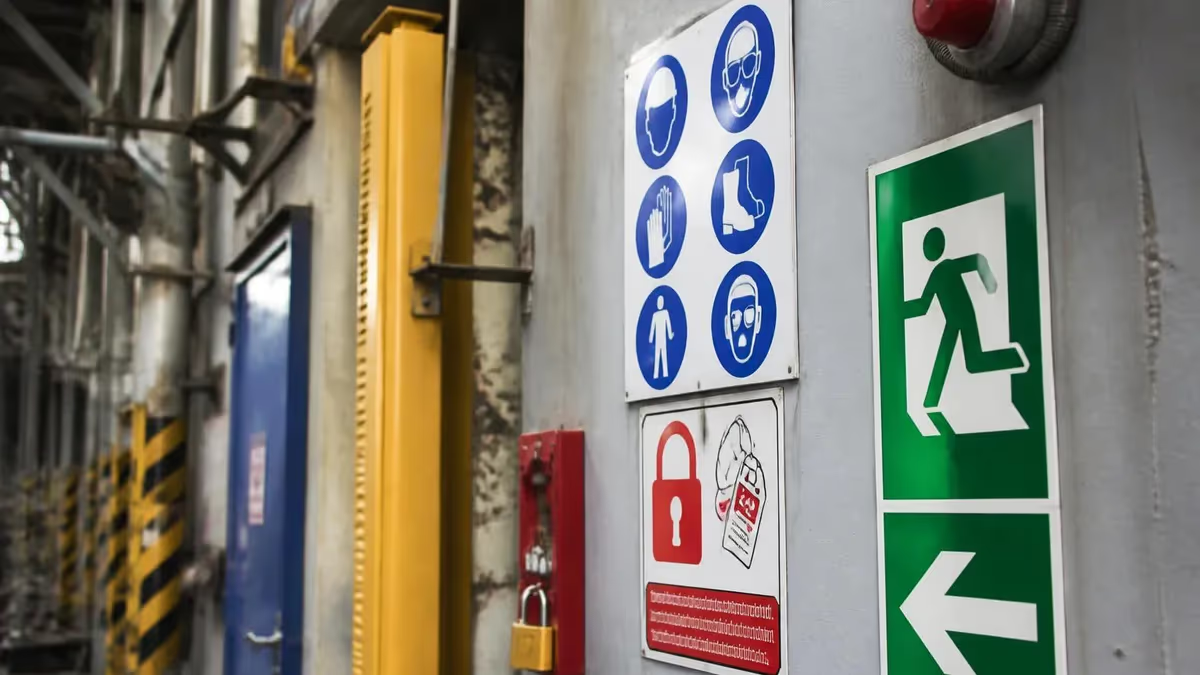
Cleaning with compressed air OSHA regulations are among the most frequently misunderstood safety rules in American workplaces. Every year, thousands of workers use compressed air to blow dust, metal shavings, and debris off equipment, clothing, and work surfaces — often without realizing that this common practice carries serious injury risks and is tightly governed by federal standards. OSHA's regulations under 29 CFR 1910.242(b) specifically restrict the pressure at which compressed air can be used for cleaning purposes, setting a clear limit that many employers and workers unknowingly violate daily.
The core OSHA rule is straightforward but critically important: compressed air used for cleaning purposes must be reduced to less than 30 pounds per square inch (PSI) if the nozzle end is dead-ended — meaning if the air stream could become blocked and build pressure. This threshold exists because air injected into the body through the skin, mouth, or eyes can cause fatal air embolisms, organ rupture, and severe internal injuries. Even a momentary blast at high pressure directed at a person's body can result in permanent disability or death, making enforcement of this standard a life-safety priority.
Many industries rely on compressed air cleaning as part of routine maintenance, including manufacturing, automotive repair, construction, food processing, and metalworking. In each of these environments, workers may use blow guns, air nozzles, or shop hoses to clean machinery, remove chips from drill presses, clear sawdust from woodworking benches, or blow debris from conveyor systems. While the productivity benefits are real, so are the hazards — and OSHA compliance is not optional. Employers who fail to enforce proper procedures face fines, citations, and most importantly, preventable tragedies.
Beyond the 30 PSI pressure limitation, OSHA also requires that workers using compressed air for cleaning wear appropriate personal protective equipment (PPE). At minimum, eye and face protection must be used whenever compressed air cleaning creates flying debris, dust, or particles that could strike the eyes or face. Safety glasses alone may not be sufficient in high-debris environments — OSHA often recommends goggles or full face shields depending on the nature of the material being removed. Chip guards on nozzles add another layer of protection by redirecting debris away from the operator.
Understanding OSHA's compressed air cleaning rules is especially relevant for workers preparing for safety certifications, including the OSHA Certified Crane Operator credential. Crane operators frequently work in environments where compressed air is used to clean equipment, inspect components, and maintain rigging hardware. Familiarity with osha compressed air cleaning requirements demonstrates the kind of broad safety awareness that OSHA examiners expect from certified professionals across all general industry and construction settings.
This article provides a comprehensive overview of OSHA's compressed air cleaning requirements, covering the specific regulatory citations, common workplace violations, required PPE, safe work practices, and employer responsibilities. Whether you are a safety manager developing a workplace policy, a worker trying to stay compliant, or a student preparing for an OSHA certification exam, understanding these rules in depth is essential for maintaining a safe and legally compliant workplace in any industry that uses pneumatic tools or air-powered cleaning equipment.
The stakes are high: OSHA data consistently shows that compressed air injuries are underreported, and many workers do not recognize the danger until an accident has already occurred. By learning and applying the correct standards, you protect yourself, your coworkers, and your organization from outcomes that are entirely preventable with proper training and equipment.
OSHA Compressed Air Cleaning by the Numbers

How OSHA Compressed Air Cleaning Rules Apply Step by Step
Identify the Task & Air Pressure Needed
Inspect Equipment & Nozzles
Don Required Personal Protective Equipment
Clear the Work Area of Bystanders
Apply Compressed Air Correctly
Document & Report Any Incidents
The hazards of compressed air cleaning are deceptively severe given how routine the activity appears. Workers who have used compressed air for years without incident often develop a false sense of security that can lead to catastrophic outcomes.
The primary danger is air injection injury — a condition that occurs when a high-pressure air stream penetrates the skin, causing an embolism that can travel to the lungs, heart, or brain. Even at pressures as low as 40 PSI, air forced through a small skin wound can enter the bloodstream and cause a fatal embolism within seconds, leaving little time for medical intervention.
Eye injuries represent another major category of compressed air hazards. Metal chips, dust particles, wood splinters, and chemical powders can be propelled at extremely high velocities by a compressed air stream. Even when a worker is wearing glasses, debris can find its way around unprotected frames. OSHA's PPE standard at 29 CFR 1910.133 requires that eye protection be matched to the specific hazard — meaning safety glasses may be adequate for light dust but completely insufficient when cleaning metal turnings or abrasive grit off a machined surface.
Hearing damage is a less obvious but equally serious risk. Industrial compressed air systems routinely generate noise levels exceeding 85 decibels, and the sound of a high-pressure air stream directed at a surface can spike well above 100 dB. Repeated exposure without hearing protection leads to noise-induced hearing loss, which is permanent and irreversible. OSHA's noise standard at 29 CFR 1910.95 requires hearing conservation programs when workers are exposed to 85 dB or more as an eight-hour time-weighted average, and compressed air use is a significant contributor in many shops.
Skin injuries from compressed air are often underestimated. Prolonged or close-range exposure to high-pressure air can strip skin, introduce foreign particles into tissue, and cause bruising or lacerations even without visible punctures. Workers who direct air streams at their own hands to clean off grease or coolant are particularly vulnerable, as the skin of the hand is highly vascular and an entry point for air injection. OSHA investigators have documented cases where workers suffered life-threatening internal injuries from what appeared to be minor skin contact with a compressed air nozzle.
Chemical and biological hazards are also amplified by compressed air cleaning. Blowing dust, mold spores, chemical powders, or silica-containing particles with compressed air aerosolizes these substances and dramatically increases their airborne concentration. Workers in the vicinity — even those not directly involved in the cleaning task — can inhale hazardous quantities of silica, lead dust, asbestos fibers, or toxic chemical residues. OSHA's standards for silica (29 CFR 1910.1053) and lead (29 CFR 1910.1025) place strict limits on airborne concentrations and may effectively prohibit the use of compressed air to clean surfaces contaminated with these substances.
Fire and explosion hazards round out the hazard profile for compressed air cleaning. In environments where flammable dusts or vapors are present — such as grain handling facilities, chemical plants, or spray painting booths — using compressed air to clean equipment can suspend combustible material in air at explosive concentrations.
Static electricity generated by a fast-moving air stream can provide the ignition source needed to trigger a flash fire or dust explosion. OSHA's combustible dust standard and NFPA 654 guidelines both address these risks, and employers in affected industries must evaluate whether compressed air cleaning is appropriate for their specific environments.
Understanding these hazards comprehensively is essential for anyone working toward OSHA compliance or certification. The breadth of risks — from immediate traumatic injuries to long-term health effects and catastrophic facility incidents — explains why OSHA takes compressed air cleaning so seriously and why employers must implement strong training, equipment controls, and procedural safeguards rather than treating this as a low-priority housekeeping activity.
OSHA Compressed Air Cleaning: Standards, PPE, and Employer Duties
The primary OSHA standard governing compressed air cleaning is 29 CFR 1910.242(b), which states that compressed air used for cleaning purposes shall not exceed 30 PSI when the nozzle end is dead-ended. This standard applies to general industry workplaces and is enforced by OSHA compliance officers during routine inspections. Violations of this standard are classified as serious when the potential for injury is significant, carrying fines up to $15,625 per violation as of 2024 federal penalty schedules.
Additional regulatory provisions affect compressed air cleaning depending on the hazards present. Under 29 CFR 1910.133, eye and face protection must be provided and used during any operation where compressed air creates flying particles or debris. The noise standard at 29 CFR 1910.95 applies when air tools generate excessive sound levels. For construction sites, 29 CFR 1926.302(b)(4) contains parallel requirements, meaning both general industry and construction workers are covered under OSHA's compressed air cleaning rules regardless of job site type.

Compressed Air Cleaning: Benefits vs. Safety Risks
- +Extremely fast and efficient for removing loose debris from equipment and surfaces
- +Reaches tight spaces, crevices, and internal components inaccessible by brushes or vacuums
- +No moisture or chemical residue left behind when using dry compressed air
- +Low consumable cost compared to solvent-based cleaning methods
- +Widely available in most industrial and manufacturing environments
- +Effective for pre-inspection cleaning of crane components and rigging hardware
- −Risk of fatal air injection injury if directed at skin even at moderate pressures
- −Flying debris can cause severe eye injuries to operators and bystanders
- −Aerosolizes hazardous dusts including silica, lead, and asbestos into breathable air
- −Generates loud noise that contributes to occupational hearing loss over time
- −Can spread contamination rather than removing it if not used with proper ventilation
- −Frequently misused despite training, leading to recurring OSHA citations and workplace injuries
Compressed Air Cleaning OSHA Compliance Checklist
- ✓Verify compressed air pressure is set below 30 PSI for all dead-ended cleaning nozzles.
- ✓Inspect all hoses, fittings, and nozzles for cracks, wear, or damage before each use.
- ✓Ensure all workers using compressed air are wearing ANSI Z87.1-rated eye protection.
- ✓Assess whether full face shield or goggles are needed based on debris type and velocity.
- ✓Provide and enforce hearing protection when air tool noise exceeds 85 dB TWA.
- ✓Train all affected employees on 29 CFR 1910.242(b) requirements before first use of compressed air.
- ✓Never allow compressed air to be directed at any person's body, clothing, or face.
- ✓Clear bystanders from the debris zone before beginning any compressed air cleaning task.
- ✓Prohibit compressed air cleaning of surfaces contaminated with silica, lead, or asbestos dust.
- ✓Maintain written documentation of equipment inspections, employee training, and any incidents.
The 30 PSI Rule Can Save Your Life
OSHA's 30 PSI limit for dead-ended compressed air cleaning is not arbitrary — it is the threshold above which air can penetrate human skin and cause a fatal embolism. Even a brief, accidental contact between a high-pressure nozzle and an employee's hand or arm can introduce air into the bloodstream. Never override pressure regulators, bypass safety nozzles, or assume that "just a quick blast" at higher pressure is safe. The rule applies every single time compressed air is used for cleaning.
Training requirements for compressed air safety are embedded throughout OSHA's regulatory framework, even though the compressed air standard itself (29 CFR 1910.242) does not contain a dedicated training provision. The General Duty Clause and OSHA's broader health and safety standards create a de facto requirement that workers be trained on the hazards of any tool or process they use.
For compressed air cleaning specifically, this means employers must cover the 30 PSI pressure rule, the dangers of air injection injury, proper PPE selection and use, and safe operating procedures before any worker is authorized to use compressed air for cleaning tasks.
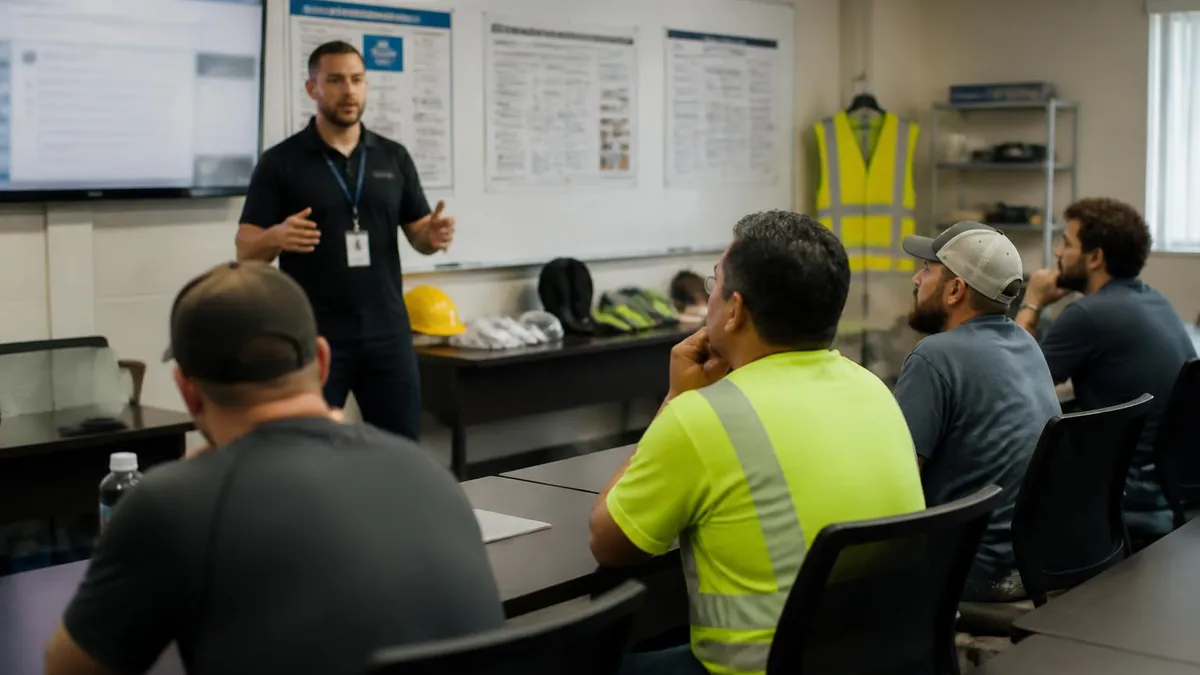
Effective training programs for compressed air cleaning should go beyond regulatory recitation. Workers need to understand the physiology of air injection injuries so that the danger feels real rather than abstract. Demonstrating the velocity of debris from a compressed air nozzle using simple visual experiments — such as watching chips scatter across a surface — helps workers internalize why PPE and proper technique are essential. Role-playing proper procedures, including how to set regulator pressure, inspect nozzles, and position the air stream safely, builds muscle memory that reduces the chance of error under time pressure in the workplace.
Supervisors and safety officers responsible for compressed air programs should be familiar with OSHA's inspection procedures and what compliance officers look for during walkthroughs. Common citation triggers include missing or broken pressure regulators, workers observed using compressed air on clothing or body parts, absence of chip guards on nozzles, inadequate eye protection, and no documented training records. Proactively addressing these issues through regular internal audits prevents citations and — more importantly — prevents injuries before they occur.
Documentation is a cornerstone of any defensible OSHA compliance program. Employers should maintain records of all compressed air safety training, including the date of training, topics covered, name of the trainer, and signature of each employee who completed the course. Equipment inspection logs should record the date, inspector name, equipment identifier, and condition notes for all air hoses, nozzles, regulators, and associated fittings. These records demonstrate good faith compliance and can significantly reduce the severity of OSHA penalties if a citation is issued following an incident.
For crane operators pursuing OSHA certification, compressed air knowledge is part of the broader equipment maintenance and safety awareness tested on certification exams. Understanding how compressed air is safely used to inspect and clean rigging hardware, crane components, and work surfaces demonstrates the integrated safety mindset that OSHA-certified professionals are expected to maintain. Crane operators who understand compressed air safety are better prepared for both the written exam and the practical demands of working on complex job sites where multiple hazardous tools and processes operate simultaneously.
OSHA's enforcement history shows that compressed air violations are among the more commonly cited general industry infractions, particularly in metalworking, automotive repair, and manufacturing environments. Employers in these sectors should treat compressed air safety as a high-priority program element, not an afterthought. Assigning a dedicated champion for compressed air safety — someone who conducts regular audits, updates training materials as standards evolve, and investigates near-misses — sends a clear message that the organization takes these risks seriously and is committed to protecting every worker from preventable harm.
Connecting compressed air training to the broader culture of workplace safety is the most effective long-term strategy. When workers understand that OSHA standards exist to protect them personally, and when they see their employer consistently enforcing those standards, compliance becomes a shared value rather than a burden. This cultural foundation is what distinguishes organizations with strong safety records from those that cycle through citations and incidents, and it is the foundation on which effective OSHA-certified workplaces are built.
OSHA strictly prohibits using compressed air to blow debris off clothing, hair, or any part of the human body. Air injected through the skin — even at pressures below 30 PSI in some cases — can cause fatal embolisms. This prohibition applies to all workers regardless of experience level or how common the practice may appear on a job site. Supervisors must actively enforce this rule and treat violations as serious safety incidents requiring immediate corrective action.
Preparing for OSHA certification exams requires a solid understanding of compressed air cleaning regulations because these rules appear in both general industry and construction knowledge domains. The OSHA Certified Crane Operator exam, administered by accredited third-party certification organizations, tests candidates on a wide range of safety standards including hand and portable tool regulations that encompass compressed air equipment. Candidates who study only crane-specific topics without reviewing general safety standards frequently find themselves surprised by questions covering areas like compressed air, lockout/tagout, and PPE requirements that appear throughout the exam.
When studying compressed air topics for OSHA exams, focus on memorizing the specific CFR citation (29 CFR 1910.242(b)), the exact 30 PSI threshold for dead-ended cleaning operations, the requirement for chip guarding on nozzles, and the mandatory use of eye protection. Exam questions often test whether candidates understand not just the rule but also its rationale — why 30 PSI was chosen as the threshold, what injury mechanisms make compressed air dangerous, and what additional standards (PPE, noise, respiratory) may apply in specific scenarios. Understanding the why behind each rule makes it far easier to answer novel scenario-based questions.
Practice tests are an invaluable tool for exam preparation because they expose knowledge gaps before the actual test and build familiarity with OSHA's question style. OSHA exam questions are typically scenario-based, presenting a workplace situation and asking candidates to identify the applicable standard, the correct action, or the responsible party.
For compressed air topics, scenarios might describe a worker cleaning a lathe with compressed air at 45 PSI while wearing no eye protection, and ask candidates to identify all violations present. Being able to rapidly parse such scenarios and apply the correct regulatory framework is a skill that develops through repeated practice.
Time management during the OSHA certification exam is another critical success factor. Candidates who are uncertain about a question should mark it and move on rather than spending disproportionate time on a single item. When reviewing marked questions, approach compressed air and tool safety questions by elimination — rules out answers that describe pressures above 30 PSI, that omit PPE requirements, or that assign compliance responsibilities to employees rather than employers. OSHA exam answers almost always reflect the employer-centric responsibility model embedded in the OSH Act of 1970.
Study groups and peer review are effective supplemental strategies for candidates preparing for OSHA certification. Discussing compressed air scenarios with peers forces candidates to articulate their reasoning, which often reveals misunderstandings that passive reading would not surface. Explaining to a study partner why air injection injuries are dangerous at pressures below 30 PSI under certain conditions, or why chip guards don't replace the need for PPE, builds the kind of nuanced understanding that distinguishes passing candidates from those who fall short. Peer discussion also surfaces real-world examples that make regulatory abstractions concrete and memorable.
For workers in the crane and rigging industry specifically, compressed air is used during equipment maintenance cycles to clean wire rope, inspect sheave grooves, clear debris from limit switches, and blow out electrical enclosures. Each of these applications has specific safety considerations that extend beyond the basic 30 PSI rule.
For example, cleaning electrical enclosures with compressed air requires that the equipment be de-energized and locked out per 29 CFR 1910.147 before any cleaning begins — adding a second regulatory framework on top of the compressed air standard. Understanding how multiple OSHA standards interact in practice is a hallmark of a truly knowledgeable certified crane operator.
Approaching OSHA certification preparation with this integrated, cross-standard mindset will serve candidates well beyond exam day. The real goal is not simply to pass a test but to internalize the safety principles that protect workers in complex, high-hazard environments. Workers who genuinely understand compressed air safety, crane operation standards, rigging requirements, and general industry PPE rules are better equipped to make sound decisions on the job, mentor newer workers effectively, and contribute to organizations that lead on safety rather than merely comply with it under compulsion.
Practical tips for implementing a compliant compressed air cleaning program start with a thorough workplace assessment. Walk through every area where compressed air is used and document the specific cleaning tasks being performed, the pressures currently in use, the PPE being worn (or not worn), and the proximity of bystanders to cleaning operations.
This baseline audit will reveal the gaps between current practice and OSHA requirements and give you a prioritized list of corrections to implement. Involving frontline workers in this process builds buy-in and often surfaces practical insights about how work is actually performed versus how it is theoretically supposed to be done.
Equipment upgrades are often the most cost-effective investment in compressed air safety. Safety-engineered nozzles that comply with OSHA's 30 PSI requirement while maintaining cleaning effectiveness are widely available from industrial supply vendors. These nozzles incorporate side vents that prevent pressure from exceeding the legal threshold even if the nozzle tip is blocked, and many designs include integrated chip guards that deflect debris away from the operator. Replacing non-compliant blow guns with OSHA-compliant versions is a simple, one-time expenditure that eliminates a recurring citation risk and immediately improves worker safety.
Pressure regulator management is another practical priority. Many compressed air systems in shops and manufacturing facilities operate at 90–120 PSI at the main supply, far above the 30 PSI limit for cleaning applications. Installing point-of-use pressure regulators at drop locations where compressed air is used for cleaning ensures that workers have access to correctly regulated pressure without having to manually adjust the main system. Lockable regulators prevent tampering, and pressure gauges visible to the worker provide real-time confirmation that the system is operating within safe parameters before cleaning begins.
Signage and visual management tools reinforce training in the workplace. Posting laminated reminder cards near compressed air drop stations that summarize the 30 PSI rule, required PPE, and prohibited uses (no cleaning clothing or body) provides just-in-time reminders at the point of task performance. Color-coding compliant nozzles (for example, all compliant nozzles tagged with green tape) creates an instant visual check that workers can perform before picking up equipment. These low-cost interventions significantly improve compliance rates in facilities where verbal reminders and written procedures alone have failed to change behavior.
Near-miss reporting systems are among the most powerful tools for preventing serious compressed air injuries. In many workplaces, compressed air is aimed at people jokingly, used at excessive pressures routinely, or applied to hazardous surfaces without respiratory protection — and none of these near-misses are formally reported because no injury occurred. Building a reporting culture where workers feel safe documenting close calls without fear of blame or discipline generates the data needed to identify persistent problem areas, repeat offenders, and equipment deficiencies before they contribute to a recordable injury or fatality.
Integrating compressed air safety into new employee onboarding is critical because new workers are statistically at the highest risk for workplace injuries. Including a hands-on compressed air safety module in orientation — where new employees actually handle the equipment, set a regulator to the correct pressure, inspect a hose, and practice using a compliant nozzle with proper eye protection — builds correct habits from day one. This practical approach is far more effective than handing workers a printout of the 29 CFR 1910.242 regulation and expecting them to internalize the rules without guided experience.
Finally, staying current with OSHA enforcement trends and penalty updates ensures that your compliance program remains effective and reflects current regulatory priorities. OSHA regularly updates penalty amounts, issues new enforcement guidance, and publishes inspection narratives that reveal what violations inspectors are finding most frequently. Subscribing to OSHA's email updates, attending local OSHA Alliance or consultation program events, and participating in industry safety associations keeps safety officers informed of developments that may affect their compressed air programs. A proactive, continuously improving approach to compressed air safety is the hallmark of an organization that genuinely values its workers' wellbeing above all else.
OSHA Questions and Answers

OSHA Restaurant Safety: Complete Guide to Workplace Compliance, Hazard Prevention, and Employee Training for Food Service Operations

360 Training OSHA 10: Complete Guide to Online OSHA 10-Hour Construction and General Industry Certification Courses

OSHA (OSHA Certified Crane Operator) Test Guide

What Is Involved in Safety Monitoring Under OSHA: Complete Guide for Crane Operators

OSHA 1910 Crane Training Requirements: Complete Guide to Certification, Qualification, and Compliance
About the Author

Certified Safety Professional & OSHA Compliance Expert
Indiana University of Pennsylvania Safety SciencesDr. William Foster holds a PhD in Safety Science from Indiana University of Pennsylvania and is a Certified Safety Professional (CSP) and Certified Hazardous Materials Manager. With 20 years of occupational health and safety management experience across construction, manufacturing, and chemical industries, he coaches safety professionals through OSHA certification, CSP, CHST, and safety management licensing programs.