
Free OSHA Classes: Complete Guide to No-Cost Safety Training in 2026 September
Find free OSHA classes online and in-person. Learn which programs are legitimate, what they cover, and how to start your safety training today. 🎓

Free OSHA classes are one of the most valuable and underutilized resources available to American workers today. Whether you work in construction, manufacturing, healthcare, or general industry, understanding OSHA regulations can protect your life and your livelihood. The good news is that you do not need to spend hundreds of dollars to access quality safety training. Numerous federal programs, nonprofit organizations, employer-sponsored courses, and online platforms offer legitimate, no-cost OSHA education to workers across every industry sector in the United States.
The Occupational Safety and Health Administration itself funds free safety training through several channels, including the Susan Harwood Training Grant Program, which awards millions of dollars each year to nonprofit organizations that deliver workplace safety education to vulnerable and underserved workers. These programs target workers in high-hazard industries and those with limited English proficiency, ensuring that safety knowledge reaches the people who need it most. The training covers everything from fall protection and hazard communication to electrical safety and machine guarding.
Community colleges and vocational schools frequently partner with OSHA training institutes to offer subsidized or fully free short courses. Many state-run workforce development programs include OSHA safety components at no charge, particularly for workers who are unemployed or transitioning between careers. Union apprenticeship programs almost universally include OSHA 10-hour or OSHA 30-hour training as part of their curriculum, covered entirely by union dues and employer contributions.
Online learning has dramatically expanded access to free OSHA content. The OSHA website itself hosts an extensive library of e-tools, interactive training modules, fact sheets, and instructional videos on everything from scaffolding safety to bloodborne pathogens. While the OSHA website content does not award an official OSHA card upon completion, the educational value is substantial and can serve as an excellent foundation before pursuing paid, card-awarding programs through authorized outreach trainers.
It is important to understand the difference between free awareness training and official OSHA certification. No free online course can legally issue an OSHA 10 or OSHA 30 card — those cards require completion of courses taught by OSHA-authorized trainers, which typically carry a fee. However, free classes can prepare you thoroughly for those paid courses, help you meet employer awareness requirements, and build the foundational knowledge needed to pass OSHA-related safety exams and workplace assessments.
If your employer requires documented safety training, check whether your company offers in-house OSHA programs. Many large employers and contractors provide OSHA 10-hour training at no cost to employees because federal and state contracts often mandate a trained workforce. Some states, including California, Washington, Michigan, and New York, have OSHA State Plan agencies that fund additional free training resources beyond what the federal program provides.
Exploring free osha classes alongside understanding proper safety equipment creates a comprehensive foundation for workplace safety. Workers who combine safety knowledge with hands-on equipment familiarity are significantly better prepared to identify hazards, respond appropriately to emergencies, and contribute to a culture of safety on the job site. This guide walks you through every legitimate source of free OSHA training available in 2026, what each program covers, who qualifies, and how to get started today.
Free OSHA Training by the Numbers
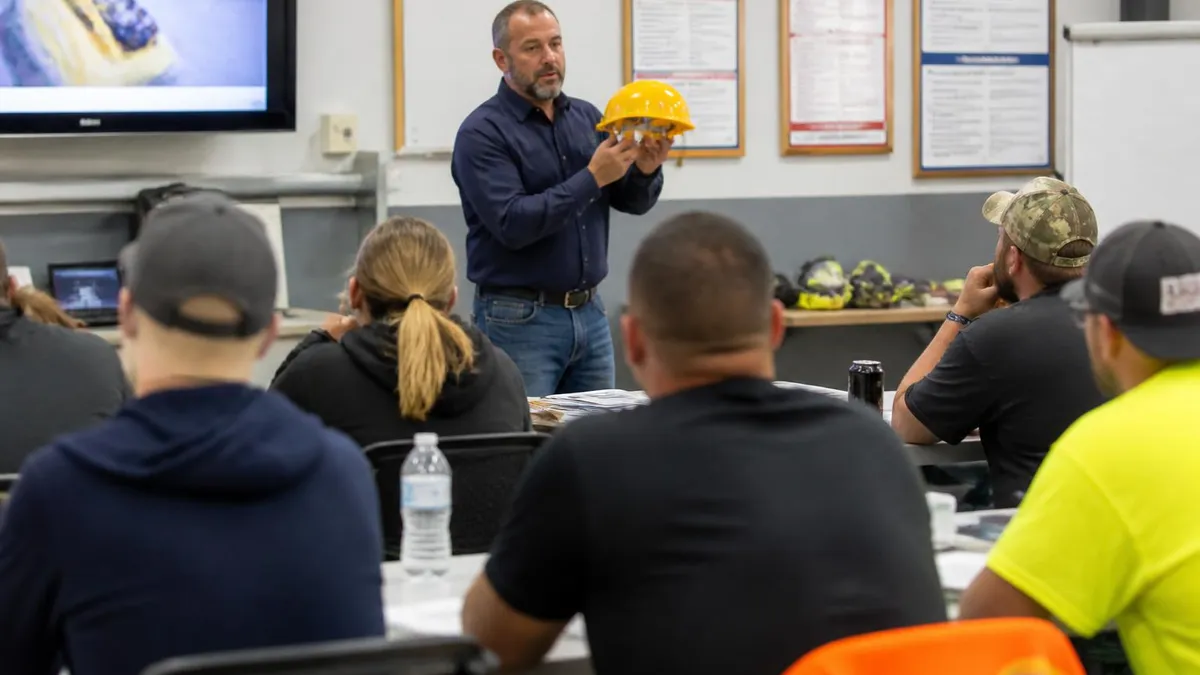
Types of Free OSHA Training Programs
Federally funded training delivered by nonprofits and educational institutions. Targets high-hazard industries and underserved workers. Covers falls, electrical hazards, chemical safety, and more at zero cost to participants.
Interactive modules, instructional videos, and fact sheets hosted directly on osha.gov. Cover hundreds of workplace hazards across all major industries. No registration required, freely accessible 24/7.
Twenty-nine states operate their own OSHA-approved programs and many fund additional free training resources. Cal/OSHA, for example, offers free consultations and training workshops to California employers and workers.
Many contractors and large employers provide OSHA 10 or 30-hour training free to employees, especially on federally contracted job sites where trained workers are a contractual requirement.
Trade unions in construction, electrical, plumbing, and other fields include full OSHA training in apprenticeship curricula. Workers pay nothing out of pocket — costs are covered through union structures.
The internet has transformed access to OSHA safety education, and in 2026 there are more high-quality free online OSHA classes available than ever before. The OSHA website at osha.gov remains the gold standard for free digital training content. The site hosts an extensive collection of e-tools — interactive web applications that guide users through hazard identification, risk assessment, and regulatory requirements for specific industries and topics. Topics range from scaffolding and confined spaces to ergonomics and laboratory safety.
OSHA's free online training library includes self-paced courses in Spanish and English, video series covering specific hazard types, and downloadable training materials that employers can use to conduct their own toolbox talks and safety meetings. The OSHA Training Institute Education Centers (OTIECs), a national network of nonprofit and educational institutions authorized to deliver OSHA training, occasionally offer free or deeply subsidized introductory courses as part of outreach efforts or grant-funded programs.
Several reputable third-party platforms also provide free OSHA awareness training. The National Safety Council offers free safety quizzes and awareness resources. The American Red Cross provides free online safety courses that overlap significantly with OSHA requirements, particularly in first aid and emergency response. OpenCourseWare from major universities like MIT and Johns Hopkins includes occupational health and safety content taught at the graduate level — completely free to access, though not OSHA-branded.
YouTube is an underappreciated source of structured OSHA training content. Official OSHA channels, authorized training centers, and safety consulting firms have posted hours of instructional content covering the most common OSHA topics. While YouTube videos do not grant completion certificates, they are an excellent tool for visual learners who want to see real-world demonstrations of safety procedures, proper equipment use, and hazard recognition in action.
Practice tests and knowledge assessments are another critical component of free online OSHA preparation. Working through sample questions helps workers identify gaps in their understanding before sitting for employer assessments or pursuing formal OSHA card training. Many workers find that combining free video content with free practice exams dramatically improves their retention of regulatory information and their confidence in applying safety principles on the job.
LinkedIn Learning occasionally offers free trials that include OSHA-relevant safety courses from certified instructors. Coursera and edX host university-developed occupational health courses that can be audited free of charge, giving you access to lecture materials, readings, and some assessments without paying for the certificate. These are particularly valuable for workers who want a deeper academic understanding of occupational safety principles beyond simple regulatory compliance.
Mobile apps represent an emerging channel for free OSHA training delivery. OSHA's own mobile app provides instant access to standards, compliance guidance, and safety resources from any smartphone. Several workforce training apps offer gamified OSHA awareness modules at no charge, designed to keep workers engaged with safety content during commutes, lunch breaks, or any downtime. Workers who commit even fifteen minutes per day to free digital OSHA content can build substantial knowledge over several weeks.
What Free OSHA Classes Cover
Free OSHA classes for general industry typically cover the foundational regulatory framework established by the OSH Act of 1970, OSHA's enforcement authority, and worker rights including the right to request workplace inspections, access exposure records, and refuse imminently dangerous work without fear of retaliation. Hazard communication — understanding Safety Data Sheets, chemical labeling, and the Globally Harmonized System — is a core module because nearly every workplace involves some chemical exposure.
Additional general industry topics include personal protective equipment selection and use, lockout/tagout procedures for controlling hazardous energy during equipment maintenance, bloodborne pathogen standards for workers in healthcare and first response, walking and working surface safety, and emergency action planning. Fire safety, electrical safety basics, and ergonomics fundamentals are also frequently included because these hazards affect the widest cross-section of general industry workers regardless of specific job function.

Free OSHA Classes: Benefits and Limitations
- +Zero cost removes the biggest barrier to accessing workplace safety education
- +Available 24/7 online, allowing workers to learn at their own pace and schedule
- +Wide topic coverage spans general industry, construction, maritime, and specialized sectors
- +Content developed or funded by OSHA ensures regulatory accuracy and relevance
- +Builds foundational knowledge that accelerates completion of paid OSHA card courses
- +Multilingual resources available in Spanish and other languages for diverse workforces
- −Free online courses cannot legally issue an official OSHA 10 or OSHA 30 DOL card
- −Quality varies widely among third-party free offerings — not all content is OSHA-vetted
- −Self-paced online learning lacks the hands-on demonstrations available in classroom settings
- −No instructor to answer specific questions or address site-specific hazard scenarios
- −Completion certificates from free courses may not satisfy employer documentation requirements
- −Content may lag behind the most recent OSHA standard updates or regulatory revisions
How to Find Free OSHA Classes Near You
- ✓Visit osha.gov and navigate to the Training section to browse all free e-tools and online modules.
- ✓Search for Susan Harwood Grant Program grantees in your state using OSHA's online grantee directory.
- ✓Contact your local community college or vocational school and ask about subsidized or free safety courses.
- ✓Ask your union representative whether OSHA 10 or OSHA 30 training is included in your apprenticeship program.
- ✓Check your state's workforce development agency website for free safety training tied to employment programs.
- ✓Ask your employer's HR or safety department whether company-sponsored OSHA training is available at no cost.
- ✓Look for OSHA Training Institute Education Center (OTIEC) locations near you — they occasionally offer free sessions.
- ✓Search for local nonprofits focused on worker health and safety, which may receive Susan Harwood grant funding.
- ✓Review your state OSHA plan agency's website if your state operates its own plan — many offer additional free resources.
- ✓Use free practice tests to self-assess your knowledge and identify which topics need the most additional study time.
Free Training Builds Real Knowledge — Even Without a Card
An official OSHA 10 or 30-hour card requires a paid, authorized trainer — but the safety knowledge gained through free OSHA classes is entirely legitimate. Many workers who complete free programs first find they require significantly less time in paid courses, score higher on employer assessments, and retain regulatory information longer because they built a knowledge foundation gradually rather than cramming in a single weekend session.
Understanding how free OSHA training compares to paid, card-awarding programs is essential for workers making decisions about their professional development. The most important distinction is legal standing: only training delivered by an OSHA-authorized outreach trainer results in a Department of Labor OSHA card, the wallet-sized credential that many employers — especially in construction and federal contracting — specifically require as a condition of employment or site access. Free courses simply cannot produce this credential, regardless of how comprehensive their content may be.
However, the knowledge gap between free and paid training is far narrower than most workers assume. A dedicated worker who completes OSHA's free online modules, watches instructional videos, and works through practice assessments will arrive at a paid OSHA 10-hour class with substantially the same regulatory knowledge as the content of that class. The paid component primarily adds the authorized trainer's expertise, interactive discussion, scenario-based learning, and the administrative verification process that results in card issuance.
Cost is the most obvious advantage of free training, but the time flexibility is equally significant. Paid OSHA 10-hour courses must be completed within a specific time window — typically no more than a few sessions spread over several weeks — and require attendance during scheduled class times. Free online resources can be accessed at 2 a.m. on a weekend, paused and resumed as life demands, and revisited as many times as needed without additional cost or scheduling commitments.
Employer acceptance is a key variable. While some employers are satisfied with documented completion of any safety training, others specifically require the DOL card. Workers should clarify their employer's exact requirements before investing time in free-only training if their goal is to meet a specific employment condition. In many cases, particularly for workers new to a field, free training is an excellent starting point that builds the case for employer-sponsored paid training down the line.
The depth of coverage in free programs also varies considerably. OSHA's own online content is authoritative but text-heavy and can be challenging to navigate for workers who prefer structured, guided learning. Paid OSHA courses follow a standardized curriculum reviewed and approved by OSHA's national office, ensuring consistent topic coverage and regulatory accuracy. Free programs from third-party sources range from excellent to misleading, and workers must exercise judgment in evaluating source credibility.
From a career development perspective, free OSHA training is most valuable when used strategically. Workers who use free resources to build awareness, identify knowledge gaps, and prepare for paid training get the best return from both investment types. Those who use free training to fulfill awareness requirements — demonstrating to employers a proactive commitment to safety — often find it accelerates hiring decisions and performance reviews even without a formal card.
For small business owners and self-employed workers, the economics strongly favor maximizing free resources before committing to paid training. Understanding OSHA's compliance requirements, penalty structures, and inspection processes through free content can prevent costly violations. When specific certifications become necessary for contracts or legal compliance, the worker who has already engaged extensively with free material completes paid training faster and more confidently than someone starting from zero.
Dozens of websites claim to offer 'free OSHA 10 certification' or issue official OSHA cards at no cost. These claims are false — no website can legitimately issue a Department of Labor OSHA card without an authorized outreach trainer delivering the required hours of instruction. Workers who pay for or download fake certificates risk job loss and potential legal liability. Always verify OSHA training providers through the official OSHA website or an OSHA Training Institute Education Center.
Maximizing the value of free OSHA education requires a deliberate approach rather than passive consumption of whatever resources are easiest to find. The most effective strategy starts with identifying your specific industry's most relevant OSHA standards. A construction worker and a hospital orderly face completely different hazard profiles and regulatory requirements, so investing time in content tailored to your actual work environment yields far more practical benefit than generic safety awareness modules that address hazards you will never encounter.
Creating a personal study plan significantly improves learning outcomes. Rather than browsing OSHA content randomly, identify the specific topics your employer emphasizes, the OSHA standards most commonly cited in your industry, and the subject areas covered by your employer's safety assessments. OSHA's website organizes content by industry and topic, making it straightforward to build a targeted reading list. Aim for consistent daily study sessions of thirty to sixty minutes rather than occasional marathon sessions that strain retention.
Supplementing OSHA's text-based content with visual and hands-on learning accelerates mastery, particularly for complex procedural topics like lockout/tagout, fall protection equipment inspection, and confined space entry procedures. Request permission from your employer's safety officer to examine the actual equipment discussed in free training modules. Connecting regulatory text to physical equipment — seeing a real use while reading about anchor point load requirements — dramatically improves both understanding and memory retention.
Taking notes while consuming free OSHA content transforms passive reading into active learning. Summarize each major requirement in your own words, note specific numerical thresholds (the 4-foot fall protection trigger in general industry versus 6 feet in construction, for example), and flag any area where your current workplace may not be fully compliant. Sharing these observations with your supervisor demonstrates initiative and safety awareness — qualities that influence hiring and promotion decisions in safety-conscious organizations.
Connecting with other workers pursuing OSHA training creates accountability and learning opportunities. Online forums, LinkedIn groups focused on occupational safety, and local safety professional associations provide communities where workers share resources, answer each other's questions, and discuss real-world application of OSHA regulations. The American Society of Safety Professionals (ASSP) and the National Safety Council maintain active online communities that welcome workers at every experience level.
Periodic reassessment of your knowledge through free practice tests is essential to identify drift and fill gaps before they become compliance or safety failures. OSHA regulations are updated regularly — new standards are published, enforcement priorities shift, and penalty structures change. Workers who treat OSHA knowledge as static quickly fall behind the regulatory curve. Free online resources are typically updated more rapidly than printed materials, making them particularly useful for staying current on evolving requirements like the silica dust standard, the updated walking and working surfaces rule, or enhanced heat illness prevention guidance.
Finally, document every free OSHA course, module, and practice assessment you complete. Maintain a simple spreadsheet recording the date, topic, source, and approximate time spent on each learning activity. While these records do not constitute official certification, they demonstrate a sustained, documented commitment to safety education that employers and regulators view favorably. Workers who can produce training logs during OSHA inspections or employment reviews consistently present stronger compliance pictures than those who completed equivalent training but kept no records.
Translating free OSHA training into practical workplace impact requires moving beyond theoretical knowledge to active hazard identification and safety advocacy. Workers who complete free OSHA classes are not just better protected themselves — they become valuable safety resources for their entire team. Understanding how to recognize an unguarded machine, an improperly stored chemical, or a ladder positioned at the wrong angle allows trained workers to speak up before accidents happen, potentially saving lives and preventing costly OSHA violations for their employers.
One of the most practical applications of free OSHA training is participating effectively in workplace safety inspections. Workers with OSHA knowledge can accompany compliance officers during inspections, understand the citations being issued, and communicate meaningfully with management about abatement timelines. This participation right — guaranteed by the OSH Act — is most meaningful when workers actually understand the standards being evaluated. Free training makes this right genuinely useful rather than theoretical.
Understanding OSHA's recordkeeping requirements, particularly Forms 300, 300A, and 301, is another practical skill developed through free OSHA training. Employers with ten or more employees must maintain injury and illness logs, and workers have the right to access these records. Knowing how to read and interpret an OSHA 300 log provides valuable insight into your workplace's actual injury history and can inform decisions about which hazards deserve the most personal protective attention.
Free OSHA training also prepares workers to exercise their rights under Section 11(c) of the OSH Act, which prohibits employers from retaliating against workers who report safety concerns, participate in inspections, or file complaints with OSHA. Many workers are unaware of these protections or hesitant to use them because they do not understand the process. Free training demystifies the complaint process and explains how OSHA investigates whistleblower retaliation claims, enabling workers to speak up without fear.
For workers interested in advancing into safety management roles, free OSHA training provides an important credential foundation. Safety coordinators, safety managers, and Environmental Health and Safety (EHS) professionals are in high demand across virtually every industry, and many begin their careers by building on free OSHA knowledge before pursuing formal credentials like the OSHA 30-hour card, the Construction Health and Safety Technician (CHST) designation, or the Certified Safety Professional (CSP) credential from the Board of Certified Safety Professionals.
Workers in states with particularly active construction and manufacturing sectors should investigate state-specific safety training incentives. Several states offer tax credits or reduced workers' compensation insurance premiums to employers who document worker safety training, which creates strong financial incentives for companies to sponsor employees' OSHA training — including reimbursing costs for paid card courses after employees demonstrate baseline knowledge through free programs. Understanding this dynamic helps workers make the case to management for company-supported training investment.
The cumulative effect of sustained free OSHA education is substantial. A worker who spends six months systematically working through OSHA's free online content, completing practice assessments, and engaging with safety communities will develop a regulatory literacy that rivals workers who attended a paid OSHA 30-hour course without adequate preparation. When these workers then pursue formal OSHA certification, they complete the experience with greater confidence, deeper retention, and a stronger practical foundation for applying safety principles in every workday decision they make.
OSHA Questions and Answers

OSHA Approved Safety Glasses: Complete 2026 Guide to ANSI Z87.1 Eye Protection Standards, Selection, and Workplace Compliance

OSHA Lightning Safety: Standards, Rules & Outdoor Worker Protection Guide for 2026

OSHA 10 Hour General Industry: Complete 2026 Guide to Training, Topics, Costs, and DOL Card

Is OSHA a Government Agency? The Federal Body Behind US Workplace Safety

How to Get OSHA Certified: Complete 2026 Guide to Training, Cards & Compliance
About the Author

Certified Safety Professional & OSHA Compliance Expert
Indiana University of Pennsylvania Safety SciencesDr. William Foster holds a PhD in Safety Science from Indiana University of Pennsylvania and is a Certified Safety Professional (CSP) and Certified Hazardous Materials Manager. With 20 years of occupational health and safety management experience across construction, manufacturing, and chemical industries, he coaches safety professionals through OSHA certification, CSP, CHST, and safety management licensing programs.
Join the Discussion
Connect with other students preparing for this exam. Share tips, ask questions, and get advice from people who have been there.
View discussion (8 replies)