
30 Hour OSHA Course: Complete Training Guide, Requirements & What to Expect
💡 Everything you need to know about the 30 hour OSHA course — who needs it, what it covers, cost, format, and how to get your card.
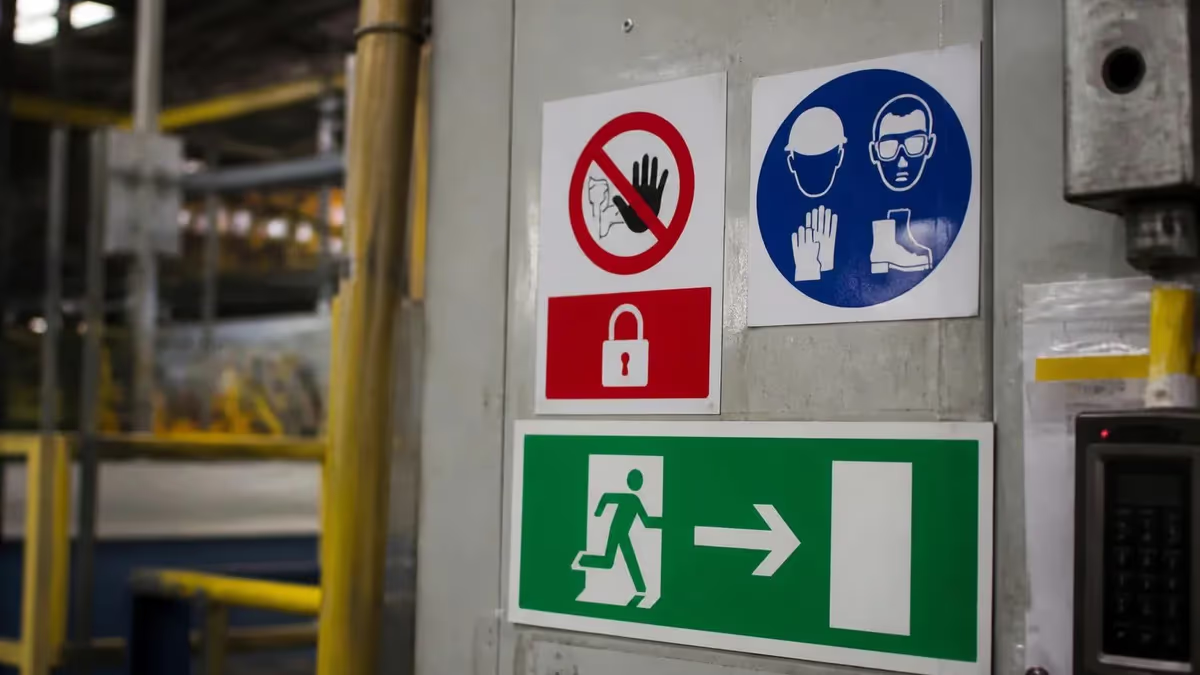
The 30 hour OSHA course is one of the most recognized workplace safety credentials in the United States, designed for supervisors, foremen, safety officers, and workers who need a deeper understanding of federal occupational health and safety standards. Unlike the entry-level 10-hour program, the 30-hour version goes well beyond basic hazard recognition to cover regulatory compliance, worksite inspections, and the supervisory responsibilities that come with managing people in high-risk environments. Whether you work in construction, general industry, maritime, or any other OSHA-regulated sector, completing this training demonstrates a serious commitment to worker protection.
Offered through OSHA-authorized trainers and available in both in-person and online formats, the 30-hour course is delivered over multiple sessions totaling a minimum of 30 contact hours. Participants engage with a broad curriculum that spans topics from fall protection and electrical safety to hazard communication, personal protective equipment, and emergency action planning. Each topic is grounded in actual OSHA standards from 29 CFR 1926 (construction) or 29 CFR 1910 (general industry), giving workers a regulatory framework they can apply immediately on the job.
Completing a 30 hour osha course is not federally mandated for all workers, but it is required or strongly preferred by many contractors, project owners, and state agencies — especially on publicly funded construction projects in states like New York, Nevada, and Massachusetts, where 30-hour OSHA cards are a condition of employment. Even where not legally required, employers increasingly list the credential as a hiring preference because it signals that a candidate understands their legal obligations and can help keep a worksite compliant.
The training is broken into required and elective topic modules. OSHA mandates that certain core subjects — such as OSHA's mission and standards, walking and working surfaces, and personal protective equipment — must be covered in every 30-hour program. Trainers then have flexibility to choose elective topics that are most relevant to the specific industry or audience. This modular approach means that a 30-hour construction course and a 30-hour general industry course will look quite different in terms of specific content, even though they share the same structural framework and total hour requirement.
Participants who successfully complete an authorized 30-hour course receive a wallet-sized OSHA completion card, commonly called the OSHA 30 card or the DOL card, typically within 6 to 8 weeks of finishing the training. This card does not expire under federal OSHA rules, though some employers and state programs require periodic refresher training every three to five years to maintain eligibility for certain projects. The card is issued by the OSHA Training Institute (OTI) or its authorized education centers and serves as verifiable proof of training.
The investment of time and money in the 30-hour program pays dividends throughout a career. Workers with the credential consistently report feeling more confident identifying and addressing hazards before incidents occur. Employers benefit from reduced injury rates, lower workers' compensation costs, and better performance on safety audits. In competitive bidding environments, having a workforce credentialed with OSHA 30 cards can be a differentiating factor that wins contracts — particularly on large commercial, industrial, or government projects where safety prequalification is part of the bid process.
This guide covers every aspect of the 30-hour OSHA course: who should take it, what topics are covered, how the training is structured, what it costs, how online delivery works, and what to do after you earn your card. By the time you finish reading, you will have a clear picture of whether the 30-hour course is the right next step for your career and exactly how to move forward with enrollment.
OSHA 30-Hour Course by the Numbers
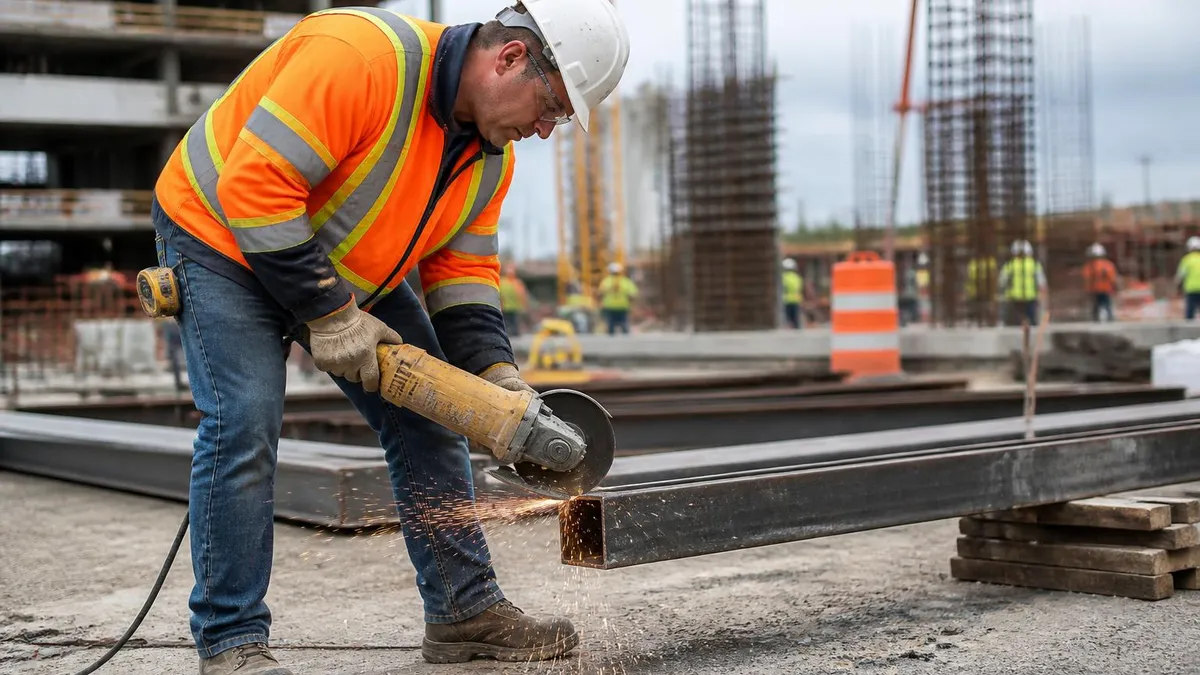
How the 30-Hour OSHA Course Is Structured
Every authorized 30-hour program must cover OSHA's mission, standards overview, and specific core hazards such as walking/working surfaces, electrical safety, and personal protective equipment. These modules cannot be skipped or substituted regardless of the delivery format.
Trainers choose supplemental modules tailored to the industry and workforce. Construction programs might add scaffolding and excavation safety, while general industry programs might cover machine guarding and lockout/tagout in greater depth. Electives make up a significant portion of total hours.
OSHA limits the daily maximum to 7.5 training hours per day for classroom delivery. This means in-person programs run across a minimum of four days. Online platforms spread content over a longer period with time-tracking software to verify actual engagement hours.
Training must be led by an OSHA-authorized trainer who holds a current Outreach Trainer card in the relevant industry sector. Courses delivered by non-authorized instructors do not result in official DOL completion cards, even if the content is identical.
After the trainer submits completion data to OSHA's National Office, the DOL mails a wallet-sized card directly to each participant. The card includes the worker's name, completion date, course type, and a DOL seal — serving as the official proof of training.
The curriculum of the 30-hour OSHA course is deliberately comprehensive because it targets people who bear supervisory responsibility for others' safety. Construction industry programs are built around 29 CFR 1926, the federal standard for construction safety, while general industry programs draw from 29 CFR 1910. Understanding these regulatory sources is not just academic — inspectors cite specific CFR sections during enforcement visits, and supervisors who recognize the applicable standard can respond more effectively and avoid costly violations.
Fall protection is typically the most time-intensive module in the construction version of the course, and for good reason: falls consistently represent the leading cause of fatalities on construction sites, accounting for roughly one-third of all construction deaths every year according to Bureau of Labor Statistics data. The fall protection module covers the hierarchy of fall controls — from elimination and passive fall systems to fall arrest equipment — and teaches supervisors how to conduct fall hazard surveys, select appropriate anchorage points, and inspect personal fall arrest systems before use.
Electrical safety is another cornerstone module. The OSHA 30-hour curriculum addresses both the standards-based requirements of 1926 Subpart K (construction) and 1910 Subpart S (general industry), covering topics such as ground fault circuit interrupter (GFCI) use, lockout/tagout procedures, assured equipment grounding conductor programs, and safe work practices around overhead power lines. Electrical incidents cause fewer total injuries than falls but carry a disproportionately high fatality rate, making supervisor-level knowledge particularly critical.
Hazard communication under the Globally Harmonized System (GHS) is covered in depth because virtually every worksite involves chemical exposures — from simple cleaning products to complex industrial solvents. The module teaches supervisors how to read Safety Data Sheets (SDS), understand GHS label pictograms, manage written hazcom programs, and ensure employees receive proper training before exposure. Since OSHA's 2012 alignment with GHS, this has become one of the most frequently cited standards across all industries.
Personal protective equipment training in the 30-hour course goes beyond simply listing what PPE exists. Supervisors learn how to conduct a formal PPE hazard assessment, document that assessment in writing as required by 29 CFR 1910.132(d), select appropriate PPE based on exposure levels and material compatibility, fit-test respirators, and manage the lifecycle of PPE from procurement through disposal. This depth of coverage is one of the key differentiators between the 10-hour and 30-hour programs.
Health hazards in construction and industry receive meaningful attention in the 30-hour curriculum — an area often overlooked in shorter safety trainings. Topics include crystalline silica exposure (a significant concern after OSHA's 2016 silica rule), noise-induced hearing loss, heat stress and heat-related illness prevention, and basic industrial hygiene principles. Supervisors who understand occupational health hazards are better equipped to request industrial hygiene surveys, interpret air monitoring results, and implement engineering controls before health effects manifest.
Emergency action and fire prevention planning rounds out the core curriculum. Supervisors learn how to develop and maintain written emergency action plans, conduct drills, assign emergency roles, and coordinate with local emergency services. They also learn the basics of fire prevention planning — including flammable liquid storage requirements, fire extinguisher selection and placement, and hot work permit programs. These planning skills translate directly into the kind of supervisory competence that OSHA expects from anyone managing people in a hazardous work environment.
Online vs In-Person: Choosing Your 30-Hour OSHA Course Format
Online 30-hour OSHA courses offer maximum scheduling flexibility, allowing workers to complete modules at their own pace across days or weeks. OSHA-authorized online platforms use time-tracking software to verify that each student spends the required number of minutes on each module — you cannot simply click through. Most platforms allow you to pause and resume sessions, making it practical for shift workers or those with variable schedules. Costs typically run between $150 and $200 for a fully authorized online course.
The main limitation of online delivery is that it lacks the hands-on demonstration component that in-person instruction provides. For topics like fall arrest equipment inspection or fire extinguisher use, watching a video is less impactful than handling actual equipment. Some employers — particularly on large construction projects — may prefer or require in-person completion. Always verify that your specific employer or project owner accepts online OSHA 30 cards before enrolling in a digital-only program.

Is the 30-Hour OSHA Course Worth It?
- +Meets state-mandated requirements for supervised workers on public construction projects in New York, Nevada, Massachusetts, and other states
- +Demonstrates supervisory-level safety competence to employers and project owners during bidding and prequalification processes
- +Provides in-depth regulatory knowledge from 29 CFR 1926 or 1910, reducing the risk of costly OSHA citations
- +Increases earning potential — workers with OSHA 30 cards often command higher wages and are prioritized for foreman and safety roles
- +Reduces workplace injuries and near-misses by equipping supervisors with hazard recognition and control skills
- +DOL card does not expire under federal rules, providing a lifetime credential that follows you across jobs and employers
- −Requires a minimum 30-hour time commitment — a significant investment for workers with limited availability or demanding schedules
- −Average course cost of $150–$250 may be a barrier for self-pay workers, though many employers cover the expense
- −Card processing takes 6–8 weeks, which can delay employment start dates on projects with mandatory card verification
- −Does not qualify holders to conduct OSHA Outreach Training themselves — a separate trainer authorization process is required
- −Some states and employers require refresher training every 3–5 years, adding ongoing time and cost
- −Online completion may not be accepted by all employers — always confirm acceptance before enrolling in a digital program
How to Enroll in and Complete the 30-Hour OSHA Course
- ✓Confirm which industry sector applies to your work — Construction (29 CFR 1926) or General Industry (29 CFR 1910) — before selecting a course.
- ✓Verify that your chosen training provider is an OSHA-authorized Outreach Trainer or OTI Education Center by checking OSHA's official provider directory.
- ✓Check whether your employer, union, or state mandate specifies in-person completion or accepts online OSHA 30 cards before enrolling online.
- ✓Register for the course and pay the enrollment fee — confirm what materials (student workbook, PPE for demos) are included or must be purchased separately.
- ✓Attend all required sessions and meet minimum time requirements for each module — partial credit is not accepted under OSHA's Outreach Training rules.
- ✓Participate actively in exercises, ask questions, and review each module's regulatory references in 29 CFR to reinforce what you learn.
- ✓Complete any required quizzes or assessments within the platform — most authorized providers include knowledge checks to confirm engagement.
- ✓Provide your legal name and current mailing address accurately at enrollment — the DOL completion card is mailed to the address on file.
- ✓Retain your course completion certificate from the provider as temporary proof of training while the official DOL card is being processed (6–8 weeks).
- ✓Once your card arrives, make a digital copy and keep the physical card accessible — many employers and project owners require visual verification at site entry.
Don't Wait for the Card to Start Working
After completing your 30-hour OSHA course, your authorized trainer will provide a signed temporary completion certificate. Most project owners and employers accept this document as proof of training while the official DOL card is being processed — which can take 6 to 8 weeks. Always carry your temporary certificate and do not discard it until your physical card arrives in the mail.
Earning your OSHA 30 card is a significant milestone, but understanding how to leverage it effectively in your career requires knowing what the card does — and does not — authorize you to do. The 30-hour completion card certifies that you have received OSHA Outreach Training at the supervisory level. It does not make you an OSHA compliance officer, a certified industrial hygienist, or an authorized Outreach Trainer. However, it does establish that you have the baseline regulatory knowledge expected of a safety-conscious supervisor or crew leader.
Many workers who earn the 30-hour card use it as a stepping stone toward additional credentials. The OSHA 500 and OSHA 510 courses — available through OTI Education Centers — are designed for construction safety professionals who want to become authorized Outreach Trainers themselves. These courses require participants to already hold the 30-hour card as a prerequisite, along with documented field experience. Becoming a trainer opens the door to teaching OSHA 10 and 30-hour courses and can significantly expand your professional earning potential.
For those pursuing a broader safety career, the 30-hour card complements credentials such as the Construction Health and Safety Technician (CHST), the Safety Management Specialist (SMS), or the Associate Safety Professional (ASP) offered by the Board of Certified Safety Professionals (BCSP). While these credentials require additional education, experience, and examinations, having the OSHA 30 card demonstrates foundational practical training that sits alongside academic qualifications. Many BCSP applications and safety degree programs specifically list OSHA Outreach Training as a recognized credential.
On the job, workers with the 30-hour card are frequently assigned roles with elevated safety responsibilities — conducting toolbox talks, performing daily hazard assessments, serving as competent persons for specific operations, and liaising with OSHA compliance officers during inspections. The regulatory vocabulary and standard-specific knowledge gained in the 30-hour program equips holders to navigate these situations confidently rather than deferring to others or risking inadvertent admissions during an inspection.
Renewal and refresher considerations are worth planning for even though the federal card does not expire. Several states, including New York under New York Labor Law Section 220-h, require workers on public work projects to hold a current OSHA 30 card but also expect the training to reflect current OSHA standards. Because OSHA updates its standards periodically — the silica rule, the beryllium rule, and updates to the walking/working surfaces standard all occurred within the past decade — workers who completed the 30-hour program more than five years ago may benefit from a refresher to stay current with regulatory changes.
Networking is an underappreciated benefit of completing an in-person 30-hour course. Participants typically come from multiple employers and trades, creating natural connections across the industry. Safety professionals often build their referral networks through training cohorts, and these relationships can lead to job opportunities, mentorship, and collaborative problem-solving when complex safety challenges arise on a new project. Even online program participants can engage through platform forums or alumni groups that some providers maintain.
Finally, the documentation trail that comes with completing an authorized 30-hour program has legal significance. In the event of a serious workplace incident, OSHA investigators and attorneys often examine what training supervisory personnel received. Workers who can demonstrate completion of an authorized 30-hour program — with a dated DOL card and training records — are in a much stronger position than those who attended informal safety talks or non-authorized courses. This legal protection dimension makes the credential valuable not just for career advancement but for personal risk management throughout your working life.
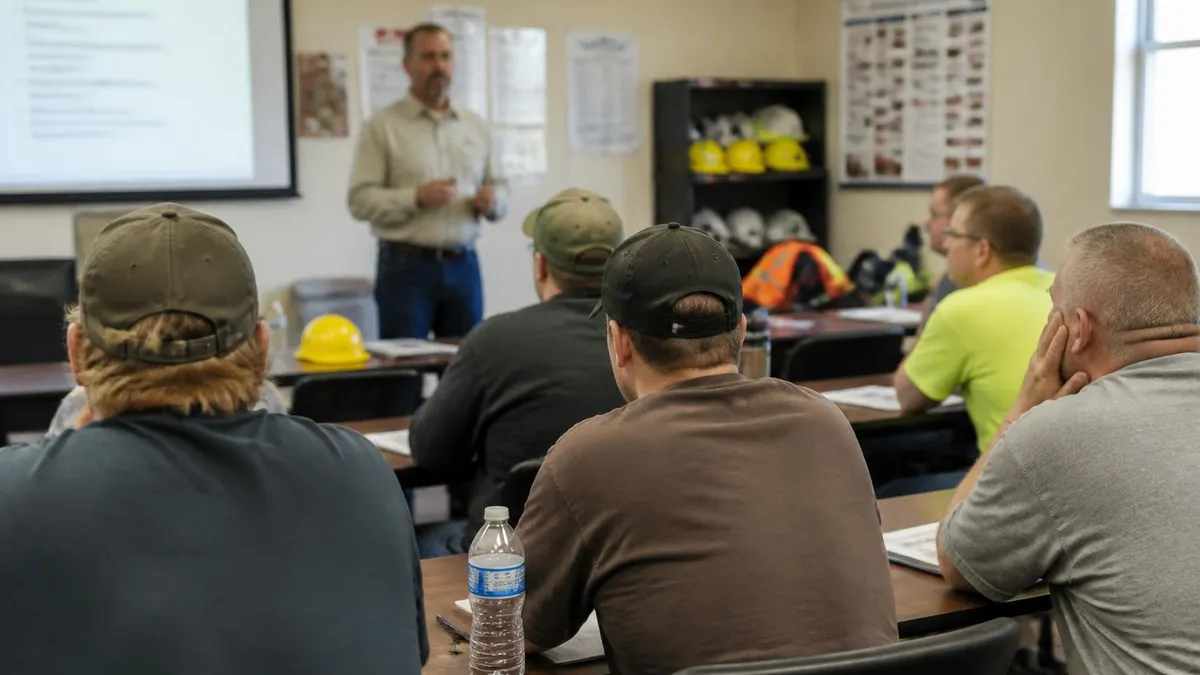
Several states require the 30-hour OSHA card as a condition of employment on specific project types — not just as a preference. New York, Nevada, Connecticut, and Massachusetts have enacted legislation or project-level requirements that make the 30-hour card mandatory for supervisors or all workers on public construction projects. Failing to hold the required card can result in removal from the worksite and may expose your employer to penalties. Always check state and local requirements before assuming the federal baseline applies to your project.
State-level OSHA requirements add an important layer of complexity that every worker and employer must understand when evaluating the 30-hour course. While federal OSHA sets minimum standards, 29 states and two territories operate their own OSHA-approved State Plans, which must be at least as effective as federal OSHA but can be — and often are — more stringent. California (Cal/OSHA), Michigan (MIOSHA), and Washington (WISHA) are among the most active State Plan states with training requirements that differ from the federal baseline.
New York State's requirements under Section 220-h of the New York Labor Law are among the most frequently cited examples of state-level 30-hour mandates. The law requires that construction workers on public works projects complete a 10-hour safety training course, while supervisors must complete the 30-hour course. This requirement has been expanded by many New York City agencies and large private developers to cover privately funded projects as well, making the 30-hour card effectively essential for supervisory work in the New York metropolitan area regardless of project funding source.
Nevada Revised Statutes require OSHA 10 or 30 training for workers on public works projects above a certain dollar threshold. The Nevada requirement applies to all workers, not just supervisors, making it broader in scope than the New York mandate. Workers on qualifying Nevada projects who cannot produce an OSHA 10 or 30 card must complete training within a specified period after hire — but bringing a current card to the job eliminates this onboarding delay entirely and makes you a more attractive candidate from day one.
Massachusetts has enacted project-specific requirements through its Department of Public Utilities and Department of Transportation for various infrastructure projects. The Massachusetts model often works through project specifications — owners and general contractors write OSHA training requirements directly into bid documents, making the 30-hour card a contractual obligation rather than a statutory one. Workers who do not monitor changing project specifications may be surprised to discover that a new contract requires credentials they do not currently hold, creating last-minute scrambles to find available course seats.
Even in states without formal mandates, large construction management firms, insurance carriers, and project owners frequently impose OSHA 30-hour requirements through their own prequalification standards. Risk management departments at major commercial insurers have been increasingly recommending OSHA 30 training as a condition of coverage or as a factor in experience modification rate (EMR) calculations. Companies with lower EMR scores — partially attributable to credentialed supervision — can bid more competitively because their insurance costs are lower.
Municipal and county governments across the country are also adopting OSHA training requirements for contractors seeking to work on public facilities. While these requirements vary widely in specificity, the trend is clearly toward higher baseline credential expectations. Workers who invest in the 30-hour course today are positioning themselves ahead of requirements that may become universal within the next decade, rather than scrambling to meet mandates after they take effect.
For international workers or recent immigrants entering the US construction or industrial workforce, the OSHA 30-hour course also provides a structured introduction to the American regulatory framework. Many foreign-trained safety professionals hold qualifications from their home countries that, while rigorous, do not map directly onto OSHA standards. Completing the 30-hour course alongside the US OSHA regulatory framework helps bridge that gap and provides a recognized credential that US employers can verify through the official DOL card system — something informal foreign credentials cannot offer.
Practical preparation can make a significant difference in how much you retain from the 30-hour OSHA course and how quickly you can apply that knowledge on the job. Before your first session, review the OSHA Quick Cards for the industry sector you are entering — these single-page reference guides cover the most common hazards and are freely available on OSHA's website. Familiarizing yourself with basic terminology such as competent person, qualified person, affected employee, and authorized employee will help you follow regulatory language during the course without getting lost in definitions.
During the course itself, take detailed notes organized by CFR section rather than just by topic name. For example, note that OSHA's fall protection standard for construction is at 29 CFR 1926.502, that the hazard communication standard is at 29 CFR 1910.1200, and that the lockout/tagout standard is at 29 CFR 1910.147. These citations are what inspectors reference, and knowing them allows you to look up the exact standard quickly when questions arise on the job. Many experienced safety professionals keep a printed or digital copy of the relevant CFR subparts accessible throughout the workday.
Engage actively with your trainer's real-world examples and contribute your own experiences to group discussions when appropriate. The 30-hour course is not a passive lecture series — it is designed for experienced workers who bring field knowledge to the classroom. Your experience with a specific type of equipment, chemical, or worksite configuration may illuminate a regulatory requirement in a way that benefits everyone in the room. Active participation also signals to your trainer that you are taking the credential seriously, which can be valuable if you ever need a professional reference.
After each module, take a few minutes to identify one or two immediate actions you will take when you return to your worksite. Will you conduct a fall hazard survey of your current project? Audit your chemical inventory against current SDS files? Check that all GFCI protection is in place for temporary power? Turning course content into concrete next-day actions accelerates real-world skill development and helps you demonstrate the value of your training to your employer from the moment you return.
For workers completing the course online, avoid the temptation to rush through modules during off-peak hours just to accumulate hours. OSHA's time-tracking requirements exist precisely to prevent this — but even where the software allows some acceleration, the return on investment from genuine engagement far exceeds the time saved by skimming. If a module covers a hazard you deal with daily, pause the video, pull up the actual CFR standard it references, and read a few paragraphs in the original regulatory text. This habit builds regulatory reading skills that will serve you throughout your career.
Study groups can be particularly effective for in-person cohorts. Workers from different trades and industries bring different perspectives on how the same OSHA standard applies in varied contexts. A carpenter and a pipefitter may both be in the same 30-hour construction course, but their on-the-job applications of fall protection or lockout/tagout will differ in important ways. Discussing these differences — and how each person would approach a specific compliance challenge — builds adaptive knowledge that rigid memorization cannot provide.
Finally, plan for the 6–8 week card processing delay proactively. If you are enrolling because a new job or project requires the 30-hour card, start the course early enough to allow for this processing time. Keep your temporary completion certificate from your trainer organized and accessible.
If your card has not arrived within 10 weeks of course completion, contact your trainer — they can follow up with OSHA's National Office. Do not wait passively: the DOL card is a physical document that can be delayed by address errors or data entry issues, and proactive follow-up is the fastest way to resolve problems.
OSHA Questions and Answers

OSHA Lightning Safety: Standards, Rules & Outdoor Worker Protection Guide for 2026

OSHA 510 Online Course: Construction Safety Training Requirements, Format, and Best Providers

Is OSHA a Government Agency? The Federal Body Behind US Workplace Safety

OSHA Compliance Without the Headache: Checklist, Consulting, and a 10-Step Action Plan

How to Get OSHA Certified: Complete 2026 Guide to Training, Cards & Compliance
About the Author

Certified Safety Professional & OSHA Compliance Expert
Indiana University of Pennsylvania Safety SciencesDr. William Foster holds a PhD in Safety Science from Indiana University of Pennsylvania and is a Certified Safety Professional (CSP) and Certified Hazardous Materials Manager. With 20 years of occupational health and safety management experience across construction, manufacturing, and chemical industries, he coaches safety professionals through OSHA certification, CSP, CHST, and safety management licensing programs.
Join the Discussion
Connect with other students preparing for this exam. Share tips, ask questions, and get advice from people who have been there.
View discussion (8 replies)