
OSHA Replacement Card: How to Get a Duplicate OSHA Card in 2026
Lost your OSHA card? Learn how to get an OSHA replacement card fast in 2026 — step-by-step process, costs & what to do. ✅

An OSHA replacement card is the official duplicate credential issued when a worker's original OSHA 10-Hour or OSHA 30-Hour training card has been lost, stolen, damaged, or simply worn beyond recognition. Because many employers, contractors, and job site supervisors require workers to physically present proof of OSHA training before they are permitted on site, losing that small wallet-sized card can have immediate, tangible consequences for your employment and earning potential. Knowing how to navigate the replacement process quickly is essential for any construction or general industry worker.
The OSHA training card itself is not issued directly by the federal Occupational Safety and Health Administration. Instead, it is produced by the Authorized Training Provider (ATP) that delivered your original OSHA Outreach training course — organizations such as the National Safety Council, local union training programs, or private safety training companies authorized through OSHA's Outreach Training Program. This means the replacement process runs through your trainer, not through OSHA's federal offices, which surprises many workers who contact OSHA directly and are redirected elsewhere.
Understanding who holds your records is the single most important step in the replacement process. OSHA Outreach training completion records are maintained in the OSHA Outreach Training Program database, which is managed by the OSHA Training Institute Education Centers (OTIECs) and the ATP network. Your issuing trainer is required by OSHA policy to retain student records for a minimum period, but those records are not always easy to retrieve years later, especially if the training company has closed or changed ownership since your original course.
The timeline for receiving a replacement card varies considerably depending on how quickly you can identify your original ATP, whether that provider is still active, and how efficiently their administrative systems work. Some providers process replacement requests within a few business days and mail a physical card promptly. Others may take several weeks, particularly if they need to verify your identity against paper-based historical records or escalate your request to a regional OSHA Training Institute Education Center for database lookup assistance.
Costs for obtaining a replacement OSHA card are generally modest — many providers charge between $10 and $25 for a reprint — but costs can rise if you need to involve an OTIEC, pay for expedited shipping, or ultimately discover that your original records cannot be located and you must retake the training. It is worth comparing fees across a few providers before committing, particularly if your original ATP is no longer operating and you must work through a secondary channel.
Workers who are concerned about osha replacement card procedures and broader OSHA compliance requirements should also familiarize themselves with the general scope of OSHA safety standards, because maintaining your credentials in good standing is only one part of demonstrating workplace safety competency to employers and inspectors. A current, valid OSHA card signals that you completed accredited outreach training and understand the fundamentals of federal workplace safety regulations.
This guide walks you through every step of the OSHA replacement card process — from identifying your original training provider, to submitting your request, to understanding what to do if your records have been lost entirely. We also cover employer verification options, digital alternatives, and how to avoid common mistakes that delay the replacement process unnecessarily.
- OSHA does not require a test or set a passing score to earn an OSHA 10-hour or 30-hour Outreach course completion card, but trainers may give a test to check learning. (U.S. Department of Labor, Occupational Safety and Health Administration (OSHA), Outreach Training Program)
- OSHA does not set one price for its 10-hour and 30-hour Outreach classes; the class fee is set by each independent OSHA-authorized trainer or online provider. (U.S. Department of Labor, Occupational Safety and Health Administration (OSHA), Outreach Training Program)
- An OSHA 10-hour or 30-hour card can be replaced only once per class and only within five years of the class; after that, the student has to retake the class to get a card. (U.S. Department of Labor, Occupational Safety and Health Administration (OSHA), Outreach Training Program)
- OSHA Outreach student course completion cards for Construction, General Industry, Maritime and Disaster Site do not have an expiration date, and Maritime cards stopped expiring as of April 1, 2019. (U.S. Department of Labor, Occupational Safety and Health Administration (OSHA), Outreach Training Program)
- Students do not renew OSHA Outreach cards, but OSHA-authorized Outreach trainers must complete an update course every four years to stay authorized. (U.S. Department of Labor, Occupational Safety and Health Administration (OSHA), Outreach Training Program)
- OSHA 10-hour and 30-hour Outreach classes are taught in person by OSHA-authorized trainers or online by OSHA-accepted independent providers; OSHA does not run online classes itself. (U.S. Department of Labor, Occupational Safety and Health Administration (OSHA), Outreach Training Program)
- The OSHA Outreach Training Program has no minimum age, but to get an OSHA card a student must complete the entire class, including all required topics and the minimum number of contact hours. (U.S. Department of Labor, Occupational Safety and Health Administration (OSHA), Outreach Training Program)
- After finishing an OSHA 10-hour or 30-hour Outreach class, students get their course completion card from the trainer or online provider, who has 90 days to issue it. (U.S. Department of Labor, Occupational Safety and Health Administration (OSHA), Outreach Training Program)
Facts verified Oct 16, 2026 against U.S. Department of Labor, Occupational Safety and Health Administration (OSHA), Outreach Training Program. Dates that have passed are removed automatically.
OSHA Exam at a Glance
Facts verified Oct 16, 2026 against U.S. Department of Labor, Occupational Safety and Health Administration (OSHA), Outreach Training Program. Dates that have passed are removed automatically.
Free OSHA Safety Certificate Study Tools
Interactive OSHA Safety Certificate resources on PracticeTestGeeks, free to start:
- Basic OSHA Practice 1 — 7 questions with answer explanations
- OSHA Safety Certificate flashcards — review key terms and concepts card by card
- OSHA Safety Certificate study guide — topic-by-topic overview of what the exam covers
- OSHA Safety Certificate cheat sheet — one-page printable summary for last-minute review
OSHA Replacement Card by the Numbers

How to Get Your OSHA Replacement Card: Step-by-Step Process
Locate Your Original Training Provider
Gather Your Personal Identification Details
Contact the ATP or OTIEC Directly
Submit a Formal Replacement Request
Receive and Verify Your Replacement Card
Finding your original Authorized Training Provider is often the most frustrating part of the OSHA replacement card process, particularly if several years have passed since you completed the course, or if you have changed employers multiple times since then. The single best starting point is your own personal records — look through old email inboxes for a completion certificate, a course confirmation, or a receipt. Many ATP systems send automated emails after course completion that include your student ID number, which greatly speeds up the record search.
If your personal records are incomplete, your next resource is your employer at the time of training. Many companies keep copies of employee training certificates in personnel files for exactly this kind of situation, and your former HR department may be able to tell you which training provider was contracted for the course. Union members should check with their local's training coordinator, as unions typically maintain detailed records of member training completions and often have established relationships with specific ATPs that simplify the retrieval process considerably.
The OSHA Training Institute Education Center network is a powerful backup option when the original ATP cannot be identified or is no longer operational. There are currently ten OTIECs across the United States, each serving a specific geographic region. These centers maintain access to the broader OSHA Outreach database and can conduct name-based and date-based searches to locate your historical training record. Processing times through OTIECs vary by region and current workload, but most can respond to inquiries within five to ten business days.
It is worth noting that OSHA does not operate a single publicly searchable national database where individual workers can look up their own card status. This centralization gap is a known limitation of the current Outreach Training Program infrastructure, and it is one reason why workers are strongly encouraged to photograph or scan their original OSHA card immediately upon receiving it and store that image in a secure cloud folder for future reference.
A clear photo of the front and back of your card captures the card number, trainer name, and issuing organization — the three most important identifiers for any future replacement request.
When searching for your original ATP, pay particular attention to the trainer's name and Trainer ID number printed on your original card, if you can access them anywhere. OSHA requires all Outreach trainers to be authorized by an OTIEC, and their credentials are recorded in the national trainer registry. If you have the trainer's name, an OTIEC staff member can often locate the ATP organization quickly, even if the business itself has since closed, merged, or rebranded under a different name.
Some workers discover through this research process that their original training was delivered by a company or individual who was not a properly authorized OSHA Outreach trainer at the time. In these unfortunate cases, the course completion may not be recorded in the official OSHA system at all, and the only remedy is to retake the training through a legitimate, currently authorized ATP. This is relatively rare but does occur, particularly with informal job site safety training that may have been marketed as OSHA-equivalent without actually being part of the official Outreach program.
For workers who completed OSHA training through online platforms — which became significantly more common after the COVID-19 pandemic expanded the availability of remote OSHA Outreach courses — the digital record-keeping is often more strong. Online platforms such as 360training, ClickSafety, and similar authorized online course providers typically send immediate email confirmations, issue digital wallet cards, and maintain searchable student portals that make retrieving records straightforward even years after course completion.
OSHA Card Verification: Digital, Physical & Employer Options
While OSHA does not currently offer a centralized public worker verification portal, many Authorized Training Providers and online course platforms maintain their own digital verification systems. These systems allow employers or job site supervisors to enter a card number or worker name and instantly confirm the validity of an OSHA 10 or OSHA 30 completion. Workers who completed training through a major online provider should log into their student account and download or screenshot their digital completion certificate as a backup to the physical card.
Several third-party credential management platforms have also emerged to fill this verification gap. Tools like Credly and similar digital credentialing services are increasingly being adopted by larger ATPs to issue verifiable digital badges alongside physical cards. A digital badge contains embedded metadata including the issuing organization, completion date, and credential type, and can be shared via a unique URL that any employer can click to verify authenticity in seconds — a significant improvement over presenting a physical wallet card that could theoretically be counterfeited.

Physical OSHA Card vs. Digital Credential: Pros and Cons
- +Universally recognized — every job site and employer knows what a physical OSHA card looks like
- +No technology required to present or inspect the credential
- +Issued immediately upon course completion in most cases
- +Accepted as legal proof of training completion under OSHA Outreach program rules
- +Easy to carry in a wallet alongside other standard ID documents
- +Well-understood replacement process through established ATP and OTIEC channels
- −Easy to lose, damage, or destroy in field conditions
- −No built-in authentication feature — physical cards can potentially be counterfeited
- −Replacement requires identifying original ATP, which can be time-consuming
- −No centralized OSHA lookup system for workers or employers to verify independently
- −Older cards may lack a unique card number, complicating record retrieval
- −Physical delivery of replacement can take one to three weeks depending on provider
Pros and Cons at a Glance
| Pros | Cons |
|---|---|
| Universally recognized — every job site and employer knows what a physical OSHA card looks like | Easy to lose, damage, or destroy in field conditions |
| No technology required to present or inspect the credential | No built-in authentication feature — physical cards can potentially be counterfeited |
| Issued immediately upon course completion in most cases | Replacement requires identifying original ATP, which can be time-consuming |
| Accepted as legal proof of training completion under OSHA Outreach program rules | No centralized OSHA lookup system for workers or employers to verify independently |
| Easy to carry in a wallet alongside other standard ID documents | Older cards may lack a unique card number, complicating record retrieval |
| Well-understood replacement process through established ATP and OTIEC channels | Physical delivery of replacement can take one to three weeks depending on provider |
OSHA Replacement Card Request Checklist
- ✓Locate any surviving documentation of your original training: receipts, emails, or certificates.
- ✓Write down your full legal name exactly as it appeared at the time of training.
- ✓Note the approximate course completion date and whether you took OSHA 10 or OSHA 30.
- ✓Identify the city and state where your training course was held.
- ✓Find the name of the Authorized Training Provider or trainer listed on your original card.
- ✓Prepare a copy of your current government-issued photo ID for identity verification.
- ✓Contact the original ATP directly by phone or email and request a replacement card.
- ✓If the ATP is unreachable, contact the nearest OSHA Training Institute Education Center (OTIEC).
- ✓Pay the replacement card fee (typically $10–$25) and save the payment confirmation.
- ✓Confirm your mailing address is correct before the card is dispatched.
One Minute of Prevention Saves Weeks of Replacement Headaches
The fastest way to handle a lost OSHA card is to never need a formal replacement at all. The moment you receive your OSHA training card, photograph both sides in good lighting and save the image to a secure cloud storage folder. This single step gives you immediate access to your card number, trainer ID, ATP name, and completion date — the exact information any replacement request will require — and can reduce a multi-week replacement process to a simple email inquiry.
When your original training records genuinely cannot be located — either because the ATP has closed, records were not properly retained, or there is simply no match in the OSHA Outreach database for your name and approximate training date — you are left with a difficult but manageable situation.
The first step in this scenario is to escalate your inquiry to the OTIEC for your region. OTIECs have access to historical records that individual ATPs may not maintain, and they can sometimes locate completion data through trainer submission logs even when the ATP itself is no longer operating as an active organization.
If the OTIEC search returns no results, request a formal written statement from the OTIEC confirming that no record was found. This document protects you by demonstrating that you made a good-faith effort to retrieve your credentials through official channels. Some employers, particularly in unionized trades, may accept this documentation in combination with other evidence of training — such as employer records, a former supervisor's written confirmation, or a dated training certificate — as provisional proof while you arrange to retake the course.
In most cases where records are definitively unrecoverable, the practical solution is to retake the OSHA Outreach training. This is not a punishment or a reflection of bad faith — it is simply a consequence of the current system's record-keeping limitations, which OSHA and the OTIEC network acknowledge as an ongoing challenge.
The good news is that OSHA 10-Hour courses are available online and can be completed in as little as one to two days, while OSHA 30-Hour courses typically require three to four days of online study spread across a week or two. Many providers offer competitive pricing, with OSHA 10 online courses often available for $60 to $80 and OSHA 30 online courses ranging from $150 to $200.
Workers who retake the training should also take the opportunity to update their knowledge of current OSHA standards. Federal workplace safety regulations are periodically updated, and the Outreach training curriculum is revised to reflect these changes. A worker who completed their original OSHA 10 training five or ten years ago may find that some material has been updated or expanded, particularly in areas such as silica dust exposure standards, electrical safety requirements, and fall protection regulations — all areas where OSHA has issued significant rule updates in recent years.
Some workers attempt to resolve lost-record situations by obtaining letters or affidavits from former employers or supervisors confirming that training was completed. While this documentation can be useful context in employment discussions, it is important to understand that employer letters do not constitute a replacement for an official OSHA Outreach training card and will not satisfy contractor or job site OSHA card verification requirements. The OSHA Outreach program is specifically designed to require completion through an authorized provider, and no informal documentation can substitute for that official credential.
Another avenue worth exploring is the training provider's insurance carrier or surety bond company. When an ATP closes, its business records — including student training records — may be transferred to a records management company, an acquiring organization, or held in storage by the original principals. Contacting former employees of a defunct ATP, checking state corporate records for business successors, or reaching out to the regional OTIEC that originally authorized the now-closed ATP can sometimes uncover a path to your records that is not immediately obvious.
Workers in the construction industry who hold other professional credentials — such as NCCER Core Curriculum certificates, competent person designations, or state-level safety certifications — should also check whether those issuing bodies have cross-referenced their OSHA training in their own records. Some comprehensive workforce credentialing programs independently verify and record OSHA training status as part of their credentialing process, and those records may serve as an additional documentation source during a replacement card dispute.
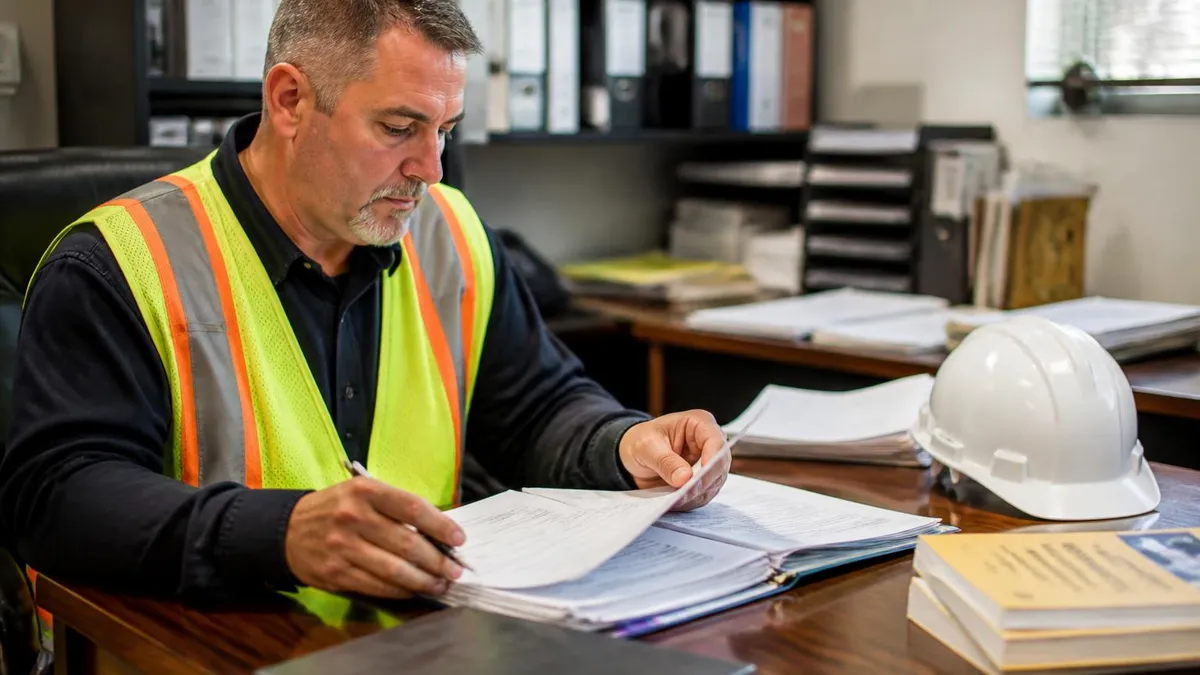
Contrary to a widespread misconception, OSHA 10 and OSHA 30 Outreach training cards issued through the official program do not have an expiration date printed on them, and OSHA does not require workers to periodically renew their Outreach training certification. However, many employers, general contractors, and project owners impose their own refresher training requirements — commonly every three to five years — as a condition of employment or site access. Always confirm your specific employer's policies before assuming your original card is sufficient for current job site requirements.
Avoiding common mistakes during the OSHA replacement card process can save you significant time, money, and frustration. The most frequent error workers make is contacting OSHA federal offices directly — either the national office in Washington, D.C., or a regional OSHA enforcement office — expecting those offices to have records of their individual training completion. OSHA's enforcement offices do not maintain Outreach training records; those records sit with the ATP and the OTIEC network. Contacting the wrong office typically results in a referral and a delay of several days before you are pointed in the right direction.
A second very common mistake is assuming that the training company that processed your employer's payment is necessarily the same entity as the Authorized Training Provider. Many employers purchase OSHA training through brokers, staffing companies, or online resellers who then subcontract the actual training delivery to an ATP. In these cases, the broker's name may appear on your receipt, but the trainer's name and the ATP's name — which appear on your actual card — are the identifiers you need to initiate a replacement request. Always work from the card, not from the payment receipt, when identifying who to contact.
Third, many workers underestimate how long postal delivery can add to the replacement timeline. Even after an ATP has processed your request and printed your replacement card, standard first-class mail within the United States can take three to seven business days to deliver. If your job site start date is imminent, request expedited processing and priority shipping at the time you submit your replacement request, and confirm whether the provider offers email confirmation or a digital PDF of your card as a temporary placeholder while the physical card is in transit.
Providing incorrect personal identification details is another frequent cause of replacement delays. If your legal name has changed since you completed your original training — due to marriage, divorce, or legal name change — you must provide documentation of both your current name and your name at the time of training. The ATP's records will reflect your original name, and submitting a request with only your current name may result in the search returning no results even when your records are intact and accessible in the system.
Workers sometimes also make the mistake of paying for a new OSHA training course before exhausting all options for retrieving their original records. Retaking the course is the correct final step, but it should genuinely be the last resort after contacting the original ATP, reaching out to the regional OTIEC, and checking any employer or union records that may document your original training. Jumping to retake the course prematurely costs both time and money that a systematic records search could have saved.
If you are an employer or HR professional managing OSHA compliance for a workforce, the best preventive measure is to maintain your own copy of each employee's OSHA card — both a physical copy in their personnel file and a scanned digital copy in your HR management system. This protects the company's compliance posture even when an individual worker loses their card, allows you to quickly answer verifier inquiries from general contractors, and gives you a complete training history for each worker that is accessible regardless of what happens to the original ATP's records over time.
Finally, be cautious of third-party websites that offer to issue OSHA cards for a fee without any verifiable connection to an OSHA-authorized training program. The internet contains numerous sites that sell counterfeit or unrecognized safety cards. A legitimate OSHA Outreach training card can only be issued by an individual or organization who holds current OSHA Outreach trainer authorization through an OTIEC. If a provider cannot name the OTIEC that authorized them or refuses to provide their OSHA Trainer ID number, that is a strong signal that their credentials are not genuine.
Practical preparation and proactive record management are the most effective long-term strategies for ensuring that an OSHA replacement card situation never derails your career. Start by creating a personal safety credentials folder — either a physical binder or a secure cloud directory — where you store scanned copies of every professional safety credential you hold: your OSHA card, competent person certifications, equipment operator licenses, first aid cards, and any state-specific safety credentials. Update this folder each time you complete a new training course or renew an existing credential.
Build the habit of recording the name and contact information of your ATP immediately after completing any OSHA training. This takes less than five minutes and can save hours of research later. Write the ATP's name, phone number, website, and your student ID number on the inside cover of your credentials folder, or save it to a note in your phone's cloud-synced notes application. This single record is the fastest path to a replacement card if yours is ever lost or damaged years down the line.
For workers who frequently move between job sites, projects, or employers — which describes the majority of people who hold OSHA Outreach training cards — consider laminating a color photocopy of your card as a working copy to present on site, while keeping the original card safely stored at home.
While a photocopy is not a substitute for the original card and should not be presented as such, having the photocopy readily available when your original is at home prevents the temptation to carry the original card daily in conditions where it could be damaged, lost, or left behind at a job site.
If you work in an industry or for an employer that requires periodic refresher training, synchronize your OSHA renewal schedule with any other recurring safety certifications you hold to reduce the number of training days you need to take off work each year. Many workers, for instance, can coordinate their OSHA refresher with their CPR/First Aid renewal or equipment-specific recertification, creating a concentrated training block that minimizes workplace disruption while keeping all credentials current simultaneously.
Sharing replacement card process information with your coworkers is a genuinely valuable contribution to your job site's safety culture. Many workers do not know that OSHA cards are issued by ATPs rather than by the federal agency, and discovering this only after losing a card can be deeply stressful, especially when a job start date is imminent. A brief conversation about record-keeping best practices during a toolbox talk or safety meeting could spare a colleague weeks of bureaucratic frustration at a critical moment in their career.
If you are preparing to take your OSHA 10 or OSHA 30 training for the first time — or if you are retaking it due to lost records — use the preparation period to study OSHA's general industry and construction standards thoroughly, not just the specific topics covered in the outreach curriculum. A strong foundational knowledge of OSHA regulations helps you on the job every single day, supports your ability to identify and report hazards, and positions you for advancement into safety-focused supervisory roles that require a deeper familiarity with the regulatory framework than the Outreach training itself demands.
Remember that your OSHA training card represents more than a compliance checkbox — it represents your personal commitment to understanding the rights and responsibilities that every American worker holds under the Occupational Safety and Health Act of 1970. Protecting that credential through careful record management, and knowing exactly how to recover it if it is ever lost, is simply an extension of the same professionalism and safety awareness that the training itself was designed to build in the first place.
Sample OSHA Safety Certificate Practice Questions
Try these questions from our free OSHA Safety Certificate practice tests. The correct answer and an explanation follow each question.
Under OSHA 29 CFR 1910.146, what is the definition of a permit-required confined space?
- A. A space large enough to enter, with limited entry/exit, and not designed for continuous occupancy, plus one or more serious hazard
- B. Any space that requires a ladder to enter
- C. Any underground vault or tank
- D. A space that requires two or more employees to access
Answer: A. A space large enough to enter, with limited entry/exit, and not designed for continuous occupancy, plus one or more serious hazard
OSHA defines a permit-required confined space as a space meeting all three size/entry criteria AND containing at least one serious hazard such as a hazardous atmosphere, engulfment risk, or converging walls.
An employer with 15 employees in a partially exempt low-hazard industry receives an OSHA citation. What recordkeeping obligation applies?
- A. They must still keep records of all work-related fatalities, hospitalizations, amputations, and losses of an eye
- B. They are fully exempt from all OSHA recordkeeping
- C. They only need to keep records if they have more than 20 employees
- D. They must maintain the full OSHA 300 Log regardless of exemption status
Answer: A. They must still keep records of all work-related fatalities, hospitalizations, amputations, and losses of an eye
Even partially exempt employers must report fatalities within 8 hours and hospitalizations, amputations, or eye losses within 24 hours.
Which element is OSHA specifically required to be included in an Emergency Action Plan?
- A. Procedures for reporting a fire or other emergency
- B. A list of all vendor phone numbers
- C. The company's annual budget
- D. Employee salary records
Answer: A. Procedures for reporting a fire or other emergency
Procedures for reporting a fire or other emergency are a mandatory EAP element.
According to OSHA 29 CFR 1910.303(g)(2), live parts of electric equipment operating at what minimum voltage must be guarded against accidental contact?
- A. 120 volts AC
- B. 30 volts AC or DC
- C. 50 volts AC or DC
- D. 240 volts AC
Answer: C. 50 volts AC or DC
OSHA standard 29 CFR 1910.303(g)(2)(i) explicitly states, 'live parts of electric equipment operating at 50 volts or more shall be guarded against accidental contact.' This rule applies to both AC and DC voltages.
OSHA Questions and Answers

OSHA Approved Safety Glasses: Complete 2026 Guide to ANSI Z87.1 Eye Protection Standards, Selection, and Workplace Compliance

OSHA Lightning Safety: Standards, Rules & Outdoor Worker Protection Guide for 2026

Is OSHA a Government Agency? The Federal Body Behind US Workplace Safety

OSHA 10 Test Answers: Complete Study Guide & Practice Questions for 2026

How Many Modules Are in OSHA 30? Complete Course Structure Breakdown for 2026
How this page was made: written with AI tools. Exam facts are checked against the official sources listed below. Not reviewed by a subject-matter expert. Editorial policy
Sources & references
Exam facts on this page (fees, format, dates, passing scores) are checked against these official sources; the date is our last check. Editorial policy
- osha.gov — Test delivery, eligibility, fees, passing score, renewal, retake policy, score validity, score release · verified Oct 2026