
Non Destructive Testing on Concrete: Complete Guide to Methods, Tools, and Applications
Non destructive testing on concrete explained — methods, tools, standards, and career tips. ✅ Learn GPR, ultrasonic, rebound hammer & more.

Non destructive testing on concrete is one of the most critical disciplines in modern structural engineering and infrastructure maintenance. Unlike traditional methods that require cutting or coring into a structure, NDT allows engineers and inspectors to evaluate the integrity, strength, and hidden defects of concrete elements without causing any damage. From bridges and highways to parking garages and high-rise buildings, concrete NDT techniques are applied across virtually every sector of the construction and civil engineering industry in the United States.
The need for reliable concrete NDT has grown dramatically over the past two decades as aging infrastructure demands more frequent and cost-effective assessment. The American Society for Testing and Materials (ASTM) and the American Concrete Institute (ACI) have both published extensive standards governing how these tests should be performed and interpreted. Inspectors who understand these standards and can apply multiple NDT methods are among the most sought-after professionals in the field today.
If you are preparing for a certification exam or exploring a career in this specialty, studying ndt on concrete through structured training programs gives you a decisive advantage. Certifications from bodies like ASNT (American Society for Nondestructive Testing) validate your competency and open doors to higher-paying positions. Understanding the physics behind each test method, not just the procedure, is what separates a Level II technician from a truly exceptional inspector.
Ground-penetrating radar, rebound hammer testing, ultrasonic pulse velocity, half-cell potential, and impact-echo are just a few of the techniques routinely used on concrete structures. Each method targets different types of defects or material properties: some reveal internal voids and delaminations, others estimate compressive strength, and still others locate corroding reinforcement bars deep within a slab. Experienced inspectors typically combine two or more techniques for a comprehensive evaluation.
Safety considerations are also central to concrete NDT work. Many test sites are active infrastructure — live traffic bridges, occupied parking structures, or operating industrial facilities. Technicians must follow OSHA guidelines, wear appropriate PPE, and coordinate closely with site managers before any field work begins. Understanding confined space entry, working-at-heights protocols, and radiological safety (for gamma-ray or X-ray methods) is essential for professionals working in the field.
The economic argument for concrete NDT is compelling. A single bridge deck rehabilitation project can cost millions of dollars. A thorough NDT survey conducted before rehabilitation planning can identify where damage is actually concentrated, allowing engineers to prioritize repairs and potentially save tens of thousands of dollars in unnecessary concrete removal. In many cases, early detection through routine NDT prevents catastrophic structural failures that would cost far more in emergency repairs, liability, and lost productivity.
This guide walks you through the most widely used non destructive testing methods on concrete, the standards that govern them, the equipment involved, and what you need to know if you are pursuing a career or certification in this specialty. Whether you are a student, a working technician looking to expand your skills, or an engineer evaluating which method suits a specific project, the information here will give you a solid foundation to build on.
Concrete NDT by the Numbers

Primary NDT Methods Used on Concrete Structures
Uses high-frequency electromagnetic waves to detect reinforcing bars, post-tension cables, voids, and delaminations within concrete. GPR is fast, non-invasive, and can scan large areas quickly, making it ideal for bridge decks and slabs-on-grade.
Measures surface hardness and provides an estimate of compressive strength. Quick and inexpensive, it is widely used for quality control during construction and for identifying areas of potential weakness on existing structures.
Transmits ultrasonic pulses through concrete and measures travel time to assess homogeneity, detect cracks, and estimate strength. Particularly effective for evaluating internal cracking and the quality of concrete in deep structural members.
Evaluates the probability of active corrosion in embedded steel reinforcement by measuring electrochemical potential difference. Essential for bridge deck inspections and parking structure assessments where chloride-induced corrosion is common.
Applies a mechanical impact to generate stress waves and analyzes reflections to locate internal defects such as voids, honeycombing, and delaminations. Particularly useful for evaluating post-tensioned concrete and thick slabs.
Ground-penetrating radar is arguably the most versatile tool in the concrete NDT toolkit. It works by emitting short pulses of microwave energy into the concrete surface and recording the signals that bounce back from interfaces between materials with different dielectric properties. Rebar, voids, and moisture-saturated zones all produce distinctive reflections that a trained technician can interpret using specialized software. Modern GPR systems can produce real-time three-dimensional images of what lies beneath a concrete surface, dramatically speeding up inspection workflows.
The rebound hammer — also called the Schmidt hammer — has been used on concrete structures since the 1950s. Despite its age, it remains one of the most practical tools in the field because it is portable, requires no power source, and delivers instant results. The device works by pressing a spring-loaded plunger against a concrete surface and measuring how far the plunger rebounds. Harder, higher-strength concrete rebounds more than weak or deteriorated material. Technicians take multiple readings across a grid pattern to produce a surface strength map, identifying zones that may warrant further investigation.
Ultrasonic pulse velocity testing is governed by ASTM C597, one of the most widely cited standards in concrete NDT. The method involves placing a transmitter and a receiver on opposite faces of a concrete element — or on the same face in indirect transmission mode — and measuring the time it takes for an ultrasonic pulse to travel through the material. Higher pulse velocities generally indicate denser, higher-quality concrete, while lower velocities suggest cracking, honeycombing, or moisture intrusion. UPV is frequently combined with the rebound hammer test for a two-parameter strength estimation.
Half-cell potential testing is specifically designed to assess the corrosion risk of steel reinforcement embedded in concrete. The method uses a copper-copper sulfate or silver-silver chloride reference electrode connected to a voltmeter, with the other terminal connected to the rebar through a drilled hole or an exposed bar end. As the electrode is moved across the concrete surface, the measured potential indicates whether active corrosion is likely, possible, or unlikely at each location. ASTM C876 provides the interpretation thresholds used by inspectors across the United States.
The impact-echo method is particularly powerful for detecting delaminations — horizontal separations within a concrete slab that can be invisible from the surface but extremely dangerous for structural integrity. A small steel ball or hammer strikes the surface, generating stress waves that travel through the concrete.
When these waves encounter a defect such as a void or crack, they reflect back to the surface where a receiver records the response. By analyzing the frequency spectrum of the received signal, a trained technician can determine the depth and extent of the defect. ASTM C1383 provides the standard test method for this technique.
Infrared thermography is another powerful tool for concrete inspection, particularly useful for detecting subsurface delaminations and moisture intrusion in bridge decks and building facades. The method relies on differences in thermal mass between intact concrete and air-filled delaminations. When the sun heats a concrete bridge deck during the day, delaminated areas warm up faster than surrounding intact concrete and appear as warm zones in an infrared image. Conversely, at night when the surface cools, delaminations appear as cooler zones. ASTM D4788 covers the use of thermography for detecting delaminations in asphalt and concrete overlays.
Radiographic testing using X-rays or gamma rays can also be applied to concrete, although it is less common due to safety concerns and logistical challenges. This method is typically reserved for situations where the precise location and condition of post-tension anchorages, voids in grouted ducts, or embedded objects must be confirmed with certainty. The technique requires clearing the area of personnel on both sides of the structure being tested, making it more disruptive than other NDT methods. Nevertheless, it provides unambiguous imaging of internal features that no other method can match in resolution.
Choosing the Right NDT Method for Concrete Inspections
Bridge deck inspections in the United States typically combine half-cell potential mapping, ground-penetrating radar, and infrared thermography. Half-cell testing identifies zones of active rebar corrosion driven by chloride intrusion from road de-icing salts, while GPR maps the depth and spacing of reinforcement and detects loss of concrete cover. Thermography is used in rapid-scan mode from a vehicle traveling at low speed, covering large deck areas in a single pass and flagging delaminated zones for closer examination.
When delaminations are suspected based on thermography results, impact-echo testing is used to confirm findings and measure delamination depth more precisely. Federal Highway Administration (FHWA) guidelines recommend combining at least two complementary NDT methods for bridge deck assessments to reduce the risk of false positives or missed defects. States like Florida, New York, and Minnesota have all incorporated multi-method NDT into their routine bridge maintenance programs, resulting in measurable improvements in rehabilitation targeting efficiency.

Advantages and Limitations of NDT on Concrete
- +No damage to the structure — testing can continue while the facility remains in service
- +Covers large surface areas quickly, especially with GPR and thermography scanning systems
- +Identifies hidden defects that visual inspection alone would miss entirely
- +Significantly reduces the number of destructive core samples needed, lowering project costs
- +Provides repeatable, documentable data that can be compared across inspection cycles over time
- +Multiple methods can be combined to cross-validate findings and increase confidence in results
- −Results require skilled interpretation — poorly trained technicians produce unreliable data
- −Concrete condition, moisture content, and aggregate type all affect test accuracy
- −Some methods (radiography) require site clearance and introduce radiation safety concerns
- −Equipment costs are high — GPR systems and impact-echo units can cost $30,000 or more
- −No single NDT method can definitively measure compressive strength without correlation testing
- −Access limitations on complex structures may prevent full coverage scanning
Concrete NDT Inspection Preparation Checklist
- ✓Review all available drawings, specifications, and prior inspection reports before mobilizing to site
- ✓Identify the specific defect types you are targeting and select methods accordingly
- ✓Calibrate all equipment per manufacturer specifications and applicable ASTM standards on the day of testing
- ✓Establish a reference grid system on the structure surface for accurate data location recording
- ✓Coordinate with the facility owner to restrict traffic or access during testing as required
- ✓Conduct a site safety assessment and complete a job hazard analysis before starting work
- ✓Perform trial measurements on a known-quality reference area to verify equipment performance
- ✓Document ambient temperature, humidity, and surface moisture conditions at the start of testing
- ✓Record all readings systematically and photograph any anomalies identified during scanning
- ✓Cross-validate critical findings using a second independent NDT method before reporting
One Method Is Rarely Enough
Every experienced concrete NDT inspector knows that no single test method tells the complete story. ASTM and ACI both recommend combining complementary methods — for example, pairing ground-penetrating radar with half-cell potential mapping on a bridge deck — to achieve reliable, actionable results. Inspectors who master at least three concrete NDT techniques are significantly more employable and command higher salaries than those who specialize in only one method.
Pursuing a career in concrete non destructive testing requires a combination of formal education, hands-on training, and professional certification. The American Society for Nondestructive Testing (ASNT) is the primary certification body in the United States, offering a tiered certification structure from Level I through Level III. Level I technicians perform tests under supervision; Level II technicians can independently conduct, interpret, and report results; Level III professionals develop procedures, train others, and hold overall responsibility for an NDT program.
ASNT certifications are method-specific, meaning you must earn certification separately for each NDT technique you wish to practice professionally. For concrete specialists, the most relevant methods include ultrasonic testing (UT), radiographic testing (RT), ground-penetrating radar (GPR), and acoustic emission testing (AE). Each requires a minimum number of documented work hours, passing a written examination, and in some cases a practical skills demonstration. The American Concrete Institute also offers the ACI Concrete Field Testing Technician certification, which covers the basics of fresh and hardened concrete testing including the rebound hammer.
Employer-based certification programs are another route into the field. Many large NDT service companies run their own internal certification programs that meet or exceed ASNT requirements. These programs often provide paid training, which is attractive for career changers entering the field without prior experience. After completing the internal program and logging the required work hours, technicians typically pursue formal ASNT certification to make their credentials portable across employers.
Salary data from the Bureau of Labor Statistics and industry surveys consistently shows that NDT technicians who specialize in concrete inspection earn above-average wages compared to generalist technicians. Bridge and infrastructure inspection roles often command premium pay due to the specialized skills and safety-critical nature of the work. In states with large infrastructure budgets — California, Texas, New York, Florida — concrete NDT specialists are in high demand, and experienced Level II technicians with GPR and half-cell potential expertise can earn $80,000 to $95,000 annually.
Continuing education is essential in this field because test methods and equipment evolve rapidly. Drone-mounted GPR systems, automated scanning rigs for bridge decks, and artificial intelligence-assisted data interpretation tools are all entering commercial use. Technicians who stay current with these developments through conferences, workshops, and additional certifications position themselves for supervisory and management roles as their careers advance. ASNT hosts an annual national conference that is one of the best venues for staying current with emerging methods and networking with other professionals.
Graduate-level education in civil engineering, materials science, or structural inspection can significantly accelerate career advancement in concrete NDT. Engineers with NDT certifications can move into project management, technical sales, or research and development roles. Universities including the University of Illinois at Urbana-Champaign and Georgia Tech have research groups dedicated to advancing concrete NDT methods, and some offer graduate courses or professional development programs in this area that are accessible to working technicians.
The long-term career outlook for concrete NDT professionals is strong. The Infrastructure Investment and Jobs Act signed into law in 2021 committed $110 billion specifically to roads and bridges, creating sustained demand for inspection and assessment services over the next decade and beyond. Climate change is also driving more frequent and severe deterioration of existing concrete infrastructure, meaning the backlog of structures needing assessment and repair will grow rather than shrink. For motivated individuals with strong technical aptitude and attention to detail, concrete NDT offers a rewarding and financially stable career path with genuine social impact.

ASNT Level II certification requires documented work experience that varies by method — ultrasonic testing, for example, requires a minimum of 400 hours of documented on-the-job experience before you can sit for the Level II exam. Hours accrued under Level I supervision count toward this total. Starting to document your hours from day one of employment is critical; many technicians discover too late that undocumented work hours cannot be credited toward certification eligibility.
The standards framework governing non destructive testing on concrete in the United States is extensive and well-developed. ASTM International has published more than a dozen standards specifically addressing concrete NDT, and these are regularly updated to reflect advances in equipment capability and interpretation methodology. Understanding which standard applies to which test method — and being able to cite it correctly in a test report — is a mark of professional competency that clients and employers look for in experienced technicians.
ASTM C805 covers the rebound hammer test, specifying hammer type, surface preparation requirements, the minimum number of readings per test area, and how to convert rebound numbers to estimated compressive strength using correlation curves. ASTM C597 governs ultrasonic pulse velocity testing and provides guidance on transducer frequency selection, coupling media, and interpretation of velocity measurements relative to concrete quality categories. These standards are available for purchase from ASTM directly, but many university libraries and employer training programs provide access to technicians during their certification preparation.
ACI 228 is the American Concrete Institute's comprehensive document on nondestructive test methods for the evaluation of concrete in structures. This two-part report (ACI 228.1R and ACI 228.2R) provides detailed guidance on method selection, test procedure, data interpretation, and combining multiple methods for improved reliability. Unlike ASTM standards, ACI documents are available free of charge from the ACI website, making them particularly accessible for students and entry-level technicians who are building their foundational knowledge.
The Federal Highway Administration has also published extensive guidance on concrete NDT for bridge inspection, including the FHWA NHI course materials on nondestructive evaluation for bridge inspection. State departments of transportation typically adopt these federal guidelines with minor modifications specific to local climate conditions, bridge types, and material characteristics. Technicians who work primarily on bridge projects should familiarize themselves with both the federal guidelines and the specific DOT specifications of the states where they work.
Quality assurance documentation is an increasingly important aspect of concrete NDT practice. Clients and regulatory agencies now routinely require that inspection reports include calibration records, technician certification documentation, equipment serial numbers, and chain-of-custody records for any samples collected. Digital reporting platforms that automatically capture this metadata and store it in a searchable database are becoming the industry standard, replacing the paper-based reporting systems that dominated the field as recently as ten years ago. Technicians comfortable with digital data collection tools — tablets, cloud-based reporting software, integrated GPS logging — are significantly more competitive in today's job market.
Environmental conditions have a significant effect on the reliability of concrete NDT results, and this is an area that is frequently tested on ASNT certification exams. Temperature extremes affect rebound hammer readings — cold concrete appears stronger than it actually is, while very hot surface temperatures produce artificially low rebound numbers. Moisture in concrete dramatically affects both UPV readings and GPR signal penetration depth. Rain on a concrete surface during half-cell potential testing can short-circuit the measurement and produce meaningless data. Experienced technicians always note environmental conditions in their reports and interpret results accordingly.
International standards are also relevant for technicians working on projects with foreign contractors or on structures built to international specifications. ISO 13822 covers the assessment of existing structures broadly, while EN 12504 is the European standard series for testing concrete in structures by cores, rebound hammer, pull-out force, and UPV. Understanding these standards is valuable for technicians working in global engineering firms or on projects funded by international development banks that require compliance with ISO or EN specifications in addition to US standards.
Practical success in concrete NDT depends on developing field judgment that goes beyond what any textbook or standard can fully convey. Experienced inspectors learn to recognize when conditions are ideal for testing and when they need to reschedule or modify their approach.
A GPR survey on a freshly poured slab, for instance, will produce dramatically different signal characteristics than the same scan on a fifty-year-old carbonated concrete bridge deck. Building a mental library of how different concrete conditions affect each test method takes years of fieldwork, but deliberately studying case studies and discussing findings with more experienced colleagues can significantly accelerate this learning process.
Equipment maintenance is a discipline that separates professional technicians from careless ones. GPR antennas are sensitive instruments that can be damaged by rough handling, and their calibration degrades over time. Rebound hammers require monthly calibration checks against a steel anvil, and the spring mechanism must be replaced after approximately 10,000 impacts. Half-cell electrodes need to be kept moist with appropriate electrolyte solution and checked for continuity before every survey. A technician who diligently maintains their equipment produces more consistent, reliable data and avoids the embarrassment of discovering mid-project that equipment malfunction has compromised weeks of data collection.
Data interpretation is the most intellectually demanding aspect of concrete NDT. A GPR scan may show hundreds of hyperbolic reflections that an automated system flags as potential anomalies, but a skilled technician can distinguish rebar from electrical conduit, post-tension sheathing from voids, and genuine delaminations from GPR signal artifacts caused by surface water. This interpretive skill is built through studying reference examples, attending manufacturer training courses, and reviewing your own past interpretations against ground-truth data obtained from subsequent coring or excavation.
Report writing is an underappreciated skill in the NDT profession. A technically excellent inspection is only as useful as the report that communicates its findings to the client. Clear, concise reports that present data in both tabular and graphical formats — contour maps, color-coded condition indices, annotated photographs — are far more actionable than dense blocks of raw numbers.
Clients range from experienced bridge engineers who want full technical detail to building owners with no engineering background who need a plain-language summary. Tailoring your report style to your audience is a mark of professionalism that leads to repeat business and strong professional references.
Staying engaged with the concrete NDT research community accelerates your professional development in ways that on-the-job experience alone cannot. Journals like NDT and E International, the Journal of Bridge Engineering, and ACI Materials Journal regularly publish new research on emerging test methods, improved interpretation algorithms, and case studies from complex inspection projects. Following these publications and attending conferences like the ASNT Annual Conference or the Transportation Research Board annual meeting keeps you aware of where the field is heading and positions you as a knowledgeable resource within your organization.
Mentorship matters enormously in concrete NDT. If you are early in your career, actively seek out senior technicians or engineers who are willing to review your field data and interpretation reports with you. The feedback you receive on your first fifty GPR scans or half-cell potential surveys will be more valuable than any classroom training. Many experienced inspectors are generous with their knowledge if you approach them with genuine curiosity and respect for their experience. Professional organizations like ASNT have formal mentorship programs that can connect you with a senior professional in your specific area of interest.
Ultimately, the most successful concrete NDT professionals are those who combine rigorous technical knowledge with strong communication skills, meticulous field habits, and a commitment to lifelong learning. The infrastructure challenges facing the United States over the next several decades are enormous, and the need for skilled, certified concrete NDT technicians will only grow. Whether you are just entering the field or looking to deepen your expertise, investing in your NDT education and certification is one of the most reliable career decisions you can make in the construction and engineering industry today.
NDT Questions and Answers
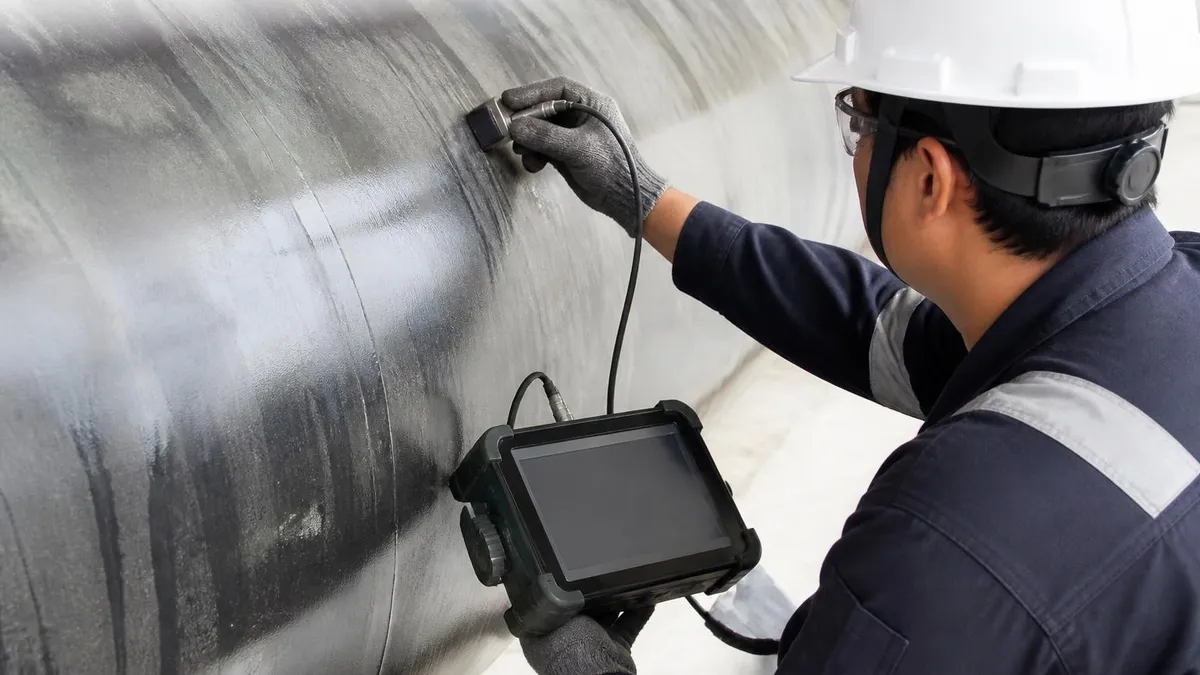
NDT Training: Complete Guide to Non-Destructive Testing Certification Courses in 2026

Crane NDT Inspection: Complete Guide to Non-Destructive Testing for Lifting Equipment

NDT Job Scope: Complete Guide to Non-Destructive Testing Career Opportunities in 2026

NDT Research: A Complete Guide to Non-Destructive Testing Science, Methods, and Career Opportunities
Non-Destructive Testing Courses: Complete Training Guide for NDT Certification in 2026
About the Author

Educational Psychologist & Academic Test Preparation Expert
Columbia University Teachers CollegeDr. Lisa Patel holds a Doctorate in Education from Columbia University Teachers College and has spent 17 years researching standardized test design and academic assessment. She has developed preparation programs for SAT, ACT, GRE, LSAT, UCAT, and numerous professional licensing exams, helping students of all backgrounds achieve their target scores.