
NDT Job Scope: Complete Guide to Non-Destructive Testing Career Opportunities in 2026 October
Explore NDT job scope, salaries, certifications & hiring industries. Your complete 2026 October career guide to non-destructive testing jobs. 🎯

Understanding the full ndt job scope is the first step toward building a rewarding career in non-destructive testing. NDT professionals inspect welds, pipelines, aircraft structures, bridges, and nuclear components without causing damage to the materials under evaluation. The field has expanded dramatically over the past decade, driven by tighter safety regulations, aging infrastructure, and rapid growth in aerospace and energy sectors. Whether you are a recent graduate or a seasoned tradesperson looking to pivot, NDT offers a clear, certification-driven pathway into well-paying technical roles.
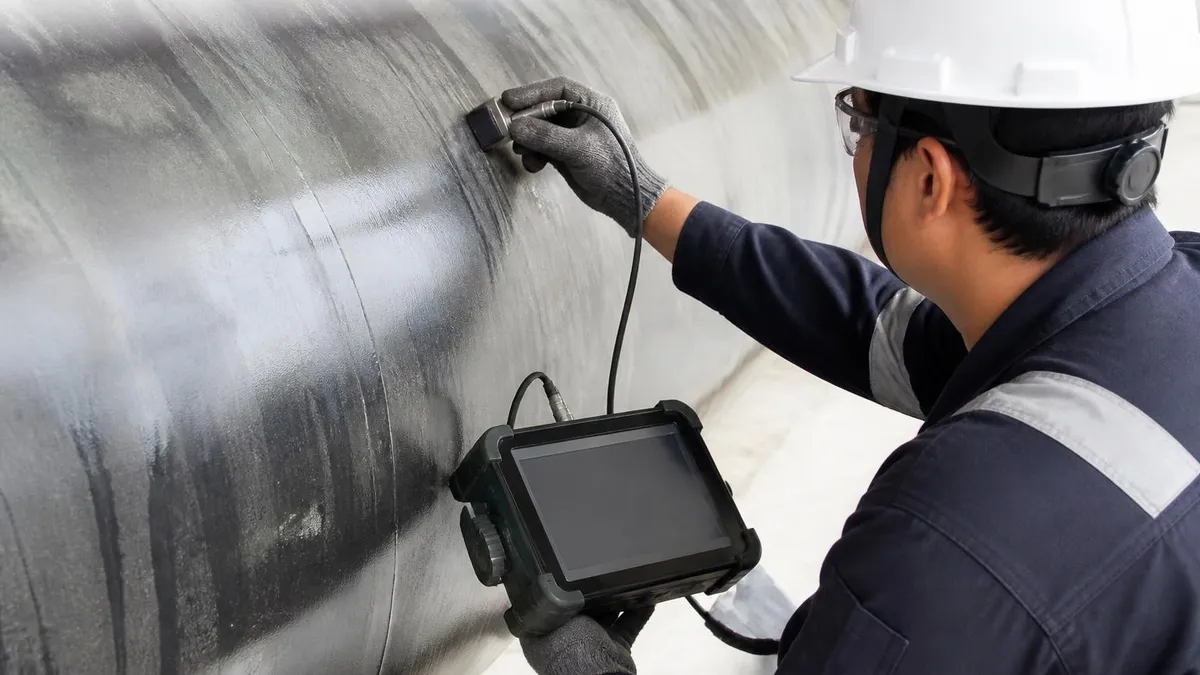
Non-destructive testing sits at the intersection of physics, materials science, and quality assurance. Technicians use methods such as ultrasonic testing, radiography, magnetic particle inspection, and liquid penetrant testing to detect cracks, voids, and discontinuities invisible to the naked eye. Each method requires a distinct skill set, and most employers expect candidates to hold at least one ASNT Level II certification before they can work independently. The breadth of techniques available means that NDT specialists can carve out highly specialized niches or develop multi-method expertise that commands premium salaries.
The U.S. Bureau of Labor Statistics groups NDT technicians under the broader category of quality control inspectors and technicians, but the reality is that NDT roles vary enormously by industry, seniority level, and geographic location. An offshore pipeline inspector in the Gulf of Mexico faces very different daily tasks compared to an aerospace NDT technician performing phased array ultrasonic scans on turbine blades in a climate-controlled facility. Both roles, however, share a common foundation: rigorous methodology, careful documentation, and an uncompromising commitment to safety.
Salary data from industry surveys conducted in 2024 and 2025 indicates that the median annual wage for an NDT Level II technician in the United States sits between $58,000 and $72,000, with Level III specialists and supervisors regularly earning $85,000 to $110,000 or more. Per-diem and travel premiums can add $15,000 to $25,000 per year for field-based roles. The combination of competitive pay, strong job security, and continuous learning opportunities makes NDT one of the most attractive trades for technically minded individuals who prefer hands-on work over a purely desk-based career.
Demand for qualified NDT personnel is projected to grow approximately 5 to 7 percent annually through 2030, outpacing many other technical trades. Key growth drivers include federally mandated pipeline integrity programs, the expansion of renewable energy infrastructure, increased commercial aerospace production, and ongoing maintenance requirements for the nation's bridges, dams, and rail networks. For professionals willing to pursue ongoing education and certification upgrades, the NDT job market offers genuine long-term stability that is difficult to replicate in more volatile sectors.
Getting started in NDT typically requires a combination of classroom instruction, hands-on laboratory training, and documented work hours in your chosen method. Most training programs take six months to two years to complete depending on the level of certification sought. Once certified, many technicians find that a structured ndt job search strategy — combining industry job boards, professional associations like ASNT, and targeted networking — significantly accelerates the hiring timeline and helps candidates land roles that match both their technical skills and lifestyle preferences.
This guide covers everything you need to know about the NDT job landscape in 2026: which industries hire the most technicians, what certification levels employers require, how compensation varies by method and geography, and practical strategies for standing out in a competitive applicant pool. Whether you are preparing for your first certification exam or looking to advance from Level II to Level III, the information below will help you make informed decisions at every stage of your career journey.
NDT Job Market by the Numbers

Top Industries Hiring NDT Technicians
Pipeline integrity programs, refinery turnarounds, and offshore platform inspections drive constant demand for certified UT and radiography technicians. Roles often include generous per-diem allowances and overtime pay for shutdown work.
Aircraft manufacturers and MRO facilities require technicians proficient in phased array UT, eddy current testing, and radiographic inspection of composite structures. Security clearances are often required for defense contracts.
Nuclear plants and fossil fuel power stations rely on NDT for reactor vessel inspection, turbine blade evaluation, and heat exchanger tube testing. Regulatory oversight ensures consistent long-term hiring demand.
Bridge inspection programs, highway overpasses, and dam integrity assessments create recurring opportunities for technicians skilled in ground-penetrating radar, acoustic emission testing, and visual inspection methods.
Quality control departments in automotive stamping plants and metal fabrication shops use magnetic particle, liquid penetrant, and ultrasonic methods to ensure finished parts meet specification before shipment.
Certification is the currency of the NDT job market. Almost every employer posting a technician role will specify a minimum certification level as a non-negotiable requirement. The American Society for Nondestructive Testing (ASNT) administers the most widely recognized U.S. credential system, organized into three progressive levels. Level I technicians perform specific calibrations and tests under supervision, following written procedures prepared by a Level III. Level II personnel can independently perform and interpret tests, write procedures, and train Level I technicians. Level III professionals develop, qualify, and approve procedures for an entire NDT program.
Earning an ASNT Level II certification in a single method — say, ultrasonic testing — typically requires a combination of formal training hours (at least 80 hours for the basic program), documented on-the-job experience (a minimum of 400 hours in the UT method), and a passing score on both written and practical examinations. The written exam tests knowledge of principles, equipment, and standards, while the practical exam assesses hands-on proficiency with calibration blocks, reference standards, and actual test specimens. Candidates who fail either portion must wait a specified period before retesting, making thorough preparation essential.
Beyond ASNT, several other certification bodies are relevant depending on the industry sector. The American Welding Society (AWS) Certified Welding Inspector credential is frequently paired with NDT qualifications for roles in fabrication and construction. In the aerospace sector, Nadcap accreditation requirements may dictate that technicians follow specific customer-approved procedures, adding another layer of documentation and auditing to the certification stack. The National Board of Boiler and Pressure Vessel Inspectors offers its own inspection credentials that align closely with NDT work on pressure equipment.
Many employers also distinguish between ASNT Central Certification Program (ACCP) credentials and employer-based certifications administered in accordance with ASNT Recommended Practice SNT-TC-1A. The ACCP credential is portable and industry-recognized, meaning it travels with the technician from employer to employer without requiring re-examination. Employer-based certifications, by contrast, are issued by the hiring company and may not be recognized by other employers, potentially requiring a new round of testing when a technician changes jobs. Understanding this distinction can significantly affect your long-term career flexibility.
For technicians targeting the nuclear power industry, the Personnel Certification in Nondestructive Examination (PCNDE) program administered through the Electric Power Research Institute (EPRI) adds yet another layer of specialized qualification. Nuclear NDT roles demand not only method certification but also thorough knowledge of ASME Code requirements, plant-specific procedures, and radiological safety protocols. The additional qualifications translate directly into higher compensation: nuclear NDT technicians routinely earn 20 to 30 percent more than their counterparts in general industrial settings.
International opportunities also hinge on certification. The ISO 9712 standard provides a globally recognized framework for NDT personnel qualification that is accepted throughout Europe, Asia, and the Middle East. Technicians who hold both ASNT Level II credentials and ISO 9712 certification dramatically expand their geographic employment options. With major infrastructure projects underway in the Middle East and Southeast Asia, dual-certified technicians with UT or TOFD (Time-of-Flight Diffraction) expertise are particularly sought after by international inspection companies offering tax-free salaries and housing allowances.
The path to Level III represents the pinnacle of NDT certification and typically requires several years of Level II field experience, completion of a comprehensive written examination covering NDT methods, materials, and codes, and demonstrated ability to develop and approve written procedures. Level III professionals often transition into supervisory, quality management, or consulting roles. Some operate as independent NDT consultants, serving multiple client companies simultaneously and earning day rates that reflect their expertise and the liability they assume when approving inspection procedures for safety-critical applications.
NDT Salary Ranges by Method and Region
Compensation in NDT varies significantly by inspection method due to differences in equipment complexity, training requirements, and market demand. Radiographic testing (RT) technicians, who must also manage radiation safety compliance, typically earn $62,000 to $80,000 annually. Phased array ultrasonic testing (PAUT) specialists command $70,000 to $95,000 given the advanced equipment and interpretation skills required. Eddy current testing professionals in aerospace applications frequently earn $75,000 or more, while magnetic particle and liquid penetrant technicians at Level II average $55,000 to $68,000.
Acoustic emission testing (AE) is an increasingly specialized field where experienced practitioners can earn $80,000 to $105,000 annually, particularly in petrochemical plant monitoring applications. Guided wave ultrasonic testing (GWUT) specialists who perform long-range pipeline screening are also among the higher earners, with experienced technicians commanding day rates of $450 to $650 in field environments. Diversifying your method portfolio by holding Level II in three or more techniques is one of the most reliable strategies for reaching the top salary quartile in the NDT profession.

Is an NDT Career Right for You?
- +Strong job security driven by mandatory safety inspection requirements across multiple industries
- +Competitive salaries with clear progression from Level I through Level III certification
- +Diverse work environments ranging from offshore platforms to aerospace manufacturing facilities
- +Relatively accessible entry path — most Level II programs take 6 to 18 months to complete
- +Travel premiums and per-diem allowances can significantly boost total annual compensation
- +Continuous learning opportunities as new methods like PAUT and digital radiography expand the field
- −Physical demands are high — fieldwork often involves confined spaces, extreme temperatures, and awkward positions
- −Radiation safety protocols add complexity and health monitoring requirements for RT technicians
- −Employer-based certifications may not transfer when changing companies, requiring re-examination
- −Remote or rotational schedules in oil and gas can strain personal relationships and work-life balance
- −Keeping certifications current requires ongoing continuing education and periodic re-examination
- −Entry-level wages can be modest until Level II credentials and field hours are accumulated
Pros and Cons at a Glance
| Pros | Cons |
|---|---|
| Strong job security driven by mandatory safety inspection requirements across multiple industries | Physical demands are high — fieldwork often involves confined spaces, extreme temperatures, and awkward positions |
| Competitive salaries with clear progression from Level I through Level III certification | Radiation safety protocols add complexity and health monitoring requirements for RT technicians |
| Diverse work environments ranging from offshore platforms to aerospace manufacturing facilities | Employer-based certifications may not transfer when changing companies, requiring re-examination |
| Travel premiums and per-diem allowances can significantly boost total annual compensation | Remote or rotational schedules in oil and gas can strain personal relationships and work-life balance |
| Continuous learning opportunities as new methods like PAUT and digital radiography expand the field | Keeping certifications current requires ongoing continuing education and periodic re-examination |
NDT Job Search Checklist: 10 Steps to Land Your Next Role
- ✓Confirm your ASNT certification documentation is current and includes all required training hours and supervisor sign-offs.
- ✓Build a method-specific resume that lists each NDT technique, certification level, applicable codes, and equipment you have operated.
- ✓Register on NDT-specific job boards such as NDT.net, ASNT Career Center, and industry-general platforms like Indeed and LinkedIn.
- ✓Join ASNT and your regional NDT section to access member job postings and networking events not listed publicly.
- ✓Request at least two professional references from supervisors who can speak to your hands-on inspection quality and safety record.
- ✓Research target companies by reviewing their Nadcap approvals, industry sectors, and client lists before applying.
- ✓Prepare for technical interviews by reviewing written procedure development, acceptance criteria, and code requirements for your primary method.
- ✓Obtain a valid TWIC card if targeting Gulf Coast offshore, refinery, or port facility roles — processing takes 6 to 8 weeks.
- ✓Verify your physical fitness for field roles, including color vision testing, since many methods require documented visual acuity.
- ✓Negotiate total compensation, not just base salary — confirm per-diem rates, travel reimbursement, and continuing education support before accepting an offer.
Multi-Method Certification Multiplies Your Market Value
NDT technicians who hold Level II certification in three or more methods earn on average 22 percent more than single-method peers with equivalent field experience. Combining high-demand methods such as PAUT, radiography, and magnetic particle testing positions you for supervisory roles and makes you highly attractive during plant outages when inspection companies need versatile personnel who can cover multiple inspection scopes simultaneously.
Advancing from NDT Level II to Level III is one of the most significant career transitions in the field, and it requires deliberate preparation over a period of several years. The ASNT Level III examination is notoriously rigorous — pass rates for first-time candidates hover around 50 to 60 percent depending on the method, and candidates who underestimate the breadth of knowledge required frequently find themselves retaking the exam multiple times.
Successful preparation demands not only deep expertise in your primary inspection method but also a thorough understanding of materials science, welding metallurgy, quality assurance systems, and relevant codes such as ASME, AWS D1.1, and API 1104.
The experiential requirements for Level III candidacy are substantial. ASNT SNT-TC-1A recommends a minimum of several years of progressive Level II experience before attempting the Level III examination, and many candidates have five to eight years of field work behind them before they feel genuinely prepared. During this accumulation phase, aspiring Level IIIs should actively seek opportunities to draft written procedures, participate in procedure qualification trials, and mentor Level I technicians. Each of these experiences builds the practical competency that the Level III examination presupposes and that employers expect when hiring a Level III professional.
Many technicians pursue the ACCP Professional Level III credential, which is widely considered the gold standard for portability and credibility. Unlike employer-based Level III certifications, the ACCP credential is administered by ASNT and recognized across virtually every major NDT employer in North America without requiring re-examination when changing jobs. The ACCP examination consists of a basic exam covering foundational NDT knowledge, a method exam specific to the chosen technique, and a practical examination component. Preparing for all three components simultaneously is a significant undertaking that most candidates spread across six to twelve months of structured study.
Specialized advanced methods are increasingly important for Level III professionals hoping to command top compensation. Phased array ultrasonic testing (PAUT) and total focusing method (TFM) imaging have become standard requirements for many pipeline and pressure vessel inspection programs.
Technicians who invest in formal PAUT training and add it to their Level III portfolio can typically command day rates 25 to 40 percent higher than conventional UT Level IIIs. Similarly, computed radiography (CR) and digital detector array (DDA) radiography skills are displacing film-based RT in many industrial settings, and Level IIIs who understand digital image quality requirements and artifact recognition are in particularly strong demand.
The transition to Level III often coincides with a shift from pure field work to a hybrid role that includes technical writing, client consulting, and quality system management. Many Level IIIs spend a portion of their time developing examination procedures, reviewing and approving inspection reports, conducting technician qualifications, and interfacing with engineering and regulatory personnel.
Strong written communication skills — the ability to write clear, technically precise procedures and reports — become as important as hands-on proficiency. Aspiring Level IIIs who recognize this shift early and work on their technical writing throughout their Level II years arrive at the transition in much better shape.
Professional development organizations offer targeted resources for technicians navigating the Level II to Level III pathway. ASNT hosts an annual conference and exhibition where Level III candidates can attend technical sessions, connect with certification coaches, and review practice examination materials. Many community colleges and NDT training schools offer Level III preparation courses that combine method review, procedure writing exercises, and mock examinations. Online study platforms have also expanded significantly in recent years, making it possible for field-based technicians on rotational schedules to fit meaningful exam preparation into their downtime between assignments.
Once you hold a Level III credential, career diversification becomes easier and more financially rewarding. Some Level IIIs move into quality management systems roles, pursuing additional credentials such as ASQ Certified Quality Engineer (CQE) or ISO 9001 Lead Auditor. Others transition into sales and applications engineering for NDT equipment manufacturers, using their technical credibility to guide customer purchasing decisions. A smaller but growing number of Level IIIs establish independent consulting practices, serving multiple clients on a project basis and achieving the combination of high earnings and schedule flexibility that represents the pinnacle of the NDT career arc.

ASNT certifications issued under employer-based SNT-TC-1A programs expire if you leave that employer, and ACCP credentials require renewal every five years. Candidates who discover their credentials have lapsed after submitting job applications frequently lose offer opportunities because background verification catches the gap. Audit your certification status at least six months before beginning a job search to allow time for renewal examinations or continuing education documentation if needed.
Emerging technologies are reshaping the NDT job landscape in ways that create entirely new career specializations. Automated and robotic inspection systems — including crawler-mounted ultrasonic probes for pipeline girth welds and drone-mounted sensors for bridge deck and tower inspection — are not replacing human NDT technicians but are dramatically changing what those technicians do on a daily basis.
The operator of a robotic inspection system must understand both the underlying NDT physics and the software interfaces that control the equipment, process the data, and generate inspection reports. This convergence of traditional NDT expertise and digital technology fluency is creating a new category of premium-compensated roles.
Digital radiography has largely supplanted film-based X-ray and gamma radiography in most industrial settings over the past decade, and the transition continues to accelerate. Computed radiography using photostimulable phosphor plates and real-time digital detector array systems both require technicians who can evaluate image quality indicators, recognize digital artifacts, and manage the data storage and retrieval systems that accompany paperless inspection programs. Organizations that have embraced digital RT report significant reductions in cycle time and consumable costs, and they actively recruit technicians who can operate these systems without a steep learning curve.
The renewable energy sector represents one of the fastest-growing sources of NDT employment in the current decade. Wind turbine blade inspection — using phased array UT, thermography, and visual methods — is a growing specialty driven by the rapid expansion of onshore and offshore wind farms across the United States.
Solar farm structural inspection, hydrogen storage tank integrity assessment, and battery manufacturing quality control are additional emerging application areas that are beginning to appear on NDT job postings with increasing frequency. Technicians who develop expertise in these sectors now are positioning themselves ahead of what promises to be a major hiring wave over the next five to ten years.
Artificial intelligence and machine learning are beginning to influence NDT data interpretation, particularly in high-volume industrial scanning applications. Some companies are deploying AI-assisted defect detection algorithms that flag regions of interest in ultrasonic C-scan data or radiographic images for human review.
Rather than eliminating the need for certified technicians, these tools are shifting the technician's role toward data oversight, exception management, and quality validation of the AI outputs. Technicians who understand the limitations and failure modes of AI interpretation tools — and who can critically evaluate AI-flagged indications against established acceptance criteria — will command a significant knowledge premium as adoption of these systems grows.
The infrastructure investment landscape in the United States also supports a positive long-term outlook for NDT employment. Federal programs targeting bridge rehabilitation, water system upgrades, and rail network modernization all generate inspection requirements that NDT technicians are uniquely positioned to fulfill. The Infrastructure Investment and Jobs Act passed in 2021 allocated over $550 billion for infrastructure projects, many of which include mandatory inspection and quality assurance provisions. State-level transportation agencies and private contractors executing these projects are increasingly seeking certified NDT personnel, creating a durable demand signal that should support hiring for years to come.
International career pathways remain a compelling option for experienced U.S. NDT technicians willing to work abroad. The Middle East continues to invest heavily in petrochemical and LNG infrastructure, and inspection companies operating in Qatar, Saudi Arabia, and the UAE consistently recruit experienced Level II and Level III technicians from the United States and Canada.
These roles typically offer tax-free salaries, housing allowances, and annual flight benefits that can make the total compensation package substantially more attractive than equivalent domestic positions. ISO 9712 dual certification significantly simplifies the qualification process for international assignments and is worth pursuing if global career mobility is a priority.
For those at the beginning of their careers, the most important immediate step is selecting a training program that provides both quality classroom instruction and meaningful hands-on laboratory experience. Look for programs accredited by ASNT or affiliated with community college systems that have established relationships with local industrial employers. Many programs include job placement assistance and externship arrangements that can convert directly into full-time employment offers upon certification. Taking the time now to invest in a thorough, well-structured training foundation will pay compounding dividends throughout what can be a long and genuinely fulfilling professional career in non-destructive testing.
Practical job search strategy matters as much as technical credentials when competing for desirable NDT positions. The most effective candidates approach their search systematically, treating it with the same methodical discipline they apply to an inspection assignment. Start by building a skills matrix that maps each of your certifications to the specific industries, codes, equipment, and standards where you have documented experience. This matrix becomes the backbone of your resume and allows hiring managers — many of whom are themselves Level IIIs — to quickly assess your fit for the role without having to parse dense paragraphs of narrative text.
Networking within the NDT community accelerates job searches considerably. ASNT section meetings, which take place in most major industrial cities on a monthly basis, bring together working technicians, inspection company managers, and equipment vendors in an informal setting where employment conversations happen naturally.
Attending even three or four section meetings per year puts you in front of decision-makers who are far more likely to hire someone they have met in person than a cold applicant from an online job board. Volunteering to present a technical paper or lead a hands-on demonstration at a section meeting raises your profile even further and signals the kind of initiative that employers value in candidates for senior roles.
Online professional presence has become increasingly important in the NDT hiring landscape. A complete LinkedIn profile that lists your certifications, method specializations, industry sectors, and specific equipment experience makes you discoverable by the growing number of NDT recruiters who use the platform as their primary sourcing tool.
Include the specific certification numbers and expiration dates for your ASNT credentials — recruiters have learned to look for this detail as a signal that a candidate's listed qualifications are genuine and current. Connecting with professionals at target companies before an opening is posted gives you a warm introduction advantage when the role does become available.
Staffing agencies that specialize in technical and industrial trades maintain active NDT job pipelines that never appear on public job boards. Companies like Acuren, TEAM Industrial, and Mistras Group — the largest NDT inspection service providers in North America — recruit continuously to staff plant turnarounds, shutdown inspections, and ongoing maintenance contracts.
Registering your availability and credentials with these companies' internal talent pools ensures that you receive calls when urgent project needs arise. Many long-term NDT careers begin with short-term contract assignments that transition into permanent positions once both the technician and the employer have had the opportunity to evaluate the working relationship.
Resume tailoring is an often overlooked but high-impact element of the NDT job search. Generic resumes that list all your experience without customizing the emphasis for the specific role you are applying for perform significantly worse in applicant tracking systems and human review alike. For an aerospace NDT role, lead with your composite inspection experience, Nadcap familiarity, and any Boeing or Airbus customer specification exposure.
For an oil and gas pipeline role, emphasize your PAUT or TOFD capabilities, API code knowledge, and offshore or remote field experience. A five-minute investment in tailoring the first third of your resume to each specific application can meaningfully improve your callback rate.
Salary negotiation is a skill that many technically oriented professionals underdevelop. Before entering any compensation discussion, research current market rates using ASNT salary survey data, Glassdoor reviews for the specific company, and conversations with peers in similar roles.
Know your walk-away number, your target number, and the specific value-adds — multi-method certification, specialized equipment proficiency, industry-specific code knowledge — that justify positioning above the midpoint of the salary band. Employers negotiating with a well-prepared candidate who can articulate their market value concretely will typically meet you closer to your target than employers negotiating with a candidate who accepts the first offer without discussion.
Finally, consider the total compensation package holistically rather than fixating on base salary alone. Per-diem rates, overtime eligibility, health insurance quality, retirement matching, continuing education reimbursement, and equipment allowances can add substantial value beyond the base wage. A position that pays $3,000 less per year in base salary but provides $8,000 in annual training reimbursement and covers the full cost of your next ASNT examination and study materials is objectively more valuable for a technician who is actively building credentials. Evaluating the complete package with a clear-eyed financial lens is one of the hallmarks of a strategically minded NDT professional.
Sample NDT - Non-Destructive Testing Practice Questions
Try these questions from our free NDT - Non-Destructive Testing practice tests. The correct answer and an explanation follow each question.
Which leak testing technique would be most appropriate for verifying the integrity of a spacecraft fuel tank before launch?
- A. Soap bubble test at ambient pressure
- B. Helium mass spectrometer leak testing to detect micro-leaks
- C. Hydrostatic testing with water fill
- D. Visual inspection only
Answer: B. Helium mass spectrometer leak testing to detect micro-leaks
The extreme sensitivity of helium mass spectrometer testing makes it the preferred method for critical aerospace applications where micro-leaks could be catastrophic.
Half-wave DC (HWDC) is preferred over full-wave DC for which specific reason in wet fluorescent magnetic particle testing?
- A. HWDC generates less heat in the part
- B. HWDC provides a pulsating field that improves particle mobility and sensitivity
- C. HWDC is safer for the operator
- D. HWDC allows longer inspection times between current applications
Answer: B. HWDC provides a pulsating field that improves particle mobility and sensitivity
The pulsating nature of HWDC creates a slight vibration in the magnetic particles, improving their mobility and migration to discontinuity sites, which enhances sensitivity especially for subsurface flaws.
In eddy current array (ECA) testing, what advantage does it offer over single-element scanning?
- A. It eliminates the need for couplant
- B. It provides full-volume coverage without mechanical scanning
- C. It scans a wider area in fewer passes with real-time C-scan imaging
- D. It works on ferromagnetic materials without saturation
Answer: C. It scans a wider area in fewer passes with real-time C-scan imaging
ECA probes contain multiple coil elements that are multiplexed electronically, covering a wider swath and producing C-scan images without the need for raster scanning.
In vacuum leak testing, a helium sniffer probe is used to detect leaks by:
- A. Applying vacuum inside the part while sniffing outside for helium escaping inward
- B. Pressurizing the part with helium while sniffing the exterior for leaking helium
- C. Immersing the part in helium liquid and observing bubbles
- D. Measuring the change in vacuum level inside the detector
Answer: B. Pressurizing the part with helium while sniffing the exterior for leaking helium
In the sniffer (pressurization) method, the part is filled with helium under pressure and the exterior is scanned with a sniffer probe to detect escaping helium.
Take the full NDT - Non-Destructive Testing practice test
NDT Questions and Answers
NDT Training: Complete Guide to Non-Destructive Testing Certification Courses in 2026

Crane NDT Inspection: Complete Guide to Non-Destructive Testing for Lifting Equipment

NDT Research: A Complete Guide to Non-Destructive Testing Science, Methods, and Career Opportunities
Non-Destructive Testing Courses: Complete Training Guide for NDT Certification in 2026

NDT Aerospace: Complete Guide to Non-Destructive Testing in Aviation and Aerospace Industries
About the Author

Educational Psychologist & Academic Test Preparation Expert
Columbia University Teachers CollegeDr. Lisa Patel holds a Doctorate in Education from Columbia University Teachers College and has spent 17 years researching standardized test design and academic assessment. She has developed preparation programs for SAT, ACT, GRE, LSAT, UCAT, and numerous professional licensing exams, helping students of all backgrounds achieve their target scores.