
NDT Training Program: Complete Guide to Requirements, Levels, and Certification in 2026 October
NDT training program guide: levels, costs, top methods & tips to pass certification. 🎯 Everything US technicians need in 2026 October.

An ndt training program is the structured path every aspiring Non-Destructive Testing technician must complete before stepping onto a plant floor, pipeline right-of-way, or aircraft hangar. These programs combine classroom theory, hands-on technique practice, and formal examinations to verify that a candidate can locate and characterize flaws without damaging the component being inspected. The American Society for Nondestructive Testing (ASNT) sets the most widely recognized standards in the United States, and nearly every employer, certification body, and government agency references ASNT SNT-TC-1A or CP-189 when evaluating technician qualifications.
Choosing the right program requires understanding how NDT training is organized. The industry divides competency into three qualification levels — Level I, Level II, and Level III — each with progressively higher training hour requirements, broader theoretical knowledge, and greater professional responsibility. A Level I technician performs specific calibrations and tests under close supervision, while a Level II technician interprets results and writes procedures. A Level III technician designs and oversees the entire program, trains others, and holds final technical authority. Skipping levels is not permitted; you must accumulate the documented hours and experience for each tier before advancing.
The specific NDT method you train in also shapes your program significantly. Common methods include ultrasonic testing (UT), radiographic testing (RT), magnetic particle testing (MT), liquid penetrant testing (PT), visual testing (VT), and eddy current testing (ET). Each method has its own physics, equipment, procedural nuances, and practical applications. Many employers hire generalists who qualify in two or three methods, while aerospace and nuclear sectors often demand deep specialization. Understanding the job market in your target industry before enrolling in a program can save months of retraining later.
Industry-specific codes add another layer to training requirements. The aerospace sector follows NAS 410 / EN 4179, the nuclear industry references ASME and NRC requirements, and pipeline work often falls under API standards. These codes may specify minimum training hours that exceed ASNT minimums or require additional oral examinations. If you intend to work in one of these sectors, verify that your chosen training provider explicitly addresses the applicable code and that the program's documented training records will satisfy employer audits.
Online NDT training has grown substantially since 2020, with providers such as the Olympus NDT Academy, the American Welding Society, and various community college programs offering blended formats. Pure online instruction can satisfy theory and classroom hour requirements, but hands-on practical training must be completed in person. Reputable hybrid programs ship loan kits of actual NDT equipment to students or arrange lab sessions at regional facilities. Be cautious of providers that claim to deliver all required hours entirely online, as most certification schemes explicitly require documented practical hours under an experienced supervisor.
Costs vary widely depending on provider, method, and level. A single-method Level I and II combined course at a private training center typically runs $1,500–$3,500 in tuition, not counting textbooks, equipment, or examination fees. Community college programs can cost less but may run on academic schedules that stretch training over a full semester. Employer-sponsored programs are the most cost-effective route if you can secure an entry-level inspection position before completing full certification, since many companies pay all training and examination expenses in exchange for a service commitment.
Preparation strategy matters as much as raw seat time. Technicians who review method-specific theory consistently throughout training — rather than cramming before a written exam — retain knowledge longer and perform better on the practical portions of certification examinations. Using practice question banks aligned to ASNT Level II exam outlines helps identify weak areas weeks before the actual test, giving you time to address gaps rather than discovering them at the exam center. The sections below walk through every major aspect of NDT training programs so you can plan your path with confidence.
NDT Training Programs by the Numbers

NDT Training Program Study Schedule
- ▸Read ASNT Level II Study Guide introduction chapters
- ▸Review SNT-TC-1A training hour requirements for your chosen method
- ▸Complete a method selection assessment based on target industry
- ▸Begin a training log to document classroom and practical hours
- ▸Study wave propagation, sound velocity, and attenuation (UT focus)
- ▸Review electromagnetic principles for ET and MT methods
- ▸Take timed practice quizzes on method theory
- ▸Draft flashcards for key equations and code references
- ▸Practice equipment setup and calibration using reference blocks
- ▸Document all calibration steps in your training log
- ▸Review applicable code tables for acceptance/rejection criteria
- ▸Complete at least 20 supervised practical inspection exercises
- ▸Interpret 30+ practice discontinuity specimens or simulated scans
- ▸Complete two full-length ASNT Level II mock written exams
- ▸Review all incorrectly answered questions with training supervisor
- ▸Confirm all training hour documentation is signed and ready for submission
Selecting the right NDT training program is one of the most consequential decisions you will make in your inspection career, and the criteria go well beyond tuition cost. The most important factor is whether the provider's training records and program documentation will satisfy your target employer's written practice, which is the company-specific document that governs how technicians are qualified, trained, and certified.
Every reputable employer has a written practice aligned to SNT-TC-1A or CP-189, and some have additional requirements layered on top. Ask any prospective training provider directly whether their documentation package has been accepted by major employers in your sector.
Instructor credentials are the second critical factor. An ideal instructor holds ASNT NDT Level III certification in the method being taught and has recent field experience — ideally within the last five years — in the industry where you plan to work.
Aerospace NDT and pipeline NDT look very different in practice even when the underlying physics are the same, and an instructor who has only ever worked in one sector may provide an incomplete picture of the field applications you will encounter. Ask for instructor resumes or LinkedIn profiles before enrolling, and do not be shy about requesting references from recent graduates who now work in your target industry.
Accreditation and affiliations signal quality but are not a substitute for due diligence. Look for providers affiliated with ASNT, the American Welding Society, or recognized community college systems. The ASNT Training Program Affiliate (TPA) designation means the provider has submitted their program to a formal peer review process. Some states also have licensing requirements for NDT providers, particularly in nuclear and pressure vessel inspection work, so verify local regulations. International applicants and US technicians pursuing aerospace work in MRO environments should additionally check whether the program covers EN 4179 / NAS 410 requirements alongside ASNT standards.
Scheduling flexibility is a practical reality for working adults. Many successful NDT technicians complete their Level I and II qualifications while already employed in adjacent trades such as welding, pipefitting, or radiography. Evening and weekend cohorts, self-paced online theory modules, and intensive two-week boot camp formats all exist in the market. The key constraint is the practical training component: ASNT SNT-TC-1A specifies that practical experience must be acquired under the direct supervision of a qualified Level II or Level III technician, so purely asynchronous programs simply cannot satisfy this requirement regardless of how the marketing materials are framed.
Geographic access to lab facilities matters more than many students initially realize. Some providers maintain fully equipped NDT training labs with a wide range of reference specimens, calibration blocks, and radiographic vaults. Others partner with regional inspection companies to arrange practical hours, which can mean scheduling headaches and inconsistent specimen availability. A training center with its own full-scale lab is almost always preferable for Level II candidates because you can repeat technique practice as many times as needed without worrying about lab availability or travel costs. Ask for a virtual tour or visit in person before committing.
Class size affects the quality of practical instruction in profound ways. A group of 12 or fewer students per instructor is the informal industry standard for hands-on technique sessions. Larger classes can work for lecture-based theory instruction but become problematic when students need individual coaching on probe manipulation, signal interpretation, or radiograph evaluation. If a provider advertises class sizes of 20 or more for practical NDT training, ask how the instructor-to-student ratio is maintained during hands-on sessions, whether additional assistant instructors are present, and how much individual practice time each student receives on each technique.
Finally, evaluate the post-training support offered by each provider. The best programs maintain alumni networks, offer refresher courses before major exams, and provide access to updated study materials as code editions change. ASNT updates its study guides periodically, and the Level III Body of Knowledge is revised with each new examination cycle.
A provider that sold you an outdated study guide and then disappeared is a liability, not a partner in your career development. Look for providers who offer at least a one-year support period that includes access to the latest edition of all course materials and one free re-sit of any written practice exam.
NDT Methods: Training Requirements by Discipline
Ultrasonic testing is one of the most technically demanding NDT methods and typically requires 40 classroom hours and 400 practical hours at Level II under ASNT SNT-TC-1A. UT technicians must understand pulse-echo and through-transmission modes, A-scan, B-scan, and C-scan displays, sound beam characteristics, and the effects of material grain structure on signal quality. Phased array UT (PAUT) and time-of-flight diffraction (TOFD) are advanced variants now in high demand in pipeline and power generation sectors.
Training programs that cover both conventional UT and PAUT are increasingly valuable in the job market, though they add approximately 24–40 additional hours of coursework. Examination preparation should emphasize calibration procedures using reference blocks (IIW, DSC, and distance-amplitude correction), velocity calculations, and near-surface resolution limitations. Candidates who practice on actual specimens with known flaw depths and orientations before their practical exam consistently outperform those who only review theoretical material from textbooks.

Is an NDT Training Program Worth It? Pros and Cons
- +Strong median salary of $64K with clear advancement to $80K+ at Level III
- +Credentials are nationally portable — ASNT certifications recognized across all 50 states
- +Growing demand in aerospace, oil and gas, infrastructure, and nuclear sectors
- +Multiple entry paths including employer sponsorship, community college, and private centers
- +Stackable certifications — add methods over time to increase employability and pay
- +Practical, hands-on work appeals to technicians who prefer field assignments over desk jobs
- −Upfront costs of $1,500–$3,500 per method plus exam fees can be a barrier
- −Radiation worker licensing for RT adds regulatory complexity and state-by-state variation
- −Practical hour requirements mean purely online completion is not possible for any method
- −Recertification every 5 years requires ongoing documentation of work experience
- −Physical demands — RT field work involves heavy equipment, confined spaces, and outdoor conditions
- −Job availability varies significantly by region; some methods are in demand only in specific industrial corridors
NDT Certification Readiness Checklist
- ✓Verify your chosen program is aligned to ASNT SNT-TC-1A or CP-189 (or the applicable industry code).
- ✓Confirm the instructor holds an active ASNT Level III certificate in your target method.
- ✓Document all classroom hours in a signed training log from day one of instruction.
- ✓Log every practical hour with the supervising technician's name, certification number, and date.
- ✓Obtain and study the current ASNT Level II Study Guide specific to your method.
- ✓Complete at least two full-length timed practice written exams before your actual test date.
- ✓Schedule practical exam review sessions with your supervisor on actual reference specimens.
- ✓Ensure your training records match the written practice format required by your employer.
- ✓Confirm examination scheduling deadlines and required identification documents at least 30 days in advance.
- ✓Prepare a professional training portfolio that includes all signed logs, program outlines, and experience verification letters.

Practical Hours Are Non-Negotiable — Document Everything
The most common reason NDT certification applications are delayed or rejected is incomplete or improperly documented practical training hours. ASNT requires that every practical hour be logged with the supervising technician's name, ASNT certification number, and the specific tasks performed. Start your training log on day one and never let it fall behind — recreating records from memory weeks after the fact is both inaccurate and a red flag to certification reviewers.
The financial investment in NDT training pays back relatively quickly compared to other skilled trades certifications. Entry-level Level I technicians in the United States earn $18–$24 per hour depending on method and industry, with oil and gas and nuclear sectors paying at the higher end of the range.
After obtaining Level II certification — typically one to three years into a career — median hourly rates climb to $28–$36 per hour, and technicians with dual-method qualifications or specialized credentials such as PAUT or TOFD command premium rates. Level III professionals, especially those who also design and audit written practices, frequently earn $90,000–$120,000 per year in demanding industrial sectors.
Geographic location exerts a strong influence on compensation. The Gulf Coast petrochemical corridor — spanning Texas, Louisiana, and parts of Oklahoma — is historically the highest-paying region for UT and RT technicians due to the concentration of refineries, LNG facilities, and offshore platforms. The Pacific Northwest and Great Lakes regions offer strong demand from aerospace and automotive manufacturers. Appalachian pipeline corridor states see consistent demand for line inspection technicians during pipeline construction and integrity assessment projects. Rural industrial areas sometimes offer higher daily rates to offset travel and living allowances, particularly for turnaround inspection work during scheduled plant shutdowns.
Career advancement beyond Level II follows several paths. The most common is pursuing Level III certification in one or more methods, which qualifies you to write inspection procedures, interpret codes, and manage NDT programs for entire facilities. Level III candidates must pass a rigorous written examination administered by ASNT that covers basic science, method-specific theory, and general NDT knowledge.
The pass rate for first-time Level III candidates hovers around 50–60%, making thorough preparation essential. Many successful Level III candidates spend six to twelve months in dedicated study before attempting the examination, using ASNT's official study materials supplemented by method-specific reference books and mentorship from existing Level IIIs.
Specialization in emerging technologies is another high-value advancement path. Phased array ultrasonic testing, guided wave UT, computed tomography (CT) for small components, laser ultrasonics, and electromagnetic acoustic transducers (EMATs) are methods where demand currently exceeds the supply of qualified technicians. Employers in aerospace and oil and gas actively recruit technicians who can operate and interpret these advanced systems, often paying 20–30% more than for conventional method qualifications. Pursuing advanced method training in these areas after establishing Level II credentials in a foundational method is a proven strategy for accelerating compensation growth.
The nuclear power sector deserves special mention for career stability and compensation. Nuclear NDT technicians working under 10 CFR 50, Appendix B quality assurance programs operate under some of the most demanding procedural and documentation standards in any industry. Entry into nuclear NDT typically requires a strong track record in conventional inspection work, additional training specific to nuclear applications, and successful background investigation. In exchange, nuclear NDT positions offer exceptional job security, overtime opportunities during refueling outages, and compensation frequently 15–25% above general industrial rates for equivalent qualifications.
Self-employment and consulting are viable long-term options for experienced Level II and Level III technicians. Many small and mid-sized manufacturers and construction companies cannot justify a full-time NDT staff but have periodic inspection needs that make hiring a contract technician economically sensible. Building a client base as an independent NDT inspector requires Level III credentials, general liability and professional liability insurance, your own calibrated equipment, and a business structure that can issue compliant inspection reports. Some independent inspectors operate through inspection staffing firms initially to build industry contacts before going fully independent, which reduces market risk during the transition.
Workforce demographics are creating a hiring environment that strongly favors newly certified technicians in the near term. A large cohort of Level II and Level III technicians who entered the profession during the 1970s–1990s infrastructure build-out is now approaching retirement age, and the pipeline of replacement technicians has not kept pace with retirement rates in several critical methods, particularly conventional RT and specialized weld inspection.
Industry associations including ASNT have noted this gap publicly and launched initiatives to attract young professionals. Entering NDT training now positions you to benefit from improved demand at precisely the moment when experienced technicians are exiting the workforce.
ASNT Level I and Level II certifications issued under SNT-TC-1A are valid for five years from the date of issuance, after which recertification requires documented continued employment in the method, a passing vision examination, and — in many employer written practices — a recertification written and practical examination. Certifications that lapse due to missed renewal deadlines may require the technician to restart the full qualification process from the beginning, including all training hours. Calendar your renewal date the day you receive your initial certification.
Preparing for ASNT Level II written examinations requires a targeted, systematic approach rather than passive re-reading of study materials. The examination consists of a general written test covering the physics, principles, and equipment of the method, plus a specific written test covering codes, standards, and application procedures relevant to your industry.
Most candidates underestimate the specific written test because it seems straightforward, but the questions often require you to look up acceptance criteria tables, formula references, and procedure steps quickly under time pressure. Familiarity with the layout of the applicable code — whether that is AWS D1.1, ASME Section V, or API 1104 — is as important as knowing the technical content.
Time management during the written examination is a skill unto itself. Level II written exams typically allow 90–120 minutes for 40–60 questions, which sounds generous until you encounter a calculation question that requires three formula steps or a code reference question that requires scanning a multi-page table.
Practice under timed conditions is essential: take at least three full-length practice tests under exam conditions, meaning no notes, no pausing the clock, and no looking up answers until the full time has elapsed. Review every question you answered incorrectly or were uncertain about, even if you guessed correctly, since the underlying concept will likely appear again in a different form on the real exam.
The practical examination typically requires candidates to set up equipment to a written procedure, calibrate to a reference standard, scan a test specimen, record indications, and make accept/reject determinations. Examiners look for systematic technique, proper equipment settings, and clear documentation of results. Many candidates who perform well on written exams underperform on practical exams because they have not practiced the complete procedure from start to finish under time constraints with an evaluator watching. Simulate examination conditions during your final preparation weeks by having your training supervisor observe and time a complete inspection sequence on a test specimen with known flaws.
Vision examination requirements are a prerequisite for NDT certification that candidates sometimes overlook until the last minute. ASNT requires that technicians demonstrate near vision acuity sufficient to read a Jaeger No. 2 eye chart at a distance of no less than 12 inches with one or both eyes, with or without corrective lenses.
Color perception requirements vary by method — PT and MT technicians must be able to distinguish contrast between indications and background, and examiners may use Ishihara color plates to verify color discrimination. Schedule your vision examination well in advance of your application submission, as some providers have limited appointment availability.
Professional development resources that complement formal training programs are widely available. ASNT publishes the Materials Evaluation journal, which contains peer-reviewed articles on emerging techniques, equipment advances, and code updates that Level II and III candidates benefit from reading.
Local ASNT sections in most major US cities host monthly technical meetings, workshops, and hands-on demonstrations that provide networking opportunities and supplemental technical education. Membership in your local ASNT section costs as little as $40–$80 per year and provides access to technical libraries, job boards, and mentorship connections that can accelerate your career development considerably beyond what any single training program can provide.
Digital simulation tools are increasingly used as supplements to hands-on training, particularly for methods where physical specimens are expensive or difficult to obtain. UT simulation software such as CIVA and UTSim allows candidates to practice beam modeling, scan planning, and signal interpretation on virtual components with defined flaw geometries.
While these tools do not replace physical practice — and cannot satisfy documented practical hour requirements — they are valuable for developing intuition about how beam characteristics and flaw orientation interact before you encounter the real thing on a calibration block. Many training centers now incorporate simulation into their curricula alongside traditional specimen-based practice.
Mentorship from an experienced Level III technician is the single most underrated accelerant in NDT career development. A mentor who has worked in your target industry can decode the difference between what the code says, what the written practice requires, and what actually happens on a job site — three things that sometimes diverge in practice.
Finding a mentor is best accomplished through ASNT section meetings, LinkedIn networking with technicians in your target sector, or through the alumni network of your training provider. Approach potential mentors with a specific question or observation rather than a generic request for guidance, and offer to assist with tasks that would be useful to them — even experienced Level IIIs occasionally need extra hands during equipment setups or documentation reviews.
Building a strong study routine in the weeks before your certification examination requires balancing active recall practice against content review. The most effective approach for most NDT candidates is a 70/30 split: 70 percent of study time dedicated to practice questions, specimen interpretation, and timed calibration drills, and 30 percent devoted to reviewing reference materials and filling knowledge gaps identified by the practice work. Passive re-reading of textbooks without testing yourself creates an illusion of competence because the material feels familiar — but familiarity is not the same as retrieval ability under exam pressure.
Spaced repetition is a well-documented learning technique that works especially well for the factual knowledge tested in NDT written exams: minimum training hours, code section numbers, calibration block dimensions, acceptable radiation dosage levels, and equipment sensitivity thresholds. Create flashcard decks organized by topic and review them in short daily sessions rather than marathon study sessions.
Research consistently shows that five 30-minute review sessions spread across a week produce better retention than a single 2.5-hour session, even when the total study time is identical. Free and low-cost spaced repetition apps make this approach easy to implement on a mobile device during commute time.
Physical preparation on exam day is as important as intellectual preparation. NDT practical examinations can run three to five hours including setup, calibration, scanning, and documentation. Standing at an inspection station for extended periods while maintaining precise probe contact, reading meter displays, and recording data requires focused physical stamina. Get adequate sleep in the two nights before the exam — not just the night immediately preceding it. Arrive at the exam center early enough to mentally review your calibration sequence and set up your equipment methodically without rushing. Rushing calibration is the most common source of practical exam errors.
Understanding common failure modes on practical NDT exams helps you avoid them. The most frequently cited reasons for practical exam failures include incorrect initial calibration setup that propagates errors throughout the entire inspection, failure to scan the complete required coverage area of the test specimen, and imprecise reporting of indication location or depth.
Examiners are evaluating your systematic methodology as much as your final results — a technician who follows the correct procedure and makes a minor measurement error will typically be treated more favorably than one who arrives at the correct answer through an undocumented, non-systematic approach. Document every step as you perform it, even steps that seem obvious.
Post-examination steps are worth planning in advance. After passing your Level II written and practical examinations, your employer's Level III must review your training records and examination results, issue a formal certification document, and establish your certification expiration date. Keep personal copies of all certification documents in a secure location — original copies issued by employers become difficult to retrieve after employment ends.
ASNT offers a National Certification for NDT (ACCP) program that provides a portable, employer-independent certification credential, which is increasingly valued by technicians who work for multiple employers or plan to move between companies. Investigate whether ACCP aligns with your career goals before completing your employer-issued certification, since some technicians pursue both simultaneously.
Continuing education should be built into your annual professional development plan from the very beginning of your NDT career. Attend at least one technical conference or ASNT section workshop per year. Read at least one technical paper on your primary method per month — Materials Evaluation and the NDT International journal both publish accessible, practically relevant research.
When new code editions are released, read the revision summaries carefully and update your study notes and flashcard decks. The technicians who reach Level III and beyond are almost universally those who treat NDT as an evolving technical discipline rather than a fixed body of knowledge that was mastered during initial training and never revisited.
Your first year working as a certified Level II technician is a critical developmental period that shapes your professional reputation. Work diligently to apply every procedure correctly, document every inspection thoroughly, and ask for guidance when you encounter ambiguous indications rather than making independent judgment calls that fall outside your written procedure's scope.
Level II technicians are explicitly required to operate within the limits of written procedures, and overstepping this boundary — even with good intentions — can create legal and professional liability. Establish yourself as a reliable, careful technician and the advanced opportunities — supervisory roles, Level III training sponsorship, and consulting work — will follow organically from that foundation.
NDT Questions and Answers
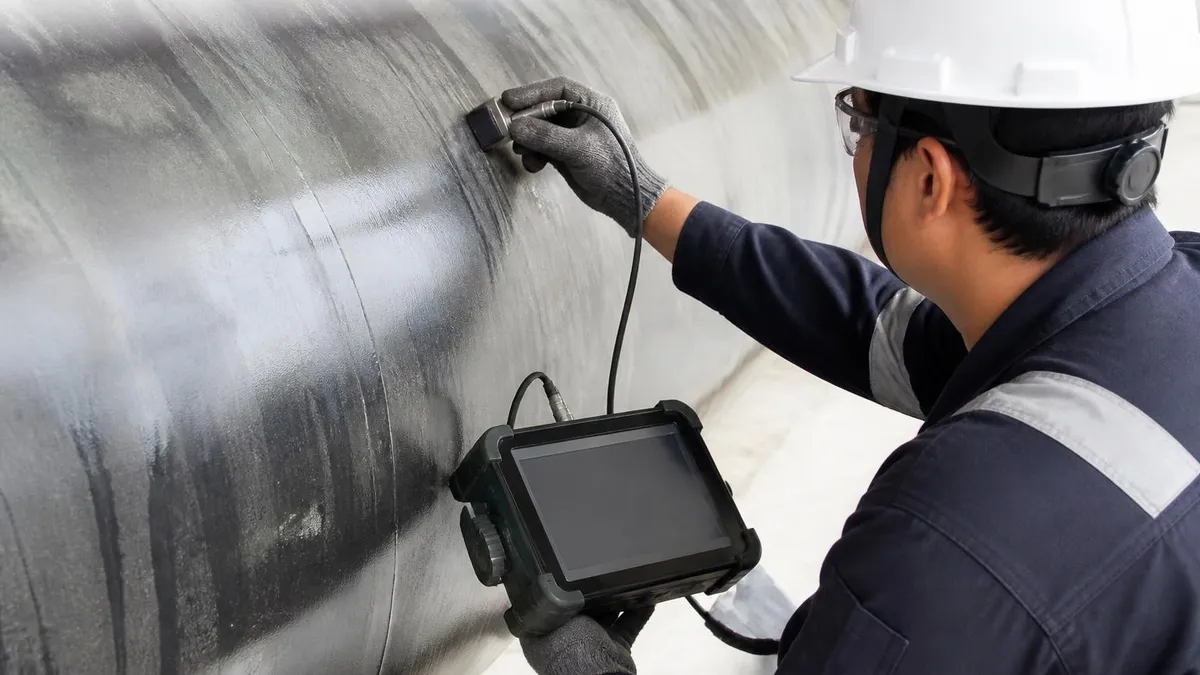
NDT Training: Complete Guide to Non-Destructive Testing Certification Courses in 2026
Non-Destructive Testing Courses: Complete Training Guide for NDT Certification in 2026

NDT Aerospace: Complete Guide to Non-Destructive Testing in Aviation and Aerospace Industries
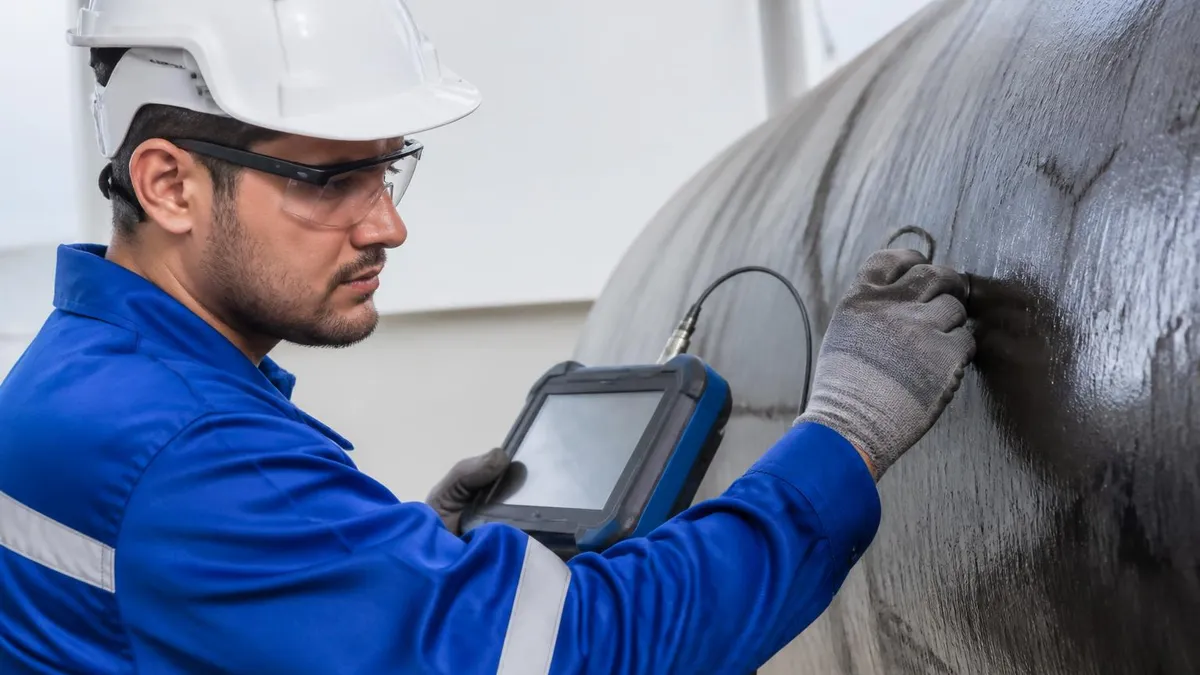
NDT Meaning: What Is Non-Destructive Testing and Why It Matters
NDT Test Video Answers
About the Author

Educational Psychologist & Academic Test Preparation Expert
Columbia University Teachers CollegeDr. Lisa Patel holds a Doctorate in Education from Columbia University Teachers College and has spent 17 years researching standardized test design and academic assessment. She has developed preparation programs for SAT, ACT, GRE, LSAT, UCAT, and numerous professional licensing exams, helping students of all backgrounds achieve their target scores.