Non-Destructive Testing Courses: Complete Training Guide for NDT Certification in 2026 October
Explore non destructive testing courses, certification paths, costs, and career requirements. ✅ Complete 2026 October guide for NDT Level I, II, and III training.
Non-destructive testing courses are the foundation of a rewarding career in one of manufacturing, aerospace, oil and gas, and infrastructure inspection's most in-demand technical fields. Whether you're entering the workforce for the first time or upgrading your qualifications from Level I to Level II, choosing the right non destructive testing courses determines how quickly you become job-ready and how much your skills are worth to employers across the United States. This guide breaks down every major training pathway, credential, cost, and timeline so you can make a fully informed decision.
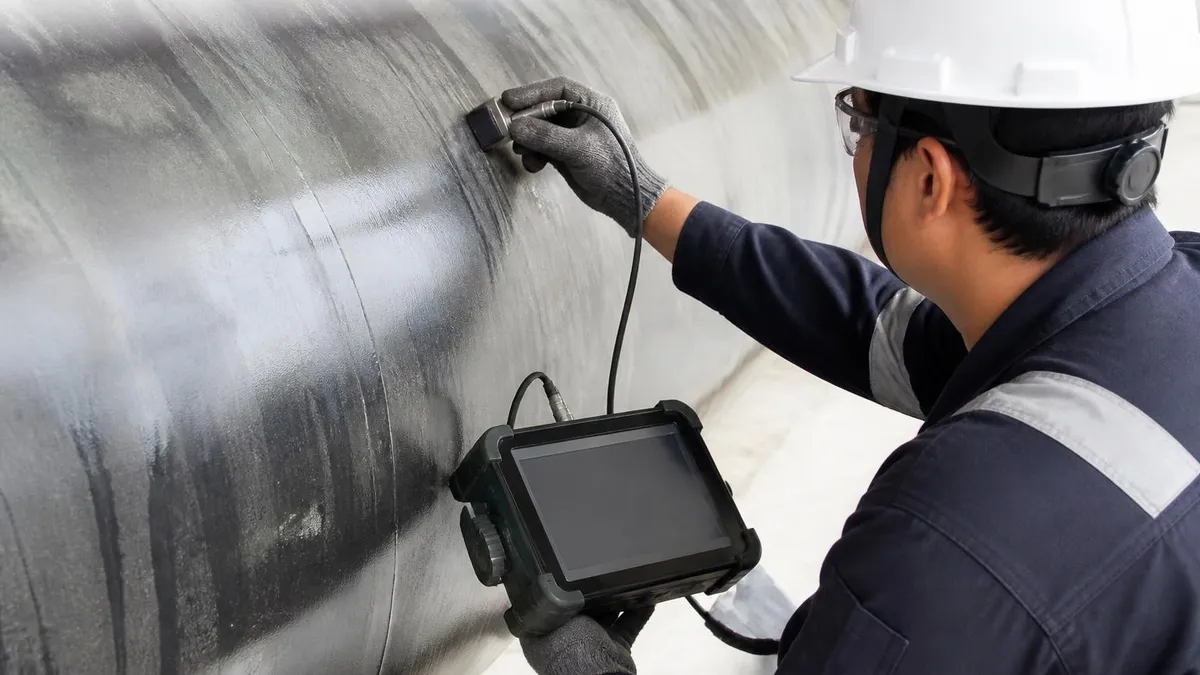
NDT is the science of evaluating materials, components, and welds for defects or irregularities without damaging the item being inspected. Inspectors use methods including ultrasonic testing (UT), liquid penetrant testing (PT), magnetic particle testing (MT), radiographic testing (RT), eddy current testing (ET), and visual testing (VT) to detect cracks, voids, porosity, and dimensional deviations that could lead to catastrophic failure in the field. Each method has its own physics, applicable standards, and specialized training curriculum.
The demand for certified NDT technicians in the US is strong and growing. The Bureau of Labor Statistics groups NDT under quality control inspectors, a field that employs roughly 440,000 workers nationally. However, NDT technicians with formal certification — particularly those holding ASNT SNT-TC-1A Level II or Level III credentials — consistently command salaries 20–35% above uncertified inspectors in comparable industries. Aerospace NDT roles in states like California, Texas, and Florida frequently list starting pay above $65,000 annually for Level II technicians.
Formal coursework matters because employers and regulators require it. The American Society for Nondestructive Testing (ASNT) has published recommended training hours for each method and level. For example, Level II certification in ultrasonic testing requires a minimum of 80 training hours combined across Level I and Level II, plus documented work experience before the employer can certify the technician. Without classroom or online training that covers those hours, you cannot sit for the required employer-administered exam and earn the certification document that appears on your resume.
NDT training is delivered through several channels: community colleges and trade schools, dedicated NDT training centers affiliated with ASNT, online self-paced platforms, employer-sponsored apprenticeships, and military technical schools. Each delivery format has real trade-offs in cost, scheduling flexibility, depth of hands-on practice, and how quickly you can begin earning. Understanding those trade-offs is the core purpose of this article, and we'll walk through each format in detail so you know exactly what to expect before you enroll.
Accreditation and program reputation matter more in NDT than in many other technical fields because your training records become part of your certification file. Employers performing employer-based certifications under SNT-TC-1A must verify and document your training hours. If your training provider cannot supply organized, signed training records, your certification process stalls. Always verify that the school you choose issues formal training completion records that align with ASNT recommended training hour tables before paying tuition.
This guide covers everything from Level I beginner courses to advanced Level III preparation programs, including cost breakdowns, typical timelines, online versus in-person trade-offs, and what the job market looks like once you hold your credentials. Read each section carefully, use the checklists and comparison tools provided, and you'll finish with a clear, personalized action plan for moving forward in your NDT career.
NDT Courses & Certification by the Numbers
NDT Training Pathways and Certification Levels
Level I training introduces fundamental NDT theory, equipment operation, and basic testing procedures under supervision. ASNT recommends 40–80 training hours depending on the method, plus documented on-the-job experience before employer certification. Ideal for newcomers to the field.
Level II training builds on Level I skills, covering calibration, technique selection, interpretation of indications, and written procedures. Technicians can work independently and supervise Level I personnel. Most field inspection jobs require Level II certification in at least one method.
Level III is the highest NDT certification tier. It requires deep knowledge of multiple methods, the ability to write procedures and interpret codes, and the authority to certify Level I and II technicians. Typically requires a degree or extensive documented experience plus a third-party written exam.
Radiographic testing involves ionizing radiation, so most states require an Industrial Radiographer Radiation Safety Personnel (IRRSP) license in addition to NDT certification. Dedicated RT safety courses — typically 24–40 hours — must be completed before performing field RT work legally.
When comparing online versus in-person non-destructive testing courses, the decision ultimately comes down to your learning style, available budget, and how quickly you need hands-on proficiency. Online courses excel at delivering theory — the physics of sound waves in ultrasonic testing, the electromagnetic principles behind eddy current testing, the chemistry of penetrant systems — at a fraction of the cost of a residential program. Many reputable platforms allow you to complete Level I theory modules in two to four weeks while working full-time, making them an attractive option for career changers who cannot afford to take unpaid time off.
The critical limitation of purely online NDT training is the absence of real hands-on practice. NDT is deeply tactile. Learning to couple an ultrasonic transducer correctly, identifying the "feel" of a magnetic particle indication forming under a UV lamp, or distinguishing a true penetrant indication from background bleed-out on a rough casting surface — none of these skills can be fully developed by watching a video or passing a digital quiz. ASNT's recommended training hour tables implicitly recognize this: they count laboratory and practical training hours separately from classroom hours, and both must be documented in your training records.
The most effective approach for most students is a blended learning model. Complete the theory portion online at your own pace, then enroll in a condensed in-person practical lab — often three to five days — at an NDT training center to develop hands-on proficiency and get your lab hours documented. Several major providers, including the Nondestructive Testing Management Association (NDTMA)-affiliated schools and independent centers in Texas, Ohio, and California, offer exactly this format. The total cost is lower than a full residential program, and the schedule is more compatible with existing employment.
In-person residential programs remain the gold standard for speed and depth of skill development. Students spend six to ten weeks in full-time training, performing dozens of inspections on real and artificially flawed specimens, calibrating actual instruments, and working through written procedure exercises guided by Level III instructors.
By the end, most graduates have accumulated all required training hours, have strong practical skills, and are ready to sit for the employer-administered certification exam with confidence. The downside is cost — residential programs frequently run $2,500 to $5,000 per method — and the logistical challenge of relocating or traveling for six to ten weeks.
Employer-sponsored training is another pathway worth considering, especially for candidates who already have a job offer or are working in adjacent fields like welding, quality control, or manufacturing inspection. Many large aerospace manufacturers, pipeline operators, and nuclear facility contractors run internal NDT training programs that meet all ASNT recommended training hour requirements. Employees attend training on company time, and the employer covers all costs. In exchange, technicians usually commit to a service period — commonly two to three years — before they can take their certified skills to a higher-paying competitor.
Community colleges offer a third format that balances affordability and access. Several two-year institutions, particularly in Texas, Louisiana, and the Carolinas where the oil and gas industry concentrates NDT demand, have developed NDT certificate programs running one or two semesters. Tuition at community colleges is far below that of private training centers, and Pell Grants and workforce development funds may cover all or part of the cost for eligible students. The trade-off is that community college programs move at a slower pace, and practical lab time may be limited by equipment availability.
Military training is the final pathway. The US armed forces train NDT technicians in Air Force Specialty Code 2A7X3, Navy rating NDE, and various Army MOS designations. Military NDT training is among the most thorough available, covering multiple methods simultaneously in a structured environment with abundant equipment access. Veterans who trained in military NDT programs typically exit service with documented training records that civilian employers and certifying bodies readily accept, giving them a significant head start over civilian candidates entering the field from scratch.
NDT Course Types by Method
Ultrasonic testing courses are among the most in-demand and technically rigorous in the NDT field. UT training covers sound wave theory, transducer selection, calibration procedures using ASME and ASTM reference blocks, A-scan interpretation, and thickness measurement techniques. Level I UT requires a minimum of 40 training hours, and Level II adds another 40 hours of advanced technique and procedure writing content. Online theory modules are widely available, but hands-on calibration practice on steel and aluminum specimens is essential before attempting employer certification exams.
Advanced UT courses extend into phased array ultrasonic testing (PAUT) and time-of-flight diffraction (TOFD), both of which command significant salary premiums in industries like nuclear power and offshore pipeline inspection. PAUT training typically runs 32–40 additional hours beyond conventional UT Level II and requires access to specialized phased array equipment. Employers in the pipeline and nuclear sectors frequently sponsor PAUT training for certified UT Level II technicians as part of career development programs, making conventional UT Level II an important prerequisite career step.
Online NDT Courses vs. In-Person Training: Key Trade-offs
- +Lower overall cost — online theory courses often cost 50–70% less than residential programs
- +Schedule flexibility allows full-time workers to study evenings and weekends
- +Self-paced modules let you revisit difficult concepts like UT physics as many times as needed
- +Geographic access — students in rural areas can complete theory training without relocation
- +Blended learning options allow online theory plus condensed lab weekends for hands-on hours
- +Some employers accept online training records for theory hours in SNT-TC-1A documentation
- −Purely online courses cannot provide the tactile hands-on practice critical to NDT proficiency
- −Lab hour documentation may not meet employer requirements without an in-person component
- −Equipment calibration skills require physical repetition on real instruments, not simulators
- −Networking opportunities with instructors and fellow technicians are limited in online formats
- −Some NDT employers specifically require training records from ASNT-recognized training centers
- −Self-discipline is required — without a fixed schedule, many students stall and never complete
Pros and Cons at a Glance
| Pros | Cons |
|---|---|
| Schedule flexibility allows full-time workers to study evenings and weekends | Purely online courses cannot provide the tactile hands-on practice critical to NDT proficiency |
| Self-paced modules let you revisit difficult concepts like UT physics as many times as needed | Lab hour documentation may not meet employer requirements without an in-person component |
| Geographic access — students in rural areas can complete theory training without relocation | Equipment calibration skills require physical repetition on real instruments, not simulators |
| Blended learning options allow online theory plus condensed lab weekends for hands-on hours | Networking opportunities with instructors and fellow technicians are limited in online formats |
NDT Course Readiness Checklist
- ✓Confirm your employer uses SNT-TC-1A or NAS 410 as their Written Practice for NDT certification.
- ✓Identify which NDT method(s) your target employer requires before selecting a course.
- ✓Verify the training provider issues signed training records aligned with ASNT hour tables.
- ✓Check that your color vision and visual acuity meet ASNT or Jaeger Number requirements.
- ✓Calculate whether you already have on-the-job experience hours that count toward certification.
- ✓Confirm whether the course includes hands-on lab time or only theory instruction.
- ✓Budget for the employer-administered written and practical exam fees after course completion.
- ✓Determine if your state requires a separate radiation safety license before taking RT courses.
- ✓Review the course schedule to ensure it aligns with your current employment obligations.
- ✓Ask the provider if they offer job placement assistance or industry connections post-certification.
Training Records Are as Important as the Training Itself
Under ASNT SNT-TC-1A, your employer — not a third-party body — issues your NDT certification. That means your employer must be able to verify every training hour you claim. Always request a formal training completion record from every course you attend, and keep your own copies permanently. Lost training records can delay or invalidate certification years later, even if you clearly have the skills.
The cost of non-destructive testing courses varies significantly by method, level, delivery format, and provider. Understanding the full financial picture — including not just tuition but also exam fees, equipment, study materials, and potential lost wages during training — is essential for making a realistic plan. Here is a detailed breakdown of what you can expect to spend at each stage of your NDT education and certification journey.
Entry-level Level I courses for methods like visual testing (VT) and liquid penetrant testing (PT) are the most affordable, typically ranging from $300 to $800 for a combination online theory and short in-person lab format. Magnetic particle testing Level I courses fall in a similar price range. These lower-cost entry points make PT and VT popular first certifications for technicians who want to start earning sooner while building toward higher-level credentials in more complex methods.
Ultrasonic testing courses carry higher costs because the equipment is more expensive and the physics curriculum is more demanding. Expect to pay $800 to $1,800 for a reputable UT Level I course at a private training center, and $1,200 to $2,500 for Level II. Combined Level I and II UT programs offered over two to three weeks typically run $2,000 to $3,500, including all lab materials. These programs are frequently attended by working welders, pipefitters, and quality technicians upgrading their credentials with employer partial reimbursement.
Radiographic testing courses are the most expensive of the standard methods due to radiation safety requirements and the cost of X-ray and gamma-ray equipment used in training labs. RT Level II programs at specialized training centers commonly run $3,000 to $5,000, and that figure excludes the separate state radiation safety licensing exam, which may involve additional fees of $50 to $200 depending on the state. Students in Louisiana, Texas, and offshore-heavy states should also budget for potential travel to RT-equipped training centers, as not every region has a facility with licensed radioactive sources.
Online-only NDT theory courses are dramatically less expensive, with some platforms offering Level I theory modules for as little as $150 to $400 per method. However, you must budget separately for in-person lab hours, which are typically offered as weekend intensives ranging from $200 to $600 depending on the method and location. The blended approach can deliver full training documentation at a total cost of $400 to $1,200 per method — a significant saving over residential programs for students who are disciplined self-learners.
Financial assistance is more widely available than most students realize. The Workforce Innovation and Opportunity Act (WIOA) funds NDT training at many community colleges and approved private training centers for eligible workers who are unemployed or underemployed. Veterans can apply GI Bill benefits to NDT programs at institutions with VA approval. Some state departments of labor maintain lists of approved training providers for workforce development grants, and many pipeline and aerospace employers offer tuition reimbursement for job-relevant certifications — in some cases covering 100% of course costs retroactively upon passing the employer certification exam.
When calculating return on investment, consider that a typical NDT Level II technician working in the oil and gas sector earns $55,000 to $85,000 annually depending on method and geographic location. An investment of $2,500 in a UT Level II course that results in a salary increase of $15,000 per year pays back in two months.
Even the most expensive RT training programs typically generate full ROI within the first year of employment at the higher wage tier that RT certification commands. This favorable ROI makes NDT one of the best-value technical certifications available to US workers without a four-year degree.
ASNT SNT-TC-1A requires both documented training hours AND documented on-the-job experience hours before your employer can certify you. Training hours come from coursework; experience hours come from actual inspection work in the field. You cannot substitute extra training for missing experience hours — both are mandatory. Review your employer's Written Practice to understand exactly how many of each are required for the method and level you are pursuing before enrolling in any course.
Choosing the right NDT training program from the dozens of options available requires a systematic approach. The most important single factor is whether the program's output — your training completion records — will be accepted by your target employer. Before enrolling, ask your employer or prospective employer which training providers they have previously accepted records from, and whether there are any provider-specific requirements in their Written Practice document. Some employers, particularly in aerospace under NAS 410, require training from providers with specific accreditation that not all schools hold.
ASNT maintains an Authorized Training Center (ATC) program that recognizes training providers who have had their curricula reviewed and approved against ASNT standards. Enrolling in an ASNT ATC provides an added layer of assurance that your training records will be structured correctly and will include all required documentation fields. A current list of ATCs is available on ASNT's official website, organized by geographic region and methods offered. If you are evaluating a non-ATC provider, request a sample training record and have it reviewed by an NDT Level III at your target employer before paying tuition.
Instructor qualifications are the second critical variable. NDT instructors should hold Level III certification in the method they teach, ideally through ASNT's ACCP (American Certification for NDT Personnel) program or an equivalent employer-based Level III. Ask any prospective school for the credentials of the specific instructor who will teach your course. A school may advertise that it employs Level III instructors without guaranteeing that your particular class will be taught by one — get this confirmed in writing before enrollment if it matters to your documentation requirements.
Class size and equipment-to-student ratio directly affect how much hands-on time each student gets. Small cohorts of six to twelve students per instructor allow meaningful individual coaching during practical labs. Larger classes of twenty or more students frequently result in students spending more time observing than doing, which limits practical skill development even when total lab hours are technically documented. Ask providers what their typical class size is and how many sets of equipment are available per session before you commit to a program.
Geographic considerations matter more for some methods than others. Liquid penetrant and visual testing courses are widely available across most US states, including at community colleges, because the equipment is inexpensive and portable. Ultrasonic testing courses are available in most major industrial markets.
Radiographic testing and phased array UT training are more geographically concentrated because the equipment is expensive and, in the case of RT, requires licensed radioactive material possession. Students pursuing RT certification often need to travel to regional training hubs in Houston, Baton Rouge, Tulsa, or the Gulf Coast area, where oil and gas industry demand has justified investment in proper training infrastructure.
Program reputation in the local job market is an intangible but real factor. Employers in tight-knit NDT communities — offshore inspection contractors, aerospace MRO shops, nuclear inspection firms — often have established relationships with specific training centers whose graduates they have found to be well-prepared. Asking working NDT technicians in your local industry network which schools produced the most respected graduates is more reliable than any marketing claim a training provider can make. LinkedIn groups, ASNT local section meetings, and industry trade shows are excellent venues for gathering this informal intelligence about which programs actually produce job-ready technicians.
Finally, verify post-course support. A good training center does not disappear after you pay tuition and complete the final lab session. The best programs offer exam preparation support, help navigating the employer certification documentation process, and maintain relationships with regional employers who are actively hiring.
Some centers maintain alumni networks that provide informal job referrals. This kind of ongoing support can meaningfully shorten the time between completing your training and starting your first NDT role — and in a field where you only get paid once you are certified and deployed, faster placement translates directly into higher lifetime earnings from your training investment.
Once you have selected a program and completed your coursework, the path to employer certification follows a consistent process regardless of which method you trained in. Understanding this process in advance prevents the frustrating delays that trip up many newly trained technicians who expect to receive their certification card immediately after finishing a course. Your training provider delivers knowledge and documented training hours; your employer delivers the actual certification after administering its own written and practical examinations.
The first step is assembling your certification package for your employer's NDT Level III or certification administrator. This package typically includes your training completion records, a log of documented on-the-job experience hours signed by a supervisor, evidence of passing your eye exam (near vision and color discrimination per ASNT guidelines), and your scores on any prerequisite exams the employer requires. Organize this documentation carefully and proactively — employers with large workforces may have their own internal deadlines and documentation systems that you need to navigate correctly from the start.
The employer-administered written exam tests your knowledge of the method's theory, the applicable standards (such as ASME Section V, AWS D1.1, or ASTM reference standards), and your employer's specific written procedure for that method. Written exam questions are typically drawn from the applicable ASNT study guides for the method and level. Spending two to four weeks of focused study on both the study guide content and your employer's specific procedures — which may differ from textbook techniques — is the most effective preparation strategy for passing on the first attempt.
The practical examination tests your ability to perform actual inspections using the equipment and procedures you will use on the job. Common practical exam components include equipment calibration, scanning a set of test specimens, correctly identifying and documenting indications, and completing a written inspection report in the format your employer uses. Some employers also test your ability to calculate scanning parameters, set sensitivity levels, or verify penetrant system performance against control standards. The practical exam is where training-shortcut candidates most frequently fail — there is no substitute for genuine hands-on repetition during the training phase.
After passing both the written and practical examinations, your employer's authorized Level III signs your certification document and logs your certification in the company's personnel qualification records. Certifications under SNT-TC-1A are typically valid for five years, after which recertification is required. Recertification usually involves a practical examination but may waive the written exam if continuous employment in the method is documented. This five-year cycle is why maintaining clean, organized qualification records throughout your career is as important as the initial certification process.
Many technicians pursue multi-method certification to increase their value and flexibility. The most common combinations are PT/MT (both surface methods, often trained simultaneously), UT/PT (covering internal and surface flaw detection), and RT/UT for comprehensive volumetric inspection capability. Each additional method certification requires its own training hours, experience hours, and employer exam cycle, but the incremental time investment shrinks as your overall NDT knowledge base grows. A technician who holds UT, PT, and MT Level II certifications is substantially more employable and higher-earning than one who holds only a single method certification.
Industry-specific certifications layer on top of ASNT credentials for certain markets. The National Aerospace NDT Board (NANDTB) and the Aerospace Industries Association's NAS 410 standard govern aerospace NDT qualification. The nuclear industry uses NQA-1 and ASME Section XI qualification requirements. Pipeline inspection is governed by ASME B31.8 and API 1104 alongside NDT certification requirements. Understanding which governing standard applies to your target industry helps you identify any additional qualification steps beyond basic ASNT certification that your future employer will require before you can perform billable inspection work.
Sample NDT - Non-Destructive Testing Practice Questions
Try these questions from our free NDT - Non-Destructive Testing practice tests. The correct answer and an explanation follow each question.
A head shot (contact shot) in magnetic particle testing produces which type of magnetization?
- A. Longitudinal
- B. Circular
- C. Multidirectional
- D. Residual only
Answer: B. Circular
Passing current directly through the part between head contacts creates circular (circumferential) magnetization around the part's cross-section.
What is the purpose of an image quality indicator (IQI) in radiographic testing?
- A. To measure the actual size of a discontinuity
- B. To demonstrate the sensitivity and quality of the radiographic image
- C. To calibrate the X-ray machine voltage
- D. To determine the chemical composition of the weld
Answer: B. To demonstrate the sensitivity and quality of the radiographic image
An IQI (also called a penetrameter) verifies that the radiographic technique achieves the minimum required image quality and sensitivity.
What is the primary function of a preamplifier in an acoustic emission testing system?
- A. To filter out high-frequency noise above 1 MHz
- B. To amplify the small AE sensor signal before transmission to the main amplifier
- C. To digitize the AE waveform at the point of detection
- D. To provide electrical isolation between the sensor and the data acquisition unit
Answer: B. To amplify the small AE sensor signal before transmission to the main amplifier
The preamplifier amplifies the low-voltage AE signal (typically microvolts to millivolts) close to the sensor to improve the signal-to-noise ratio before the signal travels through cables to the main system.
Which environmental condition in the inspection area is MOST critical to control for fluorescent penetrant testing?
- A. Relative humidity above 40%
- B. Ambient white light level (should be ≤2 fc)
- C. Air temperature above 60°F (15°C)
- D. Presence of ventilation airflow
Answer: B. Ambient white light level (should be ≤2 fc)
Ambient white light must be ≤2 foot-candles (≤20 lux) in the inspection area so fluorescent indications are not washed out and remain clearly visible.
NDT Questions and Answers
NDT Training: Complete Guide to Non-Destructive Testing Certification Courses in 2026
NDT Practice Test PDF (Free Printable 2026)

NDT Training Courses: Complete Guide to Programs, Certification & Career Requirements
NDT Test Video Answers