
Non-Destructive Testing Methods: The Complete Guide to NDT Techniques
✍🏼 Learn all major non destructive testing methods — UT, PT, MT, RT, ET and more. Understand how each works, when to use it, and how to get certified.

Non destructive testing methods are the backbone of industrial safety and quality assurance across virtually every sector that relies on engineered components — from aerospace and oil refineries to bridges, pipelines, and nuclear power plants. Unlike destructive testing, which requires cutting, breaking, or chemically dissolving a sample to evaluate its integrity, NDT allows inspectors to assess materials, welds, and structures without altering or compromising them in any way.
This fundamental advantage makes NDT indispensable wherever components must remain in service after evaluation. Understanding the full range of non destructive testing methods is the first step for any aspiring inspector or quality professional.
The history of formal NDT stretches back to the early twentieth century, when radiographic testing was first applied to examine welds in pressure vessels. Since then, the field has grown to encompass dozens of distinct techniques, each exploiting a different physical principle — sound waves, electromagnetic fields, ionizing radiation, thermal gradients, and optical phenomena — to detect and characterize flaws that are invisible to the naked eye.
ASNT (the American Society for Nondestructive Testing) now recognizes more than twenty formal methods, and industry-specific codes such as ASME, AWS, and API specify which methods must be used for particular applications and weld classifications.
Selecting the right NDT method for a given inspection task requires understanding several variables simultaneously: the type of material being tested (ferromagnetic vs. non-ferromagnetic, conductive vs. non-conductive), the location of the anticipated flaw (surface, near-surface, or volumetric), the geometry of the component, the required sensitivity and probability of detection, and the practical constraints of the work environment. A technique that delivers excellent results on a flat steel plate may be completely unsuitable on a complex titanium casting or a thin composite panel, so experienced inspectors must be fluent in multiple methods.
Six methods dominate commercial NDT practice in the United States: Visual Testing (VT), Liquid Penetrant Testing (PT), Magnetic Particle Testing (MT), Radiographic Testing (RT), Ultrasonic Testing (UT), and Eddy Current Testing (ET). Together, these six account for the vast majority of industrial inspection hours logged each year. Newer techniques — Phased Array Ultrasonic Testing (PAUT), Time-of-Flight Diffraction (TOFD), Guided Wave Testing (GWT), Digital Radiography (DR), and Acoustic Emission (AE) — are gaining market share rapidly as sensor technology and data processing power improve, offering faster coverage and richer data at lower cost per inspection.
Certification is a critical dimension of professional NDT practice. Most employers and codes require technicians to hold ASNT Level I, II, or III certifications — or equivalent credentials under the NAS 410 or ISO 9712 frameworks — before performing or supervising inspections. Level I technicians perform prescribed inspections under supervision, Level II technicians interpret results and direct Level I personnel, and Level III professionals develop procedures, write specifications, and provide technical leadership for entire inspection programs. Each level demands documented training hours, hands-on experience, and written and practical examinations.
This comprehensive guide walks through each major NDT method in detail, explaining the underlying physics, the equipment involved, the types of flaws each method can and cannot detect, and the industries where each is most commonly applied. Whether you are studying for your first ASNT certification exam, transitioning from one NDT method to another, or simply building awareness of the field, the information here will give you a solid foundation.
Supplementing your reading with hands-on practice and formal training courses is strongly recommended — NDT is an applied discipline where theoretical knowledge must be reinforced through direct experience with equipment and real components.
Throughout this guide you will also find links to practice quizzes covering specific NDT methods, which are excellent tools for reinforcing key concepts, identifying knowledge gaps, and building the test-taking confidence you will need on certification day. Each method has its own body of knowledge, and the best inspectors invest consistently in continuing education to stay current with evolving codes, new equipment, and emerging best practices in the field.
Non-Destructive Testing by the Numbers

The Six Core NDT Methods Every Inspector Must Know
The most fundamental NDT method, using direct or aided visual inspection to detect surface irregularities. Requires good lighting, proper viewing angles, and often optical aids such as borescopes, mirrors, or video probes to access confined spaces.
A highly sensitive surface method that uses capillary action to draw colored or fluorescent dye into open surface discontinuities. Effective on metals, ceramics, and plastics; cannot detect subsurface flaws. Requires thorough surface cleaning at every stage.
Applies a magnetic field to ferromagnetic materials. Surface and near-surface discontinuities disrupt the magnetic flux, attracting fine iron particles that form visible indications. Fast, sensitive, and widely used in weld and casting inspection.
High-frequency sound waves propagate through a material and reflect off internal boundaries or flaws. Provides depth information and can detect volumetric discontinuities in thick sections. Requires trained interpretation and proper calibration blocks.
Uses X-rays or gamma rays to create a permanent image of internal structure on film or a digital detector. Excellent for volumetric flaw detection in welds, castings, and composites. Requires radiation safety controls and licensed operators.
Visual Testing is the most widely applied of all non-destructive examination techniques, and it is frequently overlooked in discussions that focus on more technologically sophisticated methods. In practice, VT is nearly always the first step in any inspection sequence because many significant defects — including gross weld discontinuities, corrosion, mechanical damage, and misalignment — are detectable without any special instrumentation.
Direct VT requires the inspector to position their eye within 24 inches of the surface at an angle no less than 30 degrees, as specified by codes such as AWS D1.1 and ASME Section V. Remote VT tools including fiberoptic borescopes, rigid videoscopes, and robotic crawler systems extend this capability into areas physically inaccessible to the human eye.
Liquid Penetrant Testing exploits a beautifully simple physical principle: capillary action. After thorough surface cleaning, a liquid penetrant — either a water-washable, post-emulsifiable, or solvent-removable formulation — is applied to the test surface and allowed to dwell for a specified time, typically between five and sixty minutes depending on the material, flaw type, and temperature. During this dwell period, the penetrant seeps into any surface-open discontinuities.
Excess surface penetrant is then carefully removed, a developer is applied to draw the entrapped penetrant back to the surface, and the resulting indications are examined under white light (visible dye) or ultraviolet light (fluorescent dye). Sensitivity can be remarkably high — fluorescent PT systems can reliably detect cracks as narrow as 0.001 inches under appropriate conditions.
Magnetic Particle Testing works exclusively on ferromagnetic materials such as iron, steel, and certain nickel alloys. A magnetic field is induced in the part either by passing electrical current directly through it, wrapping a coil around it, or using a yoke.
When a surface or near-surface discontinuity interrupts the magnetic flux lines, flux leakage occurs at the discontinuity, and finely divided iron particles — suspended in a liquid carrier or applied as a dry powder — are attracted to these leakage fields, forming visible indications. Fluorescent MT is significantly more sensitive than visible-contrast MT and is preferred in applications demanding the highest probability of detection, such as aircraft engine component inspection.
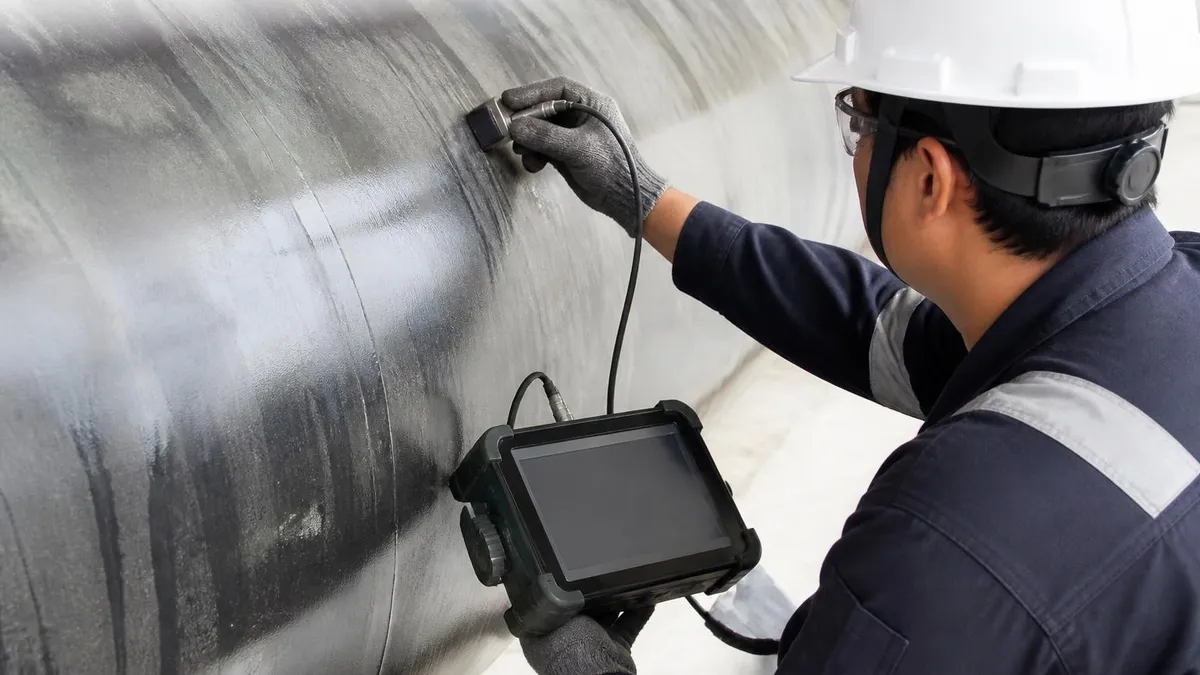
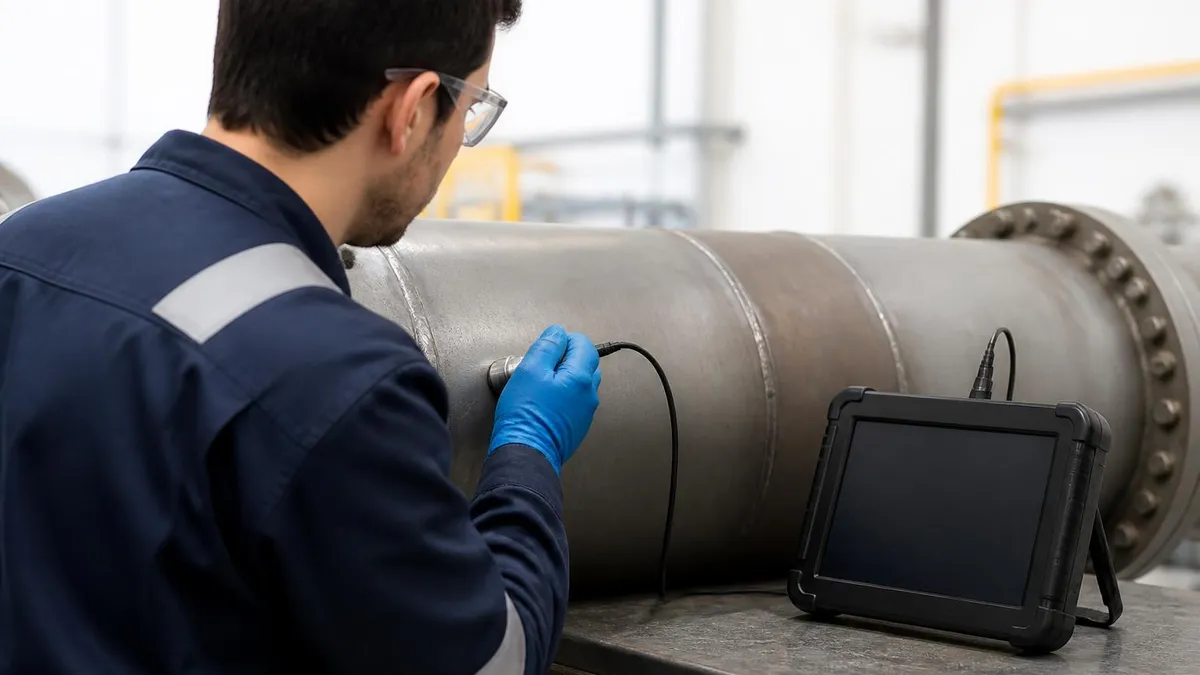
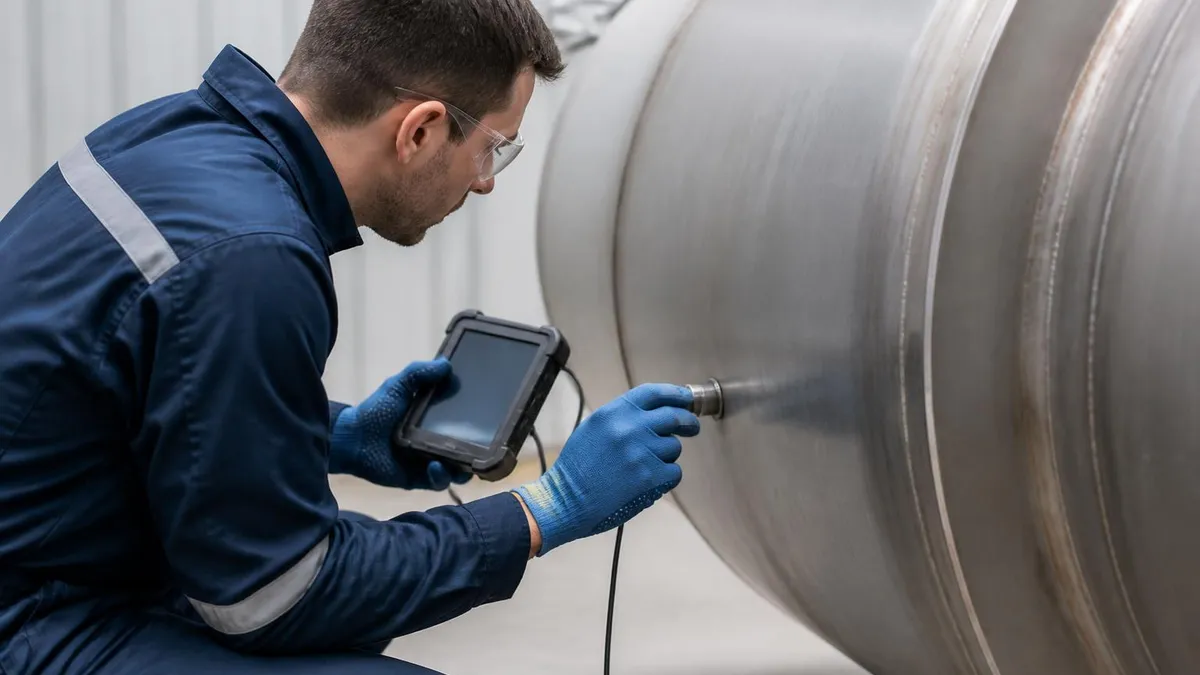
Ultrasonic Testing is one of the most versatile and widely certified methods in industrial NDT. In the conventional pulse-echo technique, a piezoelectric transducer generates a short burst of ultrasonic energy — typically between 1 and 25 MHz — that travels through the material. When this sound pulse encounters an interface or discontinuity, part of the energy reflects back to the transducer, where it is converted to an electrical signal and displayed on an A-scan oscilloscope.
The time-of-flight of the echo determines the depth of the reflector, and its amplitude provides information about the reflector's size. Inspectors use calibration blocks made from the same material and with the same heat treatment as the test object to establish reference sensitivity and sizing curves.
Radiographic Testing produces a two-dimensional shadow image of a three-dimensional object, and interpreting that image correctly requires considerable training and experience. Film radiography remains the dominant technique in many code-governed applications because film provides high spatial resolution and a permanent, legally defensible record.
Digital radiography — including computed radiography (CR) using phosphor imaging plates and direct digital radiography (DR) using flat-panel detectors — is rapidly displacing film in field applications because it eliminates chemical processing, enables immediate image review, and allows digital image enhancement and archiving. Isotopic sources such as Iridium-192 and Cobalt-60 are widely used for field radiography where access to X-ray electrical power is impractical.
Eddy Current Testing is an electromagnetic method that induces alternating electrical currents in conductive materials using a probe coil. Discontinuities and property variations in the material alter the flow of these eddy currents, changing the impedance of the probe coil in ways that can be detected and displayed. ET is exceptionally sensitive to surface and near-surface flaws in conductive materials and is the method of choice for inspecting heat exchanger tubing, aircraft fuselage skin, and fastener holes.
Modern multi-frequency ET instruments can simultaneously measure signals at several frequencies, allowing the inspector to distinguish flaw signals from interference caused by geometry changes, conductivity variations, and proximity to tube support plates. Eddy current arrays — probes containing dozens of individual coil elements — can cover large areas in a single scan pass, dramatically increasing inspection speed.
Beyond these established methods, advanced techniques continue to reshape the NDT landscape. Phased Array Ultrasonic Testing (PAUT) uses an array of individual ultrasonic elements that can be electronically steered and focused, producing real-time sectorial and linear scans that dramatically improve both detection sensitivity and sizing accuracy compared to conventional UT.
TOFD uses two separate transducers to capture diffracted signals from flaw tips, enabling very accurate height sizing of planar flaws. Guided Wave Testing propagates low-frequency ultrasonic waves along the length of pipes and rods, screening large lengths of structure from a single sensor location — a powerful tool for screening buried or insulated piping for corrosion.
Comparing Non-Destructive Testing Methods by Application
For detecting surface-breaking discontinuities, Liquid Penetrant Testing and Magnetic Particle Testing are the two dominant choices. PT works on any non-porous material — metals, ceramics, and plastics alike — making it the default for austenitic stainless steels and aluminum alloys where MT cannot be applied. MT, however, provides faster throughput on ferromagnetic steels and offers near-surface detection capability to depths of approximately one-quarter inch, which PT cannot match since it requires an open surface path.
Visual Testing always precedes both methods, as gross surface defects can be detected and documented without chemical consumables or specialized equipment. In weld inspection programs, VT is performed first and PT or MT is applied afterward to catch finer cracks that VT would miss. The choice between visible-contrast and fluorescent formulations depends on the inspection environment: fluorescent methods are preferred in controlled shop settings where UV light can be used, while visible-contrast solvent-removable PT kits dominate portable field inspection because they require no UV lamp or darkened examination area.

Advantages and Limitations of NDT vs. Destructive Testing
- +Components remain in service after inspection — no material is sacrificed
- +100% inspection of production parts is economically feasible for critical items
- +Flaws can be monitored over time with repeated inspections to track growth rate
- +Multiple methods can be applied to the same component for comprehensive coverage
- +Results are available immediately or within hours, enabling rapid disposition decisions
- +Permanent records (radiographs, UT scans, reports) create traceable quality documentation
- −Each method has specific flaw types, orientations, and materials it cannot reliably detect
- −Results require trained, certified personnel to interpret correctly — skill gaps cause missed calls
- −Equipment calibration, technique qualification, and written procedures add significant overhead
- −Surface preparation requirements for PT and MT can be time-consuming and costly in the field
- −Radiation safety controls for RT require significant logistical planning and compliance overhead
- −No single NDT method detects all flaw types — multi-method programs increase cost and complexity
NDT Method Selection and Certification Checklist
- ✓Identify the material type — determine whether it is ferromagnetic, conductive, or non-porous before selecting a method.
- ✓Define the expected flaw type — surface-breaking cracks require different methods than internal volumetric flaws.
- ✓Review the applicable code or specification to determine which methods are required or permitted.
- ✓Verify component accessibility — confirm that the chosen method can reach the inspection zone.
- ✓Check surface condition requirements — PT and MT require thorough cleaning before application.
- ✓Confirm personnel certification levels — ensure inspectors hold the correct ASNT or NAS 410 certification for the method.
- ✓Qualify the written procedure — document technique variables, equipment settings, and acceptance criteria before inspecting.
- ✓Calibrate all equipment using approved reference standards before each inspection session.
- ✓Document all indications with sketches, photographs, or digital scan data before making accept/reject decisions.
- ✓Retain all inspection records — radiographs, UT data files, and written reports — for the period required by the applicable code.
Method Combination Is the Industry Standard
No single NDT method detects all flaw types with equal reliability. The highest-consequence applications — nuclear pressure vessels, aircraft structural welds, offshore risers — routinely require two or more complementary methods on the same joint. Understanding how PT, MT, UT, and RT complement each other is as important as mastering any one technique individually, and ASNT Level III certification examinations test exactly this kind of multi-method judgment.
Advanced NDT techniques represent the cutting edge of the industry and are increasingly required in high-value sectors such as aerospace, nuclear power, and subsea pipeline inspection. Phased Array Ultrasonic Testing has become the single most transformative development in industrial NDT over the past two decades.
By electronically controlling the timing of individual elements within a multi-element transducer array, PAUT systems can generate steered and focused beams across a wide range of angles without physically moving the probe, producing a full sectorial scan in a fraction of the time required by conventional manual UT. Modern PAUT instruments display real-time S-scans, B-scans, and C-scans simultaneously, giving inspectors a three-dimensional picture of internal flaw geometry that supports far more accurate sizing and characterization than the simple A-scan waveform of conventional UT.
Time-of-Flight Diffraction is a complementary ultrasonic technique that excels specifically at measuring the through-wall height of planar flaws. While pulse-echo UT determines flaw depth from specular reflection amplitude — a measurement sensitive to flaw orientation and surface roughness — TOFD measures the actual time elapsed between diffracted signals from the top and bottom tips of a crack, providing height data that is largely independent of orientation.
For critical fitness-for-service assessments under API 579 or BS 7910, accurate flaw height measurement is essential because fracture mechanics calculations are extremely sensitive to flaw dimension, and TOFD data dramatically reduces the conservatism required in sizing estimates.
Acoustic Emission Testing is unique among NDT methods because it is entirely passive — the inspector does not introduce any energy into the structure. Instead, AE monitors the stress waves spontaneously emitted by growing cracks, fiber breakage in composites, or active corrosion as the structure is subjected to a proof load or thermal cycle.
Arrays of sensitive piezoelectric sensors attached to the structure triangulate the source locations of these emission events, allowing inspectors to identify which areas of a large structure — a pressure vessel, a storage tank, an aircraft wing — are actively deteriorating without scanning every square inch. AE is the only NDT method capable of providing global monitoring of an entire structure in real time, which makes it invaluable for leak detection in buried pipelines and structural health monitoring of bridges.
Infrared Thermography exploits differences in thermal conductivity caused by subsurface voids, delaminations, or moisture ingress. When heat is applied to a surface — either by flash lamps (active thermography) or solar loading (passive thermography) — the rate at which different areas cool down depends on what lies beneath them.
Areas over air-filled voids cool more slowly than areas over solid material, producing detectable temperature differentials that a calibrated infrared camera captures as false-color thermal maps. Thermography is particularly valuable for inspecting composite aerospace structures, building envelopes, and electronic circuit boards, where conventional contact methods would be impractical or could cause damage to delicate surfaces.
Leak Testing encompasses a family of techniques used to verify pressure boundary integrity. Bubble emission testing — pressurizing a system and looking for bubbles in a liquid bath or soap solution — is the simplest form and can detect leaks as small as 10⁻³ standard cubic centimeters per second. Halogen leak detectors sniff for refrigerant or tracer gas leakage with sensitivity down to approximately 10⁻⁶ cc/sec.
Helium mass spectrometry — the most sensitive leak testing method — can detect leaks as small as 10⁻¹⁰ cc/sec by flooding the outside of a system with helium tracer gas and detecting atoms that permeate through the tiniest leak path into a vacuum-connected mass spectrometer. This extreme sensitivity makes helium leak testing essential for spacecraft fuel systems, semiconductor manufacturing equipment, and medical implantable devices.
Ground Penetrating Radar (GPR) is an emerging NDT method for civil infrastructure inspection that uses pulsed microwave energy to image subsurface features in concrete, asphalt, and soil. GPR can locate rebar positions, voids beneath pavement slabs, buried utilities, and post-tensioning ducts without drilling or coring.
Resolution depends on antenna frequency: high-frequency antennas (2 GHz) provide sharp near-surface imaging to depths of about one foot, while low-frequency antennas (100 MHz) can penetrate fifteen feet or more but with reduced resolution. Highway departments, bridge owners, and airport pavement managers increasingly use GPR for condition assessment because it enables rapid scanning at vehicle speed — covering miles of roadway in a single shift.
The integration of digital data management, artificial intelligence, and robotics is fundamentally changing how advanced NDT is performed. Automated UT scanners guided by precision positioning systems produce fully encoded data volumes that cover 100% of a weld volume, replacing the sampling-based coverage of manual scanning. Machine learning algorithms trained on large databases of classified indications are demonstrating detection performance competitive with experienced human interpreters on specific flaw types in UT and RT data.
Drone-mounted ET and UT probes are inspecting wind turbine blades, transmission towers, and elevated structures at a fraction of the scaffold or rope-access cost. These trends mean that the NDT professional of the future must be not only proficient in traditional methods but also comfortable working with digital data systems, understanding algorithm outputs, and integrating robotic inspection tools into code-compliant inspection programs.

ASNT SNT-TC-1A allows employers to set their own certification requirements within ASNT guidelines, which means the hours and exam passing scores for Level II certification can vary between companies. Always verify whether your employer follows SNT-TC-1A, NAS 410, or ISO 9712 before investing in training, as these three frameworks have different experience hour requirements, examination formats, and renewal cycles that significantly affect your certification timeline and portability.
The real-world application of non-destructive testing methods spans an enormous range of industries and component types, and the practical demands of each sector shape which methods are emphasized and how they are applied. In the aerospace industry, the cost of in-service failure is measured not just in financial terms but in human lives and catastrophic reputational damage, so aerospace NDT programs are among the most rigorous in existence.
Every structural weld on an aircraft fuselage, every turbine blade casting, and every fastener hole in a primary load-bearing frame requires inspection to the tightest possible sensitivity standards. Fluorescent PT and fluorescent MT dominate surface inspection of aerospace alloys, while PAUT and TOFD are progressively displacing conventional RT for weld inspection because digital data records are far easier to archive, transmit, and re-analyze than film.
The oil and gas industry represents the largest overall market for NDT services in North America by inspection hours and revenue. Refineries, petrochemical plants, and offshore production platforms depend on pressure vessels, heat exchangers, and miles of piping that must maintain pressure boundary integrity under corrosive service conditions for decades.
Corrosion under insulation (CUI) — where moisture trapped between pipe insulation and the metal surface causes localized thinning that goes undetected until catastrophic failure — is one of the costliest reliability problems in the industry, and advanced inspection methods including Pulsed Eddy Current, guided wave UT, and flash radiography have all been developed specifically to address it. API 510 (pressure vessels), API 570 (piping), and API 653 (storage tanks) all mandate risk-based inspection programs that incorporate multiple NDT methods to achieve appropriate coverage within turnaround maintenance windows.
Power generation — including both conventional thermal and nuclear plants — places unique demands on NDT that reflect the consequences of in-service failure and the challenging inspection environments involved. Nuclear pressure components are inspected under ASME Section XI rules, which require volumetric examination of reactor vessel welds to detect and size any planar flaws before they can grow to a critical size.
Automated UT systems mounted on remote-controlled manipulators perform these examinations during refueling outages in highly radioactive environments, acquiring fully encoded data that is then analyzed by certified Level III interpreters following approved procedures. In fossil-fuel power plants, high-temperature steam lines and headers are routinely inspected for creep damage using advanced UT techniques that can detect the early microstructural changes associated with creep void formation before cracks develop.
The construction and civil infrastructure sector is an area of expanding NDT activity as the nation's aging bridges, tunnels, and water infrastructure require increasing inspection attention. Concrete structures present particular challenges because concrete is a heterogeneous, acoustically attenuative material that scatters ultrasonic energy strongly, limiting the effectiveness of standard UT methods.
Impact Echo, a low-frequency pulse-echo technique using mechanical impact excitation, has been standardized by ASTM for detecting delaminations, voids, and honeycombing in concrete slabs and bridge decks. Infrared thermography and GPR are used extensively for concrete bridge deck surveys to map areas of rebar corrosion-induced delamination before visible spalling occurs, enabling targeted repair rather than full deck replacement.
The manufacturing sector uses NDT throughout the production process, not just as a final acceptance inspection. Incoming material inspection uses UT thickness gauging and ET sorting to verify that raw stock meets specification before it enters machining. In-process inspection during fabrication catches defects early, when they are easiest and cheapest to correct, rather than after expensive final machining operations.
Final acceptance inspection verifies that finished components meet the dimensional and metallurgical requirements of the applicable material specification and design drawing. Automated inspection systems integrated into production lines can perform ET or UT inspection at production speed without adding cycle time, combining 100% coverage with zero additional labor cost once the system is qualified and validated.
Military and defense applications push NDT technology to its limits in terms of sensitivity requirements, material diversity, and inspection access challenges. The F-35 fighter program, for example, requires inspection of complex carbon fiber reinforced polymer (CFRP) structures for manufacturing defects including porosity, fiber waviness, and delaminations that could affect fatigue life under the severe loading of supersonic flight. Advanced thermographic and resonance inspection methods have been developed specifically for this application.
Submarine pressure hull welds are inspected by automated UT systems designed to operate underwater, and the resulting data records are archived for the entire service life of the vessel. Military vehicle armor is inspected for internal voids and bonding defects using acoustic methods that can verify the integrity of ceramic-metal composite structures without exposing personnel to the hazards of radiographic inspection in the field.
Understanding how NDT is applied across these diverse industries is essential context for certification candidates and working inspectors alike. The specific techniques, equipment, and acceptance criteria vary substantially between a refinery piping inspection and an aircraft structure inspection, but the underlying physical principles remain the same.
Mastering those principles — and learning to apply them flexibly across different material-flaw-geometry combinations — is what distinguishes a truly capable NDT professional from someone who has merely memorized a procedure. Continuous learning, cross-training in multiple methods, and staying current with evolving codes and technology are the hallmarks of a long, successful career in this technically demanding and socially important field.
Preparing effectively for an NDT certification examination requires a strategic approach that combines theoretical study, hands-on practice, and targeted review of the specific body of knowledge tested at each level.
The ASNT Level II examination for any method consists of a written general examination covering the physics and principles of the method, a written specific examination covering the particular industry application and the employer's written practice, and a practical examination demonstrating the candidate's ability to set up equipment, perform a calibration, and correctly detect and evaluate indications on actual test specimens. Passing all three components is required for certification, and candidates who underestimate any one of them often fail on their first attempt.
Building a solid theoretical foundation begins with the ASNT Study Guide for the method you are pursuing. These guides are the primary reference materials used by examination developers and cover every knowledge area that can appear on the general examination. Read each section carefully, work through all example problems, and use practice questions to identify the areas where your understanding is weakest.
Pay particular attention to the underlying physics — understanding why a technique works the way it does, rather than just memorizing procedural steps, gives you the analytical framework to answer novel questions that are phrased differently from anything you have seen before.
The practical component of NDT certification is where many candidates who are strong on theory fall short. Hands-on proficiency requires supervised time with actual equipment performing real inspections, and the minimum training hours specified in SNT-TC-1A or NAS 410 represent a floor, not a target. Seek out opportunities to perform calibrations, inspect a variety of specimen configurations, and identify different indication types before your practical examination.
If your employer does not have a broad enough range of training specimens, consider enrolling in a hands-on training course at an ASNT-approved training school where you can gain exposure to the full spectrum of equipment types and discontinuity categories that may be presented during examination.
Time management during the written examination is a skill that many candidates do not practice. ASNT examinations are typically administered with a fixed time limit — often ninety minutes to two hours for sixty to one hundred questions — that is not overly restrictive for candidates who have studied well, but that becomes a serious problem for candidates who spend too long on difficult questions and run out of time before reaching questions they know cold.
The recommended strategy is to move through the examination at a steady pace, marking any question you cannot answer quickly for review, completing all the questions you can answer confidently first, and then returning to the marked questions with whatever time remains.
Code and standard knowledge is heavily weighted in ASNT examinations, particularly at Level II and Level III. Inspectors are expected to know where to find acceptance criteria in the applicable codes — ASME Section V for examination procedures, ASME Section VIII or AWS D1.1 for weld acceptance criteria, for example — and to be able to apply those criteria correctly to indication data.
Many candidates study the physics and procedures thoroughly but neglect to spend adequate time in the codes themselves. Familiarize yourself with the document structure of the codes relevant to your application area, and practice looking up specific acceptance criteria, technique requirements, and documentation requirements quickly and accurately.
Practice tests are one of the most effective study tools available for NDT candidates, and using them strategically rather than simply running through them once makes a significant difference in examination performance.
After completing a practice exam, carefully review every question you answered incorrectly — not just to learn the right answer, but to understand exactly why your original answer was wrong and what principle or code requirement you misunderstood or forgot. Maintaining an error log of your most common mistake categories allows you to focus your remaining study time on the areas where you are most likely to lose points on examination day.
The days immediately before the examination are best spent in review and consolidation rather than cramming new material. Re-read your notes and key reference summaries, but resist the temptation to dive into topics you have not yet studied — the marginal benefit of introducing new material at the last minute is far outweighed by the risk of creating confusion that undermines well-established knowledge.
Ensure your equipment is in calibration and that you are familiar with its controls before the practical examination. Get adequate sleep the night before, arrive at the examination site with time to spare, and approach each question methodically. The combination of thorough preparation and sound examination technique gives you every opportunity to earn your certification on the first attempt.
NDT Questions and Answers
About the Author

Educational Psychologist & Academic Test Preparation Expert
Columbia University Teachers CollegeDr. Lisa Patel holds a Doctorate in Education from Columbia University Teachers College and has spent 17 years researching standardized test design and academic assessment. She has developed preparation programs for SAT, ACT, GRE, LSAT, UCAT, and numerous professional licensing exams, helping students of all backgrounds achieve their target scores.