
Non Destructive Testing Jobs Minnesota: Complete Career Guide for 2026 September
Find non destructive testing jobs minnesota — salaries, top employers, certifications & how to launch your NDT career. ✅ Full 2026 September guide.

Non destructive testing jobs Minnesota represent one of the steadiest growth sectors in the state's industrial economy. Minnesota's unique blend of aerospace manufacturing, pipeline infrastructure, heavy equipment production, and energy utilities creates sustained year-round demand for certified NDT technicians. Whether you're entering the field for the first time or relocating from another state, Minnesota offers competitive salaries, union-backed positions, and a diverse range of inspection environments that reward both new and experienced professionals equally.
The Twin Cities metropolitan area anchors the bulk of NDT employment in Minnesota, with major hubs in Minneapolis, St. Paul, Bloomington, and the surrounding suburbs. Companies like 3M, Honeywell, and a network of aerospace Tier 1 and Tier 2 suppliers maintain full-time in-house inspection teams that hire continuously throughout the year. Beyond the metro, Duluth's port operations and pipeline corridor create significant demand for corrosion inspection and weld verification specialists in the northern part of the state.
Understanding the certification landscape is essential before applying to most Minnesota NDT roles. The American Society for Nondestructive Testing (ASNT) Level II certification is the standard minimum requirement across the majority of posted positions, while Level III credentials open doors to supervisory and consulting roles that typically pay 30 to 45 percent more. Candidates planning to pursue ndt jobs minnesota should factor training time and exam preparation into their career timeline well in advance of their target start date.
Minnesota's oil and gas pipeline network — including segments of the Enbridge Line 3 replacement corridor — created a substantial wave of hiring for pipeline inspection and radiographic testing specialists in recent years. That infrastructure investment has matured into permanent maintenance contracts, meaning steady ongoing employment for radiographers and ultrasonic technicians who hold DOT-compliant qualifications. Pipeline-adjacent roles in Minnesota frequently carry prevailing wage rates and per diem allowances that substantially boost total annual compensation.
The aerospace and defense manufacturing cluster in the southern Twin Cities suburbs is another reliable employer of NDT talent. Companies supplying components to commercial aviation and defense programs maintain rigorous inspection regimes governed by AS9100 quality standards, FAA regulations, and customer-specific requirements. Technicians in these environments often work with advanced techniques including phased array ultrasonic testing (PAUT) and eddy current array (ECA), skills that command premium pay in Minnesota's job market.
Power generation facilities — including Xcel Energy's nuclear and natural gas assets in the state — represent a specialized but highly lucrative corner of the Minnesota NDT market. Nuclear outage work in particular attracts experienced technicians from across the region, often offering short-term contract packages worth $80,000 or more for a single outage season. Building a portfolio that includes EPRI-qualified procedures or NRC-recognized training puts candidates in an exceptionally strong position for these assignments.
Whether you aim to work full-time at a single facility, travel for a regional service company, or eventually build an independent inspection consultancy, Minnesota's NDT job market provides enough variety to support every career ambition. The sections below break down salary data, top employers, required certifications, and practical strategies for landing your first or next NDT role in the Land of 10,000 Lakes.
NDT Jobs Minnesota by the Numbers

NDT Salary Ranges by Method and Experience Level
New technicians with Level I certification in Minnesota typically earn $38,000–$52,000 annually. Positions are common in manufacturing quality control, pipeline services, and inspection service companies offering on-the-job training alongside a supervising Level II technician.
Level II certified technicians represent the largest hiring category in Minnesota, earning $55,000–$78,000 depending on method specialty. Ultrasonic and radiographic specialists in aerospace or pipeline sectors frequently reach the upper end of this range within three to five years.
Level III professionals overseeing inspection programs earn $85,000–$120,000 or more. Corporate NDT managers at large manufacturers, third-party program auditors, and nuclear outage specialists frequently exceed $100,000 in total annual compensation including per diem and overtime.
Short-term contract assignments — particularly nuclear outages, pipeline integrity campaigns, and shutdown inspections — pay $35–$65 per hour plus per diem allowances of $75–$150 per day. Annualized, active contract technicians in Minnesota often outearncorresponding permanent roles.
Minnesota's NDT employer landscape is dominated by a handful of large industrial sectors, each with its own hiring cadence and certification preferences. Aerospace and defense manufacturing leads the pack in terms of volume and consistency. The southern metro suburbs — Savage, Burnsville, Shakopee, and Eden Prairie — host dozens of aerospace component manufacturers and MRO (maintenance, repair, and overhaul) facilities that maintain standing NDT teams. These employers typically offer full benefits packages, 401(k) matching, and tuition reimbursement for continuing certification education.
Energy and utilities represent the second-largest NDT employment category in Minnesota. Xcel Energy, the state's dominant electricity provider, operates coal, natural gas, nuclear, and renewable generation assets that require ongoing inspection and condition monitoring. The Prairie Island Nuclear Generating Plant near Red Wing and the Monticello Nuclear Generating Plant both maintain in-house NDT programs and contract additional outage support through national firms like MISTRAS Group, Team Industrial Services, and Eddyfi Technologies. Technicians who hold EPRI certifications or SNT-TC-1A qualifications aligned with nuclear quality assurance standards are consistently in high demand at these facilities.
Pipeline and oil-and-gas infrastructure inspection is a major and growing sector. Minnesota sits at the crossroads of North American pipeline networks, and Enbridge — the largest pipeline operator in the state — maintains active contracts with multiple NDT service firms to perform in-line inspection support, above-ground facility inspection, and corrosion assessment work along its Minnesota corridor. Companies like Acuren, SGS, and Bureau Veritas all maintain regional offices in Minnesota that hire technicians for both permanent and project-based roles supporting pipeline clients.
Heavy equipment and manufacturing supply chains round out the major employer segments. Companies manufacturing construction equipment, agricultural machinery, and industrial pumps rely on NDT to verify weld quality and structural integrity in their production processes. Caterpillar's dealer network, multiple John Deere supply chain partners, and Roper Technologies facilities in the state all employ NDT technicians in production quality roles. These positions offer the advantage of predictable daytime schedules and minimal travel compared to field inspection work.
Minnesota's healthcare and medical device manufacturing sector also employs NDT professionals in niche applications. Companies like Medtronic, Boston Scientific, and smaller contract manufacturers in the medical device supply chain use specialized NDT methods — including X-ray, CT scanning, and dye penetrant inspection — to verify component integrity in implantable and life-critical devices. These roles require meticulous documentation practices and familiarity with FDA quality system regulations, but they offer exceptional job stability and typically above-average compensation packages.
Construction and civil infrastructure represent a smaller but consistent source of NDT employment in Minnesota. Bridge inspection programs managed by the Minnesota Department of Transportation (MnDOT) contract NDT services for concrete and steel structure assessments, particularly following the I-35W bridge collapse of 2007 which permanently elevated public and legislative awareness of infrastructure inspection requirements. Firms providing these services include Braun Intertec, American Engineering Testing, and WSB Engineering.
Finally, the food and beverage manufacturing sector in Minnesota — home to General Mills, Land O'Lakes, Cargill, and dozens of regional processors — employs NDT in plant maintenance roles focused on pressure vessel inspection, heat exchanger integrity, and piping system assessment. These positions are governed by National Board inspection standards and API codes and frequently require candidates to hold multiple method certifications to qualify for the broader scope of inspection work required at large process facilities.
NDT Certification Requirements for Minnesota Jobs
The ASNT SNT-TC-1A recommended practice is the most widely referenced certification framework for NDT technicians in Minnesota's industrial sector. Under this scheme, employers write their own Written Practice documents specifying training hours, experience requirements, and examination procedures for Level I, II, and III qualification in each NDT method. A Level II candidate in ultrasonic testing, for example, typically needs a minimum of 400 hours of documented experience, a written examination, and a practical examination administered by a Level III examiner before being formally certified to the employer's program.
Most Minnesota employers require candidates to arrive with prior training school completion certificates and some documented hours before they will sponsor full in-house qualification. This means investing in an ASNT-aligned training program before beginning your job search dramatically increases your interview success rate. Recognized training providers in the region offer classroom and hands-on lab sessions that count toward the experience hours required by SNT-TC-1A, helping candidates enter the workforce with a substantial head start on the qualification paperwork employers will require.

Is an NDT Career in Minnesota Right for You?
- +Consistently strong job market with year-round demand across multiple industries
- +Competitive salaries that increase significantly with each certification level achieved
- +Diverse work environments ranging from aerospace labs to outdoor pipeline corridors
- +Clear certification pathway with well-defined advancement milestones and timelines
- +Union representation available in many sectors, providing wage protections and benefits
- +High-value contract and outage opportunities that can dramatically boost annual earnings
- −Entry-level positions may require significant upfront investment in training and certification fees
- −Radiographic testing roles involve ionizing radiation exposure requiring strict safety protocols
- −Some field inspection roles involve outdoor work in Minnesota's challenging winter climate
- −Contract and outage work can mean unpredictable schedules and extended time away from home
- −Certification renewal requires ongoing continuing education and re-examination every three to five years
- −Highly specialized methods like PAUT and TOFD require additional advanced training investments
NDT Job Search Checklist for Minnesota Candidates
- ✓Obtain at minimum ASNT Level II certification in your primary NDT method before submitting applications.
- ✓Create a detailed experience log documenting all hours worked by method, material, and industry sector.
- ✓Tailor your resume to highlight method-specific certifications prominently above general experience.
- ✓Register with NDT-specific staffing agencies such as Acuren, TEAM Industrial, and NDE Associates.
- ✓Set up job alerts on Indeed, LinkedIn, and ASNT's own career center for Minnesota NDT postings.
- ✓Contact the Minnesota chapter of ASNT to attend local events and build industry connections.
- ✓Obtain a radiation safety license or RSO authorization if pursuing radiographic testing roles.
- ✓Research union membership requirements for prevailing wage pipeline and construction inspection work.
- ✓Prepare a portfolio of inspection reports and procedure documents demonstrating your technical writing ability.
- ✓Schedule a mock interview with a mentor or career coach familiar with quality and inspection hiring processes.
Level II Certification in Ultrasonic Testing Is Your Fastest Path to $70K+
Among all NDT methods hiring in Minnesota, ultrasonic testing (UT) consistently commands the highest base salaries and appears in the largest number of job postings. Technicians who hold ASNT Level II UT certifications and accumulate experience with phased array techniques (PAUT) routinely receive offers starting at $68,000–$75,000 annually, often with sign-on bonuses at aerospace and pipeline employers. If you are choosing a first NDT specialty to pursue, UT delivers the strongest return on your certification investment in the Minnesota market.
Advancing your NDT career in Minnesota beyond the technician level requires deliberate strategy around both technical credentials and professional visibility. The transition from Level II technician to Level III examiner or NDT program manager is not automatic — it demands documented experience writing procedures, conducting examinations, and demonstrating familiarity with applicable codes and standards at a depth that exceeds routine inspection work. Many Minnesota employers expect Level III candidates to hold ASNT Level III certification in at least two methods, with some aerospace and nuclear clients requiring three or more.
Networking within Minnesota's industrial quality community accelerates career progression in ways that credential accumulation alone cannot. The ASNT Minnesota Chapter hosts seminars, plant tours, and networking events throughout the year that connect working technicians with hiring managers, equipment vendors, and senior program personnel. Attending these events consistently — not just when actively job hunting — builds the professional reputation that leads to referral hires, which represent a substantial fraction of senior NDT placements at Minnesota's largest employers.
Specializing in an emerging or advanced NDT technique is one of the most reliable strategies for achieving above-average compensation growth in Minnesota. Phased array ultrasonic testing (PAUT), time-of-flight diffraction (TOFD), guided wave ultrasonic testing (GWUT), and eddy current array (ECA) are all experiencing strong demand growth among Minnesota's pipeline, aerospace, and power generation clients. Technicians who invest in training for these advanced methods — even before employers explicitly require them — position themselves at the front of the candidate queue when those requirements inevitably appear in job postings.
Moving into NDT project management or quality assurance management is another proven advancement path in Minnesota. Large inspection service companies operating in the state regularly promote experienced Level II and III technicians into project coordinator and quality manager roles that carry management responsibility and corresponding salary increases. These transitions often occur organically when a technician demonstrates initiative by volunteering for training program development, procedure writing, or customer-facing reporting tasks that build managerial competency alongside their technical credentials.
Consulting and independent inspection work represent the apex of career independence for Minnesota NDT professionals. Experienced Level III technicians with multiple ASNT certifications and strong client relationships can establish independent inspection businesses serving small manufacturers, construction contractors, and facility owners who require periodic NDT services but cannot justify full-time in-house inspection staff. Minnesota's licensing environment is relatively accommodating for independent inspection consultants, though clients in nuclear and aviation contexts will still require demonstration of program compliance with applicable regulatory standards.
Geographic mobility within Minnesota also creates advancement opportunities that purely local job seekers overlook. Duluth's industrial port, the Iron Range mining region, and Rochester's growing medical device manufacturing cluster all maintain NDT demand that competes with the Twin Cities metro in some specializations. Technicians willing to take on assignments or even relocate to these secondary markets sometimes find faster advancement timelines and less competition for senior roles than they would face in the more densely populated Twin Cities NDT job market.
Mentorship is an underutilized accelerator for Minnesota NDT career advancement. Seeking out experienced Level III technicians willing to share procedural knowledge, examination preparation guidance, and industry connections compresses the learning curve that otherwise takes years of trial and error to navigate. Many senior NDT professionals in Minnesota are receptive to mentoring relationships, particularly those who participated in apprenticeship programs earlier in their own careers and understand the value of structured knowledge transfer in keeping the inspection workforce strong.

Minnesota requires radiographic testing technicians who operate industrial radiography equipment to hold a valid Radiation Protection license issued by the Minnesota Department of Health Radiation Control Unit. This license requires completion of an approved radiation safety training course, passing a written examination, and demonstrating hands-on competency under a licensed radiographer. Processing times can run 4–8 weeks, so begin your application well before your target start date to avoid delays with employers who need you to work independently in the field.
Preparing for NDT certification examinations while simultaneously searching for jobs in Minnesota requires disciplined time management and a structured study approach. Most Level II examinations test both the theoretical principles of the inspection method and the practical application of written procedures to real inspection scenarios. Candidates who underestimate the breadth of the written examination — which typically draws from ASNT study guides, applicable codes and standards, and the employer's own written practice — are the most common source of first-attempt failures that delay career entry by weeks or months.
Practice examinations are among the most effective preparation tools available to Minnesota NDT candidates. Working through realistic sample questions in each of the topic areas covered by the examination — physics, equipment, procedures, acceptance criteria, and documentation — identifies knowledge gaps early enough to address them before the actual examination date. Online practice resources, ASNT publication study guides, and the method-specific handbooks published by major training schools all offer examination-aligned question sets that mirror the format and difficulty of actual certification tests.
Hands-on laboratory practice is equally important and arguably harder to self-direct than written study. Candidates who arrange additional practice time with training school instructors, professional mentors, or employer-sponsored lab sessions consistently outperform self-study-only candidates on the practical examination components. If you are preparing for Level II certification in Minnesota outside of a formal employer sponsorship arrangement, consider enrolling in a training program that provides sufficient supervised lab hours to build genuine procedural confidence before your examination date.
The ASNT Level III written examination series is notoriously rigorous and deserves extended preparation time. The Basic examination covers principles common to all NDT methods, while method-specific examinations test deep technical knowledge of equipment, applications, and applicable standards for each specialty. Minnesota Level III candidates should allow a minimum of 12 to 18 months of focused study, including work through past examination question banks and participation in Level III study groups where available. ASNT's online learning management system offers on-demand courses specifically designed for Level III examination preparation that many Minnesota candidates have found effective.
Connecting your exam preparation to real inspection work accelerates retention significantly. Technicians who can immediately apply concepts from study sessions to actual inspection scenarios — comparing theoretical calibration procedures to what they execute in the field, for example — internalize knowledge more durably than those studying in purely abstract classroom settings. If your current employer allows Level I technicians to shadow Level II inspections, take every opportunity to observe and ask questions that bridge the gap between textbook knowledge and professional practice.
Document your preparation journey carefully. Many Minnesota employers ask certification candidates to submit study logs alongside formal experience logs as part of their internal qualification review process. A well-organized record demonstrating consistent study effort over a defined period signals the kind of professional discipline that employers value in technicians they are trusting with safety-critical inspection responsibilities. Digital spreadsheets, learning management system completion records, and dated notes from study sessions all contribute to a compelling qualification documentation package that strengthens your candidacy.
For those at the beginning of their NDT journey who want to understand the full scope of what the profession entails before committing to a certification path, exploring the breadth of available practice questions across multiple methods is a useful orientation exercise. The free practice resources available through PracticeTestGeeks cover penetrant testing, ultrasonic testing, acoustic emission, and discontinuity interpretation — giving prospective technicians a realistic preview of the examination content they will encounter on their path to becoming fully qualified NDT professionals in Minnesota.
Landing your first NDT job in Minnesota is substantially easier when you approach the process with the same methodical discipline you will apply to actual inspection work. Generic job applications submitted to dozens of employers simultaneously rarely succeed; targeted applications that demonstrate specific knowledge of the employer's industry sector, inspection challenges, and applicable quality standards consistently generate more interview invitations. Take time before each application to research the company's industry, customer base, and quality certifications — then reflect that research in your cover letter with concrete references to how your skills address their specific inspection requirements.
Timing your job search to coincide with peak hiring seasons in Minnesota's major industries increases your chances of success. Aerospace manufacturers typically post the most new positions in the first quarter as annual budgets open and production schedules ramp up. Pipeline inspection companies surge their hiring in late winter and early spring as the construction season approaches and integrity management schedules require additional field technicians.
Nuclear outage contractors post heavily in the fall for the following spring outage season. Aligning your certification completion timeline with these seasonal patterns can reduce your time-to-employment significantly compared to completing training and then beginning a search cold in an off-peak period.
Reference letters from certified Level III professionals carry substantial weight in Minnesota's NDT hiring community. If you have worked alongside, trained under, or been examined by a respected Level III technician, proactively requesting a professional reference — before you urgently need one — positions you to present a compelling endorsement when employers request professional references during the final stages of the hiring process. Candidates who list well-known Level III professionals in Minnesota's industrial quality community as references often find their applications receive faster and more favorable attention from hiring managers who recognize those names.
Salary negotiation is appropriate and expected in Minnesota's NDT job market. Many employers post initial salary ranges that leave room for upward negotiation, particularly for candidates who arrive with multiple method certifications, advanced technique experience, or specific industry background that matches an active project requirement. Researching prevailing wage rates for your certification level and method specialty — using resources like ASNT's salary survey, Bureau of Labor Statistics data, and NDT-specific staffing agency guidance — equips you to negotiate from a position of informed confidence rather than guesswork.
Consider entry-level positions at NDT service companies as a strategic launching pad even if their initial pay is below what manufacturing employers offer. Service companies expose technicians to a wider variety of industries, materials, components, and inspection methods in the first two to three years of employment than most single-facility positions can match. That breadth of experience significantly accelerates the accumulation of diverse documented hours needed to qualify for multiple method certifications at the Level II level, opening doors to higher-paying specialized roles later in your career.
Join professional associations from your first day in the field. ASNT membership provides access to the ASNT Career Center job board, the Materials Evaluation journal, method-specific technical committees, and the professional community that generates referral opportunities throughout your career. The American Welding Society (AWS) and the Society of Tribologists and Lubrication Engineers (STLE) also maintain Minnesota chapters with overlapping memberships that extend your professional network into complementary engineering disciplines where NDT expertise is valued and recognized.
Finally, embrace continuous learning as a permanent feature of your NDT career rather than a phase you complete to reach certification. New inspection technologies — digital radiography, robotic crawlers, drone-mounted inspection systems, and AI-assisted defect recognition software — are actively reshaping how NDT is performed in Minnesota's most advanced facilities. Technicians who proactively learn these emerging technologies, even before employers require them, consistently outpace their peers in both career advancement speed and long-term earning potential. The NDT profession rewards curiosity, precision, and commitment to craft at every level from entry-level technician to senior program director.
NDT Questions and Answers
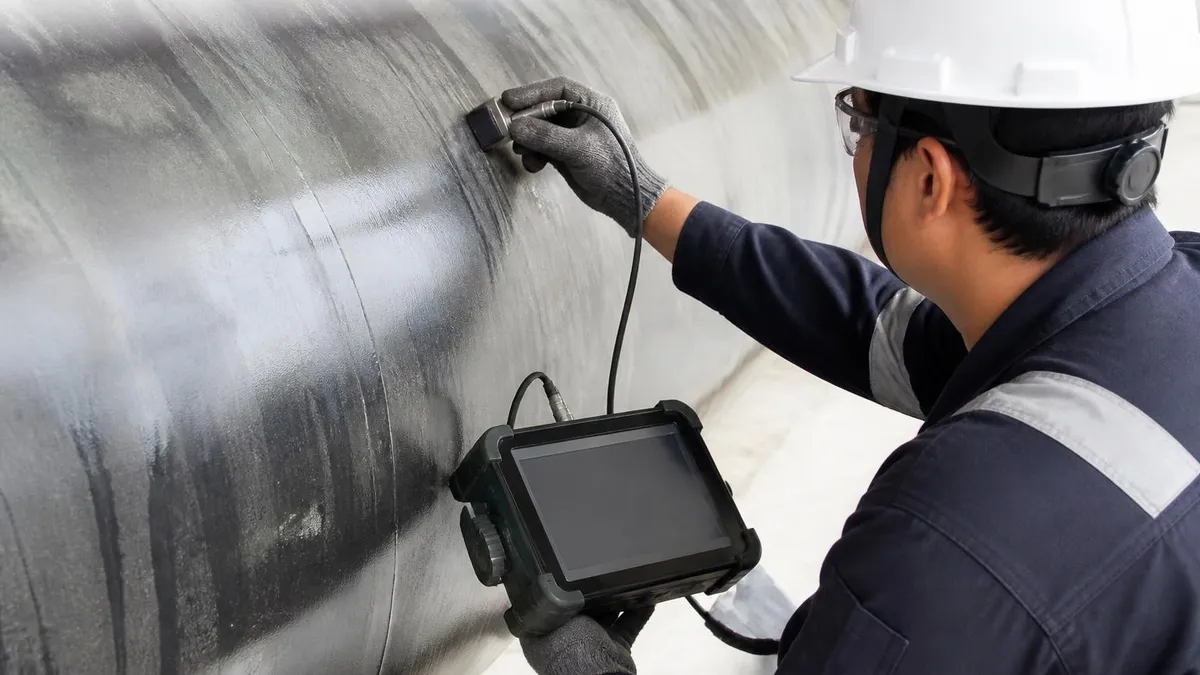
NDT Training: Complete Guide to Non-Destructive Testing Certification Courses in 2026
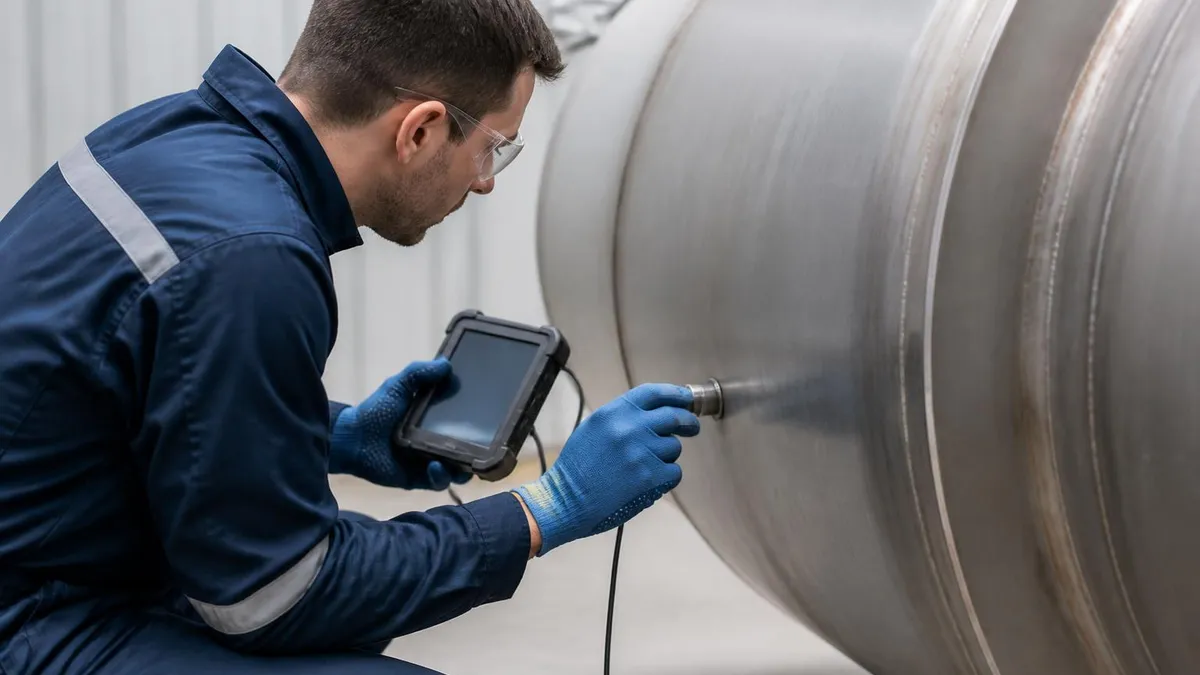
What Is NDT? A Complete Guide to Non-Destructive Testing in 2026
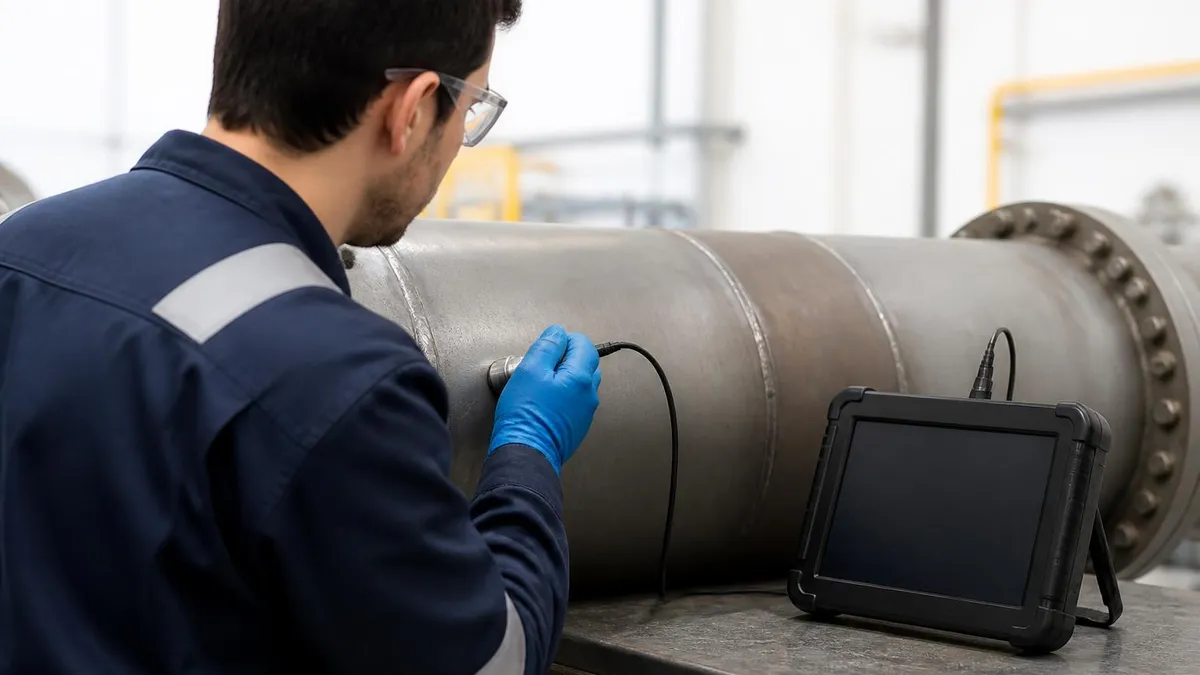
Indeed NDT Jobs: Complete Guide to Finding Non-Destructive Testing Careers in 2026

Crane NDT Inspection: Complete Guide to Non-Destructive Testing for Lifting Equipment

NDT Job Scope: Complete Guide to Non-Destructive Testing Career Opportunities in 2026
About the Author

Educational Psychologist & Academic Test Preparation Expert
Columbia University Teachers CollegeDr. Lisa Patel holds a Doctorate in Education from Columbia University Teachers College and has spent 17 years researching standardized test design and academic assessment. She has developed preparation programs for SAT, ACT, GRE, LSAT, UCAT, and numerous professional licensing exams, helping students of all backgrounds achieve their target scores.