
MRI Technologist Jobs: Salary, Demand, and Career Path Guide 2026 September
MRI technologist jobs guide: salary ranges, top hiring states, certification requirements, and how to land your first role in magnetic resonance imaging. 📝
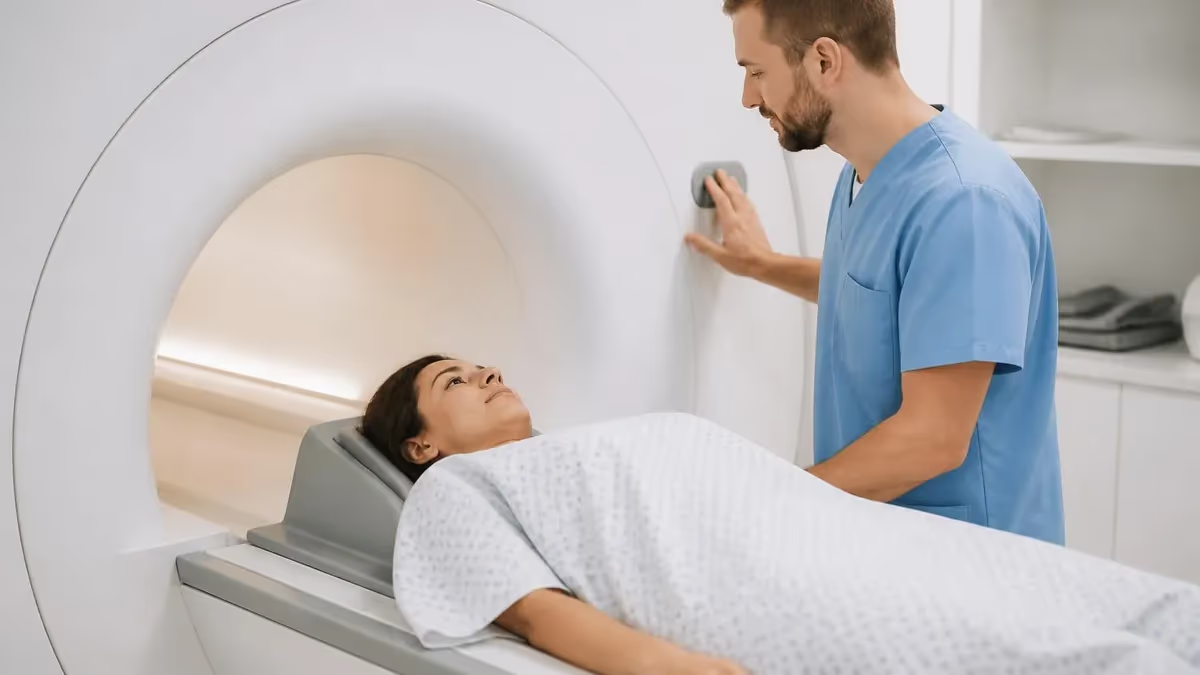
Hospitals cannot keep enough MRI technologists on staff. That single sentence drives almost everything you need to know about this career right now. Outpatient imaging centers, level-one trauma units, and small rural clinics are all running ads on the same job boards, and many of them are offering sign-on bonuses just to get someone through the door for an interview.
If you are weighing whether to pursue MRI as a career, the answer is not just about money. It is about whether you want to sit at a scanner console for eight to twelve hours, talk patients through claustrophobia, and learn to read pulse sequences like a second language. The pay is good. The hours can be brutal. And the work matters in a way that is hard to fake.
This guide breaks down what MRI tech jobs actually look like in 2026: sheriff from real Bureau of Labor Statistics data, where the openings are concentrated, what certifications hiring managers want, and the path from zero experience to your first scanner room. We will also cover the parts nobody tells you about, like night shifts, on-call rotations, and why some techs burn out within five years while others stay for thirty.
Most jobs require an ARRT certification in MRI, an associate degree from an accredited program, and clinical hours. A few states tack on additional licensure. The rest of what you need to know is in the sections below.
MRI Technologist Job Market at a Glance
What an MRI Technologist Actually Does All Day
The job title sounds straightforward. You operate an MRI scanner. In practice, the day is split across patient prep, image acquisition, equipment troubleshooting, and the documentation nobody warned you about in school.
A typical morning starts before the first scheduled patient. You log into the scanner, run a daily quality assurance check, and verify the coil inventory. By eight o'clock the first patient is in the changing room and you are walking them through the metal screening form for the third time because they forgot to mention the pacemaker they got in 2019.
Patient screening and safety
Screening is not paperwork. It is the single most important safety task in the entire department. Every ferrous object that enters the magnet bore becomes a projectile. Every implant, every tattoo with iron-based ink, every embedded shrapnel fragment changes how you scan or whether you scan at all. A tech who rushes screening will eventually hurt someone.
Running the scan
Modern scanners do a lot of the heavy lifting. You select a protocol, position the coil, drop the patient into the bore, and monitor the acquisition. But protocols need adjustment. Patients move. Sequences fail. You learn to read the raw images as they come up on the console and decide whether to repeat a series before sending the study to the radiologist.
Documentation and handoff
After every patient you chart contrast doses, scan times, patient positioning, and any incidents. Then you reset the room, swap coils for the next exam type, and start over. A busy outpatient center can push twenty patients per tech per shift.
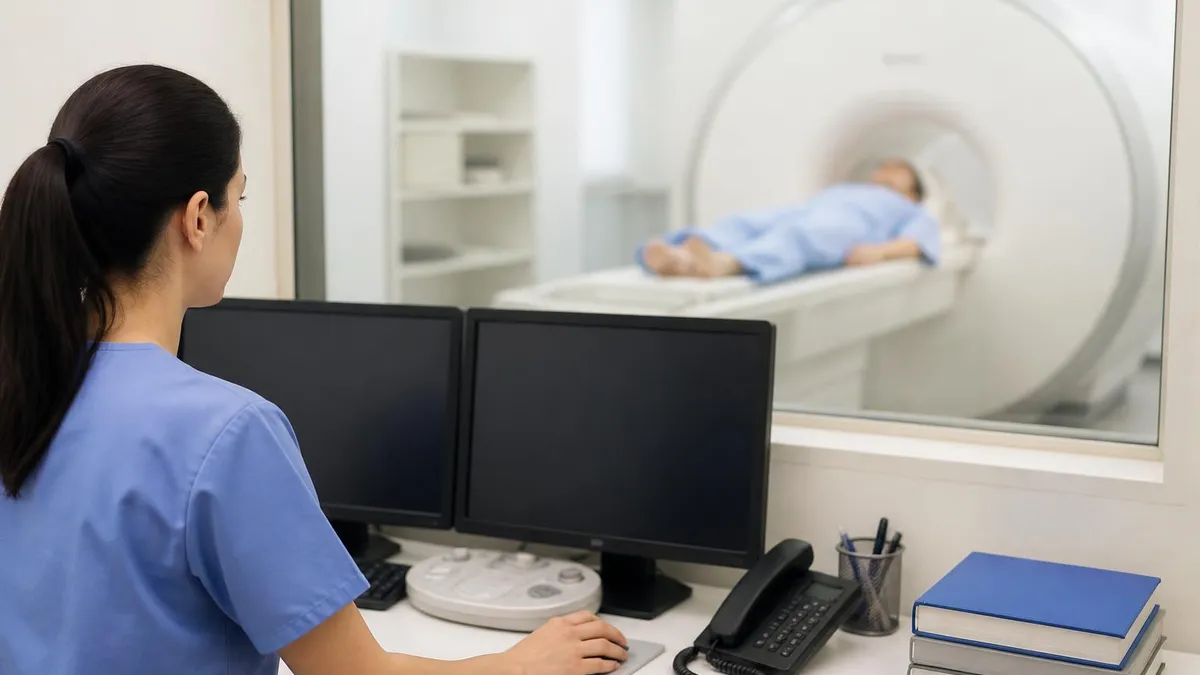
MRI tech is not a desk job. You will lift patients, run a console under time pressure, and occasionally work overnight call. If you cannot stand on your feet for eight hours or struggle with anxious patients, this career will grind you down fast. On the other hand, the work is genuinely interesting, the pay is well above the national median, and the demand keeps growing year over year.
Salary by Setting and Region
Salary varies more by employer type and geography than by years of experience. A new graduate at a California outpatient imaging chain often out-earns a fifteen-year veteran in rural Mississippi. That is the reality of how this market works.
According to the latest BLS Occupational Employment Statistics, the median annual wage for MRI technologists is $83,740. The bottom ten percent earn under $60,000, while the top ten percent clear $108,000. Outpatient care centers pay the highest median wages, followed by general medical hospitals, physician offices, and academic medical centers in that order.
The five highest-paying states
California, Washington, Hawaii, the District of Columbia, and Oregon dominate the top of the salary tables. The Bay Area, Seattle, and Honolulu metro areas regularly post MRI tech listings above $120,000 base, before overtime and call differential.
What sign-on bonuses actually look like
Sign-on bonuses range from $2,500 for routine outpatient roles to $25,000 for hard-to-fill night-shift hospital positions. Most carry a two-year commitment with prorated repayment clauses. Read those clauses carefully. A bonus is not a gift.
Where MRI Technologists Work
Predictable Monday-Friday daytime hours, higher volume per tech, often the best base pay with modest call requirements. New graduates frequently start here.
Twenty-four-hour coverage, evening and weekend differentials, more complex cases including trauma and inpatient stat orders. Best variety for skill building.
Travel between rural facilities in a trailer-mounted scanner, premium pay for the lifestyle, isolating for some techs. Two or more years experience required.
Lower base salary but exposure to advanced sequences, research protocols, and teaching opportunities for new graduates entering university hospital systems.
The Path From No Experience to Your First Job
There is no shortcut. Every legitimate MRI tech job in the United States requires either an associate degree in radiologic technology with an MRI specialty, or a primary pathway program in MRI itself. Both routes end at the same place: the ARRT certification exam.
Most working techs started as radiologic technologists, gained a year or two of general X-ray experience, then cross-trained into MRI. This route gives you a fallback skill if MRI burns you out. The direct MRI pathway is faster but locks you into one modality.
Accredited programs
JRCERT accredits the radiologic technology programs that feed into MRI. Programs run twenty-one to twenty-four months and include classroom physics, anatomy, patient care, and roughly 1,500 clinical hours at affiliated hospitals. Tuition ranges from $8,000 at community colleges to $35,000 at private institutions.
The ARRT exam
The ARRT post-primary MRI certification exam covers patient care, safety, image production, and procedures. It is a 220-question test with a three-and-a-half-hour time limit. The pass rate hovers around 88 percent for first-time test takers from accredited programs. Use a structured prep plan and take practice tests under timed conditions before your scheduled date.
Application Checklist for Your First MRI Tech Role
- ✓ARRT-MRI certification active and listed at top of resume
- ✓State license obtained or application in progress where required
- ✓BLS or CPR certification current within the last two years
- ✓Clinical rotation hours documented with site, dates, and case types
- ✓Two professional references from clinical instructors or lead techs
- ✓Cover letter naming the specific facility and one detail you researched
- ✓Scrubs and closed-toe shoes for any on-site interview or shadow shift
- ✓LinkedIn profile updated with all credentials and rotation experience
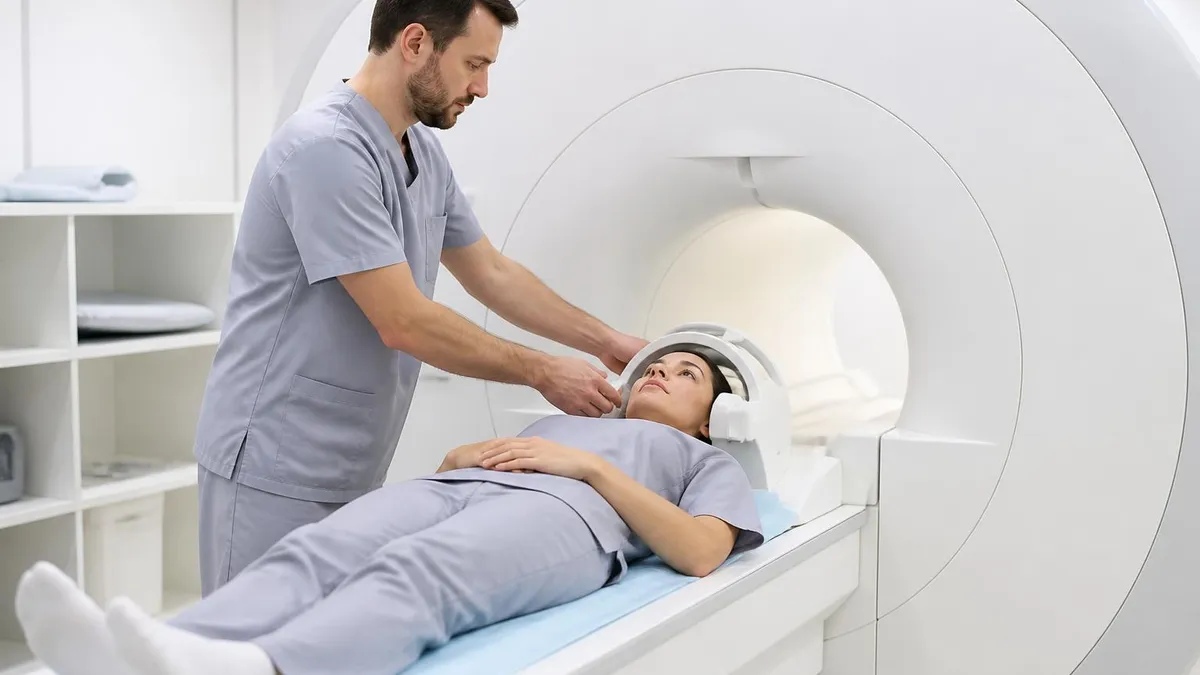
Career Stages and Salary Expectations
Most new graduates start at outpatient imaging centers or community hospitals. Expect $65,000 to $75,000 base in midwestern and southern markets, $80,000 to $95,000 on the coasts. First-year duties include routine brain, spine, and joint protocols under supervision of a lead tech. Most facilities will pair you with a senior tech for the first 90 days.
What Hiring Managers Actually Look For
Resumes get screened in under thirty seconds. Hiring managers in MRI departments scan for three things: current ARRT-MRI credential, clinical hours at a recognized teaching hospital, and any specialty experience that matches their case mix. Everything else is filler.
If you are a new graduate, your clinical rotation site matters more than your GPA. A tech who trained at a level-one trauma center has seen more case variety than someone who rotated through a single outpatient clinic. Lead with the site, not the school.
Soft skills that close the offer
The interview is where techs win or lose the job. Managers want to know how you handle a panicking patient in the bore, what you do when a sequence fails halfway through a contrast study, and whether you can work next to the same radiologist for ten hours without conflict. Prepare specific stories. Vague answers kill candidates faster than missing credentials.
Red flags in job postings
If a posting offers significantly above market rate with no sign-on commitment, ask why. High turnover roles are sometimes high turnover for a reason. Abusive lead techs, broken equipment, or chronic understaffing that pushes solo coverage on night shifts. Ask current employees on Glassdoor before you sign.
Roughly twenty-eight states require MRI technologists to hold a state license in addition to ARRT certification. Texas, Florida, and New York have their own application processes with separate fees and renewal cycles. Check your state board before you accept a job in a new market, especially if you are relocating for the role. Missing a state license requirement can delay your start date by weeks.
Job Boards and Recruiters Worth Your Time
The big general boards work for MRI tech roles, but the best openings often hit specialty boards first. AHRA, ARRT job board, and Medical Imaging Recruiters post openings that never make it to Indeed. Travel agencies like Aya Healthcare, Cross Country, and AMN dominate the contract market.
Contract MRI tech roles pay $2,400 to $3,800 per week before taxes, including housing stipend. A first-year contract tech can clear $150,000 in twelve months if they take back-to-back assignments. The tradeoff is constant moving, no employer-sponsored retirement match, and gaps between contracts.
Direct hire versus agency
If you want stability, apply directly to facility websites. Internal recruiters move faster than third-party agencies and the negotiation is cleaner. Agencies make sense if you want geographic flexibility or you are testing markets before committing.
MRI Tech Career Pros and Cons
- +Strong job security with 6% projected growth through 2034
- +Above-median pay without requiring a four-year degree
- +Clear specialization paths into cardiac, breast, or interventional MRI
- +High patient interaction without bedside nursing demands
- +Multiple work settings from outpatient to mobile to research
- −Night, weekend, and on-call rotations common at hospitals
- −Standing for entire shift with frequent patient lifting
- −Emotional toll of working with critically ill or anxious patients
- −Continuing education and recertification every two years
- −Some states require additional licensure beyond ARRT
Red Flags to Watch in MRI Tech Job Postings
- ✓Base salary listed well above local market with no sign-on commitment
- ✓Vague language about on-call coverage or weekend rotation frequency
- ✓Multiple identical listings posted by the same facility over six months
- ✓No mention of specific scanner manufacturer or field strength
- ✓Required experience that exceeds the realistic candidate pool by years
- ✓Negative Glassdoor reviews from former techs in the same department
How the Career Compares to Other Imaging Roles
MRI tech is not the only path inside diagnostic imaging. CT, ultrasound, nuclear medicine, and interventional radiology all share the same starting point. An associate degree and an ARRT credential. The choice between modalities comes down to lifestyle, pay, and what kind of physics you enjoy.
CT techs scan faster, see more trauma, and earn slightly less on average. Ultrasound sonographers work in quieter rooms with more patient contact but lower ceiling on pay. Nuclear medicine techs handle radioactive isotopes and tend to have the smallest job market but the highest pay per hour in some regions. Interventional radiology techs work in procedure suites alongside physicians, blending imaging with hands-on patient care during catheter-based interventions.
Cross-training opens doors
The techs who reach $130,000-plus by year ten almost always hold credentials in two or more modalities. CT plus MRI is the most common combination because the scheduling overlap works for most hospitals. Dual-credentialed techs are first in line for lead and supervisor positions, and they get the first call when an evening or weekend slot opens up for premium pay.
Moving into management
After eight to ten years, some techs move into imaging department leadership. Lead tech, modality coordinator, and imaging manager roles trade clinical hours for budget meetings and staff scheduling. Pay jumps to $100,000 to $140,000 but the work changes entirely. Most managers I have spoken with say they miss the scanner work within the first year, even as their paychecks climb. It is a real tradeoff, not just a promotion.
Getting Ready for the Job Search
Start before graduation. By the time you sit for the ARRT exam, your resume should already be circulating. Reach out to your clinical instructors a month before testing. Many of them know which facilities are hiring and can pass your name to the right manager.
Build a one-page resume. Two pages if you have prior healthcare experience. Lead with credentials, clinical sites, and modality experience. Skip generic objective statements. Hiring managers want to know what you can do, not what you hope to find.
Build a portfolio of practice cases
Some students walk into interviews with nothing but transcripts and a clinical hours log. The ones who stand out bring a small portfolio of de-identified case studies they helped with during rotation. Two or three brain MRI cases, a spine, a knee, and one challenging case where the scan had to be repeated for a specific reason. Hiring managers love seeing how you think about image quality.
Network in your local AHRA chapter
Most chapters allow students to attend evening meetings for free, and that is where lead techs and imaging directors talk shop. Show up twice and people will remember your face. Show up four times and someone will hand you a card.
Join your state AHRA chapter as a student member while you are still in school. Chapter meetings are where lead techs talk about openings before HR posts them online. Many MRI tech jobs are filled by referral, not by ATS keyword match.
The Day-to-Day Realities Nobody Warned You About
Job descriptions list responsibilities. They do not list what the job feels like at six in the morning during your fourth twelve-hour shift in a row. There are parts of MRI tech work that only become obvious after a year or two on the floor, and most of them are worth knowing before you sign up.
The patient mix changes everything
An outpatient orthopedic center sees mostly knee and shoulder scans on ambulatory adults. A trauma hospital sees confused stroke patients, intubated ICU transfers, and pediatric oncology cases. The same credential, the same scanner, completely different jobs. New techs underestimate how much the patient population shapes daily satisfaction.
Working with radiologists
Radiologists are not interchangeable. Some want clean studies handed off with minimal commentary. Others want techs flagging anything unusual before they open the case. Learning each radiologist's preferences is half the soft-skill battle. A tech who reads the room correctly becomes the one radiologists request by name.
Equipment ages faster than your career
The scanner you trained on is not the scanner you will be using in five years. Manufacturers push software updates, replace coils, and roll out new sequence packages every twelve to eighteen months. The techs who stay employable are the ones who treat continuing education as a baseline expectation, not an optional add-on.
Top Five Highest-Paying States for MRI Techs
Average annual wage near $108,000 with Bay Area hospitals frequently posting $125,000-plus for experienced techs. Highest cost of living offsets the headline number, but PRN and travel rates also lead the country.
Seattle metro and Spokane region post strong base pay around $104,000. Strong union representation in many hospital systems supports differential pay and overtime caps.
Premium pay around $102,000 to offset cost of living. Limited number of openings makes timing essential. Honolulu medical center is the largest employer in the state for MRI techs.
Average wages near $101,000 driven by academic medical centers and government health systems. High concentration of research roles also boosts mid-career options.
Portland and Eugene markets average around $97,000 with strong outpatient imaging growth. Lower cost of living than California or Washington makes take-home pay competitive.
Final Thoughts on Picking This Career
MRI technology is a stable, well-compensated job in a healthcare system that desperately needs more qualified people. The barrier to entry is real but not impossible. Two years of school, a tough but passable exam, and clinical hours that most students survive without major drama. Compared to nursing, pharmacy, or any path that requires a doctorate, this is one of the shorter routes to a six-figure healthcare income.
The downsides are real too. You will work weekends. You will lift patients. You will deal with the emotional weight of scanning people who are visibly terrified or already very sick. Some weeks the job will feel routine and other weeks it will leave you completely drained. If you walked into nursing thinking it would be like a TV show, MRI tech work will surprise you in the same way.
If after reading all of this you still want to do the work, the path is clear. Pick an accredited program. Schedule a campus tour. Talk to current students about their clinical sites and ask which hospitals hire from that program directly. Then put your head down and finish. The job market will still be hungry when you graduate.
One more honest note. The techs who last in this career tend to share two traits. They care about getting the image right, and they care about how the patient feels in the bore. Skills can be taught, but those two attitudes are pretty much fixed by the time you get to your first job. If both ring true for you, MRI work will feel like a fit.
MRI Questions and Answers
About the Author

Medical Laboratory Scientist & Clinical Certification Expert
Johns Hopkins UniversityDr. Sandra Kim holds a PhD in Clinical Laboratory Science from Johns Hopkins University and is certified as a Medical Technologist (MT) and Medical Laboratory Scientist (MLS) through ASCP. With 16 years of clinical laboratory experience spanning hematology, microbiology, and molecular diagnostics, she prepares candidates for ASCP board exams, MLT, MLS, and specialist certification tests.
Join the Discussion
Connect with other students preparing for this exam. Share tips, ask questions, and get advice from people who have been there.
View discussion (8 replies)