
MRI Programs: A Complete Guide to Accredited Schools, Certification Paths, Costs, and Careers
Compare MRI programs in the US: accredited schools, certificate vs degree paths, costs, ARRT certification, salary outlook, and how to choose the right route. 📗
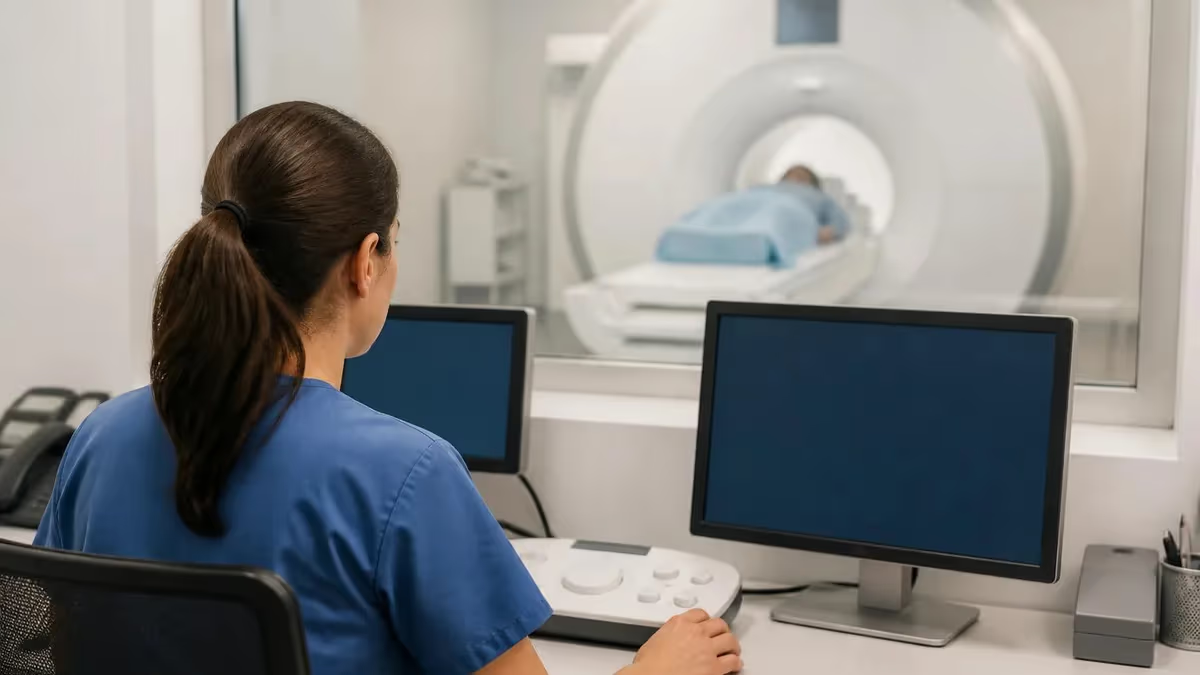
Choosing among the many mri programs available across the United States is the single most important decision a future magnetic resonance imaging technologist makes, because the path you select shapes your eligibility for national certification, your starting salary, and the speed at which you enter the workforce. Whether you are a recent high school graduate, a working radiologic technologist seeking a specialty, or a career changer drawn to healthcare, understanding how these programs are structured, accredited, and funded will save you time and thousands of dollars in wasted tuition. This guide breaks down every realistic route in plain language. Practice with the free MRI - Magnetic Resonance Imaging practice test on PracticeTestGeeks (11 questions with answer explanations).
MRI is a non-ionizing imaging modality that uses powerful magnets and radiofrequency pulses to produce detailed cross-sectional images of soft tissue, making it indispensable for diagnosing neurological, musculoskeletal, cardiovascular, and oncologic conditions. Because the equipment is complex and patient safety around the magnet is critical, employers strongly prefer technologists who have completed formal training. Most quality mri programs blend classroom instruction in physics, anatomy, and pathology with hundreds of supervised clinical hours where students scan real patients under the guidance of registered technologists in a hospital or outpatient imaging center.
In the US, the gold-standard credential is the ARRT certification in Magnetic Resonance Imaging, designated as R.T.(MR). The American Registry of Magnetic Resonance Imaging Technologists, known as ARMRIT, offers an alternative path that some employers accept as well. Both credentialing bodies require documented clinical competencies and passage of a rigorous registry examination. The program you enroll in must be recognized by your chosen credentialing organization, so verifying accreditation and the specific eligibility pathway before you pay any tuition deposit is absolutely essential to avoid a costly dead end.
There is no single correct program length, and that flexibility confuses many applicants. A licensed radiographer can sometimes complete a structured MRI certificate in nine to twelve months, while a person entering healthcare for the first time may need an associate degree spanning two years that includes general education, primary radiography, and an MRI concentration. Some hospitals even run unpaid or low-paid structured on-the-job training programs. Each route carries different prerequisites, costs, and certification consequences that we will examine in detail throughout this article.
Cost is a major deciding factor, and the range is wide. A community college associate program might total eight to fifteen thousand dollars over two years, whereas a private accelerated certificate can cost twenty thousand dollars or more in a single year. Online didactic programs paired with local clinical placements have grown rapidly, offering scheduling flexibility for working adults, but they require you to secure your own clinical site in many cases. Financial aid, employer tuition reimbursement, and scholarships from professional societies can dramatically reduce your out-of-pocket burden if you plan ahead.
Before you commit, sharpen your foundational knowledge with our free mri programs practice materials, which mirror the style of registry questions you will face after graduation. Performing well on practice tests early signals that you are ready for the academic rigor ahead. In the sections that follow, we cover program types, accreditation, the ARRT exam format, realistic costs, a step-by-step enrollment timeline, salary data, and a frequently asked questions section addressing the concerns prospective students raise most often.
For a fuller set of questions on this topic, see our open mri locations near me resource.
Free MRI - Magnetic Resonance Imaging Study Tools
Interactive MRI - Magnetic Resonance Imaging resources on PracticeTestGeeks, free to start:
- Free MRI Knowledge Questions and Answers — 11 questions with instant scoring and answer explanations
- MRI - Magnetic Resonance Imaging flashcards — review key terms and concepts card by card
- MRI - Magnetic Resonance Imaging study guide — topic-by-topic overview of what the exam covers
- MRI - Magnetic Resonance Imaging cheat sheet — one-page printable summary for last-minute review
MRI: upcoming dates and official changes
- Aug 17, 2026: ARRT launched a separate entry-level Imaging Assistant, Magnetic Resonance (I.A.) credential. A reduced $75 fee applied to applications made Aug. 17–Oct. 14, 2026, for testing Oct. 15–Nov. 30, 2026. Later applicants pay $225 and can test on or after Jan. 1, 2027.[1]
- The ARRT MRI exam through the postprimary pathway costs $225, or $450 for candidates whose supporting credential is from NMTCB or ARDMS.[1]
- The ARRT MRI exam for postprimary-pathway candidates has 220 questions: 200 scored and 20 unscored pilot items.[2]
- Postprimary-pathway candidates get 210 minutes for the ARRT MRI exam, inside a 230-minute (3 hours, 50 minutes) appointment.[2]
- To pass the ARRT MRI exam you need a total scaled score of 75 on ARRT's 1–99 scale. This is not a percentage.[3]
All verified MRI facts and sources
Numbers in brackets link to the official sources listed under Sources & last verified. Dates that have passed are removed automatically.
MRI Programs by the Numbers
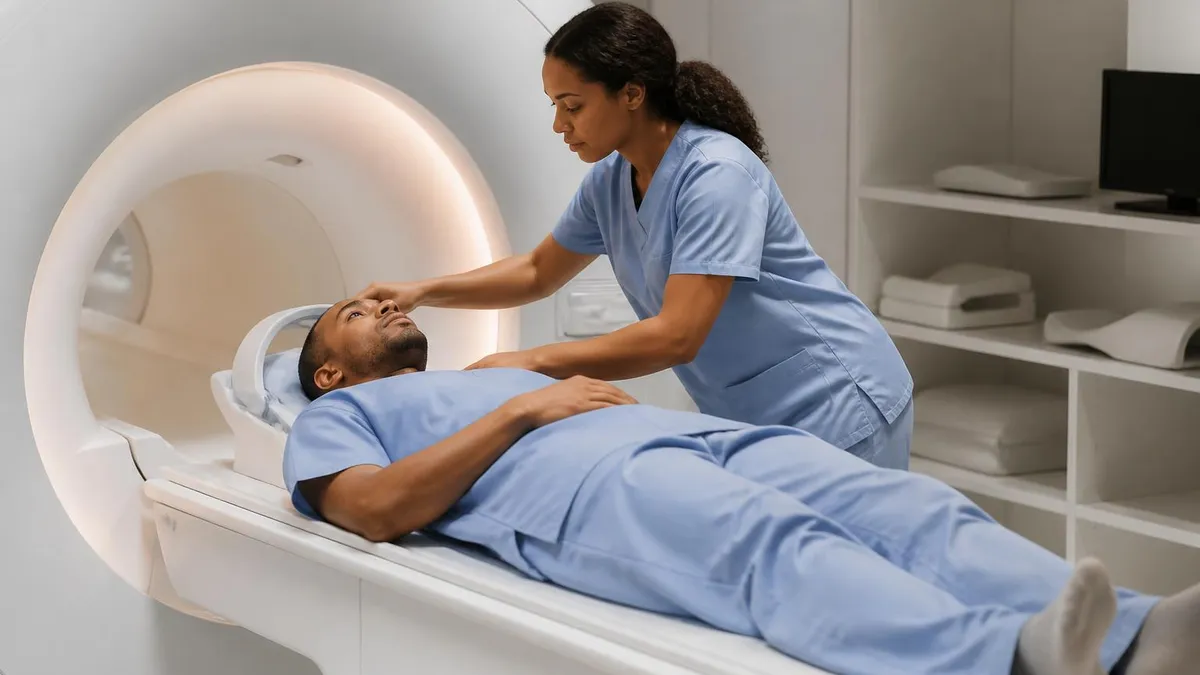
MRI Program Types and Pathways
Designed for licensed radiographers or sonographers who already hold a primary credential. Runs 9 to 14 months and focuses purely on MRI physics, safety, and clinical competencies. Fastest route to the registry exam for those with prior imaging experience.
A two-year route for newcomers to healthcare. Includes general education, primary radiography, and an MRI concentration. Best for students with no prior imaging background who want a broad, employable foundation and structured clinical placement.
Didactic coursework delivered remotely with clinical hours completed at an approved local imaging facility. Ideal for working adults, but you often must secure and document your own clinical site before the program will accept you.
Some large health systems run structured in-house MRI training for existing radiology staff. Often low-cost or paid, but availability is limited and the credential pathway must still satisfy ARRT or ARMRIT clinical requirements.
Accreditation is the foundation that determines whether your hard-earned coursework actually counts toward certification. The most respected programmatic accreditor for MRI is the Joint Review Committee on Education in Radiologic Technology, abbreviated JRCERT. While JRCERT does not yet accredit every standalone MRI certificate, regional institutional accreditation paired with ARRT-recognized curriculum content is the practical baseline you should demand. Always cross-reference a school's claims against the official ARRT website rather than trusting marketing brochures, because a non-recognized program can leave you ineligible to sit for the registry.
Eligibility for the ARRT R.T.(MR) credential follows two main routes. The primary pathway allows candidates to qualify directly through an MRI-specific educational program that documents the required clinical competencies. The post-primary pathway is for technologists who already hold an ARRT credential in another discipline, such as radiography, nuclear medicine, or sonography, and who then complete a defined set of MRI clinical experiences. Knowing which route applies to you changes the type of program you should enroll in and the prerequisites you must satisfy first.
Clinical competency documentation is non-negotiable. ARRT requires candidates to demonstrate and log a specific list of mandatory and elective procedures, including head, spine, musculoskeletal, vascular, and body imaging, performed on actual patients. Your program must provide enough clinical volume and supervision to complete these competencies within the program window. Before enrolling, ask the admissions office for a written guarantee of clinical placement and the average number of cases students scan per week, because thin clinical exposure is the most common reason students fail to graduate on time.
State licensure adds another layer that varies dramatically by location. Some states, such as California, Florida, Texas, and New Mexico, regulate MRI or radiologic personnel and require state licenses in addition to national certification. Others have no state requirement at all and rely solely on the ARRT credential. Research your specific state's radiologic health branch early, because a program that satisfies national standards may still leave gaps for your local licensing board if it lacks a particular module or supervised hour count.
Transfer credit and prior learning assessment can shorten your timeline if you already hold a relevant credential. A registered radiographer entering an MRI certificate will typically receive credit for anatomy, patient care, and radiation-adjacent coursework, allowing the program to concentrate on magnetic resonance physics and modality-specific safety. Always request an official credit evaluation in writing before enrolling, and confirm that the awarded credits satisfy both the school's graduation requirements and the credentialing body's didactic content categories.
Finally, scrutinize program outcomes data, which reputable accredited programs publish openly. The two figures that matter most are the credentialing examination pass rate and the job placement rate, both typically reported on a five-year average. A program with a registry pass rate consistently above eighty percent and a placement rate above seventy-five percent demonstrates that its curriculum and clinical partnerships genuinely prepare graduates. If a school refuses to share these numbers or buries them, treat that opacity as a serious warning sign and look elsewhere.
MRI Programs Curriculum and Clinical Training
The classroom portion of any credible MRI program centers on magnetic resonance physics, where students learn about precession, T1 and T2 relaxation, pulse sequences, gradients, and signal-to-noise tradeoffs. Alongside physics, the curriculum covers sectional anatomy, pathology recognition, pharmacology of gadolinium contrast agents, and patient care principles. This theoretical grounding is what separates a competent technologist from a button pusher and directly mirrors the content categories tested on the registry examination administered by ARRT.
Equally vital is the MRI safety curriculum, which addresses the four safety zones, ferromagnetic projectile hazards, implant screening, specific absorption rate limits, and emergency quench procedures. Programs increasingly dedicate a full course to safety because magnet-related accidents, though rare, can be fatal. Expect written competency checks on screening forms and conditional implant labeling, since employers and accreditors treat safety knowledge as the single most important professional attribute of a new MRI technologist.
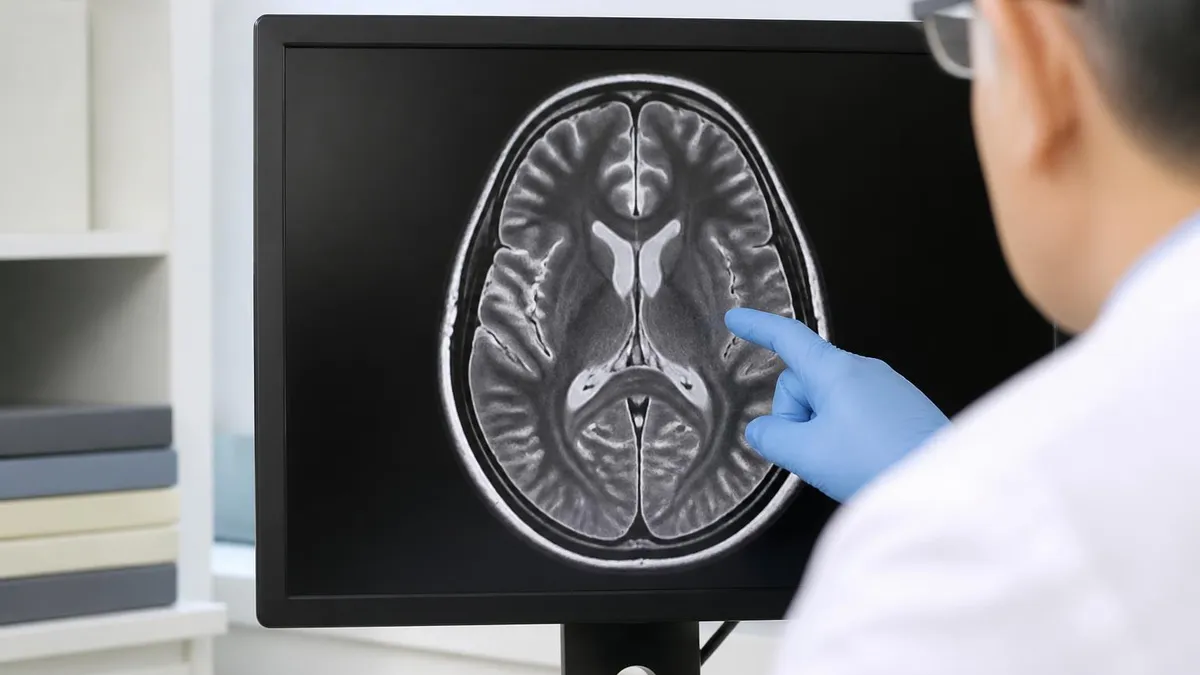
Certificate vs. Associate Degree: Which MRI Program Path Is Right?
- +Certificate programs finish in under a year for licensed technologists
- +Lower total tuition than a full two-year degree
- +Faster entry into the workforce and earning potential
- +Concentrated focus on MRI physics and safety only
- +Ideal for radiographers adding a high-demand specialty
- +Post-primary ARRT pathway is well-defined and reliable
- −Certificates usually require an existing imaging credential
- −Newcomers must first complete a primary radiography program
- −Associate degrees take two years and cost more overall
- −Online programs may require you to find your own clinical site
- −State licensure gaps can require extra coursework
- −Accelerated pacing demands strong time-management discipline
Pros and Cons at a Glance
| Pros | Cons |
|---|---|
| Certificate programs finish in under a year for licensed technologists | Certificates usually require an existing imaging credential |
| Lower total tuition than a full two-year degree | Newcomers must first complete a primary radiography program |
| Faster entry into the workforce and earning potential | Associate degrees take two years and cost more overall |
| Concentrated focus on MRI physics and safety only | Online programs may require you to find your own clinical site |
| Ideal for radiographers adding a high-demand specialty | State licensure gaps can require extra coursework |
| Post-primary ARRT pathway is well-defined and reliable | Accelerated pacing demands strong time-management discipline |
MRI Programs Enrollment Checklist
- ✓Confirm the program is recognized by ARRT or ARMRIT in writing.
- ✓Verify regional or JRCERT accreditation of the institution.
- ✓Request the five-year registry exam pass rate and job placement rate.
- ✓Determine whether you qualify for the primary or post-primary pathway.
- ✓Check your state's specific MRI or radiologic licensure requirements.
- ✓Get a written guarantee of clinical placement and average case volume.
- ✓Compare total cost including fees, books, and background-check expenses.
- ✓Apply for financial aid, scholarships, and employer tuition reimbursement.
- ✓Confirm prerequisite courses such as anatomy and physiology are met.
- ✓Schedule and pass any required entrance assessment or interview.
Always demand the five-year registry pass rate before enrolling
A program's five-year ARRT credentialing pass rate is the most honest indicator of curriculum quality and clinical strength. Schools above eighty percent consistently prepare graduates who pass on the first attempt. If an admissions counselor cannot or will not produce this figure in writing, treat the silence as a red flag and continue your search elsewhere.
The financial picture of MRI programs spans a wide range, and understanding the full cost of attendance prevents unpleasant surprises. A public community college associate degree often totals between eight and fifteen thousand dollars across two years for in-state residents, while a private accelerated certificate can reach twenty to thirty thousand dollars in a single year. Beyond tuition, budget for textbooks, lab fees, background checks, immunizations, professional liability insurance, uniforms, and the ARRT examination fee, which collectively add one to three thousand dollars to your real out-of-pocket investment.
Financial aid can dramatically soften that burden if you plan early. Federal aid through the FAFSA is available at accredited institutions, and many MRI students qualify for Pell Grants and subsidized loans. Professional organizations such as the American Society of Radiologic Technologists offer modality-specific scholarships, and numerous hospitals provide tuition reimbursement in exchange for a service commitment after graduation. Pursuing employer sponsorship while you still work as an aide or radiographer is one of the smartest ways to graduate with little or no debt at all.
The return on that investment is strong. According to the Bureau of Labor Statistics, MRI technologists earned a median annual wage of roughly eighty-three thousand dollars in 2024, with the top ten percent exceeding one hundred and ten thousand dollars. Geographic location matters enormously: technologists in California, Massachusetts, and the Pacific Northwest frequently earn well above the national median, while rural and southern markets pay less but offer a lower cost of living and sometimes signing bonuses to attract scarce talent.
Job growth outpaces the broader economy. The BLS projects employment of MRI technologists to grow about six percent through 2033, driven by an aging population, expanding outpatient imaging, and the continued shift toward non-ionizing diagnostics. This sustained demand translates into genuine job security and the use to negotiate schedules, shift differentials, and relocation packages. Cross-training in a second modality such as CT or mammography further increases your value and shields you from any localized downturn in a single specialty.
Work settings shape both pay and lifestyle. Hospitals offer the broadest case variety, around-the-clock operations with premium night and weekend differentials, and rapid skill growth, but they also demand on-call coverage. Outpatient imaging centers and physician-owned practices typically run daytime hours with predictable schedules, appealing to technologists balancing family life. Mobile MRI units and travel assignments command the highest hourly rates and signing incentives, rewarding flexibility with pay that can exceed a hundred dollars per hour in high-demand contracts.
To benchmark where you stand against the knowledge employers expect on day one, work through our free FREE MRI Physics Questions sets and track your improvement over several weeks. Strong physics scores correlate tightly with registry success and with the confidence to troubleshoot artifacts at the console. Treating practice testing as a routine habit, not a last-minute scramble, is the single behavior that separates technologists who pass on the first try from those who must retake the costly exam.
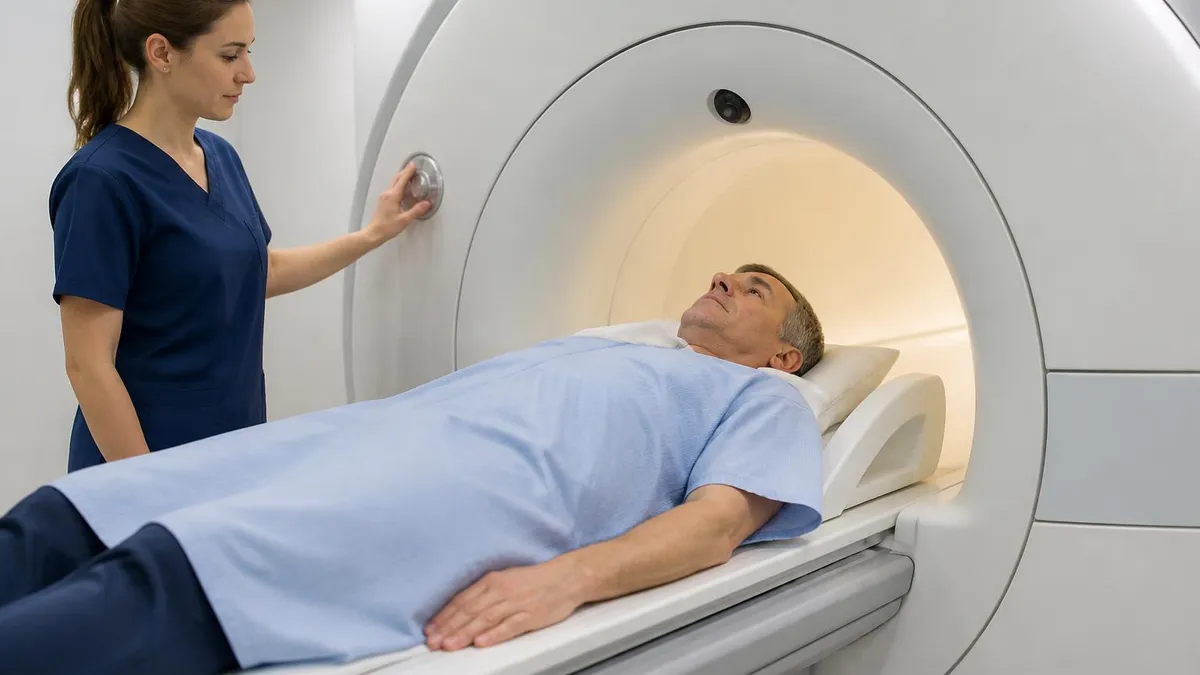
Enrolling in a program that is not recognized by ARRT or ARMRIT can leave you ineligible to sit for the registry exam, wasting a year and thousands of dollars. Never rely on a school's marketing claims alone. Cross-check the program directly on the official ARRT website and confirm your eligibility pathway in writing before submitting any tuition deposit.
Certification is the milestone that converts your education into a license to practice, and the ARRT R.T.(MR) examination is the assessment standing between graduation and your first job. The computer-based test is administered at Pearson VUE centers and contains scored multiple-choice questions drawn from defined content categories: patient care, safety, image production, and procedures. Understanding how the exam distributes its weighting lets you allocate study time intelligently rather than spreading effort evenly across topics that carry unequal importance on test day.
The patient care and safety domains together command a substantial share of the exam, reflecting the profession's emphasis on protecting patients around a powerful magnet. Expect detailed questions on screening for contraindicated implants, recognizing conditional device labeling, managing contrast reactions, and responding to a magnet quench. Image production questions probe your command of pulse sequences, parameters, artifacts, and the physics principles that govern signal and contrast. Procedures questions test region-specific protocols and the anatomy you must recognize to confirm adequate coverage.
Preparation should begin during your program, not after it. The candidates who pass on the first attempt almost universally maintain a steady cadence of practice questions throughout their final clinical semester, reviewing every missed item until the underlying concept is secure. Build a study calendar that front-loads physics and safety, since those domains carry heavy weight and reward repetition. Reserve the final two weeks for timed full-length simulations that rebuild stamina and replicate the pressure of the real testing environment.
The registry is not the end of your obligations. ARRT requires continuing education to maintain certification, typically twenty-four credits every two years, plus periodic continuing qualifications requirements in your modality. Staying current protects your credential and keeps you marketable as protocols and equipment evolve. Many employers cover the cost of continuing education and conference attendance, so factor lifelong learning into your career plan rather than treating the registry exam as a one-time hurdle to clear and forget.
If you do not pass on your first attempt, the situation is recoverable but costly. ARRT permits retakes after a waiting period, and each attempt requires another examination fee. A failed attempt usually signals a specific weak domain rather than broad unpreparedness, so analyze your score report, target the deficient category with focused drills, and lean on your program's review resources. Most repeat candidates pass the second time once they replace anxiety-driven cramming with a disciplined, data-guided remediation plan built around honest practice testing.
Finally, think beyond the entry credential. Experienced MRI technologists advance into lead technologist roles, MRI safety officer positions, applications specialist jobs with equipment manufacturers, and education or program-director careers. Some pursue advanced imaging certificates, bachelor's completion degrees, or management credentials that open the door to department leadership. The certification you earn from a solid MRI program is therefore not a ceiling but a launchpad, and the study habits you build now will compound across decades of a stable, well-compensated healthcare career.
With the big-picture decisions behind you, a handful of practical habits will carry you smoothly from acceptance letter to first paycheck. Start by treating your clinical rotations as an extended job interview, because the imaging departments where you train are frequently the ones that hire you. Arrive early, volunteer for difficult cases, learn each technologist's name, and ask thoughtful questions about protocol choices. The reputation you build at your clinical site often matters more to a hiring manager than your grade point average ever will.
Master the screening process until it becomes second nature, since patient safety is the competency employers scrutinize most. Practice reading implant cards, interpreting conditional labeling, and walking nervous patients through the magnet environment with calm authority. Familiarize yourself with reference resources for implant compatibility so that you never guess. A technologist who handles screening flawlessly earns immediate trust from radiologists and supervisors, and that trust accelerates your transition from supervised trainee to independent operator at the console.
Build a sustainable study routine rather than relying on bursts of cramming. Twenty focused minutes of practice questions each day, reviewed carefully, outperforms a frantic weekend marathon before an exam. Keep a running log of concepts you miss, group them by domain, and revisit them weekly until they stop appearing on your error list. This spaced-repetition approach mirrors how the brain consolidates lasting knowledge and is the method behind nearly every high first-attempt registry pass rate among graduating cohorts.
Network deliberately within the profession well before you need a job. Join your state radiologic society, attend a regional conference, and connect with working technologists on professional platforms. Many MRI positions are filled through referrals long before they are publicly posted, and a single conversation can surface an opening, a mentor, or an offer of clinical site placement. The radiology community is smaller and more interconnected than newcomers expect, so cultivate genuine relationships rather than transactional contacts.
Document everything carefully throughout your program. Keep organized records of completed competencies, clinical hours, immunizations, certifications, and continuing education from day one. When it comes time to apply for ARRT eligibility, state licensure, or your first position, a well-maintained portfolio spares you the frantic scramble to reconstruct lost paperwork. Employers also notice candidates who present polished, complete documentation, reading it as evidence of the conscientiousness the role demands around a hazardous magnetic environment.
Finally, protect your wellbeing across the demanding program months. MRI training combines dense academics with physically active clinical shifts, and burnout derails capable students every term. Guard your sleep, eat properly before long rotations, and lean on classmates as study partners and emotional support. The graduates who finish strong are rarely the most naturally gifted; they are the ones who paced themselves, sustained good habits, and kept their eyes on the rewarding, stable career waiting on the other side of the registry exam.
Sample MRI - Magnetic Resonance Imaging Practice Questions
Try these questions from our free MRI - Magnetic Resonance Imaging practice tests. The correct answer and an explanation follow each question.
A candidate applying for the ARRT MRI registry via the post-primary pathway must hold a primary ARRT certification in which of the following disciplines?
- A. Medical dosimetry
- B. Radiography, nuclear medicine, radiation therapy, or sonography
- C. Dental radiology
- D. Medical assisting
Answer: B. Radiography, nuclear medicine, radiation therapy, or sonography
The post-primary pathway requires a current, active ARRT primary credential in an approved imaging or therapy discipline.
A patient is claustrophobic and anxious before their MRI. Which non-pharmacological intervention is most appropriate first?
- A. Refuse the exam and reschedule
- B. Explain the procedure, offer a patient communication system, and consider feet-first entry
- C. Immediately administer IV sedation
- D. Use a stronger magnetic field to shorten scan time
Answer: B. Explain the procedure, offer a patient communication system, and consider feet-first entry
Thorough patient education, reassurance, mirror/prism glasses, music headphones, and entering the bore feet-first can significantly reduce claustrophobia before pharmacological intervention.
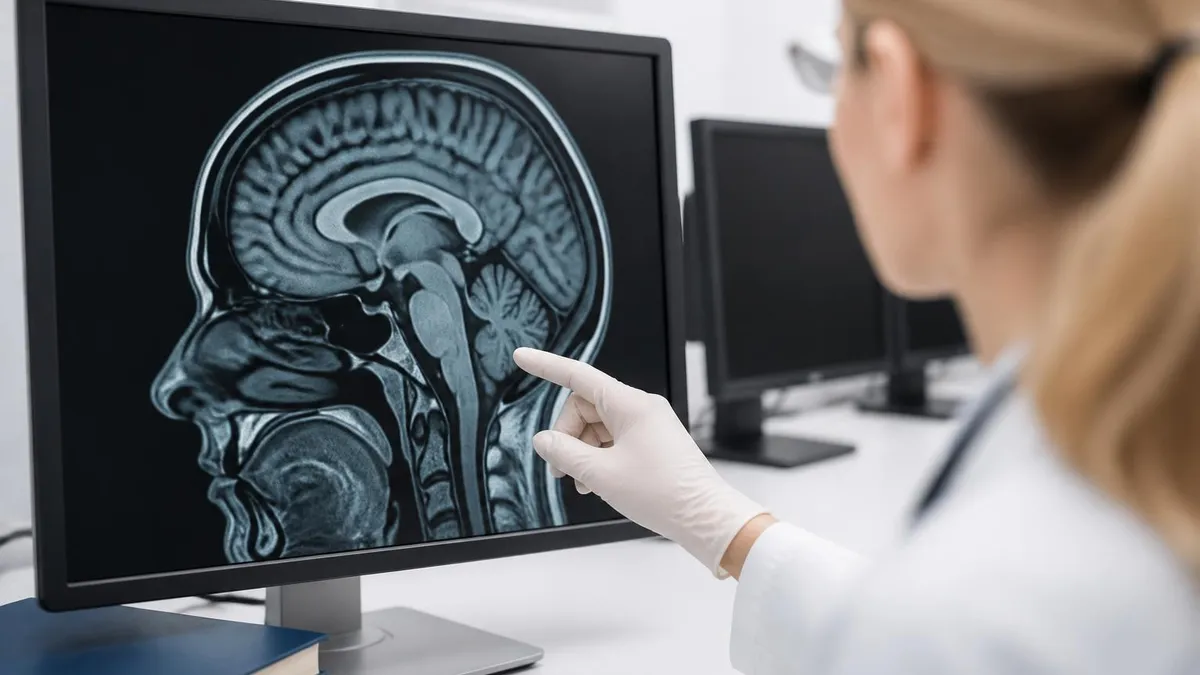
The corpus callosum is best evaluated on which MRI plane for assessing callosal agenesis?
- A. Axial
- B. Coronal
- C. Sagittal
- D. Oblique
Answer: C. Sagittal
The sagittal midline plane provides the best single view of the entire corpus callosum from genu to splenium for assessing agenesis or dysgenesis.
Wraparound (aliasing) artifact in MRI is caused by:
- A. Structures outside the FOV contributing signal that is folded back into the image
- B. Gradient non-linearity at the edges of the bore
- C. T2* dephasing from metallic objects
- D. Phase errors from pulsatile flow
Answer: A. Structures outside the FOV contributing signal that is folded back into the image
When anatomy extends beyond the selected FOV in the phase-encode direction, it is aliased and appears superimposed on the opposite side of the image.
Take the full MRI - Magnetic Resonance Imaging practice test
MRI Questions and Answers
Sources & last verified
- The American Registry of Radiologic Technologists — exam fee, other (official source). “Postprimary (M, CT, MR, BD, CI, VI, VS, BS, R.R.A.): $225 Postprimary (CT, MR, BD, or VS—using NMTCB as supporting category): $450 Postprimary (MR, VS,…” Verified Oct 15, 2026.
- assets-us-01.kc-usercontent.com — number of questions, time limit (official source). “MRI Scored Items 200 Pilot Items 20 Total Items 220 Test Time 210 min” Verified Oct 15, 2026.
- The American Registry of Radiologic Technologists — passing score (official source). “Our exam scoring scale ranges from 1 to 99, and you’ll need a total score of 75 to pass the exam.” Verified Oct 15, 2026.
How we verify: editorial & fact-checking policy. Report an error: contact us.
MRI Practice Test
MRI of Cervical Spine: Complete Guide to Imaging, Anatomy, Pathology, and Patient Preparation
Knee MRI Images: A Complete Guide to Reading, Understanding, and Interpreting Knee Scans
White Spots on Brain MRI: Causes, What They Mean, and When to Worry
Dental Implants and MRI: What Patients and Techs Need to Know About Safety, Artifacts, and Imaging
How this page was made: written with AI tools. Exam facts are checked against the official sources listed below. Not reviewed by a subject-matter expert. Editorial policy
Sources & references
Exam facts on this page (fees, format, dates, passing scores) are checked against these official sources; the date is our last check. Editorial policy
- arrt.org — Passing score, score release, fees, exam information · verified Oct 2026
- assets-us-01.kc-usercontent.com — Renewal, score validity, test delivery, eligibility, exam format, test dates, time limit · verified Oct 2026