
MRI Network: How MRI Networks, Imaging Centers, and Referral Systems Work in the United States
MRI network guide: how imaging networks operate, insurance coverage, scheduling, costs, and how to find the best MRI provider near you in the US. 💡

The mri network you choose can have a bigger impact on your diagnosis, your mri results wait time, and your out-of-pocket cost than almost any other decision in the imaging process. In the United States, an mri network is the web of hospitals, freestanding imaging centers, mobile units, radiologists, and insurance contracts that together determine where you can be scanned, who reads the images, and how quickly results reach your referring physician. Understanding how these networks function is the first step toward getting a faster, cheaper, and more accurate scan.
At its most basic level, an mri network is a contracted relationship. Insurance carriers negotiate rates with imaging providers, and only providers inside that contract are considered in-network. A 1.5 Tesla scan that costs $2,800 at an out-of-network hospital might be $450 at an in-network freestanding center across the street. The clinical images are nearly identical, but the financial exposure to the patient is radically different, which is why network status matters more than most people realize.
Modern mri networks have grown far beyond simple insurance contracts. Large national operators such as RadNet, SimonMed, Akumin, and Shields Health Solutions now run hundreds of imaging centers under unified scheduling platforms, shared radiologist pools, and centralized PACS systems. Independent regional networks and hospital-owned outpatient centers compete alongside them, creating a fragmented but increasingly digital marketplace for patients and referring clinicians.
For the patient, the practical effect is that an MRI order from a primary care doctor rarely points to a single location. Instead, it generates a referral that can be fulfilled at any in-network site that has the right magnet strength, the right coil for the body part, and an open slot. Whether that referral lands in a 3T academic scanner or a wide-bore 1.5T community machine depends on how the network routes appointments behind the scenes.
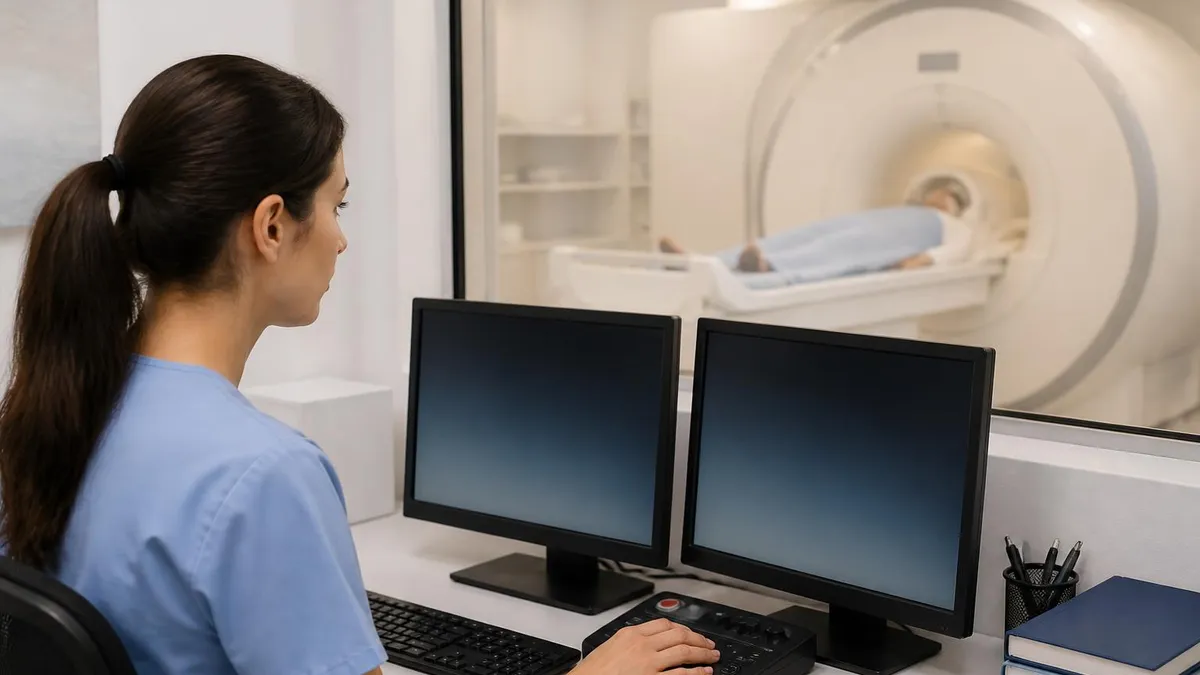
The radiologist side of the network is just as important as the scanner side. Many imaging centers now use teleradiology partners that read studies from across the country, often around the clock. A scan performed at 8 p.m. in Phoenix may be interpreted overnight by a subspecialist in Boston and signed out before the patient gets home. This 24/7 read model is one of the defining features of the modern mri network and a major reason turnaround times have shortened from days to hours.
Patients also need to understand prior authorization, which is the gatekeeping process most insurers use before approving an MRI. Companies such as eviCore, Carelon, and AIM Specialty Health review clinical notes against appropriateness criteria and then route approved patients to preferred network sites. Choosing a site outside that steerage often triggers higher copays, surprise bills, or outright denial, even when the provider is technically in-network.
This guide walks through every layer of the mri network ecosystem: who owns the scanners, how insurance contracts shape access, what the major national chains look like, how scheduling and referrals actually move, what scans typically cost, and how patients and technologists can navigate the system without getting lost. Whether you are a patient preparing for your first MRI, a technologist evaluating a new employer, or a student studying for the registry, the network is the invisible scaffolding behind every scan.
The U.S. MRI Network by the Numbers
How an MRI Network Is Structured
Located inside acute-care hospitals, these scanners handle inpatients, ER cases, and complex outpatient studies. They are often the most expensive sites in the network but offer the broadest subspecialty coverage and 24/7 availability.
Independent or chain-owned outpatient facilities focused exclusively on imaging. They typically offer lower cash prices, faster scheduling, and patient-friendly amenities like wide-bore magnets and evening hours.
Trailer-mounted scanners that rotate between rural hospitals, clinics, and skilled nursing facilities. Mobile units extend network reach into underserved areas but usually run lower field strengths and limited protocols.
Remote radiology groups that read images for multiple network sites, often overnight or on weekends. They provide subspecialty coverage that small centers could not staff independently.
Payers, radiology benefit managers, and prior-auth vendors that decide which network sites a patient can use. This invisible layer shapes 80% of where outpatient MRIs actually happen.
Insurance is the force that gives an mri network its shape. When a payer such as UnitedHealthcare, Aetna, Cigna, or a regional Blue Cross plan negotiates rates with imaging providers, those contracts define who is in-network. The contract specifies allowed amounts for each CPT code, prior-authorization requirements, and sometimes even site-of-service rules that push patients away from hospital outpatient departments toward lower-cost freestanding centers. The network is not a building — it is a stack of contracts.
Most commercial plans require prior authorization for advanced imaging. The patient's ordering physician submits clinical notes to a radiology benefit manager, who reviews the request against guidelines such as ACR Appropriateness Criteria. If approved, the patient receives an authorization number tied to specific CPT codes and, in many plans, a steerage recommendation pointing to one or two preferred network sites. Going elsewhere can void the authorization and create a denied claim.
Medicare operates a little differently. Traditional Medicare does not require prior authorization for most outpatient MRIs, and it pays nationally published fee schedule rates. Medicare Advantage plans, however, behave like commercial insurance and use the same prior-auth vendors. This is one reason many seniors are surprised to learn their Advantage plan blocked a scan that traditional Medicare would have covered without question.
Medicaid coverage of MRI varies dramatically by state. Some states reimburse at rates so low that few freestanding centers accept Medicaid at all, pushing patients into hospital outpatient departments where the network is narrower and waits are longer. Other states have expanded Medicaid managed care contracts that mirror commercial networks. Understanding your specific Medicaid plan's network is essential before scheduling.
High-deductible health plans have changed patient behavior inside the network. When patients are paying the first $3,000–$8,000 out of pocket, the price difference between a hospital MRI and a freestanding MRI becomes very real money. Price-transparency tools, employer-sponsored navigation services, and apps like Sapphire, Healthcare Bluebook, and Turquoise Health now let patients compare in-network prices before scheduling, something that was nearly impossible a decade ago.
Self-pay and cash-pay patients exist in a parallel network. Many imaging centers publish cash prices well below their negotiated insurance rates because they avoid billing overhead. A self-pay MRI of the knee in many U.S. markets now runs $400–$600, sometimes lower than a fully insured patient's coinsurance would be at a hospital. This has created a small but growing direct-pay MRI market that operates outside traditional network rules.
Finally, surprise billing protections under the federal No Surprises Act have changed how network status affects patients in emergencies. If you receive an MRI during an emergency department visit, even at an out-of-network hospital, you generally cannot be billed more than your in-network cost share. For scheduled outpatient MRIs, however, the protections are narrower, and patients still bear most of the responsibility for confirming network status before the scan.
MRI Practice Test Questions
Prepare for the MRI - Magnetic Resonance Imaging exam with our free practice test modules. Each quiz covers key topics to help you pass on your first try.
MRI Knowledge
MRI Exam Questions covering Knowledge. Master MRI Test concepts for certification prep.
MRI Physics
Free MRI Practice Test featuring Physics. Improve your MRI Exam score with mock test prep.
MRI Anatomy and Pathology
MRI Test Prep for MRI Anatomy and Pathology. Practice MRI Quiz questions and boost your score.
MRI Anatomy and Positioning
MRI Questions and Answers on MRI Anatomy and Positioning. Free MRI practice for exam readiness.
MRI Contrast Agents
Free MRI Quiz on MRI Contrast Agents. MRI Exam prep questions with detailed explanations.
MRI Patient Care and Positioning
MRI Practice Questions for MRI Patient Care and Positioning. Build confidence for your MRI certification exam.
Major U.S. MRI Networks
RadNet, SimonMed Imaging, Akumin, and Shields Health Solutions are the four largest national operators. RadNet runs roughly 400 multimodality centers concentrated in California, the Northeast, and the mid-Atlantic, while SimonMed operates around 170 sites across 11 states with a strong Sunbelt presence. Akumin focuses heavily on outpatient imaging in the Southeast and Texas, and Shields specializes in joint-venture MRI suites embedded inside hospital systems.
These chains compete on scale, technology refresh cycles, and unified scheduling. A patient with a referral can often be offered same-week appointments at multiple locations within a 20-mile radius. They also negotiate aggressively with payers, which means their sites tend to be deeply in-network for major commercial plans, Medicare Advantage, and most state Medicaid managed-care programs.
In-Network vs Out-of-Network MRI: Trade-Offs
- +Dramatically lower out-of-pocket cost under your insurance plan
- +Prior authorization is easier to obtain at preferred network sites
- +Claims are submitted directly, so you rarely pay upfront
- +Surprise billing protections apply more clearly in-network
- +Results flow automatically to your referring physician's EMR
- +Network sites typically meet payer quality and accreditation standards
- +Scheduling tools and patient portals are integrated with your plan
- −Less choice of facility, scanner type, or radiologist subspecialty
- −Steerage may push you away from the highest-tech available scanner
- −Wait times can be longer at popular in-network locations
- −Prior authorization adds days or weeks before scheduling
- −Hospital outpatient sites in-network may still cost more than cash-pay
- −Some subspecialty MRIs (cardiac, prostate) may not be offered locally
- −Out-of-state travel can put you outside your home network entirely
Patient Checklist Before Scheduling Within an MRI Network
- ✓Confirm the exact CPT code on your physician's order before calling any facility
- ✓Call your insurance plan and verify the imaging center is in-network for your specific plan
- ✓Ask whether prior authorization is required and who is responsible for submitting it
- ✓Get a written estimate of your out-of-pocket cost based on your deductible and coinsurance
- ✓Confirm the scanner field strength (1.5T or 3T) matches what your physician ordered
- ✓Ask whether the scanner is open-bore or wide-bore if you have claustrophobia concerns
- ✓Verify the radiologist reading your study is credentialed for that body part subspecialty
- ✓Confirm how and when results will be delivered to your referring physician
- ✓Ask whether contrast will be used and how it affects pricing and prep instructions
- ✓Bring your insurance card, photo ID, physician order, and prior imaging on a CD or USB
Always ask for the freestanding price
A 2023 analysis by RAND found that the same MRI exam can cost three to five times more at a hospital outpatient department than at a freestanding imaging center inside the same insurance network. Before scheduling, ask your payer or referring office to identify the lowest-cost in-network freestanding option. Many employers now offer cash incentives of $25 to $500 for patients who choose the lower-cost site.
Cost is where mri network decisions become most visible to patients. The same lumbar spine MRI without contrast — CPT 72148 — can be billed at $3,200 in a hospital outpatient department and $475 at a freestanding center in the same zip code. Both sites may be in your network, both may use comparable 1.5T scanners, and both reads may come from board-certified radiologists. The price gap reflects facility fees, overhead allocations, and historical contract terms, not clinical quality.
Insured patients usually see this difference in their coinsurance. A 20% coinsurance on a $3,200 hospital MRI is $640, while the same coinsurance on a $475 freestanding MRI is $95. If the deductible is not yet met, the patient pays the full negotiated rate until the deductible is satisfied. This is why high-deductible plan members benefit most from shopping within their network, and why employers increasingly fund navigation programs to help workers find lower-cost sites.
Medicare pricing is more standardized but still varies by site of service. The Hospital Outpatient Prospective Payment System pays significantly more than the Physician Fee Schedule for an identical study performed in a freestanding office. CMS has been gradually equalizing these rates under site-neutral payment policies, but a meaningful gap remains. Medicare beneficiaries with supplemental coverage are largely insulated, but Medicare Advantage enrollees feel the difference through plan steerage.
Cash and self-pay rates are typically the lowest sticker prices in any market. Centers that advertise transparent cash pricing — often $400 to $700 for a standard non-contrast MRI — can do so because they skip insurance billing entirely. For patients with very high deductibles, paying cash and submitting receipts toward their deductible is sometimes cheaper than running the claim through insurance, though it requires careful documentation.
Contrast adds cost. Gadolinium-based contrast agents add roughly $150 to $400 to the bill depending on dose and brand. Macrocyclic agents like gadobutrol and gadoterate are favored over older linear agents because of better safety profiles, but they cost more. Your network site may default to whichever agent its purchasing contract favors, so patients with renal disease or prior reactions should ask in advance which agent is used.
Reading fees, often called the professional component, are billed separately from the technical fee. In-network status applies to both. A common surprise bill scenario occurs when the imaging center is in-network but the radiology group reading the study is not. The No Surprises Act now blocks most of these surprise bills for scheduled care, but patients should still confirm both technical and professional billers are in-network.
Finally, network pricing is increasingly transparent thanks to federal price-transparency rules. Hospitals must publish machine-readable files of negotiated rates, and insurers must offer cost-estimator tools. Third-party sites aggregate this data and let patients compare in-network MRI prices by zip code. The data is messy, but it is real, and it tilts the playing field toward informed patients for the first time in U.S. healthcare history.
Insurance networks change constantly. A facility that was in-network last year may not be this year, especially after payer contract renegotiations on January 1 and July 1. Always call your insurance plan within 48 hours of your scheduled MRI to reconfirm network status, prior authorization, and your expected out-of-pocket cost. Get the representative's name and a reference number for the call.
Choosing the right site inside your mri network is part clinical, part financial, and part logistical. The clinical question is whether the scanner and protocol match what your physician needs. A 3T magnet produces higher signal-to-noise and finer resolution, which matters for small joint surfaces, prostate imaging, and dedicated neuro studies. A 1.5T magnet is more than adequate for the majority of routine brain, spine, and large-joint scans, and it tolerates more implants and motion than 3T.
Bore size and patient comfort matter more than most referring offices acknowledge. A standard 60 cm bore can be claustrophobic for larger or anxious patients. Wide-bore scanners at 70 cm and short-bore configurations dramatically reduce sedation needs and incomplete-scan rates. Many large mri network operators now publish bore size in their scheduling tools, and patients should ask explicitly. For pediatric or claustrophobic adults, a wide-bore 1.5T often outperforms a narrow 3T.
Subspecialty radiology reading is the second clinical factor. A musculoskeletal MRI read by a fellowship-trained MSK radiologist will identify subtle labral tears, cartilage defects, and stress reactions that a general radiologist may overlook. Many networks route specific body parts to specific subspecialists automatically through teleradiology workflows. If you have a complex case — cardiac MRI, prostate MRI, MR neurography — ask whether a subspecialist will read it.
Logistics often decide the final choice. Parking, transit, evening and weekend hours, language services, accessibility for wheelchairs, and pediatric child-life support all vary across sites in the same network. For patients balancing work and caregiving, a site with 7 a.m. or 7 p.m. slots can mean the difference between getting the scan done and postponing it for weeks. Use the network's online scheduling portal to compare real availability rather than relying on call-center guesses.
If you want broader context on how MRI fits into other diagnostic options, our guide to MRI alternatives walks through when CT, ultrasound, or X-ray may serve you better and how those choices interact with the same insurance network. Sometimes the best decision inside the mri network is not to get an MRI at all, and a well-prepared patient can have that conversation with their physician using objective information.
Patient reviews and accreditation status are also worth checking. American College of Radiology MRI accreditation indicates the site meets equipment, personnel, and quality-control standards. Independent reviews on Google and Yelp surface patient-experience issues like scheduling friction, staff communication, and report turnaround. Combine accreditation as a baseline floor with reviews as a real-world signal, and you can usually pick a strong site within a network without overthinking it.
Finally, do not underestimate the value of continuity. If you have had prior MRIs at one network site, getting follow-up imaging at the same location lets the radiologist directly compare prior studies on the same PACS system. This dramatically improves the accuracy of reports for evolving conditions like multiple sclerosis lesions, tumor surveillance, and post-operative changes. Network loyalty, when the network is good, pays clinical dividends over time.
For technologists and students, the mri network is also a career landscape. Where you work shapes the volume you see, the protocols you master, and the salary you earn. Hospital-based positions inside academic networks expose technologists to complex cases like functional MRI, MR spectroscopy, and intraoperative scanning, but pace and on-call demands are heavy. Freestanding network jobs typically offer more predictable hours and higher routine throughput but narrower clinical variety.
National chains have standardized training pipelines, internal continuing education, and structured career ladders that smaller independents cannot match. A new MRI technologist hired by RadNet or SimonMed will typically rotate through multiple sites in their first year, learning mri with vs without contrastner platform — Siemens, GE, Philips, Canon — and each subspecialty protocol set. This broad exposure accelerates skill development and is a significant advantage early in a career.
Pay inside the network varies by region and ownership type. As of 2025, U.S. MRI technologists earn a median of roughly $87,000, with major metro areas in California, Massachusetts, and Washington pushing experienced techs above $110,000. Freestanding chains often pay slightly less than academic hospitals but compensate with bonuses, weekend differentials, and travel reimbursement for multi-site rotations. Travel-MRI contracts can briefly exceed $3,000 per week in high-demand regions.
Credentialing is the gateway into any serious network job. The ARRT MRI registry — built on the structured patient care, safety, image production, and procedures domains — is the dominant U.S. credential. ARMRIT is accepted at many freestanding centers, especially in states where MRI is unlicensed. Active registry credentials, BLS certification, and documented continuing education are non-negotiable for hire at virtually every accredited network site.
Patient communication is a quiet but decisive skill inside the network. Technologists who can clearly explain the scan, manage claustrophobia, and earn trust dramatically reduce repeat-scan rates and improve patient satisfaction scores that network operators track closely. Patients who feel safe move less, breath-hold better, and produce diagnostic images on the first attempt — a metric every network manager watches.
Safety culture is the final differentiator. Strong networks enforce zone discipline, screening protocols, ferromagnetic detection, and contrast safety procedures consistently across every site. Weaker networks rely on individual technologists to maintain standards. When evaluating a network employer, ask about MR safety officer coverage, projectile incident reporting, and policies for screening implants and tattoos. The answers reveal more about the network than any salary number.
For students preparing for the ARRT MRI registry exam, practicing inside the framework of how real networks operate accelerates learning. Questions on safety zones, contrast administration, coil selection, and patient screening map directly onto the daily workflow at any in-network site. Use practice tests, structured study schedules, and the resources below to build the foundation that the network will then sharpen through real cases.
MRI Questions and Answers
MRI Medical Abbreviation: What MRI Stands For and Why It Matters
The History of MRI: From Discovery to Modern Medicine
Knee MRI Images: A Complete Guide to Reading, Understanding, and Interpreting Knee Scans
Noise of MRI Machine: Why MRI Scanners Are So Loud and What to Expect
MRI Alternatives: When CT, Ultrasound, X-Ray, and PET Make More Sense Than an MRI
About the Author

Medical Laboratory Scientist & Clinical Certification Expert
Johns Hopkins UniversityDr. Sandra Kim holds a PhD in Clinical Laboratory Science from Johns Hopkins University and is certified as a Medical Technologist (MT) and Medical Laboratory Scientist (MLS) through ASCP. With 16 years of clinical laboratory experience spanning hematology, microbiology, and molecular diagnostics, she prepares candidates for ASCP board exams, MLT, MLS, and specialist certification tests.
Join the Discussion
Connect with other students preparing for this exam. Share tips, ask questions, and get advice from people who have been there.
View discussion (8 replies)